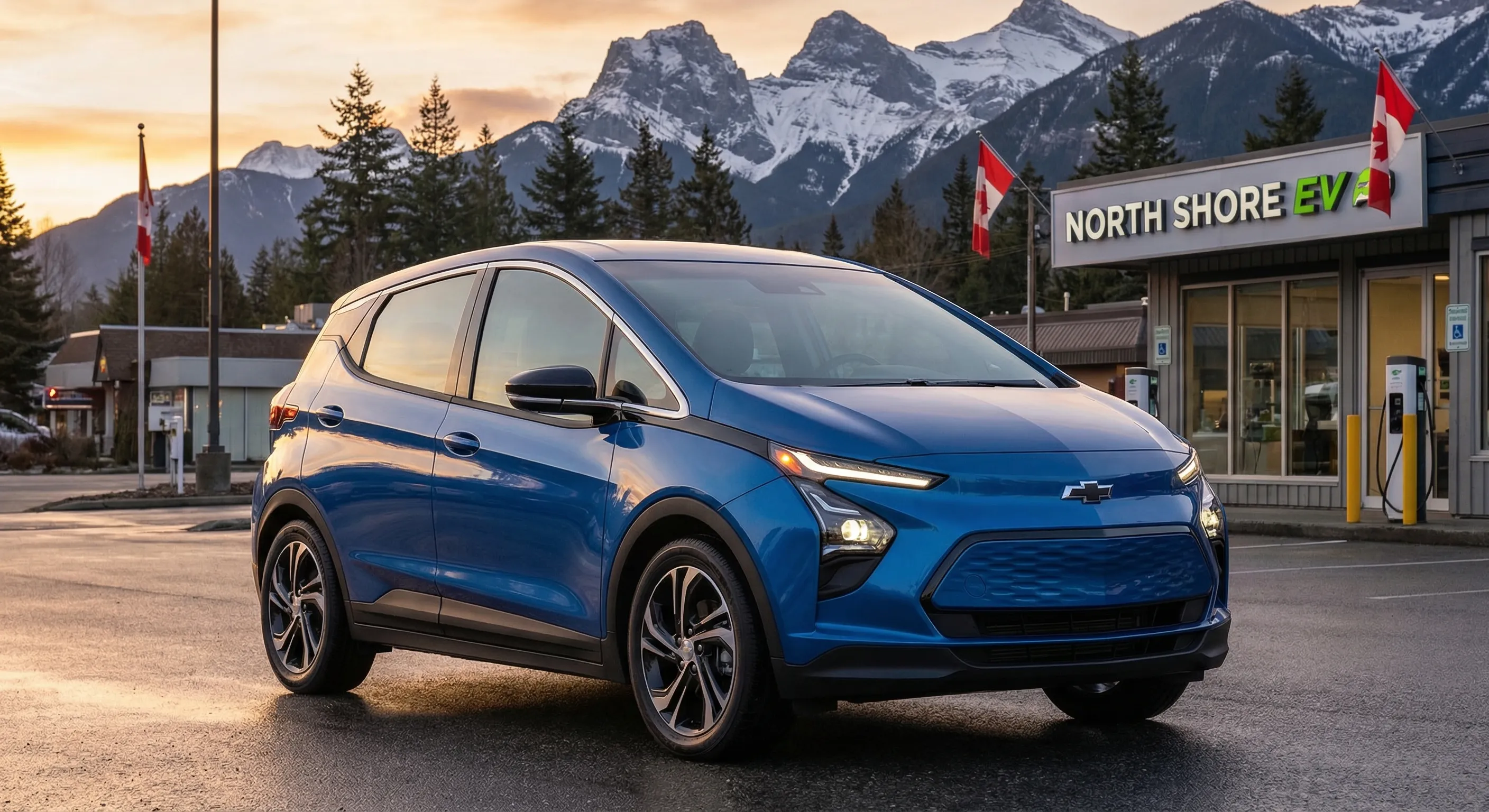
Key takeaways
- The federal EVAP rebate gives you $5,000 off a BEV at the dealership, no waiting, no filing. Stack it with provincial rebates in BC, QC, NS, NB, and PEI for up to $12,000 in total savings.
- The cheapest qualifying EVs in Canada start at ~$39,000 CAD before rebates, bringing your real cost into the mid-$30s depending on province.
- Winter range loss is real, typically 20-30%, but if your car has 400-500km of range in summer, you still have 280-350km in the coldest months. Most Canadians drive under 100km a day.
- Level 2 home charging costs $3-5 per night for a full charge. That is not a typo. Compared to a $65 gas fill-up, the math is not close.
- EVs cost roughly $500/year less to maintain than gas vehicles, no oil changes, regenerative braking extends brake life, and the drivetrain has far fewer moving parts.
- Apartment and condo dwellers have real options, a portable Level 2 unit on a NEMA 14-50 dryer outlet, or a building install funded by BC's CEVforBC and Quebec's PlugInBC, but board approval takes 3–6 months, so sort it before you buy.
Most "EV buying guides" are either written by journalists who have never owned one, or by EV enthusiasts who have owned three and forgotten what uncertainty felt like. This guide is neither.
The numbers, the actual friction points, and the decisions that will make or break your experience as a first-time EV owner in Canada are all here. Some of it will validate your concerns. Some of it will tell you your concerns are overblown. All of it is specific, because vague reassurance is useless when you are about to spend $40,000.
By the time you reach the end, you will know whether an EV makes sense for your life, which models are worth looking at, what the government will actually pay you to buy one, what winter really does to your range, how to charge at home without rewiring your house, and what the full five-year cost looks like in Canadian dollars.
Should I Actually Switch to an EV?
The Answer
It depends on two things. Where you charge, and how far you drive.
That sounds like a cop-out, but it is the most important framing you need. Every other question, range, cost, winter, charging speed, flows from those two factors. Let me show you why.
If you can charge at home, even just a standard wall outlet, an EV will almost certainly be worth it financially. The fuel cost drop alone is significant.
At current electricity rates across Canada, driving an EV costs the equivalent of about $0.03 per kilometre. A gas vehicle at 10L/100km and $1.70/L fuel costs about $0.17 per kilometre. If you drive 20,000km per year, that is a difference of roughly $2,800 annually, before maintenance savings. Over five years, you are looking at $14,000 in operating savings against a vehicle that likely cost $5,000-10,000 more upfront after rebates.
The math works.
If you cannot charge at home and must rely entirely on public charging, the math gets murkier. Public charging rates in Canada range from $0.20/kWh to $0.35/kWh at Level 2, and DC fast charging can run $0.40-0.60/kWh depending on the network. At those rates, you lose most of the fuel cost advantage. Not all of it, public EV charging is still cheaper than gas, but the gap narrows considerably.
More importantly, the daily friction of planning routes around charging stops changes the ownership experience significantly.
So before you read another word of this guide, answer these questions honestly:
- Do you have a parking spot at home, a garage, a driveway, or a dedicated outdoor spot?
- Do you drive more than 80km in a single day on a regular basis, or is your daily commute closer to 40-60km round trip?
- Do you take frequent long highway trips (500km+ in a single day) more than once a month?
- Is your monthly driving predictable, or does it vary dramatically week to week?
If you have home charging and a typical Canadian commute, an EV is almost certainly the right move financially in 2026. If you live in an apartment building without EV charging infrastructure and your daily routine requires 300km of driving, you should read the apartment section of this guide carefully before committing.
For the majority of Canadians?
CAA research confirms that two-thirds cite winter range as their top concern, but the same research shows that most Canadians drive fewer than 100km per day. These two facts sit in direct contradiction with each other. The concern is psychological, not operational. We will deal with it head-on in the winter section.
The EV transition in Canada is not for everyone today. But it is for far more people than are currently making the switch.
The Real Cost of Owning an EV in Canada, Purchase Price to 5-Year TCO
Let us stop talking about sticker prices and start talking about what you actually spend.
Purchase price reality
The cheapest EVs qualifying for federal rebates in Canada in 2026 start around $39,000 before incentives. The EVAP federal rebate of $5,000 is applied at the dealership, you do not file a claim, you do not wait for a cheque, the dealer knocks it off the price at point of sale. This matters. It is real, immediate money.
In Quebec, stack the provincial $7,000 rebate on top of that and you are buying the Kia EV4 Light for approximately $27,000 out the door before taxes and fees. That is a legitimate midsize SUV at compact car pricing. In BC, the $4,000 provincial rebate brings you to $30,000. In New Brunswick, PEI, and Nova Scotia, the provincial programs add $3,000-5,000 depending on the vehicle and household income criteria.
Compare that to a Toyota Corolla Cross at $32,000 with no rebates available, and suddenly the EV math looks different.
Five-year total cost of ownership breakdown
Let us build a real TCO comparison for a median Canadian buyer, 20,000km/year, Ontario (no provincial rebate), buying a Chevy Equinox EV at $44,000 MSRP:
Purchase cost after federal EVAP rebate:
- Sticker: $44,000
- Minus federal rebate: -$5,000
- Net purchase: $39,000
Fuel/energy over 5 years:
- EV at $0.03/km x 100,000km: $3,000
- Gas equivalent (Toyota RAV4 at ~$0.17/km): $17,000
- Savings: $14,000
Maintenance over 5 years:
- EV estimate: $2,500 (tires, cabin air filters, windshield washer fluid, occasional brake service)
- Gas equivalent: $5,000 (oil changes, transmission service, spark plugs, brake pads, air filters)
- Savings: $2,500
Insurance over 5 years (estimated 12% premium):
- EV premium over gas equivalent: +$1,800
Total 5-year operating cost differential in favour of EV: approximately $14,700.
On a $44,000 vehicle with a $5,000 rebate, you are recouping most of the price premium and then some over five years of typical Canadian driving. Add provincial rebates where available and the picture improves further.
This is not a marketing claim. These are real numbers based on current Canadian electricity rates, fuel prices, and Insurance Bureau of Canada data on EV premiums. Run your own version at Calculate Your Incentives.
Hidden costs to budget for
There are a few real costs that do not get enough attention:
- Level 2 charger installation: $500-1,500 for the hardware and electrician. This is a one-time cost, but budget for it.
- Winter tires: You need them regardless. Budget $1,200-1,800 for a set with rims. Not unique to EVs, but worth noting.
- Potential condo/strata fees if your building installs charging: varies widely.
- Battery degradation: Most EVs retain 80%+ of battery capacity at 200,000km. Not a near-term cost concern for most buyers, but worth knowing.
The picture is favourable. It is not magic, and there are upfront friction costs. But the five-year numbers are solidly in favour of going electric for most Canadian driving profiles.
Federal and Provincial Rebates, How to Stack Them
The federal EV rebate program in Canada is called the Electric Vehicle Availability Program, or EVAP. Here is what it actually does and how to use it.
How EVAP works
As of February 2026, there are 22 vehicle models qualifying for EVAP. The rebate amounts are:
- Battery Electric Vehicles (BEVs): $5,000
- Plug-in Hybrid Electric Vehicles (PHEVs): $2,500
The MSRP cap is $55,000 for base trims. Some models have higher-trim versions that do not qualify, always verify the specific trim you are buying against the current EVAP eligibility list. The dealer applies the rebate directly at point of sale, which means you see the discount immediately on your purchase agreement.
Important: EVAP has been subject to funding cycles in the past. If you are reading this in late 2026, verify the program is still active before counting on it. The federal government has confirmed funding through the current budget cycle, but program availability has changed before.
Provincial rebates and how to stack
Several provinces run their own EV incentive programs that stack on top of EVAP:
- British Columbia: $4,000 through the SCRAP-IT or CleanBC Go Electric programs, with eligibility tied to income for some streams
- Quebec: Up to $7,000 through the Roulez vert program, the most generous in Canada, with additional rebates available for used EVs
- Nova Scotia: $3,000 rebate on eligible new EVs
- New Brunswick: $5,000 rebate on qualifying vehicles
- Prince Edward Island: $5,000 rebate plus an additional incentive for charger installation
Ontario, Alberta, Saskatchewan, and Manitoba currently have no provincial EV rebate programs. If you are in Ontario, Canada's largest vehicle market, you are working with the federal $5,000 only.
Maximum stacking scenario
If you are in Quebec buying a Kia EV4 Light at $39,000:
- Federal EVAP: -$5,000
- Quebec Roulez vert: -$7,000
- Net purchase price before taxes: $27,000
That is a legitimate midsize crossover at $27,000 CAD. After Quebec sales tax (TVQ + TPS), you are around $31,000 all-in. You would struggle to find a comparable gas vehicle at that price point.
Paperwork and timing
For EVAP, there is essentially no paperwork on your end. The dealer handles the government claim. You sign the purchase agreement showing the reduced price, and the rebate is applied. Some dealers are more familiar with the process than others, if your sales rep seems unclear on how EVAP works, escalate to their finance manager. The process is straightforward when the dealership has done it before.
Provincial rebates vary in process. Quebec's Roulez vert requires an online application, but it is processed quickly. BC's programs also involve a separate application. Budget a few weeks for provincial rebate processing where applicable, and confirm current income eligibility criteria with your provincial program directly since some have household income caps.
Visit Calculate Your Incentives to see the exact combination of rebates available for your province and chosen vehicle.
The Top Affordable EVs Under $50,000 in Canada (2026)
There are exactly four EVs you should be seriously considering if your budget is under $50,000 and you want to stay within EVAP eligibility. Here is the unvarnished breakdown.
Kia EV4 Light, ~$39,000
This is the cheapest EVAP-qualifying BEV available in Canada right now, and it is not a punishment vehicle. The EV4 Light delivers a real-world range in the 380-420km range in moderate conditions, seats five comfortably, and comes from a manufacturer with a proven EV track record. The interior is competitive with other vehicles in the class. The base trim trades some convenience features for price, but what it does not trade is range, safety ratings, or build quality.
What you give up at the Light trim: heated rear seats, a larger infotainment screen, and some driver assist tech. What you keep: the full federal rebate, a solid range figure, and Kia's 8-year/160,000km battery warranty. If the budget is tight, start here.
Hyundai Kona Electric, ~$43,000
The Kona Electric is the refined choice in the sub-$45K segment. It offers slightly more interior polish than the EV4 Light, a strong range figure of around 400km, and Hyundai's well-regarded EV reliability record. The Kona sits on a platform Hyundai has been refining since 2018, which means real-world ownership data is plentiful and the early kinks have been worked out.
Hyundai and Kia share the same parent company and many platform components. You are choosing between trim levels and body styles as much as brands.
Chevrolet Equinox EV, ~$44,000
The Equinox EV is the wildcard that actually delivers. General Motors built this vehicle specifically to compete at volume in the sub-$50K Canadian market, and the result is a properly sized SUV with a 400-plus kilometre range, a well-executed interior, and GM's Ultium battery platform backing it. The Equinox EV qualifies for EVAP and offers the physical space that Canadians actually want, this is not a compromised compact hatch dressed up as a utility vehicle.
The one caution with the Equinox EV: GM's charging network in Canada (via Ultium Charge 360 partnerships) is adequate but not as strong as what you get with some Korean competitors. For home charging, this is irrelevant. For long road trips, map your route on ThinkEV Charging Map before you go.
Nissan LEAF, from $47,846
The LEAF is the veteran of this list. Nissan has been selling it in Canada since 2011, which means there is more real-world data on long-term ownership in Canadian conditions than any other EV on this list. One important note for 2026: Nissan cancelled the cheapest S trim (53 kWh battery) for Canada. Only the 75 kWh battery models remain available, starting at $47,846 for the S+ trim. That pushes the LEAF above the other options on this list by price, but the larger battery delivers a competitive 488 km of range.
The LEAF uses CHAdeMO fast charging rather than the more widespread CCS standard, which is a genuine limitation for road trip charging. For a buyer who charges almost exclusively at home and occasionally needs a top-up, this is largely a non-issue. The 2026 Ariya also saw $3,000-4,600 price cuts, worth considering if you want Nissan's more modern EV platform with CCS charging.
What about Tesla?
The Model 3 Standard Range starts above $50,000 in Canada in 2026 and does not qualify for EVAP. The Supercharger network is genuinely the best fast-charging infrastructure in the country. If you can absorb the higher purchase price without the rebate, it is a legitimate option. But I am not going to tell you to spend $60,000 when there are solid $39,000-$44,000 options available with federal rebates. Run your numbers.
Compare all these vehicles side by side at Compare EVs Side by Side.
Winter Range: What Actually Happens (With Real Numbers)
Two-thirds of Canadians cite winter range loss as their primary barrier to buying an EV. Let me give you the actual data so you can make an informed decision rather than an anxiety-driven one.
The real range reduction
Cold weather reduces EV range through two mechanisms: the battery itself performs less efficiently in cold temperatures (lithium chemistry slows down), and cabin heating draws from the same battery that powers the motor.
In gas cars, waste engine heat warms the cabin for free. In an EV, that heat costs range.
The typical range reduction in Canadian winter conditions, sustained temperatures of -10C to -25C, is 20-30% from the rated summer range. At -30C or below, you can see up to 40% reduction, but days that cold are infrequent even in most prairie cities.
Now apply those numbers to actual vehicles:
A Chevy Equinox EV with a 400km summer range gives you:
- At -10C (light winter): 300-320km of range
- At -20C (cold winter): 280-300km of range
- At -30C (severe cold): 240-280km of range
A Hyundai Kona Electric with a 400km summer range:
- At -10C: approximately 300km
- At -20C: approximately 280km
- At -30C: approximately 240km
Put this against your actual driving
The average Canadian commuter drives 55km per day.
The average Canadian drives under 100km per day on typical days. Even in the worst-case winter scenario, a vehicle at -30C with a battery that has lost 40% of its range, you still have 240km of available range against a 100km daily requirement. That is a 140km buffer.
The winter range problem is a real phenomenon being applied to an imaginary use case for most people.
The CAA's own data confirms this disconnect: Canadians worry about winter range, but their actual daily driving would not exhaust even a heavily winter-degraded battery.
Where it actually matters
The scenario where winter range becomes a genuine operational concern is the long-distance road trip in cold weather. Driving from Saskatoon to Regina (260km) in January in a vehicle showing 280km of range after a cold soak gives you a 20km buffer, that is tight.
Driving from Toronto to Ottawa (450km) in winter means you are stopping to charge regardless of the weather, because it is 450km.
The advice: if you regularly drive long highway distances in winter (200km+ in a single go), plan those trips the same way you plan gas fill-ups, but with public charging instead. Use ThinkEV Charging Map to pre-route your charging stops.
The infrastructure on major Canadian corridors is adequate and improving.
Cold weather tips that actually work
- Pre-condition your vehicle while plugged in. Every modern EV allows you to schedule cabin pre-heating before you leave. This brings the cabin to temperature and warms the battery using grid electricity, not your range.
- Keep your battery above 20% charge during cold snaps.
Lithium batteries charge and discharge more efficiently above 20% in cold.
- Get winter tires. This is non-negotiable in Canada regardless of what you drive, but proper winter tires also improve EV range in cold weather by maintaining better contact with cold road surfaces.
Gear worth having
As an Amazon Associate, ThinkEV earns a small commission from qualifying purchases — at no extra cost to you.

WeatherTech FloorLiner for Tesla Model 3
Deep-channel liners that trap every drop of slush and salt. The difference between a ruined interior and a showroom-fresh cabin after a Canadian winter.
As an Amazon Associate, ThinkEV earns from qualifying purchases — at no extra cost to you.
WeatherTech makes EV-specific floor liners that handle Canadian winter slush and salt better than any carpet mat.
A small detail, but when you are getting in and out of your car twice a day in February, it matters.
Home Charging 101, Level 1, Level 2, and DC Fast Charging
Let us establish what the three charging levels actually mean, because the terminology gets misused constantly.
Level 1: Standard household outlet (120V)
Level 1 charging uses a standard North American wall outlet. You plug in with the charging cable that comes with your vehicle. It delivers roughly 1.2-1.4 kW of power, which translates to about 8-12km of range per hour of charging.
If you drive 60km per day and plug in for 8 hours overnight, you get back roughly 80-100km of range. For light daily use, Level 1 actually works, you arrive home, plug in, wake up with a full charge. The catch is that Level 1 has no margin. If you arrive home with 30% charge and need to drive 120km tomorrow, your overnight recovery might not be enough. It also takes 20-30 hours to charge from near-empty to full.
Level 1 is fine as a secondary option or for PHEVs with small batteries. For a BEV with a 60-80 kWh battery, it is inadequate as your primary charging solution unless your daily mileage is very low.
Level 2: The sweet spot (240V)
Level 2 uses a 240V circuit, the same type of circuit that powers your dryer or electric range. With a dedicated 40-amp circuit and a Level 2 charger, you get 7-11 kW of charging power, which translates to 35-60km of range per hour.
A full charge from near-empty on a typical 60-70 kWh BEV battery takes 6-10 hours at Level 2. Which means you plug in at 10pm and wake up with a full charge regardless of what the day threw at you. This is the charging experience that makes EV ownership smooth. Three to five dollars in electricity, full battery every morning.
Level 2 is what I recommend for every homeowner or renter with a dedicated parking spot. The $500-1,500 installation cost (charger hardware plus a licensed electrician to run the circuit) is a one-time investment that pays for itself in the first year of fuel savings alone.
The Grizzl-E is the Canadian-made Level 2 charger I recommend most consistently for first-time EV owners. It is built for Canadian winters, handles temperatures down to -40C without issue, is Energy Star certified, and comes at a competitive price point. Straightforward installation, no subscription, no monthly fees.
Gear worth having
As an Amazon Associate, ThinkEV earns a small commission from qualifying purchases — at no extra cost to you.

Grizzl-E Classic Level 2 EV Charger (40A)
Canadian-made and rated for minus 40C winters. 40A / 9.6 kW, NEMA 14-50, indoor/outdoor, 24-ft cable. The charger built for Canadian weather.
As an Amazon Associate, ThinkEV earns from qualifying purchases — at no extra cost to you.
If you want more features, scheduling, energy monitoring, smartphone app control, load balancing, the ChargePoint Home Flex is the premium option. It is more expensive but offers better integration with smart home systems and more detailed charging data. If you are the kind of person who wants to optimize your overnight charging to hit cheap off-peak electricity rates automatically, ChargePoint is worth the upgrade.
DC Fast Charging (Level 3)
DC fast charging delivers 50-350 kW directly to the battery, bypassing the onboard charger. A 30-minute DC fast charge can take most EVs from 20% to 80% charge. This is what you use on road trips, not daily.
DC fast charging is hard on batteries when used frequently as the primary charging method. It is fine for occasional road trip use, that is what it is designed for. But if your plan is to charge exclusively at a public DC fast charger near your apartment every few days because you lack home charging, you are accelerating battery wear, paying higher per-kWh rates, and adding daily friction to your routine.
The takeaway on charging levels: budget for Level 2 at home. Use Level 1 as backup. Use DC fast charging for road trips.
How Much Does Charging Cost Province by Province
Electricity rates vary across Canada, and that variation directly affects your per-kilometre fuel cost. Here is what you are actually paying to charge.
Electricity cost comparisons for a typical 60 kWh BEV fill (from 10% to 90%, approximately 48 kWh):
British Columbia BC Hydro residential rates average around $0.15/kWh for most consumption. A 48 kWh charge costs approximately $7.20. At 400km of range for that 48 kWh, you are paying $0.018/km.
Alberta Alberta has a regulated rate option that fluctuates, but averages around $0.16-0.18/kWh in 2026. A full charge runs $7.70-8.65. Despite higher rates, still dramatically cheaper than gas.
Ontario Ontario's Time-of-Use rates reward overnight charging. The off-peak rate (7pm-7am on weekdays, all weekend) sits around $0.087/kWh as of early 2026. Charging overnight from 10pm to 6am costs approximately $4.20 for 48 kWh. This is why Ontario EV owners who charge off-peak have some of the best per-kilometre fuel costs in the country.
Quebec Hydro-Quebec's residential rate is among the lowest in North America at approximately $0.061/kWh for the first tier. A 48 kWh charge costs roughly $2.93. Quebec EV owners are paying less than three dollars to add 400km of range. This is why Quebec has the highest EV adoption rate in Canada.
Manitoba Manitoba Hydro rates are similarly low, around $0.08-0.10/kWh. Comparable to Ontario overnight rates without needing to manage time-of-use windows.
Saskatchewan and the Atlantic provinces SaskPower and Atlantic province utilities run higher rates, typically $0.16-0.19/kWh, bringing full-charge costs to $7.70-9.10. Still significantly cheaper than gasoline equivalents, but the fuel savings gap is narrower than in Quebec or Ontario.
Public charging cost reality check
Level 2 public charging on networks like FLO (dominant in Quebec and Eastern Canada) or ChargePoint runs approximately $0.20-0.35/kWh or sometimes a flat hourly fee of $1.50-3.00/hour depending on the location. DC fast charging on networks like ELECTRIFY Canada runs $0.40-0.58/kWh with a session fee.
At $0.50/kWh for a DC fast charge, filling 48 kWh costs $24. Still cheaper than gas for most vehicles, but the advantage over home charging is substantial. This reinforces the core message: home charging is the financial engine of EV ownership. Public charging is the insurance policy.
Insurance, Maintenance, and the Hidden Costs You Need to Know
Insurance: the picture
EVs cost more to insure in Canada. The industry average is 10-15% higher than comparable gas vehicles, and in some provinces the premium can be higher than that. The reasons are real: repair costs are higher (high-voltage components, specialized labour, proprietary systems), parts availability is still more limited than for gas vehicles, and insurance actuarial tables are still being calibrated for a relatively new vehicle category.
On a $2,000/year insurance policy, a 12% premium means you are paying an extra $240 annually. Over five years, that is $1,200 in additional insurance costs. Significant, but not enough to change the overall TCO math, it is comfortably offset by fuel savings in the first year alone.
What you can do about it: shop aggressively. Not all insurers apply the same EV premium, and the competitive picture has improved as more insurers have built EV actuarial data. Intact, Aviva, and Desjardins have all been competitive in various provinces. Get at least three quotes before accepting any renewal or initial policy on an EV.
Maintenance: where you actually save
The $500/year maintenance savings figure is conservative. Here is what you stop paying for when you own a BEV:
No oil changes. A typical Canadian does 2 oil changes per year at $80-150 each. That is $160-300 saved annually.
No transmission service. Gas vehicles require transmission fluid changes every 60,000-100,000km. EVs have single-speed reduction gears that require no fluid changes.
No spark plugs, air filters (engine), fuel filters, or fuel injector cleaning. These maintenance items do not exist on a BEV.
Brakes last significantly longer. Regenerative braking returns kinetic energy to the battery instead of converting it to heat through friction. Real-world EV owners commonly report going 100,000km or more before needing brake pad replacement. On a gas vehicle, pads typically need replacement every 40,000-70,000km.
What you do still pay for: tires (same as gas), cabin air filter (annual, $15-30 DIY), windshield wiper fluid (same), tire rotations, and the 12V auxiliary battery (typically needs replacement around 4-6 years, $150-250). Coolant for the battery thermal management system is also a periodic service item on most modern EVs, typically every 5 years or 150,000km.
Gear worth having
As an Amazon Associate, ThinkEV earns a small commission from qualifying purchases — at no extra cost to you.

ChargePoint Home Flex Level 2 Charger (50A)
Premium 50A / 12 kW charger with the best app ecosystem. Hardwired or NEMA 14-50, with real-time energy tracking and smart scheduling.
As an Amazon Associate, ThinkEV earns from qualifying purchases — at no extra cost to you.
One practical tool that earns its place in any EV owner's kit: a quality portable tire inflator. EVs are heavier than gas equivalents, which accelerates tire wear. Keeping tires at the correct pressure improves range and extends tire life. A quality 12V inflator that lives in your frunk costs under $50 and you will use it.
The battery warranty question
Every major automaker selling EVs in Canada provides a battery warranty of at minimum 8 years or 160,000km, whichever comes first, covering defects and capacity loss below 70% (some cover below 60%). Kia and Hyundai offer lifetime battery warranties on some trims. This warranty is a meaningful backstop against the primary financial risk of EV ownership.
Real-world degradation data on modern EV batteries is encouraging. Properly managed (not routinely charged to 100%, not regularly DC fast-charged from near-empty, not stored at extreme temperatures for extended periods), modern EV batteries are showing less than 10% capacity loss at 100,000km across most mainstream platforms. The apocalyptic battery replacement cost scenario that dominates online discussions is largely theoretical for a buyer choosing a 2026 model.
The Used EV Market in Canada, Is It Worth It?
The used EV market in Canada in 2026 is interesting, and worth considering if your budget is tight or if you want to avoid the new-car depreciation hit.
The case for buying used
New EVs depreciate faster than comparable gas vehicles in the current market, primarily because rebate programs reduce effective new-car prices and because technology updates have been moving quickly. A 2022-2024 Nissan LEAF or Hyundai Kona Electric with 40,000-60,000km can often be found in the $22,000-$32,000 range, well below the new-vehicle price after rebates.
Used EVs in Canada also qualify for federal rebates if you buy from a licensed dealership. As of 2026, the used EV rebate under EVAP is $2,500 for eligible previously-owned BEVs, with similar income and vehicle age eligibility criteria as the new vehicle program. Quebec's Roulez vert also provides rebates on used EVs. This partially offsets the new-car rebate advantage.
What to check on a used EV
Battery state of health (SoH) is the critical data point on a used EV. This is different from the state of charge (how full the battery is today). SoH reflects how much of the original battery capacity remains. Most EVs have a battery health readout accessible through the infotainment system or via an OBD2 adapter and third-party app.
Before buying any used EV, insist on seeing the battery SoH reading. A used EV with 80,000km should ideally show 85-90% or higher SoH. If it is below 80%, you are buying a vehicle whose range is already significantly compromised, and the battery warranty may not cover gradual degradation below 70%.
Additional checks for used EVs:
- Confirm no open recalls with Transport Canada's recall database
- Request charging records if available, frequent DC fast charging from a low state of charge is harder on batteries
- Test all charging ports (AC Level 2 and DC fast if applicable)
- Check that all software is on the current version (many used EVs have pending OTA updates that dealers may not have applied)
The private sale market
Private sales of used EVs are increasing and the prices can be better than dealer listings. However, you lose both the used EV federal rebate (which requires a licensed dealer) and any remaining manufacturer warranty transfer guarantee, depending on the brand. Kia and Hyundai warranties are transferable; not all brands are. Confirm before buying privately.
The used market is worth exploring, particularly for buyers in Ontario where no provincial new-car rebate exists. A well-maintained 2023 Kona Electric with 30,000km and 88% battery health bought privately for $28,000 is a legitimate alternative to a new $43,000 vehicle.
Apartment and Condo Charging, Your Real Options
This is where the rubber meets the road for a significant portion of Canadian EV buyers. Roughly 40% of Canadians live in multi-unit residential buildings, and the charging question is genuinely more complicated for this group.
It is solvable. But you need to solve it before you buy the car, not after.
Option 1: Negotiate with your building or strata
If your building has assigned or dedicated parking spaces, the most sustainable long-term solution is to petition your building management or strata council to install Level 2 charging infrastructure. This is increasingly common. Several provincial programs provide funding specifically for multi-unit residential EV charging installation, BC's CEVforBC program and Quebec's PlugInBC (for buildings) being the most developed.
The process involves a formal proposal to your strata or property management, an electrical assessment of the parking structure, and typically a vote or approval process. It is not fast, budget 3-6 months for the process. But it results in proper Level 2 charging at your dedicated spot that other residents cannot use.
Option 2: Install at your own spot with approval
Many condos and apartment buildings will allow individual unit owners to install a Level 2 charger at their dedicated parking space if you bear the cost and meet building electrical standards. This requires a licensed electrician, building approval (often from the strata council), and potentially a load study to ensure the building's electrical service can handle additional draw.
The cost is the same as a single-family installation: $500-1,500 for hardware and installation. The process is more bureaucratic but the outcome is identical, Level 2 charging at your spot.
Option 3: Portable Level 2 charging
If you have a 240V outlet near your parking spot, even an outdoor dryer outlet or RV outlet, you can use a portable Level 2 charging unit that does not require permanent installation. This is a niche solution but it is real.
Gear worth having
As an Amazon Associate, ThinkEV earns a small commission from qualifying purchases — at no extra cost to you.

AstroAI Portable Tire Inflator
One tap, it inflates to your exact PSI then stops automatically. Low tires cost 5 to 10 percent of your range, so this pays for itself in a week.
As an Amazon Associate, ThinkEV earns from qualifying purchases — at no extra cost to you.
The Lectron portable Level 2 EVSE is designed exactly for this use case. It plugs into a NEMA 14-50 or 6-50 outlet (the type used for RV hookups or electric dryers), delivers genuine Level 2 charging speeds, and stores in a bag that fits in your vehicle. If your parking structure has 240V outlets available for this purpose, increasingly common in newer or renovated buildings, this is the most affordable path to Level 2 charging without installation.
Option 4: Rely on public charging
This is the least preferred option for daily use, but it is the reality for some apartment dwellers. If your building has no charging and installation is not feasible, and you live near reliable public Level 2 charging infrastructure, a nearby mall, workplace, or municipal charging station, you can make it work.
The assessment: it adds friction. You need to plan charging sessions instead of passively plugging in at home. The per-kWh cost is higher. And the early morning rush to grab a charging spot at a shared facility is a real quality-of-life issue some urban EV owners deal with.
Before buying an EV without home charging access, spend two weeks tracking how you would realistically charge. Map the nearby public charging locations. Check their utilization during the times you would need them. If the charging infrastructure in your area is adequate and you are genuinely comfortable with the process, it can work. If the nearest reliable Level 2 charger is inconvenient, wait until your building situation changes or the local infrastructure improves.
For a focused look at condo and apartment charging, read EV Charging in a Condo or Apartment.
For help mapping what is available near you, use ThinkEV Charging Map.
Your 30-Day Action Plan After Buying Your First EV
You have bought the car. Here is exactly what to do in the first 30 days to set yourself up for a good ownership experience.
Week 1: Get charging sorted
Day 1: Identify the electrician you are going to use for Level 2 installation. Ask specifically about their experience with EV charger installations. Get a written quote that specifies the circuit size (40A minimum, 50A preferred), the panel work required if any, and whether the permit is included.
Day 2-3: Order your Level 2 charger so it arrives before the electrician's appointment. Most installations take 2-4 hours for a straightforward panel-to-garage or panel-to-outdoor-outlet run.
Day 4-7: Use Level 1 charging in the meantime. Plug in every night without exception. Build the habit immediately. This is the single most important EV ownership habit.
Week 2: Learn your vehicle
Set up the companion app for your vehicle (Kia Connect, myHyundai, MyChevy, NissanConnect, they all have one). Configure overnight charging schedules if your electricity provider has time-of-use rates. In Ontario, schedule charging to start after 7pm or after 11pm for the lowest rates.
Learn the pre-conditioning feature. Every modern EV has a scheduled departure feature that heats or cools the cabin and conditions the battery while still plugged in. Set it. Use it. Your mornings will be transformed.
Calibrate your range anxiety by tracking your actual daily usage for two weeks without changing your behaviour. You will almost certainly find you are using 15-30% of your available range on a typical day.
Week 3: Road trip preparation
Plan one deliberate charging stop on a short regional trip, 150-200km round trip, to get comfortable with the public charging experience before you need it on a real road trip. Use the charging stop to understand the payment process on whatever network you encounter (FLO, ELECTRIFY Canada, ChargePoint). Download their apps or get their RFID cards.
Most charging networks allow tap-to-pay now, which means you do not strictly need apps or RFID cards. But having the app for your primary regional network means access to better pricing tiers and charging session management.
Week 4: Optimize your costs
Review your first electricity bill after a full month of EV charging. Compare it to your previous average. Calculate your per-kilometre charging cost. This is the moment the fuel savings become concrete and real.
If you are not already on a time-of-use or EV-specific rate plan, contact your utility about options. In Ontario, Hydro customers on TOU rates who charge overnight save significantly compared to flat-rate charging. BC Hydro, Hydro-Quebec, and most other Canadian utilities have similar programs or are implementing them.
Register your vehicle with the federal EVAP program if you have not received confirmation that the rebate was properly applied. Your dealer's finance office should have a copy of the submission, but verify you have documentation.
Ongoing: Community and resources
Bookmark ThinkEV Charging Map for trip planning. Use it before any trip over 200km to pre-route your charging stops.
Related Reading
Ready to go deeper? These cover the next steps in your EV journey:
- Compare EVs Side by Side, Put the shortlisted models against each other with real specs and Canadian pricing
- Calculate Your Incentives, Enter your province and chosen vehicle to see your exact rebate stack
- Best Level 2 Chargers for Canadian Homes, A full breakdown of home charging hardware options at every price point
- How to Install a Level 2 EV Charger at Home in Canada, Step by step: what to expect from the electrical assessment to the final installation
- Switching from Gas to EV in Canada, A 2026 Guide, The mindset shift and practical changes that make the transition smooth
- Affordable EV Options in Canada, What Actually Stands Out, A deeper dive into the sub-$50K EV market and where the real value is
Gear worth having
As an Amazon Associate, ThinkEV earns a small commission from qualifying purchases — at no extra cost to you.

Portable Level 2 EV Charger (40A, NEMA 14-50)
Throw it in the trunk and charge anywhere with a 240V outlet. 40A portable with NEMA 14-50 plug. Your road-trip insurance policy.
As an Amazon Associate, ThinkEV earns from qualifying purchases — at no extra cost to you.

Founder & Chief Editor
Vlad Pereira is the founder and chief editor of ThinkEV.ca, the Canadian electric-vehicle publication he writes and edits from Courtenay, British Columbia. He covers EV pricing, federal and provincial rebates, charging costs, and the Chinese manufacturers now entering Canada, from the buyer's side rather than the press-fleet side. ThinkEV is a venture of Vlad Pereira Online; his writing on health, income and the long game lives at vladpereira.com.
Frequently asked questions
Is the $5,000 federal rebate still available in 2026?
Do I really need a Level 2 charger, or can I get by with the standard outlet?
What happens if I get stranded with a dead battery?
Should I buy a BEV or a PHEV for Canadian winters?
Will the EV hold its value?
Is DC fast charging bad for the battery?
What is the cheapest EV I can buy in Canada right now?
Can I install a Level 2 charger in a rented apartment or condo?
More EV & road-trip finds
Affordable upgrades worth a look — tap any to check the price on Amazon.
 ★ 1,340
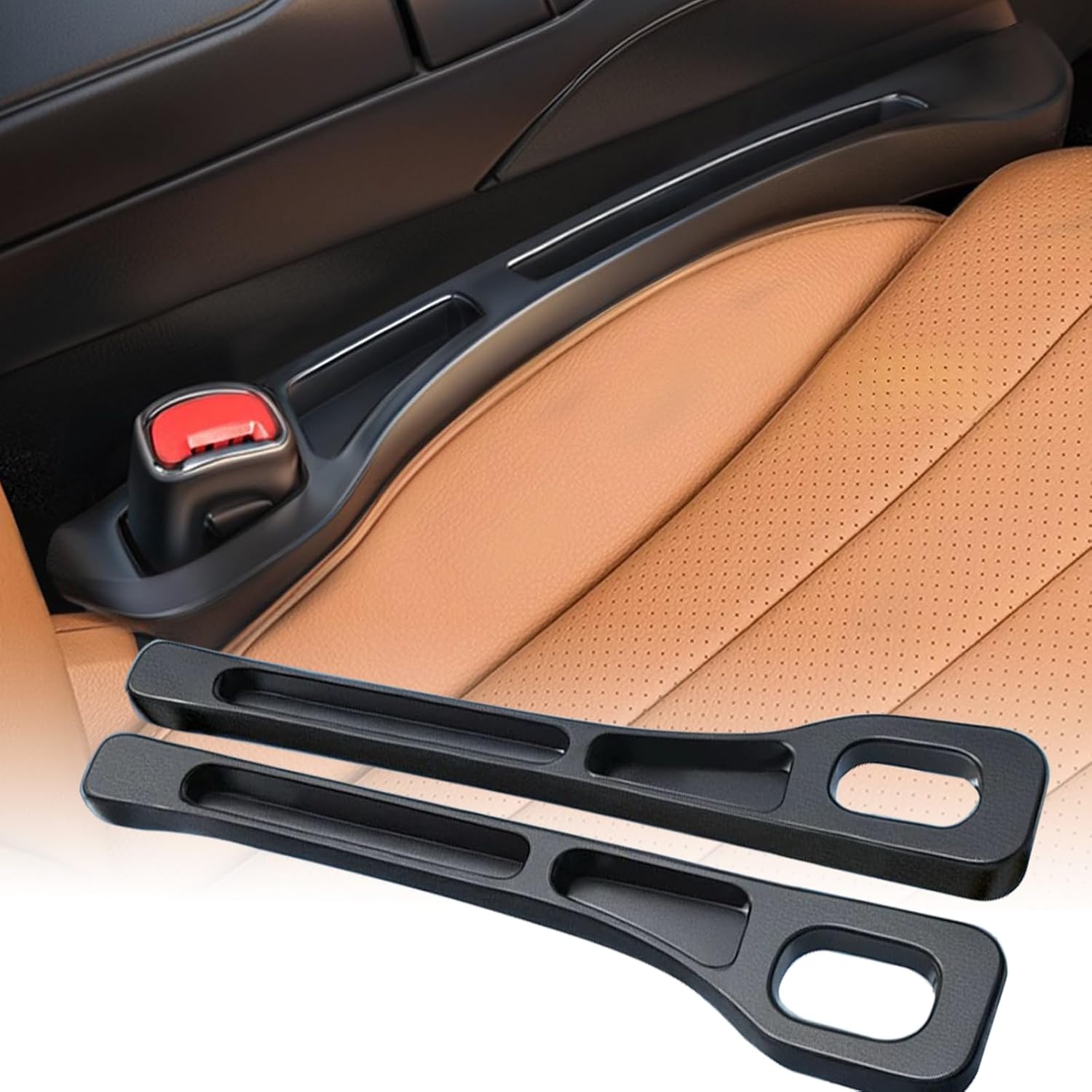
Car Seat Gap Filler (Universal)
View on Amazon ★ 1,866
70mai A810 4K Dual Dash Cam
View on Amazon ★ 61
★ 61Toddler Car Seat Snack and Cup Tray
View on Amazon ★ 17,839
Qifutan Vent Phone Mount (Military-Grade Clip)
View on Amazon ★ 9,349
Auto Detailing Brush Set (10-Piece)
View on Amazon ★ 419
★ 419RGB Car Interior LED Strip Light
View on Amazon ★ 4,055
6-Speed Manual Shift Knob Display
View on Amazon ★ 4,424
Sun Visor Card and Document Organizer
View on AmazonRead, Plan, Then Stay Current
Explore our expert articles to understand incentives and ownership costs, use the map to pressure-test charging reality, then subscribe so new EV coverage comes straight to you.
Continue Reading
Can Americans Buy Chinese EVs Through Canada?
Chinese EV Service in Canada: What Buyers Should Know
The 10 Most Affordable EVs You Can Buy in Canada in 2026
Buy or Lease an EV in Canada? The 2026 Answer
Tesla Sales Collapsed 60% in Canada, Should I Still Buy One?