Key takeaways
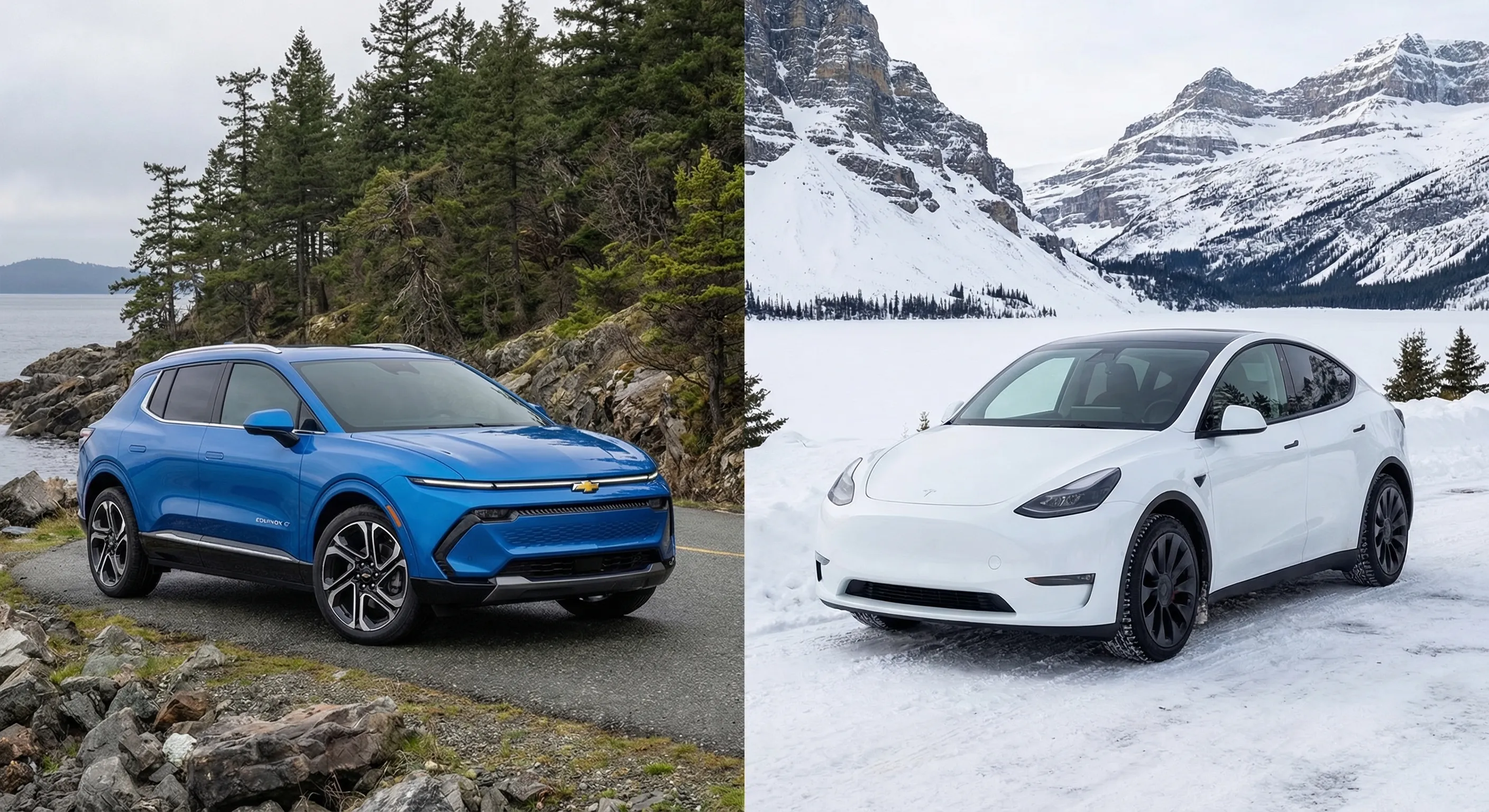
- The Bolt is no longer just an estimate on price: Chevrolet Canada now lists a starting MSRP of C$39,999.
- The BYD Dolphin does not qualify for the $5,000 federal EVAP rebate.
- The original 100% tariff from October 2024 has been reduced to 6.1% as of January 2026, with a 49,000-vehicle quota, but the EVAP exclusion remains.
- The Chevy Bolt 2027, expected to be built in North America, qualifies, assuming the transaction price stays under $50,000.
DECISION FRAME
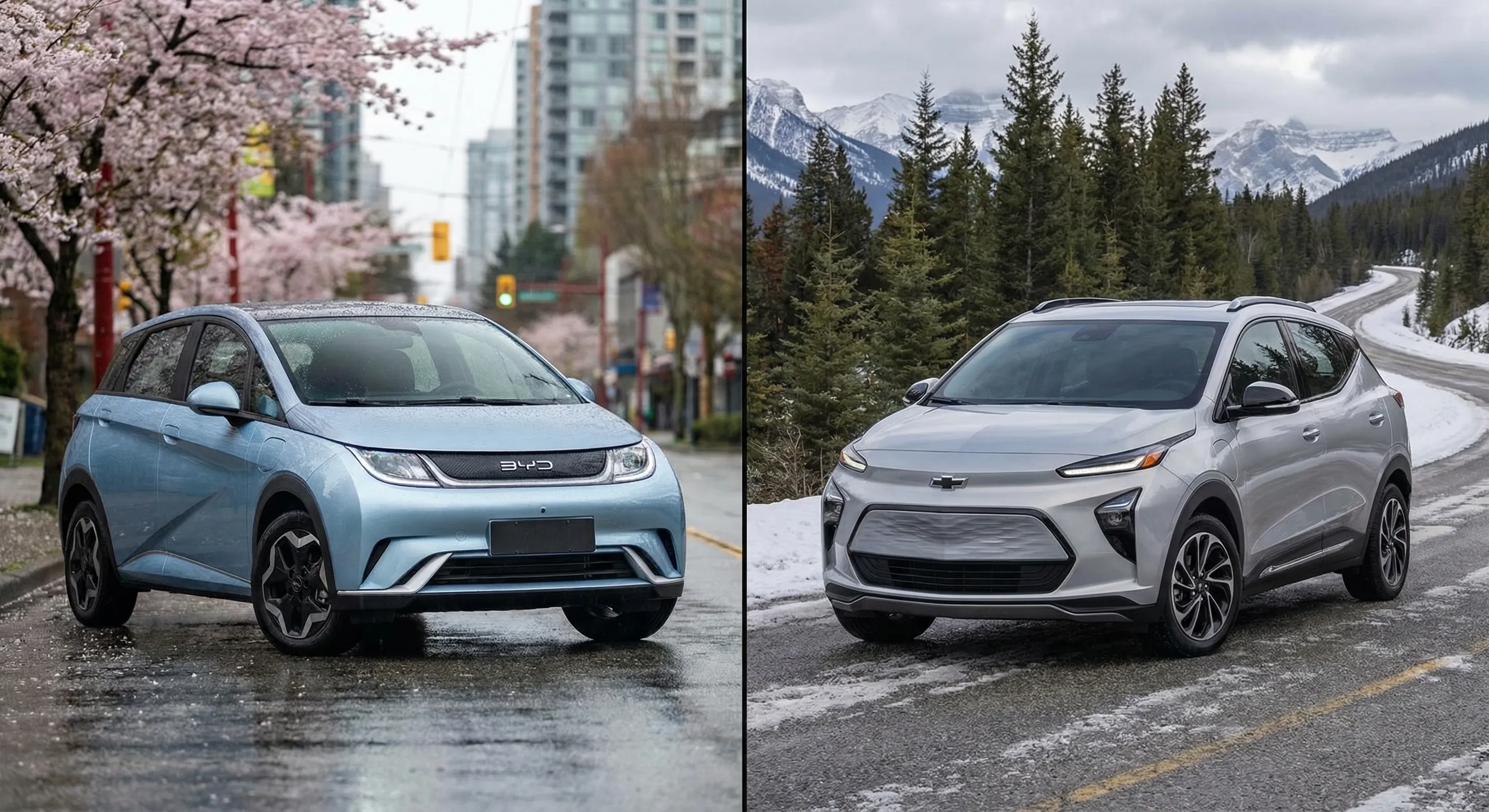
The cleanest way to frame this comparison is now different from when this post was first drafted. Chevrolet Canada says the 2027 Bolt will be available at Chevrolet dealers in the first quarter of 2026, not that January deliveries are a settled nationwide fact. BYD, meanwhile, is still a launch-timing story in Canada rather than a broad retail reality. So the real choice is between a GM product with an official Canadian spec page and dealer timeline, and a BYD product whose Canadian rollout still carries more uncertainty.
That gap matters more than most buyers admit. If your battery dies on the 401, "BYD's network is expanding rapidly" won't help you. At the same time, this comparison needs to stop overstating what we know about the Bolt itself. GM has confirmed price, range, charging speed, the native NACS port, and a Q1 2026 dealer window. It has not confirmed the battery chemistry, supplier, or exact pack size on the Canadian source page.
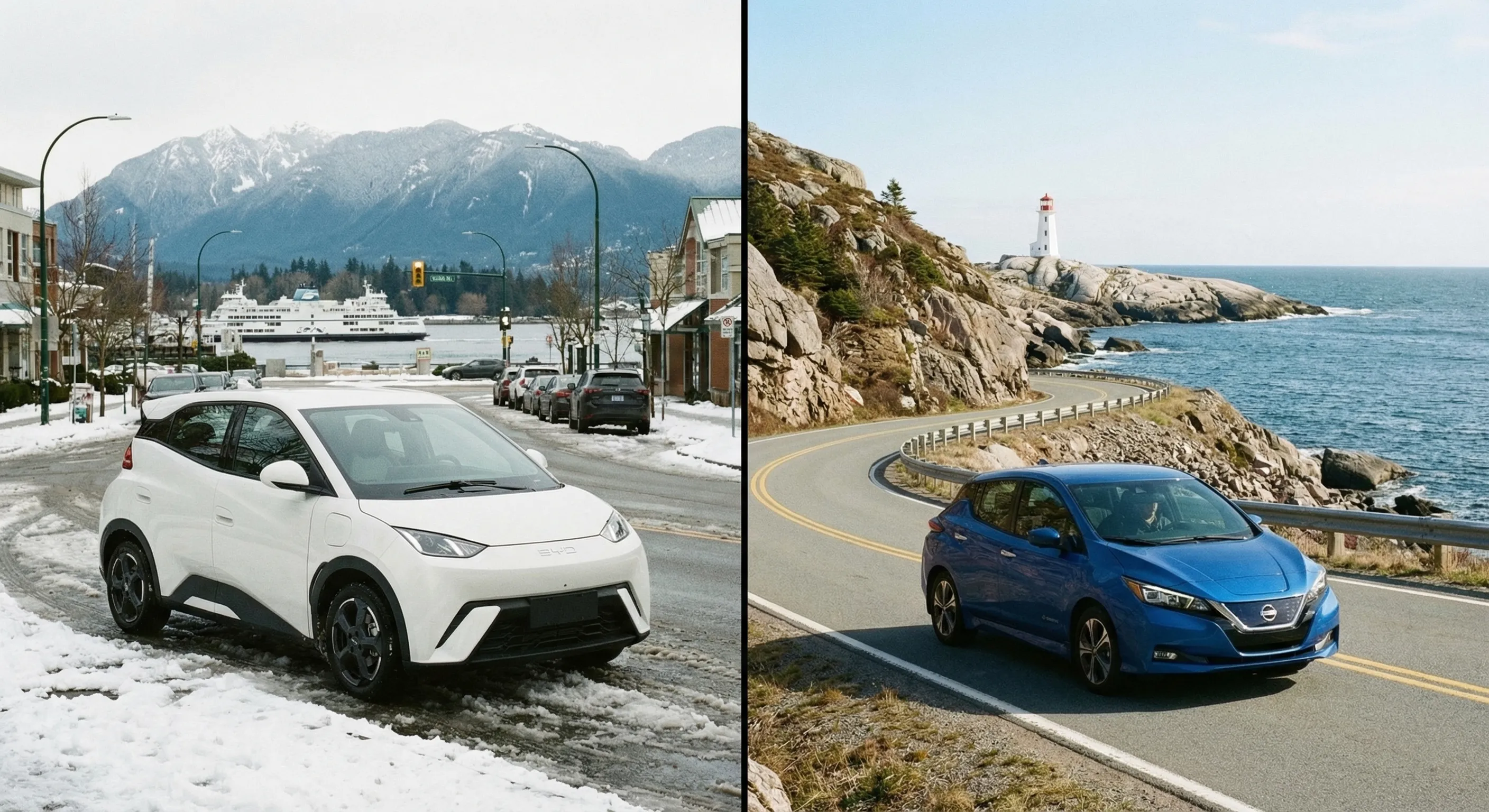
This is the most important affordable EV comparison happening in Canada right now. Both cars target the same buyer, someone who wants an electric vehicle under $35,000, doesn't want a used Leaf with questionable battery health, and isn't interested in financing a $60,000 Tesla to feel premium. These are the budget EVs that will actually move the needle on Canadian EV adoption, and neither one has proven itself on Canadian roads.
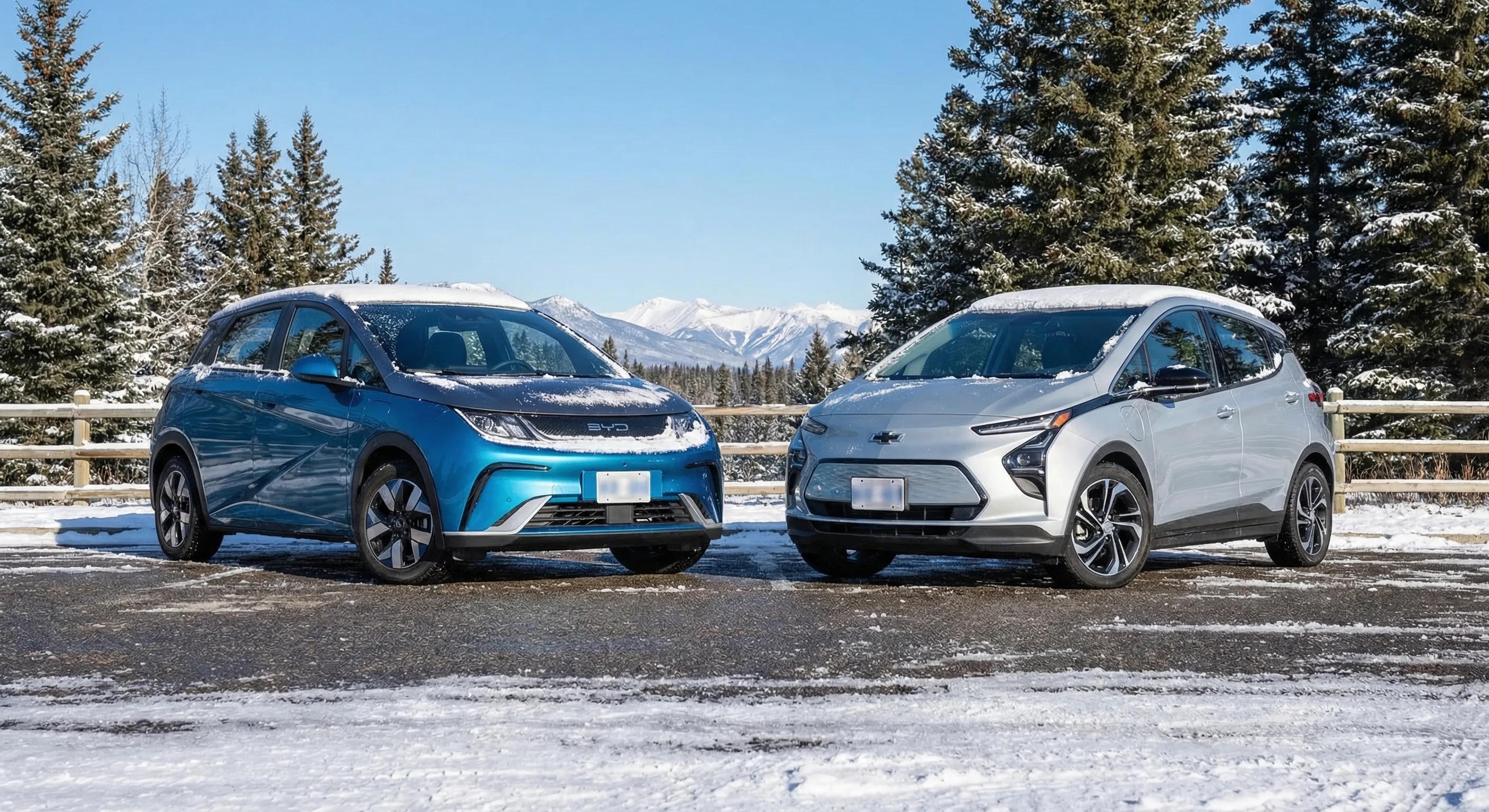
What makes this comparison tricky is that you're not just comparing two cars. You're comparing two entirely different propositions. The Dolphin is a global bestseller from the world's largest EV manufacturer, arriving in a market that has never seen a BYD in a showroom. The Bolt is a resurrection, GM killed the original, watched the affordable EV market explode without them, and scrambled to bring it back on a new platform. Both have something to prove, and both have genuine weaknesses that their marketing teams would rather you not think about.
My read: The Bolt has the stronger official Canadian fact pattern today. If you'd rather wait for the Dolphin later in 2026, you're betting on BYD's Canadian launch going smoothly, and trading away the federal rebate to do it. The rest of this article is about understanding exactly what is confirmed and what is still assumption on both sides.
PRICE
Winner: Province-dependent, Bolt on official Canadian pricing, Dolphin on modeled sticker
The Dolphin's base model is still an estimate in Canada, generally discussed in the high-$20,000s to mid-$30,000s. The Bolt is no longer just an estimate on price: Chevrolet Canada now lists a starting MSRP of C$39,999. On sticker price alone, the Dolphin still looks cheaper. But sticker isn't the full story, and in Canada's current incentive environment, it's barely half the story.
The BYD Dolphin does not qualify for the $5,000 federal EVAP rebate. Chinese-manufactured vehicles are explicitly excluded. The original 100% tariff from October 2024 has been reduced to 6.1% as of January 2026, with a 49,000-vehicle quota, but the EVAP exclusion remains. This is a political decision, not a technical one, and it directly shapes the math. The Chevy Bolt 2027, expected to be built in North America, qualifies, assuming the transaction price stays under $50,000. That $5,000 difference closes most of the gap between the two.
Run the math on a simple base-case comparison: a C$32,000 Dolphin with no federal rebate versus a C$39,999 Bolt minus a current C$5,000 EVAP brings you to roughly C$32,000 versus C$34,999 before any provincial stacking. That does not automatically make the Bolt cheaper everywhere. It means the rebate closes the gap materially, and provincial treatment becomes decisive.
The cleaner way to frame it is this:
- Ontario and other federal-only provinces: A modeled C$32,000 Dolphin still undercuts a C$39,999 Bolt even after the federal rebate.
- Quebec, BC, PEI, and Nova Scotia: Provincial stacking can erase most of the gap or swing the math toward the Bolt, depending on the live rebate rules and the final Dolphin MSRP.
- If the Dolphin launches above today's modeled low-$30K scenario: the Bolt's rebate advantage gets much stronger.
So it is no longer "the Bolt wins everywhere after incentives." The Dolphin still has the lower modeled sticker, while the Bolt has the stronger official Canadian pricing and incentive framework.
There's one more pricing angle worth considering: insurance. BYD is an unknown quantity to Canadian insurers. Without historical claims data, actuarial tables, or parts-cost baselines, expect higher premiums in year one. The Bolt, built on a familiar GM platform with established parts channels, will likely attract lower insurance quotes from day one. This gap should narrow as BYD builds a Canadian track record, but for early adopters, it's a real cost.
Financing is another consideration. GM offers captive financing through GM Financial with competitive rates and established relationships with Canadian banks. BYD's financing options in Canada are TBD, they may partner with third-party lenders or offer their own programs, but until those details are public, it's an unknown. If you're financing rather than buying outright, the Bolt's financing infrastructure is a tangible advantage.
RANGE
Winner: Bolt 2027 on confirmed range, Dolphin still easier to discuss on battery details
The headline numbers need one correction first. The Dolphin is commonly quoted at 427 km WLTP. Chevrolet Canada's published figure for the 2027 Bolt is up to 422 km estimated. That does not make these cars directly equal, because the test standards and disclosure quality are different, but it does mean earlier 440 km Bolt wording was overstated.
First, let's talk about the rating difference. The Dolphin's 427 km is a WLTP-style number, and WLTP testing is generally more optimistic than EPA-style disclosure. Chevrolet Canada lists the Bolt at up to 422 km estimated. That means you should resist false precision here. The safer takeaway is that both cars are in the same broad everyday-use bracket on published range, with the Bolt carrying the stronger official Canadian source.
Now for what actually matters to Canadian drivers: seasonal variation.
Summer range (15–25°C):
- Dolphin: Expect 380–410 km of real-world range in Canadian summer driving. City driving will push toward the higher end thanks to regenerative braking. Highway driving at 110 km/h will pull it down to 340–360 km, aerodynamic drag scales with the square of speed, and the Dolphin's hatchback shape creates more drag than a sedan.
- Bolt 2027: Expect 400–430 km in summer conditions. GM's thermal management system is sophisticated, and their experience with the original Bolt's efficiency (one of the most efficient EVs ever sold in North America) suggests strong real-world numbers.
Winter range (-10 to -25°C):
This is where the comparison gets genuinely interesting. Cold weather punishes all EV batteries, but the chemistry matters enormously.
- Dolphin (LFP): Expect 280–340 km in mild Canadian winter (-5 to -10°C) and 230–280 km in deep cold (-20 to -30°C). LFP chemistry loses more capacity at extreme cold initially, but once the battery warms up through driving, the loss stabilises. The Dolphin's heat pump (if equipped in the Canadian spec, TBD) would meaningfully improve these numbers.
- Bolt 2027: GM has published an estimated range figure, but not the chemistry, pack size, or a Canada-specific winter range estimate on the source page we are using here. So the careful answer is that winter losses are inevitable, but hard winter Bolt numbers should stay in the estimate bucket until GM or independent Canadian testing fills them in.
Highway versus city:
- City driving favours both cars equally. Regenerative braking recaptures energy at every stop, and neither car is hauling enough weight to make efficiency differences meaningful at 50 km/h.
- Highway driving (100–120 km/h) favours the Bolt. Larger battery capacity means more reserve, and GM's highway efficiency tuning on the original Bolt was class-leading. The Dolphin's 60.4 kWh battery is slightly smaller, and at sustained highway speeds, every kilowatt-hour counts.
My call: The Bolt wins on rated range and likely wins in real-world summer driving. The Dolphin's LFP chemistry makes the winter gap narrower than the summer gap, but it doesn't fully close it. For most Canadian buyers doing daily commutes of 50–100 km, both cars have more than enough range, this category only matters if you're doing regular long-distance drives or live in extreme cold without home charging. For a deeper look at what cold does to EV batteries, see our winter range testing.
CHARGING
Winner: Bolt 2027, faster DC charging is hard to argue against
Charging speed is one of the Bolt 2027's clearest advantages, and it's not close.
The Dolphin supports DC fast charging at up to 88 kW. That's... fine. It's not slow in an absolute sense, but it's slow relative to what the competition offers in 2026–2027. At 88 kW peak, a 10–80% charge takes roughly 30–35 minutes under ideal conditions. In cold weather, where the battery needs to warm up before accepting high charge rates, expect 40–50 minutes.
The Bolt 2027 supports up to 150 kW DC fast charging via its native NACS port, according to Chevrolet Canada. GM's published 10% to 80% figure is 26 minutes. That is the confirmed comparison point, and it is already strong enough without inventing extra charging-curve detail.
The numbers in context:
- Dolphin at 88 kW: ~30–35 min for 10–80% (summer), ~40–50 min (winter)
- Bolt 2027 at ~150 kW: ~20–25 min for 10–80% (summer), ~30–40 min (winter)
That 10–15 minute difference doesn't matter on your daily commute, you're charging at home overnight regardless. It matters on road trips. A Toronto-to-Ottawa drive (450 km) would require one charging stop in either car. With the Dolphin, you're spending 35–40 minutes at the charger. With the Bolt, you're spending 20–25 minutes. Not life-changing, but noticeable when you're doing it every few weeks.
Network access:
The Bolt 2027 ships with a native NACS (SAE J3400) charging port, GM's first vehicle to do so. This gives it direct access to Tesla Superchargers and the growing NACS network across Canada. For older CCS or J1772 chargers, GM offers adapters ($189 for CCS1-to-NACS DC, $67 for J1772-to-NACS AC). The Dolphin is expected to ship with CCS in Canada, giving it native access to Electrify Canada, Petro-Canada Electric Highway, FLO, and ChargePoint networks. Both cars can access both networks, the Bolt natively on NACS with CCS via adapter, the Dolphin natively on CCS with NACS access TBD.
Home charging:
Both cars accept Level 2 home charging. The important correction here is connector language: the Bolt's native port is NACS, not CCS or J1772. Older AC or DC connector compatibility is part of the adapter conversation, not the native-port conversation.
Gear worth having
As an Amazon Associate, ThinkEV earns a small commission from qualifying purchases — at no extra cost to you.

Grizzl-E Classic Level 2 EV Charger (40A)
Canadian-made and rated for minus 40C winters. 40A / 9.6 kW, NEMA 14-50, indoor/outdoor, 24-ft cable. The charger built for Canadian weather.
As an Amazon Associate, ThinkEV earns from qualifying purchases — at no extra cost to you.
If you don't have a Level 2 charger at home, a 120V outlet (Level 1) adds roughly 6–8 km of range per hour. That's enough for short daily commutes but completely inadequate for anyone driving more than 40 km per day. Budget $500–$800 for a Level 2 home charger plus installation. The Grizzl-E Level 2 is one of the best values on the market, Canadian-designed and built for our winters.
My call: The Bolt wins on charging speed, and it's a meaningful win for anyone who road-trips regularly. For daily commuters who charge at home overnight, this category is a wash. For a full breakdown of charging costs versus gas, see our total cost of ownership analysis.
DRIVING
Winner: Dolphin on fun, Bolt on practicality
Neither of these cars is a performance vehicle. Let's be clear about that. You're not cross-shopping a Model 3 Performance here. But there are real differences in how these two drive, and if you're spending $30,000+, you deserve to know what you're getting on the road.
Acceleration:
The Dolphin produces 204 hp (150 kW) from its single electric motor, driving the front wheels. BYD hasn't published official 0–100 km/h times for the Canadian spec, but global-market Dolphins with this powertrain hit 100 km/h in approximately 7.0 seconds. That's perfectly adequate for merging onto the 401 or passing on a two-lane highway. It's not exciting, but it's never going to leave you feeling unsafe.
The Bolt 2027 produces 200 hp from its single front motor and hits 0–100 km/h in about 6.5 seconds, matching the original Bolt's performance. Regardless, we're talking about a half-second difference that you'll only notice if you're actively timing yourself.
Handling:
The Dolphin is the more engaging car to drive. BYD has tuned the suspension for a European-influenced driving feel, firmer than you'd expect from a budget EV, with responsive steering and minimal body roll in corners. The Dolphin's lower centre of gravity (thanks to the battery floor) and compact dimensions make it feel nimble in city driving and surprisingly capable on winding roads.
The Bolt, based on GM's approach with the original, will likely prioritise comfort over engagement. GM tends to tune for a softer ride, lighter steering, and a more relaxed driving experience. This is neither good nor bad, it depends on what you want. If you're commuting 45 minutes on the highway every day, comfort wins. If you're working through downtown Montreal's narrow streets, nimbleness wins.
Ride comfort:
The Dolphin's firmer suspension means you'll feel more of the road, including potholes, which Canadian roads serve up generously. On smooth highways, the ride is composed and quiet. On deteriorating urban roads (so, most Canadian urban roads), it can feel busy.
The Bolt will almost certainly be the softer, more cushioned ride. GM knows its market, North American buyers overwhelmingly prefer comfort-tuned suspensions. The original Bolt's ride was unremarkable but perfectly comfortable for daily driving.
Size comparison:
These are not the same size car, and this matters more than people think.
- Dolphin: 4,290 mm long, 1,770 mm wide, 1,570 mm tall. It's a compact hatchback, think slightly smaller than a VW Golf. Wheelbase of 2,700 mm.
- Bolt 2027: Slightly larger than the original Bolt (4,166 mm long) with a crossover-adjacent profile at approximately 4,400 mm long. GM's modular platform allows for flexible packaging.
The Bolt's likely size advantage translates to more rear passenger legroom and a more commanding driving position. The Dolphin counters with better visibility from its greenhouse design and easier parking in tight spaces.
Noise:
Both cars are quiet at city speeds, that's an inherent EV advantage. At highway speeds (100+ km/h), road and wind noise become the dominant factors. The Dolphin's thinner glass and lighter construction mean it's slightly noisier at speed than what you'd expect from the Bolt, which benefits from GM's noise-vibration-harshness (NVH) engineering.
My call: The Dolphin is more fun to drive. The Bolt is more comfortable to commute in. If your driving is 80% city, the Dolphin's nimbleness is a genuine pleasure. If it's 80% highway, the Bolt's comfort and quietness make more sense. Neither car will disappoint, they're both competent, modern EVs that happen to occupy slightly different personality spaces.
DEALER NETWORK
Winner: Bolt 2027, no contest
GM has a broad national dealer footprint across Canada. That means a much better chance of familiar financing channels, nearby warranty service, and existing roadside processes. It does not guarantee perfect same-day service everywhere, but it is still a materially stronger support position than a brand in the first phase of Canadian rollout.
This isn't just about convenience, it's about cost predictability. When your 12V battery dies (and it will, eventually, EVs still use them), a GM dealer can source and install one in an afternoon. When your windshield cracks from a Highway 1 rock, a GM-certified glass shop has the part in stock. When your charging port develops an intermittent fault, a GM technician has seen the issue before and knows the fix.
BYD is building its Canadian dealer network from scratch. Early partnerships and launch planning appear to be concentrated in major markets first, while the smaller-market picture remains much less settled. In smaller cities and rural areas, that uncertainty is a real purchase consideration rather than a theoretical one.
BYD needs to:
- Negotiate and sign agreements with independent dealer groups or establish corporate-owned locations
- Train technicians on BYD-specific systems, software, and battery technology
- Establish parts warehousing and supply chain logistics within Canada
- Set up warranty claims processing infrastructure
- Build customer service and roadside assistance capability
Each of these takes 12–24 months to establish properly. BYD is well-funded and globally experienced, they've built networks in Australia, Thailand, and across Europe. But each market is different, and Canada's geography presents unique challenges. A dealer network that works in Melbourne doesn't automatically translate to one that works across a country with 9.98 million square kilometres and population centres separated by hundreds of kilometres of highway.
BYD's global scale is real, they've built dealer networks in Australia and Europe faster than critics expected. But "will expand rapidly" is not the same as "is available now." Early Dolphin adopters in Canada are, by definition, beta testers for BYD's Canadian service infrastructure. Some people are comfortable with that trade-off. Many are not, and they shouldn't feel pressured into it.
Gear worth having
As an Amazon Associate, ThinkEV earns a small commission from qualifying purchases — at no extra cost to you.
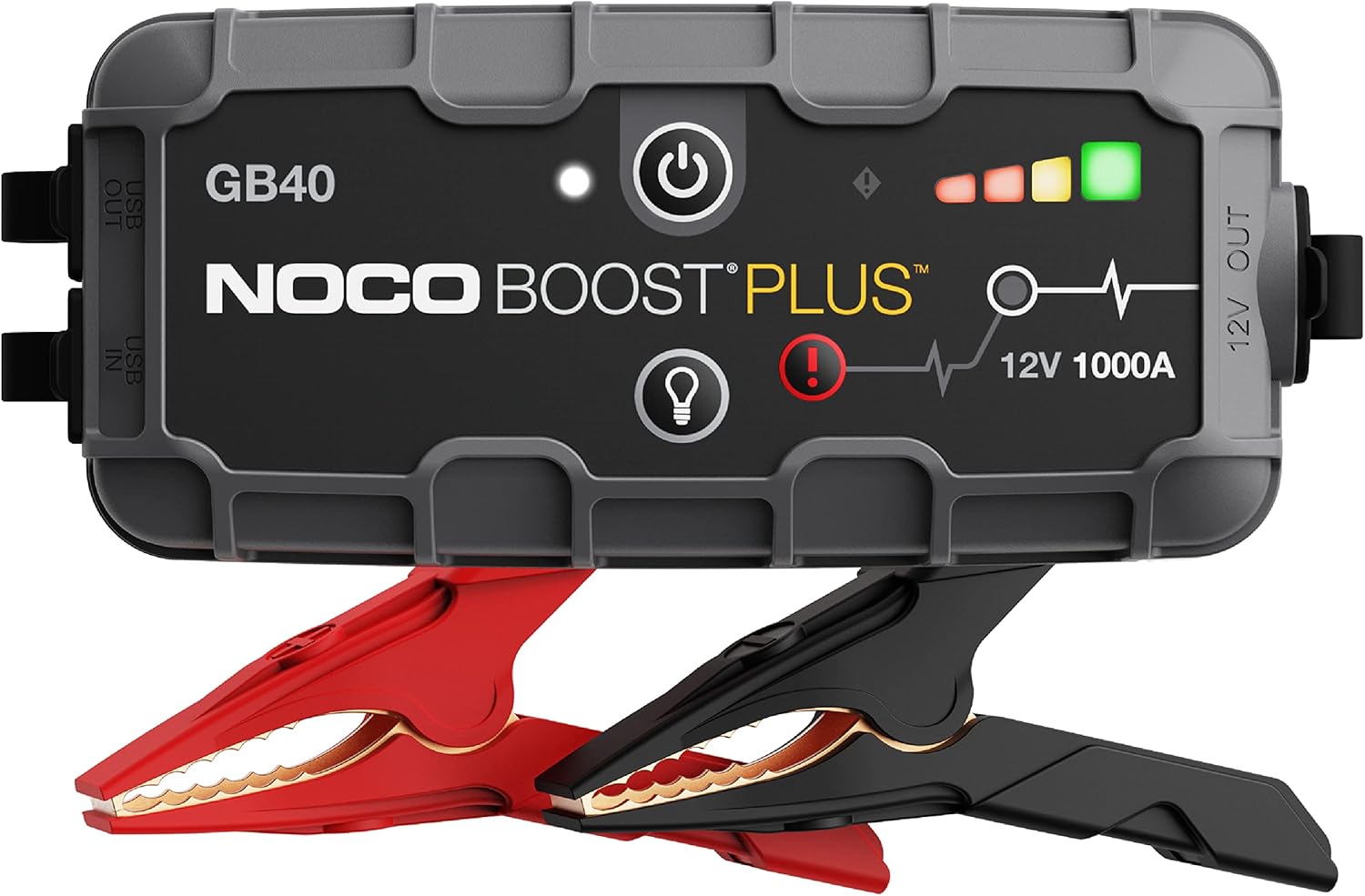
NOCO Boost Plus GB40 Jump Starter
A 1000A lithium jump starter that fits in your glovebox and works on any 12V battery. Your insurance against a dead 12V in a parking lot.
As an Amazon Associate, ThinkEV earns from qualifying purchases — at no extra cost to you.
There's a practical test I recommend: look up BYD service locations within 100 km of your home. If there isn't one, and you can't tolerate the possibility of a multi-day wait for warranty service, the Dolphin is not for you, regardless of how good the car is otherwise.
For buyers in Toronto, Vancouver, or Montreal who drive predictable urban routes and can reach a BYD dealer when needed, this is a manageable trade-off. For anyone in Sudbury, Prince George, or Moncton, stick with the Bolt. For more context on BYD's Canadian market entry strategy, we've covered the broader picture.
INTERIOR AND TECHNOLOGY
Winner: Dolphin on design flair, Bolt on software integration
The interior is where these two cars reveal their different design philosophies most clearly, and it's a category where personal preference matters as much as objective quality.
The Dolphin's interior:
BYD's interior design language is distinctive, love it or hate it, you won't mistake it for anything else. The centrepiece is a 12.8-inch rotating display that can switch between horizontal and portrait orientation. This is more than a gimmick, portrait mode is genuinely useful for navigation (more map visible ahead of you) and for reading charging station information. Horizontal mode is better for media, split-screen apps, and the reversing camera.
The dashboard has a flowing, organic design with rounded shapes and a dual-tone colour scheme. Materials are a mix of hard plastics (lower areas) and softer-touch surfaces (upper dash, door cards). For a sub-$35K car, the material quality is competitive but not exceptional. You'll find hard plastic where you don't want to, the door armrests and centre console lower sections, but the areas you touch most frequently are adequate.
The Dolphin runs BYD's proprietary infotainment system, which is comprehensive but has a learning curve. It includes navigation, vehicle settings, energy monitoring, and app connectivity. Over-the-air updates are supported. The interface is responsive but not as polished as what you'd find in a Hyundai Ioniq 5 or Tesla Model 3. Apple CarPlay and Android Auto are supported wirelessly.
The Bolt 2027's interior:
The 2027 Bolt's interior follows GM's modern EV design language (seen in the Equinox EV and Blazer EV) with a clean layout featuring an 11-inch infotainment screen and digital instrument cluster.
The Bolt's biggest technology advantage is Google Built-In. This means native Google Maps, Google Assistant, and Google Play Store access directly in the car's infotainment system, no phone connection required. Google Maps in the car is genuinely better than phone-mirrored navigation because it integrates with the vehicle's range estimation and can route through charging stations based on real-time battery state. This is a meaningful, daily-use advantage.
Apple CarPlay and Android Auto will also be supported, giving buyers the choice between the native system and their phone's ecosystem.
Cargo space:
- Dolphin: 345 litres behind the rear seats, expandable to approximately 1,310 litres with the rear seats folded. The hatchback design makes loading easier than a sedan, and the cargo floor is relatively flat when folded.
- Bolt 2027: The 2027 Bolt offers approximately 462 litres behind the rear seats and 1,614 litres with seats folded, comparable to the original. The crossover-adjacent profile maintains GM's strong packaging efficiency.
The Bolt wins on cargo space, and the gap is significant. If you regularly carry sports equipment, groceries for a family, or furniture-store purchases, the Bolt's extra space is a practical advantage. The Dolphin is fine for two people's luggage or a weekly grocery run, but it's snug for a family of four's road trip gear.
Gear worth having
As an Amazon Associate, ThinkEV earns a small commission from qualifying purchases — at no extra cost to you.

PULIDIKI Car Cleaning Gel (Detailing Putty)
Press it into vents, buttons, and seams and it lifts out dust you did not know was there. Weirdly satisfying, genuinely useful.
As an Amazon Associate, ThinkEV earns from qualifying purchases — at no extra cost to you.
Passenger space:
- Dolphin: Adequate front-seat space for occupants up to about 185 cm. Rear seats are tight for adults, comfortable for children or shorter passengers, but anyone over 175 cm will find knee room limited. The flat floor (no transmission tunnel) helps with foot space.
- Bolt 2027: The longer wheelbase should provide noticeably better rear legroom. GM's focus on the North American market, where rear-seat space is a higher priority than in Asia-Pacific markets, suggests this will be a design emphasis.
My call: If you care about interior design and want something that feels different from every other car on the road, the Dolphin delivers. If you care about software integration, cargo space, and rear-seat comfort, the Bolt is the better package. Google Built-In is a genuinely useful technology advantage that improves with every software update.
BATTERY
Winner: Dolphin on confirmed battery details, Bolt still partially unconfirmed
The Dolphin uses LFP (lithium iron phosphate) chemistry, specifically BYD's Blade Battery. LFP batteries run cooler, degrade slower, and are more stable in extreme conditions than NMC alternatives. You can charge them to 100% regularly without accelerating degradation, something NMC owners are cautioned against. For a Canadian buyer who wants to plug in, charge to full, and not think about battery management, LFP is the lower-maintenance choice.
The Blade Battery specifically deserves attention. BYD's cell-to-pack design eliminates traditional battery modules, packing more cells into the same space and improving structural rigidity. The Blade Battery passed BYD's nail penetration test, a safety benchmark that most NMC batteries fail, without thermal runaway. This doesn't mean LFP batteries are immune to fire (no battery is), but their thermal stability is genuinely superior.
The Dolphin's battery capacity is 60.4 kWh. That's a moderate-sized pack by 2026 standards, enough for the rated 427 km WLTP range but not generous enough to absorb winter losses without noticeable impact on daily usability.
This is where the article needed the hardest correction. We can talk confidently about the Dolphin's Blade Battery and BYD's LFP approach because BYD has been explicit. We cannot responsibly say the same things about the 2027 Bolt yet. Chevrolet Canada's Bolt page does not confirm LFP chemistry, CATL supply, or a specific pack size.
That means the right comparison is asymmetrical for now. BYD gives you a clearer published battery story. GM gives you the clearer Canadian pricing, range, charging, and dealer story. If battery chemistry is one of your decision-driving factors, the answer today is that the Dolphin is easier to pin down and the Bolt still needs more official disclosure.
My call: Give the Dolphin the edge for confirmed battery transparency. Do not fill the gap by pretending the Bolt's unconfirmed battery details are known.
WINTER PERFORMANCE
Winner: Too early to call on chemistry, Bolt on infrastructure confidence
This section exists because Canada is Canada. If you can't drive your EV reliably in January in Winnipeg, it doesn't matter how good the spec sheet looks. Winter performance is the single most important real-world test for any EV sold in this country, and both cars approach it differently.
LFP in Canadian cold (Dolphin):
LFP chemistry has a well-documented weakness: it performs poorly at very low temperatures until the battery warms up. Below -15°C, internal resistance increases significantly, reducing both available power and charging speed. The Dolphin addresses this with battery preconditioning, you can schedule the car to warm its battery before your morning departure while still plugged into home charging. This means the electricity comes from the grid, not your battery, preserving range.
Once the battery reaches operating temperature (which takes 10–20 minutes of driving or preconditioning), LFP performs stably and predictably. The thermal stability that makes LFP safe also means it handles repeated cold-warm cycles without the degradation that can affect NMC chemistries.
The key question for the Canadian-spec Dolphin is whether BYD includes a heat pump. Heat pumps are 2–3 times more efficient than resistive heaters for cabin heating, and they meaningfully improve winter range. BYD offers heat pumps in several global markets, but the Canadian spec hasn't been confirmed. If the Dolphin arrives without a heat pump, winter range will suffer more than the numbers above suggest, potentially losing an additional 15–25 km versus a heat-pump-equipped version.
Bolt 2027 in Canadian cold:
The careful wording matters here. We should not state that the Bolt "also uses LFP chemistry" as a settled fact unless GM confirms it. We can say the new Bolt should be evaluated on real winter range, preconditioning behaviour, and cold-weather charging once Canadian testing exists.
The original Bolt was notoriously bad in extreme cold, 30–40% range loss was common in -20°C conditions. The 2027 model should be judged as a new generation rather than treated as a simple carry-over, but Canadian winter performance still needs real owner data and independent testing.
Preconditioning:
The Bolt should be assumed to support scheduled preconditioning because that is standard behaviour for modern GM EVs. The Dolphin is expected to support app-based cabin and battery preconditioning based on other markets, but Canadian-spec app and trim details still need confirmation. This is the single most important winter EV habit regardless of badge.
Traction and stability:
Both are front-wheel-drive vehicles, which is the most common and generally acceptable configuration for Canadian winters when paired with proper winter tires. Neither car offers all-wheel drive, if you need AWD and want to stay under $40K, you're looking at different vehicles entirely.
The Dolphin's lower weight distribution (battery-heavy floor) gives it a slight stability advantage in slippery conditions. The Bolt's likely larger size and different weight balance may provide slightly more confidence in deep snow. Neither difference is significant enough to override the importance of good winter tires.
My call: In deep cold, both cars will lose range because every EV does. The difference is that BYD's battery story is clearer today, while the Bolt still needs more published hardware detail before anyone should speak with that level of winter-specific certainty.
WARRANTY AND SERVICE
Winner: Bolt 2027, GM's warranty infrastructure is mature and proven
Warranty coverage is one of the least exciting comparison categories and one of the most important. When something goes wrong, and with any new vehicle, something eventually will, warranty terms and service accessibility determine whether the experience is a minor inconvenience or a weeks-long ordeal.
BYD Dolphin warranty (expected for Canada):
BYD has not published Canadian warranty terms. In other markets, BYD typically offers:
- Vehicle warranty: 6 years / 150,000 km
- Battery warranty: 8 years / 200,000 km (covering capacity below 70%)
- Drivetrain warranty: 6 years / 150,000 km
These are competitive terms, the battery warranty in particular is strong, and the 70% capacity threshold is a meaningful guarantee. However, "competitive terms" and "convenient service" are different things. A warranty is only as good as the infrastructure behind it.
BYD's Canadian warranty service infrastructure is being built alongside its dealer network. Early adopters may face longer wait times for parts, fewer authorised service locations, and less experienced technicians. BYD has invested heavily in service training globally, but the Canadian program is new.
Chevy Bolt 2027 warranty (expected):
Based on GM's current EV warranty structure:
- Vehicle warranty: 5 years / 100,000 km (bumper-to-bumper)
- Battery warranty: 8 years / 160,000 km (covering capacity below 70%)
- Powertrain warranty: 5 years / 100,000 km
- Corrosion warranty: 6 years / 160,000 km
- Roadside assistance: 5 years / 100,000 km
GM's warranty terms are slightly shorter than BYD's on the vehicle side (5 years vs. 6), but the battery warranty gap (160,000 km vs. 200,000 km) is largely academic, very few Canadian drivers put 200,000 km on a car in 8 years.
The real advantage is execution. GM has 500+ service locations across Canada. Parts are warehoused domestically. Technicians have trained on GM electrical systems for years. Warranty claims are processed through established channels. Loaner vehicles are available at many dealers. Roadside assistance is proven and responsive.
What happens when something goes wrong:
The right way to think about this is not as a promise of exact wait times, but as a service-risk gap.
Illustrative scenario 1, Dolphin owner outside an early launch market: your 12V auxiliary battery dies in February. If BYD's nearest authorised service point is still several hours away, you may be dealing with towing, parts transit, and a multi-day wait rather than a same-day fix.
Illustrative scenario 2, Bolt owner in an established GM market: the issue is more likely to be handled through a nearby dealer with stocked parts and existing roadside processes.
That does not mean every Dolphin repair becomes an ordeal or every Bolt repair is instant. It means the service experience risk is still materially higher for a new-market brand until the Canadian footprint is real and published.
My call: If warranty and service accessibility are important to you, and they should be, the Bolt wins decisively. BYD's warranty terms are competitive on paper, but the service infrastructure gap is real and will take years to fully close.
TOTAL COST OF OWNERSHIP
Winner: Depends on your timeline and province
Total cost of ownership (TCO) is what actually matters. Sticker price, rebates, fuel savings, maintenance, insurance, and depreciation, these are the numbers that determine which car is genuinely cheaper to own.
Let me run two scenarios: a 5-year ownership in Ontario and a 5-year ownership in BC. Both assume mid-trim purchases and 20,000 km driven per year.
Scenario 1: Ontario, 5-year TCO
BYD Dolphin:
- Purchase price: modeled at ~$32,000
- Federal rebate (EVAP): $0 (ineligible)
- Provincial rebate: $0 (Ontario has none)
- Net purchase: $32,000
- Electricity cost (5 years): ~$3,600 (at $0.13/kWh, 15 kWh/100 km)
- Insurance (5 years): ~$9,000 (estimated higher due to unknown risk profile)
- Maintenance (5 years): ~$2,500 (tires, wipers, cabin filter, brake fluid)
- Estimated depreciation: ~$14,000 (uncertain, Chinese EVs have limited Canadian resale data)
- 5-year modeled TCO: ~$61,100
Chevy Bolt 2027:
- Purchase price: starting from the published C$39,999 MSRP
- Federal rebate (EVAP): -$5,000
- Provincial rebate: $0
- Net purchase: ~$34,999 at the current published starting MSRP
- Electricity cost (5 years): ~$3,900 (at $0.13/kWh, 16 kWh/100 km slightly less efficient)
- Insurance (5 years): ~$7,500 (GM's established risk profile = lower premiums)
- Maintenance (5 years): ~$2,500 (similar EV maintenance profile)
- Estimated depreciation: ~$12,000 (GM's established resale market, EVAP eligibility supports residual value)
- 5-year modeled TCO: ~$60,900
In this Ontario model, the Bolt and Dolphin land much closer than older drafts suggested.
Scenario 2: BC, 5-year TCO
BYD Dolphin:
- Purchase price: modeled at ~$32,000
- Federal rebate (EVAP): $0
- Provincial rebate (CleanBC): $0 (likely ineligible)
- Net purchase: $32,000
- Electricity cost (5 years): ~$2,900 (BC Hydro residential rates ~$0.10/kWh)
- Insurance (5 years): ~$10,500 (ICBC + unknown BYD risk factors)
- Maintenance: ~$2,500
- Estimated depreciation: ~$13,000
- 5-year modeled TCO: ~$60,900
Chevy Bolt 2027:
- Purchase price: starting from the published C$39,999 MSRP
- Federal rebate (EVAP): -$5,000
- Provincial rebate (CleanBC): -$4,000
- Net purchase: ~$30,999 if both current federal and BC incentives apply
- Electricity cost (5 years): ~$3,100
- Insurance (5 years): ~$9,000
- Maintenance: ~$2,500
- Estimated depreciation: ~$10,500
- 5-year modeled TCO: ~$56,100
Bolt wins in this BC model by roughly $4,800. The combination of EVAP + current BC incentives still creates a meaningful upfront advantage, but not the exaggerated gap that older Bolt pricing assumptions implied.
The Dolphin's TCO case:
The only scenario where the Dolphin wins on TCO is if the buyer can't access EVAP, lives in a province without provincial EV rebates, and gets competitive insurance rates. The key correction here is that we should not collapse the battery-longevity question into "both cars are LFP" unless GM confirms that. The TCO story should stay focused on incentives, pricing, insurance, service reach, and depreciation assumptions.
The depreciation wildcard:
This is the biggest unknown in both calculations. The Dolphin has no Canadian resale history. Chinese EV brands carry stigma in North American used-car markets that may or may not persist. The Bolt has the advantage of GM's brand recognition and established resale channels, but the original Bolt's resale value was hurt by the battery recall and production cancellation. The 2027 Bolt will need to establish its own resale track record.
For a comprehensive look at EV versus gas costs, see our total cost of ownership analysis.
My call: The Bolt still has the stronger TCO case in provinces where current rebates apply, but the reason is incentives and service confidence, not a made-up certainty about matching battery chemistry.
THE VERDICT
Bolt for most buyers. Dolphin for those who want to wait for BYD.
After going through every category that matters, price, range, charging, driving, dealer network, interior, battery, winter performance, warranty, and total cost, the picture is clear but nuanced. Neither car dominates across the board, and your best choice depends on your specific situation.
Where the Dolphin wins:
- Sticker price (before rebates)
- Driving engagement (more fun on the road)
- Interior design (the rotating screen is genuinely clever)
- BYD's Blade Battery track record (proven in millions of vehicles globally)
Where the Bolt wins:
- Availability (official Chevrolet Canada dealer window is Q1 2026)
- After-rebate price (EVAP eligibility is a $5,000+ advantage)
- Dealer network (500+ locations vs. a handful)
- Charging speed (150 kW vs. 88 kW)
- Native NACS port (direct Tesla Supercharger access)
- Warranty service infrastructure (proven, accessible, responsive)
- Cargo and passenger space (meaningfully larger)
- Technology integration (Google Built-In is excellent)
- Total cost of ownership over 5 years
- Range (slight advantage, larger in real-world conditions)
Where they tie:
- Winter uncertainty. Both will lose range in deep cold, and both still need real Canadian owner data rather than speculative winter-confidence claims.
The Bolt has the stronger official Canadian launch facts today: expected EVAP access under current rules, a much larger service footprint, native NACS, and a published Chevrolet Canada spec page. It's the more complete Canadian-market package today, even though parts of its battery story are still unconfirmed.
The Dolphin costs less on sticker and is a more engaging car to drive. It's a legitimate vehicle from the world's largest EV manufacturer. The trade-offs are real: no EVAP rebate, no published national service map yet, it's not available yet, and there is still uncertainty around being an early customer in a new market.
Specific recommendations:
- Buy the Bolt now if: You want the stronger official Canadian fact pattern, you want the current EVAP path, dealer access matters, or you would rather buy from GM's existing network than wait on a BYD rollout.
- Wait for Dolphin if: You expect BYD's launch markets to line up with where you live, the EVAP rebate isn't central to your math, you prefer a more engaging driving experience, and you're comfortable being an early adopter of BYD's Canadian infrastructure.
- Wait for both if: You want to see real Canadian owner data before committing. Bolt winter data will start appearing by early 2027. Dolphin Canadian reviews won't exist until late 2026 at the earliest.
For a broader view of what's coming to the Canadian EV market, check out our coverage of Chinese EVs entering Canada and the BYD Dolphin Canada review for more detail on the Dolphin specifically.

Gear worth having
As an Amazon Associate, ThinkEV earns a small commission from qualifying purchases — at no extra cost to you.

WixGear Magnetic Air Vent Phone Mount (2-Pack)
A magnet strong enough that your phone never flinches over potholes or rail crossings. Two in the box, one for each car.
As an Amazon Associate, ThinkEV earns from qualifying purchases — at no extra cost to you.
Related Reading
- BYD Dolphin Canada Review 2026, Everything we know about BYD's Canadian launch and what to expect from the Dolphin.
- 2027 Chevy Bolt EV: What Canadian Buyers Need to Know, The Bolt's return and what the Ultium platform means for affordability.
- Best EVs Under $50,000 in Canada, Budget-friendly EVs compared head to head.
- EV vs Gas: Total Cost of Ownership in Canada, The numbers that settle the debate once and for all.
- Chinese EVs Entering Canada in 2026, The tariff situation, the quota, and what it means for BYD buyers.
- EV Winter Range Test: Canada 2026, Real data on how EVs perform in Canadian cold.
Gear worth having
As an Amazon Associate, ThinkEV earns a small commission from qualifying purchases — at no extra cost to you.

Car Cup Holder Coasters (4-Pack)
Drop-in coasters that catch spills and crumbs so your cup holders stay clean. Rinse and reuse forever.
As an Amazon Associate, ThinkEV earns from qualifying purchases — at no extra cost to you.

Founder & Chief Editor
Vlad Pereira is the founder and chief editor of ThinkEV.ca, the Canadian electric-vehicle publication he writes and edits from Courtenay, British Columbia. He covers EV pricing, federal and provincial rebates, charging costs, and the Chinese manufacturers now entering Canada, from the buyer's side rather than the press-fleet side. ThinkEV is a venture of Vlad Pereira Online; his writing on health, income and the long game lives at vladpereira.com.
Frequently asked questions
What's the main difference in price between the Dolphin and Bolt 2027?
How does the dealer network affect the choice between the two?
Are the batteries in the Dolphin and Bolt 2027 different?
Which car charges faster on DC fast chargers?
How do these cars perform in Canadian winter conditions?
Does the BYD Dolphin qualify for Canada's $5,000 EVAP rebate?
Which car has better cargo and passenger space?
What is the total cost of ownership difference over 5 years?
Should I wait for real Canadian owner reviews before buying either car?
More EV & road-trip finds
Affordable upgrades worth a look — tap any to check the price on Amazon.
 ★ 392
★ 392Large Cup Holder Adapter (32-40oz)
View on Amazon ★ 8,681
Chemical Guys Complete Car Wash Kit
View on Amazon ★ 55
★ 55LED Car Door Logo Projector Light
View on Amazon ★ 546
★ 546Funny Headrest Face Covers (2-Pack)
View on Amazon ★ 865
★ 865Collapsible Trunk Organizer
View on Amazon ★ 721
★ 72145W USB-C Fast Car Charger
View on Amazon ★ 119
★ 119Foldable Waterproof Trunk Organizer
View on Amazon ★ 17,839
Qifutan Vent Phone Mount (Military-Grade Clip)
View on AmazonRead, Plan, Then Stay Current
Explore our expert articles to understand incentives and ownership costs, use the map to pressure-test charging reality, then subscribe so new EV coverage comes straight to you.
Continue Reading
Rivian R1T vs F-150 Lightning: Canada 2026 Test
EV vs Gas: 5-Year Cost of Ownership in Canada
BMW i4 vs Tesla Model 3: Is the $11K Premium Worth It?
BYD Atto 3 vs Hyundai Kona EV: The $35K Comparison
BYD Seagull vs Nissan Leaf: Canada's Cheapest EVs