The charge-limit advice circulating on owner forums is not wrong because the math is wrong. It is wrong because the regulatory and warranty architecture beneath it treats two fundamentally different battery chemistries as a single asset class, and the owner is left to reverse-engineer the difference from a manual most never open.
Transport Canada's motor vehicle safety schedules and the EU's Battery Regulation both anchor degradation warranties to cycle-count and capacity-retention floors. Neither names lithium iron phosphate or nickel-manganese-cobalt by name. The result is a regulatory regime that demands the same outcome from two chemistries that respond differently to the same charging behaviour. NMC packs degrade meaningfully at sustained high state of charge. LFP packs do not. The warranty floor is identical. The owner protocol should not be.
That mismatch is the story. It is also the lever, because the gap between what charge limits actually accomplish and what regulators require automakers to disclose is wide enough to land a policy reform inside. Most Canadian buyers have no efficient way to know which chemistry sits in the vehicle they are about to finance, which means they cannot set a charge limit that reflects the physics of their own battery. The default the dealer hands them is set to satisfy warranty math, not to optimise pack longevity. Those are not the same objective.
What follows is the policy and regulatory landscape behind the charge-limit question, what mandates say, what chemistry actually requires, what tariff policy quietly determines about which chemistry Canadians end up driving, and what disclosure reform would have to look like to close the gap.
Key takeaways
- Transport Canada's degradation warranty floor is chemistry-agnostic, meaning NMC charging defaults govern LFP packs that don't need them.
- Tesla LFP owner manuals explicitly recommend 100% daily charging, the opposite of what most EV forums advise.
- Canada has no federal battery degradation floor; EVAP eligibility defers entirely to manufacturer warranty minimums.
- The EU Battery Passport, phased in from 2026, mandates chemistry disclosure Canada has no equivalent legislation to match.
- Automakers default conservatively because excess-degradation warranty claims cost them money; unrealised LFP range costs only the owner.
How Warranty Law Encodes Chemistry Without Naming It
The EU Battery Regulation (Regulation 2023/1542) sets the most explicit numerical floor in any major jurisdiction: EV traction batteries must retain at least 80% of rated capacity after a defined cycle threshold, with enforcement phased in from 2024. The Canadian framework is less prescriptive, EVAP eligibility links indirectly to manufacturer warranty minimums rather than imposing a federal cycle-count floor, and Transport Canada's Motor Vehicle Safety Act schedules are silent on chemistry-specific performance.
What both regimes share is a chemistry-agnostic posture. The warranty obligation is the same whether the pack is NMC, NCA, or LFP. The automaker meets the floor by setting a default charge limit conservative enough to satisfy whichever chemistry is most stress-sensitive, which in practice means NMC behaviour drives the default for the entire lineup, even when LFP packs would tolerate dramatically less conservatism.
This is the quiet asymmetry. Many NMC-equipped EVs default to an 80% daily charge limit and reserve 100% for trips, and with those best practices real-world NMC packs can still easily cover 150,000 to 250,000 miles before noticeable range loss becomes an ownership issue. The 80% default works, for NMC. Applied to LFP, the same default leaves measurable capacity on the table and, more importantly, prevents the periodic 100% calibration the battery management system actually needs.
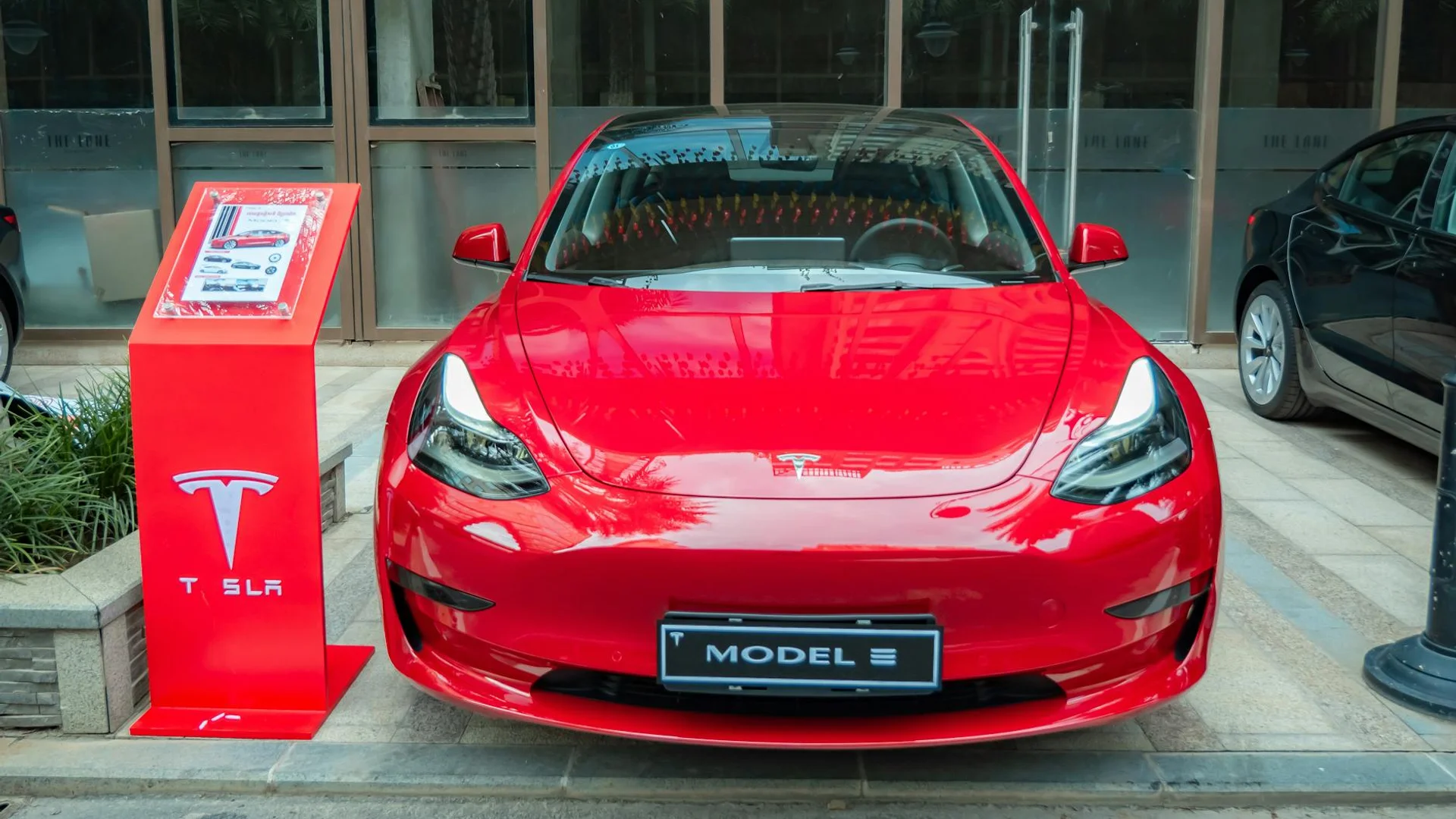
LFP's chemical stability means it tolerates living at 100% state of charge without the same stress that kills NMC cells, and Tesla's owner manual for LFP-equipped vehicles explicitly recommends setting the charge limit to 100% for daily use and charging to 100% at least once per week for BMS calibration. Two charging protocols, two chemistries, one warranty floor, and no regulatory requirement that the difference be communicated at point of sale.
The deeper problem is incentive alignment. An automaker writing a warranty has every reason to set conservative defaults; the cost of an excess-degradation claim is borne by the OEM, while the cost of unrealised LFP range is borne by the owner. Without a disclosure mandate, the conservative-by-default posture is rational corporate behaviour and irrational consumer policy.
The case against treating this as a regulatory problem runs as follows: the manuals exist, the information is technically available, and any diligent buyer can find the chemistry of their pack with thirty minutes of research. That argument concedes the wrong premise. Consumer protection law in every other durable-goods category, appliance efficiency labels, vehicle fuel economy ratings, food nutrition disclosure, assumes the opposite, that the seller carries the information burden because the asymmetry between seller and buyer is too steep to leave to buyer diligence. Treating EV battery chemistry as an exception requires an argument nobody has made on the record. The default posture is regulatory inertia, not considered policy.
The Regulatory Gap: What Mandates Say vs. What Chemistry Requires
The EU's 80% retention floor at the regulated cycle threshold takes effect on a phased schedule from 2024. The United States operates a parallel but weaker regime: California's zero-emission warranty rules require 100,000 miles or 10 years of pack coverage, with capacity-retention language that varies by manufacturer. Canada has no equivalent federal degradation floor, the EVAP incentive points to manufacturer warranty minimums but does not impose its own.
None of these frameworks require chemistry disclosure on the vehicle label, the window sticker, the OEM specifications page, or the EVAP eligibility filing. The owner who wants to know whether the pack in their driveway is NMC or LFP has to dig through the manual, cross-reference the trim level, or, for some brands, rely on third-party teardown analysis.
Tesla is the most-cited example of the disclosure gap. The Standard Range trims in several Tesla lines ship with LFP, the longer-range trims with NMC or NCA, and Tesla does not consistently publish which chemistry corresponds to which trim on its retail pages. Owner forums fill the vacuum with reverse-engineered tables and warranty-call transcripts. That is not a sustainable disclosure regime. The frustration is visible in the community: one Reddit commenter on the chemistry-chart thread asked plainly whether brands like Tesla even tell buyers what kind of battery the car has, noting that capacity figures aren't even listed on the website and arguing both should be mandatory. That is a disclosure complaint, not a charging complaint, and it is the complaint regulators should be reading.
Other automakers are more forthcoming, but the pattern is voluntary rather than mandated. In the Volvo EX30 case, determining the battery type is easy, if the car is Standard Range, it is on LFP; if it is an Extended Range trim, it is using NMC. BYD only uses LFP across its lineup in Europe currently, specifically its Blade Battery. If a brand isn't listed in published guides, the owner's manual and specification pages are the fallback. "Check the manual" is a workable instruction for diligent buyers. It is not a regulatory framework.
The EU Battery Passport, scheduled for phased implementation from 2026, will require chemistry, cycle count, state-of-health history, and material composition disclosure for batteries above the regulated threshold. That is the template, a machine-readable digital record accompanying every pack, accessible to owners, regulators, repair networks, and second-life recyclers. Neither Canada nor the United States has announced an equivalent framework. The transatlantic disclosure asymmetry will be measured in years.
For Canadian buyers in 2026, the practical implication is this: the chemistry information you need to set a correct charge limit exists, but no regulator requires the seller to give it to you in any standardised form. The burden is on the buyer to ask, and on the brand to answer. Most do not, and most are not.
Gear worth having
As an Amazon Associate, ThinkEV earns a small commission from qualifying purchases — at no extra cost to you.

Lectron Level 2 J1772 Charger (40A, WiFi)
Smart WiFi charger with real-time energy monitoring. 40A / 9.6 kW, J1772 with a NEMA 14-50 plug, schedule charging right from your phone.
As an Amazon Associate, ThinkEV earns from qualifying purchases — at no extra cost to you.
Multi-Jurisdiction Charge-Limit Guidance: What Governments and OEMs Actually Publish
The contrast across jurisdictions and across manufacturers is sharper than the warranty regime would suggest.
Tesla's owner manuals for LFP-equipped trims explicitly recommend a 100% daily limit, with periodic full charges for BMS calibration. Tesla's manuals for NMC and NCA trims recommend daily limits between 80% and 90%, with 100% reserved for trips. The chemistry difference dictates the protocol. The owner cannot follow the right protocol without first knowing which chemistry the car contains, a fact Tesla's retail pages do not consistently surface.
LFP batteries, used in Tesla Standard Range models and all BYD vehicles, have a more stable chemistry that tolerates regular 100% charging and handles temperature extremes better than NMC. LFP owners don't need to limit daily charging to 80%, in fact, Tesla specifically recommends charging LFP vehicles to 100% regularly to calibrate the BMS. The recommendation is explicit. The chemistry assignment by trim is not.
BYD's European lineup is the cleanest case. The Atto 3, Dolphin, and Seal ship with LFP across all trims, and BYD's regional guidance defaults to a 100% daily charge limit. The owner who buys a BYD in Munich, Madrid, or Manchester encounters a charging protocol that matches the chemistry without having to investigate the chemistry first.
The Volvo EX30 illustrates the within-model split: the same nameplate, two chemistries, two correct charge limits. Standard Range owners should default to 100%. Extended Range owners should default to 80%. The trim badge on the tailgate carries information the dealer's delivery checklist may not. Compare this to the BYD pattern, where the entire European lineup runs the same chemistry and the same default applies across every trim, and the policy implication is direct: model-level chemistry homogeneity makes the disclosure problem trivial, while within-model splits make it acute. Volvo, Tesla, and increasingly the German luxury brands sit on the acute side. The regulator who writes a disclosure rule has to write it for the Volvo case, not the BYD case.
Canadian federal guidance does not address chemistry-specific charging at all. Natural Resources Canada's EV consumer pages cover incentive eligibility, charging-network access, and general best practices, but stop short of telling LFP owners they can safely charge to 100% daily or NMC owners that they should not. The vacuum is filled by OEM manuals, retailer briefings of variable quality, and owner-community wisdom, which means the answer the buyer receives depends largely on the diligence of the salesperson and the existence of an active local owner forum.
For Canadians weighing their first EV purchase, the practical baseline is the actually useful guide to charging in Canada, but even that consumer-facing material cannot substitute for chemistry-specific guidance the federal regulator has not produced.
Degradation Data Across Chemistry and Jurisdiction
The degradation data, where it has been independently collected, is consistent across multiple analyst datasets and converges on a clear pattern.
NMC batteries typically deliver 1,000 to 2,000 full charge cycles before reaching 80% state of health, translating to 150,000 to 300,000 miles of driving depending on battery size and usage patterns. While substantial, this represents 50-60% of LFP cycle life. However, NMC degradation occurs primarily from high state-of-charge exposure rather than cycling itself. Conservative charging practices limiting daily maximum to 80% dramatically extend NMC longevity, potentially achieving 2,000 to 2,500 effective cycles.
That last point is the policy-relevant finding. NMC degradation is dominated by calendar aging at high SoC, the dwell time at 90%+ matters more than the raw cycle count. A daily 100% NMC charger who drives 30 km a day accumulates damage faster than a daily 80% NMC charger who drives 100 km a day. The cycle-count warranty floor does not capture this dynamic. A regulator who wanted to align the warranty with the chemistry would have to specify dwell-time conditions, not just cycle thresholds.
LFP runs on a different curve entirely. LFP batteries effectively outlast the vehicles they power, with pack replacement rarely necessary during typical 10-15 year ownership periods even with high annual mileage. The cycle-life advantage is roughly 2× NMC at the chemistry level, and the high-SoC stress sensitivity that drives NMC calendar aging is largely absent. The 80% daily limit that protects NMC is unnecessary for LFP, and the periodic 100% charge that recalibrates an LFP BMS is genuinely required.
DC fast-charging impact is the other data point worth surfacing because the assumption that DCFC destroys batteries is more cultural than empirical. A 22,700-vehicle dataset cited in industry analysis indicates moderate DCFC use adds only roughly 0.1% extra annual capacity loss, well within the noise of charge-limit and ambient-temperature effects. Charge behaviour at the wall, what limit, what dwell time, what ambient temperature, moves the needle more than DCFC frequency for typical use patterns.
The counter-position deserves a hearing: a vocal segment of the owner community argues the entire chemistry-protocol debate is over-engineered, that owners who simply charge to their daily need and ignore the chart end up with healthy state-of-health figures at resale. The top-voted comment on the same Reddit thread that prompted this analysis put it bluntly, charge based on travel needs, never had an issue, cars have good SoH when sold on. That experience is real, and it points at a genuine truth: the difference between optimal and adequate charging discipline is smaller than the difference between adequate and abusive. But "adequate" is a function of which chemistry you have, and the owner who unknowingly applies LFP-adequate behaviour to an NMC pack, daily 100% charges, multi-hour dwells at full, is in the abusive zone whether they realise it or not. The casual-charging defence works for LFP owners. It quietly fails for NMC owners.
Gear worth having
As an Amazon Associate, ThinkEV earns a small commission from qualifying purchases — at no extra cost to you.

WeatherTech FloorLiner for Tesla Model 3
Deep-channel liners that trap every drop of slush and salt. The difference between a ruined interior and a showroom-fresh cabin after a Canadian winter.
As an Amazon Associate, ThinkEV earns from qualifying purchases — at no extra cost to you.
The chemistry inheritance from the warranty framework matters here too. From a chemistry standpoint, LFP is inherently more tolerant of abuse and heat. A regulator working from cycle-count data alone has no efficient way to encode that tolerance into the warranty floor, which is why the EU Battery Passport's move toward state-of-health history disclosure, rather than just point-in-time capacity retention, is the more durable architecture.
For owners optimising their own pack, the protocol-by-chemistry summary is this:
- LFP: charge to 100% daily; perform a full 100% charge weekly for BMS calibration; DCFC is fine in moderation; cold weather sensitivity is real but recoverable.
- NMC / NCA: cap daily charging at 80–90%; reserve 100% for trips and depart shortly after reaching full; minimise dwell time at high SoC, especially in warm ambient conditions; DCFC is fine in moderation.
The information density required to follow this protocol correctly is low. The disclosure mechanism that would get it to the owner does not exist in Canada.
Gear worth having
As an Amazon Associate, ThinkEV earns a small commission from qualifying purchases — at no extra cost to you.

Grizzl-E Classic Level 2 EV Charger (40A)
Canadian-made and rated for minus 40C winters. 40A / 9.6 kW, NEMA 14-50, indoor/outdoor, 24-ft cable. The charger built for Canadian weather.
As an Amazon Associate, ThinkEV earns from qualifying purchases — at no extra cost to you.
Why Disclosure Reform Is the Policy Lever That Actually Moves Behaviour
The disclosure gap is not a market failure that fixes itself. Automakers have no commercial incentive to publish chemistry-specific charging protocols that would invite warranty-edge debates, and dealers have no training infrastructure to communicate chemistry-protocol pairing reliably. The intervention has to come from the regulatory layer.
The EU Battery Passport is the operational template. The phased rollout from 2026 will mandate chemistry, cycle count, capacity history, and material composition disclosure for EV-scale battery packs, structured as a machine-readable digital record bound to the vehicle identification number. Owners get access. Regulators get visibility. Second-life and recycling networks get the data they need to value used packs accurately. The Passport is not a charge-limit mandate, it is a disclosure framework, which is the more durable lever because it lets owners, third-party analysts, and competitive automakers act on the information.
The US has no federal chemistry-label mandate. California's Advanced Clean Cars II framework, the most prescriptive zero-emission rule in North America, is silent on pack chemistry disclosure. Federal NHTSA labelling requirements do not address battery chemistry. The vacuum is consistent across state and federal tiers.
Canada is in the same posture. The EVAP incentive program does not require chemistry disclosure for eligibility, and the Motor Vehicle Safety Act schedules do not address it. Provincial programs, Quebec's Roulez vert, British Columbia's CleanBC Go Electric, Ontario's now-defunct rebate framework, focus on price ceilings and range thresholds, not pack-level disclosure. The chemistry the buyer ends up with is whatever the OEM chose to install, communicated through whatever channel the OEM chose to use.
The asymmetry is widening. EU buyers in 2027 will purchase EVs accompanied by Battery Passport data. Canadian buyers in 2027, absent regulatory action, will continue reverse-engineering chemistry from trim badges and owner-forum tables. That is not a sustainable disclosure regime for a category of vehicle the federal government is actively incentivising consumers to buy.
The reform path is straightforward in structure and politically untested in execution. NRCan EV consumer guidance could be amended within a fiscal year to distinguish NMC and LFP charging protocols and require OEMs participating in EVAP to publish chemistry-by-trim on a public-facing page. Transport Canada could move on a parallel track to require chemistry disclosure on the EnerGuide label for EVs. Neither move requires new primary legislation. Both move the disclosure baseline in line with the EU framework without importing the full Battery Passport apparatus.
Here is the forecast worth holding regulators to. If NRCan publishes chemistry-specific charging guidance and EVAP filings begin requiring chemistry-by-trim disclosure before the end of fiscal 2026–27, the disclosure gap with the EU narrows to a manageable lag rather than a structural divergence. If neither move happens within that window, the gap compounds, because the EU Battery Passport rollout generates a second-life resale infrastructure for used packs that Canadian recyclers will not be able to participate in without equivalent data. The bet here is the simpler one: NRCan moves first because consumer guidance is the cheapest lever, Transport Canada follows on labelling within the subsequent regulatory cycle, and full Passport-equivalent rulemaking lands in the 2028–29 window. What would change that view is a substantive OEM-coalition objection in the EVAP consultation record. So far, none has been filed.
The Canadian buyer interested in the longer-term ownership math should also look at the real costs of home Level 2 charger installation and the load-management options that let most homes skip the $3,000 panel upgrade, because charge-limit discipline is only one part of the total-cost equation, and the infrastructure decision is the one most owners get wrong before they ever set a charge limit.
Tariffs, Market Composition, and the Chemistry Mix Owners Actually Face
Trade policy is the lever Canadian regulators rarely connect to battery-chemistry policy, but the link is direct. The mix of chemistries available to Canadian buyers is shaped less by consumer preference than by which manufacturers can sell here at competitive prices.
Canada's 100% retaliatory tariff on Chinese-made EVs, imposed in October 2024, effectively blocked the BYD lineup from the Canadian market. BYD's European success runs on LFP exclusively, the Blade Battery sits in every Atto 3, Dolphin, and Seal sold in the EU. The Canadian tariff regime kept that LFP-dominant lineup out of Canadian showrooms for roughly fifteen months.
The January 16, 2026 tariff reduction to 6.1% within a 49,000-unit annual quota changes the formal calculus without immediately changing the market reality. The quota is small relative to total Canadian EV demand, BYD has not announced Canadian retail operations within the quota window, and Chinese-built EVs remain excluded from EVAP rebate eligibility under separate criteria. The practical effect for 2026 buyers is that the LFP-dominant Chinese lineup is not yet a meaningful share of Canadian new-EV inventory.
The chemistry composition Canadian buyers encounter is therefore skewed toward NMC and NCA, the chemistries dominant in the non-Chinese OEM portfolios that supply the Canadian market. Tesla's Standard Range trims are the most accessible LFP option; Ford, GM, Hyundai, Kia, Volkswagen, Volvo, and the German luxury brands lean NMC and NCA across the bulk of their lineups, with LFP trims appearing selectively. The 80%-daily-limit default is, for the average Canadian EV buyer in 2026, the correct default, not because LFP charging guidance is wrong, but because the market composition makes NMC the more likely chemistry.
The EU operates a different equilibrium. Lower tariff barriers on Chinese-built EVs allowed BYD and SAIC to compete directly with European OEMs from 2023 onward, and LFP share of new EV registrations climbed accordingly. EU buyers are more likely to encounter LFP at point of sale, which is part of why EU regulators moving first on chemistry disclosure makes structural sense, the chemistry diversity in the market is higher, and the cost of mis-set charge limits is borne by a larger share of buyers.
Tariff policy in Canada is, indirectly, charging-protocol policy. Restricting the chemistry mix in the market restricts the chemistry exposure of the buyer base, which reduces the regulatory urgency around chemistry disclosure, which in turn delays the disclosure reform that would protect the LFP buyers who do exist. The feedback loop is not deliberate. It is structural, and it disadvantages the most engaged early-adopter LFP owners, who are the buyers most likely to want the chemistry-correct protocol in the first place.
The forecast worth tracking: if the 49,000-unit BYD quota fills within the first calendar year, which is plausible given European demand patterns, the LFP share of new Canadian EV registrations could double by 2027, and the political case for chemistry disclosure reform compounds with the buyer base. If the quota under-fills because BYD prioritises European allocation or the EVAP exclusion makes Canadian pricing uncompetitive, the LFP share stalls and the disclosure-reform argument stays where it is now: technically correct, politically unurgent. The signal to watch is BYD's first quarterly Canadian registration number, whenever the company chooses to publish one.
For broader context on how Canadian buyers are navigating the available NMC-skewed lineup, the comparative analyses of vehicles like the Chevy Equinox EV against the Tesla Model Y and the Kia EV3 in the Canadian market cover the chemistry-by-trim picture for the brands actually on Canadian dealer lots in 2026.
Gear worth having
As an Amazon Associate, ThinkEV earns a small commission from qualifying purchases — at no extra cost to you.

ChargePoint Home Flex Level 2 Charger (50A)
Premium 50A / 12 kW charger with the best app ecosystem. Hardwired or NEMA 14-50, with real-time energy tracking and smart scheduling.
As an Amazon Associate, ThinkEV earns from qualifying purchases — at no extra cost to you.
What Regulators Should Require And What Owners Can Do Now
Short term, the owner-level action is unchanged regardless of which chemistry is in the driveway: open the manual, find the chemistry section, set the daily charge limit to match the OEM's chemistry-specific recommendation, and ignore generic forum advice that treats all lithium chemistries as a single category. If the manual is silent on chemistry, which it sometimes is, the trim level is usually a reliable proxy, and the OEM customer line should be able to confirm definitively.
Medium term, the EU Battery Passport is the disclosure architecture worth replicating. A Canadian equivalent does not require new legislation. NRCan can update EV consumer guidance to distinguish NMC and LFP charging protocols within a fiscal year, EVAP eligibility criteria can be amended to require chemistry disclosure as a condition of incentive payment, and Transport Canada can move chemistry disclosure onto the EnerGuide label through existing rulemaking authority. None of these moves are politically expensive. All of them close a disclosure gap that disadvantages the buyer the incentive program was designed to support.
Bottom line: the charge-limit question is a chemistry question, the chemistry question is a disclosure question, and the disclosure question is a policy question Canadian regulators have not yet engaged. The EU has the template. The data supports the reform. The cost of inaction is borne by the LFP owners running NMC protocols and the NMC owners running LFP protocols, both groups degrading their packs in ways the warranty floor will not catch and the dealer will not flag. The lever exists. Pulling it is a 2026 file, not a 2030 one.
Gear worth having
As an Amazon Associate, ThinkEV earns a small commission from qualifying purchases — at no extra cost to you.

Magnetic EV Charger Plug Cover
A magnetic cap that keeps rain, road salt, and grit out of your home charger handle between sessions.
As an Amazon Associate, ThinkEV earns from qualifying purchases — at no extra cost to you.

Founder & Chief Editor
Vlad Pereira is the founder and chief editor of ThinkEV.ca, the Canadian electric-vehicle publication he writes and edits from Courtenay, British Columbia. He covers EV pricing, federal and provincial rebates, charging costs, and the Chinese manufacturers now entering Canada, from the buyer's side rather than the press-fleet side. ThinkEV is a venture of Vlad Pereira Online; his writing on health, income and the long game lives at vladpereira.com.
Frequently asked questions
Does my car's manual actually tell me which chemistry I have?
Will the EU Battery Passport rules ever apply in Canada?
If I've been limiting my LFP to 80%, have I actually damaged it?
Why don't automakers just publish chemistry on the window sticker?
Does the 100% tariff removal change which battery chemistry Canadians actually buy?
More EV & road-trip finds
Affordable upgrades worth a look — tap any to check the price on Amazon.
 ★ 268
★ 268Anti-Slip Leather Steering Wheel Cover
View on Amazon ★ 8,681
Chemical Guys Complete Car Wash Kit
View on Amazon ★ 419
★ 419RGB Car Interior LED Strip Light
View on Amazon ★ 4,055
6-Speed Manual Shift Knob Display
View on Amazon ★ 865
★ 865Collapsible Trunk Organizer
View on Amazon ★ 17,242
LISEN Mini USB-C Car Charger (54W)
View on Amazon ★ 61
★ 61Toddler Car Seat Snack and Cup Tray
View on Amazon ★ 392
★ 392Large Cup Holder Adapter (32-40oz)
View on AmazonRead, Plan, Then Stay Current
Explore our expert articles to understand incentives and ownership costs, use the map to pressure-test charging reality, then subscribe so new EV coverage comes straight to you.
Continue Reading
EV Battery Degradation: What's Normal and How to Slow It

EV Battery Replacement: What a Failed Pack Actually Costs
EV Battery Lifespan: Real Data From 22,700 Vehicles (2026)
How Chinese Automakers Became Global EV Leaders
BYD in Canada: Which Models You Can Actually Buy in 2026