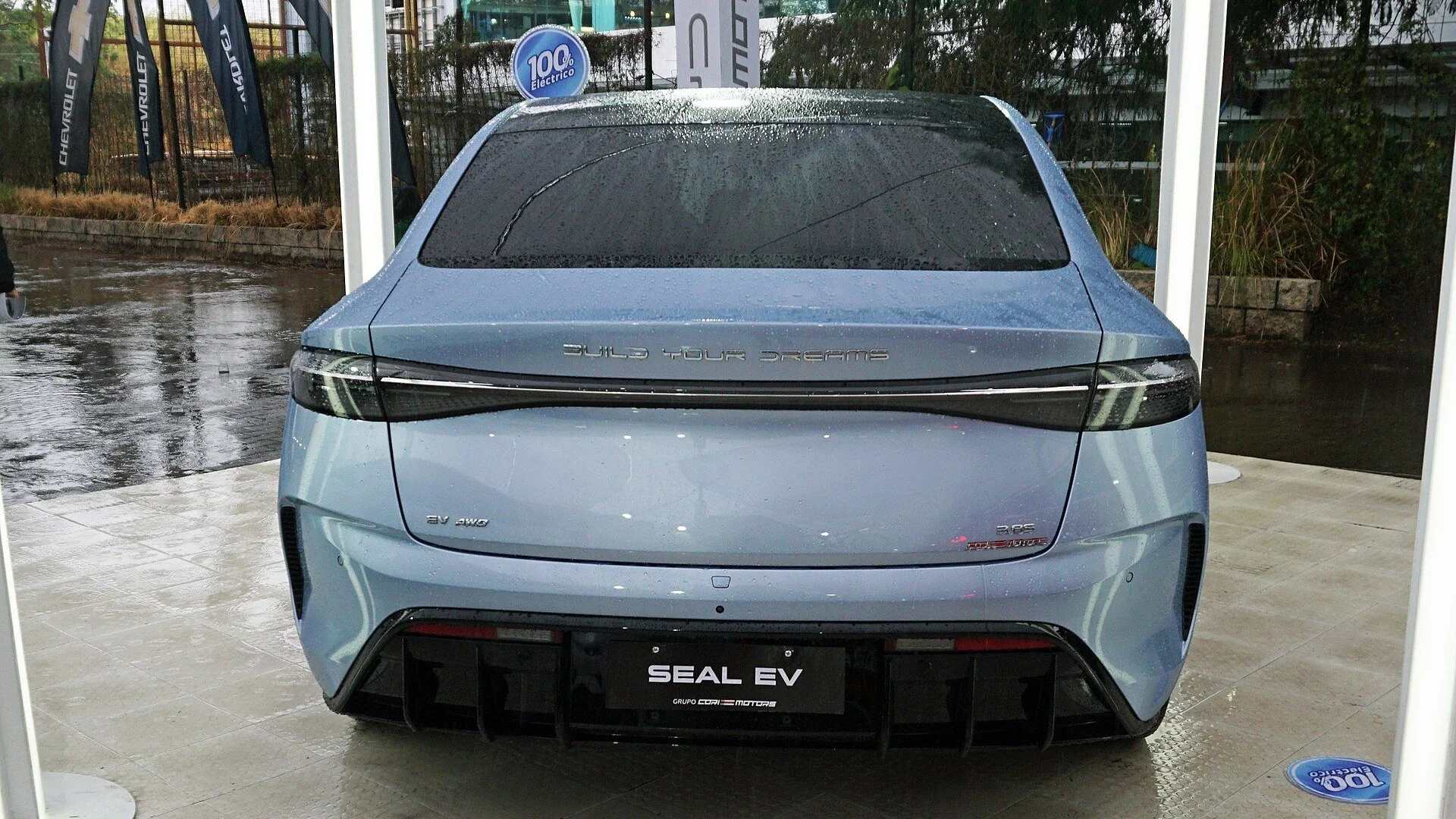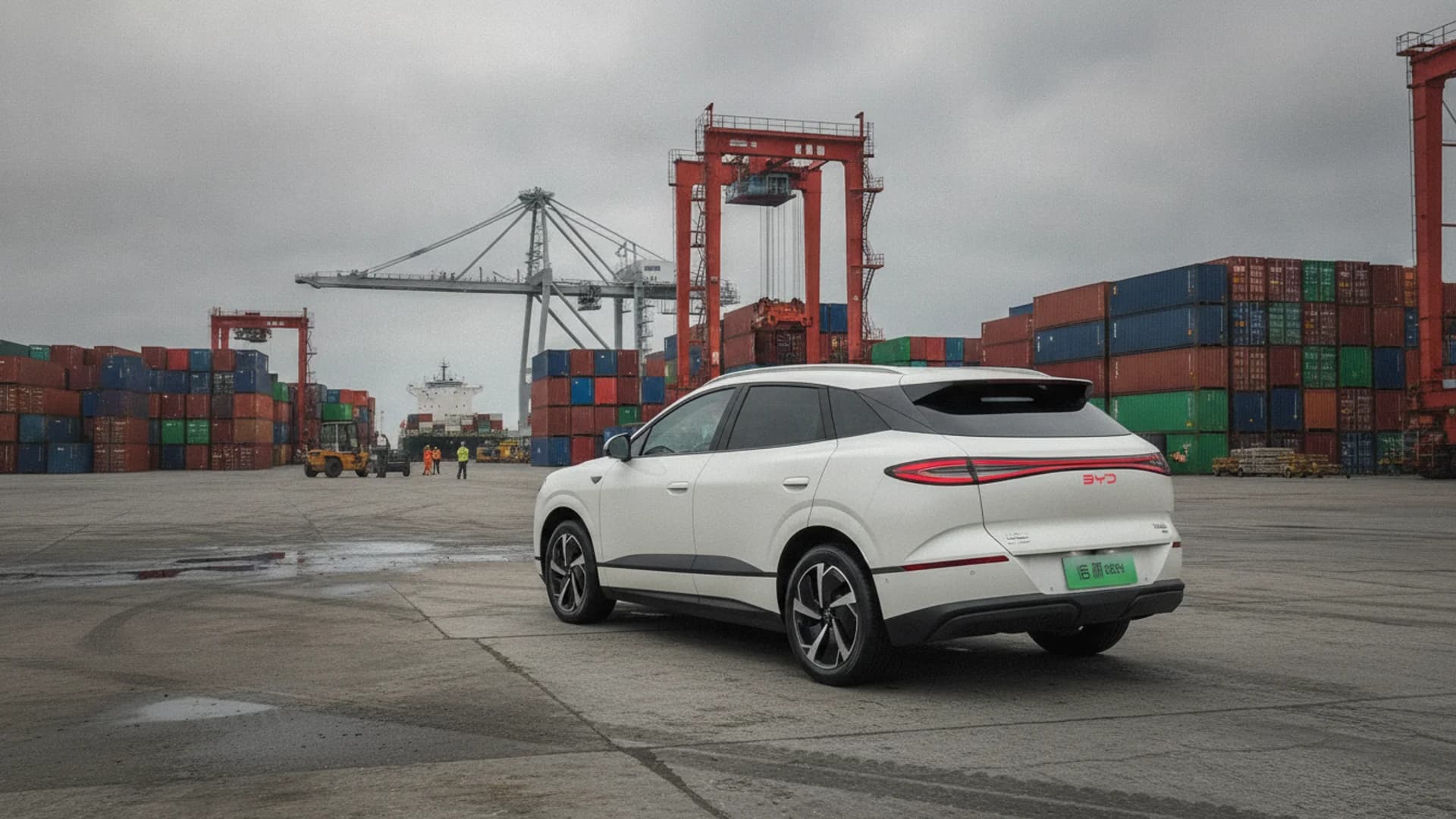
The BYD Sealion 06's ¥159,900 starting price is not a market price, it is a domestic Chinese policy artifact, anchored to the NEV mandate compliance regime and the second-generation Blade Battery subsidy tier. Everything between that number and a Canadian driveway is regulatory architecture, and the architecture is what determines whether this vehicle is ever a Canadian buying decision at all.
The Sealion 06 is part of the "Sealion" line-up of SUVs under the Ocean Series product line-up that are distributed through Ocean Network dealerships in China, a distribution structure that matters because Ocean Network and Dynasty Network operate under different fleet-procurement eligibility rules within China's domestic NEV credit system. The vehicle launched in July 2025, refreshed in March 2026 with a 710 km CLTC range claim and second-generation Blade Battery, and added a longer-range DM-i plug-in hybrid variant for the May 26, 2026 dealer rollout. Each of those dates is a regulatory pacing decision, not a marketing one.
The thesis of this piece is narrow: the Sealion 06's 2026 trajectory tests whether China's domestic policy advantages translate into viable export-market positioning across the EU, Canada, the US, Brazil, and the UK, five jurisdictions running five different countervailing, tariff, and zero-emission-mandate regimes that, stacked against each other, produce wildly divergent landed prices and consumer-incentive eligibility. Bottom-of-the-page question: what is the Sealion 06 actually worth once it crosses a border?
Key takeaways
- Canada's 6.1% quota tariff covers only 49,000 Chinese EVs annually, above that, the original 100% surtax reasserts.
- The Sealion 06's ¥159,900 Chinese price is underwritten by NEV credits BYD earns on domestic sales rather than export economics, so it is not a guide to a Canadian sticker.
- BYD's headline 710 km CLTC range translates to roughly 470–510 km on the EPA cycle Canadian buyers would actually see.
- The 9-minute flash-charge claim assumes an 800V charger and high state-of-charge headroom, it is not a 0–100% figure.
Where the Sealion 06 Sits in China's Domestic EV Policy Architecture
China's New Energy Vehicle mandate requires a 40% NEV sales ratio by 2030 and 100% by 2035, the Sealion 06 is a compliance vehicle as much as a market product, and the price reflects that. Manufacturers earn NEV credits proportional to electric range, battery technology tier, and fleet-weighted average emissions. The ¥159,900 base price is sustainable for BYD partly because the Sealion 06 generates credits that offset compliance costs on the rest of the lineup; the unit economics of an export-market sale, stripped of that credit value, look different from the domestic figures.
The Ocean Network dealership channel is the second policy lever. BYD operates two parallel networks in China, Dynasty Network (Han, Tang, Song, Qin model lines) and Ocean Network (Seal, Sealion, Dolphin, Seagull). The split matters for fleet procurement: Chinese municipal and provincial fleet tenders frequently specify channel eligibility based on local industrial policy alignment, and Ocean Network vehicles have historically captured a different mix of fleet versus retail sales than Dynasty Network. The Sealion 06 sits squarely in the Ocean Network retail-and-fleet hybrid lane.
The case against treating the dual-network structure as policy-relevant is that it looks, from the outside, like ordinary brand segmentation, the kind of multi-channel retail strategy Volkswagen runs with VW and Skoda, or Toyota with Toyota and Lexus. That reading is incomplete. The Chinese NEV credit formula is administered at the manufacturer level, but municipal procurement preferences and provincial industrial policy alignments are channel-specific. A Shenzhen fleet tender that favours Ocean Network's coastal-province manufacturing footprint is not equivalent to a Lexus-versus-Toyota retail decision; it is a procurement instrument with measurable price effects on the underlying SKU. The dual-network design is brand strategy stacked on top of policy strategy, and ignoring the second layer makes the ¥159,900 price look unsupportable when it is, in fact, structurally supported.
CLTC range ratings deserve direct definition before the comparison work begins. The China Light-duty vehicle Test Cycle is the domestic homologation cycle for range claims; it produces figures roughly 15–25% higher than the EU's WLTP cycle and 25–35% higher than the US EPA combined rating, because CLTC has lower average speeds and gentler acceleration profiles than its Western equivalents. The Sealion 06's headline 710 km CLTC range is real under that cycle, but no Western homologation has been confirmed. A WLTP figure in the 550–600 km band is the realistic translation; an EPA figure closer to 470–510 km is the conservative one.
The 2026 refresh introduced second-generation Blade Battery technology and what BYD calls flash-charging. The Sealion 06 sits in the same Ocean Series naming family as the BYD Sealion 7 and BYD Sealion 05 DM-i, both documented in Wikipedia model references, and the second-generation refresh extends across the line. The 9-minute charge claim, marketed as flash-charging from the ¥159,900 base trim relies on 800V architecture and supporting infrastructure. The Blade Battery 2.0 qualifies for China's higher battery technology subsidy tier under the NEV credit formula, which is part of why BYD launched the refresh in March 2026 rather than waiting for a full model-year cycle. The 9-minute figure assumes high-state-of-charge headroom on a 800V-capable charger; the Chinese 800V network is expanding rapidly but is not the dominant deployment, and the figure is not a 0–100% claim under sustained current.
A useful contrast: the BYD Seal 07 EV sedan launched on the same March 6, 2026 day at a ¥169,900 starting price, also equipped with the second-generation Blade Battery and flash-charging. That sibling launch matters because it confirms BYD's 2026 platform strategy is to roll the second-generation battery across Ocean Network at speed rather than reserving it for a single halo model, which in turn signals that the Sealion 06's pricing floor is not the result of a battery cost subsidy that competitors will quickly catch. It is platform-wide, and the platform is BYD's most volume-defended asset.
The second-generation Blade Battery technology pattern echoes what we've covered on broader EV efficiency physics, particularly why shape and energy density beat curb weight in determining real-world EV range. Energy-density gains compound when paired with aerodynamic discipline, which is what BYD's Ocean Series prioritised in its second-generation styling refresh.
Tariff Map: What the Sealion 06 Faces Entering Each Major Market
The single most consequential policy decision shaping the Sealion 06's export viability is the European Union's October 2024 confirmation of countervailing duties on Chinese-built battery electric vehicles. BYD's duty rate was set at 17%, layered on top of the existing 10% Most-Favoured-Nation tariff that applies to all extra-EU passenger vehicle imports. The combined effective tariff at the EU border is 27%, before VAT, before logistics, before homologation cost amortisation.
Canada's tariff regime sits in its own category, and the timeline matters. The 100% surtax on Chinese-built EVs took effect October 1, 2024, applied alongside the existing MFN duty structure. On January 16, 2026, that 100% surtax was replaced by a quota-managed 6.1% tariff covering 49,000 vehicles per calendar year, a hybrid policy instrument, not a tariff floor. Above the quota, the original 100% surtax reasserts. The Sealion 06 has not been listed by Transport Canada as a homologated vehicle eligible for Canadian sale; the quota covers any qualifying Chinese-assembled EV from any manufacturer, and the allocation mechanics across BYD, Geely, Chery, NIO, and Xpeng have not been published. For the deeper structure of how that quota was designed and what it does and doesn't change, the relevant institutional context sits in our coverage of how the 49,000-unit Canada quota actually functions as a policy instrument.
The counter-argument here, made most often by Canadian auto industry trade associations, is that the 6.1% rate is functionally an open border and that Chinese manufacturers will saturate the quota in weeks. The arithmetic doesn't quite support it. The 49,000-unit ceiling is shared across every Chinese-assembled BEV across every manufacturer; BYD alone exported 417,000 vehicles globally in 2025, but the share directed at any single non-priority market is small, and Canada has not been a BYD priority since the 100% surtax took effect. The likelier 2026 outcome is partial quota uptake by two or three manufacturers, BYD, Geely, and possibly Chery, with the Sealion 06 as a candidate rather than a confirmed entrant. Saturation by year-end is plausible by 2027, not 2026.
The United States runs the strictest regime by a wide margin. The Section 301 tariff on Chinese-built EVs sits at 100% with no quota pathway, no countervailing-duty bypass, and no announced revision schedule. BYD has not confirmed a US entry plan for the Sealion 06 or for any passenger vehicle, and the Inflation Reduction Act's foreign-entity-of-concern provisions further restrict consumer tax credit eligibility for vehicles with Chinese battery supply chain content. The US market is, in practical regulatory terms, closed to this vehicle for the foreseeable future.
Brazil sits in a transitional band. The country reinstated EV import tariffs in a phased schedule from 2024, climbing to a 35% effective rate by 2026 baseline. BYD's local manufacturing facility in Camaçari, Bahia, acquired from Ford in 2023, exempts domestically assembled BYD models from the import tariff. Whether the Sealion 06 enters Brazil as a CKD-assembled local product or as a fully-imported unit determines whether buyers see the ¥159,900-equivalent base price or a tariff-stacked figure roughly 30% higher. BYD has not confirmed Sealion 06 Camaçari assembly status as of Q2 2026.
The UK runs a separate calculation. Post-Brexit, the UK applies its own MFN tariff structure rather than the EU's, and the UK has not imposed countervailing duties matching the EU's October 2024 ruling. The Sealion 06 entering the UK would face the standard 10% UK MFN rate on passenger vehicles, not the 27% EU effective rate, a meaningful gap that has begun to influence BYD's European market sequencing. The expected arbitrage is real but bounded: UK new-vehicle volume is roughly a fifth of EU volume, and the right-hand-drive homologation cost amortises across a smaller fleet, narrowing the per-unit price advantage by the time the vehicle reaches a London showroom.
The implication is that the Sealion 06 is a different commercial proposition in each of these five jurisdictions, and the differences are entirely policy-driven. The vehicle is identical; the regulatory wrapper is not.
Gear worth having
As an Amazon Associate, ThinkEV earns a small commission from qualifying purchases — at no extra cost to you.

Portable Level 2 EV Charger (40A, NEMA 14-50)
Throw it in the trunk and charge anywhere with a 240V outlet. 40A portable with NEMA 14-50 plug. Your road-trip insurance policy.
As an Amazon Associate, ThinkEV earns from qualifying purchases — at no extra cost to you.
Federal Rebate Ineligibility and the Canadian Market Calculus
Canada's federal EV rebate, the Electric Vehicle Affordability Program (EVAP), pays up to $5,000 on an eligible BEV, but only when the vehicle is built in Canada or in a country with a free-trade agreement with Canada. The Sealion 06, assembled in China, meets neither test, so it is excluded from EVAP regardless of price. That $5,000 gap against eligible rivals is the single biggest variable in how a Chinese-built model like this lands with Canadian buyers, with downstream effects on how dealer networks would even shelf the vehicle.
The ¥159,900 base price translates to approximately CAD $30,800 at current exchange rates, before any tariff loading. Apply the 6.1% quota tariff, the standard 5% federal GST or HST equivalent, provincial sales taxes, logistics, and dealer margin, and the landed Canadian consumer price lands in the CAD $42,000–46,000 band, competitive with mid-trim Hyundai Kona Electric or Kia Niro EV pricing, but without EVAP eligibility, without provincial rebate stacking, and without the warranty-and-service confidence Canadian buyers expect from established networks.
The named comparison sharpens the picture. A 2026 Hyundai Kona Electric Preferred trim sells in Ontario at approximately CAD $48,500 before rebate, drops to $43,500 after the federal EVAP rebate, and drops further after Quebec's Roulez vert top-up, for a buyer in Quebec, the effective Kona Electric price is roughly $7,000 below the unrebated Sealion 06 landed price. The Sealion 06 wins on raw specification, longer CLTC range, faster charging architecture, larger interior package, and loses on the only metric most retail EV buyers in Canada use, which is total out-of-pocket after rebate. Specification arbitrage does not beat incentive arbitrage at this price point.
Quebec's Roulez vert program requires federal EVAP eligibility as a precondition for its top-up, so the Chinese-assembled exclusion at the federal level cascades downward and locks the Sealion 06 out of the standard provincial stack as well. The full federal-plus-provincial incentive a Korean or Japanese competitor can access sits at roughly $0 for the Sealion 06 absent a change in EVAP eligibility rules. Provincial framework specifics, including which provinces stack and which don't, are in our coverage of provincial EV incentive structures across Canada.
BYD's Canadian footprint as of 2025 is small, industry-tracking estimates place full-year 2025 BYD passenger vehicle registrations below 500 units, mostly through limited fleet and commercial deployments. The Sealion 06 has not been homologated for Canadian retail sale, which is a separate process from import quota eligibility. Transport Canada homologation requires Canadian Motor Vehicle Safety Standards compliance testing, daytime running light configuration, French-language documentation, and the full Compliance Information Statement package. BYD has not publicly confirmed Sealion 06 CMVSS work is underway.
The Canadian calculus, taken together, is that the Sealion 06 is technically importable under the 49,000-unit quota, practically unrecognised by the consumer incentive stack, and not yet homologated for retail sale. Three independent regulatory gates, and only the first one is currently open.
EU Countervailing Duty Proceedings: BYD's Sealion 06 as a Test Case
The European Commission's investigation into Chinese EV state subsidies, launched October 2023 and concluded with provisional duties in July 2024, found that BYD received state support equivalent to 17% of vehicle value through preferential financing, land-use grants, and battery supply-chain subsidies. The Commission confirmed the duties in October 2024 with no significant rate revision. The legal basis is the EU's countervailing duty regulation, which permits offsetting duties where state subsidies are demonstrated to cause injury to EU industry.
BYD challenged the ruling at the World Trade Organization in late 2024, arguing the Commission's subsidy calculation methodology overcounted standard industrial-policy support and undercounted EU member-state subsidies to European manufacturers. The case remains open as of Q1 2026. The WTO dispute settlement process does not stay the duties during proceedings, which means BYD has been paying the 17% rate on every Sealion 06, Atto 3, Seal, and Dolphin entering the EU since the provisional period began.
Gear worth having
As an Amazon Associate, ThinkEV earns a small commission from qualifying purchases — at no extra cost to you.

WeatherTech FloorLiner for Tesla Model 3
Deep-channel liners that trap every drop of slush and salt. The difference between a ruined interior and a showroom-fresh cabin after a Canadian winter.
As an Amazon Associate, ThinkEV earns from qualifying purchases — at no extra cost to you.
The pricing implication is severe. A ¥159,900 Sealion 06 in China translates to approximately €20,100 at current cross rates. Apply the EU's 27% effective tariff (17% countervailing plus 10% MFN), VAT in the buyer's member state, logistics from Chinese port to European distribution centre, homologation cost amortisation, and dealer margin, and the EU consumer price lands in the €38,000–42,000 band. That is competitive with a base Volkswagen ID.4 or a Renault Scenic E-Tech, but it eliminates the price advantage that was the original Chinese-EV thesis in European markets.
The strategic response BYD has been building since 2023 is local manufacturing. BYD's Debrecen, Hungary plant was announced in December 2023 with a target production start in 2025–2026, designed for European-market models. EU-assembled vehicles are not subject to countervailing duties because the duties target the import of Chinese-built vehicles specifically. If the Hungary plant produces Sealion 06 units for the European market at meaningful volume, the 17% rate disappears and the landed price drops by approximately €5,000–6,000 per vehicle.
BYD has not confirmed Sealion 06 assignment to the Hungary plant. The plant's announced initial model mix focused on Atto 3 and Dolphin, with Seal sedan potentially added in later phases. The Sealion 06 is a 2025-launch model with active second-generation refresh as of March 2026, which positions it as a candidate for later-phase Hungary production but not the opening lineup.
The broader European countervailing duty proceeding is functioning as a stress test on every Chinese manufacturer's EU strategy. Tesla, which assembles its China-built Model 3 at the Shanghai Gigafactory and exports significant volume to Europe, received its own 7.8% rate after a separate calculation. SAIC received 35.3%, Geely 18.8%, and "other co-operating companies" 20.7%. BYD's 17% is mid-band, which means the Sealion 06's EU pricing pressure is not uniquely punitive, it is structurally similar to the pressure on Geely's Polestar 4, NIO's ET5, and Xpeng's G6.
The case against the WTO challenge mattering at all is the timeline. Even a BYD victory in 2027 or 2028 arrives after the Hungary plant has either succeeded or failed on its own production curve, and the commercial decision space will already be set. The countervailing duty is in some sense a deadline-forcing function: it makes the Debrecen ramp a non-optional condition for EU market viability, regardless of how the WTO eventually rules. The duty is not the problem BYD is trying to win, it is the problem BYD is trying to outrun by relocating production.
Gear worth having
As an Amazon Associate, ThinkEV earns a small commission from qualifying purchases — at no extra cost to you.

Grizzl-E Classic Level 2 EV Charger (40A)
Canadian-made and rated for minus 40C winters. 40A / 9.6 kW, NEMA 14-50, indoor/outdoor, 24-ft cable. The charger built for Canadian weather.
As an Amazon Associate, ThinkEV earns from qualifying purchases — at no extra cost to you.
DM-i Variant and Multi-Jurisdiction PHEV Policy Divergence
The 2026 Sealion 06 DM-i, scheduled for May 26, 2026 dealer launch, carries up to 310 km of CLTC electric range with an optional lidar-assisted driver-assistance package on the higher trims, a figure that places it well above the threshold most jurisdictions use to qualify a plug-in hybrid for incentive treatment, and well into the band where PHEV policy is actively being tightened.
China classifies the DM-i variant as a New Energy Vehicle under the NEV credit system, generating credits proportional to electric range. The 310 km CLTC figure places the DM-i in the top NEV credit tier for plug-in hybrids, on par with battery electric vehicles in the smaller-range categories. This is part of why BYD's DM-i platform has scaled, the credit yield per vehicle is structurally favourable under the Chinese formula.
The EU is moving the opposite direction. A 2026 review of PHEV subsidy eligibility has proposed a 50 km minimum WLTP electric range as the floor for any continuing PHEV consumer incentive, up from the 40 km standard most member states currently apply. The Sealion 06 DM-i's 310 km CLTC range likely translates to roughly 220–250 km WLTP, comfortably above the proposed threshold. The DM-i variant retains EU PHEV incentive eligibility even under the tightened rule, a meaningful regulatory tailwind compared with shorter-range competitor PHEVs that lose eligibility entirely.
Canada classifies PHEVs separately from BEVs for EVAP purposes. The federal rebate caps at $2,500 for PHEVs versus $5,000 for BEVs, and the same Chinese-assembled exclusion applies, the DM-i variant carries no EVAP access under current rules. Were the Hungary plant or another non-Chinese assembly source to produce the DM-i variant, the $2,500 PHEV rebate becomes accessible, though still half the BEV rate. The PHEV-versus-BEV EVAP gap is a structural disincentive in Canadian policy that does not exist in the European or Chinese frameworks.
The United Kingdom removed PHEVs from its Zero-Emission Vehicle mandate counting framework in the 2024–2025 policy revision, with the new rule taking effect in stages through 2035. Under the revised mandate, manufacturers cannot claim PHEV sales toward their ZEV credit obligation, which collapses the regulatory value of PHEV imports into the UK for credit-generation purposes. The DM-i variant, regardless of its 310 km CLTC range, generates zero UK ZEV mandate credit. Consumer-level eligibility for the UK's reduced Plug-in Car Grant remnants is similarly tightened.
A useful Australian counter-example sits in the New Zealand market, where the Sealion 6 plug-in hybrid arrived in mid-2024 as the first of the so-called "super hybrids," offering a combined EV-plus-petrol range up to 1,000 km and shifting the segment conversation toward total range rather than electric-only range. The reception there validates the DM-i thesis in markets that treat PHEV range linearly: when policy rewards total range, BYD wins on engineering; when policy rewards electric-only range above a threshold, BYD's threshold position is still favourable; only when policy zeroes PHEVs out entirely, as the UK has done, does the DM-i value proposition collapse.
Australia, Brazil, and Southeast Asian markets generally treat PHEV electric range linearly, the longer the range, the higher the incentive tier, which positions the DM-i variant favourably in those jurisdictions. BYD's confirmed export priorities for 2026 include Australia (Atto 3 and Seal currently lead, Sealion line-up expansion expected) and several ASEAN markets where local assembly partnerships are reducing tariff exposure independently.
The DM-i's policy story, then, is a four-way split: Chinese credit favourable, EU credit favourable under tightening rules, Canadian credit blocked by assembly origin, UK credit zeroed by mandate revision. Identical vehicle, four different regulatory verdicts.
Market Share Trajectory and What 134,665 Units Actually Signals
The widely-circulated figure is 134,665 units sold since the Sealion 06's July 2025 launch, an industry-tracking estimate, T3-tier, reported across enthusiast forums and Chinese auto-industry tracking aggregators. Treated as approximate rather than audited, the figure averages roughly 16,800 units per month over the first eight months of availability, which is a credible mid-tier volume in China's mid-size SUV segment.
China's mid-size SUV segment as a whole sold approximately 2.1 million units in 2025 according to China Passenger Car Association tracking. The Sealion 06's 134,665-unit eight-month run translates to a full-year run rate of roughly 200,000 units, or 0.96% of the segment, a second-tier volume player by share, well below the top BYD performers and well below Tesla's Model Y share.
The comparison set matters. The Tesla Model Y, the segment volume leader, sold approximately 480,000 units in China in 2025. The BYD Song Plus DM-i, BYD's own segment workhorse, sold over 600,000 units. The Sealion 06 is not competing in the same volume tier as either; it is positioned as a complementary Ocean Network entry that captures buyers the Dynasty Network Song Plus does not reach, primarily on styling, channel preference, and the second-generation Blade Battery upgrade.
The case against treating the Sealion 06 as a successful product is that 0.96% segment share is a strategic disappointment for a model BYD positioned as a second-generation flagship for the Ocean Network's SUV lineup. The rebuttal sits in the fleet math. BYD's segment coverage thesis is not "win the volume crown with one model", it is "cover every price-and-feature node so no buyer leaves the dealership for a competitor." The Sealion 06 at 200,000 annual units is a node-fill product, and the node it fills is the second-generation Blade Battery mid-size SUV at sub-¥160,000 with Ocean Network styling. It does not need to outsell the Song Plus to justify its place in the lineup; it needs to not lose customers to Geely Galaxy E5 or Leapmotor C10, and on that narrower measure it appears to be holding.
BYD's total vehicle exports in 2025 reached 417,000 units according to BYD official disclosures, a sharp increase from 2024 and a structural shift in the company's revenue mix. The Sealion 06's specific export share has not been broken out publicly. Confirmed export markets for the Ocean Network line-up include Australia, Thailand, Malaysia, Singapore, Brazil, and several European markets where countervailing duties are absorbed into pricing. The Sealion 06's appearance in those export channels has been gradual; the volume contribution is small relative to Atto 3 and Seal, which carry the BYD Europe and Australia narratives.
What the 134,665 figure actually signals is that the Sealion 06 has found a viable domestic Chinese market position without dominating it. The vehicle is profitable, generates NEV credits, contributes to BYD's segment coverage, and supports the dual-channel dealership strategy, but it is not the export tip-of-spear. The Atto 3 carries that role in established export markets, and the Seal sedan in newer ones. The Sealion 06 is a domestic compliance-and-volume play first, an export candidate second. The market-positioning question echoes themes covered in our analysis of how Chinese EVs are entering Canadian and global markets with mixed strategies.
Gear worth having
As an Amazon Associate, ThinkEV earns a small commission from qualifying purchases — at no extra cost to you.
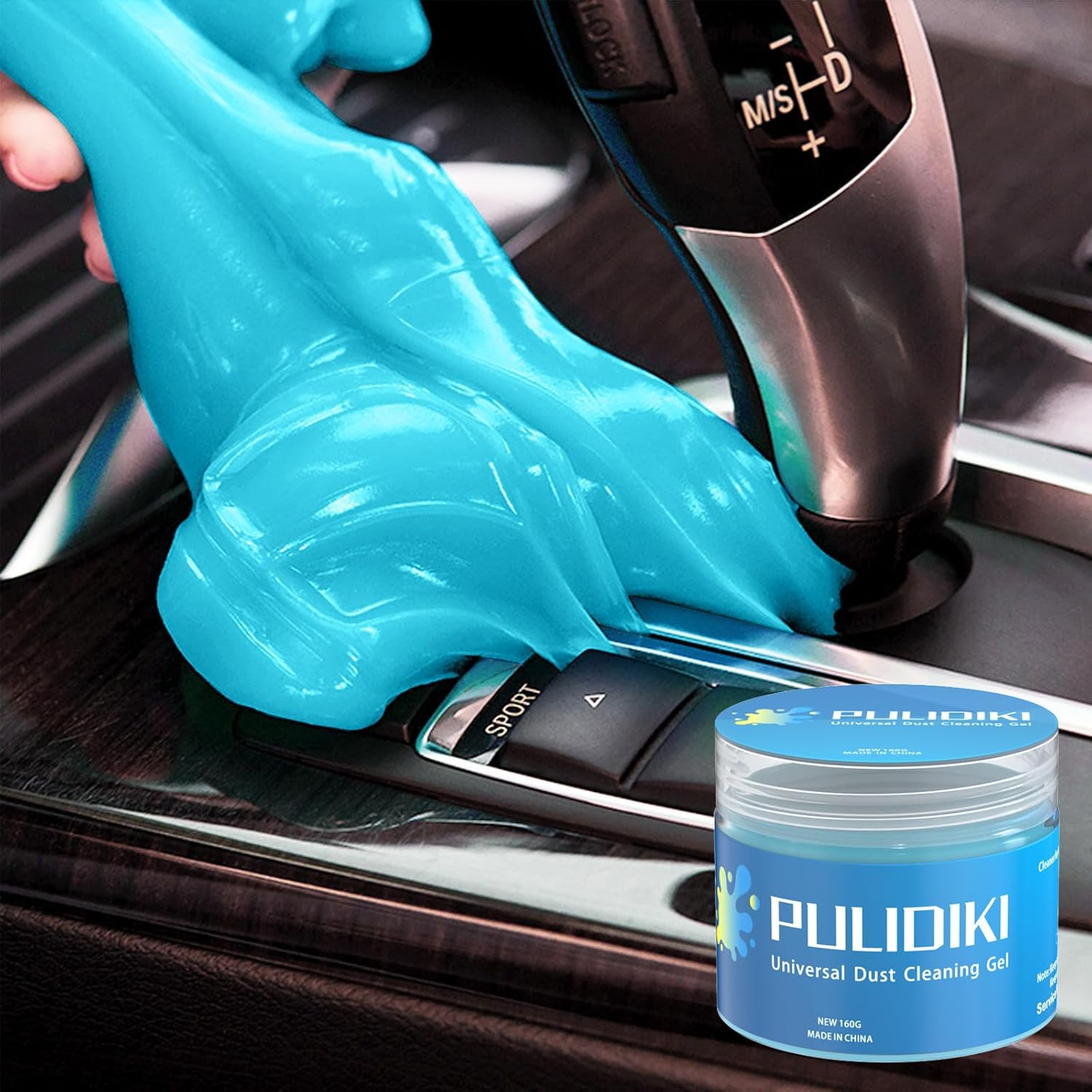
PULIDIKI Car Cleaning Gel (Detailing Putty)
Press it into vents, buttons, and seams and it lifts out dust you did not know was there. Weirdly satisfying, genuinely useful.
As an Amazon Associate, ThinkEV earns from qualifying purchases — at no extra cost to you.
What Changes Next, and What Wouldn't
The Sealion 06's trajectory across 2026–2027 depends on three specific regulatory events worth tracking.
First, the BYD Debrecen plant production ramp. If Hungary-assembled Sealion 06 units begin entering EU distribution by Q4 2026 or Q1 2027, the EU landed price drops by roughly €5,000–6,000 per vehicle, and the competitive position against Volkswagen, Renault, and Stellantis tightens materially. If the Hungary plant does not assign Sealion 06 production until 2028, the EU narrative stays in countervailing-duty territory and the vehicle remains a premium-priced curiosity rather than a volume entry. The signal worth watching is the BYD Debrecen press release calendar; the company has previously announced model assignments six to nine months ahead of line activation, which means an autumn 2026 Sealion 06 announcement would translate to mid-2027 production reality.
Second, the Canadian quota allocation mechanics. The 49,000-unit annual quota is shared across all Chinese-assembled BEVs, and Transport Canada has not published manufacturer allocations. If BYD secures meaningful quota access and BYD elects to homologate the Sealion 06 for Canadian sale, the vehicle becomes a real Canadian buying option in 2026, without iZEV eligibility, but at a sticker price competitive with Korean and Japanese alternatives. If quota access goes elsewhere or BYD prioritises Atto 3 and Dolphin for Canada, the Sealion 06 stays a Chinese-domestic vehicle.
Third, the EU WTO proceeding. If BYD prevails or secures a partial rate reduction, the 17% countervailing duty narrows or vanishes, and the European pricing pressure eases. The WTO process is slow, a 2027 or 2028 ruling is the realistic range, and the duties remain in place throughout. The probability-weighted base case is that the 17% rate holds through at least 2027.
What would change my mind on this analysis: a Transport Canada CMVSS filing for the Sealion 06 before Q4 2026, paired with a quota allocation disclosure that placed BYD above 15,000 units of the 49,000-unit ceiling. That combination would shift the vehicle from "policy test case" to "actual Canadian buying decision" within a single product cycle. Absent both, my forecast holds: the Sealion 06 is a 2027-or-later Canadian conversation, the EU pricing pressure is structural through at least the next WTO calendar window, and the export tip-of-spear stays with the Atto 3 and Seal.
The bet I would place, if forced to name one: BYD assigns Sealion 06 production to Debrecen in a 2027 model-year announcement, with line activation in 2028. The Atto 3 and Dolphin take the 2026–2027 European volume slot. The Sealion 06 stays a Chinese-domestic plus Asia-Pacific export product through that window, and the Canadian entry, if it happens, follows the European local-assembly pivot rather than preceding it.
The BYD Sealion 06 is a well-engineered domestic Chinese vehicle that has not yet crossed into export-market viability outside Asia-Pacific. Its pricing advantage survives the tariff and incentive stacking process only in jurisdictions where Chinese-EV policy is neutral or local assembly is available. In Canada, the EU, and the US, it remains a policy test case, and 2027 is the realistic horizon for meaningful change. Watch Debrecen, watch the Transport Canada homologation filings, and watch the WTO calendar. The vehicle is not the story; the regulatory map it has to cross is.
Gear worth having
As an Amazon Associate, ThinkEV earns a small commission from qualifying purchases — at no extra cost to you.

WixGear Magnetic Air Vent Phone Mount (2-Pack)
A magnet strong enough that your phone never flinches over potholes or rail crossings. Two in the box, one for each car.
As an Amazon Associate, ThinkEV earns from qualifying purchases — at no extra cost to you.

Founder & Chief Editor
Vlad Pereira is the founder and chief editor of ThinkEV.ca, the Canadian electric-vehicle publication he writes and edits from Courtenay, British Columbia. He covers EV pricing, federal and provincial rebates, charging costs, and the Chinese manufacturers now entering Canada, from the buyer's side rather than the press-fleet side. ThinkEV is a venture of Vlad Pereira Online; his writing on health, income and the long game lives at vladpereira.com.
Frequently asked questions
Does the 49,000-unit quota apply to BYD specifically or all Chinese EVs?
What would the Sealion 06 actually cost in a Canadian driveway?
Is the 710 km range claim real or a Chinese testing artifact?
What happens to Canada's tariff if the 49,000-unit quota fills up?
Does the 9-minute flash-charge claim hold up outside China?
More EV & road-trip finds
Affordable upgrades worth a look — tap any to check the price on Amazon.
 ★ 61
★ 61Toddler Car Seat Snack and Cup Tray
View on Amazon ★ 392
★ 392Large Cup Holder Adapter (32-40oz)
View on Amazon ★ 2,941
Microfiber Cleaning Cloths (Multi-Pack)
View on Amazon ★ 537
★ 537USB Star Projector Roof Light
View on Amazon ★ 4,055
6-Speed Manual Shift Knob Display
View on Amazon ★ 979
★ 979Leather Headrest Purse Hook
View on Amazon ★ 17,242
LISEN Mini USB-C Car Charger (54W)
View on Amazon ★ 87
★ 87Car Window Sun Shades for Kids (4-Pack)
View on AmazonRead, Plan, Then Stay Current
Explore our expert articles to understand incentives and ownership costs, use the map to pressure-test charging reality, then subscribe so new EV coverage comes straight to you.
Continue Reading
BYD Atto 3 Canada: Price, Range & EVAP Rebate (2026)
BYD Shark 6 Canada 2026: Price Band, Specs, Incentive Reality
Are Canada's Repair Shops Ready for Chinese EVs?
BYD Seagull Canada: Real Price, Real Specs, Real Wait
EV Rebates in Canada: How EVAP and Provincial Stacking Work