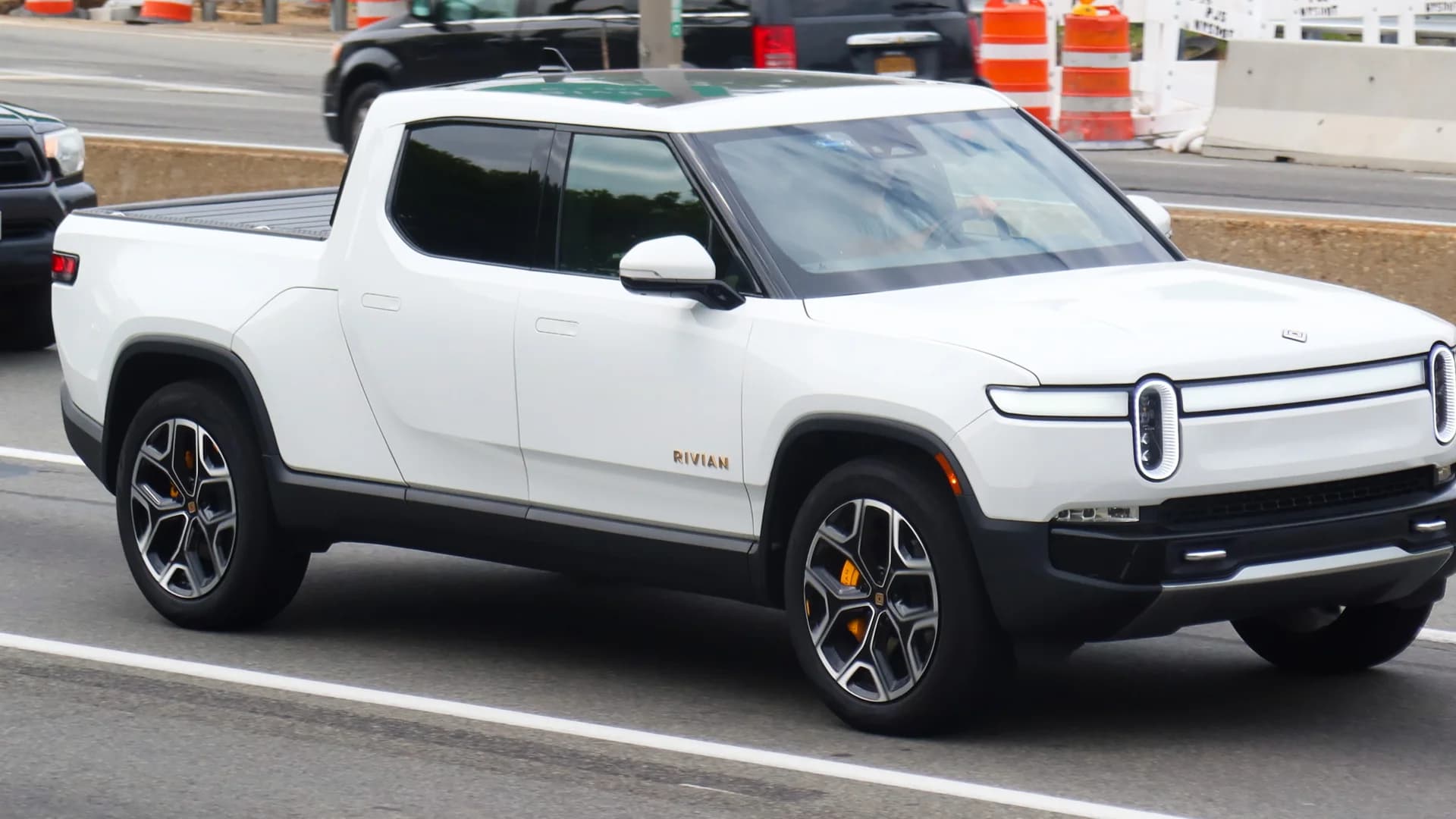
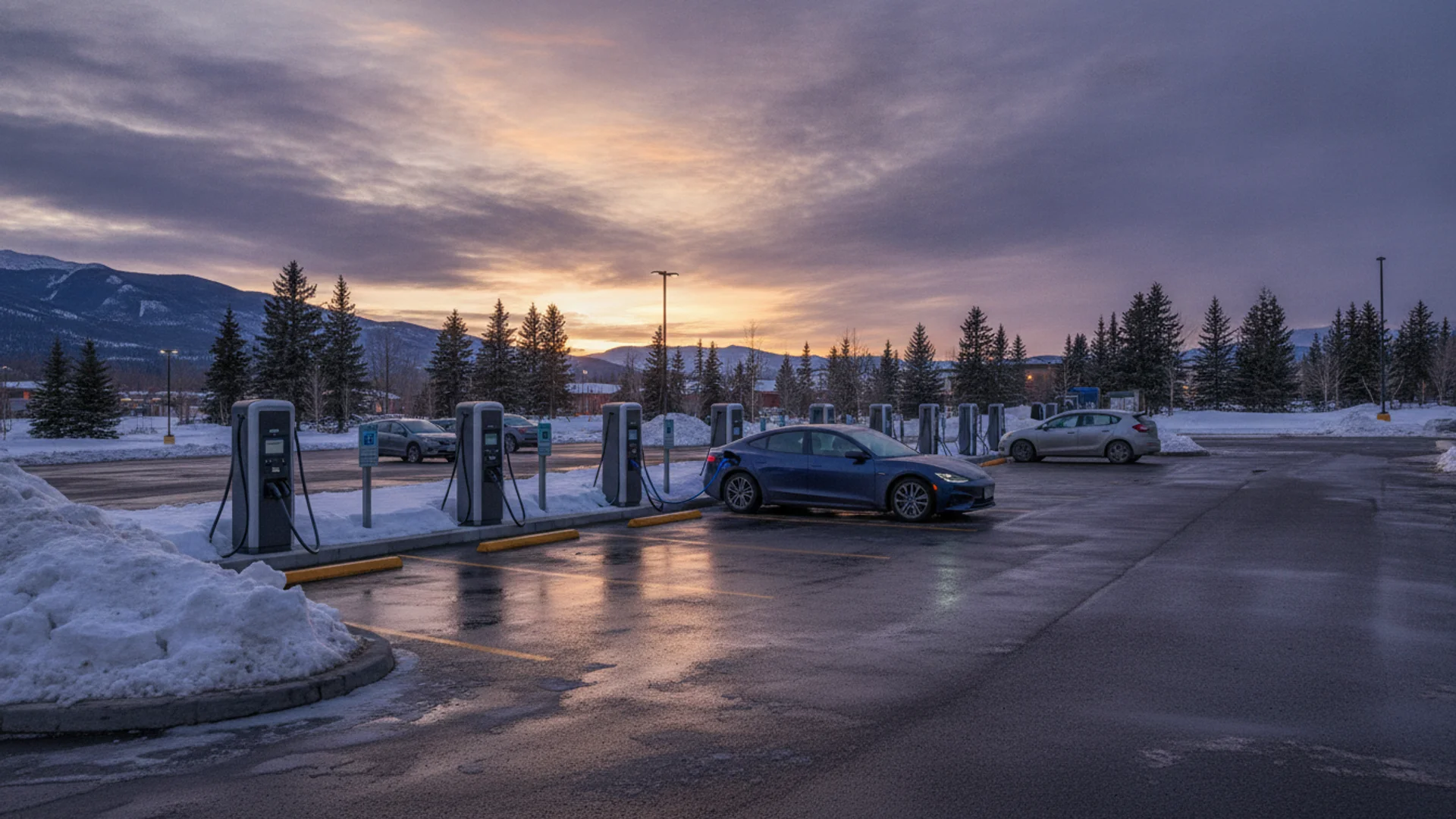
You don't own a Rivian. Can you still plug into their chargers? As of right now, yes, and the network just crossed 1,000 stalls. The Rivian Adventure Network of EV fast chargers just hit a big milestone. The headline number is 1,007 individual DC fast-charging stalls across 148 locations, and the bigger story is that most of them no longer care what's parked in the bay.
For Canadian EV drivers, this matters in a specific, practical way: not because RAN has Canadian stations yet (it doesn't), but because the network you're most likely to use on a US road trip just got materially bigger and materially more open. If you're routing a Vancouver-to-Seattle-to-Portland trip this summer, or a Windsor-to-Detroit-to-Chicago run, the math on where you stop has quietly changed.
Here's the practical breakdown.
Key takeaways
- Rivian's Adventure Network crossed 1,007 stalls across 148 US locations as of June 2026.
- Over 75% of RAN stations now accept non-Rivian EVs, you just need the Rivian app pre-installed.
- RAN has zero Canadian stations, but Vancouver-Seattle or Windsor-Detroit routes now have a real new charging option.
- Non-Rivian charging costs roughly CAD $45–$65 per full session, per-kWh billing, not per-minute.
- Your car's onboard charger sets the speed ceiling, a 350 kW stall won't push a Mach-E past 150 kW.
What Is the Rivian Adventure Network, and Why Should Canadians Care?
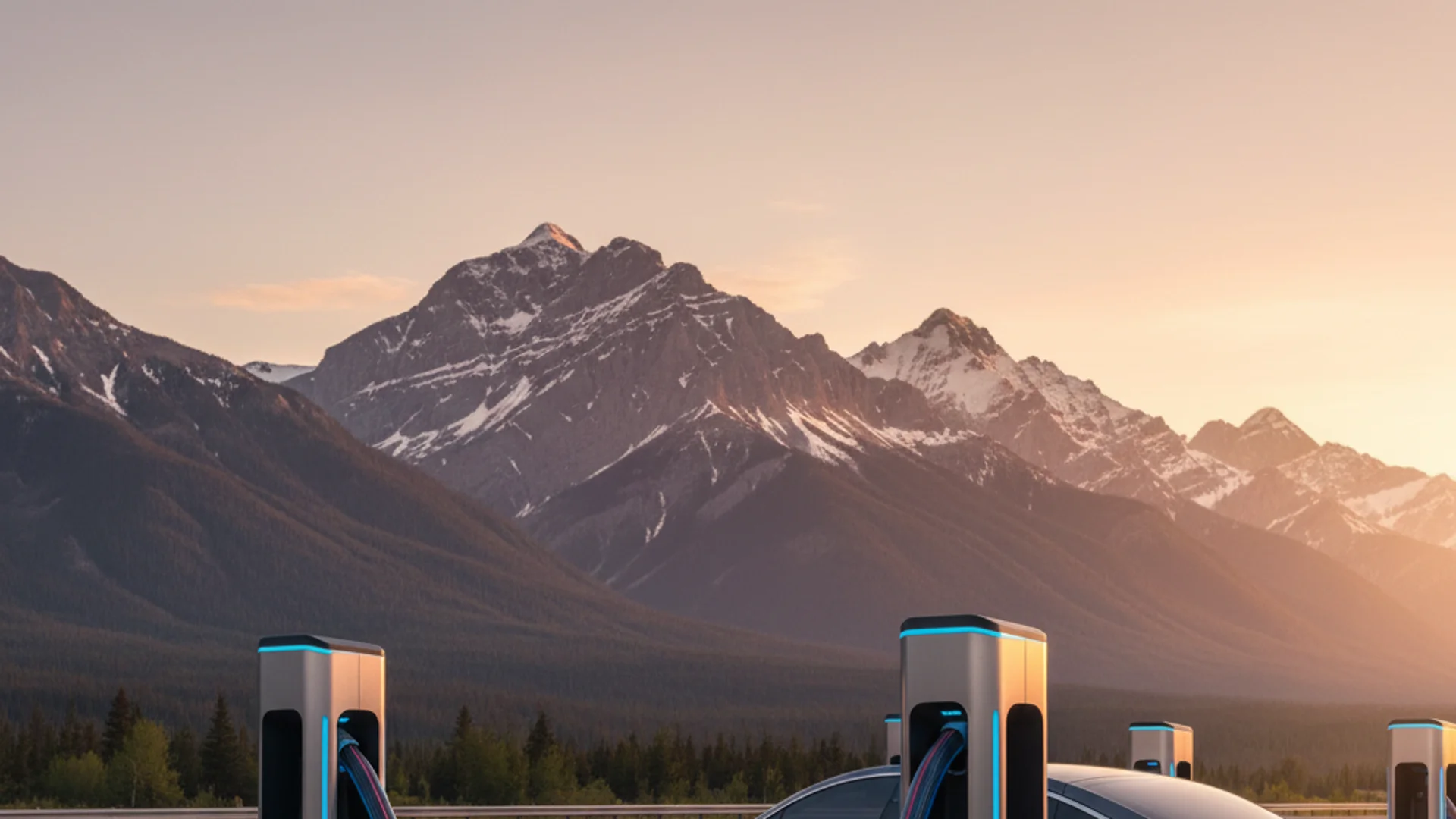
The Rivian Adventure Network, RAN for short, is Rivian's proprietary DC fast-charging network, built originally as a private perk for R1T and R1S owners. The conceptual hook is in the name: these aren't downtown commuter chargers. RAN sites cluster along outdoor and adventure corridors, Rockies entry points, Pacific Coast routes, Southwest national-park approaches.
The shift Canadians should care about is the opening. Rivian is gradually opening up its DC fast charging network to all EVs. Now, over 75% of the Rivian Adventure Network is open to all electric cars, not just Rivians. That percentage has been climbing through 2025 and into 2026, and Rivian has signalled it intends to keep pushing toward full network openness as the R2 launch ramps.
The Canadian footprint, to be honest about it, is zero. RAN stations are US-only today. So if you're charging at home in Burnaby and driving to work in downtown Vancouver, this network is not in your life. But if you're one of the thousands of Canadian EV owners who'll drive south for a summer road trip, RAN is now one of the most relevant new options in your route planner, and it sits alongside Tesla's Supercharger network, Electrify America, and EVgo as a serious fourth pillar.
For the bigger picture on what's available north of the border, the complete Canadian EV charging network breakdown covers the six major Canadian networks and how they actually compare on cost and reliability.
The 1,000-Stall Milestone: What the Numbers Actually Mean
A thousand stalls sounds round and tidy. Here's the context that makes it useful.
Per the Alternative Fuels Data Center tracking, RAN now operates 148 locations and 1,007 stalls as of June 2026. Back in Q3 2025, that number was roughly 750. So Rivian added about 250 stalls in under nine months, and that's after Q1 2026 was, by Rivian's own acknowledgement, a slowdown quarter for new installations. The milestone landed in Q2 because Q1 saw fewer ribbon-cuttings than the trajectory implied.
Scale-wise, RAN is still a smaller player. Tesla's Supercharger network has over 20,000 stalls in North America. Electrify America runs roughly 4,000. RAN at 1,007 is a fraction of either, but it's a useful fraction, because it's the one most aggressively targeted at exactly the routes people road-trip on.
The broader context for charging buildout is also in. EV Sales Are Slowing Down. The U.S. Still Got Over 3,000 New Fast Charging Plugs In Q1, which is to say, even in a soft sales quarter, the charging infrastructure is still expanding faster than vehicle uptake. That's good news for any driver currently shopping, including Canadians watching cross-border charging maturity before committing to longer EV road trips.
Rivian's own framing on what comes next is straightforward. To prepare for this new chapter and the expansion of our community, we are scaling our charging infrastructure to ensure that every electric vehicle driver, whether in an R1, an R2, or a non-Rivian EV, has the power to go further on their journey. That's the policy statement. The 1,007 stalls is the receipt.
Gear worth having
As an Amazon Associate, ThinkEV earns a small commission from qualifying purchases — at no extra cost to you.

Portable Level 2 EV Charger (40A, NEMA 14-50)
Throw it in the trunk and charge anywhere with a 240V outlet. 40A portable with NEMA 14-50 plug. Your road-trip insurance policy.
As an Amazon Associate, ThinkEV earns from qualifying purchases — at no extra cost to you.
Can You Actually Use a RAN Charger With Your Non-Rivian EV?
The short answer: yes, if your EV uses (or adapts to) the NACS connector, and you're willing to set up a Rivian app account.
The longer answer has three practical pieces:
- Connector compatibility. Over 75% of RAN stalls support non-Rivian EVs via the NACS port. If you drive a Tesla, you're plug-native. If you drive a Ford Mustang Mach-E, Hyundai Ioniq 5, Kia EV6, Chevy Equinox EV, or essentially any 2024-or-newer non-Tesla EV that ships with, or has a NACS adapter for, that connector, you're in.
- App and payment. You'll need the Rivian app installed, an account created, and a payment method registered before you arrive. This is not a tap-your-credit-card-on-the-stall network yet. Set it up in your driveway, not in the parking lot at 11pm with one bar of signal.
- Plug-and-charge is rolling out. Charging A Rivian Is About To Get Even Easier, Rivian is pushing a plug-and-charge update through 2026 that authenticates the session via the vehicle itself, removing the app-fumbling step. For non-Rivian drivers, app-initiated charging is still the current default, but the friction is dropping.
One catch for Canadian CCS-adapter owners: not every RAN stall is dual-connector. Some are NACS-only. Before you build a 2,000-km route around RAN waypoints, verify the specific station's connector inventory on the Rivian app or PlugShare. The detail matters more for older non-Tesla EVs with CCS still as the primary port.
Compared to other open networks, RAN's onboarding is mid-pack. Electrify America Just Made EV Charging Easier By Ditching An Annoying Policy, Electrify America has been working through its own friction reduction this year. The trend across the industry is the same direction: fewer apps, fewer credit-card swipes, more authenticated sessions that start the moment you plug in. For a closer look at how payment friction shapes which networks actually get used, Walmart's recent rollout is the cleaner case study.
Charging Speed and Cost: What to Expect at a RAN Station
This is where most reader questions land. Here's the working math.
Stall output. RAN stalls are genuine DC fast chargers, typically 200 kW to 350 kW depending on the station. The newer build-outs lean toward 350 kW, Rivian designed RAN with future vehicle capability in mind, not just current R1 hardware.
Real-world charging time. A Rivian R1T or R1S at a 350 kW stall typically hits 0–80% in about 30 to 40 minutes. That's the marketing claim and it holds up reasonably well in independent owner reports. If you're in a non-Rivian EV, the speed depends on your car, not the stall:
Gear worth having
As an Amazon Associate, ThinkEV earns a small commission from qualifying purchases — at no extra cost to you.

NACS to J1772 Adapter
Use Tesla destination chargers with any J1772 EV. Opens up thousands of extra charging locations across Canada.
As an Amazon Associate, ThinkEV earns from qualifying purchases — at no extra cost to you.
- A Hyundai Ioniq 5 or Kia EV6 will accept up to ~235 kW peak, so it charges 10–80% in roughly 18 minutes
- A Tesla Model Y or Model 3 will pull up to ~250 kW, similar range
- A Chevy Equinox EV peaks around 150 kW and will charge slower regardless of how fancy the stall is
- A Ford Mustang Mach-E peaks at ~150 kW for the extended-range battery
The takeaway: a 350 kW stall doesn't make your car charge faster than your car's own ceiling. It just means you won't be the bottleneck.
Cost. RAN bills per kWh, not per minute. This is the right billing model, per-minute pricing penalizes slower-charging cars unfairly. Exact rates vary by location, but the network sits in roughly the same band as Electrify America: typically in the USD $0.40–$0.55 per kWh range for non-Rivian drivers, with Rivian owners getting preferential pricing.
For Canadians converting that back home: at current exchange and an 80 kWh charge, you're looking at roughly CAD $45–$65 USD-equivalent for a full session at RAN. Cheaper than gas for the same distance, more expensive than charging at home in BC or Quebec, roughly on par with Ontario peak-hour home rates.
No membership is required for non-Rivian drivers. Pay as you go, session by session. This is the same model most open networks have converged on.
For the deeper debate on whether fast-charging this often actually harms your battery, relevant if you're planning to lean on RAN regularly, the actual battery data tells a more nuanced story than the conventional wisdom suggests.
Gear worth having
As an Amazon Associate, ThinkEV earns a small commission from qualifying purchases — at no extra cost to you.
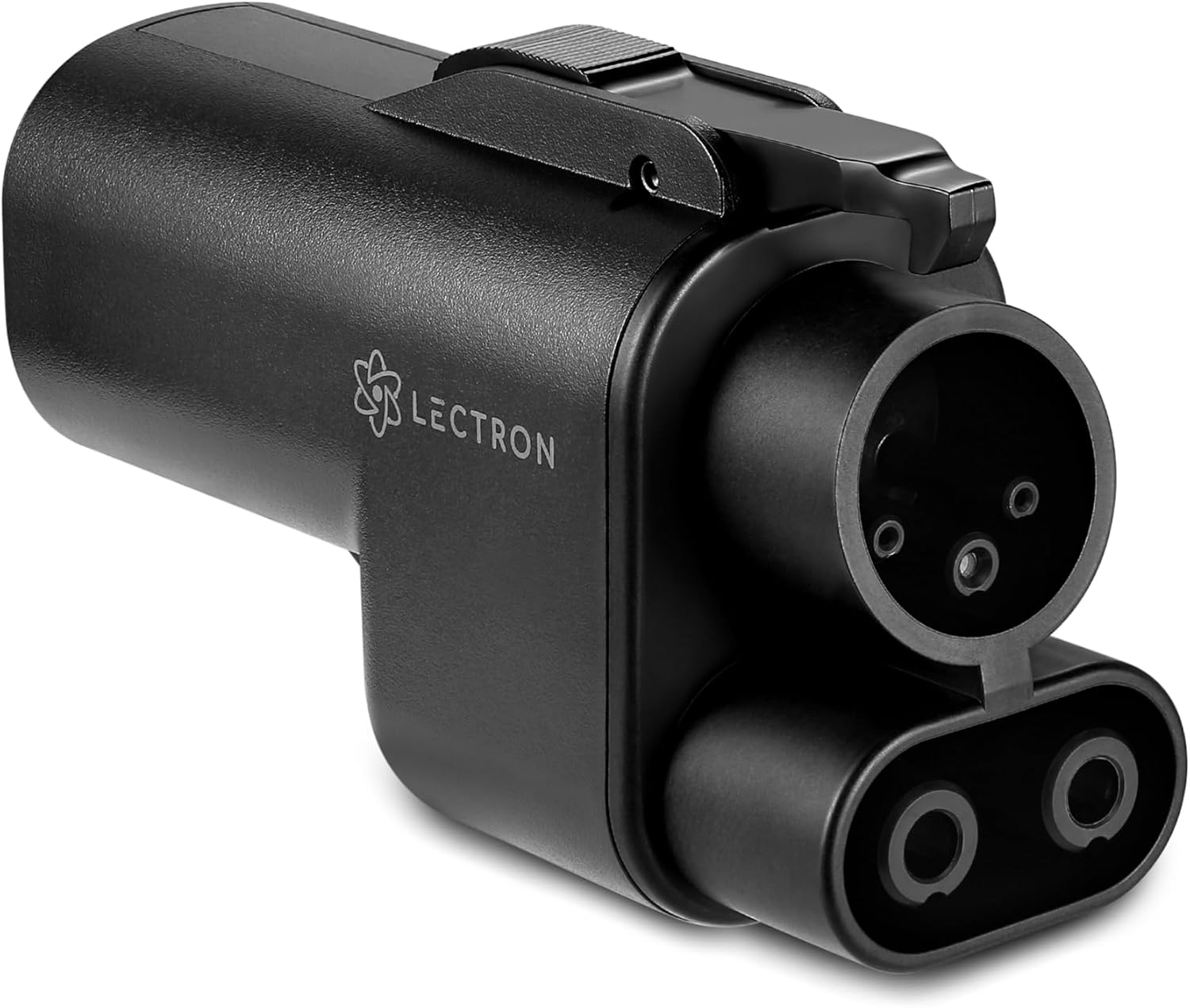
Lectron NACS to CCS Fast-Charge Adapter
Unlock every CCS fast charger for your Tesla, up to 500A DC. Never get stranded at a non-Tesla DC station again.
As an Amazon Associate, ThinkEV earns from qualifying purchases — at no extra cost to you.
R2 Is Coming, and It's Why the Network Is Expanding Now
The reason RAN is suddenly in build-out mode isn't really about today's R1 owners. It's about the R2.
Rivian's R2, the smaller, lower-priced model designed to put Rivian into mainstream price territory, entered production in 2026. Expected US MSRP sits around USD $45,000. Canadian pricing hasn't been formally confirmed, but the working assumption based on similar Rivian product pricing is roughly CAD $62,000–$68,000 before any provincial incentives or federal iZEV consideration (and iZEV eligibility for Rivian models has historically been tight, verify before counting on it).
More R2s on the road means more demand on RAN. Rivian has been explicit about this being the driver. The 1,007-stall milestone isn't the finish line, it's the runway. Network capacity has to land before the vehicles do, not after, because the worst possible launch is a popular vehicle and overwhelmed chargers.
For Canadian buyers eyeing R2 once it's available north of the border, the charging-infrastructure question is still live. Today, you'd be charging on FLO, Electrify Canada, Tesla Superchargers (where opened), and Petro-Canada. Future Canadian RAN expansion is plausible but unannounced. Don't budget around it.
Practical Canadian Road-Trip Planning With RAN Access
Here's the actual use case for a Canadian EV driver in 2026.
You're driving south. Maybe Vancouver to Portland, Toronto to Pittsburgh, Calgary to Glacier National Park. RAN now becomes one more network in your route planner alongside the ones you already use. ABRP (A Better Route Planner) and PlugShare both include RAN stations in their databases.
The geographic logic of RAN's footprint is what makes it actually useful for Canadians, not annoying:
- Pacific Northwest: RAN sites along the I-5 corridor and toward Mount Rainier / Olympic National Park
- Rockies: Sites approaching Yellowstone, Glacier, and the Wyoming/Montana adventure corridor
- Southwest: Coverage near Moab, Sedona, and the Utah parks loop
- California: Pacific Coast Highway coverage
If your US road trip ends at a city centre, RAN is less useful, Electrify America and EVgo own that market. If your trip ends at a trailhead, RAN was built for exactly that.
Practical advice for routing:
- Plan your border crossing with a full charge or near-full state of charge, Canadian fast-charging on the way down beats relying on the first US stall you find
- Pre-install the Rivian app and verify your payment method works while still on Canadian cell data
- Layer RAN, Tesla Supercharger, and Electrify America as three parallel options on each leg, redundancy keeps you out of trouble
- Verify connector type per stall on PlugShare before committing the route, especially if your EV uses CCS with a NACS adapter
For more on how cross-border charging fits the larger Canadian picture, Tesla and EVgo's planned 1,000-charger Canadian buildout is the corresponding story on this side of the border.
Gear worth having
As an Amazon Associate, ThinkEV earns a small commission from qualifying purchases — at no extra cost to you.

Grizzl-E Classic Level 2 EV Charger (40A)
Canadian-made and rated for minus 40C winters. 40A / 9.6 kW, NEMA 14-50, indoor/outdoor, 24-ft cable. The charger built for Canadian weather.
As an Amazon Associate, ThinkEV earns from qualifying purchases — at no extra cost to you.
Buy / Wait / Skip: Should RAN Change Your EV-Buying Math?
Buy in. If you're a Canadian EV driver who road-trips into the US regularly, Pacific Northwest, the Rockies, the Southwest, RAN access is now a real factor in your charging-network mix. Install the app this weekend. The marginal effort is roughly twenty minutes, and the optionality it buys for your next US trip is genuine.
Wait. If you're shopping for a new EV and partially deciding based on Canadian RAN access, wait. There's no announced Canadian rollout. Your charging-network analysis for Canadian use should focus on FLO, Electrify Canada, Tesla Supercharger access, and Petro-Canada. RAN isn't yet a factor north of the border.
Skip. If you don't road-trip into the US, RAN is genuinely not in your life. The 1,007-stall milestone is a North American charging-industry story, but it's not a Canadian commuter story. Skip the app install until you have an actual US trip planned.
The trigger that would flip the call: a Rivian announcement of Canadian RAN sites, or an R2 Canadian launch with bundled network access. Either would move RAN from "useful for trips" to "factor in the buying decision." Watch for it through late 2026 and into 2027, Rivian has the corporate room to expand north, and the R2's price point is the kind of product that makes the cross-border buildout economically rational.
Bottom line: a thousand stalls is not a Tesla-killer, but it's a meaningful third option, and the openness move is the right call. Worth setting up the account before your next summer trip south.
Gear worth having
As an Amazon Associate, ThinkEV earns a small commission from qualifying purchases — at no extra cost to you.

Roadside Emergency Safety Kit
Jumper cables, a portable air compressor, tow strap, first aid, and more for when something goes wrong between chargers. Canadian winters do not forgive the unprepared.
As an Amazon Associate, ThinkEV earns from qualifying purchases — at no extra cost to you.

Founder & Chief Editor
Vlad Pereira is the founder and chief editor of ThinkEV.ca, the Canadian electric-vehicle publication he writes and edits from Courtenay, British Columbia. He covers EV pricing, federal and provincial rebates, charging costs, and the Chinese manufacturers now entering Canada, from the buyer's side rather than the press-fleet side. ThinkEV is a venture of Vlad Pereira Online; his writing on health, income and the long game lives at vladpereira.com.
Frequently asked questions
Do you need a Rivian to charge at a RAN station?
Are there any Rivian Adventure Network stations in Canada?
Will a 350 kW stall charge your non-Rivian EV faster?
How much does a full charge cost at RAN for non-Rivian drivers?
Does your EV need NACS or will CCS work at RAN stalls?
More EV & road-trip finds
Affordable upgrades worth a look — tap any to check the price on Amazon.
 ★ 4,626
HoogaLife Hanging Car Diffuser (2-Pack)
View on Amazon ★ 12,396
K KNODEL Car Trash Can with Lid
View on Amazon ★ 21,310
Magnetic Car Phone Mount
View on Amazon ★ 87
★ 87Car Window Sun Shades for Kids (4-Pack)
View on Amazon ★ 68
★ 68WeatherTech FloorLiner for Tesla Model 3
View on Amazon ★ 47,507
HOMEXCEL Microfiber Cloths (12-Pack)
View on Amazon ★ 314
★ 314Mini USB LED Ambient Lamps (4-Pack)
View on Amazon ★ 1,349
Cool Swinging Duck Dashboard Ornament
View on AmazonRead, Plan, Then Stay Current
Explore our expert articles to understand incentives and ownership costs, use the map to pressure-test charging reality, then subscribe so new EV coverage comes straight to you.
Continue Reading
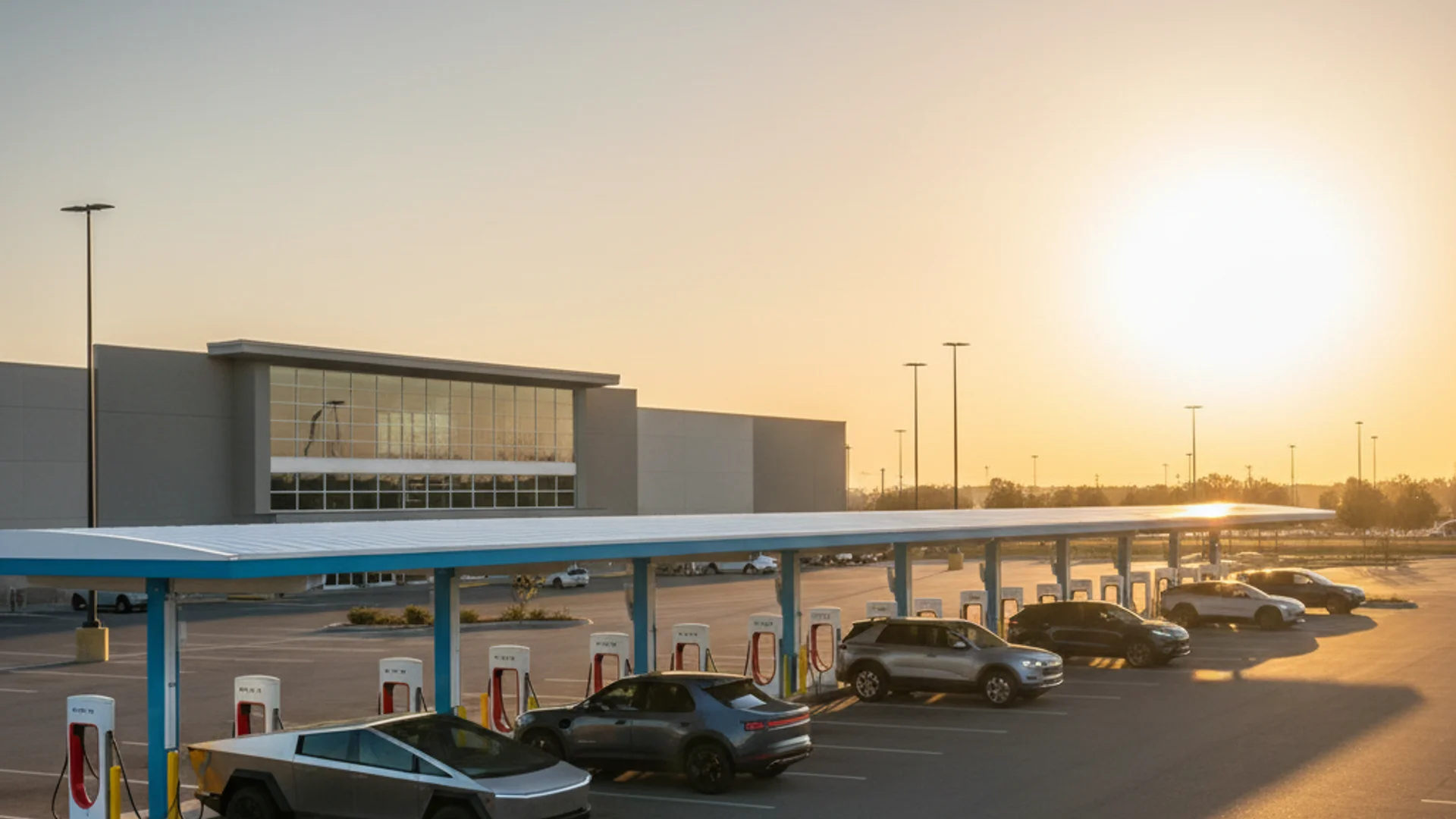
Walmart's EV Charging Network Is Getting Cheaper
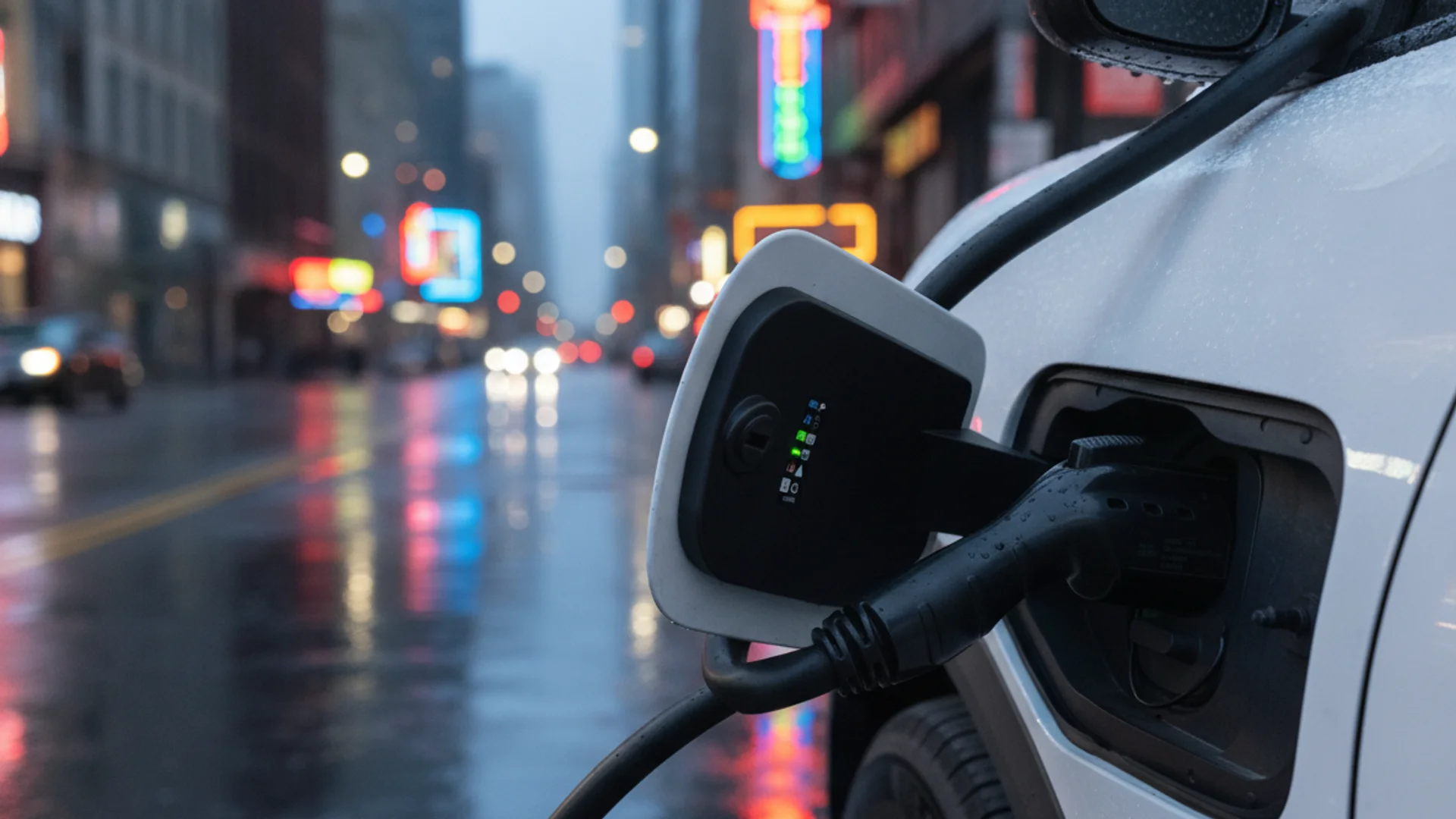
Public EV Charging in Canada: Networks and Payment
Public EV Chargers in Canada: Which Count Is Right
Level 3 DC Fast Chargers Explained for Canadian EV Owners
Rivian Posted 14.4% Delivery Growth Without The Tax Credit