Key takeaways
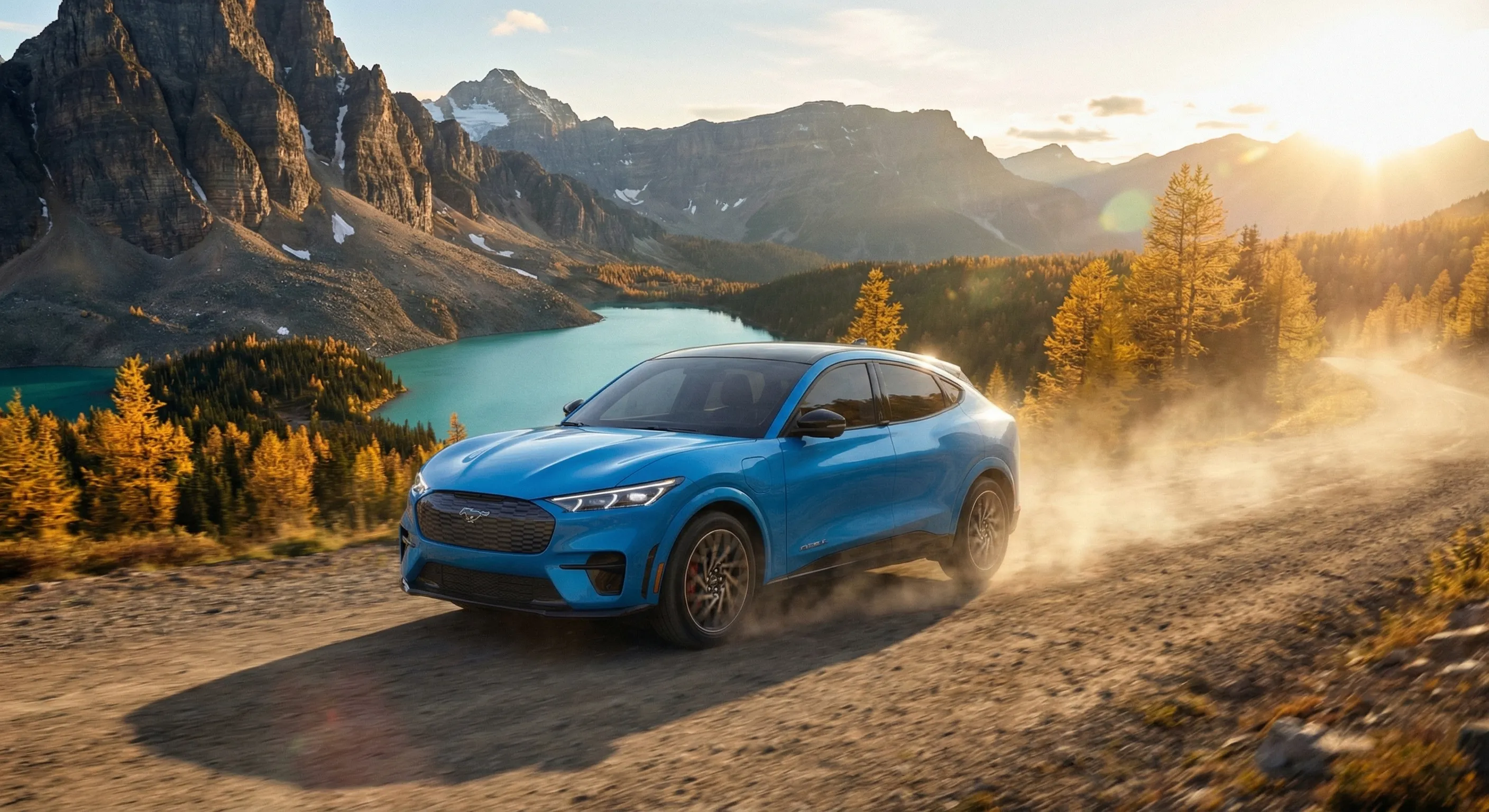
- Ford has repriced the Mach-E Select RWD to $44,690, which now qualifies for the $5,000 federal EVAP rebate, bringing the effective price to $39,690.
- The base Select, starting at $44,690, now claims 402 km of official range.
- That's a 5.5% gain, extracted from the same 72 kWh battery configuration, no hardware change, just efficiency improvements Ford has wrung from the powertrain management system.
Ford named their first serious consumer EV after the Mustang. That decision, attaching the most emotionally loaded nameplate in Ford's entire century-plus history to a crossover-shaped battery-electric vehicle, remains one of the more audacious product bets any legacy automaker has placed in the modern EV era. And not audacious in the vague marketing sense. Audacious in the sense that it genuinely infuriated a substantial portion of their most loyal customer base, generated hundreds of thousands of words of automotive opinion across the internet, and then... worked. The Mach-E is, in 2026, still Ford's best-selling electric vehicle. I find that fact more revealing than any single specification in this review.
But 2026 is not 2021. The EV market Ford launched the Mach-E into was basically wide open: a world where 380 km of range felt impressive rather than adequate, where hands-free highway driving was something you'd demo to your friends at a dinner party, and where the concept of a mid-size EV crossover with a real interior and genuine driving dynamics was nearly without competition.
That world is gone. The Ioniq 5 refreshed with 800V architecture and a design that makes the Mach-E look conservative by comparison. The Model Y has calcified its position at the centre of the market with pricing and Supercharger advantages that are difficult to argue with on a spreadsheet. And Ford has repriced the Mach-E Select RWD to $44,690, which now qualifies for the $5,000 federal EVAP rebate, bringing the effective price to $39,690.
So here's the question I want to answer: does the Mach-E still deserve Canadian buyers' money in 2026, and if so, who specifically are those buyers? Not whether it's a capable vehicle, it clearly is. The relevant question is whether the premium it asks for is justified against a field that has decisively caught up, and whether there's a version of this car that makes honest sense for a Canadian buyer right now.
There is. But the path to it is narrower than Ford would prefer to admit.
The 2026 Numbers That Actually Changed
Ford describes the 2026 Mach-E as a midcycle refresh, which is technically accurate and slightly undersells the real changes to the one number that matters most to Canadian buyers: range.
The base Select, starting at $44,690, now claims 402 km of official range. The 2024 model was 380 km. That's a 5.5% gain, extracted from the same 72 kWh battery configuration, no hardware change, just efficiency improvements Ford has wrung from the powertrain management system. In percentage terms, the jump looks modest. In market terms, it matters more than that percentage suggests.
A significant chunk of Canadian EV buyers, somewhere between a quarter and a third, based on surveys I've seen, won't seriously consider a vehicle below the 400 km official range threshold. It's a psychological floor, not an engineering one, but it's a real barrier to purchase consideration. The 2026 update pushes the Mach-E past it. That's not trivial. Ford checked a box that unlocks a portion of the market that the 2024 model couldn't touch.
The extended-range variant, now at $82,695, runs a 91 kWh pack and claims 515 km. I've done the geography on that. Toronto to Montreal is roughly 540 km. With mixed city-highway driving in moderate weather, 515 km of official range means you arrive in Montreal on a single charge with approximately 50 km of buffer, comfortable, not nail-biting. Drop the temperature to a February average on the 401 and add a cargo load, and I'd estimate 420 to 440 km of real-world range. That's still enough for the corridor without stopping. For anyone who makes that run regularly, the extended-range model removes it from the mental "needs planning" category entirely.
DC fast charging is rated at 150 kW across both battery sizes. At peak throughput, you're adding approximately 100 km of range every 10 minutes. Here's the planning number I'd actually use: 170 to 180 km in a 20-minute window. Not the theoretical 200 km, because charging curves don't stay at peak for the full session. Batteries thermal-throttle. Station power fluctuates. You occasionally share a pedestal with another vehicle drawing from the same supply. Building 170 km into your trip-planning math is honest and nearly always met, which is the goal.
The infotainment updates are less headline-worthy but worth naming. The 15.5-inch portrait touchscreen, already one of the better units in the class when the car launched, has received a software revision that delivers faster response and a reorganised home screen. Climate controls are less buried than before. Over-the-air updates have been a consistent feature of the Mach-E's ownership experience, which means buyers who purchased 2025 models or early 2026 may already have received most of what I'm describing. That OTA continuity is one of Ford's legitimately underrated advantages in the EV space and I'll come back to it in detail.
The Price Reality
At $44,690, the base Mach-E Select RWD now qualifies for the $5,000 federal EVAP rebate. That's a meaningful change from earlier pricing. After the rebate, the effective price is $39,690. I want to be specific about why this matters, because the EVAP details affect how every competitor comparison in this review needs to be read.
The EVAP program uses a $50,000 final transaction value cap, calculated from base price plus options plus dealer fees, excluding taxes and freight. The Mach-E Select RWD at $44,690 is on Transport Canada's official eligible vehicle list and clears that cap. The Select qualifies. However, higher trims, the Premium, the Extended Range AWD, and certainly the GT at $72,695, may push the final transaction value over the cap depending on options. Verify your specific configuration with your dealer before counting on the rebate.
In Ontario, EVAP eligibility now changes the math meaningfully. The Select RWD at $44,690 minus $5,000 EVAP equals $39,690 before tax. Add Ontario's 13% HST on $39,690 and approximately $1,500 in fees, and you're around $46,380 out the door. Financed at approximately 7.5% over 60 months, that's a monthly payment around $930, a very different number than this car carried a year ago.
The competitive context: the Chevrolet Equinox EV starts at $44,995 and qualifies for EVAP at $39,995 effective. The Mach-E Select at $39,690 effective is now slightly cheaper than the Equinox EV after rebates. The Kia EV6 LIGHT RWD comes in at $48,995 and also qualifies for EVAP. The Ioniq 5 starts at $54,999 and does not qualify. The Tesla Model Y RWD base at $49,990 also qualifies for EVAP.
The pricing market has shifted. The Mach-E Select is no longer fighting with one hand tied behind its back in the EVAP conversation. It's a competitive entry at $39,690 effective. The question is now entirely about the experience, and that's actually where this car makes its best argument.
What Putting the Mustang Name on an EV Actually Meant
The Mach-E naming decision was genuinely controversial and I've come to believe that the controversy was generated almost entirely by people who misread what Ford was actually communicating with it.
Here's the frame that makes the name coherent: Ford didn't put the Mustang badge on this car to sell EVs to Mustang buyers. They put it on to signal, loudly and unmistakably, that their first serious consumer EV was not going to be an appliance. In 2021, the word "appliance" was the most common pejorative in EV commentary, and it was largely accurate. Most EVs available then ranged from functionally anonymous (Leaf) to actively characterless (Bolt). The Mustang name carried a specific and legible message: this vehicle was designed to be driven, to feel like something, to have a personality. For a first product entering a market full of cautious competence, that signal was valuable in a way that a blander name would not have been.
And then Ford had to back it up. The GT version, starting at $72,695 in 2026, produces 480 horsepower and 860 Nm of torque, with a 0-100 km/h time under 4.5 seconds. Let's ground that in something concrete rather than just citing the number. A BMW X5 xDrive40i, which costs significantly more than $72,695, runs zero to 100 in about 5.3 seconds. A Mercedes GLC 300 4MATIC does the same sprint in roughly 6.0 seconds. The Mach-E GT is not just quick for a crossover, it's genuinely fast by the standards of any contemporary performance vehicle, and that context belongs in the conversation rather than buried in a footnote.
The more complicated question is whether the GT justifies its price against the alternatives that didn't exist in 2021. The Tesla Model Y Performance does 0-100 in about 3.7 seconds. The Ioniq 5 N brings 650 horsepower and a more extreme performance experience to a similar price bracket. The Mach-E GT is genuinely fast. It is not the fastest vehicle in this segment, and buyers who prioritise raw acceleration above everything else deserve to know that before making a $72,695 decision.
But I don't think straight-line numbers are the actual point of the Mustang name. The badge draws a buyer who wants a car with a reason to exist beyond moving cargo from point A to point B, someone who finds bland competence unsatisfying even when that competence is substantial. The GT delivers that sense of purpose. The base Select delivers a version of it. The name works as a filter: it self-selects buyers who are going to be satisfied by what the car actually delivers, which is a better outcome than marketing ambiguity that attracts buyers the car can't serve.
Five years of Canadian sales data suggest the filter is working. The Mach-E remains Ford's best-selling EV in a market where legacy brand EVs have generally struggled to build momentum. The Mustang name is part of why, and dismissing that as mere badge engineering misses what Ford actually accomplished.
What Driving It Actually Feels Like
The 2026 Mach-E drives noticeably better than the 2024 model. "Better driving" is one of the laziest phrases in automotive journalism, so let me be specific about what changed.
Ford's suspension tuning update is real. The ride is more planted, body roll is better controlled, and the steering has gained linearity in its response around centre. The specific improvement is the on-centre deadzone. In the 2024 model, there was a small but perceptible window of steering input where the car would drift slightly before the system corrected actively.
You could wander within your lane before the car responded. The 2026 model has tightened that window measurably. On the 401, where you're making constant micro-corrections against road crown, crosswinds, and the turbulence of passing transports, the result is a car that feels genuinely alert without feeling nervous. It's a refinement rather than a transformation, but it's the kind that makes a two-hour highway drive materially less fatiguing. I appreciate refinement in ways I didn't when I was twenty-three.
The low centre of gravity from a floor-mounted battery pack isn't theoretical here, it shows up in the way the Mach-E corners. The suspension is tuned to exploit that low mass centroid, and in direction changes the car rotates more like a station wagon than a traditional high-riding crossover. At highway speeds it feels settled rather than just large. The AWD system on Premium and GT trims produces 346 horsepower in the Premium configuration and 480 in the GT. Ford's dual-motor torque split operates electronically, and in wet or snowy conditions the AWD models are notably composed, something Canadian Mach-E owners report consistently in winter driving assessments.
The GT adds MagneRide adaptive dampers, which I'll cover in their own section because the technology deserves more explanation than it typically gets. The short version: the GT's suspension transforms what the car feels like on the combination of highway grades and battered urban streets that make up the Canadian driving experience.
Regenerative braking through Ford One Pedal Drive is well-calibrated. Heavy regen ramps up progressively rather than biting the moment you lift off the throttle, which is the difference between a system that feels natural after two days and one that takes two weeks to stop fighting with your reflexes. In city driving, once you've adapted, which usually takes a day or two, maybe a week if you're particularly attuned to the feel of the brake pedal, you stop touching the conventional brakes except for final low-speed stops. Brake pad wear becomes essentially irrelevant. On a vehicle at $44,690 and up, I appreciate every dimension of reduced operating cost, and the regenerative braking story is one of the best arguments for EV ownership that almost never gets enough emphasis.
The RWD base models are quick enough for daily use, 0-100 in the 6-second range, but the AWD versions are where the Mach-E's personality really emerges. The torque response from a standing start is the feature that converts ICE drivers in the first five minutes of a test drive. There's no gear shift, no rev climb, no moment where you're waiting for the powertrain to get into the right part of its power band. You ask for acceleration and you get it, instantaneously, from any speed. Once you've lived with that for a week, going back to an ICE vehicle feels like piloting something that has a cold every morning.
The Interior Makes the Price Make Sense
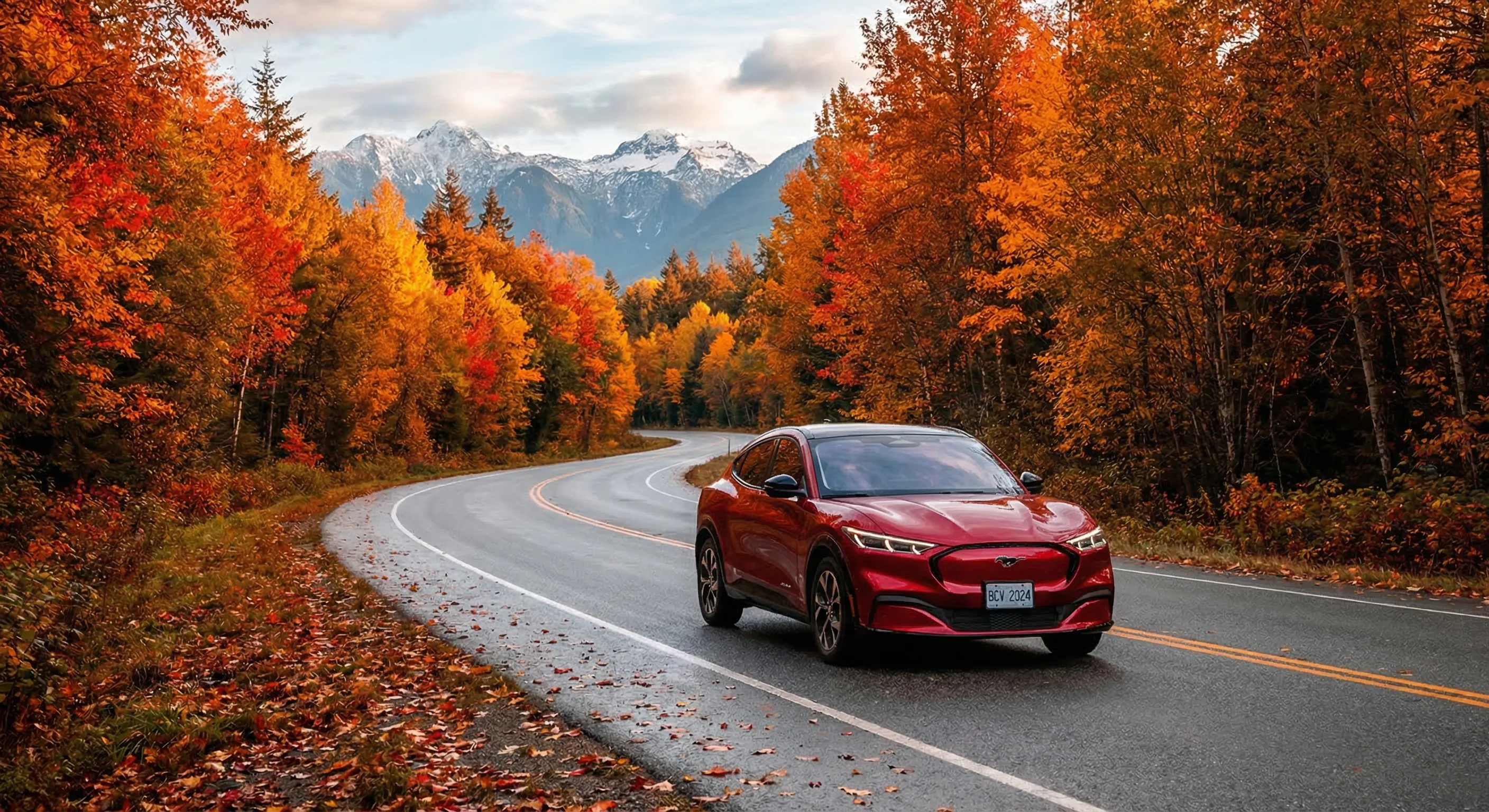
The Mach-E's interior is where $44,690 feels most justified, and it deserves more than the standard paragraph that most reviews give it.
The dashboard design is deliberately restrained. Ford resisted the temptation to fill every surface with screens and ambient light strips, and the result reads as considered rather than sparse. The 15.5-inch portrait touchscreen anchors the centre stack impressively, but then Ford made a decision that separates them from most competitors: they kept the physical volume knob and physical temperature buttons.
This sounds trivial until you've lived with a car that doesn't have them. The Tesla Model Y removed all physical controls. The Ioniq 5 kept some but buried climate functions in touchscreen submenus. The Mach-E kept exactly the controls that matter, volume and temperature, physical, and put everything else on the screen. That's the correct call. It becomes more obviously correct every week you drive the car and never once have to take your eyes off the road to find the HVAC.
Seat upholstery on the Select runs a cloth-and-leather combination. Premium and GT trims step up to Ford's ActiveX synthetic leather, a material developed specifically for EV interiors because it handles temperature cycling better than traditional leather while also being vegan-compliant. In a car that will sit at -25°C in January and bake at 35°C in July, the durability argument for synthetic material is genuinely real, not just marketing language. The seating position falls in the productive middle zone between SUV and sedan, easy entry and exit, commanding view forward, but a lower hip point than a traditional high-riding crossover that gives the car a more planted than perched feeling.
Rear passenger space deserves specific attention because mid-size crossovers in this segment often compromise it quietly in pursuit of a silhouette. The flat floor, possible because the battery pack lives under the structure rather than intruding into the cabin as a transmission tunnel, means there's no hump for a middle-rear passenger to straddle. Three adults across the rear bench is genuinely possible without anyone drawing a short straw. Headroom is adequate up to about 6'1"; above that, the roofline starts to make itself known, particularly in panoramic roof trims where the structural header sits marginally lower.
The panoramic glass roof available on Premium and GT trims is worth choosing if you have any interest in it. It's fixed rather than opening, which preserves structural rigidity and eliminates the seal degradation you'd get from a power moonroof cycling through Canadian winters. UV-tinted. The view it creates transforms the cabin atmosphere entirely on a clear day, and in the context of a Canadian winter where useful natural light is already rationed, the psychological effect of more light in the cabin is real and measurable in mood rather than just aesthetics.
Cargo space is 402 litres behind the rear seats, expanding to 1,624 litres with them folded. The front trunk adds 81 litres, enough for a charging cable, rain gear, a jumper kit, and whatever else you'd rather keep accessible and separate from the main cargo area. The Tesla Model Y offers 854 litres behind the rear seats and 117 litres in the front. Total Mach-E volume is slightly less overall, but the frunk's accessibility genuinely changes how you use the car's storage in practice, cold-weather gear in the frunk, grocery bags in the main hold, in ways that aggregate litre comparisons don't capture.
The B&O Sound System on Premium and GT trims, 10 speakers, developed in collaboration with Bang & Olufsen, is genuinely good. Not audiophile-grade, not the kind of system that makes a music journalist weep, but legitimately satisfying for daily driving. The baseline Select audio is adequate and nothing more. If audio quality matters to you and you're weighing Select versus Premium, the B&O system alone is a meaningful tie-breaker.
The pattern is clear: overall interior coherence. The materials, the layout, the technology integration, it tells a consistent story about what the car thinks it is. That coherence is more unusual in the EV segment than it should be, and it's one of the things that makes the Mach-E feel like a finished product rather than a features list.

BlueCruise: The System That Actually Changes Long-Distance Driving
BlueCruise is Ford's hands-free highway driving system, and in 2026 it's the most compelling driver-assistance technology available on any non-Tesla vehicle in this price range. The marketing manages to simultaneously oversell and undersell it, so let me explain exactly what it does and what it doesn't do.
What BlueCruise actually does: on pre-mapped highway sections, substantial stretches of the 401, the Trans-Canada, Highway 400, and most major provincial highway corridors, the system takes over steering, acceleration, and braking entirely. Your hands can leave the wheel. A driver-facing infrared camera monitors your gaze, and if you look away from the road for more than a few seconds, it escalates alerts until it decelerates the vehicle and ultimately stops it. The legal and practical distinction between BlueCruise and Tesla's Autopilot is worth stating clearly: BlueCruise requires your eyes forward. Autopilot can be abused in ways that BlueCruise's architecture makes physically difficult. This is a better safety design, not a lesser one.
On the 401, which carries something like 500,000 vehicles daily through Greater Toronto and is genuinely the spine of Ontario's transportation network, BlueCruise changes what a long commute feels like in ways that are hard to quantify but easy to notice after a week. The mental load of lane-keeping and speed management over two hours of stop-and-go is real. It accumulates across days and weeks in ways that affect how you arrive at work and how you feel when you get home. Having a system manage that task reliably while you keep your eyes forward and your attention available for higher-order decisions is a daily practical benefit that the marketing doesn't capture. It's not autonomy. It's genuinely useful assistance.
The current limitations deserve naming. BlueCruise doesn't change lanes autonomously or take exits, it isn't a navigation system. In construction zones, where lane markings are redrawn daily and temporary barriers create ambiguous geometry, the system hands back control. It also steps back in heavy rain or low-visibility conditions where camera confidence drops. These are appropriate limits, not failures. A system that recognises when to stop is more trustworthy than one that guesses, and I'd take a cautious BlueCruise over an overconfident competitor on any Canadian winter highway.
BlueCruise is available on Premium and GT trims only. The base Select doesn't offer it. If BlueCruise is a significant factor in your decision, and for highway commuters and regular long-distance drivers I think it genuinely should be, you're looking at Premium trim at minimum, which means starting at roughly $64,000 to $67,000 depending on configuration.
The combination of BlueCruise and the Mach-E's 150 kW DCFC creates a specific travel use case that Ford has genuinely solved. A Toronto-to-Sudbury run is roughly 400 km. You leave Toronto with a full charge, let BlueCruise manage the first two hours of 400-series highway, stop for 20 to 25 minutes at Barrie or Parry Sound to charge, and arrive in Sudbury with a comfortable buffer. That's not a hypothetical I constructed for dramatic effect. It's a well-documented route in the Canadian Mach-E owner community, and the car handles it consistently without drama. That matters to me more than any single specification.
Winter Range: The Number That Actually Matters Here
Official range is tested at 23°C. Canada is not 23°C for five months of the year in most of the country, and any review written honestly for a Canadian audience has to spend real time on the cold-weather numbers. Not a paragraph, a full accounting.
At -15°C, a representative winter temperature for interior BC, the Prairies, and most of Ontario and Quebec from December through February, plan for 20 to 30% range reduction. On the base model's 402 km official range, that means 282 to 322 km of real-world winter range. On the extended-range model's 515 km claim, you're working with 360 to 412 km. These are still viable numbers for most Canadian commuting patterns. A 300-km round trip is uncommon in daily suburban life. But they're the numbers you're actually planning around, not the numbers on the window sticker.
The heat pump, standard on most Mach-E trims, is central to why these numbers aren't worse. Without a heat pump, cabin heating draws from the battery through resistive elements at a rate that can be severe: some older EVs lose 40 to 50% range in deep cold. The heat pump operates through ambient heat exchange and is significantly more efficient than resistive heating at temperatures above approximately -20°C. Below that threshold, efficiency drops and most systems supplement with resistive heat. In practice, the Mach-E's winter range degradation is more moderate than older or budget EVs because of the heat pump, but "more moderate" is not "immune." Use 20% range reduction as your planning assumption in real winter, 30% in a genuine cold snap.
Tire choice affects this more than most buyers expect. The Mach-E ships on summer or all-season tires depending on trim and market. Dedicated winter tires, not all-seasons, but actual winter-rated rubber like the Michelin X-Ice or Nokian Seasonproof, partially offset range reduction by decreasing rolling resistance in snow and providing grip that enables more confident regenerative braking, which recovers more energy in return. Canadian Mach-E owners report consistently that a proper winter tire set is the single highest-return modification they've made to the car. Budget $1,200 to $2,000 for a winter tire set on steel rims. This is not optional advice if you live anywhere that sees meaningful snow accumulation.
Ground clearance on the Mach-E is approximately 175 mm. That's adequate for plowed urban roads and light snow, but it's not a Subaru Outback. After a heavy overnight snowfall before the morning plows run, you'll want to be thoughtful about where you're going. The AWD models have a meaningful advantage in these conditions, dual-motor torque vectoring can pull the car through situations where the RWD Select would spin and wait.
Pre-conditioning the battery before departure makes a tangible difference in cold-weather performance. The Ford Power My Drive app lets you set the car to warm both the cabin and the battery while still plugged in at home, so you leave with a warm pack operating at full efficiency rather than a cold pack throttling its discharge to protect itself. For anyone who garage-parks and plugs in nightly, which should be every Mach-E owner in Canada, this is a five-minute habit that pays measurable dividends in both range and charging speed every single winter morning. If there's one operational tip that matters most for Canadian EV ownership, this is it.
150 kW on the Canadian Charging Network: Honest Assessment
150 kW is the Mach-E's DC fast charging ceiling on both battery configurations. Here's what that number means across the real Canadian charging network in 2026, not the ideal one.
The CCS connector standard has broad infrastructure support in Canada. Electrify Canada operates over 350 DCFC stations nationally, with many upgraded to 150 kW and above. Petro-Canada's highway network spans major provincial corridors with CCS-capable stations. ChargePoint, Flo, and SWTCH all maintain CCS-compatible DC fast charging infrastructure. Finding a 150 kW CCS station in 2026 is genuinely easier than in 2021, and on major corridors, the 401, the Trans-Canada in BC, the QEW through Southern Ontario, you can plan trips with reasonable confidence.
In rural areas and off major corridors, the picture is more variable. This is precisely where the extended-range variant's 515 km range earns its $82,695 premium. More range means fewer required stops, and fewer stops means less exposure to the stretches where infrastructure density thins out. If you regularly drive routes outside major corridors, the extended-range is not an indulgence, it's infrastructure insurance, and it's priced more reasonably than it looks when you factor in the reduced stress.
The comparison with Tesla's Supercharger network is direct and worth naming. The Model Y charges at up to 250 kW on Supercharger V3 stations, a 67% peak speed advantage over the Mach-E's 150 kW ceiling. In a 20-minute session, a Model Y might realistically add 250 to 270 km. The Mach-E adds 170 to 190 km. Over a long trip with multiple charging stops, the Model Y's charging speed can save 30 to 45 minutes of total stop time. That's a real number. It's not decisive for most Canadian drivers who make occasional highway trips rather than covering distance professionally, but it belongs in a comparison rather than a footnote.
The Supercharger network also maintains a reliability reputation advantage in Canada, particularly during peak travel periods. Mach-E owners occasionally report sessions where a CCS station is down or occupied, requiring a detour. This is improving as infrastructure matures, but it remains a non-zero risk worth factoring into trip planning, particularly on long-weekend drives when every EV owner in Ontario is apparently heading for the same cottage corridor simultaneously.
For daily home charging, the practical picture is uncomplicated. Most Mach-E owners install a Level 2 EVSE, a 240V unit running at 7.2 to 9.6 kW. The Mach-E's onboard AC charger accepts up to 11 kW on Premium and GT trims, and 7.2 kW on the Select. A full charge from empty on an 11 kW Level 2 takes approximately eight hours. On a 7.2 kW unit, closer to eleven. For most Canadian commuters driving under 80 km daily, plugging in overnight consistently means waking to a full charge every morning. The 72 and 91 kWh packs are both comfortably covered by overnight Level 2 charging, which means fast charging becomes a road-trip consideration rather than a daily logistics problem.
The Competition Has Caught Up, Here's the Picture
I've referenced the Equinox EV and Model Y throughout. They deserve direct treatment rather than passing mentions, because the competitive picture is genuinely the most important context for a 2026 Mach-E buying decision.
The Chevrolet Equinox EV at $44,995 with its $5,000 EVAP rebate is still a key competitor. Effective net price: $39,995. It delivers approximately 439 km of range in RWD configuration, charges at up to 150 kW, matching the Mach-E exactly on fast charging speed, and offers wireless Apple CarPlay and Android Auto. It's a genuinely capable car with a well-appointed interior. It doesn't drive as well as the Mach-E. It doesn't offer BlueCruise. It doesn't carry any emotional weight as a nameplate. The effective price gap has narrowed considerably now that the Mach-E Select also qualifies for EVAP, $39,690 for the Mach-E versus $39,995 for the Equinox. At near-parity, the choice is entirely about what kind of car you want to drive.
The Tesla Model Y RWD base at $49,990 now qualifies for the $5,000 EVAP rebate and is on Transport Canada's official eligible list, effective price $44,990. Model Y advantages: Supercharger network reliability and charging speed, slightly more cargo space, and navigation that actively routes you through charge stops without manual planning. Mach-E advantages: interior materials quality, BlueCruise hands-free highway driving, better driving dynamics, lower sticker price, and a traditional dealer network if face-to-face service matters to you. Both cars now qualify for EVAP at their base trims, so the comparison is purely about the experience.
The Ioniq 5, starting at $54,999, is the most technically interesting direct competitor. Its 800V architecture allows charging at up to 350 kW on compatible stations, more than double the Mach-E's ceiling. In a 20-minute session at a 350 kW compatible station, you're adding 300+ km. The design is striking, the interior is excellent, and the AWD variant is genuinely rapid. The practical complication: 350 kW charging infrastructure in Canada remains sparse. Many Ioniq 5 owners never actually access the top charging speed in real Canadian life because the stations aren't positioned along their routes. The 800V architecture is forward-compatible in a meaningful way the Mach-E's 400V setup isn't, but forward-compatible and currently useful are not the same thing.
Again and again, the Equinox EV is the most direct comparison for the Mach-E, because the price gap has closed. The Ioniq 5 asks you to pay more for technology. The Model Y asks you to accept a different ownership ecosystem. The Equinox EV now lands at virtually the same effective price as the Mach-E Select after EVAP. The Mach-E needs to win on experience to justify the choice, and it does, but you need to be the specific buyer who values what the experience delivers.
Gear worth having
As an Amazon Associate, ThinkEV earns a small commission from qualifying purchases — at no extra cost to you.
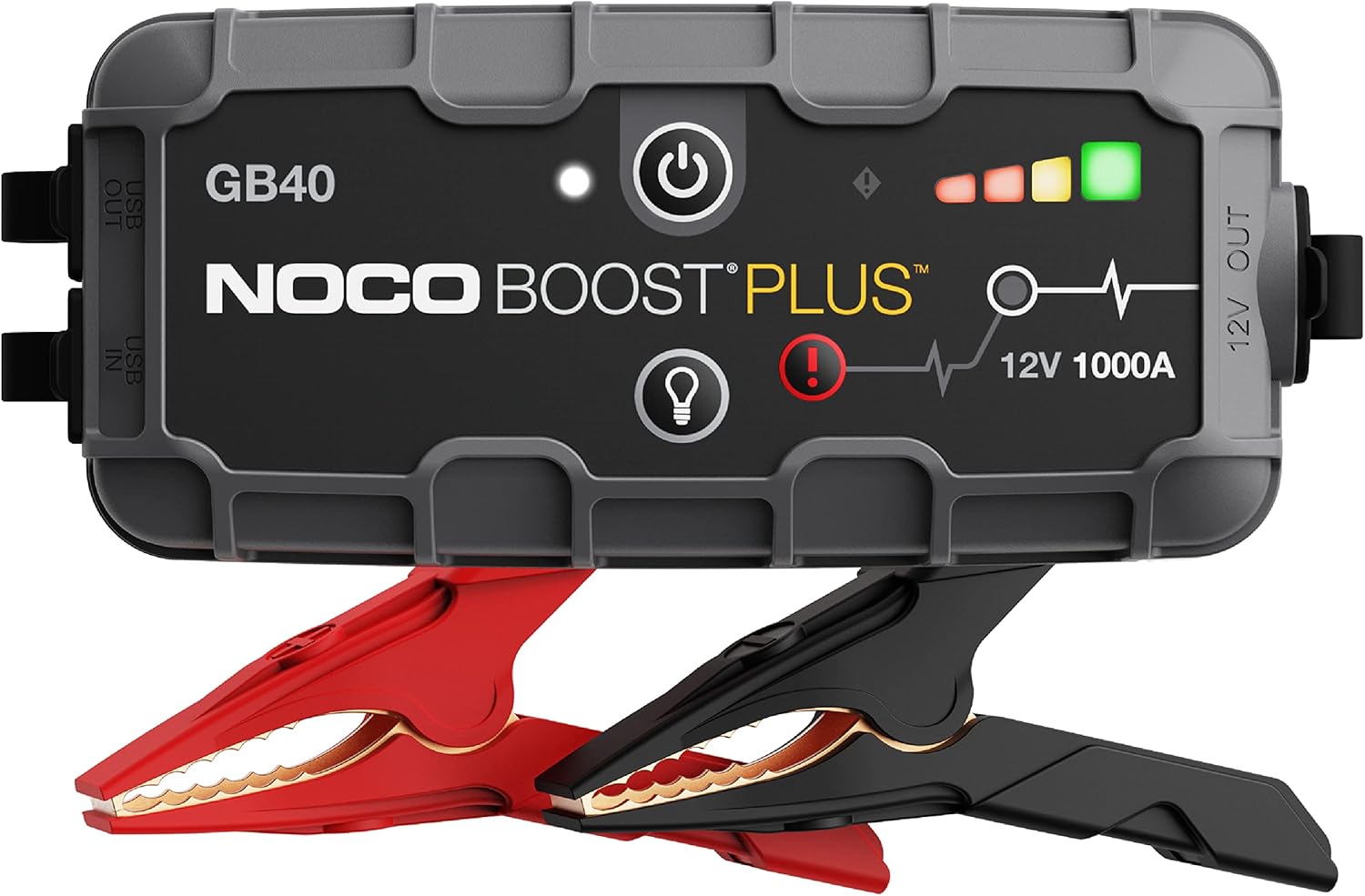
NOCO Boost Plus GB40 Jump Starter
A 1000A lithium jump starter that fits in your glovebox and works on any 12V battery. Your insurance against a dead 12V in a parking lot.
As an Amazon Associate, ThinkEV earns from qualifying purchases — at no extra cost to you.
Which Mach-E Trim Actually Makes Sense
The lineup runs from the Select RWD at $44,690 to the GT at $72,695, with several configurations between. Here's how I'd actually think through each tier rather than reciting the option list.
The Select RWD at $44,690, now $39,690 after EVAP, is actually the entry point that makes the most sense for budget-conscious buyers. RWD, 72 kWh, 402 km official range. You get the 15.5-inch touchscreen, wireless Apple CarPlay and Android Auto, and Ford's full Co-Pilot360 active safety suite including blind-spot monitoring, lane-centring, and adaptive cruise. What you don't get: BlueCruise, the panoramic glass roof, premium audio, or the 11 kW onboard charger. At $39,690 effective, it's a genuinely competitive entry point, close in price to the Equinox EV and cheaper than the Model Y RWD base after rebates. The limitations are real, but so is the price.
The Premium trim is where the Mach-E's value logic sharpens into something defensible. Available in RWD with the 72 kWh pack or AWD with the 91 kWh pack, the Premium adds BlueCruise, the panoramic roof, the B&O Sound System, the 11 kW onboard charger, and heated front and rear seats. If you're spending Mach-E money, this is the trim that delivers the features that justify the category. If I were writing a cheque today, it would be the Premium AWD with the 91 kWh pack, 515 km claimed range, AWD for Canadian winters, BlueCruise for the highway commute, all the features that make the interior worth talking about. That's approximately $74,000 to $78,000 after provincial taxes and fees depending on your province, which is a serious commitment, but it's a coherent one.
The Extended Range AWD at $82,695 is essentially the Premium package with the larger battery as the defining feature. For Canadian buyers who regularly cover highway distances, a commute between cities, regular runs between major centres, weekend travel to properties outside urban corridors, the range jump and AWD system together produce the lowest-stress charging experience the Mach-E offers. Whether $82,695 is the right price for that peace of mind depends entirely on your driving patterns and financial situation.
The GT at $72,695 is the enthusiast's trim: 480 horsepower, MagneRide adaptive dampers, a more aggressive suspension tune, 0-100 km/h under 4.5 seconds. It delivers real performance and a noticeably different character from the Premium. If driving dynamics and straight-line capability are primary interests, it earns its price. If they're tertiary concerns behind range and value, there are more efficient ways to allocate $72,695 in the 2026 EV market.
The honest trim recommendation for most Canadian buyers is Premium AWD. Everything above that is for buyers with specific reasons to go higher.
The GT's MagneRide Suspension: Why It's Worth Understanding
The GT's $16,000 premium over the base Select needs a proper accounting, and the MagneRide dampers are the part of that equation that gets the least explanation in most reviews.
MagneRide doesn't use conventional passive dampers or basic electronically controlled units that switch between a handful of preset modes. It uses magneto-rheological fluid, a fluid whose viscosity changes in response to an applied magnetic field, to adjust damping force thousands of times per second, responding to road surface input continuously rather than on a programmed schedule.
The practical result is a suspension that is simultaneously firmer and more comfortable than those two qualities normally allow at the same time: firm enough to control body roll in corners, compliant enough to absorb the surface irregularities common on Canadian urban roads without transmitting them into the cabin. On a city like Toronto, highway-quality grades combined with streets that look like they've been negotiating with potholes since confederation, MagneRide delivers a driving experience that fixed-rate dampers cannot replicate at either end of the stiffness spectrum.
The GT's Pirelli performance tires add grip on dry pavement at the cost of winter traction and a modest range penalty from higher rolling resistance. GT owners in Canada who plan to drive year-round should budget for a proper winter tire set on steel wheels: $1,500 to $2,500 depending on size and brand. Not optional. The performance tires that make the GT feel planted in August are genuinely dangerous on a cold wet November road in Ontario, and "genuinely dangerous" is not a phrase I use loosely.
The 480 horsepower and 860 Nm of torque in the GT produce a driving sensation qualitatively different from the Premium's 346 horsepower. The torque figure is the key, instant, full torque from zero RPM means the GT doesn't have a power band, it has a power wall. Floor it at 20 km/h and the response is identical to flooring it at 80 km/h, which no naturally aspirated engine can replicate and which turbocharged engines only approximate with their characteristic lag. A Mercedes-AMG C43 does 0-100 in 4.6 seconds. An Audi S5 does it in 4.5. The Mach-E GT does it in under 4.5 seconds in a five-seat family crossover with a panoramic roof and a frunk full of charging cables. That context matters when evaluating the price.
The SYNC 4A Experience in Daily Life
BlueCruise is the headline technology, but the broader SYNC 4A connectivity experience is what you're actually living with every day, and it deserves treatment as a daily driving companion rather than a spec-sheet checkbox.
The 15.5-inch portrait screen is initially striking and then becomes background furniture, which is exactly the right trajectory for technology you're in a relationship with for seven or eight years. Resolution and brightness are excellent. The SYNC 4A interface organises around a persistent taskbar at the screen's bottom, with large tappable icons for navigation, media, climate, and phone. Ford learned painful lessons from the disasters of early SYNC generations, and this version is consistently responsive, I've never experienced the multi-second lag that plagued SYNC 3 in cold temperatures, which was the specific failure mode that made early Mach-E owners quietly furious in winter 2021.
Wireless Apple CarPlay and Android Auto are supported across all 2026 Mach-E trims. Once registered, the connection is automatic and fast on startup. The majority of Mach-E owners use their phone's navigation rather than Ford's embedded nav, Waze and Google Maps remain more accurate and better-updated than any built-in navigation from any manufacturer. The argument for native nav is route planning with integrated charge stop sequencing, which the FordPass app handles reasonably well for pre-trip planning even if the in-car integration isn't as smooth as Tesla's single-system approach.
The FordPass app manages remote climate pre-conditioning, charge scheduling, charging status monitoring, and remote lock and unlock. Pre-conditioning is what Canadian Mach-E owners use most consistently, warming the cabin and battery while still plugged in before a winter departure saves both range and comfort in a way that pays off every cold morning. The app's reliability has improved significantly over the past year. Early Mach-E adopters experienced connection failures that have been largely resolved through backend updates, but it's worth checking current user reviews before purchasing rather than relying on the 2023 reputation.
Voice command through SYNC 4A has improved with each software revision. It's not Siri. It's not Google Assistant. But for navigation destinations and climate adjustments it handles natural language reliably enough that you start using it rather than avoiding it, which is the only bar that matters. "Set temperature to 21 degrees" and "take me to the nearest Electrify Canada station" work consistently. Consistent is the word that matters, not impressive, not magical, consistent. And consistent means you can build it into your routine, which is what actually changes your daily experience.
Ford's Dealer Network: An Underrated Canadian Advantage
Dealer coverage doesn't appear on comparison spreadsheets, but it matters in the real experience of owning a vehicle in Canada.
Ford's dealer network covers every major Canadian market and a substantial number of secondary and rural markets. In a country where a BYD or an NIO, or even a Tesla, requires working through a service model that can involve shipping your vehicle to a regional service centre, the ability to walk into a Ford dealer in Kamloops, Red Deer, or Sault Ste. Marie, or a hundred similar communities that house real Canadian populations, and have a service department that can handle your vehicle is a genuine and meaningful advantage. I'm not suggesting this is the primary reason to choose the Mach-E over its competitors. It's a real consideration that gets systematically underweighted in reviews written for readers who live within 30 km of a major urban service centre.
Ford has pushed OTA software updates consistently across the Mach-E's five-year life. Meaningful revisions to driving character, charging management, and infotainment have arrived through over-the-air delivery in a way that more closely mirrors the Tesla model than most legacy-brand EVs achieve. Buying a Mach-E today is buying a car that will be measurably better in two years without requiring a dealer visit or a hardware modification. That continuity of improvement has real financial value when you're keeping a car for seven or eight years, and it's one of the things Ford has genuinely gotten right with this platform.
The Mustang community is another real-world differentiator that doesn't fit neatly into a spec sheet. Mach-E owner groups exist in every major Canadian city, and the cross-pollination with traditional Mustang culture has produced something unusual: an EV with an active, engaged ownership community built around it. For first-time EV buyers especially, access to a community of experienced owners who have already solved the problems you're about to encounter, winter tire choices, cold-weather charging strategies, provincial incentive programs, cross-country routing on the specific corridors you actually drive, is practically valuable in a way that no manufacturer document captures.
Ford's warranty covers 3 years and 60,000 km bumper-to-bumper, with 8 years and 160,000 km on the battery and electric drive components. That matches the federal mandate and is competitive with the broader EV field. The 8-year battery coverage is the one that matters, pack replacement on a 72 or 91 kWh battery would be a significant cost event outside warranty. Knowing it's covered for the better part of a decade removes the largest variable from your long-term ownership calculus.
Reliability: Five Years of Real-World Data
The Mach-E has been on Canadian roads for nearly five years. That's enough time for a meaningful reliability picture to emerge, and the trajectory is genuinely encouraging, especially for buyers considering 2025 and 2026 model year vehicles.
Early production years, 2021 and 2022, had documented issues. A recall on the main battery junction box in certain 12V systems. Software instability in early SYNC 4A deployments. Some reported problems with the front trunk latch mechanism. Ford addressed these through formal recalls and OTA fixes, and the resolution process was generally efficient, but early adopters paid the tax that early adopters always pay. The 2024 to 2026 production years have a meaningfully cleaner track record based on owner forums, J.D. Power data, and Consumer Reports tracking.
J.D. Power's 2025 Initial Quality Study placed the Mach-E above the segment average for EV crossovers. Consumer Reports gives the 2025 Mach-E a Recommended rating with above-average predicted reliability, a meaningful improvement from the 2022 and 2023 models that earned below-average scores. That improvement trajectory matters when you're buying a vehicle you intend to keep for seven or eight years. The 2026 model builds on the 2024 to 2025 reliability foundation, not the 2021 to 2022 one.
Ford's certified pre-owned programme for the Mach-E is active, and used Mach-E pricing has stabilised after the significant depreciation that hit most early EVs between 2022 and 2024. A 2022 or 2023 Mach-E Premium with reasonable mileage currently sits in the $38,000 to $44,000 range. For buyers who want the Mach-E ownership experience at an even lower price point, that's an interesting entry, used vehicles don't qualify for EVAP, but at $38,000 to $44,000 the net price is competitive and the math works for the right buyer, particularly someone who can benefit from the lower insurance premium on a lower-declared value.
The 8-year, 160,000 km battery warranty covers the largest potential expense in long-term EV ownership. Battery replacement for a 72 or 91 kWh pack, if it were to occur outside warranty, would be a significant financial event. Knowing it's covered removes the tail risk from the ownership calculation in a way that genuinely matters when you're deciding whether to keep the car or sell it at year six.
What Canadian EV Geography Actually Does to Your Decision
Canada is not the United States, and Canadian EV buying decisions involve specific factors that reviews written for American audiences consistently underweight. Let me walk through what actually shapes EV adoption here and where the Mach-E sits within it.
Range anxiety in Canada is qualitatively different from the continental US because Canadian geography is simultaneously more hostile and more spread out. Edmonton to Calgary is 300 km. Toronto to Ottawa is 450 km. Winnipeg to Brandon is 200 km. These are ordinary regional drives that Canadians make regularly, weekend trips, family visits, work travel, and the combination of highway distances and potential charging gaps means range matters here in a way it might not for someone in Los Angeles who never ventures more than 80 km from home.
The Mach-E's 402 km standard range and 515 km extended-range need to be assessed against Canadian geography specifically. The 402 km base range covers the Edmonton-Calgary corridor on a single charge in summer, though at -25°C in January with a headwind it compresses considerably. The 515 km extended-range handles the same corridor with meaningful comfort margin year-round. These aren't edge cases I've constructed for dramatic effect, they're the normal operating conditions for a substantial portion of Canadian buyers who will actually purchase a Mach-E. Getting this math right before you buy is far more useful than any driving dynamics comparison.
Charging infrastructure investment has accelerated since 2021, but distribution remains uneven. The Trans-Canada from Vancouver to Calgary is now well-served, with multiple Electrify Canada stations and the Petro-Canada network providing reliable CCS coverage. The Montreal-Quebec City corridor is comparably developed. The weaker stretches are predictable: northern Ontario between Sudbury and Thunder Bay, rural Saskatchewan and Manitoba, and the Maritimes outside Halifax. For Mach-E owners in major urban centres, these gaps are largely irrelevant to daily life. For owners who regularly travel to remote areas, they require genuine trip planning rather than assumption, and the extended-range variant is the appropriate choice for those buyers.
Electricity pricing varies significantly across Canadian provinces and it affects the running cost argument more than most buyers realise. Ontario's time-of-use pricing at roughly $0.13/kWh off-peak produces annual energy costs around $780 for typical 15,000 km annual driving. British Columbia Hydro's residential rates land at approximately $0.10 to $0.13/kWh flat.
Saskatchewan runs higher, at $0.165/kWh or above. Quebec's Hydro-Québec rates, among the cheapest electricity in North America at around $0.07/kWh for the first tier, make the Mach-E's energy cost argument most compelling for Quebec buyers, and the province's $8,000 EV rebate makes the price more manageable than the sticker suggests. The running cost math is province-dependent in ways that materially affect the five-year ownership calculation, and it's worth running the numbers for your specific province and driving pattern rather than relying on generalised annual savings estimates.
The EV community in Canada is active and geographically specific. Mach-E owner chapters in Vancouver, Calgary, Toronto, and Ottawa accumulate real knowledge about Canadian-specific issues: winter tire choices, cold-weather charging behaviour, provincial incentive programmes, cross-country routing on the corridors that actually exist rather than the ones that should. For a first-time EV buyer, access to that community is a real resource, the kind that prevents the specific mistakes that only experience reveals.
The Complete Financial Picture for a Canadian Buyer
Individual data points are less useful than the complete picture, so let me put the full ownership math together.
Purchase price for the Select RWD before fees and taxes: $44,690. Federal EVAP rebate: $5,000, the Select qualifies. Net before tax: $39,690. Ontario HST at 13%: $5,160. Licensing, registration, and dealer fees: approximately $1,500. Total out-of-pocket at acquisition: approximately $46,350. Financed at current auto loan rates of approximately 7.5% over 60 months, that produces a monthly payment in the range of $930. That number deserves to sit on the page plainly rather than buried in enthusiasm about the driving experience.
The energy cost calculation is more favourable. Assume 15,000 km annually, the Mach-E's efficiency of approximately 2.5 km/kWh, and Ontario's off-peak rate of $0.13/kWh. Annual electricity cost: approximately $780. A comparable Ford Edge SE driven 15,000 km at 10.5 L/100km with Ontario gasoline at $1.65/L costs roughly $2,601 annually in fuel. The Mach-E saves approximately $1,821 per year in energy costs. Over five years, that's $9,105 in energy savings before inflation adjustments. Real money, and at the Select's effective price it starts to make the five-year ownership math competitive with the Equinox EV.
Maintenance costs in year one: tire rotation, cabin air filter, inspection. Budget $200 to $300. An equivalent ICE crossover runs roughly $600 to $900 in year one, including oil changes, air filter, and inspection. The savings compound: no oil changes, no transmission fluid, no spark plugs, minimal brake wear from regenerative braking. Third-party analysts have estimated $3,000 to $5,000 in maintenance savings over five years and 80,000 km compared to equivalent ICE crossover ownership. That's a real number and it matters, particularly in later ownership years when ICE maintenance costs typically accelerate.
Insurance in Ontario deserves specific attention. At $44,690 sticker, insurance premiums are competitive with other EVs in this range. Some Ontario insurers have begun offering EV-specific rates that reflect lower claims frequency; others haven't updated their models yet. The spread between carriers on Mach-E insurance in Ontario can be $600 to $900 annually. Shop carefully and compare multiple carriers before completing the purchase, and do it before you sign the purchase agreement, not after.
The five-year total cost of ownership comparison now puts the Mach-E Select at $39,690 effective against the Equinox EV at $39,995 effective, nearly identical entry points. The differentiation is entirely about driving experience, interior quality, and the BlueCruise capability. That's where the Mach-E either earns your money or doesn't.
Gear worth having
As an Amazon Associate, ThinkEV earns a small commission from qualifying purchases — at no extra cost to you.

VIOFO A229 Pro 4K Dash Cam
4K front plus 2K rear with parking mode and GPS. Your silent witness for insurance claims, with always-on sentry recording while parked.
As an Amazon Associate, ThinkEV earns from qualifying purchases — at no extra cost to you.
Ford's Internal EV Strategy and Where the Mach-E Fits
There's an internal tension in Ford's EV lineup worth acknowledging, because it shapes how you should think about the Mach-E's long-term position.
The Mach-E competes not just externally but within Ford's own brand. The F-150 Lightning dominates Ford's EV conversation in markets where pickups are the primary vehicle category, which is a substantial portion of Canada. The E-Transit van serves commercial fleets. The Mach-E is supposed to be the consumer car, the emotional centre of Ford's EV identity. Whether Ford is fully committed to that positioning, given where the Lightning's sales volume lives, is a reasonable question.
What I find genuinely interesting is that Ford has resisted the temptation to make the Mach-E compete purely on value. They haven't slashed the price to chase EVAP eligibility, which would require dropping below $50,000 and almost certainly gutting the feature set significantly. Instead they've doubled down on Mustang heritage, BlueCruise capability, and driving dynamics. The 2026 updates reinforce that positioning rather than retreating from it.
The risk is real: if Canadian buyers increasingly optimise for EVAP eligibility, and the $5,000 rebate is a meaningful incentive, the Mach-E's above-cap pricing becomes a structural disadvantage that no amount of performance or branding overcomes. The reward is equally real: if you define your product clearly enough and it genuinely delivers on that definition, you attract buyers who will pay the premium and will not regret it. Ford is betting on the latter. Based on five years of sales data that still make the Mach-E Ford's best-selling EV, that bet is not losing, yet.
The long-term strategy question for the Mach-E is whether Ford will update the platform sufficiently to keep pace with the 800V architecture that Hyundai and Kia have deployed, or whether the next-generation Mach-E (if there is one) will represent a more significant departure. For 2026 buyers, that question matters less than it might for buyers who are thinking about resale value at year five or six. A car with 400V charging architecture in a world moving toward 800V will face headwinds in used car valuations, though the timeline for that to become a significant factor in the Canadian used market is still years out.
The Verdict: Where the Mach-E Actually Stands in 2026
Here's where I land after working through every dimension of this car.
The Mach-E is the best-driving EV crossover available from a mainstream legacy brand in Canada. Not the fastest: the GT is rapid, but the Model Y Performance and Ioniq 5 N match or beat it. Not the most efficient architecture: the extended-range AWD is good, but the Ioniq 5's 800V system is more forward-looking. Not the most affordable: the Equinox EV beats it by a wide margin on both price and rebate eligibility. But the combination of driving dynamics, interior quality, BlueCruise hands-free highway capability, Ford's dealer network and service infrastructure, and a consistently improving OTA update cadence creates a package that's genuinely difficult to replicate in its entirety.
Interior coherence is the Mach-E's real advantage. The cabin tells a consistent story about what the car thinks it is. The screen is large but the important controls are physical. The materials are premium without being performatively luxurious. The seating position is athletic without compromising access. The audio system rewards people who listen to music. These aren't isolated wins, they're a coherent design philosophy executed well, and that coherence is more unusual in the EV segment than it should be.
The Mach-E Select now qualifies for EVAP and lands at $39,690 effective, so EVAP eligibility is no longer a reason to rule it out. The Equinox EV at $39,995 effective is marginally more expensive. If pure value is your filter, the Equinox EV is still solid, but the Mach-E has closed that gap. If Supercharger reliability and the Tesla software ecosystem are priorities, the Model Y is a better answer. If charging speed ceiling and forward-compatible architecture are what you're optimising for, the Ioniq 5 is a better answer.
But if you're a Canadian driver who does regular highway trips, wants hands-free driving capability that works on actual Canadian infrastructure, cares about how a car moves from the driver's seat, and values the combination of a broad dealer network and consistent software improvement, the Premium AWD is a coherent, excellent purchase. You'll pay a premium. The experience returns a premium. And the experience compounds: the car improves through OTA updates, the dealer network is accessible when you need it, and the driving character doesn't become tedious the way that some technically impressive EVs eventually do when the novelty of their specifications wears off.
The 402 km standard range is sufficient for Canadian urban and suburban life. The 515 km extended-range option removes essentially all highway range anxiety. The 150 kW charging is adequate without being leading-edge. The driving dynamics are genuinely engaging rather than merely competent. The interior is genuinely premium rather than merely inoffensive. BlueCruise is genuinely useful on Canadian highway corridors in a way that the marketing barely communicates.
Is the Mach-E still relevant in 2026? Yes, but with a narrower margin than 2021, for a more specific buyer than before. The field has earned the right to compete with it, and several competitors win on specific dimensions. The Mach-E earns its place on driving experience and interior coherence. That's a verdict and a precise limitation simultaneously. I think it's exactly where Ford intended this car to land, and I think the Canadian buyers who find it are going to be glad they did.
Gear worth having
As an Amazon Associate, ThinkEV earns a small commission from qualifying purchases — at no extra cost to you.

Grizzl-E Classic Level 2 EV Charger (40A)
Canadian-made and rated for minus 40C winters. 40A / 9.6 kW, NEMA 14-50, indoor/outdoor, 24-ft cable. The charger built for Canadian weather.
As an Amazon Associate, ThinkEV earns from qualifying purchases — at no extra cost to you.
Gear worth having
As an Amazon Associate, ThinkEV earns a small commission from qualifying purchases — at no extra cost to you.

PULIDIKI Car Cleaning Gel (Detailing Putty)
Press it into vents, buttons, and seams and it lifts out dust you did not know was there. Weirdly satisfying, genuinely useful.
As an Amazon Associate, ThinkEV earns from qualifying purchases — at no extra cost to you.
Related Reading
- Every New EV Coming to Canada in 2026-2027, The complete list of electric vehicles arriving on Canadian roads.
- Most Affordable EVs in Canada 2026, Our top picks for affordable electric vehicles available now.
- EV Winter Range Test Canada 2026, How far can you really go in a Canadian winter?
Gear worth having
As an Amazon Associate, ThinkEV earns a small commission from qualifying purchases — at no extra cost to you.

WixGear Magnetic Air Vent Phone Mount (2-Pack)
A magnet strong enough that your phone never flinches over potholes or rail crossings. Two in the box, one for each car.
As an Amazon Associate, ThinkEV earns from qualifying purchases — at no extra cost to you.

Founder & Chief Editor
Vlad Pereira is the founder and chief editor of ThinkEV.ca, the Canadian electric-vehicle publication he writes and edits from Courtenay, British Columbia. He covers EV pricing, federal and provincial rebates, charging costs, and the Chinese manufacturers now entering Canada, from the buyer's side rather than the press-fleet side. ThinkEV is a venture of Vlad Pereira Online; his writing on health, income and the long game lives at vladpereira.com.
Frequently asked questions
Does the Mustang Mach-E qualify for the EVAP rebate?
How does the Mach-E compare to the Tesla Model Y?
Is the Mach-E good in Canadian winters?
What is BlueCruise and which trims include it?
More EV & road-trip finds
Affordable upgrades worth a look — tap any to check the price on Amazon.
 ★ 17,839
Qifutan Vent Phone Mount (Military-Grade Clip)
View on Amazon ★ 12,051
Windex Electronics Screen Wipes
View on Amazon ★ 537
★ 537USB Star Projector Roof Light
View on Amazon ★ 401
★ 401Crochet Daisy Rear-View Mirror Charm
View on Amazon ★ 865
★ 865Collapsible Trunk Organizer
View on Amazon ★ 15,014
Spigen Tempered Glass for Tesla Model 3/Y
View on Amazon ★ 61
★ 61Toddler Car Seat Snack and Cup Tray
View on Amazon ★ 68
★ 68WeatherTech FloorLiner for Tesla Model 3
View on AmazonRead, Plan, Then Stay Current
Explore our expert articles to understand incentives and ownership costs, use the map to pressure-test charging reality, then subscribe so new EV coverage comes straight to you.
Continue Reading
7 Chinese EVs Under $35,000 Coming to Canada
Rivian R2 Canada Price 2026: The $57K Electric SUV
Ford F-150 Lightning Canada Review: The Real Math
Kia EV3 Canada Price 2026: The $38K Electric SUV
The 10 Most Affordable EVs You Can Buy in Canada in 2026