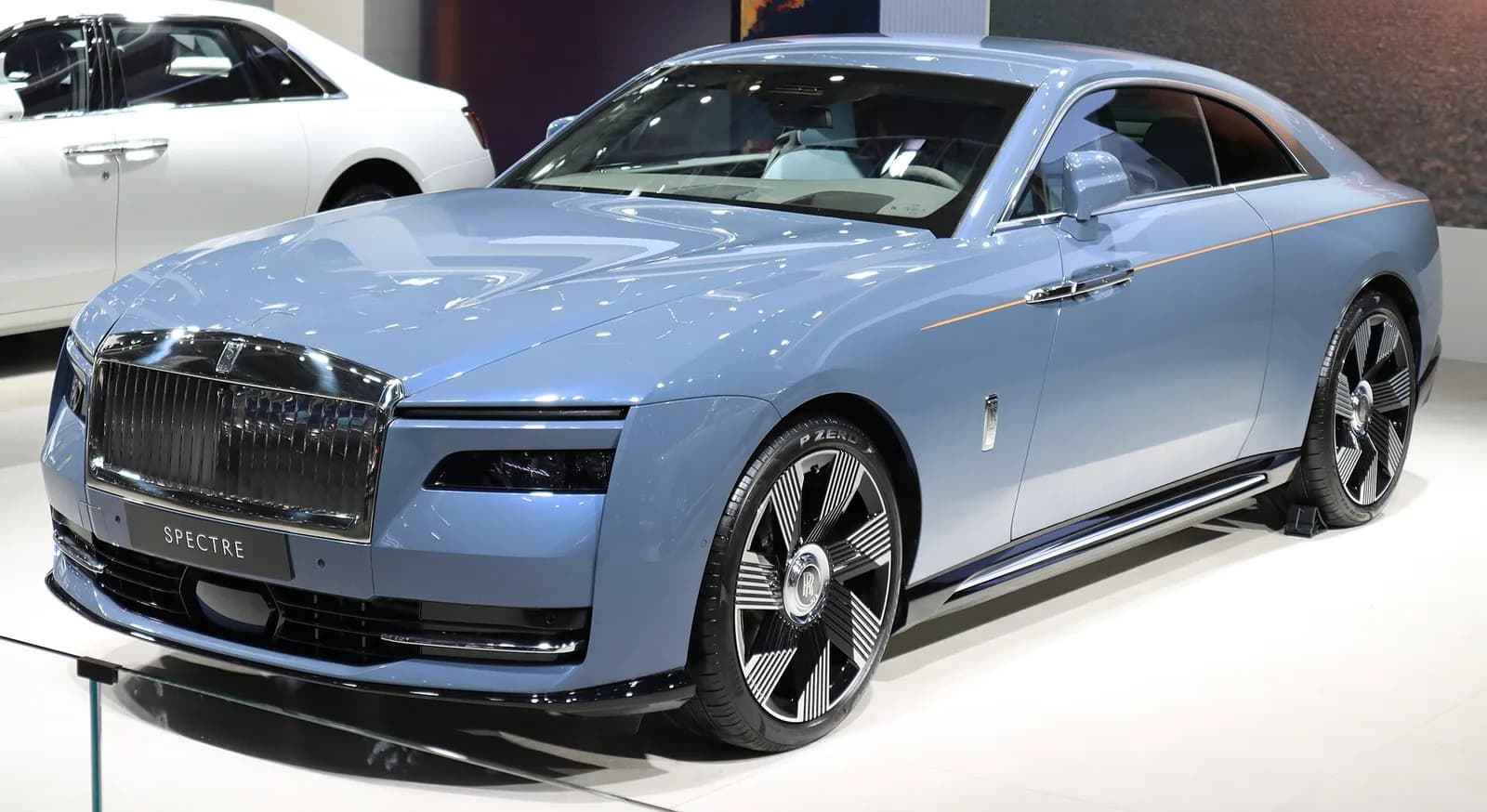
The way Rolls-Royce treats infrastructure anxiety, and the way the rest of the industry doesn't, is by ignoring it for as long as the badge allows, then engineering a fix so quiet it barely qualifies as an announcement. The Spectre Series II is that fix. Rolls-Royce has unveiled the Spectre Series II, bringing a 16% range increase to 308 EPA-estimated miles, a switch to the NACS charging standard in the US, and a 670 hp Black Badge variant that becomes the most powerful Rolls-Royce ever built.
Read as a spec sheet, this is an iterative refresh of a three-year-old car. Read as a philosophy update, it's the most revealing thing Rolls-Royce has done since committing to electric. The original Spectre arrived in 2023 with a 265-mile EPA figure that the company framed as sufficient for the Spectre owner's lifestyle, a rationalization that aged in roughly eighteen months. The Series II is the brand quietly conceding that "sufficient" was never going to hold, and that the Tesla Supercharger network had become too central to the experience of owning an electric car to keep ignoring.
Key takeaways
- The Spectre Series II adds 43 miles of range and NACS access, three years after the 265-mile original launched.
- Rolls-Royce cut charging time 14% through BMS recalibration and thermal protocol updates, not just a port swap.
- Tesla's Supercharger network forced Rolls-Royce's hand: 17,000-plus stalls made CCS-only untenable at $398,000.
- The 670 hp Black Badge is now the most powerful production Rolls-Royce ever built, beating every previous model.
- Bentley still hasn't moved to NACS, two ultra-luxury brands, same parent company, opposite bets on electrification timing.
The 265-Mile Problem Rolls-Royce Refused to Admit It Had
When the original Spectre launched, 265 miles was competitive in absolute terms and embarrassing in relative ones. The Lucid Air had already crossed 500 EPA miles. The Mercedes EQS, despite its own compromises, cleared 350. Rolls-Royce sold the Spectre's range as a non-issue, the car was for the kind of buyer who took it to dinner and home again, not for cross-country drives. That framing was internally consistent and externally indefensible. A $398,000 coupe whose owner profile includes second and third homes does, in fact, get driven between them.
The CCS-only charging port was the deeper compromise. By 2024, Tesla's Supercharger network had become the de facto fast-charging backbone of the United States, 17,000-plus stalls, predictable uptime, locations chosen by a company that ran its own fleet. Excluding the Spectre from that network meant excluding it from the most reliable charging infrastructure money could access. Rolls-Royce's competitors at the ultra-luxury tier, Lucid, eventually, were already moving toward NACS or providing adapters. Rolls held the line.
What changed wasn't the engineering. What changed was the conversation around the engineering. By 2025, the buyer who could afford a Spectre had likely also bought, leased, or test-driven a Model S Plaid or a Lucid Air Sapphire. The reference set had shifted. The Series II isn't a reinvention. It's an acknowledgment that the reference set won.
What 308 Miles Actually Required: The Battery Engineering Story
A 16% range gain without a publicly stated capacity increase is the kind of detail that tells you what the engineering team actually did. Rolls-Royce is fitting a NACS port to the Spectre, opening access to the Supercharger charging network and cutting the charging time by 14%. It goes an EPA-estimated 308 miles on a single charge, or 16% more than before. Neither figure is dramatic. Both are revealing.
A 16% improvement at the EPA level, achieved without a fundamentally larger pack, points to one of three things: revised cell chemistry, improved thermal management, or software-level efficiency gains in motor control and energy recovery. Most likely, all three in combination. The BMW Group has spent the last two product cycles refining the cell-to-pack architecture across its Neue Klasse roadmap, and the Spectre shares enough underlying platform DNA to benefit from that work. The Series II reads as Rolls inheriting BMW's engineering maturity rather than developing it independently.
The 14% charging-time reduction is the more technically interesting number. A port swap from CCS to NACS, on its own, doesn't change charging speed, the connector is just hardware. Faster charging requires updates to the onboard charging logic, thermal protocols for the battery during DC fast-charge, and likely revisions to the BMS calibration that determines how aggressively the pack accepts energy at various states of charge. This is invisible engineering, expensive to do, and easy to under-credit.
What Rolls-Royce has not done is publish a revised kWh figure for the pack. That opacity is deliberate. Tesla and Lucid have trained the market to read battery specs as a measure of seriousness; Rolls is opting out of that conversation, presenting only the user-facing numbers, miles, minutes, and asking the buyer to trust the badge for the rest. It's a worldview choice. The spec sheet, stripped of marketing language, says: we will tell you what matters to use the car, not what matters to benchmark the car. That's either confidence or evasion depending on where you sit. Probably both.
Gear worth having
As an Amazon Associate, ThinkEV earns a small commission from qualifying purchases — at no extra cost to you.

Lectron Level 2 J1772 Charger (40A, WiFi)
Smart WiFi charger with real-time energy monitoring. 40A / 9.6 kW, J1772 with a NEMA 14-50 plug, schedule charging right from your phone.
As an Amazon Associate, ThinkEV earns from qualifying purchases — at no extra cost to you.
NACS Adoption: BMW Group Finally Moves Its Prestige Brand
The Spectre rides on BMW Group's electric architecture, and NACS adoption here mirrors the broader strategy BMW telegraphed across its US lineup. What's notable is that Rolls-Royce, the group's most conservative marque, is moving first within the ultra-luxury segment.
The plug isn't the story. The network is. Tesla's V3 and V4 Superchargers deliver high-power DC fast-charging at site densities no other operator has matched, and the experiential delta between pulling into a Supercharger and hunting for a working CCS station at this price tier is enormous. For a buyer who treats charging friction as personal insult, NACS isn't a feature, it's the floor. Rolls-Royce taking three years to accept that is a data point about how the brand thinks about infrastructure.
Bentley, for context, has not made the same move. The Continental GT remains a combustion/hybrid car, and Bentley's electrification timeline runs slower and more cautiously than its Goodwood cousin. The 2025 Rolls-Royce Spectre Base featured in the comparison below has an overall data-driven rating of 3.75 with 5 stars for its Efficiency and the 2025 Bentley Continental GT Speed has an overall data-driven rating of 3.25 with 5 Stars for its Power. Two parent companies, two ultra-luxury brands, two different bets on when electric becomes mandatory. Rolls-Royce committed early and is now iterating. Bentley is preserving optionality.
The way Tesla shaped this, by simply being the most useful network long enough that other manufacturers had to capitulate, is the strategic move of the decade in EV infrastructure. Rolls-Royce isn't the first or the last to bend, but watching the most tradition-bound name in motoring adopt a port designed by a Silicon Valley company is the kind of detail historians of the transition will return to. The Spectre Series II's NACS adoption is the broader CCS-to-NACS transition arriving at the ultra-luxury tier, and the move tells you the segment is no longer immune.
Gear worth having
As an Amazon Associate, ThinkEV earns a small commission from qualifying purchases — at no extra cost to you.
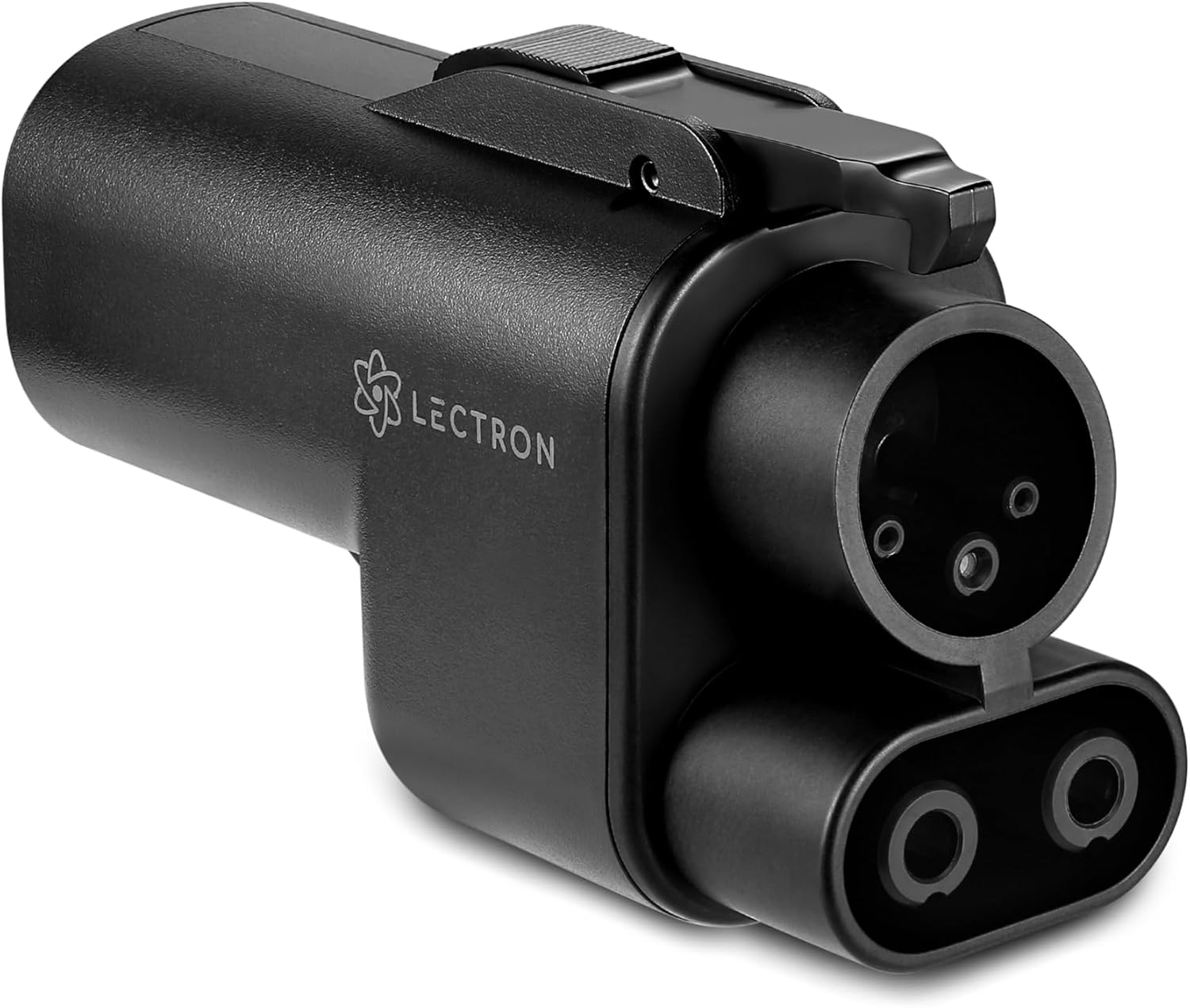
Lectron NACS to CCS Fast-Charge Adapter
Unlock every CCS fast charger for your Tesla, up to 500A DC. Never get stranded at a non-Tesla DC station again.
As an Amazon Associate, ThinkEV earns from qualifying purchases — at no extra cost to you.
670 HP Black Badge: Power as Personality, Not Performance
The Black Badge variant becomes the most powerful production Rolls-Royce ever built. That sentence is true and almost beside the point.
Rolls-Royce has historically used Black Badge to sharpen aesthetic identity, not chase performance metrics. The trim exists to give the brand a darker, sharper, more nocturnal register, different stitching, different surfacing, different mood. The horsepower number is downstream of the visual identity, not the other way around. A 670 hp Spectre is meaningful as a brand statement: we can build the most powerful Rolls ever, and we choose to do it in the Black Badge. The performance itself is almost incidental.
The interesting comparison is the Lucid Air Sapphire, which produces 1,234 hp in a sedan tuned for cornering and track speed. Sapphire is what a performance-EV manufacturer builds when performance is the entire point. The Spectre Black Badge isn't competing with Sapphire, it's competing with the idea that a Rolls-Royce can express seriousness through power without abandoning silence, isolation, and the sense that the car is moving the world around it rather than moving through it.
How 670 hp is actually experienced inside a vehicle engineered for muted authority is the question the Series II raises and doesn't answer. Spirited mode – launch control in all but name – gives access to headline acceleration time, but it feels somewhat out of character for a Rolls Royce. The Spirited mode debate from the original Spectre, that launch-control behaviour is tonally wrong for the brand, sharpens, not resolves, with the Black Badge's added power. The engineering team has given the buyer access to performance the brand's philosophy doesn't quite endorse. That tension is the most honest thing the Series II expresses.
Gear worth having
As an Amazon Associate, ThinkEV earns a small commission from qualifying purchases — at no extra cost to you.

Grizzl-E Classic Level 2 EV Charger (40A)
Canadian-made and rated for minus 40C winters. 40A / 9.6 kW, NEMA 14-50, indoor/outdoor, 24-ft cable. The charger built for Canadian weather.
As an Amazon Associate, ThinkEV earns from qualifying purchases — at no extra cost to you.
The Bentley Contrast: Two Philosophies of Electric Transition
Two ultra-luxury brands, two parent companies (BMW and Volkswagen Group), two genuinely different bets on when ICE becomes a liability. Rolls-Royce committed to full electric for the Spectre and is now iterating on the platform. Bentley kept the Continental GT on combustion and hybrid powertrains, preserving the option to delay full electrification until the technology and infrastructure mature further.
The Series II's existence, an iterative refresh rather than a clean-sheet successor, tells you something about Rolls-Royce's confidence (or constraint) in the original Spectre's platform. Confidence, because the underlying architecture was good enough to refine rather than replace. Constraint, because a clean-sheet EV at the ultra-luxury tier requires investment the brand may not yet be ready to commit twice. Both readings can be true.
Which strategy ages better depends on a question neither brand can answer in 2026: do ultra-luxury buyers want to be early to the transition, or certain about it? Rolls's bet is that being early establishes the brand's electric credibility, and that credibility compounds. Bentley's bet is that being right matters more than being first, and the customer who can afford either car can afford to wait. The next five years will resolve which read of the buyer was correct. My instinct says Rolls's bet ages better, the badge survives a generation of imperfect product if it's seen as the segment's electric pioneer. Bentley's delay risks looking like hesitation rather than discipline.
Gear worth having
As an Amazon Associate, ThinkEV earns a small commission from qualifying purchases — at no extra cost to you.

Tesla Key Card Holder with AirTag Slot
Stop fishing the keycard out of your wallet, and slot an AirTag in case the car wanders off in a lot.
As an Amazon Associate, ThinkEV earns from qualifying purchases — at no extra cost to you.
What the Series II Reveals About Rolls-Royce's EV Maturity
Addressing range and charging in year three of production is fast by Rolls-Royce standards and slow by Tesla's. That asymmetry is the most useful frame for understanding what the Series II actually means.
Rolls-Royce historically launched a model once and waited a decade. The Ghost, the Phantom, the Wraith, each lived through long product cycles with minor cosmetic refreshes and almost no meaningful spec evolution. The Spectre Series II breaks that pattern. The brand is learning to iterate, to respond to a competitive landscape where 16% more range is the difference between current and dated. That's new behaviour, and it matters more than the specific numbers in the update.
The update pattern itself, incremental spec gains, infrastructure alignment, no headline architectural change, mirrors how BMW Group handled early i3 and i4 criticism. Tighten the obvious flaws, ship a faster charging curve, preserve the platform. Rolls-Royce is inheriting not just BMW's engineering but BMW's product-management philosophy. For a brand whose marketing has spent a century insisting it operates on a different timescale than its parent company, that's a quiet but real change.
The Spectre's real test isn't the Series II. It's whether a Series III arrives before the platform feels dated, and whether Rolls can sustain the iteration cadence the EV market now demands without losing the sense that each Rolls is a generational object rather than a software-update target. I'd bet on the brand getting one more refresh out of this architecture before a clean-sheet successor becomes necessary, and I'd watch closely for whether the next Phantom or Ghost generation goes electric on the same Spectre-derived platform, or whether Rolls commissions something purpose-built for the larger cars. The answer will tell you how seriously BMW Group is investing in the marque's long electric future. The Series II is the appetizer. What's on the platform after it determines whether Rolls-Royce becomes a great EV brand or remains a great brand that also sells an EV.
Bottom line: the Spectre Series II is a small spec update and a large philosophical one. The range number and the port change are receipts. The story is that Rolls-Royce now iterates, and once a brand starts iterating, it can't go back to launching once and waiting.
Hero image: 2023 Rolls-Royce Spectre by User3204, licensed under CC BY-SA 4.0 via Wikimedia Commons; resized and converted to WebP.

Gear worth having
As an Amazon Associate, ThinkEV earns a small commission from qualifying purchases — at no extra cost to you.

ChargePoint Home Flex Level 2 Charger (50A)
Premium 50A / 12 kW charger with the best app ecosystem. Hardwired or NEMA 14-50, with real-time energy tracking and smart scheduling.
As an Amazon Associate, ThinkEV earns from qualifying purchases — at no extra cost to you.

Founder & Chief Editor
Vlad Pereira is the founder and chief editor of ThinkEV.ca, the Canadian electric-vehicle publication he writes and edits from Courtenay, British Columbia. He covers EV pricing, federal and provincial rebates, charging costs, and the Chinese manufacturers now entering Canada, from the buyer's side rather than the press-fleet side. ThinkEV is a venture of Vlad Pereira Online; his writing on health, income and the long game lives at vladpereira.com.
Frequently asked questions
Can Canadians use the Spectre Series II's NACS port here?
Why didn't Rolls-Royce publish the new battery pack size?
What actually drove the 14% charging speed improvement?
Has Bentley made a similar NACS or range push yet?
Does the Black Badge's 670 hp change how the car drives?
More EV & road-trip finds
Affordable upgrades worth a look — tap any to check the price on Amazon.
 ★ 2,941
Microfiber Cleaning Cloths (Multi-Pack)
View on Amazon ★ 419
★ 419RGB Car Interior LED Strip Light
View on Amazon ★ 401
★ 401Crochet Daisy Rear-View Mirror Charm
View on Amazon ★ 27,769
Car Cup Holder Coasters (4-Pack)
View on Amazon ★ 721
★ 72145W USB-C Fast Car Charger
View on Amazon ★ 61
★ 61Toddler Car Seat Snack and Cup Tray
View on Amazon ★ 17,839
Qifutan Vent Phone Mount (Military-Grade Clip)
View on Amazon ★ 96,686
PULIDIKI Car Cleaning Gel (Detailing Putty)
View on AmazonRead, Plan, Then Stay Current
Explore our expert articles to understand incentives and ownership costs, use the map to pressure-test charging reality, then subscribe so new EV coverage comes straight to you.
Continue Reading

GM Energy Pass: One Universal Interface For Public Charging
Rivian's Charging Network Hits 1,007 Stalls in 2026
Walmart's EV Charging Network Is Getting Cheaper
How to Test-Drive an EV: What Gas-Car Buyers Miss
Public EV Charging in Canada: Networks and Payment