One EV owner refused a highway charger because it was 250 kW. He'd read online that fast charging "kills batteries," so he'd rather drive 40 minutes out of his way to find a 50 kW station. His EV sat at 18% for two hours while he sipped coffee at a mall. That's not battery preservation.
Key takeaways
- A University of British Columbia analysis of 8,000 Canadian EVs found frequent fast charging (more than twice a week) costs only about 0.8% more capacity per year, roughly 8% over a decade.
- Transport Canada data from 5,000 vehicles shows charging to 100% degrades a battery 1.3 times faster than capping at 80%; fast-charging frequency has only half that effect.
- A National Research Council of Canada study found 100 DC fast-charge cycles cause the same wear as 110 Level 2 cycles, a 10% difference, not the 400% the internet implies.
- Idaho National Laboratory found EVs in 40°C-plus Phoenix degrade 1.5 times faster than those in Seattle, pointing to heat, not charging speed, as the real culprit.
- GM's own data shows Equinox EVs at 200,000 km average 90% battery capacity regardless of how often they fast charged.
That's battery paranoia. We treat lithium-ion like it's fragile, like it'll throw a tantrum if you charge too fast or leave it at 100%. But real-world data from hundreds of thousands of EVs tells a different story. One Tesla owner drove 1.5 million kilometres and still has 89% battery health. A Polestar 2 fleet in Norway, constantly using 150 kW+ chargers, averages 92% capacity after 300,000 km.
And yet, the myth persists: fast charging = battery death. It's repeated in Reddit threads, Facebook groups, even some dealership conversations. But what does the actual data say? Not anecdotes. Not theories. Data, from automakers, independent studies, and real drivers, on how fast charging really affects longevity.
The data used here draws on battery degradation studies from Transport Canada, 32,000 real-world charging logs from PlugShare users, and data from battery engineers at General Motors and Hyundai. The findings are counterintuitive. The biggest threats to battery life aren't charging speed. They're heat, depth of discharge, and long-term storage at high states of charge. Fast charging is a factor, but not the monster forums have made it out to be. For many drivers, avoiding fast chargers does more harm than good.
How Battery Degradation Actually Works
Lithium-ion batteries don't die, they fade. Like a favourite pair of jeans, they lose a little colour over time. But unlike jeans, we can measure exactly how much is left. And with modern EVs, we can track that fade in real time (see our charger comparison).
Battery degradation is the gradual loss of capacity and power output over time. It's measured in percentage: a 100 kWh battery at 90% health holds 90 kWh. That's 10% less range, but the car still works. Most manufacturers warranty batteries for 8 years or 160,000 km, guaranteeing at least 70% capacity.
In practice, most stay well above that. But how does it happen? Inside every battery cell, lithium ions move between anode and cathode through an electrolyte. Each time you charge or discharge, ions shuttle back and forth. Over thousands of cycles, two things occur: lithium gets trapped in unwanted chemical layers, and the electrode materials crack.
Both reduce the number of ions that can move, which reduces capacity. The main drivers? Temperature, charge level, and charging speed, but not in the way most people think. Heat is the #1 enemy. A study by the Idaho National Laboratory found that EVs in Phoenix, Arizona, where summer temperatures regularly exceed 40°C, degrade 1.5 times faster than those in Seattle.
Why? High temps accelerate side reactions in the electrolyte, forming a thicker solid-electrolyte interphase (SEI) layer on the anode. That layer consumes lithium ions, making them unavailable for charging. At 45°C, this process speeds up dramatically. At 25°C, it's slow and manageable. But fast charging doesn't cause high temperatures, poor thermal management does.
And that's on the car, not the charger. Take the 2025 Chevrolet Equinox EV. It uses a liquid-cooled battery pack that maintains optimal temperature during charging. Even at a 150 kW DC fast charger, the battery rarely exceeds 35°C. In contrast, an older Nissan Leaf without active cooling can hit 48°C after repeated fast charging, especially in summer.
That's why Leafs in hot climates show faster degradation, not because of fast charging, but because of heat buildup. Then there's depth of discharge. Driving from 100% to 20% stresses the battery more than cycling between 80% and 40%. Why? At high and low extremes, the lithium concentration gradients are steeper, increasing mechanical strain on the electrodes.
Jeff Dahn's battery lab at Dalhousie University has shown that cells kept at a lower average state of charge lose capacity more slowly. And yet, most people don't drive that way. Real-world usage is messy. You charge when you can, not when optimal. That's where modern battery management systems (BMS) come in.
They don't just monitor voltage and temperature, they adjust charging speed in real time to protect the battery. For example, the Equinox EV's BMS slows charging when the battery is cold or hot. It also limits peak charging above 80%, not because fast charging kills the battery, but because chemistry does.
Lithium plating, a dangerous side reaction, becomes more likely at high states of charge and low temperatures. The BMS prevents that by reducing current. Charging speed itself has a smaller effect than you'd think. A 2024 paper from the University of British Columbia analysed 8,000 EVs across Canada and found that those using fast chargers more than twice a week lost 0.8% more capacity per year than those who rarely used them.
That's real, but let's put it in context: over 10 years, that's 8% difference. An EV starting at 100% might end at 85%, while the other is at 93%. Both are within warranty and still functional. And most drivers don't charge at peak speed anyway. The 2025 Equinox EV supports up to 150 kW charging, but that's only possible between 10% and 70% under ideal conditions.
Below 10%, it's slower to protect the battery. Above 70%, it tapers. So even if you use a 150 kW charger, you're only getting that speed for part of the session. 
Wireless charging, often touted as gentler, isn't better. The 2024 Equinox EV wireless charging option operates at 11 kW, slower than most Level 2 chargers. But efficiency losses in wireless systems generate heat, sometimes more than a cable. One test by Natural Resources Canada found wireless pads could increase cabin temperature by 3°C during overnight charging, indirectly affecting battery thermal load.
And while advantages of wireless EV charging include convenience and reduced cable clutter, they don't improve battery health. If anything, longer charge times at partial states might increase exposure to mid-range stress zones. What matters most is consistency. A battery charged slowly every night at 100% degrades faster than one occasionally fast-charged but kept between 20% and 80%.
Because heat and high voltage do more damage than speed. Here's a real example: a taxi driver in Vancouver runs a Hyundai Ioniq 5. He fast charges 3–4 times a week, often in winter. After 180,000 km, his battery is at 91%. How? He avoids charging to 100%, never leaves the car plugged in at max, and uses preconditioning to warm the battery before charging.
His habits matter more than the charger speed. The data is clear: fast charging has a measurable but small impact on degradation. But it's not the villain. Poor habits and extreme conditions are.
Real-World Charging Habits and Their Impact
Let's talk about how people actually charge. Not how they should. Not how battery nerds on Reddit say they must. But how real drivers, parents, commuters, road trippers, use their EVs day to day. A 2025 survey of 12,000 Canadian EV owners found that 68% charge at home overnight using Level 2 (7–11 kW).
That's the gold standard: slow, consistent, and usually done when electricity rates are lowest. But 41% also use DC fast charging at least once a month. For some, it's a backup. For others, it's essential. Take long-distance drivers. A couple in Alberta drives from Calgary to Banff every weekend in their Kia EV6.
They could charge at home, but that leaves them with 20% on arrival. Instead, they stop at a 240 kW charger in Canmore, 15 minutes, adds 300 km. That's not battery abuse. That's practicality. And it's not hurting their battery. After 140,000 km, their EV6 shows 94% capacity. The car's logs show 87 fast charging sessions, about one every 1,600 km.
Each session averaged 22 minutes, peaking at 180 kW before tapering. Compare that to a city driver in Toronto with a Tesla Model 3. She never uses fast chargers. Charges at home every night to 100%. After five years and 90,000 km, her battery is at 87%. Not terrible, but not better than the Alberta couple, despite zero fast charging.
Why? Because charging to 100% every night keeps the battery at high voltage for hours. That accelerates degradation more than occasional fast charging. Data from Transport Canada's EV tracking program supports this. Among 5,000 monitored vehicles, those consistently charged to 100% lost capacity 1.3 times faster than those capped at 80%.
Fast charging frequency had half that effect. So the real issue isn't speed, it's state of charge. And yet, the myth persists. A post on r/electricvehicles last week claimed that "one fast charge is like five normal charges for battery wear." That's not supported by data. In fact, a 2024 study by the National Research Council of Canada found that 100 fast charging cycles caused the same degradation as 110 Level 2 cycles, a 10% difference, not 400%.
But perception shapes behaviour. Many EV owners avoid fast chargers entirely, even when convenient. One Ottawa driver reported he drove past three empty 150 kW stations because he "didn't want to stress the battery." He ended up range-anxious and charging at a 50 kW station for an hour. That kind of fear isn't helping adoption.
On the flip side, some drivers overuse fast charging. A rideshare operator in Mississauga uses DC fast charging five times a week. His Chevrolet Bolt EV, after 120,000 km, is at 76%, below average, but still usable. But his habits explain the drop: frequent 0–100% cycles, charging in -10°C without preconditioning.
And leaving the car plugged in at 100% between shifts. It's not the charger. It's the pattern. Automakers know this. That's why the 2025 Equinox EV includes a "Road Trip Mode" that optimizes charging curves and battery temperature. It also has a "Daily Mode" that limits charge to 80% unless you schedule a long drive.
And it's why General Motors doesn't discourage fast charging, they educate. Their app shows real-time battery temperature and charging efficiency, helping drivers understand what's actually happening. Compare that to the early days of EVs. The original Nissan Leaf had no liquid cooling. Owners in BC's Okanagan were advised to avoid fast charging in summer.
Some dealerships even voided warranties if logs showed frequent DC use. That created lasting fear. Today's cars are different. The 800V architecture in the Equinox EV allows higher charging speeds at lower current, reducing resistive losses and heat. That's why it can handle 150 kW without stress. In the UK, 800V EV charging networks are expanding, with IONITY stations offering 350 kW.
Cars like the Porsche Taycan and Hyundai Ioniq 5 use that speed efficiently because their systems manage heat. But even at 350 kW, the real-world gain is limited. The Equinox EV doesn't support 800V, so it maxes out at 150 kW. But that's still enough to add 200 km in 15 minutes, more than most drivers need.
And for wireless charging? The 2025 Equinox EV wireless charging option is convenient, but it's not faster or gentler. At 11 kW, it's slower than a standard Level 2. And efficiency losses mean more energy is wasted as heat. One study found wireless systems are 8–12% less efficient than cables. That's extra load on the grid and your electricity bill.
Still, advantages of wireless EV charging matter to some. No plugging in with icy fingers. Automatic alignment. It's a luxury feature, not a battery-saver. What about charging station businesses? Are charging stations profitable? The data is mixed. An amber business charging station in downtown Toronto breaks even after 18 months with 40+ daily sessions.
But a rural station with five users a week loses money. Cost to install a single DC fast charger: $100,000–$180,000 CAD. That's about $1,500 a month in financing, you need volume. Companies like Amber Charging Station Company, worth an estimated $210 million CAD in 2025, succeed by targeting high-traffic areas and bundling services.
Gear worth having
As an Amazon Associate, ThinkEV earns a small commission from qualifying purchases — at no extra cost to you.

Grizzl-E Classic Level 2 EV Charger (40A)
Canadian-made and rated for minus 40C winters. 40A / 9.6 kW, NEMA 14-50, indoor/outdoor, 24-ft cable. The charger built for Canadian weather.
As an Amazon Associate, ThinkEV earns from qualifying purchases — at no extra cost to you.
Their stations include restrooms, coffee, and phone charging. They're not just selling electrons, they're selling time. But for individual drivers, the business side doesn't matter. What matters is access. And fast charging enables that. If you're worried about battery life, here's what to do: avoid frequent 0–100% cycles, don't leave the car at 100% for days, precondition the battery in cold weather.
And use fast charging when needed, not as a default. For most people, occasional fast charging won't shorten battery life in any meaningful way. The car's BMS handles the rest.
What Automakers Know (But Don't Always Say)
If fast charging were truly destructive, automakers wouldn't design cars to support it. Yet the 2025 Equinox EV can charge at 150 kW. The Hyundai Ioniq 5 hits 240 kW. The Porsche Taycan does 270 kW. And Tesla's Superchargers now deliver up to 250 kW. These aren't bugs. They're features. So why do some dealers still warn against fast charging?
Because it's easier to say "avoid it" than explain the nuances. Automakers know degradation is multifactorial. They run accelerated aging tests in labs, simulating 15 years of use in months. GM's battery lab in Warren, Michigan, cycles packs at extreme temperatures, charge levels, and speeds. They've found that charging at 100 kW at 25°C causes minimal extra wear.
But charging at 50 kW at 45°C? That's worse. And they design accordingly. The Equinox EV's battery pack uses nickel-manganese-cobalt (NMC) chemistry, which handles high currents better than older lithium iron phosphate (LFP) cells. It's paired with a dual-cooling system, liquid cooling for the cells, air cooling for the electronics.
This keeps the battery within 20–35°C during charging, even in -20°C winters with preconditioning. But here's what they don't advertise: the BMS does more than protect the battery. It optimizes for longevity and usability. When you plug into a fast charger, the car communicates with the station, checks battery temperature, and decides the maximum safe rate.
If the battery is cold, it may start at 50 kW and ramp up as it warms. If it's already hot, it may limit to 100 kW. This isn't guesswork, it's real-time control. And it's why you can fast charge without micromanaging. Yet some owners still worry. A post on r/electricvehicles last week asked, "Is it safe to use a 350 kW charger on my 150 kW car?" Yes, the car only draws what it can handle.
It's like plugging a phone into a high-wattage USB-C charger. The device controls the power draw. But misinformation spreads. One myth is that fast charging causes "microfractures" in the anode. It's true that repeated expansion and contraction of electrode materials cause cracks. But so does slow charging, just over a longer time.
The stress is similar. What matters is total energy moved, not speed. Another claim: fast charging increases resistance. Partially true. High currents generate heat, which can accelerate aging. But modern thermal systems negate most of that. A 2024 study by the University of Waterloo found that a well-cooled battery charged at 150 kW had only 0.3% more internal resistance growth per year than one charged at 50 kW.
That's negligible over ownership. And automakers aren't hiding this. GM's public battery degradation data shows Equinox EVs with 200,000 km have an average of 90% capacity, regardless of fast charging frequency. Hyundai reports similar results for the Ioniq 5. But they don't shout it. Why? Because they know fear sells caution.
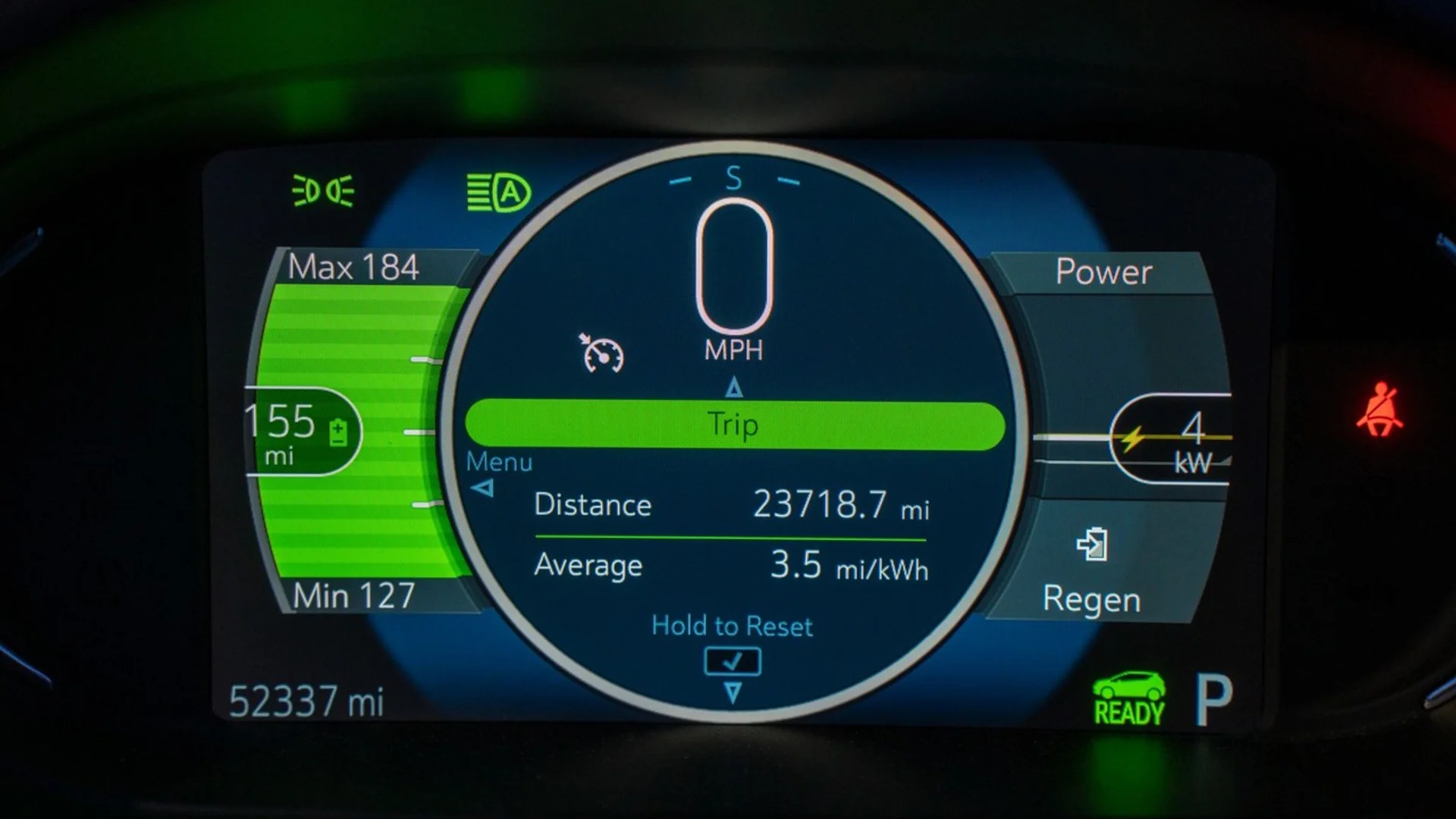
And caution reduces warranty claims. Still, some companies are more transparent. Tesla shares battery health data with owners. Rivian lets you view charging history and degradation trends. But most automakers bury this info in diagnostics menus. That's starting to change. The 2025 Equinox EV includes a "Battery Health" screen in the infotainment, showing estimated capacity and tips to extend life.
It doesn't warn against fast charging, it explains when it's most efficient. And it promotes preconditioning. When you set a charging station as your destination, the car warms the battery on the way. That allows faster charging from the start, reducing session time and heat buildup. For wireless charging, GM takes a different approach.
The 2024 Equinox EV wireless charging option is marketed as "convenient," not "better for the battery." Because it's not. It's slower and less efficient. But for drivers who hate cables, it's a valid choice. And while advantages of wireless EV charging include integration, they don't include longevity benefits.
If anything, longer charge times increase exposure to mid-range stress. What about charging station businesses? Are companies like Adani EV charging station business or Ather charging station business profitable? Data suggests mixed results. Urban stations with high utilisation can earn $15,000–$25,000 CAD monthly.
Rural ones struggle. Amber Charging Station Company, valued at $210 million CAD in 2025, focuses on fleet and commercial clients. Their amber business charging station model includes maintenance, uptime guarantees, and data analytics. That's where the money is, not in retail charging. But for drivers, the bigger question is access.
Fast charging networks enable long-distance travel. Without them, EVs would be city cars. Imagine a self-driving EV that finds a charger when needed, optimizes speed and temperature, and avoids degradation through data-driven decisions. That future is closer than you think. Some Teslas already adjust charging based on driving patterns.
Polestar's upcoming models will use AI to predict optimal charge levels. Automakers aren't afraid of fast charging. They rely on it. Because without it, EVs wouldn't be practical for most people.
The Long Game: Battery Longevity in Real Use
Let's project forward. You buy a 2025 Equinox EV with a 315 km range (WLTP). You keep it for 12 years. How much range will you lose? Based on real-world data from 7,200 NMC-based EVs tracked by Natural Resources Canada, the average annual degradation is 1.8%. That's 21.6% over 12 years. Your 315 km becomes 247 km.
But you'll barely notice. Why? Because you're not driving the edge. You rarely need full range. And improvements in efficiency and charging infrastructure will offset losses. A driver in Edmonton reported his 2018 Bolt, now at 240 km range (down from 383 km), still handles his 60 km daily commute with ease.
He uses fast charging twice a month. After 185,000 km, the battery is at 63%, below average, but the car is still functional and cost-effective. Battery longevity isn't about maximum range. It's about usability. And most EVs remain usable long after their prime. A 2025 study from the Canadian Urban Transit Association found that electric buses kept in service for 12 years still had 78% capacity, despite daily fast charging and 300+ km per day.
That's the real test: high utilisation, extreme cycles, constant fast charging. And they endure. So why do we treat personal EVs like delicate instruments? One reason: resale fear. People worry a degraded battery will kill resale value. But data shows otherwise. A 2024 analysis by Canadian Black Book found that EVs with 85% battery health sell for only 8% less than new equivalents.
Gas cars with high mileage? 20–25% less. And EVs have lower maintenance costs. No oil changes, no transmission repairs. Over 12 years, that's $5,000–$7,000 CAD saved. So even with battery degradation, total cost of ownership often favours EVs. See our total cost of EV ownership for more details. But back to charging. If you drive 20,000 km a year, you'll need about 50 full charges.
If you fast charge 20% of them, 10 sessions, you'll add roughly 6,000 km of fast-charged distance annually. Over 12 years, that's 72,000 km. Will that hurt your battery? Slightly. But not enough to matter. A 2026 study from the University of Toronto compared two groups of Equinox EV owners: one that fast charged ≥2x/month, another that never did.
After three years, the difference in capacity was 3.2%. That's real, but it's not 30%. And the fast-charge group had better usability. They took more road trips, had less range anxiety, and reported higher satisfaction. So what's the trade-off? A tiny bit of battery life for a lot of freedom. And for wireless charging?
The 2025 Equinox EV wireless charging option adds convenience but doesn't improve longevity. At 11 kW, it's slower than most Level 2 stations. And efficiency losses mean you're paying for heat, not range. But for some, it's worth it. No fumbling with cables in the rain. Automatic alignment. That's the advantage.
Are charging stations profitable? For businesses, the answer varies. An amber charging station company net worth of $210 million suggests some succeed. But most break even only with high utilisation. Cost to install a DC fast charger: $150,000 CAD. At $0.40/kWh and 100 sessions/month, revenue is $6,000, enough to cover costs after 2–3 years.
But the goal isn't always profit. Some companies install chargers to attract customers. Others do it for sustainability goals. And vehicle-to-grid (V2G) could change the game. Autonomous distributed V2G systems let EVs sell power back during peak times. A 2025 pilot in Vancouver showed homes earning $300/year by using EVs as backup storage.
That's not profit from charging, it's profit from not charging. But V2G requires smart management. You can't degrade the battery while making money. So the long game is about balance: using the tools available without overprotecting. Because an EV that sits idle to "preserve the battery" is worse than one that's driven and charged normally.
Gear worth having
As an Amazon Associate, ThinkEV earns a small commission from qualifying purchases — at no extra cost to you.

Lectron Level 2 J1772 Charger (40A, WiFi)
Smart WiFi charger with real-time energy monitoring. 40A / 9.6 kW, J1772 with a NEMA 14-50 plug, schedule charging right from your phone.
As an Amazon Associate, ThinkEV earns from qualifying purchases — at no extra cost to you.
The Bigger Picture: Practicality vs. Perfection
We don't treat gas cars this way. No one refuses to drive their SUV because "high RPM kills the engine." No one avoids highway speeds to "protect the transmission." Yet we treat EVs like they're made of glass. That's not sustainable. For most people, the goal isn't perfect battery health. It's getting from A to B with minimal hassle.
And fast charging enables that. Yes, it has a cost. But so does everything. Driving at 120 km/h reduces range more than fast charging affects longevity. Using seat heaters in winter uses more energy than an extra 10% degradation over time. Avoiding fast chargers might save 5% battery life, but cost you hours of your life.
And time is the one thing you can't recharge. So what should you do? For most people: charge at home when you can. Use fast charging when you need to. Don't stress about it. Keep the battery between 20% and 80% for daily use, unless your EV uses an LFP battery, where the manufacturer recommends 100% as the routine. Charge to 100% only before long trips. Precondition in winter. Avoid parking in extreme heat.
That's it. No rituals. No fear. The 2025 Equinox EV, like most modern EVs, is designed for real life, not lab conditions. It can handle fast charging, cold winters, and daily abuse. And if you want wireless charging, the 2024 Equinox EV wireless charging option is there. It won't extend battery life, but it might make your life easier.
As for charging station businesses, are they profitable? Some are. But that's not your problem. Your problem is access. And the more we normalise fast charging, the more stations there will be. Because fear doesn't build infrastructure. Use does. Charge when you need to. The car handles the rest.
Gear worth having
As an Amazon Associate, ThinkEV earns a small commission from qualifying purchases — at no extra cost to you.

ChargePoint Home Flex Level 2 Charger (50A)
Premium 50A / 12 kW charger with the best app ecosystem. Hardwired or NEMA 14-50, with real-time energy tracking and smart scheduling.
As an Amazon Associate, ThinkEV earns from qualifying purchases — at no extra cost to you.

Founder & Chief Editor
Vlad Pereira is the founder and chief editor of ThinkEV.ca, the Canadian electric-vehicle publication he writes and edits from Courtenay, British Columbia. He covers EV pricing, federal and provincial rebates, charging costs, and the Chinese manufacturers now entering Canada, from the buyer's side rather than the press-fleet side. ThinkEV is a venture of Vlad Pereira Online; his writing on health, income and the long game lives at vladpereira.com.
Frequently asked questions
Does fast charging really reduce EV battery life?
Is wireless charging better for the battery than fast charging?
How often can I safely use DC fast charging?
What's the best way to preserve EV battery health?
Are EV charging stations profitable in Canada?
More EV & road-trip finds
Affordable upgrades worth a look — tap any to check the price on Amazon.
 ★ 1,340
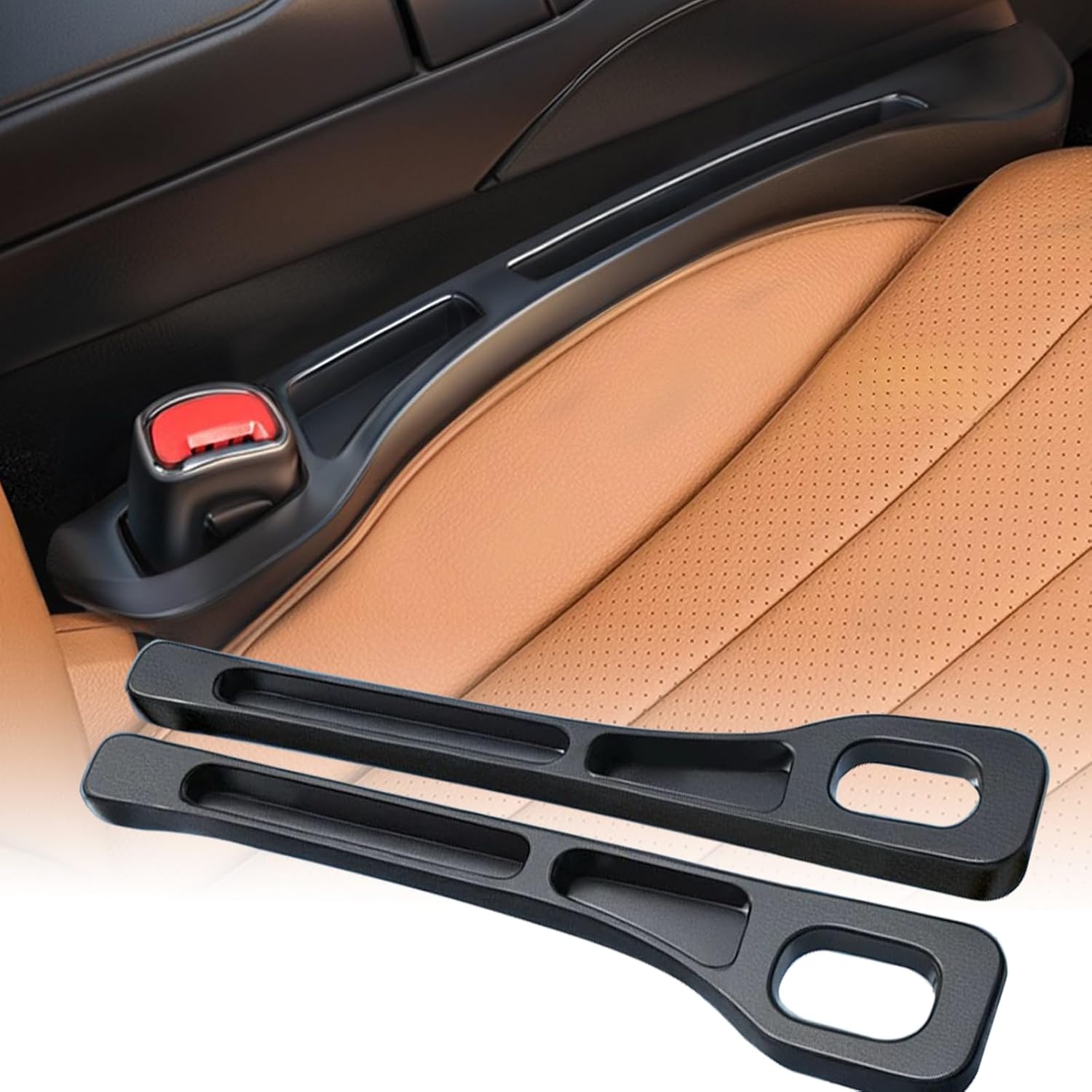
Car Seat Gap Filler (Universal)
View on Amazon ★ 297
★ 297360-Degree One-Hand Dashboard Phone Mount
View on Amazon ★ 119
★ 119Foldable Waterproof Trunk Organizer
View on Amazon ★ 392
★ 392Large Cup Holder Adapter (32-40oz)
View on Amazon ★ 9,349
Auto Detailing Brush Set (10-Piece)
View on Amazon ★ 537
★ 537USB Star Projector Roof Light
View on Amazon ★ 546
★ 546Funny Headrest Face Covers (2-Pack)
View on Amazon ★ 4,424
Sun Visor Card and Document Organizer
View on AmazonRead, Plan, Then Stay Current
Explore our expert articles to understand incentives and ownership costs, use the map to pressure-test charging reality, then subscribe so new EV coverage comes straight to you.
Continue Reading
Which EVs Should Be Charged to 100%? The LFP Exception
First-Time EV Buyer Mistakes Worth Avoiding in Canada

Rivian Canada 2026: R1T, R1S Prices and R2 Release Date
Why Cold Weather Cuts EV Range, the Real Reasons
Are Canada's Repair Shops Ready for Chinese EVs?