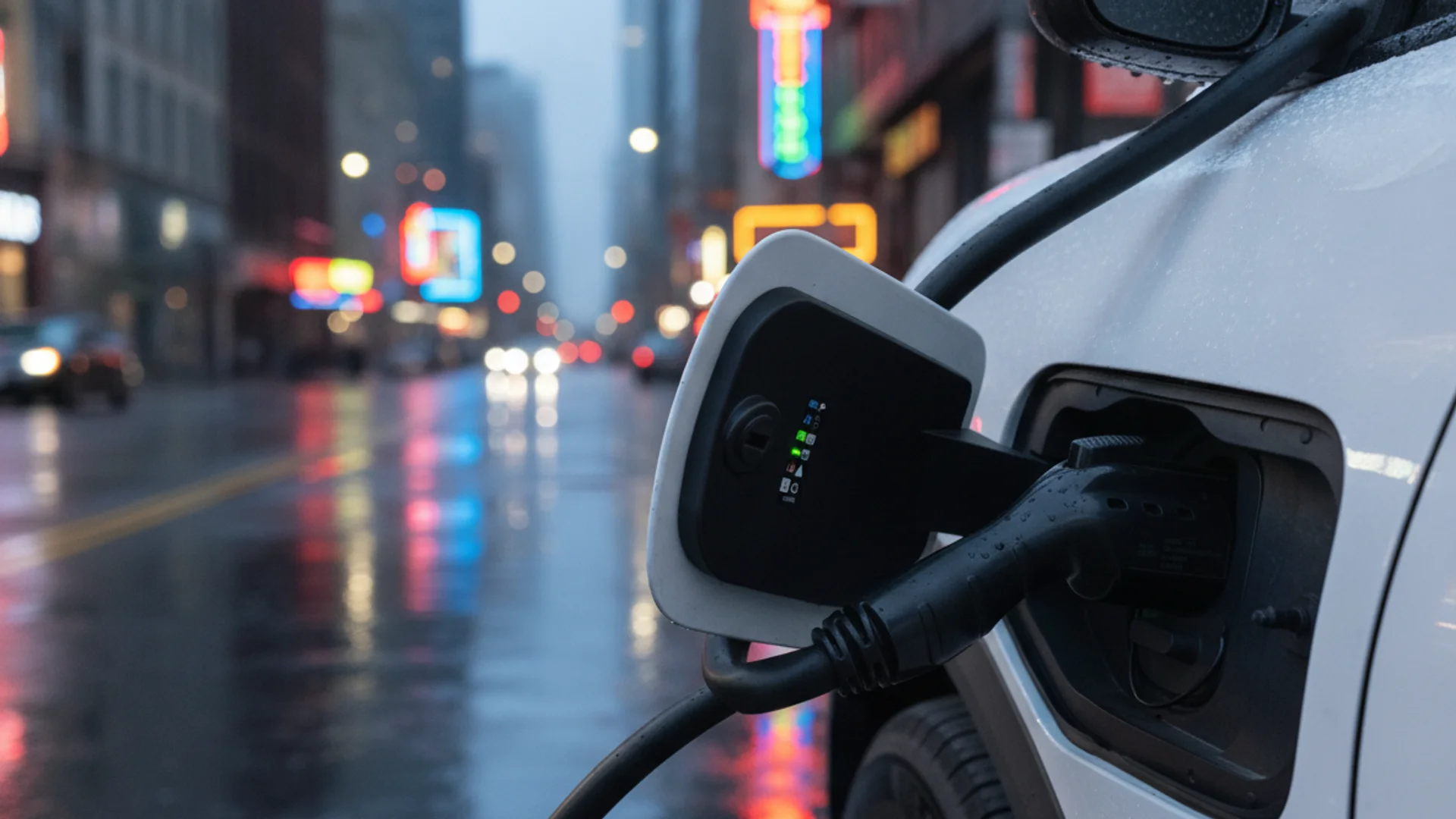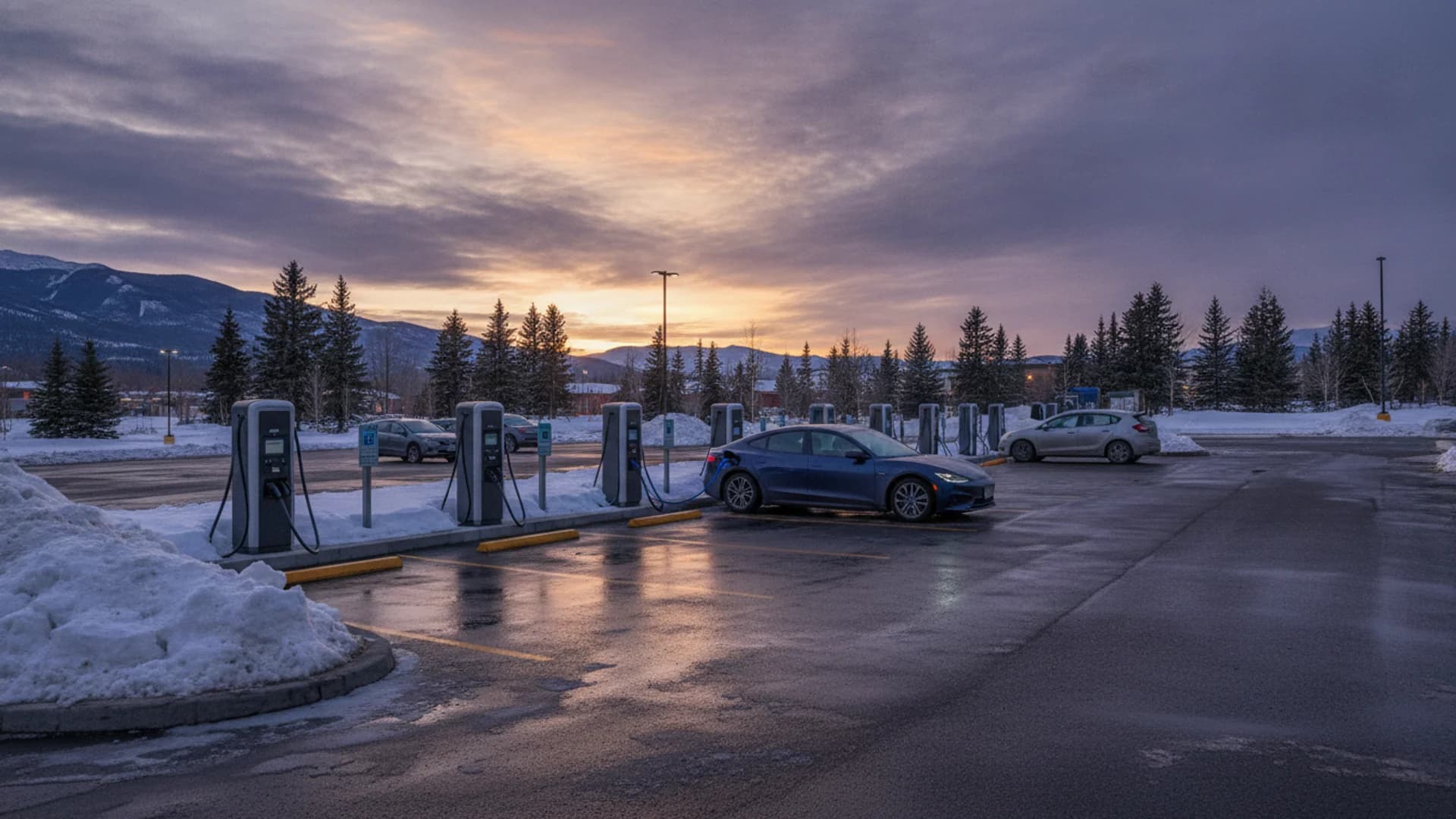
Canada now has over 30,000 public charging points, and a reliability problem that the install count doesn't capture. The headline number is real. It is also the wrong number to lead with, and the federal communications strategy of leading with it anyway is the single biggest reason EV-curious Canadians still treat public charging as an excuse rather than a solved problem.
Here is the editorial position, stated up front so the rest of the piece can defend it: the network is growing fast enough to matter, but not fast enough, and not in the right ways, to stop being a legitimate concern for the buyer in Thunder Bay, Yellowknife, or Saint John. The federal government built a skeleton. The private operators are still arguing about whether to put muscle on it or paint it.
Key takeaways
- Canada's 30,000 public charging points include only ~7,400 DC fast chargers, the number that actually matters for trips.
- ZEVIP funds installations but imposes zero uptime requirements, meaning a broken charger counts the same as a working one.
- Winnipeg had 17% of public chargers offline in January; Surrey had 12%, these are patterns, not outliers.
- The US NEVI program mandates 97% uptime as a federal funding condition; Canada has no equivalent threshold on the record.
- The April 2026 $10.6M announcement averages roughly 123 new chargers per province and territory, incremental, not transformative.
The number that gets quoted and the one that doesn't
Budget 2019 and the 2020 Fall Economic Statement committed $280 million to ZEVIP over 5 years to support the deployment of 33,500 electric vehicle chargers and 10 hydrogen refuelling stations in public places, on-street, in multi-unit residential buildings and at workplaces, as well as strategic infrastructure projects for urban delivery and fleet applications. Natural Resources Canada cites that figure in nearly every press release on the file. Canada is home to thousands of public charging stations. Plug'n Drive's homepage echoes the same talking point.
Both are technically true. Neither tells you whether your trip from Sudbury to Sault Ste. Marie will work next Tuesday.
The number that determines whether public charging is functionally useful is the DC fast charger count, and that number is roughly 7,400 across the country as of early 2026, about a quarter the size of the headline figure. The growth split is where it gets interesting. DC fast charging port installations grew 33.6 per cent year-over-year. Level 2 grew 13.5 per cent. The mix is shifting toward usable speed, which is the right direction, but the absolute base is still small enough that a single offline site on a rural corridor can break a trip.
The gap between "installed" and "working" is where the real policy story lives, and almost no one in Ottawa is measuring it. That is the editorial complaint this post is built around, and it is the lens for everything below, including the per-province charging cost math, which assumes the charger is online when you arrive.
Federal money built the skeleton, now comes the hard part
Since 2016, Canada has invested over $1 billion to make EVs more affordable and chargers more accessible for Canadians. These investments are supporting the establishment of a coast-to-coast network of chargers in local areas where Canadians live, work, travel, and play. That is real money, and the coverage map looks dramatically different than it did in 2018. Anyone who tells you otherwise is grading on the wrong scale.
The April 2026 tranche, $10.6 million for 1,600 new chargers, is the kind of announcement that sounds large in a press release and small once you divide it across thirteen provinces and territories. Roughly 123 chargers per jurisdiction, on average. It is incremental. It will not be transformative.
An analysis commissioned by Natural Resources Canada, Montreal-based consultancy Dunsky Energy and Climate estimated in March 2022, that Canada would need 52,000 chargers by the end of 2025. We are past that deadline and well short of the target, even with the 8,000 new stalls pledged under the federal Automotive Strategy. The timeline on those 8,000 is unclear. The accountability mechanism, what happens if they don't materialise, is non-existent on the public record.
Public funding built coverage. Private operators have to build reliability, and the operators are uneven. FLO, a Quebec-based EV charging station company with over 90,000 chargers is the Canadian incumbent and a credible global player; its uptime story is generally the strongest in the domestic market. Electrify Canada brought 150 kW and 350 kW hardware to the country earlier than anyone else. Shell Recharge is expanding. Enel North America operates in the United States and Canada through its renewables and energy services businesses, with a portfolio including over 9.6 GW of renewable capacity, 160,000 EV charging points across its footprint, another foreign operator with scale that Canadian buyers should be paying attention to.
The hard part is not adding more logos. It is making the existing logos work every day. That is the next test, and the federal program does not currently measure it.
Gear worth having
As an Amazon Associate, ThinkEV earns a small commission from qualifying purchases — at no extra cost to you.

Lectron Level 2 J1772 Charger (40A, WiFi)
Smart WiFi charger with real-time energy monitoring. 40A / 9.6 kW, J1772 with a NEMA 14-50 plug, schedule charging right from your phone.
As an Amazon Associate, ThinkEV earns from qualifying purchases — at no extra cost to you.
Reliability is the policy failure nobody wants to measure
This is the part of the file that frustrates me most as a publisher. In Winnipeg, 17 per cent of public chargers were out of service in January. In Surrey, 12 per cent were offline the same month. These are not outliers. They are the pattern, and they are visible in the ThinkEV charging map because we built the map to make them visible, not because the operators or the funders publish them.
Uptime is not a federal reporting requirement under ZEVIP. The program funds installation. It does not fund, or require, performance. An operator can take a federal grant, energise a site, file the completion paperwork, and let the unit sit broken for six months without consequence. That is a policy choice. It is not a technical limitation.
Contrast that with the US NEVI program, which mandated 97 per cent uptime as a condition of federal money. The mandate is not perfectly enforced, but the standard exists. In Canada, there is no equivalent threshold on the public record. The ZEVIP framework treats a working charger and a broken one as the same data point as long as both were once installed.
Gear worth having
As an Amazon Associate, ThinkEV earns a small commission from qualifying purchases — at no extra cost to you.

TP-Link Kasa Smart Plug with Energy Monitoring
Track exactly how much electricity your Level 1 charger uses and schedule it for off-peak hours. Know your real cost per kWh.
As an Amazon Associate, ThinkEV earns from qualifying purchases — at no extra cost to you.
A charging network measured only by port count is a roads program measured only by kilometres paved. The kilometres are interesting. They tell you nothing about whether the road has potholes, whether it is plowed in February, or whether the bridge is rated for the truck you actually drive. EV buyers in this country need the equivalent of a pavement-condition index, and they need it from the funder, not from the publication.
This is the single biggest gap between Canada's stated EV ambition and its operational reality. Until Natural Resources Canada attaches uptime conditions to ZEVIP disbursements, or until the provinces step into the gap, the headline charger count will keep flattering the policy.
The connector transition is a real complication, but not a reason to wait
The U.S. Department of Transportation estimates 70% of new public fast chargers will be NACS. These include FLO, a Quebec-based EV charging station company with over 90,000 chargers. EV fast-charger company FreeWire Technologies also announced NACS plans. The North American Charging Standard is the practical winner, and Canadian networks are mid-transition: a CCS1 installed base from the 2019–2024 build-out, NACS-compatible new builds going in now, and adapters bridging the gap.
Stranded-hardware risk is real but manageable. The connector mechanics, what plugs into what, when an adapter helps, when it doesn't, are covered in the CCS vs NACS standards breakdown, and the short version is that a buyer in 2026 should not be reorganising their purchase around connector anxiety. The hardware question will resolve itself within the ownership life of the car you buy this year.
What that means editorially: do not let the transition narrative get conflated with the reliability narrative. They are different problems. Transition friction is temporary. Reliability and density are structural. A network that solves the connector standard but does not solve uptime is still a broken network for the average buyer. Conversely, a network that maintains 97 per cent uptime through the transition will be functionally fine even with mixed plugs and adapters in the trunk.
The conflation matters because the press releases mix them. "We're upgrading to NACS" is a substitute for "we're fixing the things that are broken" in too many operator communications. Watch the language.
Gear worth having
As an Amazon Associate, ThinkEV earns a small commission from qualifying purchases — at no extra cost to you.

Grizzl-E Classic Level 2 EV Charger (40A)
Canadian-made and rated for minus 40C winters. 40A / 9.6 kW, NEMA 14-50, indoor/outdoor, 24-ft cable. The charger built for Canadian weather.
As an Amazon Associate, ThinkEV earns from qualifying purchases — at no extra cost to you.
The geography problem no network announcement solves
The national average flatters the experience of the average rural or northern buyer. Yukon has Level 2 charging in Whitehorse, Haines Junction, Dawson City, Watson Lake, and Carmacks, and zero public DC fast chargers in the entire territory. The northern incentive landscape covers what's available; the infrastructure side is bluntly thinner than the rebate side.
Nunavut has three Level 2 chargers in Iqaluit. That is the public charging infrastructure for the entire territory. The Arctic feasibility case is genuinely still open, not closed in either direction, and the territorial governments are doing the analytical work the federal program has not pushed hard enough to fund.
ZEVIP's eligibility and matching-fund structure favours commercially viable locations, which is rational on its face, federal dollars get multiplied by private investment where the unit economics work. It is also why Iqaluit has three chargers and Toronto has thousands. The structure is a feature when the goal is national port count. It becomes a bug when the goal is national network coverage, which is what the press releases imply we are buying.
Rural Trans-Canada corridors sit in the middle of this. They are not as bad as the territories. They are nowhere near as well covered as the announcement language suggests, and the gap is most visible at minus-twenty in January, exactly when range falls and the next plug matters most.
Gear worth having
As an Amazon Associate, ThinkEV earns a small commission from qualifying purchases — at no extra cost to you.

Magnetic EV Charger Plug Cover
A magnetic cap that keeps rain, road salt, and grit out of your home charger handle between sessions.
As an Amazon Associate, ThinkEV earns from qualifying purchases — at no extra cost to you.
What would actually change the editorial verdict
I would not call Canada's public charging network adequate today. I would call it on the way to adequate, with a structural gap that the current program design will not close on its own. The verdict moves to "adequate", and the editorial complaint stops, when a few specific things happen.
A federal uptime reporting requirement with operator consequences, not voluntary disclosure. Trans-Canada corridor DC fast charger density reaching parity with urban cores. NACS transition completing without stranding CCS-only vehicles in remote regions where adapter logistics break down. Provincial governments publishing live reliability data, British Columbia leads here; most others have no equivalent. The Tesla and EVgo 1,000-charger expansion is a useful data point to watch against these criteria, not because it solves the problem, but because it is large enough that its execution quality will tell us whether the next phase of buildout is going to be different from the last.
Bottom line: the charging network is no longer the reason not to buy an EV in this country, for most buyers, in most corridors, most of the time. It is also not yet good enough for the federal communications strategy to keep flattering it with port-count headlines. Measure what matters. Publish what you measure. The rest follows.
Gear worth having
As an Amazon Associate, ThinkEV earns a small commission from qualifying purchases — at no extra cost to you.

ChargePoint Home Flex Level 2 Charger (50A)
Premium 50A / 12 kW charger with the best app ecosystem. Hardwired or NEMA 14-50, with real-time energy tracking and smart scheduling.
As an Amazon Associate, ThinkEV earns from qualifying purchases — at no extra cost to you.

Founder & Chief Editor
Vlad Pereira is the founder and chief editor of ThinkEV.ca, the Canadian electric-vehicle publication he writes and edits from Courtenay, British Columbia. He covers EV pricing, federal and provincial rebates, charging costs, and the Chinese manufacturers now entering Canada, from the buyer's side rather than the press-fleet side. ThinkEV is a venture of Vlad Pereira Online; his writing on health, income and the long game lives at vladpereira.com.
Frequently asked questions
Does the 30,000 charger count include broken or offline units?
How many DC fast chargers actually exist in Canada right now?
Which charging networks have the strongest reliability track record in Canada?
Should I hold off buying an EV until the NACS transition settles?
Does Canada have a federal uptime standard like the US NEVI program?
More EV & road-trip finds
Affordable upgrades worth a look — tap any to check the price on Amazon.
 ★ 15,014
Spigen Tempered Glass for Tesla Model 3/Y
View on Amazon ★ 119
★ 119Foldable Waterproof Trunk Organizer
View on Amazon ★ 392
★ 392Large Cup Holder Adapter (32-40oz)
View on Amazon ★ 4,050
Touchscreen Mist Screen Cleaner Kit
View on Amazon ★ 419
★ 419RGB Car Interior LED Strip Light
View on Amazon ★ 546
★ 546Funny Headrest Face Covers (2-Pack)
View on Amazon ★ 4,424
Sun Visor Card and Document Organizer
View on Amazon ★ 12,834
P3 Kill A Watt Electricity Usage Monitor
View on AmazonRead, Plan, Then Stay Current
Explore our expert articles to understand incentives and ownership costs, use the map to pressure-test charging reality, then subscribe so new EV coverage comes straight to you.
Continue Reading
Public EV Chargers in Canada: 33,000 Now, 447,000
How Charging Networks Decide Stall Count Per Site
Rivian's Charging Network Hits 1,007 Stalls in 2026
EV Battery Degradation: What's Normal and How to Slow It
Why Cold Weather Cuts EV Range, the Real Reasons