
Watch the Model Y's five-year residual next March. Once it crosses 50%, "EVs depreciate faster" stops being a generalisation and starts being a model-specific observation, and the structural argument that anchored a decade of EV-skeptic talking points quietly expires.
The gap is real today. New EVs in North America averaged roughly 50% five-year depreciation across 2023 and 2024. Comparable gas vehicles averaged about 40%. Ten points, on a $55,000 vehicle, is $5,500, more than most owners spend on fuel and maintenance combined over the same window. For most owners, depreciation outweighs every other ownership cost, and understanding how an EV or gas car will lose value over three to five years can swing the decision by thousands of dollars.
Three structural forces explain the gap: incentive arbitrage, technology obsolescence, and thin used-market liquidity. All three are weakening. Unevenly. By model and by year. The question worth answering is not whether EVs depreciate faster on average, they do, but which EVs, bought in which year, against which comp.
Key takeaways
- New EVs averaged roughly 50% five-year depreciation in 2023–2024, versus about 40% for comparable gas vehicles.
- A 2022 Chevy Bolt lost half its value in 24 months; a comparable 2022 Civic lost only 15%.
- Canada's iZEV rebate directly suppresses used asking prices because buyers discount what the first owner saved.
- LFP batteries in the Tesla Model 3 Standard Range and BYD Seal degrade measurably slower than older NMC chemistry.
- A $100–$150 OBD-II battery health pull is the only reliable way to verify SoH on any used EV purchase.
Quick Answer: How EV and Gas Depreciation Actually Compare
Ten percentage points over five years. That is the working number, and it has been narrowing through 2025 into 2026 as incentive stacking moderates and the model-launch cadence slows from its 2022–2023 peak.
There are a few big reasons EVs suffer greater depreciation. Historically they have been more heavily incentivised, which tends to hurt resale values since a used buyer won't pay as much for a car that did, or even could have, received discounts.Incentives hurt resale values for all kinds of cars, but EVs have received some additional ones, including the now-expired US federal rebate, and as recently as August EVs were getting roughly twice the incentives of gas-burning cars according to Cox Automotive. The Canadian iZEV rebate runs the same mechanism with the same downstream effect on used asking prices.
Outliers run both directions. The Tesla Model Y held value better than most gas SUVs in its class. The Chevrolet Bolt did not. A 2022 Bolt lost roughly half its value in 24 months; a 2022 Civic of comparable trim lost about 15% in the same window. Treating "EVs depreciate faster" as a single number obscures the only question that matters: which model, which year, which comp.
The Canadian wrinkle is structural. iZEV applied to the new car directly suppresses what a buyer will pay for the same car used twelve months later. The rebate did not disappear into the dealer's margin, it set the post-purchase comp.
Quick read on where the gap sits today by class:
- Mid-size EV SUV vs gas SUV: ~8–10 point gap, narrowing.
- EV pickup (first-gen) vs gas pickup: ~15–20 point gap, still wide.
- Compact EV (post-2023) vs compact gas: ~5–8 point gap, near parity for Tesla.
- First-gen Bolt vs comparable Civic/Corolla: 30+ point gap, structurally stuck.
Gear worth having
As an Amazon Associate, ThinkEV earns a small commission from qualifying purchases — at no extra cost to you.

NACS to J1772 Adapter
Use Tesla destination chargers with any J1772 EV. Opens up thousands of extra charging locations across Canada.
As an Amazon Associate, ThinkEV earns from qualifying purchases — at no extra cost to you.
The Three Structural Forces That Make EVs Depreciate Faster
Incentive arbitrage. A federal rebate of several thousand dollars on a new EV does not stay invisible. The used buyer eighteen months later knows the original purchase price was effectively lower, and bids accordingly. The rebate transfers, in part, from the second buyer to the first. Gas cars carry small dealer incentives that wash out at the margin; EV incentives have been an order of magnitude larger and policy-driven, which makes them legible to the used market in a way dealer cash never was. The same dynamic shapes the Chinese EV resale value picture for Canada as the post-tariff-cut comps land.
Technology obsolescence premium. A 2020 Bolt offered roughly 380 km of range and 50 kW peak DC charging. A 2024 Equinox EV offers ~510 km and 150 kW. The 2020 car still works exactly as it did the day it was sold. The market discounts it anyway, because the buyer is comparing it to what is on sale new this month, not what was on sale new four years ago. EVs are influenced by additional considerations, battery condition, charging technology, software updates, the growth of charging infrastructure, and shifts in overall EV market demand, which is why electric vehicles often follow a different depreciation curve than combustion cars.
Thin used-market liquidity. Fewer buyers feel confident bidding on a used EV. Range anxiety, charging-access uncertainty, and battery-health unknowns each shave a slice off demand. Fewer bidders, lower clearing prices. Not a permanent condition, it is what every new vehicle category looks like in its first liquidity cycle, but it is the condition for any EV being sold today.
These forces stack. The early Bolt eats all three at once: it received a rebate, it has been technologically lapped twice, and it sells into the thinnest part of the used market. A two-year-old Model Y eats roughly one and a half: smaller relative incentive, still-current tech, the deepest used-EV bid pool in North America. The depreciation curves diverge accordingly.
Battery Health: The Variable Gas Cars Don't Have
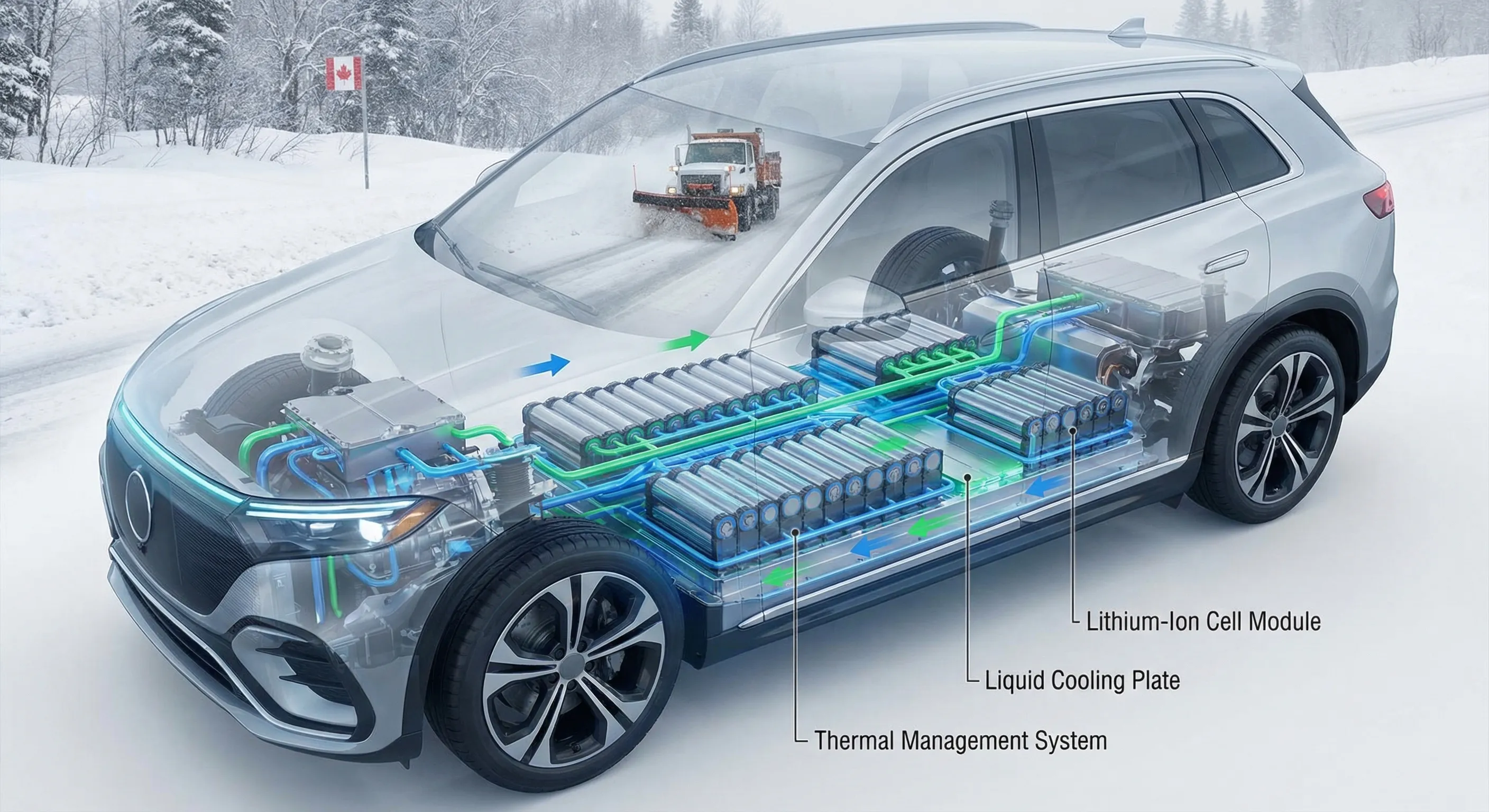
Every used EV transaction carries a question gas buyers never ask: what is the state of the battery. State-of-health (SoH) below roughly 80% is the market's informal distress threshold, below it, the car is repriced as a short-range commuter rather than a primary vehicle, and the gap is steep.
The early panic about EV battery longevity has not aged well. Most 2019–2022 EVs sampled in fleet teardowns and independent SoH pulls are showing 90–95% SoH at 100,000 km. Better than the 2018-vintage warnings predicted, and the single largest reason the depreciation gap is narrowing: the residual-value models built on pessimistic battery assumptions are being corrected by actual data.
Canada has no Carfax-equivalent for battery SoH. The workaround is a third-party OBD-II pull at an independent shop, typically $100 to $150, takes under an hour, and reads the battery management system's own state-of-health estimate directly. For any used EV transaction above $20,000, skipping this test is a false economy.
Chemistry matters. LFP (lithium iron phosphate) batteries, used in the Tesla Model 3 Standard Range, the BYD Seal, and a growing slice of the new model lineup, show measurably flatter degradation curves than the NMC chemistry that dominated the 2018–2022 generation. Same kilometres, less capacity loss. This will show up in residual values as the LFP-equipped vehicles age into the used market. A chemistry question nobody outside a battery lab wanted to learn. It now sets the resale floor.
Gear worth having
As an Amazon Associate, ThinkEV earns a small commission from qualifying purchases — at no extra cost to you.

TP-Link Kasa Smart Plug with Energy Monitoring
Track exactly how much electricity your Level 1 charger uses and schedule it for off-peak hours. Know your real cost per kWh.
As an Amazon Associate, ThinkEV earns from qualifying purchases — at no extra cost to you.

Gear worth having
As an Amazon Associate, ThinkEV earns a small commission from qualifying purchases — at no extra cost to you.

Grizzl-E Classic Level 2 EV Charger (40A)
Canadian-made and rated for minus 40C winters. 40A / 9.6 kW, NEMA 14-50, indoor/outdoor, 24-ft cable. The charger built for Canadian weather.
As an Amazon Associate, ThinkEV earns from qualifying purchases — at no extra cost to you.
Where the Gap Is Closing, and Where It Isn't
Stabilisation is real, concentrated in the vehicles with the deepest used-market liquidity. The Tesla Model Y, Model 3, and Hyundai Ioniq 6 are tracking five-year residuals in the mid-40s percent range, within a few points of comparable gas vehicles, and well inside the noise band of any individual transaction. For most owners, depreciation outweighs every other ownership cost, and on the Model Y the gap has effectively closed.
Still steep: first-generation long-range pickups (the early Lightning trims, the R1T), the first-gen Bolt across its entire production run, and any model facing direct successor launch within twelve months. A successor announcement does not gradually erode the predecessor's value, it moves the comp immediately. Owners selling a 2024 vehicle the week after the 2026 refresh is announced are negotiating against a price the market set overnight.
Two external pressures sit on top of the model-specific picture. Chinese EV price cuts in global markets, BYD's repeated mid-cycle reductions, MG's aggressive European pricing, create downward pressure on used EV comps everywhere those vehicles are sold, and indirect pressure on markets where they aren't yet. Canada's tariff cut from 100% to 6.1% in January 2026, paired with the 49,000-unit annual quota, brings that pressure here on a defined schedule. The used comps will move before the new BYDs reach dealer lots in volume.
The second pressure is fleet supply. When India's BlueSmart all-electric ride-hailing fleet collapsed in 2025, the secondary market absorbed thousands of vehicles in months. A similar dynamic in any major rideshare market, Uber's London EV fleet, BYD's contracted government fleets, would set a floor far below where private-sale comps are currently clearing. Price that risk into a five-year hold: fleet liquidations set floors that private-sale comps cannot ignore.
Gear worth having
As an Amazon Associate, ThinkEV earns a small commission from qualifying purchases — at no extra cost to you.

PULIDIKI Car Cleaning Gel (Detailing Putty)
Press it into vents, buttons, and seams and it lifts out dust you did not know was there. Weirdly satisfying, genuinely useful.
As an Amazon Associate, ThinkEV earns from qualifying purchases — at no extra cost to you.
How to Use This When You're Buying or Selling
Buying used, the checklist:
- Get the OBD-II SoH pull before the offer. $100 to $150, under an hour, reads directly from the battery management system.
- Negotiate from the SoH number, not the odometer. A 90,000 km EV at 94% SoH is a different vehicle from a 60,000 km EV at 82% SoH. The asking prices will not always reflect that.
- Check for an announced successor within the next twelve months. If one exists, the price floor has not finished moving.
- Pull the federal and provincial rebate history for the model and trim. That sets your real comp, not the original MSRP.
- For LFP-equipped trims, weight the offer up, the chemistry holds.
For a deeper read on which brands are holding value and which aren't, the model-by-model breakdown of which EVs hold their value in Canada covers Tesla, BYD, Nio, Xpeng, Toyota, and Honda residual curves with the three-year numbers.
Buying new. Your depreciation clock starts at the post-rebate price, not the MSRP. An iZEV federal rebate plus a provincial top-up, Quebec, BC, or whichever programme is live in your province this quarter, sets the real cost basis, and the used market will reset against that number twelve months later. The MSRP is for the dealer's window sticker; your residual is against the cash you actually wrote a cheque for.
Selling. Time the listing to the model-year calendar. A successor announcement, refresh, new trim structure, new battery option, moves the comps in days, not months. Selling six weeks before a refresh and selling six weeks after are different transactions at different prices. Watch the manufacturer's announcement cadence, not the seasonal demand curve, when the goal is the cleanest exit.
Buy / Wait / Skip, the verdict:
- Buy: A 2022–2023 Model Y, Model 3, or Ioniq 6 with verified SoH ≥ 90%, bought after the original owner absorbed the incentive arbitrage. The steep portion of the curve is behind you.
- Wait: Any first-gen long-range EV pickup. The 2027 model years bring the successor generation, and the current comps have not finished moving.
- Skip: A 2017–2020 first-gen Bolt at anything above scrap-plus-battery pricing. Three structural forces stack on this vehicle simultaneously and none of them are reversing.
The two-year-old EV from a high-liquidity model line is the position with the most structural advantages. The original buyer has already absorbed the incentive arbitrage. The technology obsolescence haircut has been taken. The battery has thousands of real-world kilometres of telemetry available. You are buying after the steep portion of the curve, before the long flat tail. The Canadian owner-tested guide to switching from gas to EV covers what the first year of ownership actually looks like once the depreciation question is settled.
I have not driven a 2017 Bolt or a 2024 Model Y back-to-back. The spec sheet, the residual data, and the SoH pulls from independent shops tell a consistent story anyway: the gap between EV and gas depreciation will keep closing through 2027 as LFP chemistry ages into the used market and incentive structures normalise. The vehicles being bought in 2026 will not see the curves the 2022 Bolts saw.
Gear worth having
As an Amazon Associate, ThinkEV earns a small commission from qualifying purchases — at no extra cost to you.

WixGear Magnetic Air Vent Phone Mount (2-Pack)
A magnet strong enough that your phone never flinches over potholes or rail crossings. Two in the box, one for each car.
As an Amazon Associate, ThinkEV earns from qualifying purchases — at no extra cost to you.

Founder & Chief Editor
Vlad Pereira is the founder and chief editor of ThinkEV.ca, the Canadian electric-vehicle publication he writes and edits from Courtenay, British Columbia. He covers EV pricing, federal and provincial rebates, charging costs, and the Chinese manufacturers now entering Canada, from the buyer's side rather than the press-fleet side. ThinkEV is a venture of Vlad Pereira Online; his writing on health, income and the long game lives at vladpereira.com.
Frequently asked questions
Does the iZEV rebate hurt your EV's resale value?
How do you check a used EV's battery health in Canada?
Does battery chemistry actually affect what a used EV is worth?
Which EVs are still depreciating badly right now?
Is EV depreciation the same across all vehicle classes?
More EV & road-trip finds
Affordable upgrades worth a look — tap any to check the price on Amazon.
 ★ 1,340
Car Seat Gap Filler (Universal)
View on Amazon ★ 12,834
P3 Kill A Watt Electricity Usage Monitor
View on Amazon ★ 87
★ 87Car Window Sun Shades for Kids (4-Pack)
View on Amazon ★ 68
★ 68WeatherTech FloorLiner for Tesla Model 3
View on Amazon ★ 4,050
Touchscreen Mist Screen Cleaner Kit
View on Amazon ★ 419
★ 419RGB Car Interior LED Strip Light
View on Amazon ★ 4,626
HoogaLife Hanging Car Diffuser (2-Pack)
View on Amazon ★ 4,424
Sun Visor Card and Document Organizer
View on AmazonRead, Plan, Then Stay Current
Explore our expert articles to understand incentives and ownership costs, use the map to pressure-test charging reality, then subscribe so new EV coverage comes straight to you.
Continue Reading
EV Battery Lifespan: Real Data From 22,700 Vehicles (2026)
BYD in Canada: What You Can Buy and What It Costs

BYD Canada: The Quota Math Behind Ottawa's Bet
What Nobody Tells You Before Buying Your First EV in 2026
EV Battery Degradation: How Long They Last in Canada
