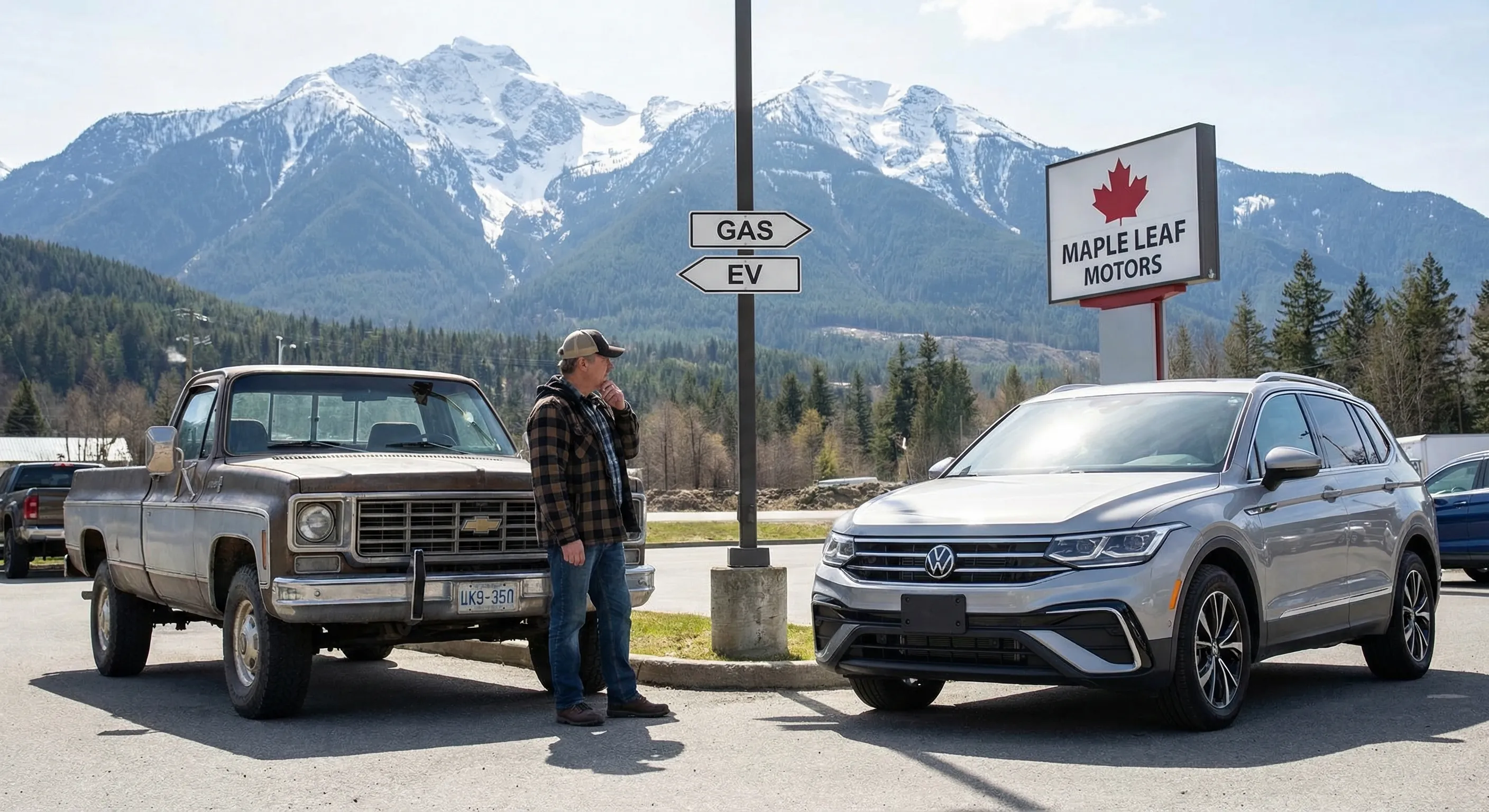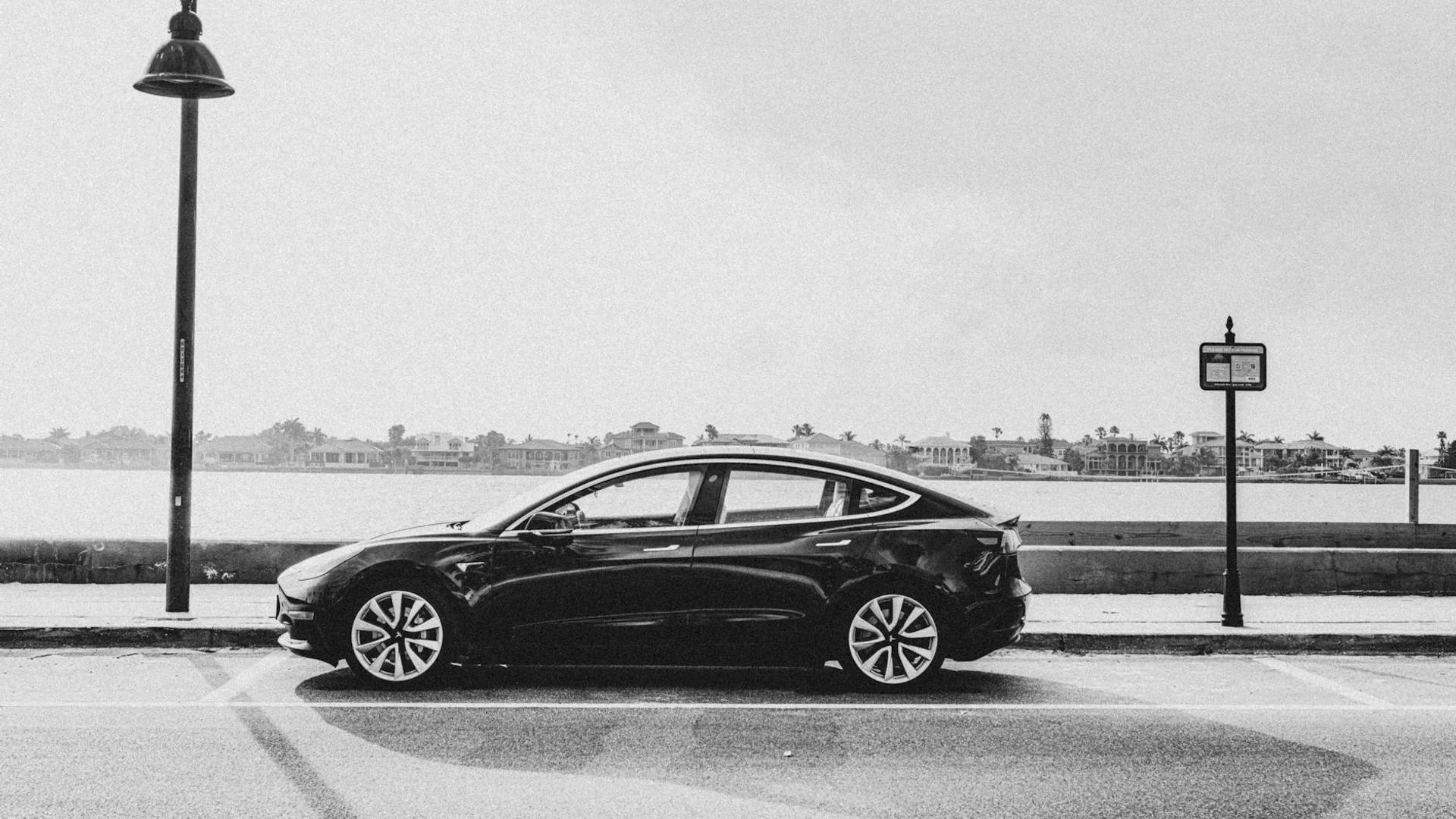
The dealer hands you the key fob and a thin photocopied sheet about regenerative braking. That sheet, in my experience, is where honest EV ownership advice ends and the mythology begins. I have spent the better part of a decade watching first-time buyers arrive at this moment with their heads full of range-anxiety folklore borrowed from a 2014 Nissan Leaf forum, and leave the lot equally misinformed in the opposite direction, convinced the battery is immortal, the maintenance is free, and the depreciation curve is a flat line. None of that is quite right. The truth is more interesting, and it rewards the buyer who can hold two ideas at once: that electric vehicles are, on balance, a better domestic appliance than the internal combustion engine has any right to compete with, and that they fail in specific, predictable ways that the brochure will not tell you about.
What follows is what I would tell a friend on the eve of their first purchase. It is not a sales pitch. It is the conversation I wish someone had handed me before I signed my own paperwork.
Key takeaways
- Kia's EV battery warranty runs ten years and 200,000 km with a 70% capacity retention floor.
- A 2017 air-cooled Leaf's pack degradation tells you nothing about any EV built after 2020.
- Apartment dwellers outside Vancouver, Montreal, or specific Toronto neighbourhoods shouldn't buy an EV yet.
- Daily EV charging works like a smartphone, your garage is the pump, fast-chargers are for road trips only.
- Passing a Costco gas line untouched is the moment most new EV owners stop second-guessing their purchase.
The Battery Question, Settled Honestly
Every conversation about a first EV purchase eventually returns to the battery, and rightly so. The pack is between thirty and forty percent of the vehicle's manufacturing cost, and its degradation curve is the closest thing electric motoring has to a clock ticking on the asset. The good news, which has now hardened into something close to consensus, is that the pack will almost certainly outlast your interest in owning the car. The lithium-ion battery packs used in most modern EVs can last at least a decade before replacement, and the field data emerging from fleets and rental agencies suggests that "at least a decade" is conservative for any pack built after roughly 2020. The chemistry has matured. The thermal management has matured. The software that manages the cells, arguably more important than the cells themselves, has matured most of all.
The case against this confidence is not unreasonable, and I will state it before rebutting it. Industry analysts at Consumer Reports have pointed out, correctly, that we do not yet have full-life data on the newest chemistries, LFP packs from BYD, the silicon-anode hybrids creeping into Korean and German cars, the structural-battery configurations Tesla pioneered. As one CR analyst put it, "time will tell how newer EV technology ages and whether or not they would succumb to the same battery degradation issues." That is a fair caution. A 2026 buyer is, in a real sense, a participant in a long-running materials science experiment.
My rebuttal is twofold. First, the warranty floor in Canada is now uniformly generous: every electric vehicle sold here carries a minimum eight-year battery warranty, and several manufacturers, Kia chief among them, have pushed that to ten years and 200,000 kilometres with an explicit seventy-percent capacity retention guarantee. When a manufacturer is willing to underwrite that kind of liability, it is because their internal accelerated-aging data says they will rarely have to pay out. Second, the failure modes we do see in older packs are almost never the slow, graceful degradation curve the textbooks predict, they are early infant-mortality defects in individual modules, caught and replaced under warranty. The pack that survives its first eighteen months is statistically very likely to survive its first decade.
The buyer's practical takeaway is this: ignore the breathless YouTube videos about a 2017 Leaf with sixty percent capacity. That car was air-cooled, the chemistry was an early-generation NMC blend, and it is no more representative of a 2026 EV than a 1998 Camry's transmission is representative of a modern dual-clutch. Buy with confidence, but buy with a battery health report if you are going used. The technology to verify pack health independently of the dealer's optimism now exists and is cheap.
The Charging Math Nobody Does on the Test Drive
The second great mythology surrounds charging, and here the first-time buyer is most reliably misled, usually by their own anxiety rather than by the dealer. The mental model most people bring to the showroom is borrowed from gasoline: the car has a fuel level, the fuel level drops, you go somewhere to refill it, refilling takes about five minutes, and the cost is roughly the same everywhere. None of these assumptions transfer cleanly.
The correct model is closer to a smartphone. You charge at home, overnight, on a schedule, and you arrive at one hundred percent every morning without thinking about it. The "filling station" is your garage, and it costs roughly a third of what gasoline costs per kilometre, sometimes less. The public DC fast-charging network, the thing the brochure photographs lovingly and the dealer points to on the map, is for road trips. It is not your daily fuel source, and treating it as such is the single most common way new EV owners make themselves miserable and shorten their pack's life simultaneously.
The counter-argument here is the apartment dweller, and it is a serious one. If you cannot charge at home, the smartphone model collapses and you are back to a gasoline-shaped life with worse infrastructure. I do not think apartment dwellers should buy EVs yet, full stop, unless their workplace offers Level 2 charging or their city has dense overnight curbside infrastructure, which in Canada means essentially Vancouver, parts of Montreal, and a few neighbourhoods in Toronto. Everyone else is signing up for a frustration the brochure will not warn them about. National Geographic's recent feature on first-time EV buyers captured this honestly, noting that the purchase price gap between EVs and combustion vehicles continues to narrow even as the infrastructure gap remains stubbornly uneven across geographies.
There is a quieter aspect of charging the test drive cannot show you, and it is the one that converts skeptics. Reddit threads about first-EV "aha moments" return again and again to the same scene: the owner driving past a Costco gas line on a long-weekend Friday, untouched by it, and realizing that fuelling has been quietly subtracted from their week. One commenter on a recent thread put it with admirable economy, "passing by the lines of cars waiting for $5 Costco gas", and it sounds glib until it happens to you. The dollar savings are real. The cognitive savings, the elimination of a small recurring chore, are larger than the dollar savings, and they do not show up in any spreadsheet.
Regenerative Braking and the Mountain Test
I want to give one full paragraph to regenerative braking, because it is the feature most consistently undersold by dealers and most consistently celebrated by owners after the fact. The physics is unremarkable: the motor runs backwards as a generator when you lift off the accelerator, slowing the car and dumping kinetic energy back into the pack. The experience is something else. The most frequently cited "aha moment" in owner surveys is the descent, coming down from the Blue Ridge Parkway, or the Coquihalla, or any sustained downhill, and watching the battery percentage climb several points by the bottom. A combustion car turns that same energy into brake-rotor heat and rotor wear. An EV turns it into range. Over the life of the vehicle this difference shows up in two places: the brake pads, which on most EVs are still on their original set at 100,000 kilometres, and the driver's relationship to elevation, which subtly inverts. Hills stop being a fuel penalty and become a fuel opportunity. It is a small thing. It changes how you drive.
One-pedal driving, the more aggressive regenerative setting where lifting off the accelerator brings the car to a full stop, is the feature owners report adapting to within about a week and refusing to give up thereafter. If you test drive a vehicle that does not offer it, or offers only a watered-down version, treat that as a meaningful demerit. The Mach-E and the ID.4 both made this mistake in early model years and corrected it under owner pressure. It matters.
Gear worth having
As an Amazon Associate, ThinkEV earns a small commission from qualifying purchases — at no extra cost to you.

Lectron Level 2 J1772 Charger (40A, WiFi)
Smart WiFi charger with real-time energy monitoring. 40A / 9.6 kW, J1772 with a NEMA 14-50 plug, schedule charging right from your phone.
As an Amazon Associate, ThinkEV earns from qualifying purchases — at no extra cost to you.
Depreciation: The Cliff and the Plateau
Here is where I will be most blunt, because this is where first-time buyers lose real money. EV depreciation is not a single curve. It is two distinct curves stacked on top of each other, and which one your vehicle follows depends almost entirely on the brand and the model year, not on how well you treated the car.
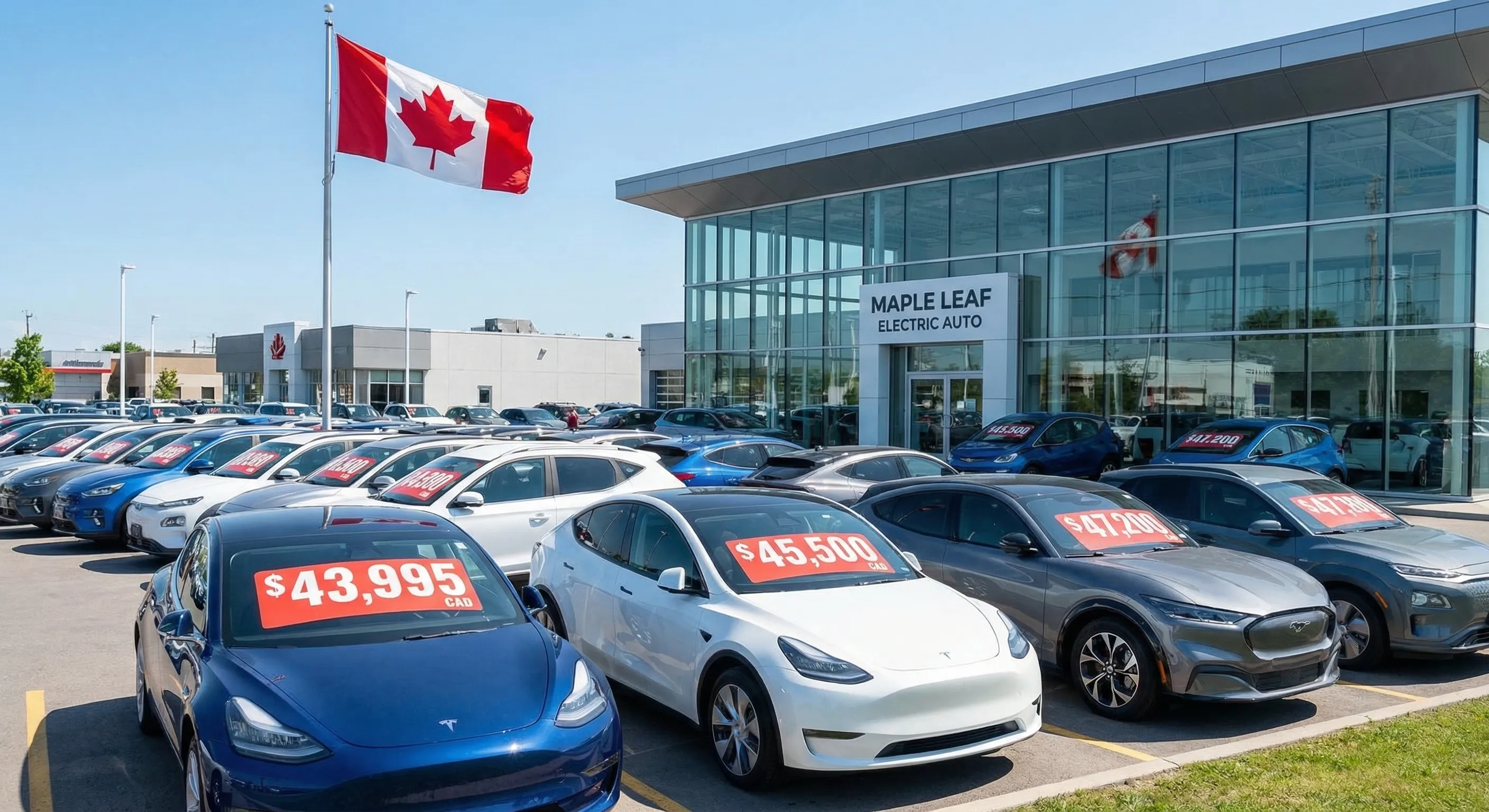
The first curve is the cliff. Several brands, and I will not name them all, but the pattern is well-documented in ThinkEV's depreciation tracking, have shed forty to fifty percent of their value in the first three years. This is not because the cars are bad. It is because the manufacturers built too many, the lease returns flooded the secondary market simultaneously, and the next-generation model introduced range or charging improvements that made the older model feel suddenly antique. The buyer who paid sticker in 2023 absorbed all of that. The buyer who walks into a used lot in 2026 is the beneficiary.
The second curve is the plateau. A small handful of vehicles, certain Tesla configurations, the better Hyundai-Kia products, the Volvo and Polestar lineup, have held their value remarkably well, depreciating closer to the long-run average for premium combustion cars. The mechanism here is partly brand strength, partly genuine technical lead, and partly that these manufacturers throttled supply rather than chase volume.
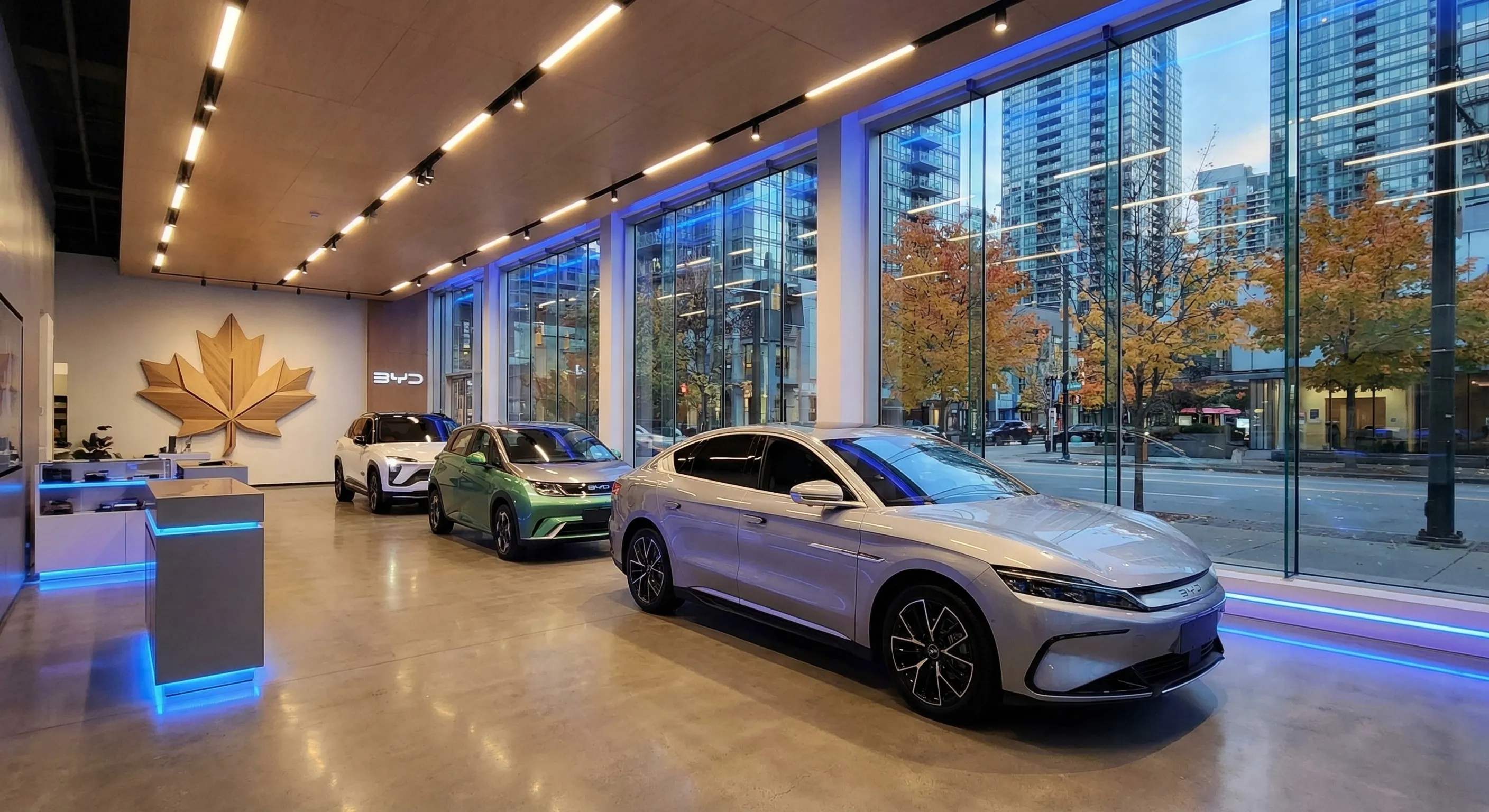
The forecast I would stake reputation on: the cliff steepens before it flattens. The Chinese-built EVs arriving in Canada under the renegotiated 6.1% tariff structure beginning January 2026 will price-anchor the entire used market downward. BYD alone outsold Tesla globally in 2024 and is now the world's largest EV manufacturer by volume. When their products reach Canadian dealerships in 2026 and 2027 at price points the legacy brands cannot match, the resale value of any non-premium 2023–2025 EV will compress further. What would change my mind: a sudden tariff reversal, or a quality scandal at one of the major Chinese manufacturers severe enough to break consumer confidence. Neither feels likely on current evidence.
The practical advice is uncomfortable. If you are buying new in 2026, accept that you are paying a convenience premium for a depreciating asset. Lease, do not finance, unless you intend to keep the car for at least seven years, at which point the curve flattens and ownership economics turn favourable again. If you are buying used, the cliff is your friend. A three-year-old EV with verified battery health and a clean service history is among the best automotive bargains available to a Canadian consumer right now.
The Hidden Annoyances
No honest buyer's guide should skip the parts that annoy owners after the fact. They are small, they are real, and they are almost never mentioned at the dealership.
Gear worth having
As an Amazon Associate, ThinkEV earns a small commission from qualifying purchases — at no extra cost to you.

WeatherTech FloorLiner for Tesla Model 3
Deep-channel liners that trap every drop of slush and salt. The difference between a ruined interior and a showroom-fresh cabin after a Canadian winter.
As an Amazon Associate, ThinkEV earns from qualifying purchases — at no extra cost to you.
The first is winter range loss. On a cold morning at minus twenty, a Canadian EV will deliver somewhere between sixty and seventy-five percent of its summer range. This is physics, battery chemistry slows in the cold, and a meaningful fraction of the pack's energy is now heating the cabin and the battery itself rather than turning the wheels. Preconditioning, which warms the pack and cabin while still plugged in, recovers most of the loss, but only if you remember to use it. Owners adapt within one winter. First-time buyers who did not know this is a feature often spend that first winter convinced their car is broken. It is not. It is a Canadian car doing Canadian-car things, and the cars that handle it best tend to be the ones with heat pumps and properly engineered thermal management, not necessarily the ones with the largest nominal range.
The second is the charging-curve education. DC fast chargers do not deliver their advertised peak speed for the full session. They taper, sometimes aggressively, as the battery fills past about sixty percent. A "350 kW charger" is a marketing artefact; the car will accept that rate for perhaps ten minutes before the curve drops. The competent road-tripper learns to plug in at twenty percent and unplug at sixty-five, three times across a long day, rather than charging to a hundred twice and waiting through the long taper. This is counterintuitive on the first trip. By the fifth, it is muscle memory.
The third is software updates. Your car is now a computer with wheels, and the manufacturer will push updates to it on their schedule, not yours. Most are uneventful. Some have, in well-documented cases, changed the regenerative braking behaviour, the navigation interface, or the charging speed curve overnight. Owners who treat this as a feature, as I do, appreciate that the car they bought is not the car they will own in three years; it will be subtly better. Owners who treat it as an intrusion, and there are many, never quite forgive the manufacturer for it.
The fourth annoyance is the dealership experience itself, which in Canada remains uneven. Tesla bypasses the dealer entirely. Hyundai, Kia, Ford, GM, and the European brands still route through franchise dealers whose service technicians have variable EV training and whose parts departments may not stock high-voltage components. Reddit threads on EV ownership downsides return repeatedly to the same complaint: a routine service appointment turns into a multi-week wait because the trained technician is on vacation, or the diagnostic software has not been updated, or the regional parts hub is in another province. This is improving annually. It is not yet solved.
The Used Market in 2026, A Real Opportunity
I have argued that the depreciation cliff is severe. The implication is that the used market in 2026 is the best entry point most Canadian buyers will ever see for an electric vehicle. I want to develop that point with some specificity.
A 2022 or 2023 mid-range EV, call it a long-range Model 3, an Ioniq 5, an EV6, a Mach-E Premium, is now available on the Canadian used market at roughly half its original sticker. The battery on every one of those vehicles is still covered under the manufacturer's eight-year warranty for at least four more years. The pack will, on the evidence, retain better than ninety percent of its original capacity at this stage of life. The cosmetic and mechanical condition of these cars is generally excellent, because EVs are mechanically simpler than combustion vehicles and the early-adopter demographic that bought them tends to be conscientious owners.
The risks are specific and addressable. A small number of early-production cars have known module defects that show up as anomalous fast-charging behaviour or unexplained range loss. Recurrent and Recharged both now offer verified battery health reports that can be pulled before purchase, and any private seller or dealer who refuses to provide one should be assumed to be hiding something. A clean report, combined with a service history showing no high-voltage component replacements, is sufficient diligence for a buyer who is not a technician.
The named comparison I would offer is Norway, which has now reached a state of EV market maturity Canada will not see for at least a decade. Norway's new-car market is now over ninety percent electric, and the Norwegian used market has stabilized into something close to combustion-car depreciation patterns, meaningful first-year drop, then a slow and predictable taper. Canada is roughly where Norway was in 2018. The cliff we are watching is a transitional artefact, not a permanent feature of electric motoring. The buyer who steps in at the bottom of the cliff gets to participate in the plateau that follows.

Gear worth having
As an Amazon Associate, ThinkEV earns a small commission from qualifying purchases — at no extra cost to you.

PULIDIKI Car Cleaning Gel (Detailing Putty)
Press it into vents, buttons, and seams and it lifts out dust you did not know was there. Weirdly satisfying, genuinely useful.
As an Amazon Associate, ThinkEV earns from qualifying purchases — at no extra cost to you.
Incentives, Tariffs, and the Policy Layer
I will be brief on policy because it changes too quickly to be useful in a buyer's guide that aspires to a shelf life longer than six months. The current Canadian landscape: the federal iZEV programme has been wound down and restarted twice in eighteen months, several provinces continue to offer their own rebates of varying generosity (Quebec and British Columbia leading, Ontario absent), and the tariff structure on Chinese-built EVs dropped from 100% to 6.1% in January 2026, with a 49,000-vehicle annual quota.
The buyer's relevant takeaway is that the policy layer is volatile and you should not buy a car primarily for an incentive that may not survive the next budget. Treat any rebate as a pleasant bonus. Build the purchase decision around the vehicle itself, the charging situation at your home, and the total cost of ownership over the years you actually intend to keep it.
The tariff change matters more than the rebate noise. With Chinese-built vehicles now reaching Canadian dealerships at competitive price points, the entire market is repricing. Legacy manufacturers are responding with discounts and incentive stacking that, by my read, will deepen through 2026 and into 2027 before stabilizing. A patient buyer who can wait six months may see deals on 2025 model-year inventory that look extraordinary by historical standards.
The Smaller Pleasures
I have spent most of this piece on the risks and complications because that is where first-time buyers are most underserved by existing coverage. I want to close on the smaller pleasures, because they are real and they are the reason most owners, once converted, do not go back.
The car is quiet. Not "quieter than a combustion car" quiet, silent at idle, and very nearly silent at urban speeds. You will notice the tires on coarse pavement and the wind at highway speeds for the first time, because there is no engine noise to mask them. Some owners find this disconcerting for a week. Then they find it restful, and the prospect of returning to a combustion cabin starts to feel mildly hostile.
The car is fast. Even modest EVs deliver instant torque from a standstill, which on an on-ramp or in a passing manoeuvre feels qualitatively different from a combustion drivetrain working its way through gears. This is not about top speed, which is mostly irrelevant in Canadian driving. It is about response, the gap between intention and acceleration is measured in milliseconds rather than half-seconds, and after a few months you stop noticing it consciously, but the relaxation it produces is permanent. You stop planning passes; you just make them.
The car is convenient in ways that compound. The frunk holds groceries. The phone-as-key works more reliably than a fob. The mobile app shows you the state of charge from the kitchen. The cabin preconditions before you walk to the garage on a January morning. None of these is decisive. Together, they constitute a domestic appliance that does its job with markedly less friction than the one it replaced.
Owners report adapting to this within roughly three months and then quietly losing patience with rental cars, friends' cars, and any combustion vehicle they have to operate thereafter. This is, I think, the actual answer to the question of whether EVs will win the market. The technology converts its users into advocates not through ideology but through habituation. Once you have lived with the smaller pleasures, the combustion equivalent feels like an older, noisier, more demanding version of the same thing.
Gear worth having
As an Amazon Associate, ThinkEV earns a small commission from qualifying purchases — at no extra cost to you.

WixGear Magnetic Air Vent Phone Mount (2-Pack)
A magnet strong enough that your phone never flinches over potholes or rail crossings. Two in the box, one for each car.
As an Amazon Associate, ThinkEV earns from qualifying purchases — at no extra cost to you.
What I Would Tell a Friend
Buy a used EV from the 2022–2024 vintage if you can charge at home and you can afford the up-front. Pull a battery health report before you sign anything. Do not let the dealer dismiss your questions about charging curves or thermal management; if they cannot answer them coherently, walk. Lease rather than finance if you are buying new and uncertain. Wait six months if you can stand the wait, because the market is repricing under your feet and the deals available in the back half of 2026 will likely exceed anything available in the front half.
Do not buy on the strength of an incentive that the next election could vapourize. Do not buy on the strength of a range figure tested at twenty degrees Celsius if you live anywhere north of Toronto. Do not buy a car you cannot charge at home unless you have verified, verified, not assumed, that your workplace or your municipality offers Level 2 charging on a schedule that fits your life.
And then, once you have done the diligence and signed the papers and driven the thing home, let yourself enjoy it. The mythology has obscured the simple fact that this is, on most days, just a quieter and quicker and cheaper-to-fuel car than the one you traded in. The revolution is mostly domestic. It happens in your garage at two in the morning, while you sleep, and the car is full when you wake up. That is the whole pitch. Everything else is footnotes.
Gear worth having
As an Amazon Associate, ThinkEV earns a small commission from qualifying purchases — at no extra cost to you.

NOCO Boost Plus GB40 Jump Starter
A 1000A lithium jump starter that fits in your glovebox and works on any 12V battery. Your insurance against a dead 12V in a parking lot.
As an Amazon Associate, ThinkEV earns from qualifying purchases — at no extra cost to you.