For most Canadians shopping an EV in 2026, leasing wins the math, and it wins it earlier than the industry's own marketing suggests. The break-even point for most drivers sits somewhere between five and seven years, and most drivers replace their vehicle before then. That is the whole argument. Everything below is the receipts.
The EVAP rebate applies to leases as readily as it does to purchases, which reframes the question. The decision is which path leaves less money on the table given how long you actually keep cars, how many kilometres you drive, and whether your preferred model carries a residual worth defending.
Key takeaways
- Leasing beats buying financially if you keep your EV under five years, most Canadians do.
- EVAP's $5,000 federal rebate applies equally to leases and purchases, but excludes all China-built EVs.
- Overages on a 20,000 km lease cap cost $0.10–$0.15/km, high-mileage drivers above 30,000 km should buy.
- Lease premiums rose 8–12% since 2023 as residual assumptions tightened after the 2022–2024 used-EV correction.
- The Yukon Good Energy Program stacks $5,000 on top of EVAP for both leases and purchases.
The Depreciation Math Decides Most Cases Early
New cars can lose about 20% of their original value in the first year, and the curve stays steep through year three. Speaking to The Globe and Mail, Shari Prymak of Car Help Canada put the underlying dynamic bluntly: electric vehicles make sense to lease because they depreciate rapidly, and today's EVs are like computers in the 90s, the newest model is so much better than the one before it that you don't want to get stuck with yesterday's tech. Residual risk is the single largest financial exposure in an EV purchase, and leasing transfers that risk to the lessor by design.
Break-even on ownership versus leasing sits between five and seven years for most models at 2026 residual values. That is the industry's honest number. Beyond that, owning a vehicle outright tends to be the more cost-effective position. Under five, the depreciation loss usually exceeds the equity a buyer accumulates.
Canadian ownership tenures do not cooperate with that horizon. Most buyers swap vehicles well before the break-even lands, which means they eat the steepest part of the depreciation curve and hand back a car worth substantially less than what they paid for it. A lease sidesteps the whole exchange, you pay for the use, not the asset. The pushback here is that lease payments leave you with nothing at the end, and it is a fair point on its own terms: there is no trade-in value, resale value, or equity built from your payments when the term closes. The rebuttal is that "equity" in a vehicle that lost 45% of its value in three years is a smaller consolation than the accounting suggests, you kept the depreciation, not the equity.
Used EV values are stabilising in 2026 but remain volatile. The 2022–2024 correction hasn't fully priced in, a used Model 3 today can trade at a range wide enough to embarrass any spreadsheet. That volatility is what makes leasing the safer purely-financial choice for buyers with sub-five-year horizons. For buyers thinking about a used EV that already took the hit, the math flips entirely (more on that below).
The verdict: if your ownership horizon is under five years, leasing wins the math almost automatically. If it is over seven, buying wins. The middle three years are where the interesting decisions live, and they are decided by incentives and mileage, not by whether leasing is "throwing money away," which is a folk theory the numbers do not support.
Gear worth having
As an Amazon Associate, ThinkEV earns a small commission from qualifying purchases — at no extra cost to you.

AstroAI Portable Tire Inflator
One tap, it inflates to your exact PSI then stops automatically. Low tires cost 5 to 10 percent of your range, so this pays for itself in a week.
As an Amazon Associate, ThinkEV earns from qualifying purchases — at no extra cost to you.
How Canadian Incentives Tilt the Calculation
The federal picture in 2026 is EVAP, the Electric Vehicle Availability Program, which launched in February and replaced the retired iZEV. EVAP pays up to $5,000 for an eligible BEV, caps at a $50,000 final transaction value (with no cap for Canadian-built vehicles), and, critically for this comparison, applies to both purchases and leases. NRCan administers the program. The rebate is deducted at the dealership, not clawed back at tax time.
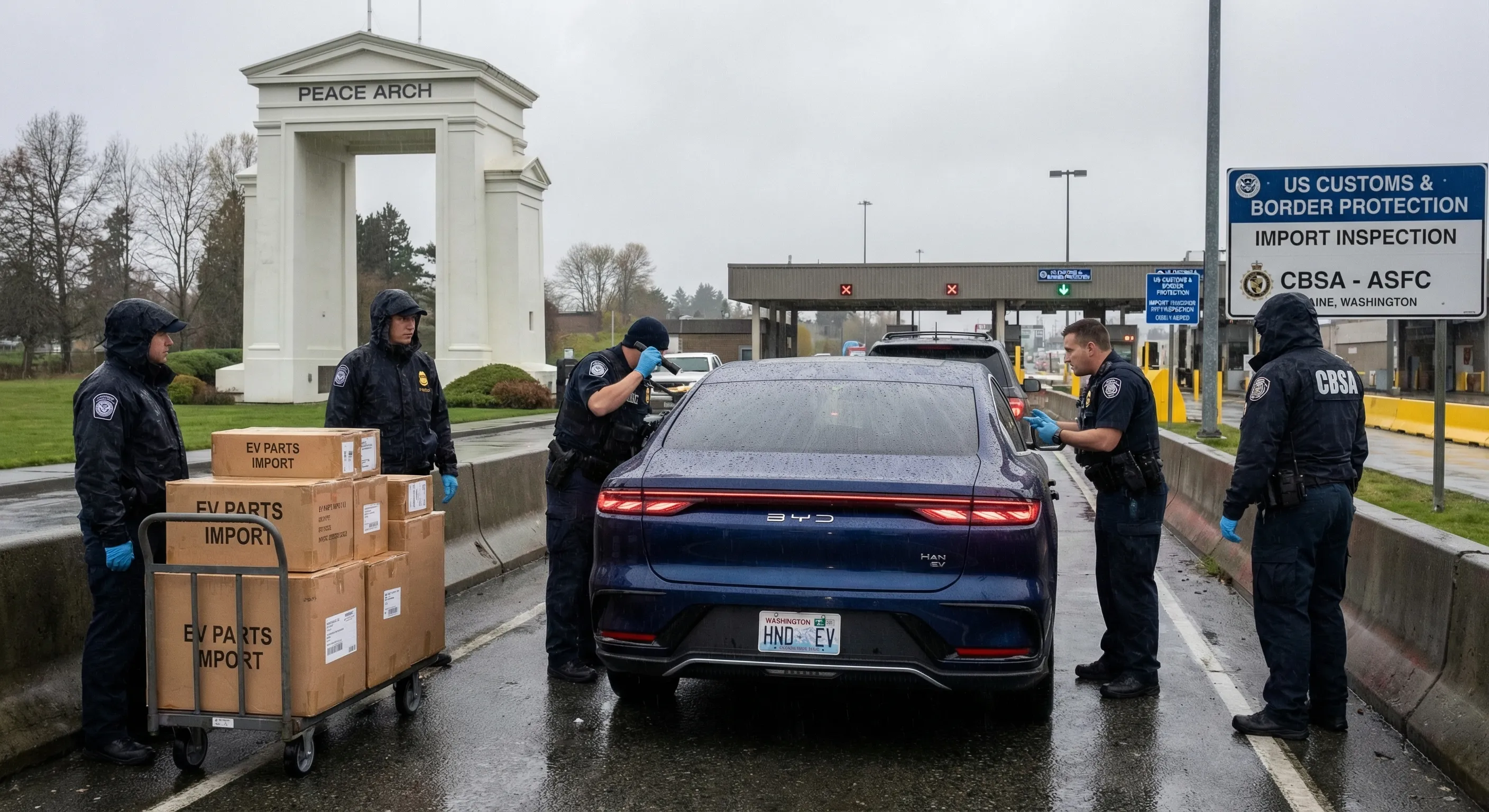
Country-of-origin matters. EVAP excludes China-built vehicles regardless of price, which means BYD's Canadian arrival under the January 2026 tariff shift does not come with a federal rebate attached. That is a meaningful line item on the buy-vs-lease sheet: a Chinese-built EV that is otherwise price-competitive loses $5,000 of federal support that a Korean- or Ontario-built alternative keeps.
Provincial and territorial layers stack on top with mixed rules. The Yukon Good Energy Program adds $5,000 for the purchase or lease of a new or used BEV or PHEV, administered by the territory's Energy branch, one of the cleaner stacking opportunities in the country for lessees. Elsewhere the picture is less generous. Several provincial top-ups (BC's SCRAP-IT, Quebec's programme, Nova Scotia's) historically restricted the fuller rebate to purchases, not leases. Read the specific programme's fine print before signing anything; the rules shift year to year and by vehicle eligibility.
Two operational details matter:
- How the rebate flows. On a purchase the buyer collects the rebate as a lump-sum discount; on a lease it usually gets applied to the capitalised cost, reducing the monthly payment across the term rather than arriving as a cheque. Same money, different mechanic.
- Who claims it. Some provinces let purchasers claim the full incentive personally while lessees see it flow through the leasing company. The net-to-you can be identical, but ask the dealer to show the line item both ways.
For anyone tempted to route around all of this by importing personally, the Chinese-EV-through-Canada question has a longer answer than most buyers expect. The short version: the incentives don't travel.
The Technology Hedge Is Real, and Has a Ceiling
The strongest non-financial argument for leasing an EV is the technology hedge. Most lease terms last only two to three years, so it's a great option for anyone who's still figuring out if EV life is right for them, and mid-decade is when the industry expects meaningful chemistry step-ups, with 400 Wh/kg cell energy densities moving from lab announcements toward production lines. If your priority is not being locked into a 2026 pack when a 2028 pack does 40% more range at similar cost, leasing is the direct instrument for that hedge. BMW's own buyer research points the same way, respondents said they want to try out a used electric car through leasing first, and over one in four new leasing inquiries already focus on EVs, which suggests the hedge motive is doing real work in actual buyer behaviour, not just in commentary.
Gear worth having
As an Amazon Associate, ThinkEV earns a small commission from qualifying purchases — at no extra cost to you.

Lectron Level 2 J1772 Charger (40A, WiFi)
Smart WiFi charger with real-time energy monitoring. 40A / 9.6 kW, J1772 with a NEMA 14-50 plug, schedule charging right from your phone.
As an Amazon Associate, ThinkEV earns from qualifying purchases — at no extra cost to you.
The hedge is not free. Lease premiums have risen roughly 8–12% since 2023 as leasing companies tightened their residual assumptions to reflect what the used market actually did. The premium is the price of transferring residual risk to a counterparty that now knows what that risk looks like. It is, to be fair, a rational number.
The trap is mileage. Standard EV leases in Canada cap at 20,000 to 24,000 km per year, and overages run $0.10 to $0.15 per kilometre at return. A driver logging 30,000 km annually on a 20,000-km lease is buying an $1,800-per-year end-of-lease bill on top of the payment. Buy more mileage up front and you erase a large chunk of the leasing advantage. If you drive 30,000+ km annually, buying almost certainly wins regardless of depreciation exposure, the lease math simply does not accommodate the use case. There is a customisation trap too: leased vehicles must be returned in original condition outside normal wear and tear, and custom wheels, wraps, or hardware modifications are typically off the table. For a lot of buyers that is trivial. For anyone who was going to swap the wheels on day one, it is a real cost of the hedge.
There is a second ceiling. The technology hedge only matters if you can afford to actually rotate cars every three years. For buyers whose budget already stretches to reach a specific model, a three-year cycle means recommitting to the same or higher payment on every rollover. Ownership, by contrast, gets cheaper per year the longer you hold. This is the classic argument for buying a used EV that has already absorbed the steep first-year hit, the depreciation curve is somebody else's problem, and the ownership equity clock starts on day one.
Gear worth having
As an Amazon Associate, ThinkEV earns a small commission from qualifying purchases — at no extra cost to you.

Grizzl-E Classic Level 2 EV Charger (40A)
Canadian-made and rated for minus 40C winters. 40A / 9.6 kW, NEMA 14-50, indoor/outdoor, 24-ft cable. The charger built for Canadian weather.
As an Amazon Associate, ThinkEV earns from qualifying purchases — at no extra cost to you.
Buy When the Numbers Say Buy, Three Specific Scenarios
The buy-vs-lease answer flips cleanly in three cases. Naming them is more useful than another round of general advice.
Scenario A: You plan to keep the vehicle eight years or longer, and you charge at home. Total cost of ownership favours purchase decisively here. Financing terminates around year six or seven; years eight through twelve are essentially free of the monthly payment. Home charging at Canadian residential rates undercuts public DC fast-charging by a factor of three to five, which compounds the ownership advantage across the hold period. This is the buyer for whom the phrase "leasing is throwing money away" comes closest to being true, not because leasing is inefficient, but because you are the exact profile that captures the ownership tail.
Scenario B: You're buying used. A two-to-three-year-old EV has already absorbed the steep first-year depreciation. The residual risk that makes leasing attractive on a new car has already been paid, by whoever leased it originally. Ownership equity starts building the day you sign, and the used-EV market in 2026 is deep enough to give buyers real choice. The used play is the single strongest argument against leasing for a budget-conscious Canadian buyer.
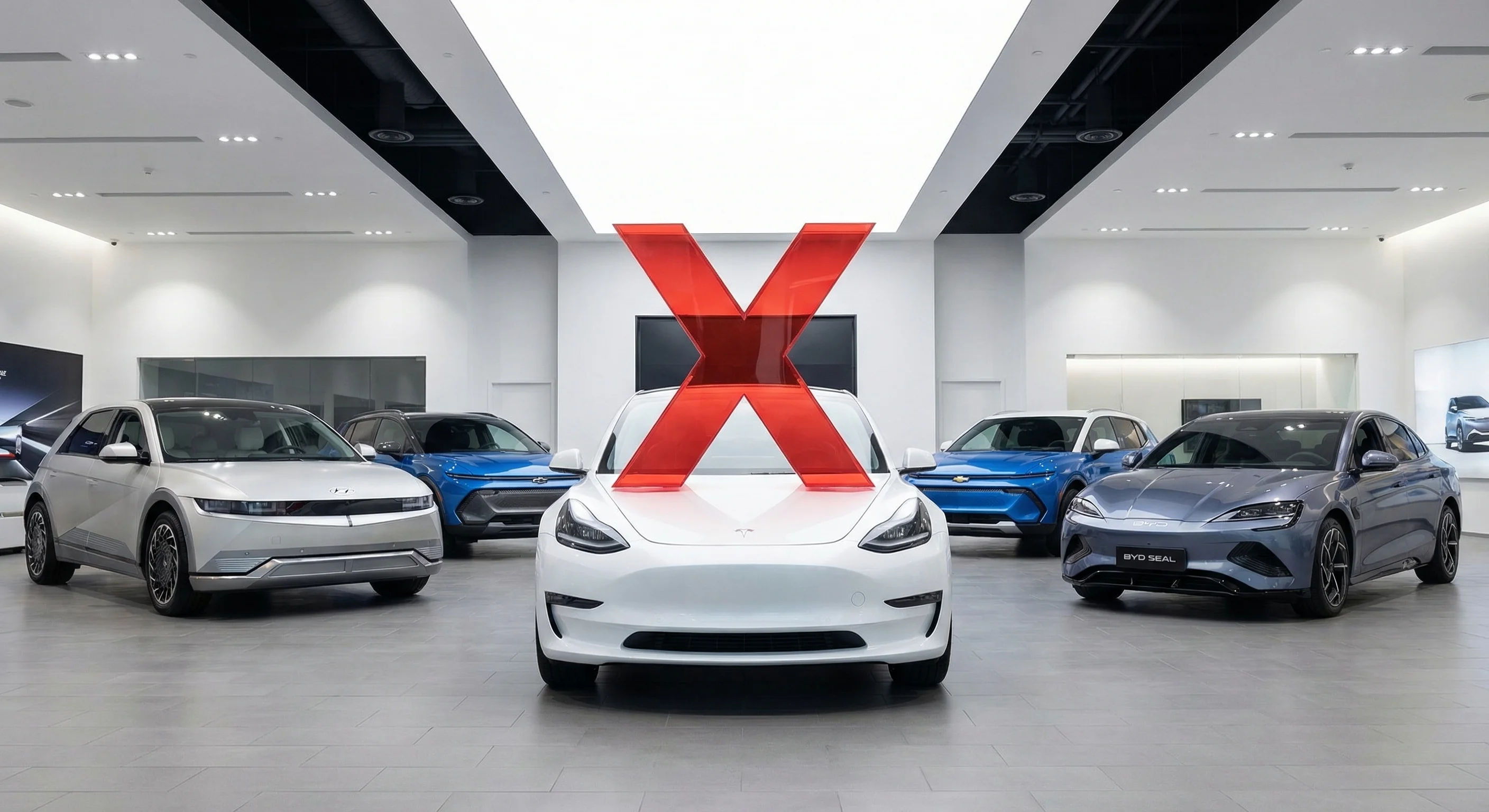
Scenario C: Your preferred model carries a strong residual. The Model Y Long Range and Chevrolet Equinox EV both hold value materially better than the 2026 EV segment average. If the depreciation risk is smaller, the leasing hedge against that risk is worth less. Owning a model with a durable residual gets you most of the way to leasing's financial protection without the mileage cap or the end-of-term surrender. Tesla's residuals held up better than the brand's headline narrative in 2025, the Canadian sales collapse did not translate directly into value collapse on existing stock, which is a distinction most coverage flattened. The direct comparison worth naming: a three-year-old Model Y Long Range in Ontario currently trades within roughly 8–10 points of Equinox EV residuals in the same age band, while a comparably-priced Mustang Mach-E from the same vintage sits closer to 20 points behind both. Same segment, same price bracket, wildly different residual behaviour, which is exactly why "should I lease an EV" is the wrong question until you name the model.
The inflection point I'd commit to: roughly $48,000 MSRP on a five-year financing horizon at current rates. Below it, ownership math tightens because the absolute depreciation dollars are smaller and the payment fits a longer hold. Above it, leasing is usually the answer for anyone under the seven-year threshold, the sums involved are large enough that transferring residual risk earns its premium.
Two conditions would flip this read. If used-EV values stop stabilising and re-enter the correction pattern of 2023, the lease-vs-buy gap widens further in leasing's favour and the inflection point drops below $40,000. If Canadian lease premiums re-tighten back toward 2022 levels, plausible if leasing companies gain confidence in the residual floor, the gap narrows and the ownership math improves at every price point. The specific checkpoint I'll be watching: the average 36-month residual quoted by the big captive finance arms (Toyota Financial, GM Financial, Ford Credit, Tesla) on their Q4 2026 Canadian rate sheets. If that number crosses back above 55% of MSRP for a mainstream EV, the inflection point I quoted above needs to move down by roughly $6,000, and a lot of buyers currently sitting on the leasing side of the line will find themselves on the buying side by the following spring.
Gear worth having
As an Amazon Associate, ThinkEV earns a small commission from qualifying purchases — at no extra cost to you.

PULIDIKI Car Cleaning Gel (Detailing Putty)
Press it into vents, buttons, and seams and it lifts out dust you did not know was there. Weirdly satisfying, genuinely useful.
As an Amazon Associate, ThinkEV earns from qualifying purchases — at no extra cost to you.
Most Canadian Buyers Replace Before the Break-Even Lands
Most Canadian EV buyers replace their vehicle inside five years. Most of the buy-vs-lease debate is conducted as if they will keep it for ten. Reconcile that gap honestly and the answer for the typical 2026 buyer, mid-priced EV, sub-24,000 km/year, three-to-five-year horizon, EVAP-eligible model, is leasing, with the rebate applied to the capitalised cost and a hard eye on the mileage cap.
The exceptions are real and worth taking. High-mileage drivers, long-hold owners, used-EV shoppers, and buyers of strong-residual models each have a specific reason to buy. Everyone else is paying for optionality they will not use.
Gear worth having
As an Amazon Associate, ThinkEV earns a small commission from qualifying purchases — at no extra cost to you.

WixGear Magnetic Air Vent Phone Mount (2-Pack)
A magnet strong enough that your phone never flinches over potholes or rail crossings. Two in the box, one for each car.
As an Amazon Associate, ThinkEV earns from qualifying purchases — at no extra cost to you.

Founder & Chief Editor
Vlad Pereira is the founder and chief editor of ThinkEV.ca, the Canadian electric-vehicle publication he writes and edits from Courtenay, British Columbia. He covers EV pricing, federal and provincial rebates, charging costs, and the Chinese manufacturers now entering Canada, from the buyer's side rather than the press-fleet side. ThinkEV is a venture of Vlad Pereira Online; his writing on health, income and the long game lives at vladpereira.com.
Frequently asked questions
Does the EVAP rebate pay out differently on a lease vs. purchase?
What happens if I go over my lease mileage driving to work?
Can I buy out my leased EV if I actually love it?
Do Chinese EVs like BYD qualify for any Canadian incentives?
Is a used EV purchase ever smarter than a new lease?
More EV & road-trip finds
Affordable upgrades worth a look — tap any to check the price on Amazon.
 ★ 4,626
HoogaLife Hanging Car Diffuser (2-Pack)
View on Amazon ★ 12,396
K KNODEL Car Trash Can with Lid
View on Amazon ★ 848
★ 848Coiled USB-C to USB-C Car Cable (2-Pack)
View on Amazon ★ 87
★ 87Car Window Sun Shades for Kids (4-Pack)
View on Amazon ★ 68
★ 68WeatherTech FloorLiner for Tesla Model 3
View on Amazon ★ 47,507
HOMEXCEL Microfiber Cloths (12-Pack)
View on Amazon ★ 164
★ 164Solar-Powered LED Ambient Light
View on Amazon ★ 1,349
Cool Swinging Duck Dashboard Ornament
View on AmazonRead, Plan, Then Stay Current
Explore our expert articles to understand incentives and ownership costs, use the map to pressure-test charging reality, then subscribe so new EV coverage comes straight to you.
Continue Reading
Tesla and Canada's EV Rebate: Why It Doesn't Qualify
Canada's EV Rebates Lifted March Sales Over 80%
What Nobody Tells You Before Buying Your First EV in 2026

Your First EV in Canada, The No-BS 2026 Buying Guide
Tesla Sales Collapsed 60% in Canada, Should I Still Buy One?