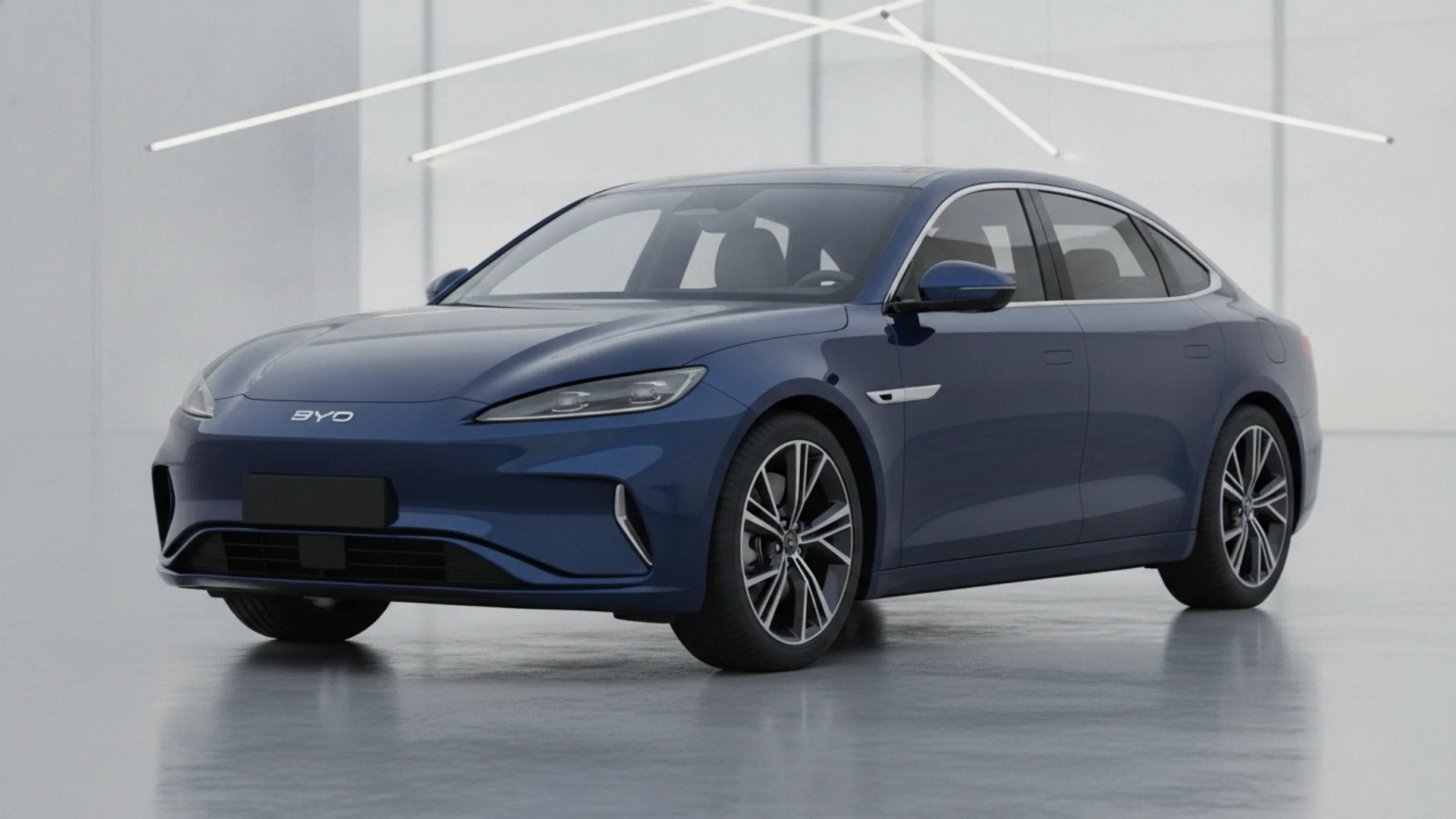
You've seen the BYD Seal on your commute three times this month, and now you want to know what one actually costs to put in your driveway. The short answer: in BC or Ontario, with the federal iZEV rebate stacked on top, a Seal lands in the high-$40s CAD before fees, and in BC you can knock roughly $9,000 off if you qualify for the provincial top-up.
That's the headline. The rest of this guide is the small print, which models you can actually buy, what the winter range really looks like at minus ten, and where the service network thins out the moment you leave Vancouver or Toronto. BYD is the world's largest EV maker, and it's a vertically integrated company with several major subsidiaries, including BYD Auto for vehicles, BYD Electronics for parts and assembly, and FinDreams for automotive components and electric vehicle batteries. That vertical stack is part of why the prices look the way they do, and why the warranty story is more interesting than it first appears.
Key takeaways
- No BYD model sold in Canada qualifies for the federal EVAP rebate, Dolphin, Atto 3, and Seal are all excluded because China has no free-trade agreement with Canada.
- The BYD Dolphin starts under $40,000 CAD, making it the lowest-priced model in BYD's Canadian lineup.
- Authorized BYD service is concentrated in metro Vancouver and the GTA, where body panels and trim have shown 3–8 week lead times sourced from China.
- The BYD Seal has a WLTP range of 570 km and accepts up to 150 kW DC fast charging, putting a 10–80% charge at roughly 30 minutes.
- Out-the-door costs run $2,000–$3,500 above sticker once destination, PDI, tax, and dealer fees are added.
Which BYD Models Can You Actually Buy in Canada Right Now?
Three models carry the volume in Canada today: the Atto 3 compact SUV, the Seal mid-size sedan, and the Dolphin entry hatchback. All three sit in BYD's Ocean series, the design-forward, export-oriented lineup. BYD also sells under high-end brands Denza, Fangchengbao, and Yangwang, plus the commercial-focused Linghui brand, but none of those have landed in Canadian showrooms. If you've read about a Yangwang U8 climbing a sand dune sideways, set that aside, it's not coming to a Burnaby dealer this year.
Dealer presence is concentrated. BC has the densest network, with Vancouver, Burnaby, Richmond, and Victoria all serviced. Ontario is next, with stores in the GTA and one Ottawa point. Quebec has two announced locations but inventory has been slow; francophone documentation and Transport Canada certification paperwork pushed timelines. Alberta opened a Calgary store this spring; Saskatchewan and Manitoba are still pre-launch. Atlantic Canada: not yet.
Here's the practical move: don't trust the marketing map. Call the specific dealer, confirm they have a unit on the lot in the trim you want, and ask about test-drive availability for the next two weekends. EV inventory turns quickly when rebates are stackable, and several BC buyers reported in March that "in-stock" online meant "ordered, six to ten weeks out."
The Dynasty series (Qin, Han, Tang, Song, Yuan), BYD's domestic-market lineup, is not sold here. If you see a listing for a Tang in a Canadian classified, it's a private import, and that's a separate conversation about insurance, parts, and resale that this guide doesn't cover.
For broader context on the wave of Chinese brands arriving in Canada under the new tariff regime, the seven-year unlimited-kilometre warranty Chery is offering on its Canadian launch is the competitive pressure BYD is responding to.
What Does a BYD EV Actually Cost in Canada (CAD, Not CNY)?
Sticker prices, before fees and rebates:
- BYD Dolphin, from approximately $39,900 CAD
- BYD Atto 3, from approximately $44,900 CAD
- BYD Seal, from approximately $49,900 CAD (Premium trim closer to $54,900)
Those are MSRP. The real out-the-door number includes destination ($1,895–$2,295 depending on province), PDI ($595–$895), provincial sales tax, and dealer fees that range from honest to inventive. Budget another $2,000–$3,500 on top of sticker. In Ontario, a Seal Premium at $54,900 walks out closer to $63,500 after HST and fees. The federal rebate doesn't soften that the way it would for a Korean or Japanese rival, because no BYD qualifies for it (more on that below).
The Dolphin is the value play. Under $40K before fees, it's the cheapest way into the lineup. But don't pencil in the federal $5,000 rebate on any of them, BYD is built in China, and Chinese-built EVs are excluded from the federal program regardless of price (covered in detail below). That exclusion, not the sticker, is what reshapes the comparison against rebate-eligible rivals. Most reviews skip this part.
Lease rates from BYD Canada launched at 4.99% on 48-month terms for the Atto 3 as of April, with residuals quoted around 52%, competitive but not aggressive. Compare that against a Hyundai Ioniq 5 lease and BYD comes out roughly even on monthly payment, with the trade-off being a thinner service network for the BYD side. For Ioniq 5 cross-shoppers, the long-term reliability and ownership picture on the Hyundai side is the other half of that decision.
Cash buyers have more leverage than lease buyers right now. Canadian dealer allocation is constrained, so cash-and-carry deals occasionally get a $500–$1,000 trim adjustment, especially on units that have been on the lot more than 45 days. Ask.
If affordability is the priority, the returning Chevy Bolt's confirmed Canadian spec is the natural cross-shop, it's the other under-$40K play.
Gear worth having
As an Amazon Associate, ThinkEV earns a small commission from qualifying purchases — at no extra cost to you.

WeatherTech FloorLiner for Tesla Model 3
Deep-channel liners that trap every drop of slush and salt. The difference between a ruined interior and a showroom-fresh cabin after a Canadian winter.
As an Amazon Associate, ThinkEV earns from qualifying purchases — at no extra cost to you.
Federal and Provincial Rebates: Why a BYD Can't Stack Them
Start with the federal rebate, because for BYD it's a short conversation. The federal EVAP program pays up to $5,000 on eligible BEVs, but eligibility requires the vehicle to be built in Canada or in a country with a free-trade agreement with Canada. China has no such agreement, so every BYD is excluded: Dolphin, Atto 3, Seal, all trims, regardless of price. This isn't a trim-cap edge case; it's a blanket exclusion.
Provincial programs don't rescue the math, because most of them piggyback on federal eligibility:
- Quebec, Roulez vert requires federal eligibility as a precondition, so a federally-excluded BYD doesn't qualify for the standard stack.
- British Columbia, CleanBC's rebate is income-tested and follows federal eligibility; a BYD doesn't qualify. (BC's SCRAP-IT is a separate vehicle-retirement incentive with its own rules, worth checking only if you're scrapping an eligible older gas vehicle.)
- Manitoba, explicitly excludes Chinese-manufactured EVs from its rebate.
- Ontario, Alberta, Saskatchewan, no provincial rebate anyway.
So budget a BYD at full price. The $5,000-plus that a comparable Hyundai, Kia or Chevy buyer subtracts is simply not on the table here, which is exactly why a BYD has to win on sticker and product alone. For the broader picture on how the rebate programmes work, the full breakdown of EV incentives across Canadian provinces is the reference to bookmark.
The read: because no province's rebate reaches a BYD, the financial picture is similar coast to coast. You pay sticker everywhere. Ontario is the best province to buy one in logistically (dealer density, charging coverage); elsewhere a thinner service network, not a rebate, is the variable that should move your decision.
WLTP range numbers are useful for ranking models against each other. They're useless for planning a trip from Burnaby to Kelowna in February.
Realistic Canadian winter expectations (-10°C ambient, heat on, highway speeds 110 km/h):
Gear worth having
As an Amazon Associate, ThinkEV earns a small commission from qualifying purchases — at no extra cost to you.

Lectron Level 2 J1772 Charger (40A, WiFi)
Smart WiFi charger with real-time energy monitoring. 40A / 9.6 kW, J1772 with a NEMA 14-50 plug, schedule charging right from your phone.
As an Amazon Associate, ThinkEV earns from qualifying purchases — at no extra cost to you.
- BYD Dolphin, WLTP ~340 km, realistic winter ~220–240 km
- BYD Atto 3, WLTP ~420 km, realistic winter ~280–300 km
- BYD Seal, WLTP ~570 km, realistic winter ~380–420 km
The Seal is the road-trip car in this lineup. The Atto 3 is the everyday-commute car. The Dolphin is the city car that occasionally does the highway. Match the model to your actual driving pattern, not to the WLTP brochure number.
Charging speeds matter as much as range. The Seal accepts up to 150 kW DC fast charge, which means a 10–80% top-up takes roughly 30 minutes at a compatible 150 kW+ station. The Atto 3 peaks lower, around 88 kW, so figure 40–45 minutes for the same percentage. The Dolphin is the slowest of the three at ~60 kW peak.
The standout engineering point is BYD's Blade Battery, a lithium iron phosphate (LFP) cell-to-pack design. LFP chemistry handles cold better than nickel-based chemistries for thermal stability, though it loses more range percentage in deep cold because of internal resistance. The trade-off, in practical Canadian terms: lower fire risk, longer cycle life, slightly bigger winter range hit. Net-net, Blade is a feature, not a marketing line. For the deeper comparison of LFP versus NMC chemistry in Canadian winters, the cold-weather curves matter more than the brochure spec.
One scenario to anchor: a Seal owner in Calgary reported a January morning cold-soak (-22°C overnight, no garage) returning roughly 65% of WLTP after a 20-minute cabin preconditioning warm-up. That's the worst case most Canadian buyers will hit. Plan around it.
Charging at Home and on the Road: Network Compatibility in Canada
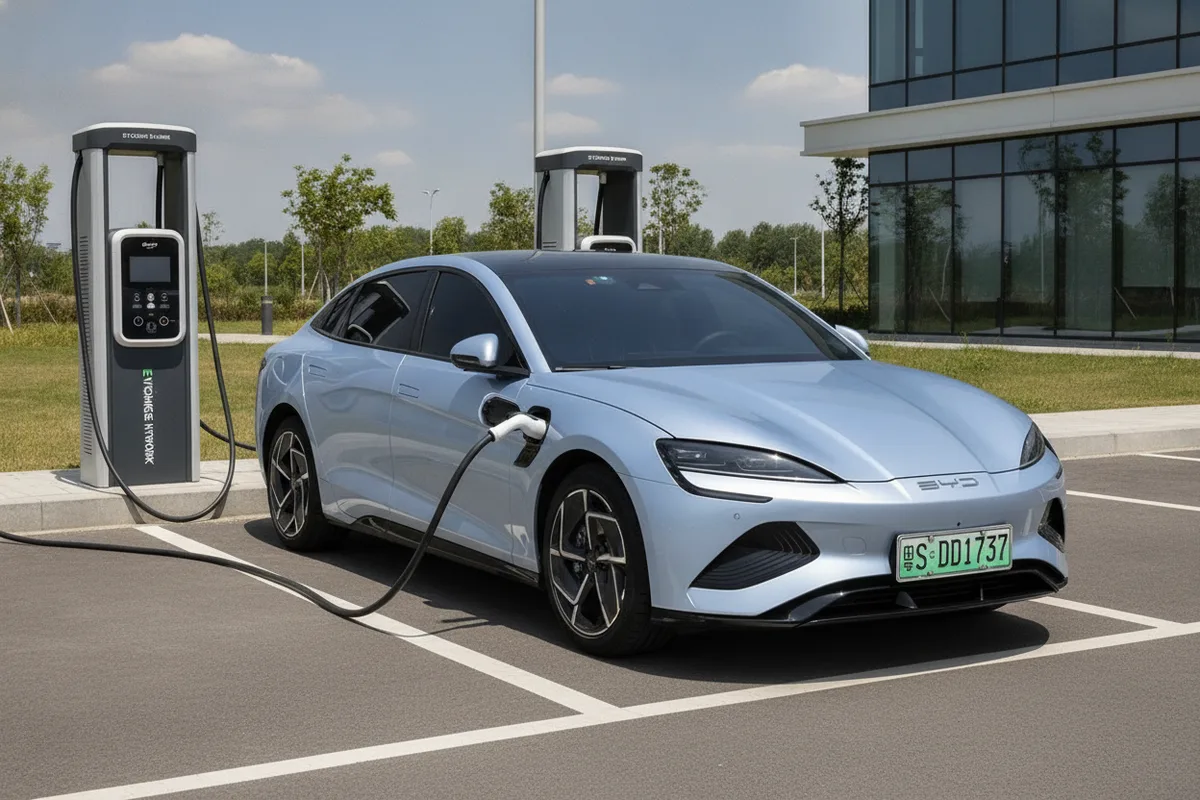
All three Canadian BYD models use CCS1, the standard combined-charging-system port that works with Electrify Canada, ChargePoint, FLO, Petro-Canada's network, and the EVgo footprint where it exists. No proprietary connector, no adapter needed at public DC stations.
The Tesla Supercharger question is the one most buyers ask. As of May 2026, BYD Canada has not officially confirmed Supercharger access. The Magic Dock rollout in Canada has been slow, and BYD specifically isn't on Tesla's announced manufacturer list. A third-party CCS1-to-NACS adapter exists, but using one voids your BYD warranty on charging-port issues. Wait on this one.
Home charging:
- Level 1 (120V), works in a pinch for the Dolphin, adds about 6–8 km of range per hour. Don't plan to live this way.
- Level 2 (240V/40A), the realistic home setup. Budget $800–$1,500 CAD for the EVSE itself (FLO Home X5, ChargePoint Home Flex, Wallbox Pulsar Plus are common picks), plus $500–$2,000 for electrician install depending on panel proximity and whether you need an upgrade. BC Hydro and several utilities offer rebates of $350–$500 on the install side, worth asking your installer to bundle the paperwork.
Road-trip math, Burnaby to Kelowna (~390 km via Coquihalla):
- Seal, one stop in Merritt, about 25 minutes. Done.
- Atto 3, two stops, roughly 35 minutes each. Coffee and a meal.
- Dolphin, three stops minimum, plan two hours of charging time across the trip. Not the car for this route in February.
The Electrify Canada and FLO networks both cover the Coquihalla corridor reasonably well at this point. The gap is the Kootenays and most of northern BC and Ontario. If you live or travel there regularly, factor that into your model choice before the rebate math seduces you.
Gear worth having
As an Amazon Associate, ThinkEV earns a small commission from qualifying purchases — at no extra cost to you.

Grizzl-E Classic Level 2 EV Charger (40A)
Canadian-made and rated for minus 40C winters. 40A / 9.6 kW, NEMA 14-50, indoor/outdoor, 24-ft cable. The charger built for Canadian weather.
As an Amazon Associate, ThinkEV earns from qualifying purchases — at no extra cost to you.
Warranty, Service, and the Parts Question
BYD Canada's warranty:
- Battery, 8 years / 160,000 km
- Bumper-to-bumper, 5 years / 100,000 km
- Drivetrain, included in the bumper-to-bumper term, not extended
- Corrosion, 12 years / unlimited km on perforation
- Roadside assistance, 5 years included
The battery warranty is competitive with Hyundai (8/160,000) and better than Tesla's 8/192,000 on the Model Y Long Range only in coverage scope. Tesla's battery warranty guarantees 70% retention; BYD's guarantees defect-only. Read the specific language before you compare them as equals.
Service is where the asterisk lives. Authorized service points are concentrated in metro Vancouver and the GTA. Outside those two regions, you're looking at a 100–300 km drive to the nearest certified shop for warranty work. Parts availability for routine items (filters, wipers, brake pads) is fine. Body panels and trim pieces have shown 3–8 week lead times in anecdotal reports, sourced from China, container-shipped, customs-cleared. If you're risk-averse about post-collision repair timelines, factor that in.
Roadside assistance is included, but loaner-vehicle policy varies by dealer. Confirm in writing before you sign.
Buy now if: You live in metro Vancouver or the GTA, you have home Level 2 charging (or can install it), and the BYD's sticker, with no rebate, because none applies to a Chinese-built EV, still beats a rebate-eligible rival on your shortlist. The product is good, the warranty is solid, the charging story is standard CCS1. A Dolphin under $40K or an Atto 3 in the low-$40Ks is the value case; the Seal is a 570 km WLTP sedan that has to justify its price on the metal alone, because the $5,000 a comparable rival gets isn't available here.
Wait if: You're in a province with thin BYD dealer coverage (Quebec, Alberta outside Calgary, Prairies, Atlantic Canada). The product will be the same in six to twelve months, but the service network and Tesla Supercharger access question will both have clearer answers. The cost of waiting is low; the cost of being the first BYD owner in your service region is real.
Skip if: You need a service centre within 100 km, you can't install home charging, or you specifically want a brand with 5+ years of Canadian winter performance data. BYD has the data globally; the Canadian-cohort sample size is still small. A used Hyundai Ioniq 5 or a new Chevy Bolt is the more conservative pick.
The Dolphin under $40K is the value case in this lineup (no federal rebate applies to any BYD, so the sticker is the story). The Seal is the long-range performance case. The Atto 3 is the everyday compromise, and "compromise" isn't an insult. It's the right answer for most Canadian households.
Gear worth having
As an Amazon Associate, ThinkEV earns a small commission from qualifying purchases — at no extra cost to you.

TP-Link Kasa Smart Plug with Energy Monitoring
Track exactly how much electricity your Level 1 charger uses and schedule it for off-peak hours. Know your real cost per kWh.
As an Amazon Associate, ThinkEV earns from qualifying purchases — at no extra cost to you.
The BYD Value Case Is Real But Geographically Gated
The BYD value proposition in Canada is real, but it's geographically gated. BC and Ontario buyers get the product, the rebate stack, and the dealer access. Everyone else gets the product and the federal rebate, but trades away network density. The Dolphin under $40K is the entry-point that makes the math work for the most households; the Seal is the road-trip option that justifies the spend.
Watch two things over the next twelve months. First, whether BYD Canada confirms Supercharger access. That single change reshapes the road-trip story. Second, whether Quebec's dealer footprint actually opens up, because the RCEV $7,000 stack on top of federal is the best rebate math in the country, and right now it's stranded behind a thin service network.
If a Seal in your driveway at $42K after rebates sounds right, and you live within 50 km of an authorized service centre, go drive one this weekend. If any part of that sentence doesn't fit, give it six months.
Gear worth having
As an Amazon Associate, ThinkEV earns a small commission from qualifying purchases — at no extra cost to you.

P3 Kill A Watt Electricity Usage Monitor
Plug in your charger and see exactly what you spend in kWh, cost, and watts. Settle the is-my-EV-really-cheaper debate with data.
As an Amazon Associate, ThinkEV earns from qualifying purchases — at no extra cost to you.

Founder & Chief Editor
Vlad Pereira is the founder and chief editor of ThinkEV.ca, the Canadian electric-vehicle publication he writes and edits from Courtenay, British Columbia. He covers EV pricing, federal and provincial rebates, charging costs, and the Chinese manufacturers now entering Canada, from the buyer's side rather than the press-fleet side. ThinkEV is a venture of Vlad Pereira Online; his writing on health, income and the long game lives at vladpereira.com.
Frequently asked questions
Does the Seal Premium qualify for the federal iZEV rebate?
Can you actually get a BYD serviced outside Vancouver or Toronto?
Is the Dynasty series, Qin, Han, Tang, coming to Canada soon?
Which province gives you the best stacked rebate on a BYD?
Do cash buyers get any pricing advantage over lease customers right now?
More EV & road-trip finds
Affordable upgrades worth a look — tap any to check the price on Amazon.
 ★ 2,941
Microfiber Cleaning Cloths (Multi-Pack)
View on Amazon ★ 537
★ 537USB Star Projector Roof Light
View on Amazon ★ 1,349
Cool Swinging Duck Dashboard Ornament
View on Amazon ★ 27,769
Car Cup Holder Coasters (4-Pack)
View on Amazon ★ 15,014
Spigen Tempered Glass for Tesla Model 3/Y
View on Amazon ★ 121
★ 121Foldable Windshield Sun Umbrella
View on Amazon ★ 392
★ 392Large Cup Holder Adapter (32-40oz)
View on Amazon ★ 96,686
PULIDIKI Car Cleaning Gel (Detailing Putty)
View on AmazonRead, Plan, Then Stay Current
Explore our expert articles to understand incentives and ownership costs, use the map to pressure-test charging reality, then subscribe so new EV coverage comes straight to you.
Continue Reading
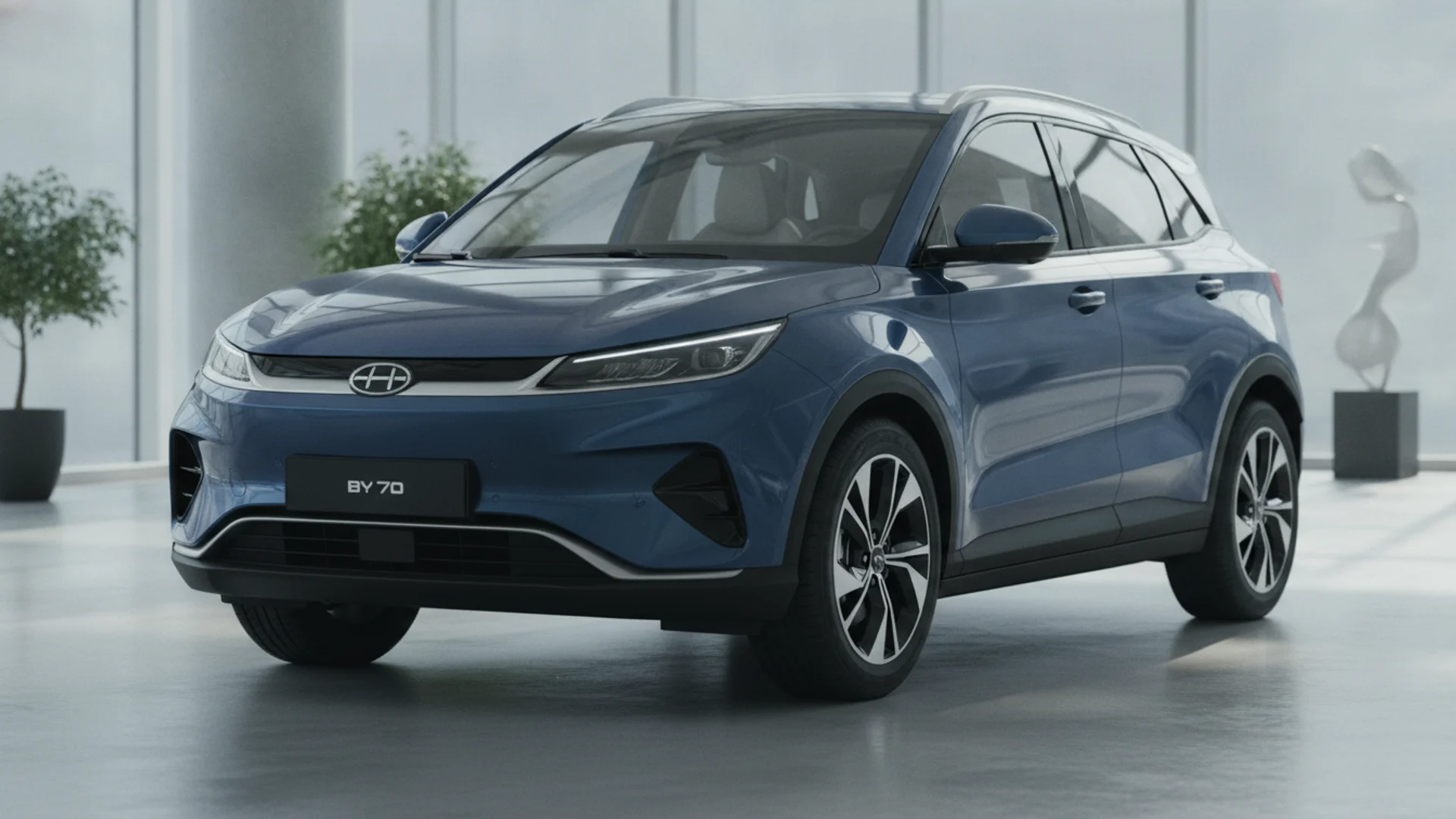
BYD Atto 3 Price Canada 2026, The Real Number, Banded
Are Canada's Repair Shops Ready for Chinese EVs?
BYD Auto Explained: World's Biggest EV Maker, Blocked From Canada
BYD Truck Canada 2026: Shark 6 Specs, Price & What to Know
BYD Shark 6 Canada: Specs, Price Band & 2026 Lineup Guide