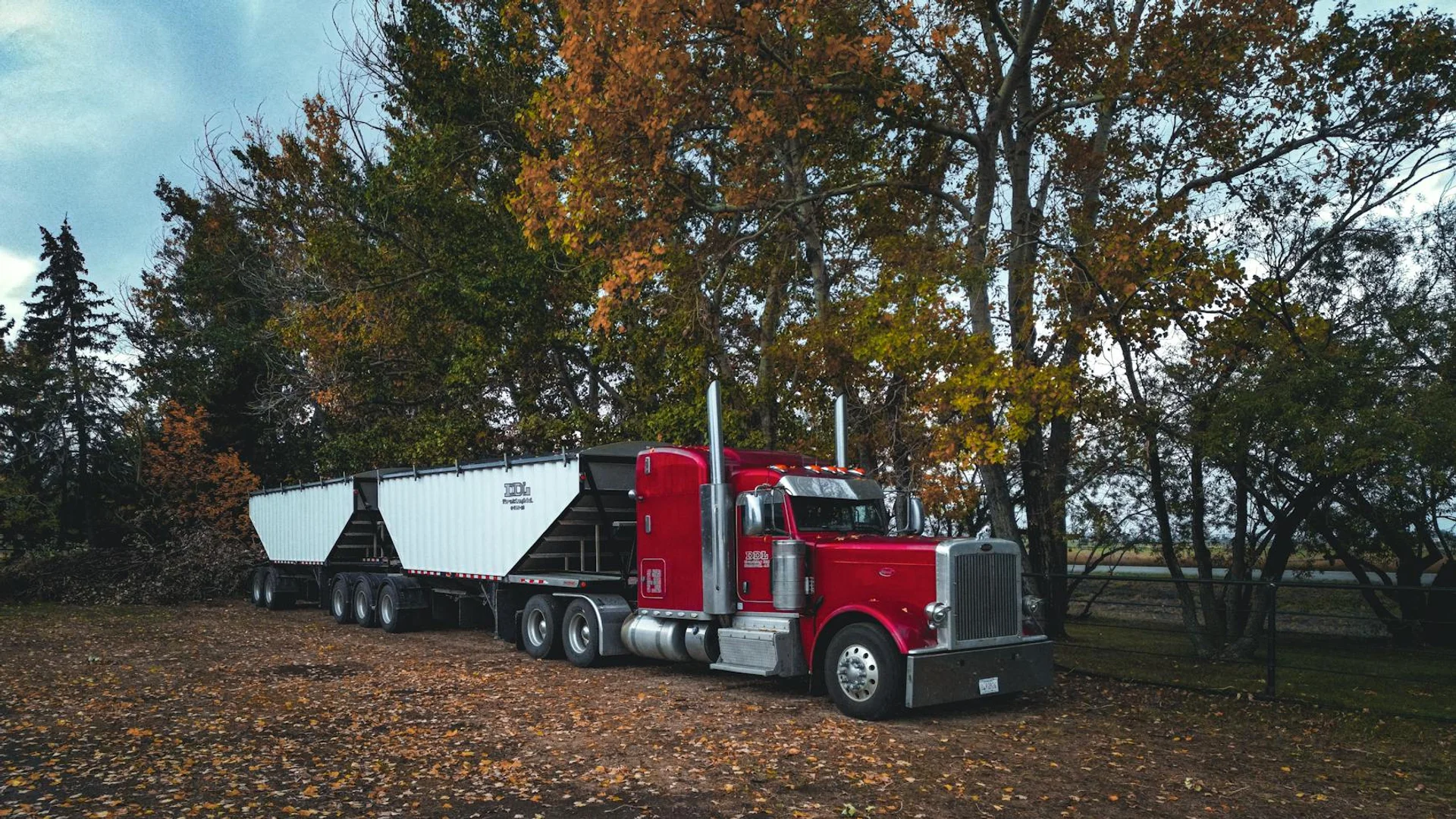
The F-150 held roughly a fifth of Canada's total vehicle market in 2024. That number is about to have a competitor that costs half as much, and the incumbents have not answered it. I'll put the editorial position on the table before the analysis: the BYD Shark is the first truck that forces Canadian pickup buyers to do real math, and the silence from Ford, GM, and Stellantis on a sub-$50,000 PHEV truck is itself a data point worth weighing.
I am not going to road-test this vehicle. I do not own one, I have not driven one, and the band I am about to put on its Canadian landed price, $48,000 to $52,000 for the base Shark 6, is built from the published Mexican and Australian pricing, the January 2026 tariff-quota math, and what we know about BYD's dealer economics in markets where the brand has already landed. That band is an estimate, and I will label every place it could move. Refusing to round it to a single dollar figure is deliberate. Any publisher who tells you the Canadian sticker to the cent right now is selling you a number with no foundation under it.
Below: why it matters, which objections are real, and what would change the verdict.
Key takeaways
- BYD Shark 6 lands in Canada at an estimated $48,000–$52,000, roughly half the price of an F-150 Lightning.
- The Shark's 100 km EV range covers daily commutes while the 1.5-litre turbo ICE extends total range to ~650 km in Canadian conditions.
- Australia's 2,500 kg braked tow rating puts the Shark in F-150 XLT territory, if Canadian certification confirms that number.
- Canada's January 2026 tariff drop to 6.1% opened the door, but a 49,000-unit annual quota caps how many Chinese EVs can actually enter.
- Ford, GM, and Stellantis have no sub-$50,000 PHEV truck answer, that silence is itself the competitive signal.
Why the Pickup Market Is the Only Fight That Matters
Pickups represent more than 20% of Canadian new-vehicle sales, and the Ford F-Series alone has been the country's best-selling vehicle for fifteen years running. No electrification thesis for this market is credible if it cannot describe how it wins the truck segment. Every analyst who skips that segment is hand-waving past the largest single battleground in Canadian retail automotive.
The history is that every serious EV entrant has circled the pickup category and either blinked or stumbled. Rivian built a credible product and priced it for buyers who already own a sedan. Ford built the Lightning and watched dealer inventory pile up at $84,000-plus. GM's Silverado EV arrived heavy, expensive, and slow to scale. Tesla's Cybertruck is its own conversation, and not a Canadian one in any volume yet. The category has produced beautiful press cars and stubborn sales charts.
BYD's entry changes the conversation for one structural reason: the Shark is a plug-in hybrid, not a battery-electric truck. That single architectural choice answers the range-anxiety objection that hollowed out full-EV truck interest among the buyers who actually use trucks as trucks. A hundred kilometres of EV-only range covers the commute and the in-town errand circuit. The internal combustion engine extends range for highway hauls and trailering, exactly where battery-only pickups have struggled in cold-weather conditions and at sustained tow loads.
The case against this read is that PHEVs are a transitional technology and Canadian buyers committing to one in 2026 are buying a powertrain the rest of the market will abandon by 2032. I concede the technology arc; I do not concede that it matters for this purchase. A truck bought in 2026 with a seven-to-ten-year ownership horizon sits inside the window where PHEVs remain the dominant tow-and-haul solution for cold climates. The buyer who waits for a pure-electric truck that matches the Shark's price and tow rating is waiting through at least two more product cycles. The case for buying now is not technological optimism; it is calendar honesty about when the alternative actually arrives.
My editorial position is that this is the most strategically significant vehicle BYD could bring to Canada. Not the Atto 3, not the Seal, not the Dolphin, those are sedans and crossovers fighting in segments already covered by Korean and Japanese rivals at competitive prices. The Shark fights in the only segment where the incumbents have a structural cost problem and no immediate answer. For a detailed read on the launch-trim specifics, BYD Shark 6 Canada, The Direct Answer walks the engineering choices that produce the price.
This is not advocacy for one brand. It is recognition that competition in Canada's largest retail segment has been muted for two decades, and the entrant capable of moving that needle is sitting at a Vancouver registry desk with cleared paperwork.
What BYD Is Actually Bringing: Shark Specs Without the Press-Release Gloss
The Shark 6 is the launch trim. Mexican and Australian specifications give us the cleanest baseline: a twin-motor plug-in hybrid powertrain rated at roughly 430 horsepower combined, a battery pack delivering approximately 100 kilometres of pure-EV range under the NEDC cycle, and a combined range of about 800 kilometres with the 1.5-litre turbocharged ICE acting as range extender and direct drive at highway speeds. BYD launched its first pickup truck, the BYD Shark, in Mexico, and the Mexican-market data is the most relevant peer benchmark we have for what Canada will see.
Strip the NEDC optimism and the realistic combined range for Canadian conditions sits closer to 600 to 650 kilometres, with EV-only range in the 70 to 85 kilometre window once cold weather and highway speeds enter the picture. That is still enough to cover the daily-driver use case on electrons alone for most Canadian commutes, and it is the answer to the most consistent objection trucks-as-EVs have faced from contractors and rural buyers.
The specifications that matter most for Canadian buyers, payload rating, maximum tow capacity at sustained highway speed, and certified GVWR for trailering, are not yet confirmed at Canadian trim. This is not a small gap. A pickup that cannot tow 5,000 pounds is not competing with a half-ton truck; it is competing with a midsize crossover. The Australian-market Shark is rated at 2,500 kg braked tow capacity, which translates to roughly 5,500 pounds. If that number holds for the Canadian trim, the Shark slots into the same towing tier as the lower trims of the F-150 and Silverado. If it drops, the editorial verdict softens.
A named comparison sharpens the towing question. The Ford Maverick Hybrid, the closest North American analogue to the Shark in price and powertrain philosophy, is rated at 4,000 pounds tow capacity in its 4K Tow Package trim, and at 2,000 pounds in its base configuration. The Shark's Australian rating sits between 1,500 and 3,500 pounds above the Maverick depending on which trim you use as the anchor. If Canadian certification confirms the 5,500-pound figure, the Shark is not a Maverick competitor; it is an F-150 XLT competitor at half the price. That is the binary the towing paperwork will resolve.
The regulatory gate is the January 2026 tariff reset. Canada's 100% tariff on Chinese-origin EVs dropped to 6.1% effective January 16, 2026, but only under a 49,000-unit annual import quota framework. Every Chinese vehicle entering Canada this calendar year comes through that quota, and the allocation method has not been published. BYD's regulatory head start, the brand is already cleared in the Canadian vehicle registry, ahead of Geely, Chery, and the other prospective entrants, gives it the timing advantage, but it does not give it unlimited inventory. For the full quota-mechanics breakdown, BYD Truck Canada Price: The Number That Resets the Pickup Conversation lays out what the 49,000-unit ceiling does to delivery timelines.
What BYD has not confirmed publicly: exact Canadian trim hierarchy, which dealer network will carry the truck, the warranty structure that Canadian buyers will receive, and whether the Shark will be sold through standalone BYD showrooms or through a partner network. Each of those gaps is a real reason to wait before signing. None of them is a reason to dismiss the vehicle.
Gear worth having
As an Amazon Associate, ThinkEV earns a small commission from qualifying purchases — at no extra cost to you.
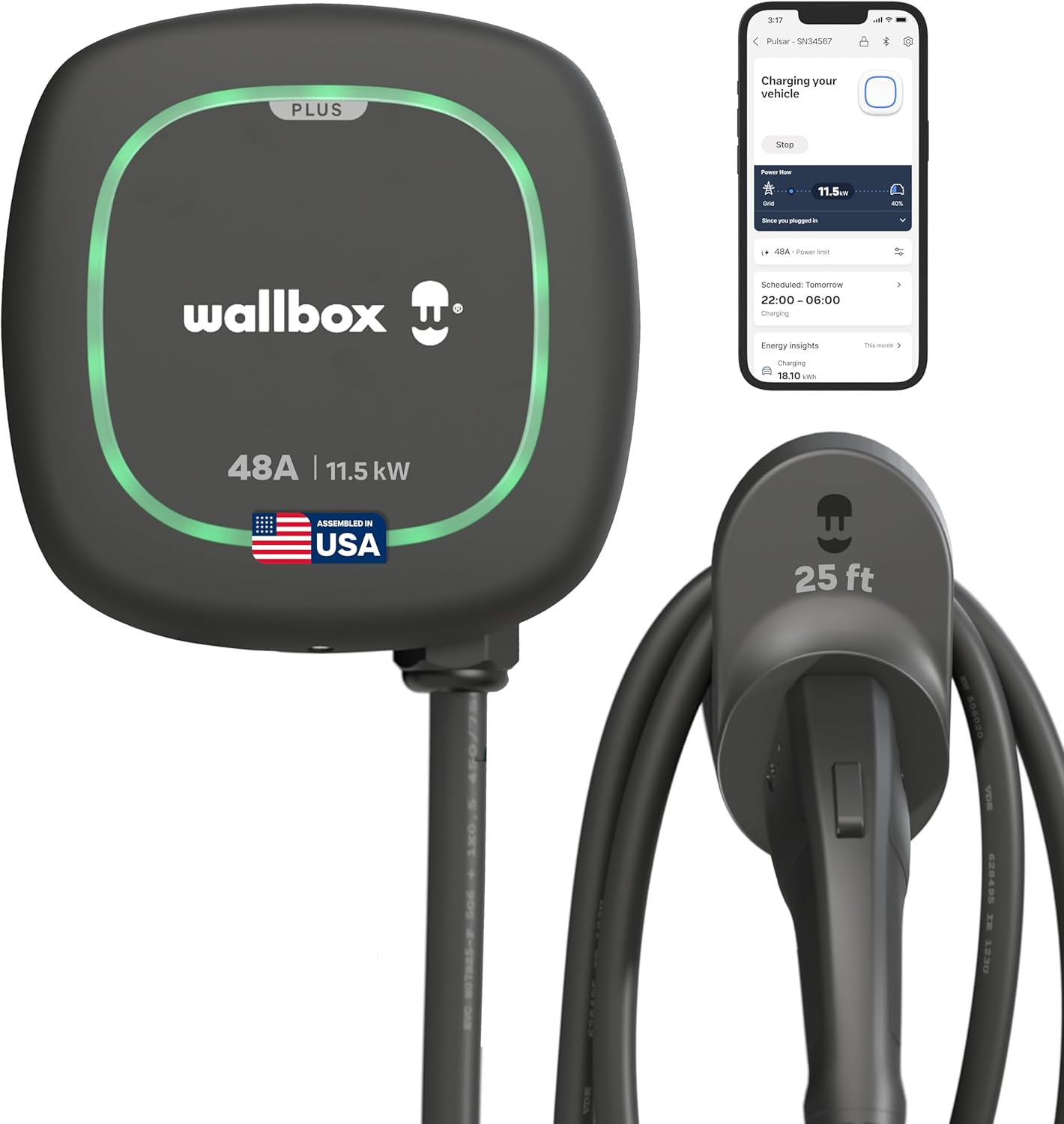
Wallbox Pulsar Plus 48A Level 2 Charger
Compact, sleek charger with app control and power sharing for two EVs. 48A / 11.5 kW, NEMA 14-50. Looks as good as your EV.
As an Amazon Associate, ThinkEV earns from qualifying purchases — at no extra cost to you.
The Price Gap Is Real and the Industry Hasn't Answered It
Here is the math that no Canadian truck buyer can ignore. The Ford F-150 Lightning starts at approximately $69,999 CAD for the Pro trim before destination and freight, and most retail customers leave the dealer closer to $80,000 once typical equipment is included. The Chevrolet Silverado EV starts higher, in the mid-$80,000s. The Rivian R1T sits north of $100,000 for any trim a Canadian buyer can actually order.
The Shark 6 lands in a band I put at $48,000 to $52,000 for the base Canadian trim, with the upper-spec variant potentially reaching $55,000. That is a $20,000 to $30,000 gap against the cheapest domestic electric truck on sale today. The gap is not 5%. It is not 15%. It is structurally large enough that buyers who never considered an electrified pickup will run the numbers, and buyers already cross-shopping the Lightning will find the math difficult to reject on price alone.
The complicating factor is rebates. Canada's federal iZEV programme does not cover Chinese-origin vehicles, and the Electric Vehicle Availability Standard treats Chinese imports separately from the domestic and Korean-Japanese-European compliance pool. A Canadian buyer of an F-150 Lightning may qualify for up to $5,000 in federal incentives depending on trim; a Canadian buyer of a Shark qualifies for zero. Provincial programmes vary, but most follow the federal lead on country-of-origin exclusions.
Even with the rebate stripped out, the gap remains. A $50,000 Shark without rebates versus a $75,000 Lightning with $5,000 of federal incentives is still a $20,000 delta on the sticker, and operating-cost math favours the PHEV on most realistic Canadian use patterns. The buyer who runs the spreadsheet ends up at a number that is hard to dismiss.
The counter-argument worth naming: a $20,000 sticker gap can be eaten by depreciation if the Shark's residual values collapse the way every new-brand entrant's residuals have collapsed in Canada over the past two decades. Kia and Hyundai needed fifteen years to repair their resale curves; the early Korean buyers paid the cost of that repair in trade-in equity. Residuals on the Shark in Canada are unknowable until the second and third model years post-launch, and any buyer using residual-adjusted total cost of ownership as the deciding factor is making a forecast, not a calculation. The buyer who can absorb a depreciation hit because they intend to keep the truck eight years takes a different risk than the buyer who plans to flip at thirty-six months.
What I find most editorially telling is the silence. Ford has not announced a sub-$50,000 PHEV truck for Canada. GM has not. Stellantis has not. The incumbents have either decided the segment is uneconomical at that price, or they have decided to wait and see whether BYD's volume materialises. Both interpretations are unflattering. The first concedes a structural cost disadvantage. The second concedes that the incumbents are reactive rather than proactive on the most important segment in their largest North American market.
A comparison helps frame the scale of the pricing gap. The Chevy Equinox EV and Tesla Model Y are the two best-selling electric vehicles in Canada and they fight in a segment one tier below pickups; their pricing battle is covered in the Chevy Equinox EV vs Tesla Model Y comparison. Even there the difference between competitors is single-digit thousands of dollars. A $20,000 gap in the pickup segment is in a different category of disruption entirely.
Gear worth having
As an Amazon Associate, ThinkEV earns a small commission from qualifying purchases — at no extra cost to you.

TP-Link Kasa Smart Plug with Energy Monitoring
Track exactly how much electricity your Level 1 charger uses and schedule it for off-peak hours. Know your real cost per kWh.
As an Amazon Associate, ThinkEV earns from qualifying purchases — at no extra cost to you.
The Tariff Math and What the Quota Actually Means for Buyers
The numbers that govern this entire conversation come from one Department of Finance announcement: the 100% surtax on Chinese-origin EVs introduced in October 2024 was replaced on January 16, 2026 with a 6.1% tariff applied to imports up to a 49,000-unit annual quota. Vehicles in excess of the quota revert to the 100% rate. The framework is meant to crack the door, not throw it open.
Forty-nine thousand units across all Chinese brands sounds substantial until you size it against the market. Canada sold roughly 1.9 million new vehicles in 2024. The quota represents about 2.5% of total annual sales, distributed across an unknown number of Chinese OEMs competing for allocation. If BYD captured 40% of that quota, which would be aggressive given that Geely, Chery, and others are pursuing the same opening, the brand would deliver roughly 20,000 vehicles in Canada in 2026, spread across the Shark, Atto 3, Seal, Dolphin, and any commercial vehicles allocated to dealer fleets. The Shark's share of that volume might be 5,000 to 8,000 units in the first year.
The allocation method matters more than most coverage has acknowledged. If the quota is first-come-first-served, the brands that move inventory fastest win. If it is auctioned, the brands with the deepest pockets win. If it is allocated by Ottawa on a discretionary basis with Canadian-content or labour conditions attached, the framework looks very different from the headlines. Department of Finance has signalled that the mechanism is still under consultation, and the absence of a published method this far into the calendar year is itself a planning risk for any buyer placing a deposit.
What is settled: Chinese EVs are explicitly excluded from Canada's Electric Vehicle Availability Standard targets. That is significant because the EVAS forces domestic and other foreign automakers to hit electrification mix targets, and the absence of Chinese EVs from that calculation means BYD's volume here does not help any other automaker meet its compliance. The competitive dynamic is therefore stripped of the cross-subsidy that Korean and Japanese brands have indirectly received through compliance credits in other jurisdictions.
BYD's regulatory clearance in the Canadian vehicle registry, confirmed by industry filings tracked by independent EV trade publications, predates the public announcements of most rival Chinese brands' Canadian intentions. The brand has been preparing the paperwork for at least eighteen months. BYD's EHS hybrid system architecture has been certified across multiple international markets, and that engineering work transfers directly to the Canadian homologation timeline. For the brand-strategy context, the BYD Canada launch timeline covers what the registry clearance actually unlocks.
The second-order implication that most coverage misses: a quota that gets fully subscribed in 2026 becomes a political artefact in 2027. Ottawa will face a choice between raising the ceiling, freezing it, or attaching content conditions that effectively shift the framework toward a managed-trade arrangement. The Canadian Auto Workers, the Detroit Three's Canadian operations, and the Quebec battery-supply-chain cluster will each lobby for different outcomes, and the 2026 federal political calendar will mediate the result. A buyer placing a deposit on a 2027 Shark is implicitly betting that the quota survives the lobbying season in roughly its current form. That bet is reasonable but not certain.
The practical buyer takeaway: deposits are likely to outpace deliveries through 2026. The quota is the bottleneck, not manufacturing capacity. BYD can build Sharks faster than Canada is willing to import them.

Gear worth having
As an Amazon Associate, ThinkEV earns a small commission from qualifying purchases — at no extra cost to you.

Grizzl-E Classic Level 2 EV Charger (40A)
Canadian-made and rated for minus 40C winters. 40A / 9.6 kW, NEMA 14-50, indoor/outdoor, 24-ft cable. The charger built for Canadian weather.
As an Amazon Associate, ThinkEV earns from qualifying purchases — at no extra cost to you.
The Objections That Are Real vs. the Ones That Are Stalling Tactics
The legitimate caveats and the reflexive objections are different problems. Both deserve naming.
The real objections, in priority order: Canadian-trim payload and maximum tow ratings remain unverified, and a pickup that cannot match the towing utility of an F-150 XLT is in a different competitive category than the price gap implies. Cold-weather PHEV degradation data is thin for the Shark specifically; the Australian and Mexican fleets give us hot-climate performance, and the Canadian Prairie winter is a different test entirely. Dealer service infrastructure does not exist yet, there is no BYD service network in any province, the parts supply chain has to be stood up from scratch, and the warranty experience for early buyers is genuinely uncertain. None of these is FUD. All three are legitimate reasons to wait for the second-year buyer rather than the first.
The stalling tactics, in roughly the order I see them deployed: the "Chinese quality" framing ignores that BYD is the world's largest electric vehicle manufacturer by units, that the brand's reliability data in Australia has been competitive with established marques across two model years, and that BYD's vertical integration on batteries and electronics produces engineering consistency the legacy automakers have struggled to match. The "buy Canadian" argument does not survive contact with the actual product portfolio, no Canadian-headquartered automaker builds a pickup at this price band in this segment, and the F-150 is built in Michigan and Missouri, the Silverado in Indiana and Mexico, the Ram in Michigan and Mexico. The "national security" framing applied to consumer pickups is theatrical; it would apply with equal force to the Volvo built in Charleston by a Geely subsidiary, and it does not.
The reflexive objections deserve a flat answer because they tend to crowd out the real ones in public discussion. When a Canadian buyer is told that buying a Shark is unpatriotic, the buyer is being asked to pay a $20,000 premium for a product built outside Canada by a company that is not Canadian. That is not patriotism. That is paying more for the same imported good with a different flag on the marketing.
Canadian buyers deserve a conversation that names the real risks: service network, towing certification, winter range. Those are the questions that determine whether the Shark is the right truck for a specific household. Country-of-origin sentiment is not analysis. For the comparative read on what the incumbents actually deliver, the F-150 Lightning Canada review, the Silverado EV Canada review, and the Rivian R1T Canada review lay out the benchmarks the Shark has to clear or beat.
Gear worth having
As an Amazon Associate, ThinkEV earns a small commission from qualifying purchases — at no extra cost to you.

Coiled Lightning Car Cable for iPhone (2-Pack)
Retractable Lightning cables built for the car: fast, tidy, and long enough to reach the back seat.
As an Amazon Associate, ThinkEV earns from qualifying purchases — at no extra cost to you.
What Would Change the Editorial Verdict, and What I'm Watching Next
I started this piece with a price band and an editorial position. The position is contingent. Here is what would move it.
If the Canadian-trim Shark is certified at a maximum tow rating below 4,500 pounds, the thesis softens materially. A truck that cannot tow a small travel trailer or a landscaper's equipment trailer is not actually competing with the F-150 XLT, it is competing with the Maverick and the Santa Cruz, where the price advantage shrinks because the comparison vehicles are themselves under $50,000. The towing certification is the single specification I will be watching most closely when Transport Canada paperwork is published.
If the dealer service rollout does not include the Prairie provinces within twelve months of launch, the value proposition for buyers in Saskatchewan, Manitoba, and Alberta drops sharply. Ontario and BC coverage is table stakes; those are the provinces where BYD will land first and where service capacity is easiest to stand up. The real test is whether the brand commits to coverage in markets where pickups are not optional retail accessories but working tools. Without that coverage, the Shark becomes a coastal vehicle, and the strategic significance I described in section one shrinks to a regional phenomenon.
If the 49,000-unit quota is not hit in the first half of 2026, the demand-side thesis weakens. The quota was set with the assumption that Chinese brands would aggressively compete for allocation; if utilisation runs at 60% or below through H1, the read is that Canadian buyers are not as ready as the headlines suggest, and the incumbents have more time than they think. I expect the quota to be fully subscribed by midyear. If it is not, I will say so and revise the position.
If real-world cold-weather range degradation exceeds 35% in published owner data from the first Canadian Shark cohort, the PHEV advantage narrows to the point where the towing math has to do more of the work. PHEVs handle cold better than full-EVs structurally because the ICE provides cabin heat at zero electrical cost, but battery efficiency still drops, and a 35%-plus degradation would mean the EV-only range in winter falls below 50 kilometres. That is still enough for a short commute, but the dual-mode utility narrative gets thinner.
I would bet, today, that the Shark lands within the price band I named, that the towing rating clears 5,000 pounds, that quota utilisation hits the ceiling by Q3 2026, and that the cold-weather data comes in inside the acceptable range. If two of those four go the other way, the editorial verdict shifts from "this is the most strategically significant vehicle BYD could bring to Canada" to "this is a serious entrant in a tough market with real gaps." I will be honest about which of those two stories the data ends up telling.
The forecast I am willing to put a stake in: by the time the 2027 model year orders open, at least one of the Detroit Three will have announced a sub-$55,000 PHEV pickup for the Canadian market, and the announcement will be framed as a long-planned product decision rather than a response. That framing will be wrong. The product cadence at Ford and GM does not produce a new powertrain configuration in a sub-eighteen-month window unless the engineering work was already on the shelf, and the fact that the work has been on the shelf without a product decision is exactly the structural failure the Shark exposes. The thing to watch is not whether the response comes; it is how the incumbents explain the timing.
The pickup segment is where Canadian electrification gets decided. For the first time in fifteen years, the incumbents are about to face a price they cannot match without restructuring their supply chains. Whether they respond, whether BYD delivers on the unverified specifications, and whether Ottawa keeps the quota door cracked are the three questions worth watching through 2026.
Gear worth having
As an Amazon Associate, ThinkEV earns a small commission from qualifying purchases — at no extra cost to you.

PULIDIKI Car Cleaning Gel (Detailing Putty)
Press it into vents, buttons, and seams and it lifts out dust you did not know was there. Weirdly satisfying, genuinely useful.
As an Amazon Associate, ThinkEV earns from qualifying purchases — at no extra cost to you.

Founder & Chief Editor
Vlad Pereira is the founder and chief editor of ThinkEV.ca, the Canadian electric-vehicle publication he writes and edits from Courtenay, British Columbia. He covers EV pricing, federal and provincial rebates, charging costs, and the Chinese manufacturers now entering Canada, from the buyer's side rather than the press-fleet side. ThinkEV is a venture of Vlad Pereira Online; his writing on health, income and the long game lives at vladpereira.com.
Frequently asked questions
Does the Shark qualify for any Canadian EV incentives?
How does the 49,000-unit quota affect when I can actually buy one?
Is the 5,500-pound tow rating confirmed for Canada?
Which dealer network will sell the Shark in Canada?
What happens to PHEV resale value as full-EV trucks improve?
More EV & road-trip finds
Affordable upgrades worth a look — tap any to check the price on Amazon.
 ★ 12,051
Windex Electronics Screen Wipes
View on Amazon ★ 55
★ 55LED Car Door Logo Projector Light
View on Amazon ★ 1,349
Cool Swinging Duck Dashboard Ornament
View on Amazon ★ 27,769
Car Cup Holder Coasters (4-Pack)
View on Amazon ★ 1,944
VIOFO A229 Pro 4K Dash Cam
View on Amazon ★ 121
★ 121Foldable Windshield Sun Umbrella
View on Amazon ★ 268
★ 268Anti-Slip Leather Steering Wheel Cover
View on Amazon ★ 8,681
Chemical Guys Complete Car Wash Kit
View on AmazonRead, Plan, Then Stay Current
Explore our expert articles to understand incentives and ownership costs, use the map to pressure-test charging reality, then subscribe so new EV coverage comes straight to you.
Continue Reading
BYD Truck Canada Price: The Number That Matters
BYD Shark 6 Price in Canada: $55K–$62K Estimate, Explained
BYD Shark 6 Canada: Specs, Price Band & 2026 Lineup Guide
BYD Shark 6 Canada, The Direct Answer
Rivian R2 Canada Price: $66,500 Base Misses the Rebate