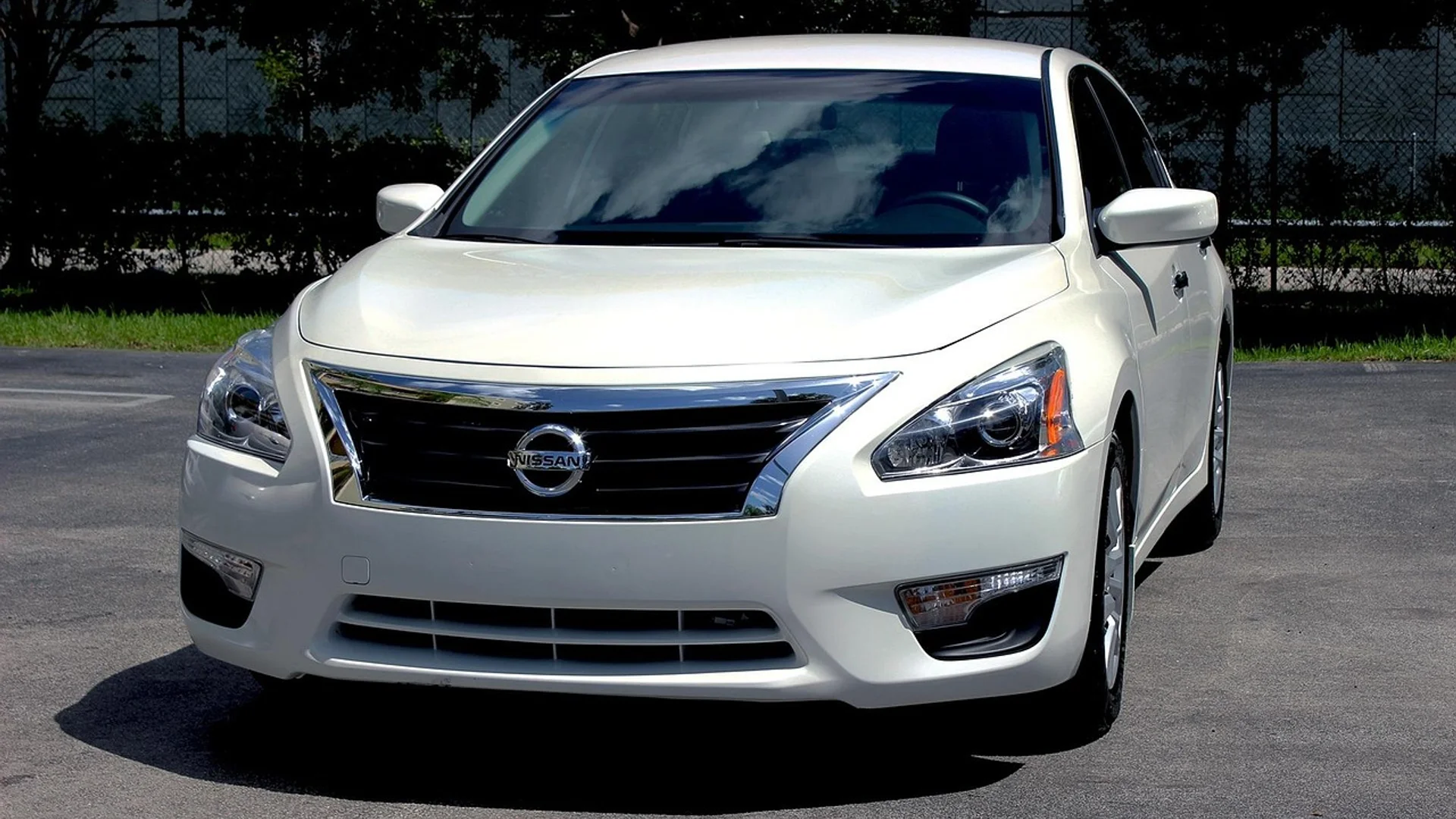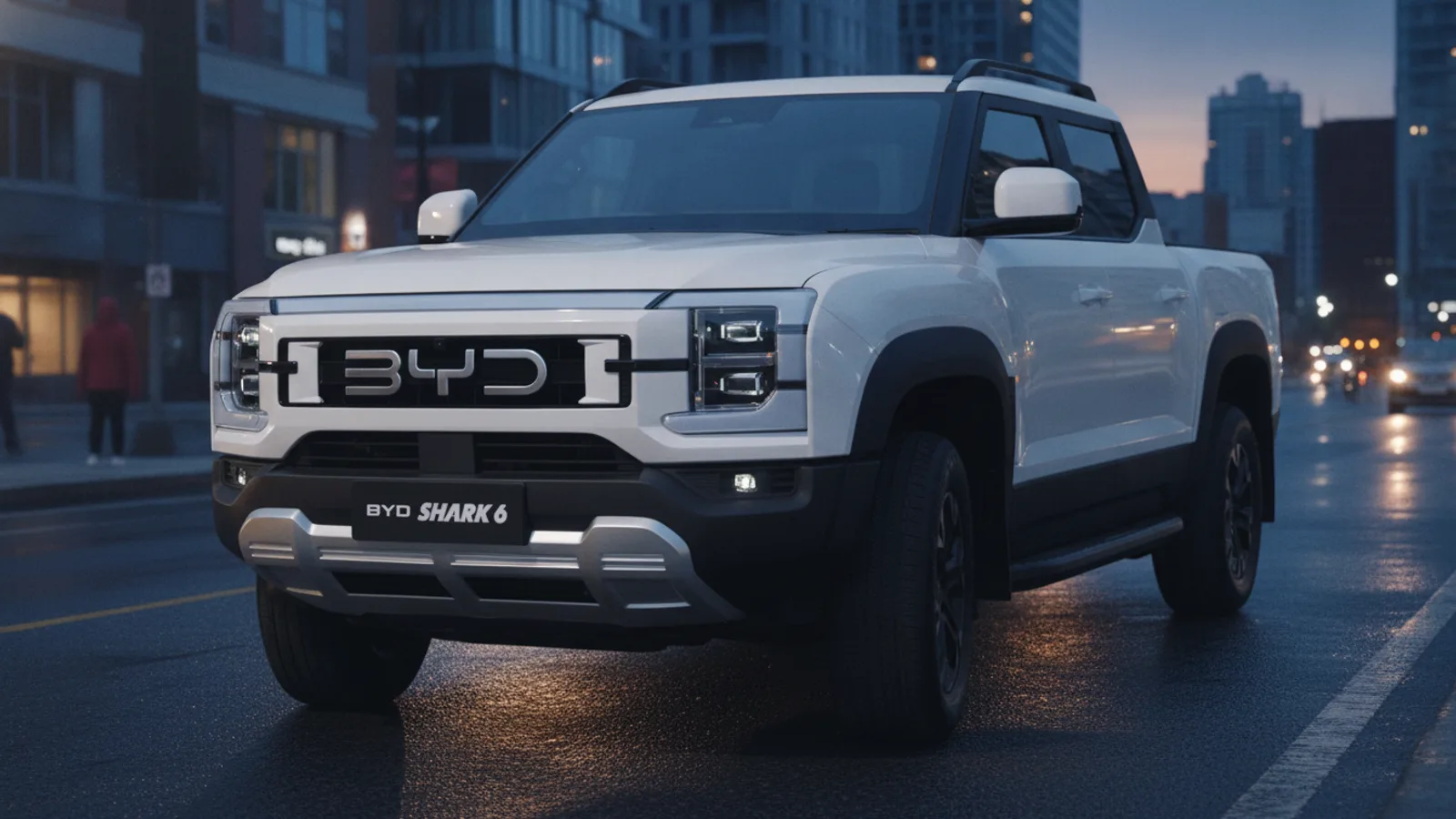
A 29.6 kWh battery in a pickup that sells for roughly the CAD equivalent of $52,000 in the markets where you can actually buy it. That number shouldn't be possible inside the price logic that governs North American trucks, where battery packs alone often eat the better part of a Ford Maverick's sticker. BYD made it possible by rethinking what a truck's engine is actually for, and the answer reframes the entire midsize segment. One caveat up front: Canada is not yet one of those markets. BYD has not confirmed the Shark 6 for sale here, and there is no official Canadian price.
The Shark 6 is not a cheap truck pretending to be a sophisticated one. It is a sophisticated truck whose architecture happens to be cheap to build, and the difference matters. The 1.5-litre turbocharged gasoline engine spends most of its working life as a generator, powering a 29.6 kWh battery that feeds two electric motors producing a combined 430 hp and 480 lb-ft of torque. No transfer case. No torque converter. For the great majority of driving, no mechanical link from the combustion engine to the wheels at all: the engine tops up the battery, the battery feeds the motors, and the motors do the work. Only at steady higher speeds does a single clutch let the engine drive the wheels directly, the parallel side of BYD's dual-mode system.
That is not a compromise hybrid. It is a coherent engineering thesis in a pickup body, and if it reaches Canada it becomes the proving ground for whether the thesis survives contact with the F-150 buyer. The 49,000-unit quota under the 6.1% tariff regime is a narrow door, and so far BYD has lined up passenger cars to walk through it, not the Shark. Everything about the truck, the powertrain choice, the cell chemistry, the dual e-axle layout, the Mexico-first launch sequence, points the same direction. BYD is not trying to build the cheapest truck. It is trying to build the truck whose architecture makes every rival's bill of materials look bloated.
Key takeaways
- For most driving the Shark 6's 1.5-litre engine acts as a generator charging the 29.6 kWh battery; only at higher speeds does a clutch let it drive the wheels directly.
- The dual-mode (series-parallel) architecture lets BYD optimize each component for the job it does most of the time, cutting complexity a conventional parallel hybrid can't match.
- LFP chemistry costs less per kWh than NMC and needs no cobalt, right-sized for about 85 km of WLTP daily electric range.
- BYD manufactures its own cells, eliminating the supplier margin a rival OEM pays on every pack, one of the biggest structural reasons it can undercut the segment.
- Canada's 49,000-unit quota at 6.1% tariff (effective January 16, 2026) is the narrow door, but BYD's confirmed Canadian lineup is passenger cars; the Shark 6 has not been confirmed for Canada.
Why a Generator Masquerading as an Engine Changes Everything
Most plug-in hybrid pickups are parallel hybrids, the combustion engine and the electric motor both drive the wheels, coordinated by a gearbox and a clutch pack that hand torque back and forth depending on speed, load, and battery state. This is the architecture in nearly every conventional PHEV crossover on the market. It works. It is also a compromise designed by committee, because the engine has to be sized to drive the vehicle on its own, the electric motor has to be sized to drive the vehicle on its own, and the transmission has to mediate between them under every conceivable combination.
The Shark 6 reframes that committee's job. For most of the time the truck is moving, the 1.5-litre turbo never touches the wheels: it is wired to a generator, the generator feeds the battery, the battery feeds two motors (one on each axle), and the motors are the only things moving the truck. This is series operation. BYD then adds a single direct-drive clutch so the engine can also power the wheels at steady highway speeds, where combustion is most efficient, which makes the Shark a series-parallel, or dual-mode, hybrid rather than a pure series one. The architectural payoff is still large: in the driving that dominates a truck's life, every component is optimised for the one job it actually does, instead of being compromised across the three jobs a conventional parallel layout asks of it.
The engine, freed from the requirement of driving the truck across a wide speed band, can be tuned for a single efficient RPM range. The motors, freed from the requirement of coexisting with a combustion drivetrain, can be sized purely for torque and packaging. The battery, freed from the requirement of being the sole energy source on long trips, can be sized to roughly 85 km of WLTP electric range rather than the 400-plus kilometres a pure EV pickup needs. Every component is doing less than it would in a conventional parallel hybrid or a pure EV, and doing less is what makes each component cheaper, simpler, and more reliable.
Ford's F-150 Lightning takes the opposite bet. It is a pure battery-electric truck, which means the battery alone must carry every kilometre of range the truck will ever travel. That demands a pack roughly four times the size of the Shark 6's, with all the cooling complexity, structural reinforcement, and supplier-margin cost that scales with kWh. Ram's 1500 REV and its range-extended sibling go in yet another direction. Every architectural choice here is a long bet on what truck buyers actually want, and BYD's bet is the one that produces the lowest bill of materials for a given utility envelope.
The architectural purity matters beyond cost. Electric motors deliver torque the instant the driver asks for it, no turbo lag, no gearbox kickdown, no waiting for the engine to wind to the right spot in its power curve. Combustion handles range anxiety on the highway by topping up the battery as needed, which means the Shark 6 is functionally a pure EV in town and a hybrid only on long trips. That split is exactly how most pickup buyers actually use their trucks, and BYD designed the powertrain to match the usage pattern rather than the marketing brochure.
The decision to treat the engine primarily as infrastructure, a charger first and a wheel-driver only when that is the efficient thing to do, is the most consequential choice in the truck. Everything else follows from it.
The Battery Chemistry Decision That Explains the Price
The second decision that built the price is chemistry. BYD's Blade battery uses lithium iron phosphate, LFP, instead of the nickel-manganese-cobalt formulation that dominates premium EVs. LFP cells have lower energy density per kilogram, which is why no one would build a long-range sports sedan around them. They are also dramatically cheaper to manufacture, structurally more stable, and far less dependent on the cobalt supply chain that injects volatility into NMC pricing every quarter.
In a pickup that is engineered to never need more than 100 kilometres of electric range, the energy-density penalty disappears. There is no reason to pay the NMC premium for a battery that will never be asked to deliver Tesla-style range. The Shark 6 needs enough kWh to cover the daily commute and to feed the motors when towing, and that is exactly what 29.6 kWh of LFP delivers, at a cost per kilowatt-hour that NMC chemistry cannot match.
The cost story compounds because BYD manufactures its own cells. There is no supplier between the chemistry and the truck. Every other automaker building a PHEV or EV pickup is paying a margin to CATL, LG Energy Solution, Panasonic, or Samsung SDI on every pack. BYD pays itself. The vertical integration is not a marketing line. It is the structural reason the Shark 6 can wear a sticker thousands of dollars below a comparably-powered North American rival while delivering a powertrain those rivals still have to buy in from outside suppliers.
The 29.6 kWh pack is also a deliberate ceiling, not a maximum. BYD could fit a larger pack into the truck. It chose not to. A bigger battery would push the price into Lightning territory, defeating the entire architectural argument. The Shark 6 is engineered to be the truck that costs less because it carries less battery, not the truck that competes on EV-only range. That is a refreshingly honest piece of product positioning in a segment where every spec sheet is padded with numbers that the buyer will never actually use.
LFP's thermal stability is the quiet third benefit. NMC cells require sophisticated thermal management, liquid cooling loops, sensors, control algorithms, and the structural packaging to contain a cell that can go into thermal runaway under abuse. LFP cells are far more forgiving. They can tolerate higher temperatures without degrading and they do not go into runaway under the same conditions that would set an NMC pack on fire. The cooling system can be simpler. The structural protection can be lighter. The bill of materials for the entire pack assembly drops, and the safety margin goes up at the same time.
The chemistry choice and the architecture choice reinforce each other. A pure EV pickup needs every NMC kilowatt-hour it can afford, because the battery is the only energy source. A series-parallel PHEV pickup with a combustion range extender can use a smaller, cheaper, more stable chemistry without giving up the utility a truck buyer actually demands. BYD did not choose LFP because it is cheaper and accept the consequences. It chose LFP because LFP is the right chemistry for a truck whose architecture already solves the range problem with a generator.
Gear worth having
As an Amazon Associate, ThinkEV earns a small commission from qualifying purchases — at no extra cost to you.

Portable Level 2 EV Charger (40A, NEMA 14-50)
Throw it in the trunk and charge anywhere with a 240V outlet. 40A portable with NEMA 14-50 plug. Your road-trip insurance policy.
As an Amazon Associate, ThinkEV earns from qualifying purchases — at no extra cost to you.
Dual E-Axle Architecture: What 430 hp Means When Motors Do the Work
The third decision is mechanical. The Shark 6 carries one motor at the front axle and one at the rear, each driving its wheels through a fixed reduction gear. There is no transfer case. There is no driveshaft running the length of the truck. There is no mechanical differential coupling the front and rear axles. Torque distribution is handled in software, by varying the current to each motor independently, hundreds of times per second.
The output is genuinely strong for a midsize pickup. Combined output is 430 hp and 480 lb-ft of torque, and BYD claims a 0–62-mph sprint of 5.7 seconds. Numbers like that would have been unremarkable in a half-ton truck a decade ago and would have required a 6.2-litre V8 burning premium fuel to produce. The Shark 6 delivers them through two motors that fit inside the axles they drive, with no parasitic losses to a transmission, no idle fuel consumption, and no warm-up cycle before peak torque becomes available.
The dual e-axle layout also rewrites the off-road and towing math. Torque vectoring, sending more power to the wheel with grip and less to the wheel slipping, is not a mechanical operation in the Shark 6 the way it is in an F-150 with an electronically locking rear differential. It is a software decision made at the controller level, with response times measured in milliseconds. A wheel breaks traction; the controller cuts current to that motor; the other motor receives more. The driver never feels the transition because there is no clutch pack or hydraulic line to engage.
The Performance trim's 3,500 kg tow rating (the base and Premium are rated at 2,500 kg) is achieved the same way. Under load, the controller manages axle distribution dynamically, keeping the rear motor loaded for grip while the front motor handles stability, adjusting in real time to weight transfer, grade, and surface. A conventional truck achieves the same end through mechanical means: a stiff frame, a heavy transfer case, and a driver who knows when to lock the differentials. The Shark 6 achieves it through code, and the code is cheaper to ship than the hardware.
Compare with the F-150 Lightning's drivetrain layout, front and rear motors, similar in concept, but constrained by the packaging of a much larger battery pack underneath. Ram's range-extended 1500 takes a different angle again, with combustion architecture re-purposed for series-hybrid duty. None of these is wrong. They are different bets about how to balance battery cost, drivetrain complexity, and buyer expectations. BYD's bet is that two e-axles plus a small battery plus a generator is the cheapest path to the utility a truck buyer demands, and the spec sheet supports the bet.
Instant torque from a standstill is the part that will sell the truck the moment a buyer test-drives it. Pickup buyers value the feeling of effortless pull off the line, it is the reason the V8 survived in the half-ton segment for forty years after it was thermodynamically obsolete. Electric motors deliver that feeling at a fraction of the operating cost and without the warm-up rituals of a turbo diesel. The Shark 6 is among the first pickups to deliver V8 throttle response in a package priced like a mid-trim Ranger, and the dual e-axle architecture is the reason it can.
Design Intent: Why the Shark 6 Looks the Way It Does
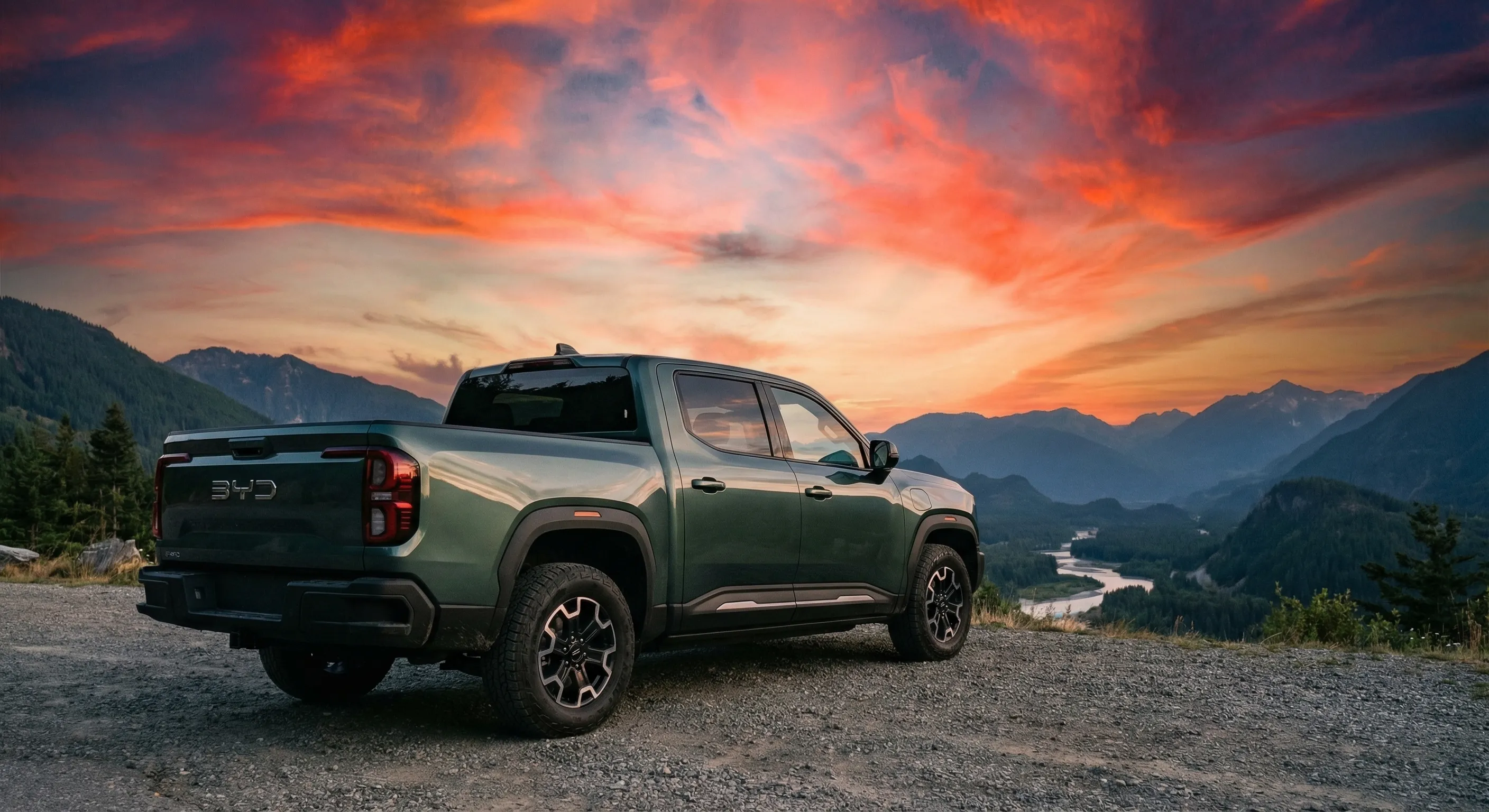
The Shark 6 wears an aggressive face, squared shoulders, a wide grille treatment, fender flares that suggest the truck wants to be photographed off a paved road. That styling is not aesthetic indulgence. It is targeting. BYD is signalling, before a word of marketing copy is read, that this truck is being aimed at the same buyer who shops Ranger Raptor, Ford Maverick Tremor, and Toyota Tacoma TRD, the lifestyle truck buyer, not the fleet contractor.
BYD announced its first pickup truck would be named the Shark in April 2024, and the BYD Shark was first introduced in Mexico on 14 May 2024, the first time BYD had a vehicle global debut launch outside China, as the Shark is not marketed in China itself. That sequencing is not accidental. Mexico is a tariff-free adjacent market with truck demand and brand-building potential, and it lets BYD validate the product against North American expectations without absorbing the full risk of a US or Canadian launch. By the time Canadian buyers see the Shark 6 on a dealer lot, BYD will have data from a year or more of real Mexican market use.
The cab proportions reflect a truck-first set of tradeoffs. The Shark 6 is not aerodynamically optimised the way a passenger car is, it cannot be, because bed access geometry and towing dynamics impose hard constraints on cab height and overhang. BYD has not pretended otherwise. The truck looks like a truck and behaves like one, and the company has saved its aerodynamic obsession for the sedans and crossovers where it pays off. Picking the right battle on each product is a sign of an engineering culture that understands its segments rather than copy-pasting a design philosophy.
Gear worth having
As an Amazon Associate, ThinkEV earns a small commission from qualifying purchases — at no extra cost to you.

First Alert Auto Fire Extinguisher
A compact extinguisher sized for vehicles and bracket-mounted under the seat. Peace of mind for the price of lunch.
As an Amazon Associate, ThinkEV earns from qualifying purchases — at no extra cost to you.
Interior tech is where the contrast with North American incumbents becomes the sharpest. The Shark 6 carries a large central touchscreen, an OTA-capable software stack, and the integrated cabin electronics that BYD has been iterating on across its passenger lineup for half a decade. The truck is not a stripped-down work tool with a 7-inch display bolted to the dashboard. It is a software platform with a bed, and the difference matters to a buyer who treats the cab as a daily workspace rather than as a place to wait between tasks.
That software-first stance is a manufacturing philosophy as much as a product decision. BYD Auto is the automotive subsidiary of BYD Company, a publicly listed Chinese multinational manufacturing operation whose origins are in battery production, not in stamping body panels. The company entered the automotive business with a vertical-integration mindset and a software competency that traditional truck makers are still acquiring. The Shark 6 carries that DNA visibly, the cabin feels like a tablet built around a steering wheel, not a truck with an infotainment system bolted in as an afterthought.
The design intent is coherent from the outside in. Aggressive sheet metal targets the lifestyle truck buyer; truck-first proportions deliver the utility that buyer demands; software-first cabin signals what the next decade of pickups will look like. None of these decisions is the cheap choice. All of them are the right choice for the buyer BYD is actually pursuing.

Gear worth having
As an Amazon Associate, ThinkEV earns a small commission from qualifying purchases — at no extra cost to you.

Grizzl-E Classic Level 2 EV Charger (40A)
Canadian-made and rated for minus 40C winters. 40A / 9.6 kW, NEMA 14-50, indoor/outdoor, 24-ft cable. The charger built for Canadian weather.
As an Amazon Associate, ThinkEV earns from qualifying purchases — at no extra cost to you.
What the Shark 6 Reveals About BYD's Manufacturing Philosophy
Step back from the truck and the pattern becomes clearer. Every choice, series-parallel PHEV, LFP chemistry, dual e-axle, software-first cabin, compresses cost not by cutting corners but by removing the suppliers, margins, and complexity layers that other automakers accept as the cost of doing business. BYD's manufacturing philosophy is to own the stack from chemistry up, and the Shark 6 is what that philosophy looks like when it is pointed at a pickup.
Vertical integration at this depth is genuinely rare. Most automakers buy cells from CATL or LG, buy motors from Bosch or ZF, buy infotainment platforms from Harman or Continental, and buy chips from a thicket of semiconductor suppliers. Each transaction adds a margin layer and a coordination cost. BYD makes its own cells, designs its own motors, writes its own cabin software, and increasingly fabricates its own semiconductors. Every step removed from the supply chain is a margin returned to the price tag, and the price tag is the most visible competitive weapon BYD carries into a new market.
The series-parallel PHEV choice over a pure EV is itself a philosophical statement. BYD could have built an all-electric Shark and shipped it into markets where charging infrastructure is mature. It chose not to. The decision says that BYD reads the global truck buyer as someone who will not surrender highway range to environmental virtue, and that the cheapest path to giving that buyer an EV-adjacent product is to bolt a small combustion generator onto a small battery and call it a hybrid. The product wins on price; the customer never has to learn a new behaviour around charging; the architecture scales to markets that pure EVs cannot yet reach.
This is the lens that distinguishes BYD from Ford. The F-150 Lightning was engineered as an EV first, then tested against truck-buyer expectations. The Shark 6 was engineered as a truck first, then optimised for cost using the EV-adjacent architecture that minimises battery spend. Ford asked, "how do we make our truck electric?" BYD asked, "how do we make a truck that uses electricity where electricity is cheapest and combustion where range matters?" Different questions produce different answers, and the answers shape every line item on the bill of materials.
The deeper lesson is about engineering culture. BYD treats every subsystem as a candidate for in-house redesign, and treats every supplier relationship as a margin leak to be plugged whenever volume justifies the investment. That stance is not unique to trucks, it shows up in the Atto 3, the Seal, the Dolphin, and every other product the company ships. The Shark 6 is simply the first product where the philosophy collides with the segment most resistant to EV economics. The fact that BYD can undercut every battery-electric pickup in the segment by a wide margin is evidence that the philosophy survives that collision.
The Series PHEV decision also neutralises the single biggest objection to new-market EV adoption: charging infrastructure. A pure EV pickup launching in Canada has to answer the question of where buyers in northern Ontario or the Prairies will charge it on a road trip. The Shark 6 sidesteps the question. The combustion generator means the buyer never has to plan around DC fast chargers, and yet the daily driving experience is fully electric for anyone with a Level 2 outlet at home. BYD has engineered the truck to be acceptable everywhere the customer goes, not just in the urban corridors where charging is dense.
The pickup that emerges from all of this is not the cheapest truck in the segment by accident. It is the cheapest truck in the segment because the engineering philosophy that produced it treats every conventional cost centre as a problem to be solved. That is what makes the Shark 6 dangerous to the incumbents: not the price, but the manufacturing logic that produced the price.
Canada as the Proving Ground: Why the Shark 6 Arrives Here Before the US
The 49,000-unit annual import quota under Canada's 6.1% tariff regime is the door any Chinese-built vehicle walks through to reach North America. One caveat has to sit over this whole section: BYD has confirmed four passenger models for Canada (Seal, Atto 3, Dolphin, Seagull) and has not confirmed the Shark 6 at all. What follows is the case for why the truck would make sense here, not a report that it is coming. The quota is small in absolute terms, about 2% of Canadian new-vehicle sales in a typical year, but it is enough to validate a product, build a dealer network, and establish a brand without the political risk of a US launch. For a company with BYD's volume ambitions, Canada is a market entry strategy, not a market.
Australian success sequenced ahead of the Canadian bet for a reason. Australia is right-hand drive, which forced BYD to engineer the truck for a market the US and Canada do not share, but it also matches Canada on the cultural variables that actually move trucks, towing, outdoor recreation, rural distance, weather. A product that succeeds with Australian buyers will probably succeed with Canadian buyers, and the data from a year of Australian sales lets BYD enter Canada with marketing and pricing assumptions that are already validated against a comparable customer.
The unresolved question for the Canadian launch is the sales channel. BYD has not committed to a traditional dealership model or a Tesla-style direct-sales approach, and the choice will shape how quickly inventory reaches buyers. A dealership network takes years to build and burns capital. Direct sales scale faster but require the buyer to accept a different purchase experience. The fact that this question is still open in mid-2026 suggests BYD is still calibrating the answer, and the calibration will probably differ by province depending on franchise-law constraints. The real-price-and-dealer-gap question for the Shark in Canada is where the rubber meets the road on this.
For the Canadian buyer, the spec-sheet competition lines up against the Ford Maverick Hybrid and the Ranger more than against the Lightning. An 800 kg payload and up to a 3,500 kg tow rating on the Performance trim sit well ahead of the Maverick's numbers, and the Shark 6's combined output dramatically outclasses the Maverick's hybrid powertrain. Price would determine where the truck lands: at the low end of its plausible Canadian band it is a Maverick competitor with far more power; in the mid-$50s it competes with the Ranger and the lower trims of the F-150. The actual pricing math the segment would produce is the variable that turns architecture into market share, once a real Canadian number exists.
Canadian charging infrastructure also factors in, though less than it would for a pure EV. The Shark 6 can complete a road trip on its combustion generator alone if needed, which means buyers in Saskatchewan and northern BC are not gated by the density of DC fast chargers along their routes. For buyers in urban Ontario and Quebec where charging is dense, the truck behaves as a near-pure EV in daily use. The architecture lets BYD sell a single product into both contexts without compromise, and that is precisely the flexibility the evolving Canadian fast-charging network does not yet demand of every EV but rewards from the products that have it.
The US is not on BYD's near-term map, the 100% American tariff on Chinese vehicles is prohibitive, and the arbitrage of importing through Canada does not survive contact with US customs enforcement. Canada gets the Shark 6 first because Canada is the only North American market where the math currently works. If the truck succeeds here, the case for negotiated US market access strengthens. If it fails, the experiment ends at the Canadian border. The stakes for both BYD and the segment are higher than the small quota number suggests.
Gear worth having
As an Amazon Associate, ThinkEV earns a small commission from qualifying purchases — at no extra cost to you.

PULIDIKI Car Cleaning Gel (Detailing Putty)
Press it into vents, buttons, and seams and it lifts out dust you did not know was there. Weirdly satisfying, genuinely useful.
As an Amazon Associate, ThinkEV earns from qualifying purchases — at no extra cost to you.
What the Numbers Say About the Segment
Wherever the Shark 6 lands in Canada, it is not aimed at the F-150 Lightning. It is aimed at the lifestyle truck buyer who would otherwise be cross-shopping a Maverick Hybrid against a base Tacoma, the buyer who wants truck utility at car money, not the buyer who wants a luxury EV with a bed. That positioning is deliberate, and it reveals what BYD believes the next phase of pickup competition will look like.
The engineering stack, Blade LFP cells, series-parallel PHEV architecture, dual e-axle drivetrain, is not a cost-cut version of a North American truck. It is a coherent engineering thesis that produces a lower price as a byproduct of better architectural choices. The truck is cheap because it is built right, not built down. That distinction is the one incumbents will struggle most to answer, because answering it requires rethinking decisions they made a decade ago about supplier relationships, chemistry, and drivetrain layout.
BYD is not copying North American trucks. It is arguing that North American trucks were designed wrong, that the parallel hybrid architecture is a compromise, that NMC chemistry is a wasted premium for a pickup application, that mechanical four-wheel drive is solved more cheaply in software, and that the buyer the segment has been chasing is not the buyer the segment should be serving. The argument may not win. But the truck that carries the argument is already on sale in Australia, Mexico, and Brazil, and if it reaches Canada the incumbents will have to answer it product by product rather than press release by press release.
The real competition for the Shark 6 is not the F-150 Lightning. It is the buyer who has never considered an EV-adjacent truck and now has one available at a price that makes the question unavoidable. Watch the conquest sales data from the first full year of Canadian availability, if BYD pulls buyers out of the Maverick Hybrid and the base Tacoma rather than out of the Lightning waitlist, the architectural thesis is working. If it pulls them out of nowhere at all, the thesis was wrong about who actually wanted this truck.
The Shark 6 is the first pickup whose price reflects an engineering philosophy rather than a compromise. Canada is where we find out whether that philosophy translates across the Pacific. The next twelve months of sales data will tell us more about the future of the segment than the last five years of incumbent product cycles have.
Gear worth having
As an Amazon Associate, ThinkEV earns a small commission from qualifying purchases — at no extra cost to you.

WixGear Magnetic Air Vent Phone Mount (2-Pack)
A magnet strong enough that your phone never flinches over potholes or rail crossings. Two in the box, one for each car.
As an Amazon Associate, ThinkEV earns from qualifying purchases — at no extra cost to you.

Founder & Chief Editor
Vlad Pereira is the founder and chief editor of ThinkEV.ca, the Canadian electric-vehicle publication he writes and edits from Courtenay, British Columbia. He covers EV pricing, federal and provincial rebates, charging costs, and the Chinese manufacturers now entering Canada, from the buyer's side rather than the press-fleet side. ThinkEV is a venture of Vlad Pereira Online; his writing on health, income and the long game lives at vladpereira.com.
Frequently asked questions
Does the Shark 6 qualify for any Canadian EV incentives?
What happens when the battery runs flat on the highway?
Can the Shark 6 actually tow like a real truck?
How does LFP battery chemistry hold up in Canadian winters?
When is the Shark 6 actually arriving in Canada?
More EV & road-trip finds
Affordable upgrades worth a look — tap any to check the price on Amazon.
 ★ 47,507
HOMEXCEL Microfiber Cloths (12-Pack)
View on Amazon ★ 55
★ 55LED Car Door Logo Projector Light
View on Amazon ★ 900
★ 900Personalized Photo Car Air Freshener
View on Amazon ★ 27,769
Car Cup Holder Coasters (4-Pack)
View on Amazon ★ 848
★ 848Coiled USB-C to USB-C Car Cable (2-Pack)
View on Amazon ★ 87
★ 87Car Window Sun Shades for Kids (4-Pack)
View on Amazon ★ 68
★ 68WeatherTech FloorLiner for Tesla Model 3
View on Amazon ★ 9,349
Auto Detailing Brush Set (10-Piece)
View on AmazonRead, Plan, Then Stay Current
Explore our expert articles to understand incentives and ownership costs, use the map to pressure-test charging reality, then subscribe so new EV coverage comes straight to you.
Continue Reading
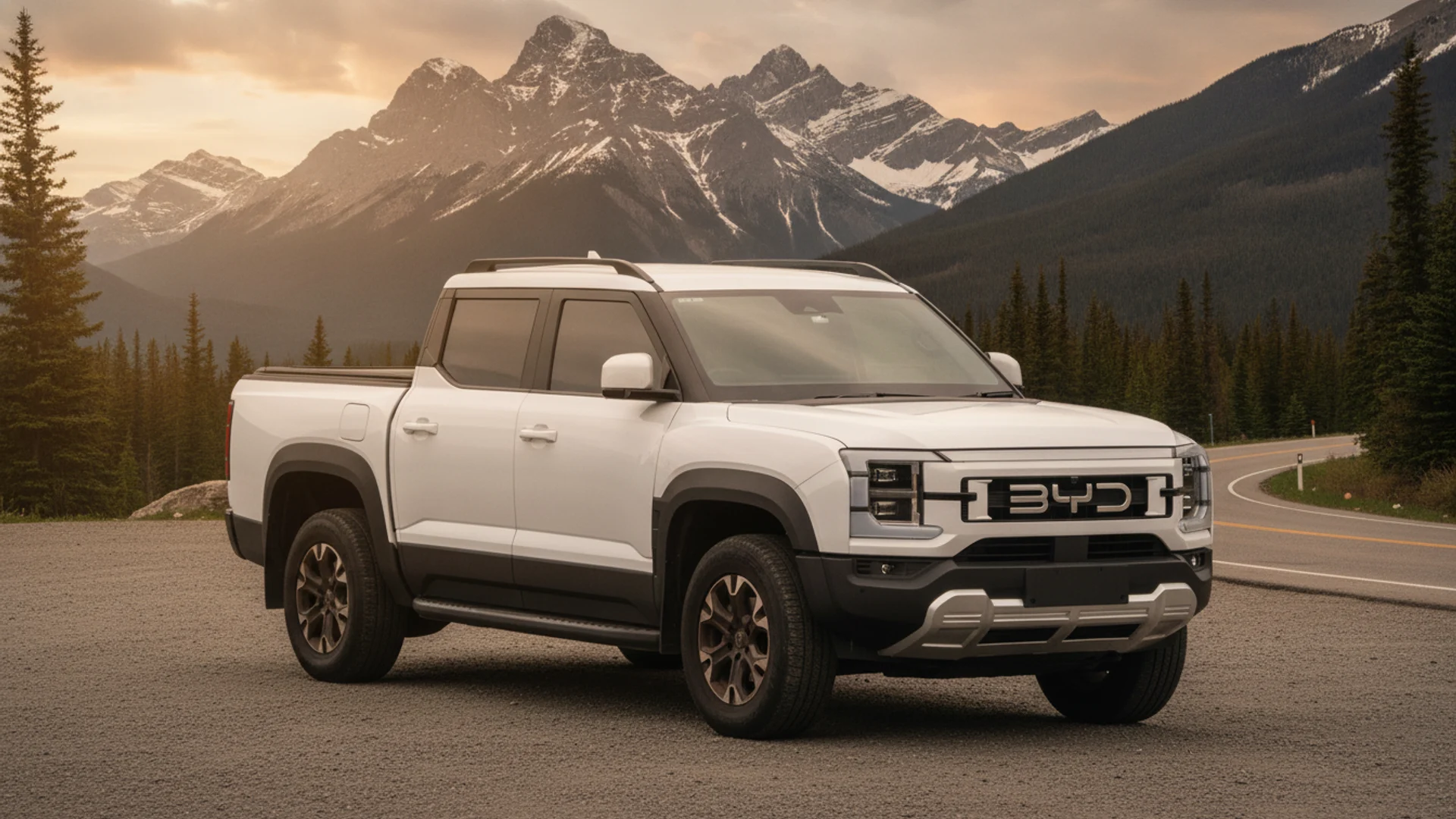
BYD Shark 6 Canada: Specs, Price Band & 2026 Lineup Guide
BYD Shark 6 Price in Canada: $55K–$62K Estimate, Explained
BYD Truck Canada 2026: Shark 6 Specs, Price & What to Know
Are Canada's Repair Shops Ready for Chinese EVs?
BYD Atto 3 Price Canada 2026, The Real Number, Banded