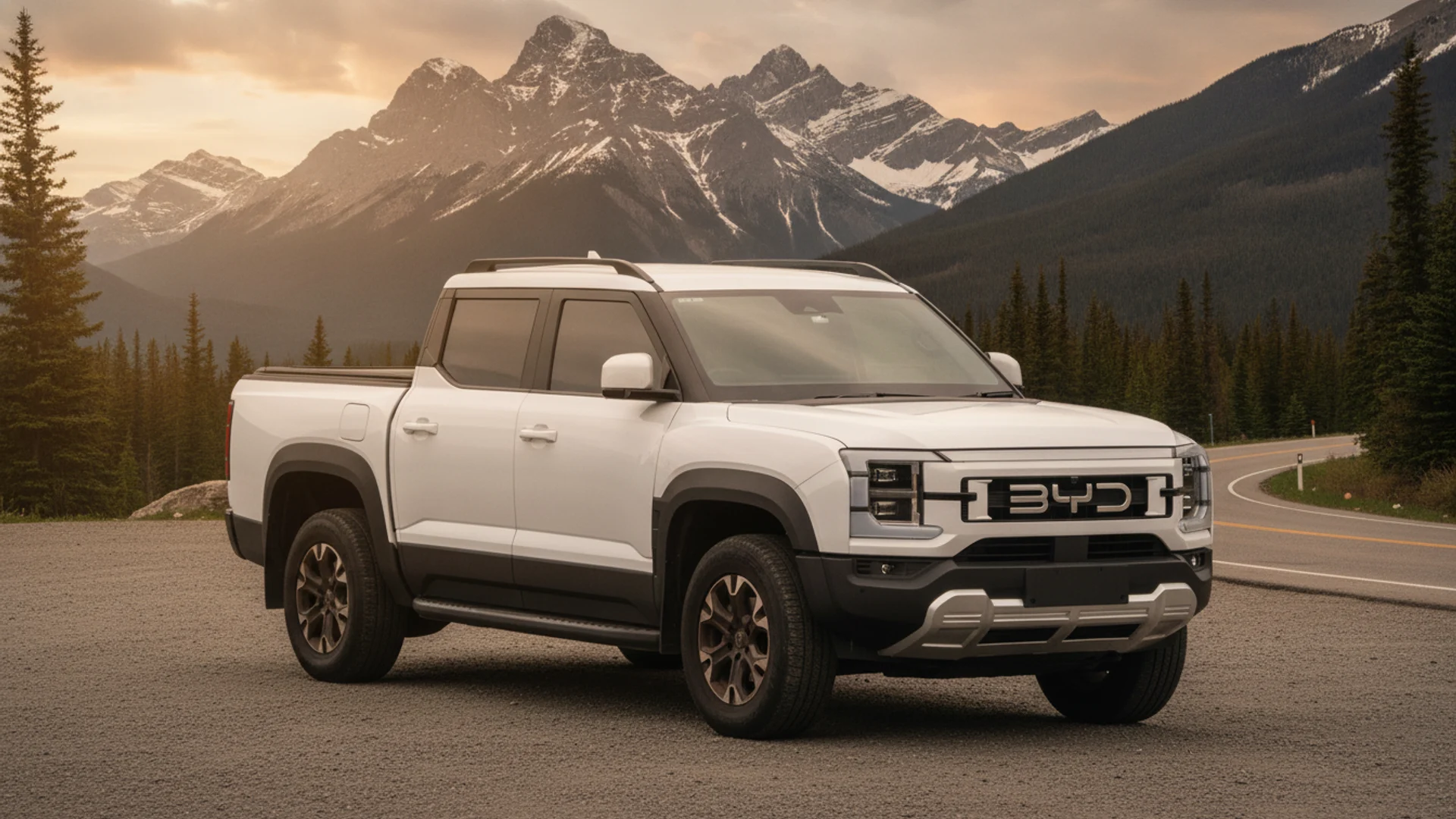
A 29.6 kWh battery in a pickup truck. That number alone should end the conversation about whether BYD is serious about this segment, it's larger than the usable pack in several entry BEVs sold in Canada today, bolted into a dual-cab ute that also carries a 1.5-litre turbo petrol engine. The Shark 6 is a credible plug-in hybrid pickup for the Canadian market. Whether BYD actually shows up to sell it is the unresolved variable.
Key takeaways
- The BYD Shark 6's 29.6 kWh battery delivers about 85 km of electric range on the WLTP cycle (~100 km on the older NEDC standard), enough to cover Canada's median 30 km daily commute.
- BYD launched the Shark 6 in Brazil in October 2024 and opened Australian orders that same month, but as of mid-2026 it has not confirmed the truck for Canada and has published no Canadian price.
- Canada's surtax on Chinese-built EVs dropped from 100% to 6.1% effective January 16, 2026 (the framework was announced January 16), but a 49,000-unit quota remains the real constraint.
- No PHEV pickup is currently sold in Canada, so if the Shark 6 does land it enters a segment with zero direct competition.
- In its launch markets the Performance trim's 3,500 kg towing matches the half-ton benchmark F-150 buyers compare everything against; the base trim tows 2,500 kg.
Quick Answer: What the BYD Shark 6 Actually Is
The BYD Shark 6 is a dual-cab plug-in hybrid pickup that launched in Brazil in October 2024 as part of BYD's broader Latin American strategy, and became available for order in Australia on 29 October 2024, with first deliveries commencing later that year. Canada, as of mid-2026, is still pre-arrival.
For the 2026 model year, BYD expanded the Shark 6 line in its launch markets from one trim to three: an entry work-spec cab-chassis built for fleet and trade bodies, the carried-over Premium, and a Performance flagship with the 2.0-litre system and 3,500 kg towing. None of those trims has been confirmed for Canada.
The drivetrain is the headline. BYD's DMO Super Hybrid pairs a 1.5-litre turbocharged petrol engine with dual electric motors for a combined system output of around 321 kW (430 hp) and 650 Nm, with 2,500 kg of braked towing on the base and Premium trims. The Performance steps up to a 2.0-litre turbo hybrid system, 350 kW (469 hp), 700 Nm and a 3,500 kg braked towing limit, which closes the gap to what a half-ton buyer expects on paper. About 85 km of electric driving range on the WLTP cycle (BYD's ~100 km figure is the older NEDC number) pairs with the practicality of a dual-cab body, and the EV range is the part Canadian commuters should care about most.
Canadian price band, if it ever arrives: a cross-market estimate of roughly $52,000–$62,000 CAD depending on trim and tariff outcome. BYD has published no Canadian price, this is derived from its Australian and Latin American figures, not a quote.
Gear worth having
As an Amazon Associate, ThinkEV earns a small commission from qualifying purchases — at no extra cost to you.

Portable Level 2 EV Charger (40A, NEMA 14-50)
Throw it in the trunk and charge anywhere with a 240V outlet. 40A portable with NEMA 14-50 plug. Your road-trip insurance policy.
As an Amazon Associate, ThinkEV earns from qualifying purchases — at no extra cost to you.
Specs That Matter for Canadian Truck Buyers
Towing first, because in this country it decides the conversation. The Premium's 2,500 kg rating is honest mid-size territory, enough for a 22-foot travel trailer, a small boat, a utility load. The Performance's 3,500 kg matches the half-ton benchmark Canadians actually shop against. It is, to be fair, the number F-150 buyers compare every ute to. Zecar's media-drive team towed a 3.5-tonne caravan across highway, off-road, and uphill terrain in Victoria, the 3,500 kg spec held under load, not just on the spec sheet.
The EV range matters more than spec sheets usually acknowledge. An 85 km plug-in window covers the daily commute pattern for the majority of Canadian truck buyers, which means the 1.5-litre or 2.0-litre petrol engine spends most weekdays as cargo. The hybrid system engages on demand and on highway runs. For an owner who plugs in nightly, this is functionally an EV with a gas safety net, which is the exact use-case Ford's F-150 PowerBoost cannot deliver because it has no plug.
A fair pushback: 100 km is the manufacturer figure, and PHEV ranges fall hard in Canadian winters. A realistic January window at -15°C is closer to 55–65 km on resistive heat, and the petrol engine will cycle on for cabin warmth whether the battery has charge or not. That still covers the median Canadian commute of roughly 30 km round-trip with margin, and the worst-case is a vehicle that drives like a Maverick Hybrid, which is to say, fine. The plug remains the differentiator no other truck in this price class offers.
More than a year of Australian ownership now sits behind the truck, and the long-term reports line up with the spec sheet: the EV range holds, the towing is real, and the niggles are typical first-generation territory. Useful texture before any Canadian deliveries begin.
Charging on a PHEV pack is the one spec that needs scrutiny. A 29.6 kWh battery is large for a plug-in hybrid but small for a BEV, and DC fast-charge ceilings on PHEVs are typically conservative. Confirm the kW rating against your home Level 2 setup before signing, a 7 kW wallbox refills the pack overnight regardless, which is the realistic use-pattern anyway.
Payload, bed dimensions, and ground clearance all sit in mid-size truck territory rather than half-ton. The Shark 6 is closer to a Hilux footprint than an F-150 footprint. Canadian buyers cross-shopping a Ranger or a Tacoma are in the right size class. F-150 shoppers are not.
Canada Pricing: The Tariff Math and the Defensible Band
The tariff math changed in 2026 and the price logic has to be redrawn from that point. After Canada moved from a 100% surtax to a 6.1% rate, effective January 16, 2026 under the new quota (the framework was announced January 16), the defensible Canadian price band shifted upward, but only modestly. The 49,000-unit quota is the binding constraint, not the rate.
Gear worth having
As an Amazon Associate, ThinkEV earns a small commission from qualifying purchases — at no extra cost to you.

WeatherTech FloorLiner for Tesla Model 3
Deep-channel liners that trap every drop of slush and salt. The difference between a ruined interior and a showroom-fresh cabin after a Canadian winter.
As an Amazon Associate, ThinkEV earns from qualifying purchases — at no extra cost to you.
Australian on-road pricing is the nearest reference market, and Brazil adds a second data point. Both launched in late 2024 at price points that undercut domestic-brand pickups by a meaningful margin. The Seal export precedent suggests BYD prices competitively when entering a new market, the company is buying share, not extracting it.
There is no official Canadian price, and BYD has not confirmed the Shark 6 for the Canadian market at all. What exists is launch-market pricing to reason from. The Shark 6 starts around AU$57,900 driveaway in Australia, roughly CAD $52,000 before any Canadian overlay, with the Mexican and Brazilian figures landing in a similar band. Layer Canadian freight, certification, dealer margin, and the 6.1% tariff on top, and a defensible Canadian estimate falls somewhere in the $52,000–$62,000 CAD range, lower for a work-spec trim, higher for the Performance.
Label this an estimate, not a quote. Trade policy is fluid, the 49,000-unit quota is consumable, and any rate or origin-rule change moves the math. The full tariff math and dealer-gap analysis lives in the price breakdown of BYD's Canadian Shark. What I will not do is round this to a single dollar figure: the uncertainty is real, and BYD has not even committed to selling the truck here.
Gear worth having
As an Amazon Associate, ThinkEV earns a small commission from qualifying purchases — at no extra cost to you.

Grizzl-E Classic Level 2 EV Charger (40A)
Canadian-made and rated for minus 40C winters. 40A / 9.6 kW, NEMA 14-50, indoor/outdoor, 24-ft cable. The charger built for Canadian weather.
As an Amazon Associate, ThinkEV earns from qualifying purchases — at no extra cost to you.
How It Compares to What Canada Already Sells
The competitive set decides whether the Shark 6 matters here, and the set is mostly empty. No PHEV pickup is currently sold in Canada. Not one. Ford's F-150 PowerBoost is a hybrid without a plug, which means zero EV-only kilometres and zero rebate eligibility. The Ram 1500 REV and Chevrolet Silverado EV are full battery-electrics, different operating logic, different price tier, fundamentally different ownership pattern.
The Ford Maverick Hybrid undercuts the Shark 6 on entry price by a wide margin, but offers no EV range, half the towing of the Premium, and roughly a third of the Performance's towing. It is a fuel-efficient compact, not a PHEV truck.
The Toyota Tacoma Hybrid arrived for 2024 with a mild-hybrid setup that improves efficiency without changing the use-pattern. Same logic as the PowerBoost: useful, but not a plug-in.
This leaves the Shark 6 alone in its slot. PHEV plus truck utility plus a sub-$50K entry point is currently unoccupied in the Canadian market. The truck reads as competent without being class-defining, which, in an empty class, is more than enough. The more revealing cross-shop is the Sealion 7: shoppers weighing a PHEV ute against a mid-size BEV crossover tells you the segment boundaries inside BYD's own lineup are still soft, and that the Shark sells partly because the brand is now a known quantity. The direct answer on what the Shark 6 actually delivers in this market covers the engineering logic behind that price.
Gear worth having
As an Amazon Associate, ThinkEV earns a small commission from qualifying purchases — at no extra cost to you.

PULIDIKI Car Cleaning Gel (Detailing Putty)
Press it into vents, buttons, and seams and it lifts out dust you did not know was there. Weirdly satisfying, genuinely useful.
As an Amazon Associate, ThinkEV earns from qualifying purchases — at no extra cost to you.
When and Whether Canada Gets It
Australia launched in October 2024. Canada has no confirmed launch date as of June 2026. The 20-month gap is informative, BYD has been busy with European expansion and Latin American volume, and the Canadian market is small enough that it sits below the priority list for a company shipping millions of vehicles annually.
Three conditions have to align before a Canadian launch is real.
A dealer network. BYD's Canadian footprint is thin. A vehicle arriving means nothing if service capacity does not. A handful of stores in metro Vancouver and the GTA will not support nationwide sales, and a pickup buyer in Saskatoon will not drive to Toronto for warranty work. The specific number I am tracking: at least 25 announced Canadian dealer locations with PHEV-certified service bays by 31 December 2026. Anything less is a soft launch dressed up as a hard one. The broader question of whether the Shark actually lands in Canada covers the dealer and quota constraints in detail.
EVAP eligibility math. This one is simple. Chinese-built vehicles are excluded from the federal EVAP rebate outright, regardless of price, because there is no Canada-China free-trade agreement. The MSRP cap is moot. Until a future trade deal changes the rule, the Shark 6 would fight on sticker alone. Do not assume the rebate. Price the truck without it.
The tariff window. The 6.1% rate under the 49K-unit quota is the operating environment as of writing, but Canadian trade policy is fluid and the quota is consumable. If BYD enters at scale, the quota fills, and the rate-or-quota math has to be rewritten.
The Shark 6 is a credible plug-in pickup for this market. The product is real, the price logic works, the specs match what Canadian truck buyers actually need from a mid-size hauler. Whether BYD wants to sell it here badly enough to build the support network it needs to back the warranty is the part that remains unresolved. Dealer count in the second half of 2026 is the leading indicator, a launch announcement without service infrastructure is a press release, not a market entry.
Gear worth having
As an Amazon Associate, ThinkEV earns a small commission from qualifying purchases — at no extra cost to you.

WixGear Magnetic Air Vent Phone Mount (2-Pack)
A magnet strong enough that your phone never flinches over potholes or rail crossings. Two in the box, one for each car.
As an Amazon Associate, ThinkEV earns from qualifying purchases — at no extra cost to you.

Founder & Chief Editor
Vlad Pereira is the founder and chief editor of ThinkEV.ca, the Canadian electric-vehicle publication he writes and edits from Courtenay, British Columbia. He covers EV pricing, federal and provincial rebates, charging costs, and the Chinese manufacturers now entering Canada, from the buyer's side rather than the press-fleet side. ThinkEV is a venture of Vlad Pereira Online; his writing on health, income and the long game lives at vladpereira.com.
Frequently asked questions
Does the BYD Shark 6 qualify for any Canadian EV rebates?
How much does the ~85 km EV range actually drop in a Canadian winter?
Is the Shark 6 the same size as an F-150?
Which trim makes the most sense for a Canadian truck buyer?
Can I charge the Shark 6 at home overnight on a standard setup?
More EV & road-trip finds
Affordable upgrades worth a look — tap any to check the price on Amazon.
 ★ 568
★ 568Personalized Photo and Text Keychain
View on Amazon ★ 12,396
K KNODEL Car Trash Can with Lid
View on Amazon ★ 21,310
Magnetic Car Phone Mount
View on Amazon ★ 121
★ 121Foldable Windshield Sun Umbrella
View on Amazon ★ 17,839
Qifutan Vent Phone Mount (Military-Grade Clip)
View on Amazon ★ 12,051
Windex Electronics Screen Wipes
View on Amazon ★ 314
★ 314Mini USB LED Ambient Lamps (4-Pack)
View on Amazon ★ 546
★ 546Funny Headrest Face Covers (2-Pack)
View on AmazonRead, Plan, Then Stay Current
Explore our expert articles to understand incentives and ownership costs, use the map to pressure-test charging reality, then subscribe so new EV coverage comes straight to you.
Continue Reading
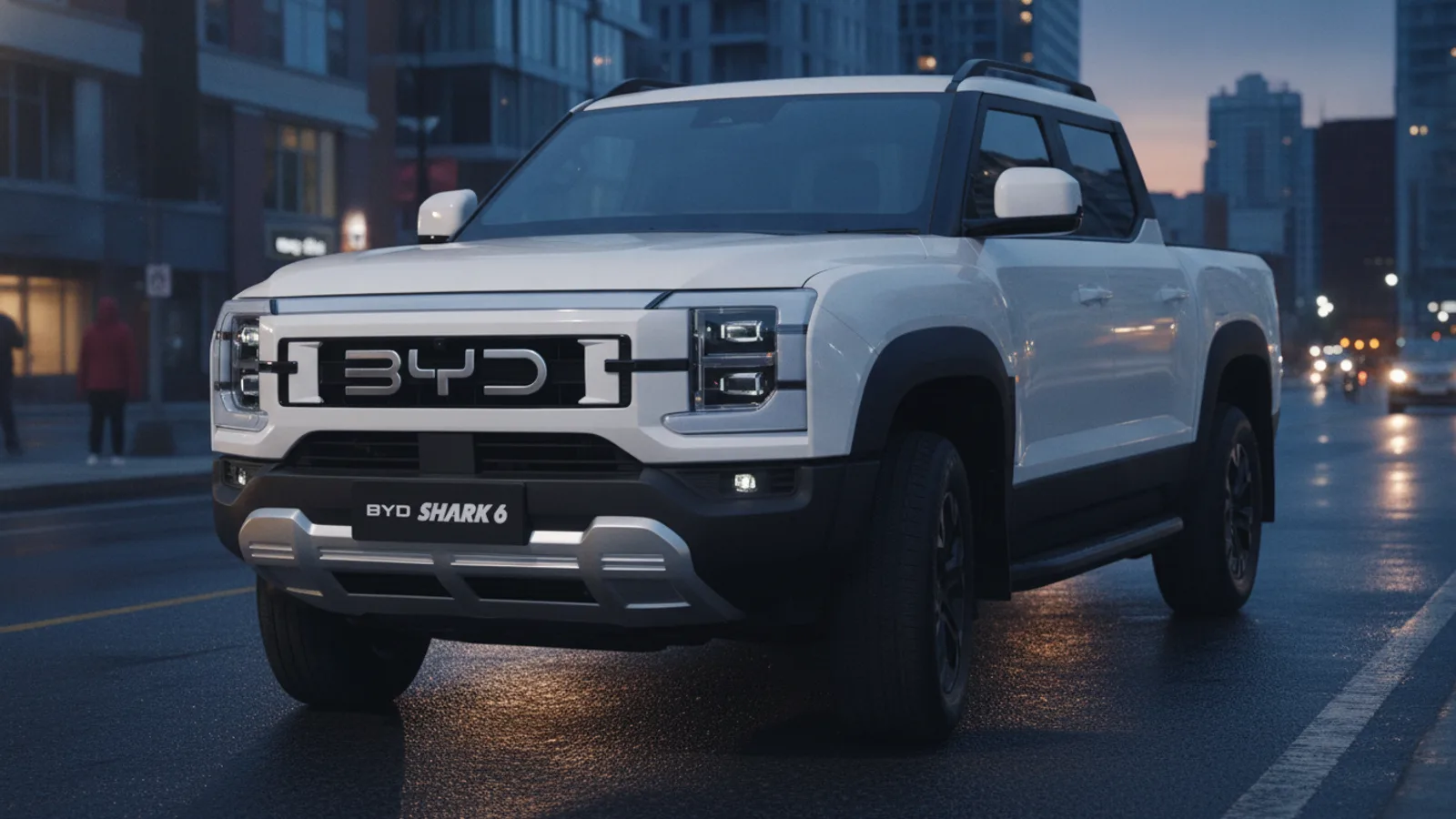
BYD Shark 6 Canada, The Direct Answer
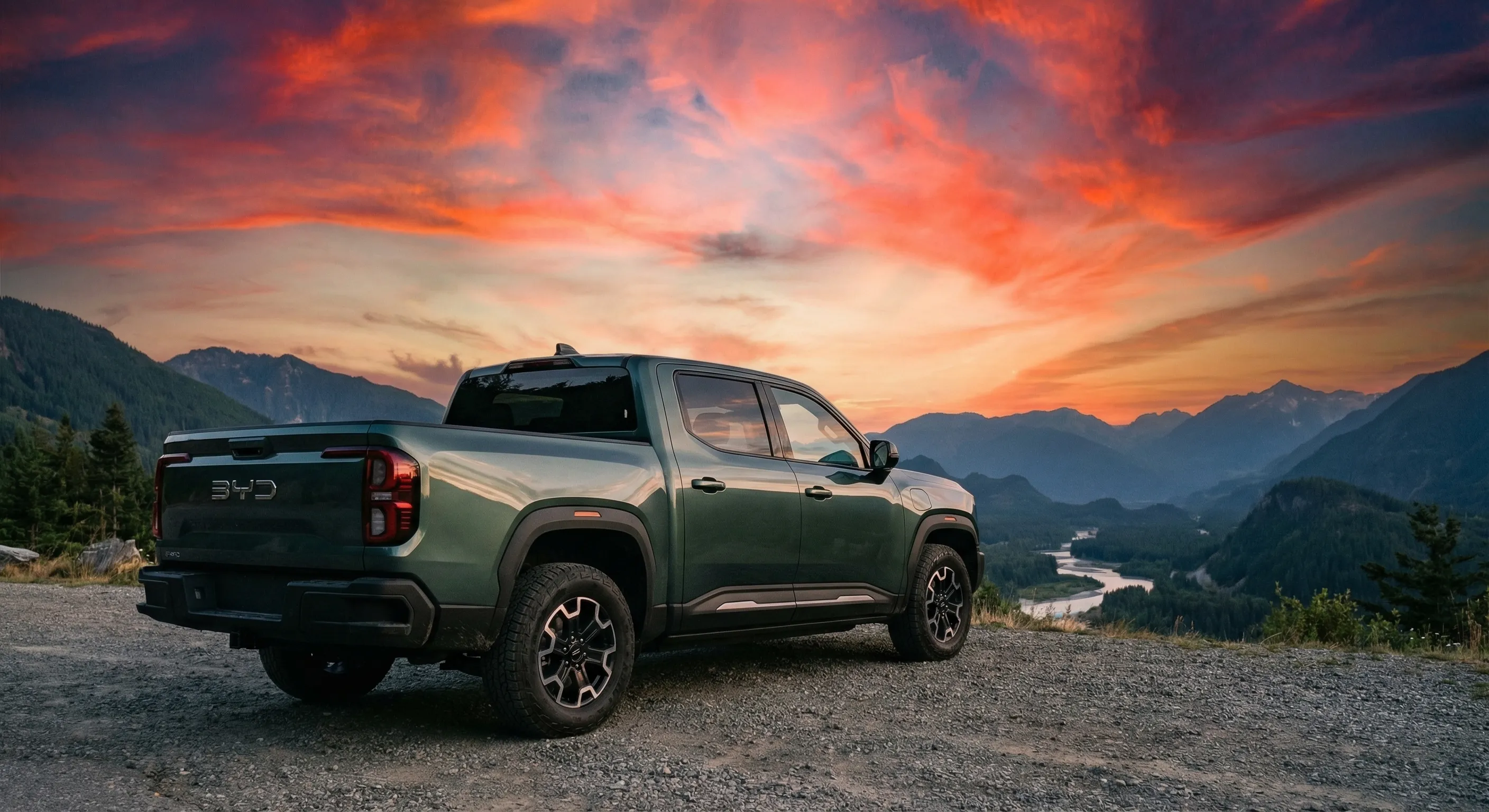
BYD Shark 6 Price in Canada: $55K–$62K Estimate, Explained
BYD Truck Canada 2026: Shark 6 Specs, Price & What to Know

Are Canada's Repair Shops Ready for Chinese EVs?
BYD Atto 3 Price Canada 2026, The Real Number, Banded