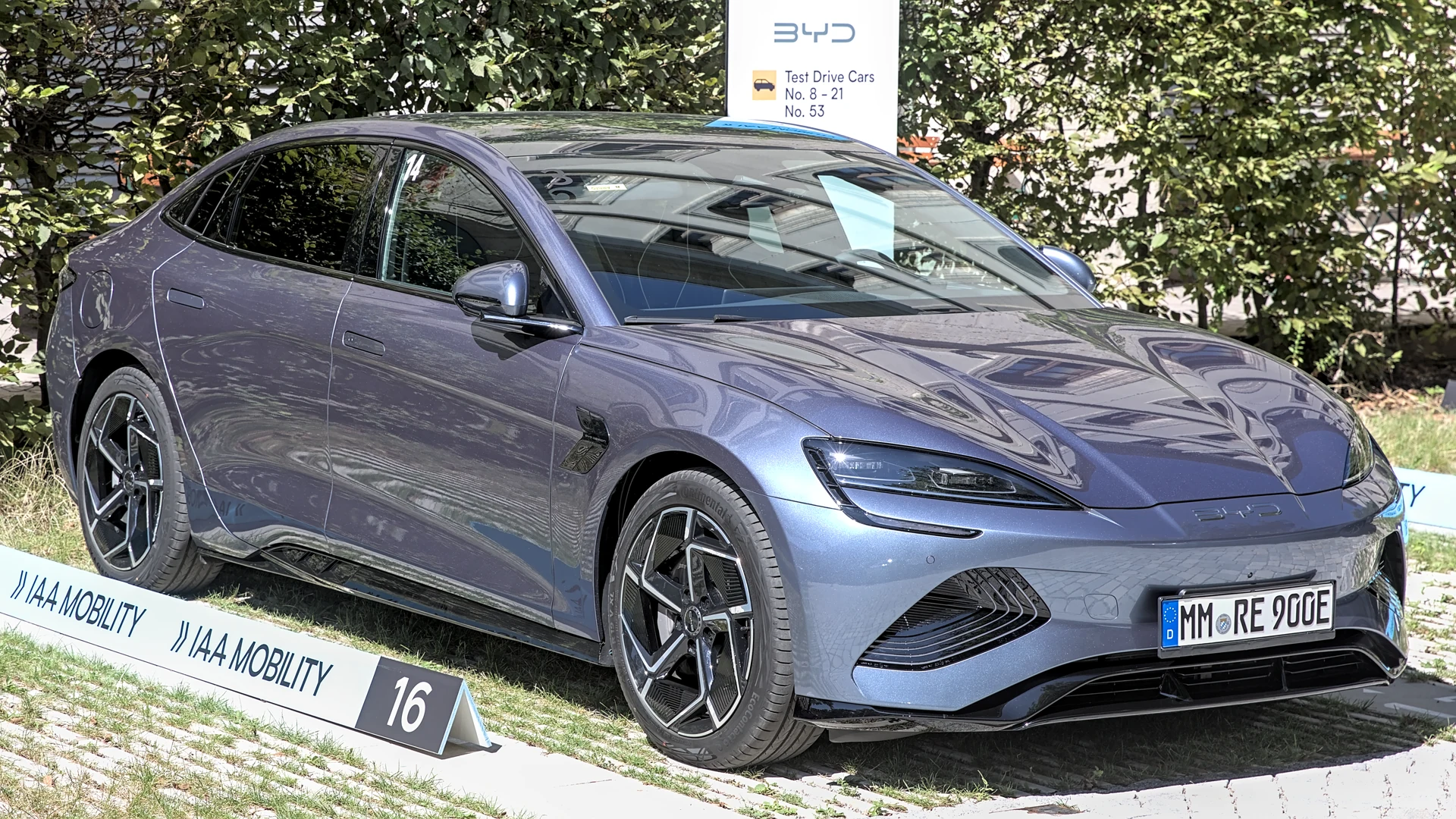
BYD's Australian markup over its Chinese retail price runs anywhere from 27 per cent on the Seal to roughly 63 per cent on the Atto 3, with the Dolphin sitting near 43 per cent, differences that reflect segment positioning, shipping costs, and local spec upgrades. Apply that methodology to Canada, with the Australian dollar trading near parity to the Canadian, and the Seal stops looking like a budget car and starts looking like a precisely positioned mid-market sedan. The number nobody quotes correctly is the one the import permit will eventually print.
The Canadian price will not be the Chinese MSRP plus shipping. It will be the Australian formula, ported almost line-for-line, adjusted for a 6.1 per cent tariff and a 49,000-unit annual quota that creates its own pricing dynamics. The band that falls out of that math is $38,000 to $48,000 CAD across trims, narrower than the speculation, wider than the rumour-mill suggests, and tightly bracketed by evidence that is already public.
The Seal is the test case for whether Canada gets a structural new tier of EV pricing or just a temporary novelty under quota.
Key takeaways
- The Seal's Canadian price band is $38,000–$42,000 CAD for Design RWD, not the $35,000 Chinese MSRP circulating online.
- BYD applies a 27 per cent markup over Chinese base pricing in Australia, the tightest spread in its lineup, signalling volume over margin.
- The 6.1% tariff adds roughly $2,300 to a $38,000 Seal: real money, but not the wall the old 100% surtax was.
- Quota exhaustion flips the same Seal from ~$40,000 in March to potentially $70,000 in November if permits run out.
- The Excellence AWD trim projects to $47,000–$51,000 CAD, and neither configuration qualifies for the federal EVAP rebate.
The Number Everyone Is Quoting, And Why It's Wrong
The Chinese MSRP for the BYD Seal Design trim sits near ¥189,800 CNY, which converts to roughly $35,000 CAD at current spot rates. That number circulates as if it were the Canadian sticker. It is not. It is the floor of a calculation, not the result of one.
The cleanest pricing proxy is Australia. The Australian and Canadian dollars trade near parity, 1 AUD was approximately 1.040 CAD as of April 4, 2026, which means a Sydney price translates almost directly into a Toronto one once tariffs and homologation are accounted for. Australia also imports BYD vehicles under a regulatory regime that, while not identical to Canada's, requires the same broad categories of work: right-hand-to-left-hand-drive considerations aside, both markets demand local crash certification, charging-standard alignment, and a dealer network buildout from scratch.
The Australian markup methodology is the load-bearing input. The Seal carries a 27 per cent margin over its Chinese base in Australia, which is the tightest spread in BYD's lineup, a signal that BYD treats the Seal as its volume halo rather than a margin product. Apply 27 per cent to a $35,000 CAD Chinese-base equivalent and the landed Australian-method price for a Seal Design lands near $44,000 before any Canadian-specific adjustments.
The Australian figure is not the Canadian figure, but it is the closest analog the market has produced. Adjustments downward come from a more competitive Canadian dealer landscape, where established players like Hyundai-Kia and GM are already operating at thinner margins than BYD's Australian distributor accepts. Adjustments upward come from the tariff and from the cost of building a service network in a country where BYD has zero stores and zero parts-supply infrastructure.
The honest band that emerges, with the methodology stress-tested against three different markup assumptions, is $38,000 to $42,000 CAD for the Design RWD trim. That band is narrower than most commentary suggests because the inputs are real. Motor Illustrated already flagged that BYD's smallest EV could open near $25,000 in Canada, which sets the floor of the lineup; the Seal sits two segments above the Seagull, and the price ladder is consistent with the Chinese and European spreads.
The Seal is not a $35,000 car in Canada. It was never going to be. The Chinese price is the manufacturing reality; the Canadian price is the manufacturing reality plus everything it takes to put a car on a Calgary lot with a warranty and a parts queue.
What the 6.1% Tariff Actually Does to the Floor Price
The tariff is the single most misunderstood input in Seal pricing conversations. The quota system is now official as of February 26, 2026, with import permit applications opening March 1, 2026. Inside that 49,000-unit annual quota, the tariff is 6.1 per cent, not zero, not 100, and not negotiable on a per-vehicle basis.
Key numbers at a glance:
- Tariff inside quota: 6.1 per cent
- Annual quota ceiling: 49,000 units
- Chinese MSRP equivalent: ~$35,000 CAD
- Australian markup applied to Seal: 27 per cent
- Projected Design RWD band: $38,000–$42,000 CAD
- Projected Excellence AWD band: $47,000–$51,000 CAD
- Federal EVAP eligibility: none (China-built imports excluded)
On a $38,000 CAD landed vehicle, 6.1 per cent works out to roughly $2,300. That is meaningful, it covers a buyer's first year of insurance in most provinces, or a Level 2 home charger plus installation, but it is not the structural barrier the previous 100 per cent surtax was. The earlier regime priced Chinese EVs out of the market entirely; this one prices them in, with a margin penalty that the manufacturer absorbs or passes through depending on competitive pressure.
Canada's January 2026 trade reset with China created a pathway for brands such as BYD to test the market under a 49,000-unit annual quota, which will grow over subsequent years if the policy holds. The growth schedule matters more than the current ceiling, because it tells manufacturers whether to invest in a Canadian dealer network or treat the country as a one-off opportunistic export. A growing quota signals permanence; a frozen quota signals constraint.
Quota exhaustion is the second-order risk. If permits fill before year-end, late entrants pay 100 per cent again, which means the same Seal that costs $40,000 in March could cost $70,000 in November depending on when the importer cleared the permit. This creates structural urgency pricing dynamics that benefit early-entry dealers and punish customers who wait for the inventory glut that traditional automotive cycles would predict.
BYD's incentive is to front-load Canadian volume in the first two quarters of the import year. Get the cars on the boats, clear the permits in March and April, and recognise the revenue before the quota ceiling becomes a binding constraint. That implies a pricing strategy of aggressive launch positioning, undercut the established competition hard enough to soak up the quota before any Korean or American competitor can adjust their own incentive structure.
For the buyer, the takeaway is timing. The Seal will not be cheaper in November. It may not be available in November. The structural rationality of the quota system, paired with the manufacturer's first-mover incentives, points toward Q1 and Q2 deliveries at the published-band prices, and increasingly speculative pricing after that. The regulatory map and realistic timeline tells you when the quota becomes a binding constraint rather than a theoretical one.
Gear worth having
As an Amazon Associate, ThinkEV earns a small commission from qualifying purchases — at no extra cost to you.

Lectron Level 2 J1772 Charger (40A, WiFi)
Smart WiFi charger with real-time energy monitoring. 40A / 9.6 kW, J1772 with a NEMA 14-50 plug, schedule charging right from your phone.
As an Amazon Associate, ThinkEV earns from qualifying purchases — at no extra cost to you.
Seal Design vs. Excellence: The AWD Premium and What It Buys
The Seal is sold in two main configurations globally, and the Canadian lineup will mirror that structure. British reviewers at Auto Express praised its premium feel and noted that 2026 updates increased boot capacity from 400 to 485 litres while expanding the front trunk from 53 to 72 litres. InsideEVs and The Drive both concluded the Seal offers a credible alternative to the Model 3, though some faulted its heavy reliance on touchscreen controls and dynamics that prioritize comfort over engagement. Those updates apply across both trims; the trim split is about powertrain.
The Design (RWD) runs a single rear-mounted motor producing 230 kW and 360 Nm of torque. It is the volume trim in every market BYD has launched it in, and it will be the volume trim in Canada. The Excellence (AWD) adds a front motor to bring combined output to 390 kW and 670 Nm of torque, performance specification that competes directly with the Tesla Model 3 Performance, not the Long Range AWD.
The Australian trim spread runs about $10,000 AUD between Design and Excellence. Applied to Canada at near-parity exchange, that suggests a $9,000 to $11,000 CAD spread between trims. The Excellence band therefore projects to roughly $47,000 to $51,000 CAD, above the federal EVAP $55,000 ceiling at the top of the band, below it at the bottom, but the entire trim is ineligible for EVAP regardless of price because China-built BYD imports are excluded from federal incentives.
That exclusion matters more for the Excellence than for the Design, because the Excellence is competing against trims that do qualify. A buyer cross-shopping the Seal Excellence against an Ioniq 5 Limited AWD or an EV6 GT-Line AWD has to net out the $5,000 federal rebate the Korean cars carry, which narrows the Seal's price advantage at the top of the band and inverts it at the bottom.
The Design trim's value proposition is different and stronger. At $38,000 to $42,000 with no federal rebate, it still undercuts the Tesla Model 3 RWD by a margin that no incentive structure closes. The Korean and American competition in the sub-$45,000 segment is meaningfully thinner than in the $50,000–$60,000 tier; BYD is entering Canada at the trim where domestic incumbents have the least cover.
The engineering between trims is more interesting than the price gap. The BYD Dolphin targets budget-conscious buyers, and the Seal Design carries pieces of that same volume-first philosophy. The Excellence is BYD's spec-parity argument, a way of saying that the same architecture that produces a $40,000 sedan can also produce a $50,000 performance car without compromise. That is not a marketing claim; it is a manufacturing claim, and it shows up in the $10,000 price gap comparison with the Model 3.
The Engineering That Justifies the Price, Or Doesn't
The Seal is a spec sheet that reads less like a product brief and more like a quiet thesis on what midsize EV sedans were always supposed to be. The chemistry choice is the first tell. BYD uses its Blade Battery, an LFP (lithium iron phosphate) chemistry that trades some energy density against NMC for two structural advantages: no cobalt in the supply chain, and thermal characteristics that are dramatically safer in failure modes.
LFP carries a Canadian-winter cost, cold-weather range degradation is more pronounced than in NMC packs, and charging speeds taper harder below freezing. The trade-off BYD makes is that the cycle life of the Blade Battery is roughly double the NMC equivalent, which means the car holds resale value differently than its competitors. A five-year-old Seal with 150,000 km should have noticeably less battery degradation than a five-year-old Model 3 Long Range with the same mileage. That is the bet BYD is asking buyers to make.
The structural integration is the second engineering signature. BYD's CTB, Cell-to-Body, design treats the battery pack as a load-bearing element of the chassis rather than a heavy box bolted underneath. The packaging dividend shows up in two places: a 0.219 drag coefficient that is among the lowest in the segment, and an interior volume that punches above the exterior footprint. Drag coefficient is the spec most likely to get dismissed as marketing gloss; it is, in fact, the single largest determinant of highway range, which is where Canadian buyers actually live.
Gear worth having
As an Amazon Associate, ThinkEV earns a small commission from qualifying purchases — at no extra cost to you.

WeatherTech FloorLiner for Tesla Model 3
Deep-channel liners that trap every drop of slush and salt. The difference between a ruined interior and a showroom-fresh cabin after a Canadian winter.
As an Amazon Associate, ThinkEV earns from qualifying purchases — at no extra cost to you.
The platform underneath both trims is e-Platform 3.0, an architecture designed around 800-volt capability in a segment where most competitors still run 400V systems. That future-proofs the charging experience in a way the spec sheet does not fully communicate. A Seal arriving in 2026 will be capable of taking advantage of charging infrastructure that does not yet exist in most Canadian provinces, and when that infrastructure does roll out over the next five years, the Seal will benefit without a hardware update.
The 2026 update that lifted the frunk capacity from 53 to 72 litres is a small detail with a large signal. It tells you BYD is reading western-market reviews and adjusting. Chinese-market sedans historically deprioritised frunks because Chinese buyers did not value them. The expansion is a concession to a Canadian and European buyer profile, somebody who treats the frunk as a meaningful storage solution rather than an unused void.
These are not premium-segment engineering choices that justify a premium price. They are mass-market engineering choices that justify a mass-market price at scale. The Seal's specification is what happens when a manufacturer builds a million-unit platform and then trims it to compete in a 50,000-unit market.
The Tesla Model 3 Comparison: What the Numbers Actually Show
The two cars occupy the same segment, share a similar drag profile, and target the same buyer. The Model 3 RWD in Canada sits at $54,990 CAD for 2026, which means a Seal Design at $38,000–$42,000 represents a $13,000 to $17,000 price gap on like-for-like trim. The Model 3's own pricing structure across trims sets the ceiling that BYD is undercutting.
The price gap is not the most interesting number. The torque-per-dollar comparison is. The Seal Design's 360 Nm at $40,000 produces roughly 9 Nm per $1,000 CAD; the Model 3 RWD's 350 Nm at $55,000 produces roughly 6.4 Nm per $1,000. The Seal is the better dollar-per-Newton-metre car by a meaningful margin, and that compounds across the lineup, Excellence at $49,000 with 670 Nm hits 13.7 Nm per $1,000, which is performance-segment value at mid-segment money.
Tesla's moat is not the spec sheet. It is the Supercharger network. The Seal will charge on Canadian Tesla Superchargers via NACS adapters, but Tesla owners get native integration, route planning, and a reliability track record that BYD cannot match in year one. The infrastructure gap closes over time, Electrify Canada, FLO, and Petro-Canada Electric Highway all continue to expand, but in the short term, the Model 3 buys a charging experience that the Seal buys around.
The aerodynamic comparison is closer than headlines suggest. Cd 0.219 versus the Model 3's 0.208 puts the Seal within 5 per cent of Tesla's segment-leading drag figure. That gap matters at highway speed, over 1,000 km of motorway driving at 110 km/h, the Model 3's lower drag yields a meaningfully better real-world range than the Seal's nominal specifications would suggest. BYD is close. It is not equal. That distinction will show up in winter highway runs from Toronto to Montreal.
The comparison illuminates BYD's manufacturing philosophy more than its product. The Seal is what happens when a vertically integrated battery maker decides to build a car around its own cells rather than buying cells from somebody else and engineering around them. Tesla's argument is software and network; BYD's argument is supply chain and manufacturing depth. The two arguments produce comparable cars at meaningfully different price points, and the gap is the cost of the difference in argument.
The market is about to find out which argument Canadian buyers actually weight more. The Tesla deposit base in Canada is large and loyal; the BYD deposit base does not yet exist. Year one of the comparison will be noisy, and the data that matters will not arrive until year three.
Gear worth having
As an Amazon Associate, ThinkEV earns a small commission from qualifying purchases — at no extra cost to you.
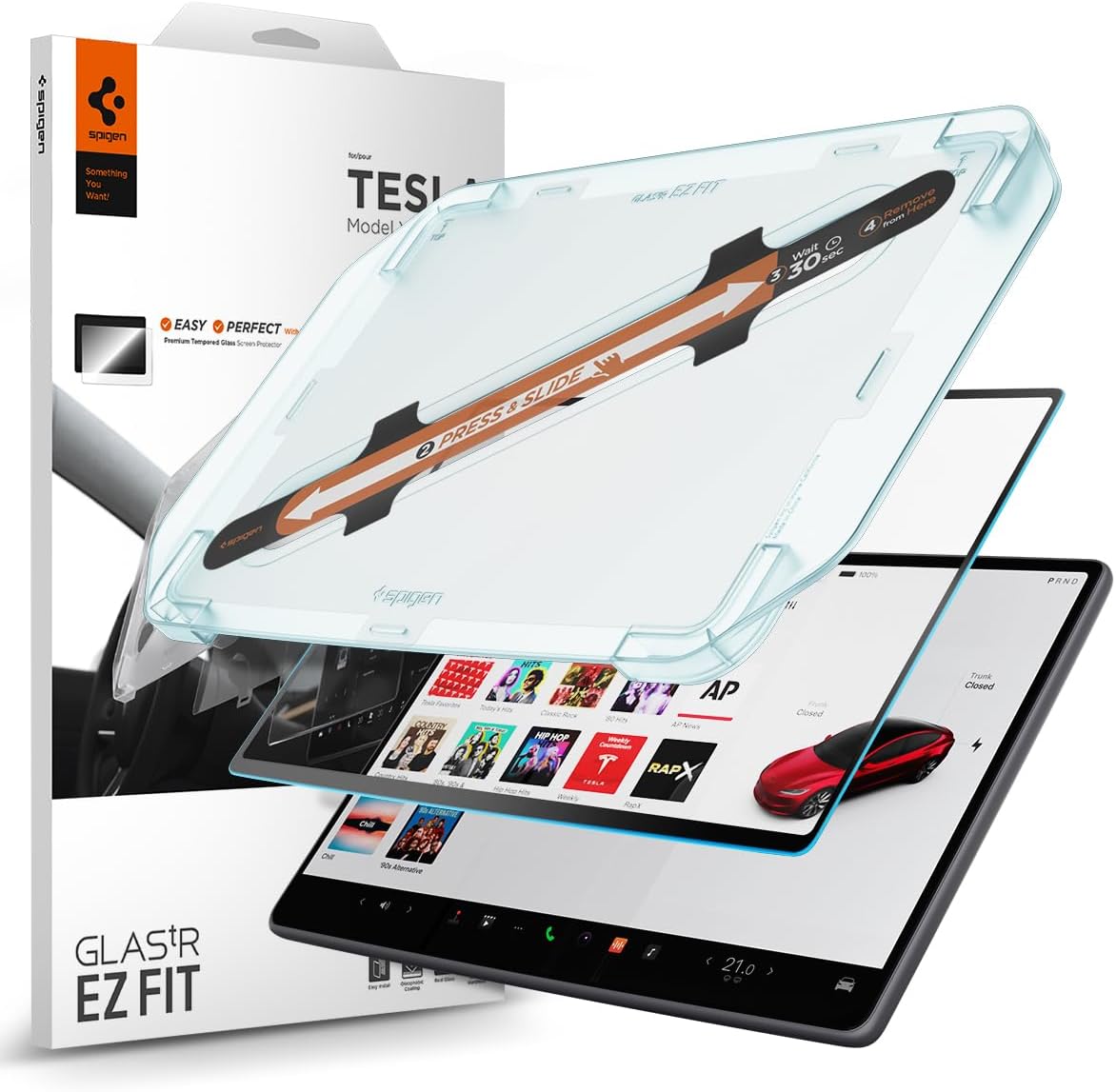
Spigen Tempered Glass for Tesla Model 3/Y
Tempered-glass protection for the touchscreen that kills fingerprints and scratches. Two minutes to install, lasts the life of the car.
As an Amazon Associate, ThinkEV earns from qualifying purchases — at no extra cost to you.
Insurance, True Cost, and the Number That Changes the Calculus
The price band is only part of the calculation, and the part that catches buyers off guard is on the insurance side. The most expensive insurance plans are in Alberta, with the Chery Omoda E5 estimated to cost between C$3,679 and C$5,019. The second-most expensive is also in Alberta, with the BYD Seal estimated at between C$3,679 and C$4,810.
That insurance figure is high. For context, an Alberta driver insuring a Tesla Model 3 typically pays in the $2,200 to $3,400 range for comparable coverage. The Seal's premium is structural, it reflects the absence of repair-cost data, the unknown availability of replacement parts, and the lack of a Canadian collision-repair network certified to handle BYD's CTB-integrated battery structure.
Repair-cost opacity is the underlying mechanic. Insurers price risk against actuarial certainty, and Chinese EVs in Canada have no actuarial history. The first 10,000 Seals to land in the country will, in effect, be paying the cost of generating that data on behalf of the buyers who come after. By year three, the insurance band should compress materially as parts supply normalises and certified body shops come online.
The five-year true-cost comparison shifts because of this. A $40,000 Seal Design with $4,000 annual insurance in Alberta carries a $200,000 total cost of ownership over five years before depreciation. An Equinox EV 1LT at $44,995 with $2,500 annual insurance carries a comparable figure once fuel savings and the $5,000 federal EVAP rebate are folded in. The Seal's price advantage at the sticker is real; the Seal's price advantage in the driveway is narrower.
The insurance premium is a temporary market inefficiency, not a permanent structural feature. The same dynamic played out with Hyundai-Kia twenty years ago, when Korean cars commanded an insurance penalty that disappeared as their parts networks matured. Buyers in 2027 and 2028 will benefit from the actuarial data the 2026 cohort generates, which is one of the quiet costs of being first.
For provincial buyers outside Alberta, Ontario, Quebec, BC, the insurance figures should run materially lower, but the same directional premium applies. Plan for a Seal that costs 15 to 30 per cent more to insure than its Korean or American competitor, and budget accordingly.
What the Price Band Means for the Canadian Market, Not Just BYD
A Seal Design at $38,000 to $42,000 CAD does not just create a new option for Canadian EV buyers. It forces a response from every incumbent operating in the $45,000 to $55,000 segment. The Chevrolet Equinox EV 1LT at $44,995, the Hyundai Ioniq 5 Standard Range at $54,999 and Kia EV6 Standard Range AWD at $54,995, these are the cars whose pricing was set on the assumption that no comparable Chinese vehicle would be available in Canada. That assumption is now wrong.
The Equinox EV looks most exposed. At $44,995 with $5,000 EVAP rebate eligibility, its effective price is around $40,000, directly in the Seal Design's band, but with a smaller motor (220 kW vs 230 kW), a more conventional 400V architecture, and no Blade Battery longevity story. GM will need to either move the Equinox down the price ladder or move the spec sheet up. Neither is cheap, and both will compress margin on a vehicle that GM has not yet proven it can sell at volume.
The Korean response is harder to predict because Hyundai-Kia operates with thinner natural margin than American or German competitors. Either company could choose to absorb a price cut rather than cede share, but the parent corporation's global margin discipline argues against it. More likely is a feature-content response, adding hardware that BYD's mass-market specification deliberately omits, and marketing the difference. Whether Canadian buyers pay for that hardware delta is the open question.
BYD's entry price signals an unmistakable strategy. This is not margin optimization; this is market-share buying. The Australian playbook is the same playbook, run a year earlier in a market with similar regulatory friction and similar dealer-network buildout costs. The timeline is accelerating. BYD is coming to Canada. The price band is the leading edge of a multi-model rollout that will eventually include the Atto 3, Dolphin, and Seagull at lower price points, each of which compresses a different segment of the incumbent market.
The Seal's Canadian debut is less about one model and more about whether the quota system becomes a permanent structural feature of the Canadian auto market. If the 49,000-unit quota grows on schedule and the 6.1 per cent tariff holds, Canada will have a permanent third tier of EV pricing, below the German premium tier, below the Korean-American mainstream tier, anchored by Chinese vehicles that operate on different supply-chain economics. That third tier reshapes affordability calculations across the entire EV transition.
Gear worth having
As an Amazon Associate, ThinkEV earns a small commission from qualifying purchases — at no extra cost to you.
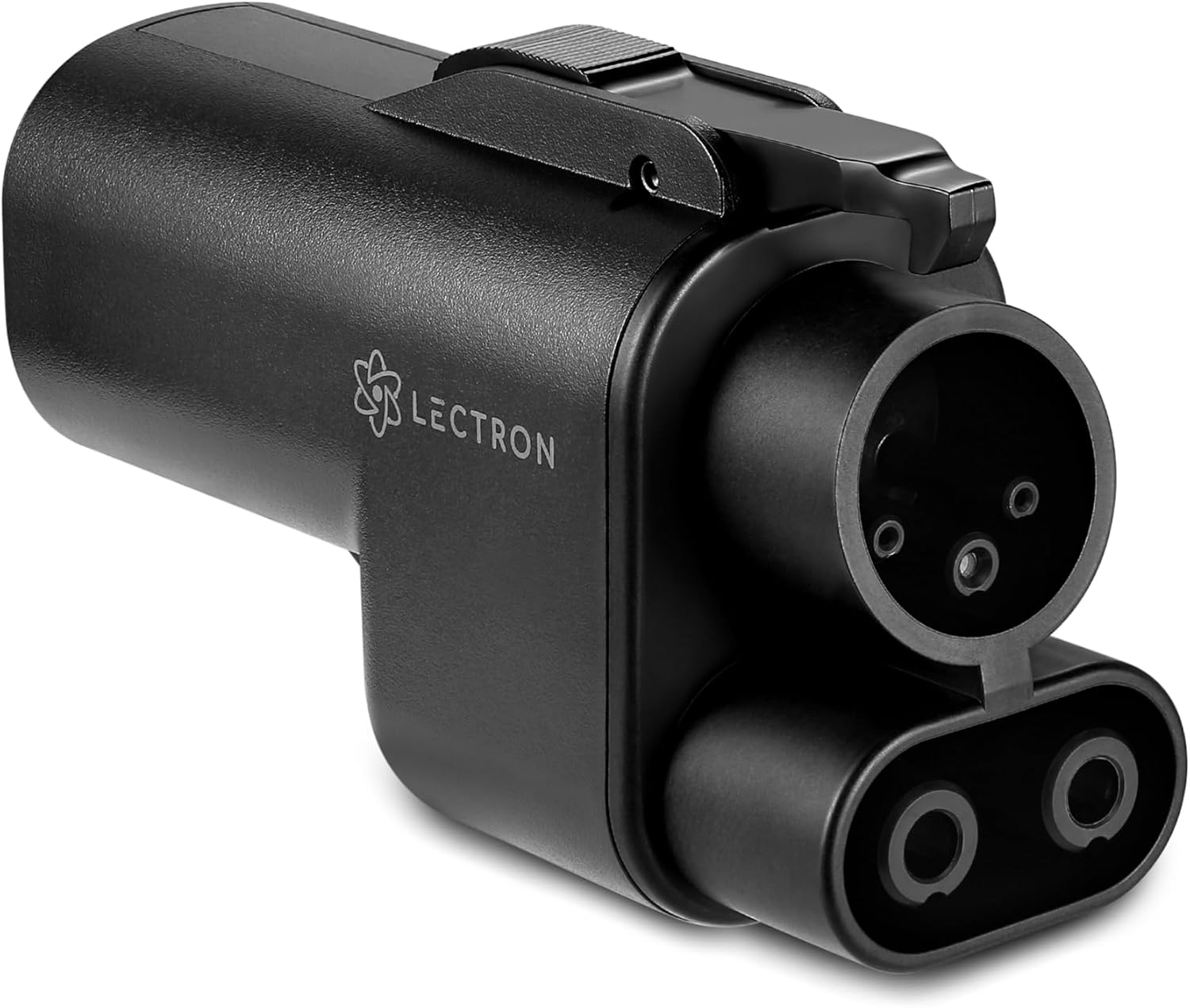
Lectron NACS to CCS Fast-Charge Adapter
Unlock every CCS fast charger for your Tesla, up to 500A DC. Never get stranded at a non-Tesla DC station again.
As an Amazon Associate, ThinkEV earns from qualifying purchases — at no extra cost to you.
The Defensible Band Is $38K To $42K
The defensible band for the BYD Seal in Canada is $38,000 to $42,000 CAD for the Design RWD and $47,000 to $51,000 CAD for the Excellence AWD, with the 6.1 per cent tariff baked in and the federal EVAP rebate excluded. The Alberta insurance premium is real, the quota timing matters more than the speculation suggests, and the engineering specification is mass-market by design, not premium-segment by aspiration.
The decision a buyer faces in 2026 is not really about the Seal. It is about whether to bet that the Chinese EV tier becomes permanent or temporary in Canada. A permanent tier means today's Seal is the first of many, and the second-mover Chinese brands will arrive with even sharper pricing as the quota grows. A temporary tier means the Seal is a four-year window before the political winds shift again, and buyers who delay may pay 100 per cent surtax pricing by 2030.
The data points toward permanence. The quota is scheduled to grow. The Australian and European markets have already absorbed BYD without macroeconomic disruption. The Canadian dealer applications are flowing. The bet to watch in the next twelve months is whether Hyundai-Kia or GM moves first on a structural price cut, that is the signal that the incumbents have read the Seal's specification and concluded it cannot be matched at the current margin structure.
If that price cut arrives, the Seal will have done its job before its first Canadian buyer has signed a delivery contract. If it does not arrive, the Seal will do that job one customer at a time, throughout 2026 and into 2027, at a price band that the incumbents cannot match without rebuilding their cost structures from the cell up.
Gear worth having
As an Amazon Associate, ThinkEV earns a small commission from qualifying purchases — at no extra cost to you.

Tesla Key Card Holder with AirTag Slot
Stop fishing the keycard out of your wallet, and slot an AirTag in case the car wanders off in a lot.
As an Amazon Associate, ThinkEV earns from qualifying purchases — at no extra cost to you.

Founder & Chief Editor
Vlad Pereira is the founder and chief editor of ThinkEV.ca, the Canadian electric-vehicle publication he writes and edits from Courtenay, British Columbia. He covers EV pricing, federal and provincial rebates, charging costs, and the Chinese manufacturers now entering Canada, from the buyer's side rather than the press-fleet side. ThinkEV is a venture of Vlad Pereira Online; his writing on health, income and the long game lives at vladpereira.com.
Frequently asked questions
Will early buyers get better pricing than those who wait?
Does the federal EV rebate apply to the BYD Seal?
Why does Australia's price matter more than China's?
How much does the 6.1% tariff actually add to the price?
Does the Excellence AWD trim justify its price premium over Design?
More EV & road-trip finds
Affordable upgrades worth a look — tap any to check the price on Amazon.
 ★ 2,941
Microfiber Cleaning Cloths (Multi-Pack)
View on Amazon ★ 314
★ 314Mini USB LED Ambient Lamps (4-Pack)
View on Amazon ★ 1,349
Cool Swinging Duck Dashboard Ornament
View on Amazon ★ 27,769
Car Cup Holder Coasters (4-Pack)
View on Amazon ★ 692
★ 692USB-A to USB-C CarPlay Adapter (3-Pack)
View on Amazon ★ 121
★ 121Foldable Windshield Sun Umbrella
View on Amazon ★ 268
★ 268Anti-Slip Leather Steering Wheel Cover
View on Amazon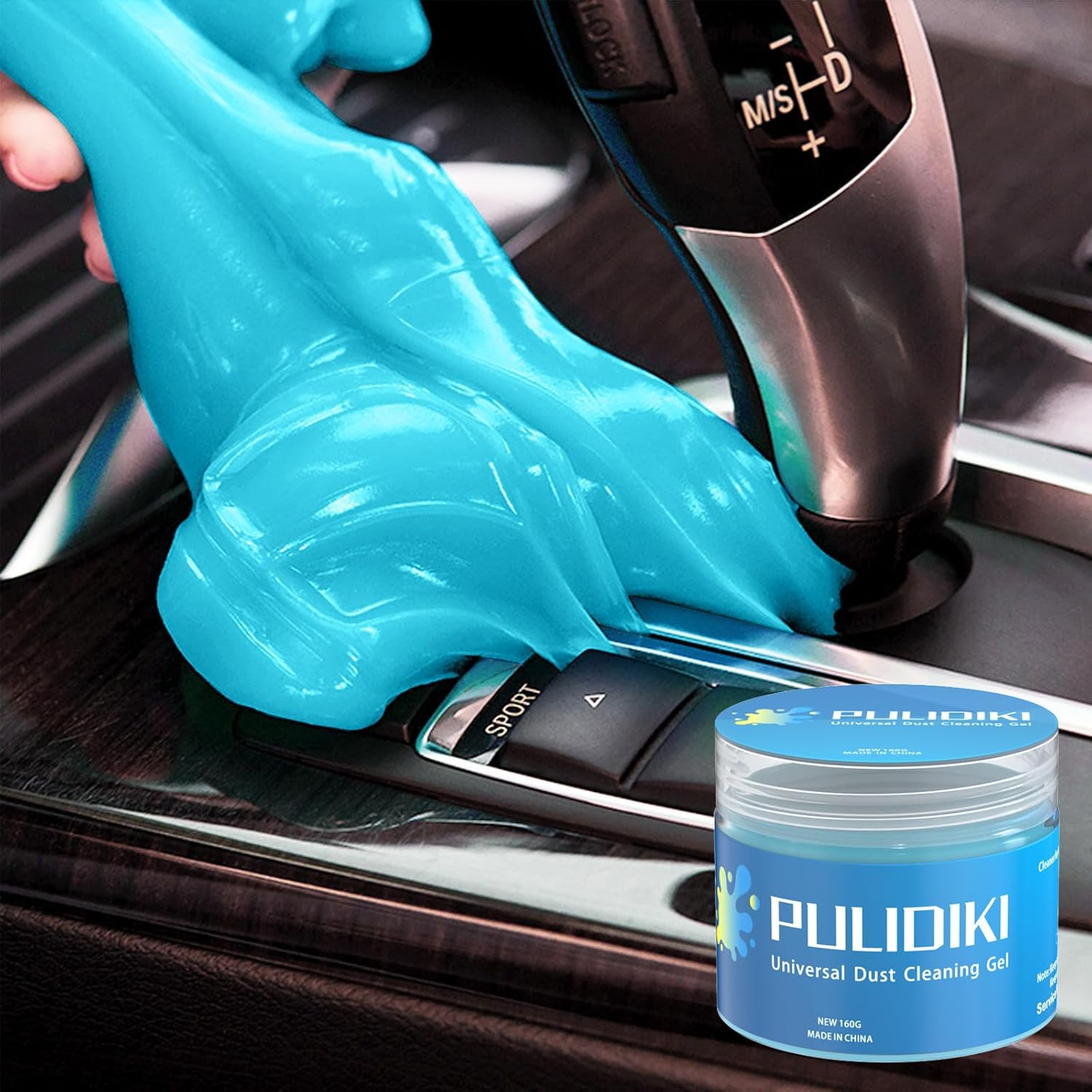 ★ 96,686
PULIDIKI Car Cleaning Gel (Detailing Putty)
View on AmazonRead, Plan, Then Stay Current
Explore our expert articles to understand incentives and ownership costs, use the map to pressure-test charging reality, then subscribe so new EV coverage comes straight to you.
Continue Reading
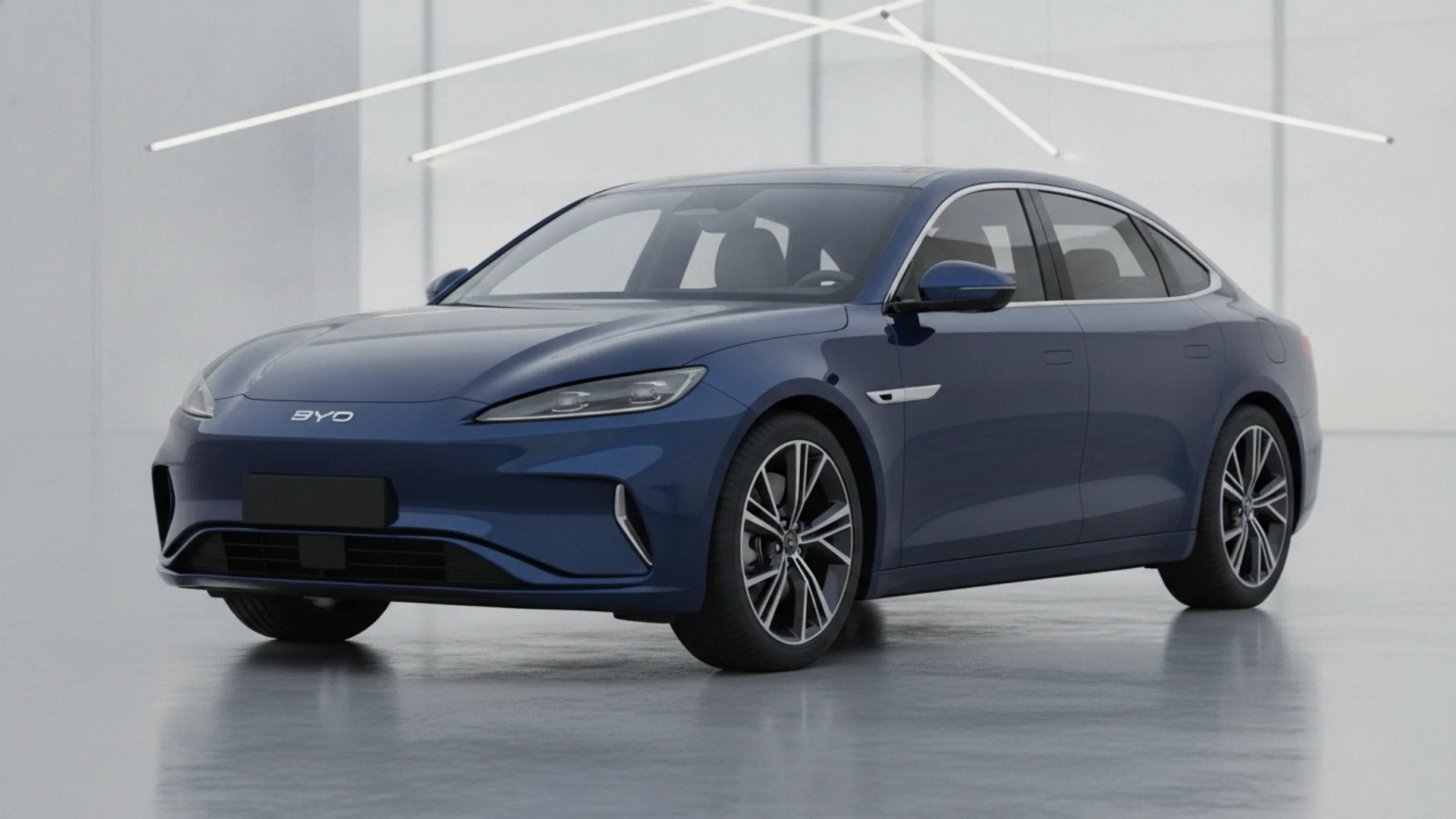
BYD Seal Canada: Demand Is Real, the Car Is Not Here
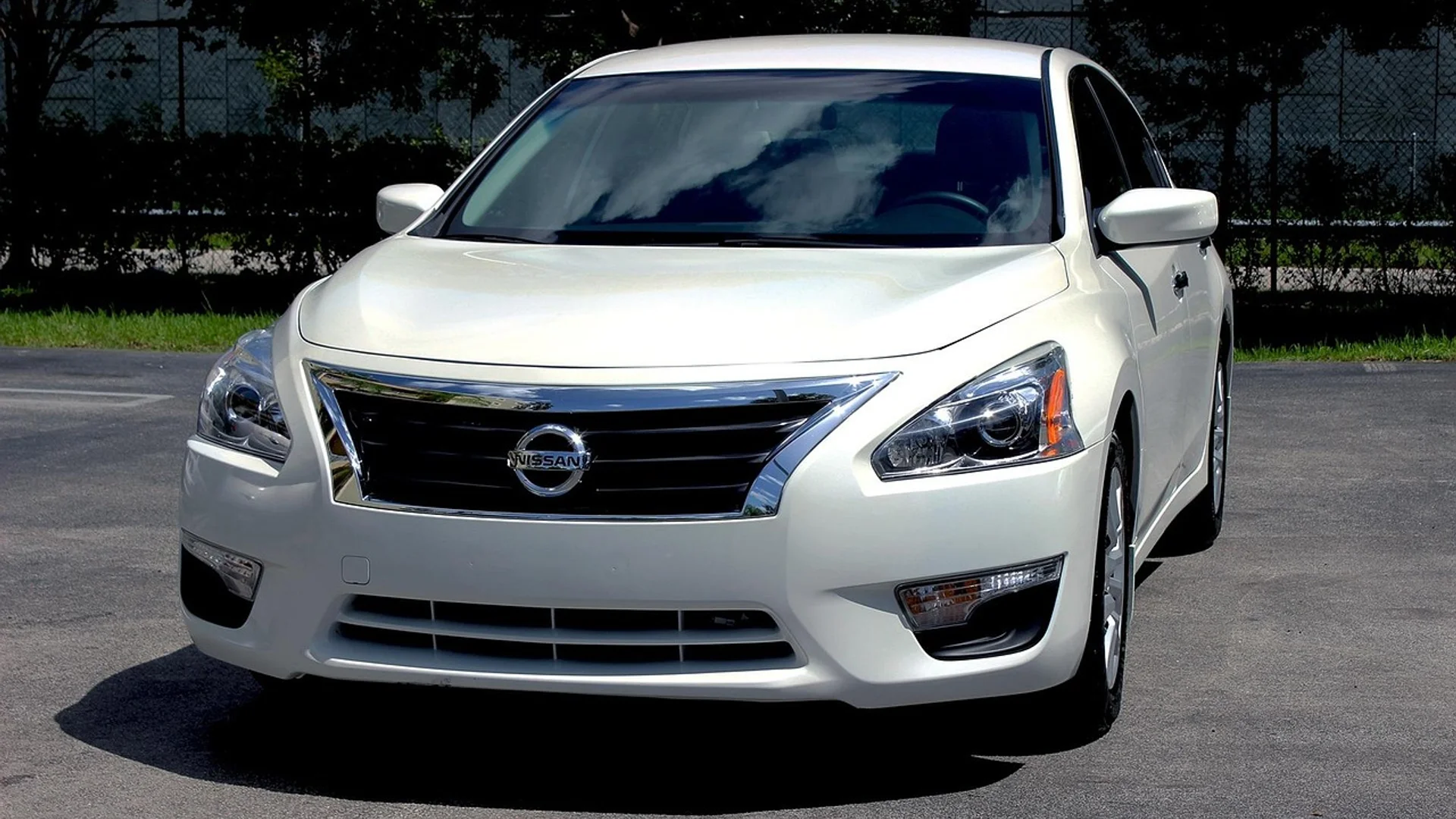
BYD in Canada: What You Can Buy and What It Costs
Shark 6 vs. the 49K Quota: BYD's Two-Year Window
BYD Seal Canada Price: $45K Sedan, Is It Worth It?
Which EVs Should Be Charged to 100%? The LFP Exception