
Key takeaways
- The $4,000 provincial rebate (reduced from $5,000 in June 2025) combined with the $5,000 federal EVAP gets PEI buyers to $9,000 off a new battery-electric vehicle.
- For context, a 2026 Chevy Equinox EV at $44,995 becomes $35,995 after both rebates.
- If Kia Canada prices the EV4 where early discussion suggests and the qualifying trim stays eligible, it could also land around the $30,000 mark after stacked rebates.
Prince Edward Island punches well above its weight on EV incentives, and it is not even close. This is a province of roughly 170,000 people, the smallest in Canada by both population and land area, and yet it has assembled one of the most competitive EV rebate stacks in the entire country. The $4,000 provincial rebate (reduced from $5,000 in June 2025) combined with the $5,000 federal EVAP gets PEI buyers to $9,000 off a new battery-electric vehicle. That ties Manitoba for the best incentive stack in Canada outside Quebec, and depending on how you calculate Quebec's declining Roulez vert payments, PEI might actually be better.
For context, a 2026 Chevy Equinox EV at $44,995 becomes $35,995 after both rebates. A Kia EV3 at $38,495 drops to $29,495. If Kia Canada prices the EV4 where early discussion suggests and the qualifying trim stays eligible, it could also land around the $30,000 mark after stacked rebates. That is a generational shift in affordability, and most Islanders do not even know it is happening.
Then there is the geography. PEI is 280 km long from Tignish to East Point. That is roughly the distance from Charlottetown to Moncton. Every modern EV on the market has at least 300 km of range, and most have 400 km or more. Range anxiety, the single biggest objection people raise about EVs, is literally a non-issue on Prince Edward Island. You could drive the entire length of the island, turn around, and drive most of the way back on a single charge. No other province in Canada offers such a perfect geographic match for electric driving.
The island's relatively compact highway network means public charging infrastructure does not need to be massive to be effective. It just needs to exist in a few strategic locations, and it does. Charlottetown, Summerside, Montague, and the Confederation Bridge area all have charging available. For the 90% of daily driving that happens within 50 km of home, a Level 2 charger in your garage handles everything.
And the operating costs tell the rest of the story. Maritime Electric's residential rate of $0.16-$0.18 per kWh means charging costs roughly $2.40-$2.70 per 100 km. Compare that to $13.20 per 100 km for gasoline at current prices. That is an 80% reduction in fuel costs, which translates to roughly $1,500 in annual savings for a driver covering 15,000 km. Over five years, add up the rebates and the fuel savings and you are looking at approximately $17,000 in total savings compared to buying and running a gas car. The math is overwhelming, and it works even with PEI's relatively higher electricity rates compared to Quebec or Manitoba.
Note: Tesla is excluded from PEI's provincial rebate. This is important and we will address it in detail below.
The province's EV adoption has been growing steadily, though it still lags behind Quebec and BC. Part of the challenge is awareness. Many Islanders do not know the provincial rebate exists, or assume it is harder to claim than it actually is. Others have heard vague rumours about range anxiety or winter performance that simply do not apply to PEI's geography and maritime climate. This guide is designed to fix that information gap, to lay out every dollar, every detail, and every practical consideration for buying and owning an EV on Prince Edward Island in 2026.
If you are an Islander sitting on the fence about going electric, the data is about to make your decision very easy.
THE PROVINCIAL REBATE
PEI's provincial EV rebate is $4,000 for new battery-electric vehicles. Until June 2025, it was $5,000. The reduction was disappointing but the program is still among the most generous provincial incentives in Canada, only Manitoba matches it at the provincial level, and most provinces offer nothing at all. Nova Scotia ended its rebate program entirely. New Brunswick offers just $2,500 for BEVs. Ontario, Alberta, and Saskatchewan offer zero. PEI is doing more with less, and credit where credit is due.
The rebate is administered through the province's Department of Environment, Energy and Climate Action. Unlike the federal EVAP, which is handled at the dealership, the PEI provincial rebate is applied for after you purchase the vehicle. You buy the car, take delivery, register it in PEI, and then submit your application with supporting documents. The rebate is paid directly to you, typically via cheque or direct deposit.
Here is what you need for the application:
- Proof of purchase (bill of sale or purchase agreement showing the vehicle details and price)
- Vehicle registration showing the vehicle is registered in PEI
- Proof of PEI residency (driver's licence, utility bill, or similar)
- Completed application form (available on the Department's website)
The application process is straightforward. There is no interview, no inspection, no complicated multi-step approval process. You submit the documents, the department reviews them, and if everything checks out, the money arrives in 4-6 weeks. Some applicants have reported faster turnaround times, particularly early in the fiscal year when the department is not yet dealing with high volume.
That brings up an important point: the program has a fixed annual budget. PEI does not have unlimited funds for EV rebates, the province allocates a specific amount each fiscal year, and once that allocation is exhausted, no more rebates are issued until the next fiscal year begins. This means applying early is wise. If you are planning an EV purchase, do not wait until November to start thinking about it. The early months of the fiscal year (April onward) are your best bet for ensuring funds are still available. As of early 2026, the program is still accepting applications and funds remain available, but there is no public dashboard tracking how much of the annual allocation has been spent.
Eligible vehicles include most mainstream battery-electric vehicles available through Canadian dealerships:
- Chevrolet Equinox EV
- Hyundai Kona Electric
- Hyundai Ioniq 5
- Hyundai Ioniq 6
- Kia EV3
- Kia EV4 (if and when Canadian pricing/eligibility are finalized as expected)
- Kia EV6
- Kia EV9
- Volkswagen ID.4
- Ford Mustang Mach-E
- Nissan Ariya
- Chevrolet Blazer EV
- And other BEVs from manufacturers with Canadian dealer networks

Tesla is excluded from PEI's provincial rebate. This is worth emphasizing because Tesla remains one of the most recognized EV brands, and many prospective buyers assume they can get the provincial rebate on a Model 3 or Model Y. You cannot. The exclusion applies to all Tesla models. If you buy a Tesla in PEI, you are limited to whatever federal incentives may apply (and as we will discuss below, most Tesla models also fail to qualify for the federal EVAP due to pricing). This Tesla exclusion is one of the key differentiators of PEI's program compared to Manitoba's, which does allow Tesla.
Plug-in hybrids (PHEVs) receive a reduced rebate, less than the $4,000 available for full BEVs. If you are buying a PHEV like the Toyota RAV4 Prime or Mitsubishi Outlander PHEV, check the current PHEV rebate amount on the department's website, as it has changed over time. Generally speaking, the rebate for PHEVs is roughly half the BEV amount.
Key restrictions:
- The vehicle must be new (used EVs do not qualify)
- The vehicle must be registered in PEI
- The applicant must be a PEI resident
- One rebate per household per calendar year
- BYD vehicles are not yet available in Canada as of March 2026, and Chinese-manufactured vehicles may face additional eligibility scrutiny due to federal trade policies
One rebate per household per calendar year is a meaningful limitation for multi-vehicle households. If both you and your spouse want to buy EVs, you will need to do so in separate calendar years to claim both rebates. Plan accordingly.
STACKING WITH FEDERAL EVAP
The real power of PEI's incentive package is the stack. The federal Electric Vehicle Affordability Program (EVAP) provides $5,000 for new battery-electric vehicles (or $2,500 for PHEVs) with a final transaction value under $50,000. Canadian-made vehicles, most notably the Chevrolet Equinox EV, which is assembled in Ingersoll, Ontario, have no price cap. Vehicles must be manufactured in Canada or free trade agreement (FTA) countries. Chinese-manufactured vehicles are excluded from EVAP. The EVAP rebate is applied at the point of sale by participating dealers, so you see the discount immediately, no separate application required.
The provincial $4,000 comes afterward as a direct payment. Together, you are looking at $9,000 off a new BEV. Let me walk through the math on several popular models to show exactly what this looks like for a PEI buyer walking into a dealership today.
Chevrolet Equinox EV, $44,995 MSRP
- Federal EVAP: -$5,000 (Canadian-made, no price cap applies)
- PEI provincial: -$4,000
- Net price: $35,995
The Equinox EV is arguably the best deal in the entire Canadian EV market right now, and it gets even better on PEI. At $35,995 after both rebates, you are paying less than a well-equipped Toyota RAV4 for a brand-new electric crossover with approximately 500 km of range. The fact that it is built in Ontario means it qualifies for EVAP regardless of trim or options, since the Canadian-made exemption eliminates the $50,000 price cap.
Hyundai Kona Electric, $42,999 MSRP
- Federal EVAP: -$5,000
- PEI provincial: -$4,000
- Net price: $33,999
The Kona Electric is Hyundai's entry-level BEV and it has been a consistent best-seller in the Atlantic provinces. At $33,999 after stacking, this is genuinely affordable transportation, cheaper than many new gas-powered crossovers on the lot beside it.
Kia EV3, $38,495 MSRP
- Federal EVAP: -$5,000
- PEI provincial: -$4,000
- Net price: $29,495
Under $30,000 for a new EV. That number deserves its own paragraph. The Kia EV3 after both PEI rebates costs less than a Kia Forte sedan. It has approximately 370 km of range, modern styling, and Kia's strong warranty. This is the kind of pricing that makes the gas-versus-electric debate completely irrelevant for Island buyers.
Kia EV4 - watchlist scenario
- If Canadian pricing lands around $38,995 and the qualifying trim remains EVAP-eligible: -$5,000 federal EVAP
- PEI provincial: -$4,000
- Plausible net price: about $29,995
The EV4 is expected to be Kia's sedan counterpart to the EV3, offering a similar value proposition in a sleeker package if Canadian specs and trims land as expected. But for PEI buyers, this should still be treated as a pricing scenario rather than a settled local retail fact until Kia Canada's trim sheet and dealer availability are locked.
Volkswagen ID.4, $44,995 MSRP
- Federal EVAP: -$5,000
- PEI provincial: -$4,000
- Net price: $35,995
The ID.4 offers a familiar European driving feel and solid range. At $35,995 it competes directly with the Equinox EV at the same post-rebate price point, giving PEI buyers real choice in the mid-$30,000 range.
Hyundai Ioniq 5, $47,999 MSRP (base)
- Federal EVAP: -$5,000 (base model qualifies under $50K cap)
- PEI provincial: -$4,000
- Net price: $38,999
The Ioniq 5 is a step up in size and features. The base model squeezes under the $50,000 EVAP cap, but be careful with options, higher trims can push past the threshold and lose the federal rebate entirely. The provincial $4,000 still applies regardless.
Gear worth having
As an Amazon Associate, ThinkEV earns a small commission from qualifying purchases — at no extra cost to you.

Grizzl-E Classic Level 2 EV Charger (40A)
Canadian-made and rated for minus 40C winters. 40A / 9.6 kW, NEMA 14-50, indoor/outdoor, 24-ft cable. The charger built for Canadian weather.
As an Amazon Associate, ThinkEV earns from qualifying purchases — at no extra cost to you.
The Tesla situation. Tesla is excluded from PEI's provincial rebate, full stop, all Tesla models, regardless of price. On the federal EVAP side, the situation is now partial: the Tesla Model Y RWD base ($49,990) is on Transport Canada's official EVAP eligible vehicle list and qualifies for the $5,000 federal rebate, provided dealer fees do not push the final transaction value over $50,000.
Higher Model Y trims (Long Range AWD at $59,990, Performance at $69,990) and all Model 3 trims ($54,990+) still exceed the cap and do not qualify for EVAP. So a PEI buyer choosing the base Model Y RWD can get the $5,000 federal rebate but still misses the $4,000 provincial rebate, netting $5,000 total vs. $9,000 for a qualifying non-Tesla. On higher Tesla trims, you get zero incentives. That gap should factor heavily into any purchase decision.
Application order matters. The federal EVAP is applied at the dealership at the time of purchase, your dealer handles the paperwork. The PEI provincial rebate is applied for separately after you take delivery and register the vehicle. You do not need to wait for one to be processed before applying for the other. Buy the car with the EVAP discount applied, drive it home, register it, and then submit your provincial rebate application immediately. The two programs operate independently and there is no conflict or sequencing requirement.
Best strategy for maximizing savings: Choose a vehicle that qualifies for both the full $5,000 EVAP and the $4,000 PEI rebate. Focus on models priced between $38,000 and $50,000 MSRP (or Canadian-made models at any price). Avoid Tesla. Avoid loading up options that push the transaction value past $50,000 unless the vehicle is Canadian-made. Apply for the provincial rebate early in the fiscal year. That is the playbook.
For a full breakdown of the federal program, including eligible models and pricing thresholds, see our complete guide to the federal EVAP.
CHARGING ON THE ISLAND
PEI's charging infrastructure has improved significantly over the past two years, and while it is not as dense as what you will find in Montreal or Vancouver, it does not need to be. The island's compact geography means a relatively small number of well-placed chargers covers the entire province effectively.
As of early 2026, PEI has over 40 public Level 2 chargers and a growing number of DC fast chargers (DCFC) positioned along the Trans-Canada Highway and in the province's three main population centres: Charlottetown, Summerside, and Montague.
Charlottetown has the highest concentration of public charging, as you would expect from the capital and largest city. Level 2 chargers are available at several locations including shopping centres, municipal parking areas, and hotel properties. DC fast charging is available along the Trans-Canada corridor approaching the city, allowing highway travellers to top up quickly. For residents, these public chargers serve as convenient backup, most Charlottetown EV owners charge at home overnight and rarely need public infrastructure for daily driving.
Summerside has expanded its public charging offerings, with Level 2 chargers available at municipal facilities and commercial properties. Summerside is notable because the city operates its own electric utility (Summerside Electric) rather than Maritime Electric, which can result in slightly different electricity rates for residents. The charging infrastructure in Summerside adequately serves the city's growing EV population.
Montague and Eastern PEI have fewer public chargers, but the demand is also lower. The key DCFC stations along the Trans-Canada Highway between Charlottetown and the Wood Islands ferry terminal serve this area. For eastern PEI residents, home charging is even more important, but the distances involved are short enough that any modern EV handles them effortlessly.
The Confederation Bridge corridor deserves specific mention. The bridge connects PEI to New Brunswick and is the primary land link to the rest of Canada. Charging is available on the PEI side of the bridge, which is critical for visitors arriving from New Brunswick and for Islanders who have just crossed back from the mainland. Coming back from Moncton (roughly 200 km from Charlottetown via the bridge), even a modest-range EV can make the trip without stopping, but having DCFC available at the bridge approach provides peace of mind. The New Brunswick side also has charging infrastructure in the Aulac/Sackville area, creating a functional charging corridor across the strait.
The Trans-Canada Highway through PEI, which is really just Route 1 from Borden-Carleton (the bridge) through Charlottetown to the eastern end of the island, has charging stations at strategic intervals. The total distance from the bridge to Charlottetown is about 60 km, and from Charlottetown to the far eastern communities is another 80-100 km. These are trivial distances for any modern EV, but having DCFC along the route means even older or shorter-range EVs can travel the full island highway without concern.
Home charging is king on PEI. This cannot be overstated. For the vast majority of PEI EV owners, a Level 2 home charger is the only charging infrastructure they will regularly use. A Level 2 charger (240V, 32-48 amp) delivers a full overnight charge for virtually any EV on the market. You plug in when you get home, wake up with a full battery, and never think about public charging for your daily driving. A typical home charge on a 60 kWh battery costs roughly $9.60-$10.80 at Maritime Electric's residential rate, less than a single fill-up at a gas station by a factor of five or more.
The cost of purchasing and installing a Level 2 home charger typically runs $1,500-$2,500 including the charger unit and electrical work. PEI does not currently offer a provincial rebate for charger installation, so this is an out-of-pocket expense. However, it is a one-time cost that pays for itself within the first year through fuel savings. For detailed guidance on home charger installation, see our Level 2 charger installation guide.

Workplace and destination charging is growing on PEI. Several hotels, restaurants, and shopping centres in Charlottetown now offer Level 2 charging for customers and guests. Some employers have installed chargers in employee parking areas. This kind of top-up charging is a nice-to-have, it lets you grab 30-50 km of range while you are at work or having dinner, but it is not essential. The reality is that home charging covers 90% or more of a PEI EV owner's needs, and the compact island geography means the remaining 10% is easily handled by the existing public network.
A note on charging networks: PEI's public chargers are operated by a mix of providers including FLO, ChargePoint, and some locally managed stations. Download multiple charging apps to ensure you can access any station. Most newer chargers also accept contactless credit card payment, reducing the need for specific network memberships.
For a broader look at charging costs across the country, see our provincial charging cost comparison.
ELECTRICITY COSTS
Maritime Electric charges approximately $0.16-$0.18 per kWh for residential customers. This is a flat rate structure, there is no time-of-use pricing on PEI. That means it costs the same to charge your EV at 2:00 AM as it does at 6:00 PM. This is actually a minor advantage over provinces like Ontario, where time-of-use rates create pressure to charge during off-peak hours. On PEI, you plug in whenever you get home and forget about it. No scheduling, no timers, no worrying about peak rates.
How does PEI's electricity rate compare to other provinces?
- Quebec (Hydro-Quebec): $0.07-$0.09/kWh, the cheapest in Canada by far
- Manitoba (Manitoba Hydro): $0.09-$0.10/kWh, nearly as cheap as Quebec
- British Columbia (BC Hydro): $0.09-$0.13/kWh, competitive thanks to hydroelectric generation
- Ontario (various): $0.08-$0.17/kWh, depends on time-of-use tier, off-peak can be very low
- New Brunswick (NB Power): $0.13-$0.15/kWh, slightly cheaper than PEI
- Nova Scotia (Nova Scotia Power): $0.17-$0.18/kWh, essentially the same as PEI
- Alberta (various retailers): $0.12-$0.20/kWh, volatile, depends on market conditions
PEI sits in the upper tier of Canadian electricity rates, alongside Nova Scotia. You are paying roughly double what a Quebec or Manitoba resident pays per kWh. That matters for your annual charging bill, but it does not change the fundamental equation. Even at PEI's rates, electricity is dramatically cheaper than gasoline for transportation.
Let me break down the actual numbers for a typical PEI EV owner:
Cost per 100 km:
- EV at 15 kWh/100 km consumption, $0.17/kWh rate: $2.55 per 100 km
- Gas car at 8L/100 km consumption, $1.65/L: $13.20 per 100 km
- Savings: $10.65 per 100 km (81% reduction)
Monthly cost (1,250 km/month, 15,000 km/year):
- EV: $31.88 per month
- Gas car: $165.00 per month
- Monthly savings: $133.13
Annual cost (15,000 km):
- EV: $382.50 per year
- Gas car: $1,980.00 per year
- Annual savings: $1,597.50
Yes, charging on PEI costs more than charging in Quebec, where the same 15,000 km would cost roughly $157 per year. But the comparison that matters is not PEI electricity versus Quebec electricity, it is PEI electricity versus PEI gasoline. And that comparison is overwhelmingly in the EV's favour.
Over five years and 75,000 km, the fuel savings alone total approximately $7,988-$8,100. Add the $9,000 in upfront rebates and you are looking at approximately $17,000 in total savings compared to buying and fuelling a gas car. That is real money. That is a kitchen renovation. That is two years of property taxes for many Island homeowners. The math is overwhelming, even with PEI's relatively higher electricity rates, and it gets better every time gas prices spike.
Gear worth having
As an Amazon Associate, ThinkEV earns a small commission from qualifying purchases — at no extra cost to you.
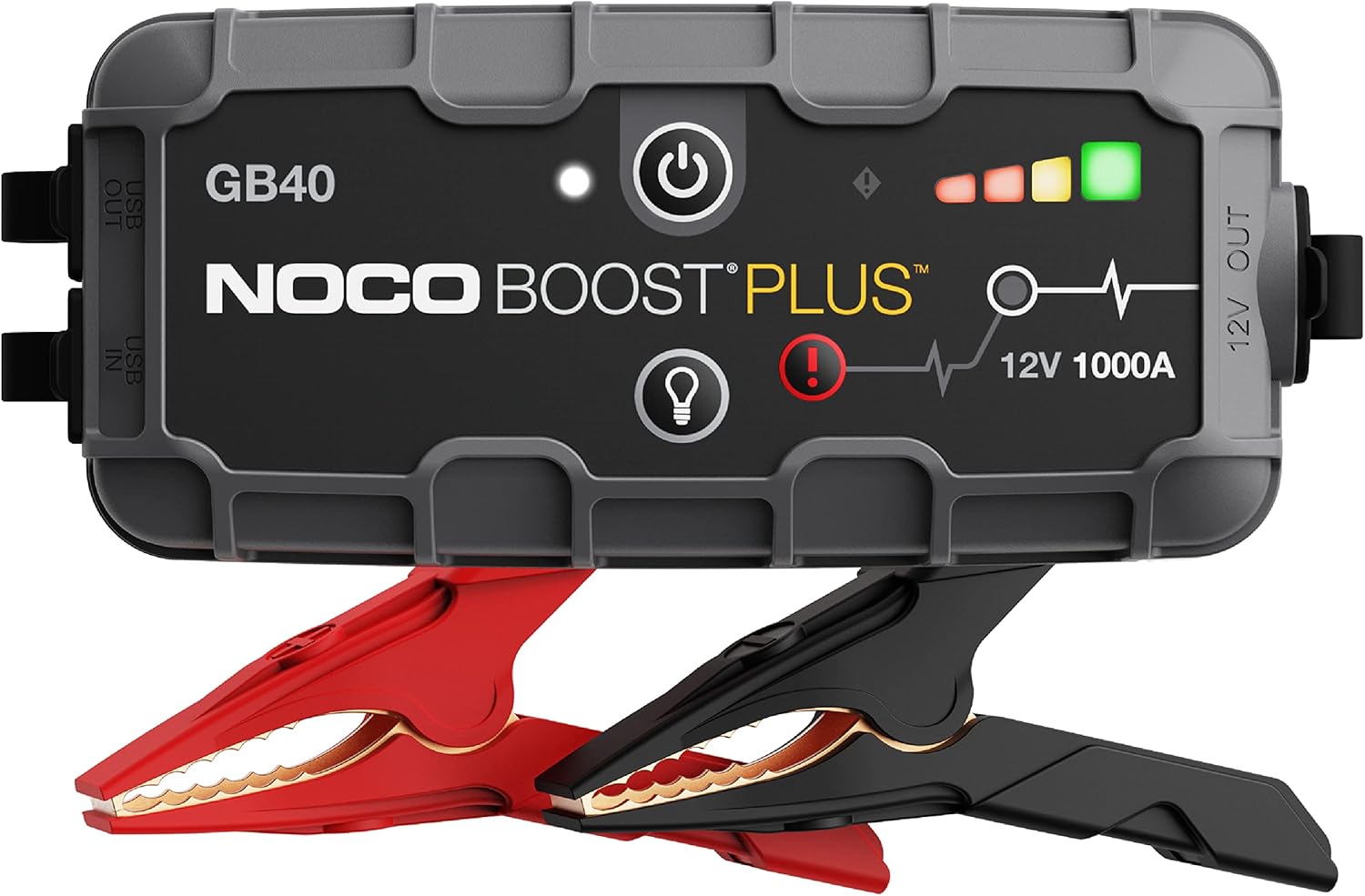
NOCO Boost Plus GB40 Jump Starter
A 1000A lithium jump starter that fits in your glovebox and works on any 12V battery. Your insurance against a dead 12V in a parking lot.
As an Amazon Associate, ThinkEV earns from qualifying purchases — at no extra cost to you.
One more consideration: Maritime Electric's rates have been relatively stable compared to the volatile price of gasoline. Your EV charging cost is predictable month to month and year to year. Your gas cost is a dice roll tied to global oil markets, OPEC decisions, pipeline disputes, refinery outages, and carbon tax adjustments. The stability of electricity pricing is an underrated benefit of EV ownership, particularly for budget-conscious families.
WHY PEI IS PERFECT FOR EVS
I have covered EV incentives for every province in Canada, and I can say this without hesitation: Prince Edward Island may be the single best geography for EV ownership in the entire country. Not because of the rebates (though those are excellent) and not because of electricity costs (those are merely okay). PEI is perfect for EVs because the island's physical characteristics eliminate virtually every argument against going electric.
The island is 280 km long. That is the total distance from Tignish at the western tip to East Point at the eastern tip. Most PEI residents live within 30-40 km of Charlottetown. The vast majority of daily driving on PEI, commutes, errands, school runs, hockey practice, happens within a 50 km radius. Even the cheapest modern EV has more than enough range to handle a week of PEI driving on a single charge. Range anxiety is not a minor concern here, it is a complete non-issue.
Daily driving patterns match EVs perfectly. PEI has no true long-distance commutes by Canadian standards. A Charlottetown-to-Summerside commute is about 60 km each way, 120 km round trip. That is a hefty commute by Island standards, but an EV with 400 km of range handles it for three consecutive days before needing a charge. Most Islanders drive far less than that. A typical daily round trip of 30-50 km uses less than 15% of a modern EV's battery capacity. You charge once or twice a week and forget about it.
Off-island travel is manageable. The only way off PEI by car is the Confederation Bridge to New Brunswick (or the Wood Islands ferry to Nova Scotia in season). Moncton is roughly 200 km from Charlottetown via the bridge, well within the range of any modern EV. Halifax is about 300 km from the bridge, achievable with one quick DCFC stop. Fredericton is about 350 km. These are all comfortable single-charge or one-stop trips. You are not driving to Thunder Bay. You are not crossing Saskatchewan. The distances that Atlantic Canadians actually drive align beautifully with EV range capabilities.
The ferry routes work fine. The Wood Islands-Caribou ferry to Nova Scotia is a 75-minute crossing. Your EV sits on the ferry consuming zero energy. You arrive in Caribou, Nova Scotia with the same state of charge you had when you drove onto the ferry in PEI. From Caribou, Halifax is about 290 km, a single charge for most EVs, or one quick DCFC stop for shorter-range models. The ferry is actually an EV advantage, not a disadvantage, you get a built-in rest stop without using any range.
Gear worth having
As an Amazon Associate, ThinkEV earns a small commission from qualifying purchases — at no extra cost to you.

PULIDIKI Car Cleaning Gel (Detailing Putty)
Press it into vents, buttons, and seams and it lifts out dust you did not know was there. Weirdly satisfying, genuinely useful.
As an Amazon Associate, ThinkEV earns from qualifying purchases — at no extra cost to you.
There are no mountain passes. PEI is flat. The highest point on the island is roughly 152 metres above sea level. There are no steep highway grades draining your battery, no mountain passes requiring sustained climbing in winter conditions. Your real-world efficiency on PEI will closely match the manufacturer's rated range, because you are driving on flat terrain in all conditions. Compare that to BC, where mountain driving can reduce range by 15-20%, or Alberta, where elevation changes on Highway 2 affect consumption noticeably. On PEI, what the sticker says is essentially what you get.
Population density supports infrastructure. Despite being Canada's smallest province, PEI has the highest population density (approximately 28 people per square kilometre). This means the charging infrastructure that does exist serves a concentrated population effectively. You do not need charging stations every 50 km along a 1,000 km empty highway, you need them in three or four towns that account for 80% of the island's population. That is exactly what PEI has.
The combination of short distances, flat terrain, concentrated population, and manageable off-island trips makes PEI arguably the easiest place in Canada to own an EV. The only province that comes close in geographic suitability is Nova Scotia's Halifax Regional Municipality specifically, but Nova Scotia as a whole has much longer inter-city distances and, critically, worse incentives.
WINTER DRIVING ON PEI
Winter range loss is the second-most-common concern about EVs after range anxiety, and on PEI, the news is better than most people expect. PEI's maritime climate produces significantly milder winters than central and western Canada, and that difference has a direct, measurable impact on EV performance.
PEI winter temperatures versus the prairies:
- PEI typical January: -5 to -15C, with occasional dips to -20C
- Winnipeg typical January: -15 to -25C, with regular dips to -35C or colder
- Edmonton typical January: -10 to -25C, with wind chills to -40C
- PEI wind chill factor: significant due to ocean winds, but absolute temperatures stay milder
What this means for range: EV batteries lose efficiency in cold weather. The colder it gets, the more range you lose. At -10C, a typical modern EV loses roughly 15-20% of its rated range. At -20C, that loss increases to 25-30%. At -35C (common on the prairies), range loss can hit 35-40%. PEI rarely sees sustained temperatures below -15C, which means Island EV owners experience range loss in the 15-25% range for most of the winter, significantly less than what prairie drivers deal with.
In practical terms, an EV rated at 400 km of range will deliver roughly 300-340 km in a typical PEI winter. On a day when Winnipeg EV owners are getting 240-260 km from the same vehicle, you are getting an extra 60-80 km. That is the maritime climate advantage, and it is substantial.
Preconditioning is your best friend. Every modern EV allows you to precondition the cabin and battery while the vehicle is still plugged in at home. On a cold PEI morning, you start the preconditioning from your phone 20-30 minutes before you leave. The car warms the cabin to your preferred temperature and brings the battery to optimal operating temperature, all using grid power, not battery power. You walk out to a warm car with a full battery and maximum efficiency. Gas car owners are scraping windshields and waiting for their engines to warm up. You are already comfortable and losing zero range to the warm-up process.
Winter tires are mandatory on PEI from November 1 to May 31. This applies to all vehicles, not just EVs. Winter tires do slightly increase rolling resistance, which reduces EV range by a small amount (roughly 3-5%). This is the same for gas cars, they just burn more fuel, which you notice at the pump instead of on a range display. The safety benefit of winter tires far outweighs any efficiency penalty.
Salt and corrosion. PEI roads are heavily salted in winter, and the maritime environment adds salt spray to the air year-round. This is a legitimate concern for any vehicle, gas or electric. EVs have an advantage here: their battery packs and undercarriage components are sealed and coated against corrosion. There are no exhaust systems, mufflers, or fuel lines to corrode. The main vulnerability is the same as any car, wheel wells, brake rotors (though EVs use regenerative braking and barely touch the brake pads), and body panels. Regular undercarriage washing throughout winter is good practice for any vehicle on PEI, electric or otherwise.
Regenerative braking in winter. In cold conditions, regenerative braking effectiveness is reduced until the battery warms up. On the first few minutes of a cold-start drive, you may notice the regen braking feels weaker than usual. This is normal and resolves as the battery temperature rises. Preconditioning eliminates this entirely. On PEI's flat terrain, this is a minor consideration, regen braking matters more in hilly environments where you are capturing energy on descents.
The bottom line on PEI winters: this is not northern Ontario. This is not Yellowknife. PEI's maritime climate delivers milder sustained temperatures than most of inland Canada, and modern EVs handle PEI winters with minimal range compromise. A 400 km EV gives you 300+ km in the coldest conditions, more than enough for any conceivable daily driving pattern on the island. If Islanders in Churchill, Manitoba and Whitehorse, Yukon are driving EVs successfully through -40C winters, PEI's -15C January is genuinely not a problem.
BEST EVS FOR PEI BUYERS
With $9,000 in stacked rebates available, PEI buyers have access to some of the lowest effective EV prices in Canada. Here are the top five vehicles that maximize value for Island buyers in 2026, ranked by post-rebate price.
1. Kia EV3, $29,495 after rebates
- MSRP: $38,495
- Range: ~370 km
- Why it works: The cheapest new EV you can buy on PEI after rebates. Sub-$30,000 for a brand-new electric crossover with solid range, modern tech, and Kia's industry-leading warranty. The EV3's compact size is ideal for Charlottetown and Summerside, and 370 km of range covers the entire island with margin. This is the value champion for PEI buyers.
2. Watchlist: compact electric sedans around $30,000 after rebates
If Kia Canada lands EV4 pricing where early reporting suggests and the qualifying trim stays EVAP-eligible, PEI is one of the places where the rebate stack could make that class extraordinarily compelling. Treat that as a likely pricing scenario rather than a locked local sticker.
3. Hyundai Kona Electric, $33,999 after rebates
- MSRP: $42,999
- Range: ~418 km
- Why it works: The Kona Electric has been one of the most popular EVs in Atlantic Canada since its launch, and for good reason. It is a proven, reliable small crossover with excellent range and a strong dealer network on PEI. At $33,999 it is priced like a well-equipped gas-powered Kona, making it an easy cross-shop for buyers already considering a Hyundai.
4. Chevrolet Equinox EV, $35,995 after rebates
- MSRP: $44,995
- Range: ~500 km
- Why it works: Built in Canada (Ingersoll, Ontario), which means it qualifies for EVAP regardless of price. The Equinox EV offers the best range of any vehicle on this list and delivers genuine crossover utility, spacious interior, good cargo capacity, and a driving experience that feels familiar to anyone coming from a gas-powered SUV. At $35,995 it competes with the Toyota RAV4 and Honda CR-V on price while eliminating fuel costs. For families, this may be the best overall choice.
5. Volkswagen ID.4, $35,995 after rebates
- MSRP: $44,995
- Range: ~443 km
- Why it works: The European alternative at the same post-rebate price as the Equinox EV. The ID.4 offers a refined driving experience, solid build quality, and VW's strong dealer service network. Slightly less range than the Equinox EV but still more than adequate for PEI driving. A good choice for buyers who prefer European engineering.
Honourable mention: Hyundai Ioniq 5, $38,999 after rebates (base model). A larger, more premium option for buyers who want more space and 800V architecture for ultra-fast charging. The base model qualifies for the full $9,000 stack, but watch the options, higher trims can push past the $50,000 EVAP threshold.
All five of these vehicles have dealer representation in or near PEI (Charlottetown dealers carry most Korean and domestic brands), and all qualify for the full $9,000 rebate stack. If you are an Islander looking to go electric in 2026, start your search with this list.
USED EVS ON PEI
Neither the PEI provincial rebate nor the federal EVAP applies to used electric vehicles. If you buy a pre-owned EV, you get zero rebates. That is a significant disadvantage compared to buying new, where $9,000 in incentives can dramatically alter the equation.
That said, the used EV market on PEI and in Atlantic Canada has grown substantially, and the operating cost savings still make used EVs an attractive proposition even without rebate support.
What is available on the used market:
-
2019-2022 Nissan Leaf: $18,000-$24,000. Range: 240-370 km depending on model year and battery size. The Leaf was one of the first widely available EVs in Canada and there are plenty of used units circulating in the Maritimes. Older models (40 kWh battery) have roughly 240 km of range, perfectly adequate for PEI driving but tight for off-island trips without stops.
-
2020-2023 Hyundai Kona Electric: $26,000-$32,000. Range: 380-418 km. These are excellent used buys, strong range, proven reliability, and the Hyundai dealer network provides accessible service on PEI.
-
2019-2022 Chevrolet Bolt EV: $22,000-$28,000. Range: 380-417 km. The Bolt was discontinued and then revived, and used units offer tremendous value. Range is excellent for the price, and the compact size suits Island driving. Battery recall replacements on older models mean many used Bolts are effectively running new batteries.
-
2021-2023 Tesla Model 3: $35,000-$42,000. Range: 430-580 km depending on variant. Yes, Tesla is excluded from PEI's provincial rebate for new vehicles, but that does not matter for used purchases since neither program covers used vehicles anyway. A used Model 3 offers outstanding range and access to Tesla's Supercharger network, which has limited but growing presence in Atlantic Canada.
-
2022-2024 Kia EV6: $34,000-$40,000. Range: 450-500 km. The EV6 is a premium offering on the used market, with 800V architecture, excellent range, and a spacious interior. Less common in Atlantic Canada than Kona or Bolt units but worth seeking out.
The operating cost case for used EVs: Even without rebates, a used EV saves money every single day through lower fuel and maintenance costs. A used Kona Electric at $28,000 versus a used RAV4 at $28,000, same purchase price, but the Kona costs $2.55 per 100 km to drive versus $13.20 for the RAV4. Over five years and 75,000 km, that is roughly $8,000 in fuel savings. Add lower maintenance costs (no oil changes, no transmission service, longer brake life) and the used EV likely saves $10,000-$12,000 over a five-year ownership period. The rebates would be nice, but the economics work without them.
Where to find used EVs on PEI: The PEI used EV market is small, you will likely need to expand your search to Moncton, Halifax, and potentially Montreal to find the best selection and pricing. Shipping or driving a used EV from Montreal to PEI is straightforward and the broader market access gives you better negotiating leverage. Check AutoTrader, Kijiji, and dealer inventory listings across the Maritimes.
Battery health on used EVs: When buying used, battery state of health (SoH) is the most important metric. Ask the seller for a battery health report or have an independent technician check it. Most EVs retain 85-95% of original battery capacity after 5-7 years of normal use. On PEI's flat terrain with moderate climate, battery degradation tends to be at the lower end of that range, the island's conditions are gentle on batteries compared to extreme heat (the real enemy of lithium-ion longevity).
For more on the used EV market, see our guide to the used EV boom in Canada.
5-YEAR COST COMPARISON
Numbers talk. Let me run two detailed total cost of ownership comparisons using PEI-specific data, the electricity rates, the rebates, the actual driving distances Islanders deal with.
Comparison 1: compact electric sedan scenario vs. Toyota Corolla
A compact electric sedan landing around $29,995 after PEI's stacked rebates:
- Net purchase: about $29,995
- Annual electricity (15,000 km at $2.55/100 km): $382.50
- 5-year electricity: $1,912.50
- Annual maintenance (tires, washer fluid, cabin filter, brake check): $400
- 5-year maintenance: $2,000
- Insurance (estimated, PEI): $1,400/year x 5 = $7,000
- 5-year total cost: about $40,907.50
Toyota Corolla:
- Purchase price: $26,990
- Rebates: $0
- Net purchase: $26,990
- Annual fuel (15,000 km at $13.20/100 km, 6.7L/100 km combined at $1.65/L): $1,659.00
- 5-year fuel: $8,295.00
- Annual maintenance (oil changes, filters, brakes, transmission service): $800
- 5-year maintenance: $4,000
- Insurance (estimated, PEI): $1,300/year x 5 = $6,500
- 5-year total cost: $45,785.00
5-year advantage for the EV scenario: about $4,877.50
The scenario EV costs more upfront than the Corolla if pricing lands here, but still saves materially in fuel and maintenance over five years.
Comparison 2: Chevrolet Equinox EV vs. Toyota RAV4
This is the crossover comparison, the two most practical family vehicles in their respective fuel categories.
Chevrolet Equinox EV:
- Purchase price: $44,995
- Federal EVAP: -$5,000 (Canadian-made, no cap)
- PEI provincial: -$4,000
- Net purchase: $35,995
- Annual electricity (15,000 km at $2.70/100 km): $405.00
- 5-year electricity: $2,025.00
- Annual maintenance: $450
- 5-year maintenance: $2,250
- Insurance (estimated, PEI): $1,500/year x 5 = $7,500
- 5-year total cost: $47,770.00
Toyota RAV4:
- Purchase price: $37,490
- Rebates: $0
- Net purchase: $37,490
- Annual fuel (15,000 km at 8.4L/100 km combined at $1.65/L): $2,079.00
- 5-year fuel: $10,395.00
- Annual maintenance: $900
- 5-year maintenance: $4,500
- Insurance (estimated, PEI): $1,400/year x 5 = $7,000
- 5-year total cost: $59,385.00
5-year advantage for the Equinox EV: $11,615.00
This one is not even close. The Equinox EV costs $1,495 less upfront after rebates (thanks to the Canadian-made EVAP exemption from the price cap), and then saves $8,370 in fuel and $2,250 in maintenance over five years. The crossover is the segment where EV economics are most devastating to the gas car case, and on PEI with the full rebate stack, the numbers are overwhelming.
These comparisons use conservative assumptions. Gas prices are based on $1.65/L, which is below the 2025 average in PEI. If gas goes to $1.80/L (entirely plausible given carbon tax trajectory and global oil markets), the EV advantage grows by another $1,500-$2,000 over five years. And these comparisons do not account for the higher resale value that EVs are increasingly commanding in the Canadian used market.
For a deeper dive into EV versus gas total cost of ownership across all provinces, see our comprehensive TCO analysis.
WHAT PEI GETS RIGHT
I spend a lot of time criticizing provincial EV policies in this country, because most of them deserve criticism. Ontario scrapped its rebate program in 2018 and never brought it back. Alberta offers nothing. Saskatchewan offers nothing. Nova Scotia ended its program and is now actively penalizing EV owners with a $500 biennial surcharge. The patchwork of provincial policies is incoherent, short-sighted, and often counterproductive.
PEI is the exception. And while the $4,000 rebate getting cut from $5,000 in June 2025 was not ideal, the overall policy framework deserves genuine praise.
What PEI gets right:
-
A meaningful provincial rebate that stacks with federal. The $4,000 provincial rebate combined with the $5,000 EVAP creates a $9,000 incentive stack. That is enough to fundamentally change the economics of buying an EV. It is enough to make a Kia EV3 cheaper than a Kia Forte. It is enough to make the Equinox EV cheaper than the RAV4. This is what moving the needle looks like.
-
Simple, accessible application process. The PEI rebate application is not buried in bureaucratic complexity. You buy the car, submit your documents, and get paid in 4-6 weeks. There is no pre-approval process, no multi-step online portal that crashes, no requirement to go through a specific dealer network. Straightforward policy design.
-
Investment in charging infrastructure proportional to need. PEI has not tried to build a thousand charging stations for an island of 170,000 people. It has built what is needed: DCFC along the Trans-Canada, Level 2 in the main population centres, and support for home charging as the primary solution. Smart allocation of limited resources.
-
No EV surcharge. Unlike Nova Scotia, PEI has not introduced a registration surcharge on zero-emission vehicles. This matters more symbolically than financially, a $250/year surcharge does not break the economics, but it matters. Early adopters should not be punished for making a choice the government ostensibly supports.
The Nova Scotia contrast is instructive. Two neighbouring Atlantic provinces with similar populations, similar economies, and similar climate, but radically different approaches to EV policy. PEI offers $4,000 and no surcharge. Nova Scotia offers $0 and is about to charge you $500 every two years for the privilege of driving electric. The result? PEI is making it easier for its residents to save money and reduce emissions. Nova Scotia is making it harder. One of these approaches is correct. It is not Nova Scotia's.
What other Atlantic provinces should learn from PEI:
- New Brunswick's $2,500 BEV rebate is better than nothing but falls $1,500 short of PEI's. Closing that gap would make New Brunswick competitive and boost the cross-border charging corridor.
- Nova Scotia needs to reinstate a provincial rebate, period. The EV surcharge sends exactly the wrong message to consumers who are already hesitant about switching.
- Newfoundland and Labrador, with the cheapest electricity in Atlantic Canada, should be pairing its low power costs with a provincial rebate to create the most compelling EV economics in the region. It has not done so.
PEI is showing that a small province with a modest budget can still make meaningful policy. The $4,000 rebate is not free money from a bottomless treasury, it is a deliberate choice to prioritize EV adoption. That choice is paying off in growing adoption rates and real savings for Island families. Other provinces should take notes.
For a complete comparison of every provincial program, see our EV rebates by province guide.
Gear worth having
As an Amazon Associate, ThinkEV earns a small commission from qualifying purchases — at no extra cost to you.

WixGear Magnetic Air Vent Phone Mount (2-Pack)
A magnet strong enough that your phone never flinches over potholes or rail crossings. Two in the box, one for each car.
As an Amazon Associate, ThinkEV earns from qualifying purchases — at no extra cost to you.
FAQ
Related Reading
- EV Rebates by Province: Complete Canadian Guide, How every province stacks up on EV incentives, updated for 2026.
- Federal EVAP 2026: Everything You Need to Know, The full breakdown of Canada's $5,000 federal EV rebate.
- Nova Scotia EV Programs and Incentives 2026, PEI's neighbour takes a very different approach. See how they compare.
- New Brunswick EV Incentives 2026, The other Atlantic province with a provincial rebate, though smaller than PEI's.
- EV vs Gas: Total Cost of Ownership in Canada, The real numbers on fuel, maintenance, and long-term savings.
- EV Charging Costs by Province, What you will actually pay to charge at home and on the road across Canada.
- Most Affordable EVs in Canada 2026, The cheapest EVs available, ranked by post-rebate price.
- Best Level 2 EV Chargers for Canadian Homes, Top home charger picks for PEI and Atlantic Canada.
Gear worth having
As an Amazon Associate, ThinkEV earns a small commission from qualifying purchases — at no extra cost to you.

Car Cup Holder Coasters (4-Pack)
Drop-in coasters that catch spills and crumbs so your cup holders stay clean. Rinse and reuse forever.
As an Amazon Associate, ThinkEV earns from qualifying purchases — at no extra cost to you.

Founder & Chief Editor
Vlad Pereira is the founder and chief editor of ThinkEV.ca, the Canadian electric-vehicle publication he writes and edits from Courtenay, British Columbia. He covers EV pricing, federal and provincial rebates, charging costs, and the Chinese manufacturers now entering Canada, from the buyer's side rather than the press-fleet side. ThinkEV is a venture of Vlad Pereira Online; his writing on health, income and the long game lives at vladpereira.com.
Frequently asked questions
Can I stack the PEI rebate with the federal EVAP?
Do used EVs qualify for the PEI rebate?
Is there enough charging infrastructure on PEI?
How much does it cost to charge an EV on PEI?
Does the PEI rebate apply to Tesla vehicles?
How does PEI's EV rebate compare to other Atlantic provinces?
How long does it take to get the PEI rebate after applying?
How do EVs handle PEI winters?
Can I apply for the provincial rebate if I lease an EV?
More EV & road-trip finds
Affordable upgrades worth a look — tap any to check the price on Amazon.
 ★ 401
★ 401Crochet Daisy Rear-View Mirror Charm
View on Amazon ★ 979
★ 979Leather Headrest Purse Hook
View on Amazon ★ 297
★ 297360-Degree One-Hand Dashboard Phone Mount
View on Amazon ★ 61
★ 61Toddler Car Seat Snack and Cup Tray
View on Amazon ★ 17,839
Qifutan Vent Phone Mount (Military-Grade Clip)
View on Amazon ★ 12,051
Windex Electronics Screen Wipes
View on Amazon ★ 164
★ 164Solar-Powered LED Ambient Light
View on Amazon ★ 900
★ 900Personalized Photo Car Air Freshener
View on AmazonRead, Plan, Then Stay Current
Explore our expert articles to understand incentives and ownership costs, use the map to pressure-test charging reality, then subscribe so new EV coverage comes straight to you.
Continue Reading

Alberta EV Rebates 2026: What You Actually Get

BC EV Rebates 2026: What's Left After the Cuts

Manitoba EV Rebates 2026: $4,000 Incentive Ends March 31
Newfoundland EV Rebates 2026: What You Can Claim
Quebec EV Rebates 2026: The Roulez Vert Changes