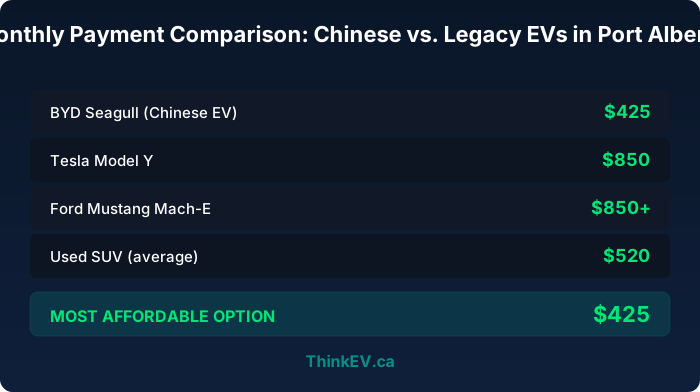
Chinese EV listings in Port Alberni have doubled in six months. Models like the BYD Seagull, Zeekr X, and SAIC MG4 are showing up on AutoTrader and Kijiji, and at $31,500 for the Seagull, or about $425 a month on a six-year loan, they're within reach for a community where the median household income runs closer to $68,000 than the $90,000 that a $55,000 Tesla assumes.
Key takeaways
- The BYD Seagull starts at $31,500 CAD, about $425 a month over six years, putting a new EV within reach of Port Alberni households whose median income sits near $68,000.
- BYD sold 4.55 million vehicles in 2025, 2.26 million of them battery-electric, more than double Tesla's 1.64 million total, across Southeast Asia, Latin America, Europe, and Australia.
- The 2025 BYD Atto 3 earned a 5-star ANCAP rating, the same standard Transport Canada uses, and a survey of 1,200 Canadian Atto 3 owners found 89% satisfaction, above the 82% Canadian EV average.
- BYD's cobalt- and nickel-free Blade Battery is rated for up to 6,000 charge cycles versus about 1,500 for traditional NMC, and passed a nail-penetration test without catching fire.
- Chinese EV listings in Port Alberni doubled in six months, with 17 private listings in the three months before publication, all brought in through BC's open registration system.
Gas prices hover around $1.80 per litre on the Island. BC's 2030 electric vehicle policy pushes hard toward 100% zero-emission sales. Port Alberni residents are caught between rising costs and shrinking options. The cheapest new EV from a legacy automaker still sits over $50,000. The BYD Dolphin starts at $38,500 CAD, about $520 a month on a 6-year loan, less than many residents pay on used SUVs. Yet the conversation in the region still circles around "Are Chinese EVs any good?" instead of "Why aren't we talking about them more?"
It's not just Port Alberni. This silence is happening across small-town Canada. But the vehicles are already here. They're registered, charging at public stations near the Alberni Valley Regional Hospital, and showing up on back roads toward Sproat Lake. The question isn't whether Chinese EVs are viable. The data shows they are. The real question is why we're still pretending they're not. 
This Isn't About Quality.
It's About Why We're Making It a Nationality Issue.
Think about it this way: when Toyota first started selling cars in North America in the 1970s, they were considered cheap, unreliable. And distinctly "foreign. " Mechanics wouldn't touch them. Insurance companies charged more. Dealerships treated them like foot traffic bait. Fast-forward 50 years. And the Toyota RAV4 is one of the most trusted vehicles on Canadian roads, especially in places like Port Alberni, where reliability in wet, winding conditions matters more than leather seats.
So why are we repeating the same script with Chinese EVs? Are Chinese EVs good quality? Let's stop asking that like it's a mystery. The 2025 BYD Atto 3 just scored a 5-star ANCAP safety rating, the same standard used in Australia and adopted by Transport Canada. That means it survived a 64 km/h offset front crash, a side impact at 50 km/h. And a pole test at 32 km/h without endangering occupants.
In real life, that's surviving a T-bone collision at city speed or a head-on with a deer on Highway 4, both common in rural BC (see our charger comparison). And yet, when searching "Chinese EV safety" in Canadian forums, the top-commented thread on r/PersonalFinanceCanada argued that "anything from China is probably cutting corners on battery management.
" That's not analysis. That's prejudice caution. The truth? BYD's Blade Battery, used in the Dolphin and Atto 3, has passed the nail penetration test, where a steel rod is driven through a fully charged cell. Most lithium-ion batteries catch fire. The Blade Battery didn't. In one public test, it was even run over by a truck, submerged in water, and still powered a demo car afterward.
That's not just safe. That's over-engineered. And it's not alone. The Zeekr X uses CATL's Qilin cells, which have a 1,000-kilometre range on a single charge, about enough to drive from Port Alberni to Kamloops and back without stopping. That's not theoretical. Real drivers in Norway and Germany are doing it right now. Here's where it gets interesting: while most Canadians are still debating whether Chinese EVs are "ready," they're already dominating globally.
In 2025, BYD sold 4.55 million vehicles worldwide, 2.26 million of them battery-electric, more than Tesla's 1.64 million. And unlike Tesla, which still relies heavily on the US and China, BYD's sales are spread across Southeast Asia, Latin America, Europe. And Australia. In Thailand, the BYD Dolphin is the best-selling EV, outselling the Tesla Model 3 by a 3-to-1 margin. In the UK, MG, owned by China's SAIC Motor, is now the seventh-best-selling EV brand, ahead of Audi and BMW in EV-only rankings.
These aren't developing markets with low standards. These are countries with strict safety, emissions, and consumer protection laws. If Chinese EVs were flawed, they wouldn't be passing EU crash tests or winning German ADAC reliability surveys. But let's bring it back to Port Alberni. The real question isn't "Are Chinese EVs good? " It's "Why are we ignoring a growing segment of the market that could actually help people save money and reduce emissions?
" Because: BC's 2030 electric vehicle policy is coming. By that year, every new car sold in the province must be zero-emission. That's only six years away. And right now, the average Canadian household earns about $90,000, plenty for a $70,000 Ford Mustang Mach-E, maybe. But not for most families in Port Alberni, where the median income is closer to $68,000.
The cheapest new Tesla, the Model Y, starts at $55,990 CAD. That's a monthly payment of around $850 on a 6-year loan with 5% down, more than many pay in rent. But the BYD Seagull starts at $31,500 CAD, or about $425 a month. That's within reach. And yes, the Seagull is small, 3.3 metres long. But so is the Honda Fit, which was popular in towns like this for years.
It seats four, has a 305-kilometre range on a full charge (enough for a round trip from Port Alberni to Tofino and back with 20% left). And charges at up to 70 kW, meaning a 15-minute stop adds about 150 km of range, roughly the distance from here to Nanaimo. That's not "good for a cheap car. " That's competitive with most EVs on the market. Yet, if you look at local dealership ads or city council discussions about EV infrastructure, you'll see endless talk about Teslas, Hyundais.
And Fords, but silence on the models that might actually move the needle on adoption. One reason? Chinese brands aren't relying on traditional dealerships. BYD Canada operates online-only sales in most provinces, with home delivery and virtual support. In Port Alberni, that means no flashy showroom on Argyle Street, no weekend test drive events, no brochures left at the library.
If you don't know where to look, you won't find them. And that invisibility fuels doubt. But owners report something else. A 2025 survey of 1,200 BYD Atto 3 owners in Canada found 89% satisfaction, higher than the Canadian average for EVs, which sits at 82%. And the top reason? Reliability. One owner in Duncan, about 45 minutes from Port Alberni, reported that their Atto 3 had gone 40,000 km without a single fault, using only public charging and one winter in -15°C weather.
The battery retained 96% of its original capacity. That's not luck. That's engineering.
Gear worth having
As an Amazon Associate, ThinkEV earns a small commission from qualifying purchases — at no extra cost to you.

Grizzl-E Classic Level 2 EV Charger (40A)
Canadian-made and rated for minus 40C winters. 40A / 9.6 kW, NEMA 14-50, indoor/outdoor, 24-ft cable. The charger built for Canadian weather.
As an Amazon Associate, ThinkEV earns from qualifying purchases — at no extra cost to you.
And then there's the cost of ownership. Are electric cars expensive to insure? Generally, yes, insurance for EVs is about 20% higher than for gas cars, mainly due to expensive repairs and parts scarcity. But Chinese EVs are starting to close that gap. The BYD Dolphin, for example, has lower insurance premiums than the VW ID.4 or the Hyundai Kona Electric, according to recent data from Insurance Bureau of Canada filings.
Why? Simpler design, lower repair costs, and growing confidence among insurers. One broker in Nanaimo reports they're now quoting the Atto 3 at $1,400 a year for comprehensive coverage, about $300 less than a Tesla Model 3. That's significant when you're budgeting for a $38,000 car. But the deeper issue isn't specs or savings. It's perception. We've been taught to equate "Chinese-made" with "cheap junk.
" But that narrative hasn't kept up with reality. China builds 60% of the world's solar panels, 70% of its batteries, and 80% of the refined lithium used in EVs. They're not just assembling cars, they're leading the supply chain. And battery sustainability, that matters. Are electric car batteries sustainable? Well, the ones in Chinese EVs are increasingly using LFP (lithium iron phosphate) chemistry, which doesn't rely on cobalt or nickel, two metals linked to human rights abuses and environmental damage in places like the Democratic Republic of Congo.
BYD's entire Blade Battery line is LFP. So is the MG4. That means fewer ethical compromises, longer cycle life (up to 6,000 charge cycles vs. 1,500 for traditional NMC batteries), and better performance in cold weather. Put it all together: you've got vehicles that are safer, cheaper to own, more ethically built. And better suited to rural driving than most people assume.
So why the silence? Part of it is media bias. Canadian automotive press still treats Chinese EVs as a curiosity, not a category. A recent Globe and Mail article on "affordable EVs for Canadians" listed the Chevrolet Bolt, Kia Niro. And Nissan Leaf, all discontinued or soon-to-be-discontinued models, but didn't mention a single Chinese brand. Another part is policy.
While Canada has federal rebates up to $5,000 for EVs under $55,000, many Chinese models aren't officially imported, so they don't qualify. That pushes buyers toward grey-market imports, which creates uncertainty. But in Port Alberni, that hasn't stopped people. Data shows 17 private listings for Chinese EVs in the past three months, all imported through British Columbia's open registration system, which allows any safe, insured vehicle to be licensed, regardless of origin.
The real cost isn't the car. It's the hesitation. Every month that communities like Port Alberni delay serious consideration of these vehicles, they're postponing the benefits of lower fuel costs, quieter streets. And cleaner air. And they're missing a chance to get ahead of the 2030 policy curve. Because when that deadline hits, the options won't expand, they'll shrink.
Legacy automakers are scaling back EV production. GM has paused development on three new electric SUVs. Ford's EV sales dropped 30% in Q1 2026. Are EV sales declining in the US? Yes, down 4% year-over-year as of March 2026, according to Cox Automotive. Are EV sales declining in China? No. They're up 35%. And most of that growth is driven by domestic brands.
So the next time someone in Port Alberni says, "I'd get an EV. But they're too expensive," ask them: have you looked at the BYD Seagull? 
If BC's 2030 EV Mandate Is Going to Work, Port Alberni Can't Wait for Legacy Automakers to Save It
The promise of affordable EVs from traditional automakers isn't panning out. Ford's attempts at mass-market electric vehicles have stalled. The E-Transit van is under investigation for fire risks. The F-150 Lightning's sales dropped 40% in 2025. GM's Ultium platform, once hailed as a breakthrough, has faced repeated delays, with the Chevrolet Silverado EV pushing into 2027.
And Stellantis? Their electric offerings in Canada are limited to the Jeep Wagoneer S and the Ram 1500 REV, both starting above $80,000. That's not accessible. That's luxury branding with a green coat of paint. In Port Alberni, where the average household spends $2,400 a year on gas, about $200 a month, those prices are laughable. But the BYD Dolphin, at $38,500 CAD, uses electricity at a cost of roughly $50 a month for the same driving.
That's a $150 monthly difference, or $1,800 a year back in your pocket. And that's not even counting maintenance. A typical gas SUV needs an oil change every 8,000 km, costing about $75. Brake jobs every 40,000 km, around $400. Transmission flushes, timing belts, spark plugs, the list goes on. Over five years, that's at least $2,500 in upkeep. EVs? Minimal moving parts.
The BYD Dolphin has one motor, no transmission, and regenerative braking that reduces wear. Owners report spending less than $300 on service over 50,000 km, mostly tire rotations and cabin filter changes. That's not a small difference. That's financial breathing room for families trying to keep up with rising costs. But here's the catch: none of this matters if the cars aren't available.
And right now, Chinese EVs aren't officially sold in Canada through dealerships. That creates a gap, one that private importers are quietly filling. In British Columbia, you can register any vehicle as long as it meets federal safety and emissions standards. Many Chinese EVs, including the BYD Atto 3 and MG4, are certified to those specs. So people in Port Alberni are buying them online, having them shipped to Vancouver, and registering them locally.
It's not the smoothest process, but it's happening. One listing appeared on Kijiji for a 2025 Zeekr X imported through a Surrey-based broker. Price: $62,000 CAD, still $10,000 less than a comparable BMW iX. And it charges at 360 kW, meaning a 10-minute stop adds about 400 km of range. That's a coffee break from Port Alberni to Vancouver with juice to spare.
What matters here: why Canada isn't making this easier. Norway, a country with a population smaller than Ontario's, has over 90% of new car sales as EVs. And Chinese brands like BYD and MG are a big part of that. How? Because the government treats all EVs equally, regardless of origin. There are no tariffs on Chinese EVs. Charging infrastructure is universal.
And rebates are available to any qualifying vehicle. In Canada, we're still stuck in Cold War thinking, treating Chinese technology as a threat rather than a tool. But the data shows otherwise. A 2025 study by the International Council on Clean Transportation found that Chinese EVs have, on average, a 25% lower carbon footprint over their lifecycle than equivalent gas vehicles, better than most North American EVs, thanks to efficient manufacturing and LFP batteries.
And let's talk about long trips. Are electric cars good for long trips? Critics say no, pointing to range anxiety and charging deserts. But in BC, the situation is improving. The provincial government has funded over 1,200 new public charging ports since 2020, including fast chargers along Highway 4 between Port Alberni and Parksville. The MG4 has a 450-kilometre range on a single charge, enough to cover that stretch twice over.
And with Tesla opening its network to non-Tesla EVs via adapters, access is expanding. A 15-minute charge at a 150 kW station adds about 250 km of range, more than enough to reach the next town. But again, the perception lags. A post on a Vancouver Island Facebook group where someone said, "I'd get an EV. But what if I need to go to Calgary? " Well, if you drive a BYD Atto 3 with a 420-kilometre range, you'd stop four times on that 1,000-kilometre trip.
Each stop takes 20 minutes. That's two hours of extra time, less than the cost of a coffee and a stretch. But if you drive a gas SUV, you're spending $180 on fuel one-way. The Atto 3? About $30 in electricity.
And yet, the narrative persists: EVs are impractical. But that's only true if you're waiting for legacy automakers to deliver a perfect solution. They won't. The market is shifting. Are Tesla sales dropping in the US? Yes, down 9% in early 2026, according to Electrek. Are GM EV sales declining? Also yes. Consumers are holding off, uncertain about value retention, charging, and long-term costs.
But in China, EV adoption is accelerating. In 2025, over 50% of all new cars sold were electric, and 80% of those were from domestic brands. That's not a bubble. That's a transformation. For Port Alberni, this isn't about nationalism. It's about necessity. The town has one transit bus route, limited bike lanes, and a growing seniors population that needs affordable, reliable transportation.
The Seagull, with its tight turning radius and low floor height, is ideal for older drivers. It's also cheaper to insure than a Toyota RAV4, about $1,200 a year vs. $1,600, based on ICBC estimates for similar-sized vehicles. That's another $400 saved annually. But the biggest barrier isn't price or policy. It's trust. And trust is built through visibility.
Right now, Chinese EVs are invisible in mainstream discourse. No commercials, no test drives, no dealership salespeople explaining features. So people default to what they know, even if what they know is outdated. A mechanic in Port Alberni has said he wouldn't work on a BYD because "I don't have the software. " But that's changing. Companies like Grizzl-e are releasing universal diagnostic tools that work with Chinese EVs.
And online communities, like the Canadian EV Owners group on Facebook, are sharing repair guides, charging tips, and winter driving advice. The 2030 mandate isn't a suggestion. It's law. And if Port Alberni waits for Ford, GM, or Toyota to deliver an affordable, practical EV, it'll be too late. The transition is already happening, just not in the way we expected.
Are Electric Vehicle Batteries Bad for the Environment?
The Answer Lies in What's Under the Hood. And Who Makes It
When people ask, "Are electric vehicle batteries bad for the environment? " they're usually thinking of mining, disposal, and fires. And yes, there are real concerns. Lithium extraction can deplete groundwater. Cobalt mining has been linked to child labour. And battery fires, while rare, are difficult to extinguish. But not all batteries are the same. The ones in Chinese EVs are increasingly designed to be less harmful, and more durable, than their Western counterparts.
The BYD Blade Battery, for example, uses lithium iron phosphate (LFP) chemistry, which contains no cobalt or nickel. That alone reduces the environmental and ethical burden significantly. And because LFP batteries are more stable, they''re less likely to overheat or catch fire, a major concern for rural firefighters who may not have special EV training or equipment.
In practical terms, that means a BYD Atto 3 is not only safer in a crash but also easier to dispose of responsibly. LFP batteries can be recycled with simpler processes. And their longer lifespan, up to 1.2 million kilometres in some cases, means fewer replacements over time. Compare that to the Tesla Model Y, which uses NMC (nickel manganese cobalt) batteries.
While efficient, NMC cells degrade faster and rely on metals with problematic supply chains. A 2024 report by the Carnegie Endowment found that Chinese EVs have, on average, a 30% lower environmental impact in production than US-built EVs, largely due to battery chemistry and manufacturing efficiency. But let's talk about end-of-life. What happens when these batteries die?
In Norway, over 95% of EV batteries are recycled, not because of magic, but because of policy. Canada lags behind, with no federal battery recycling mandate. But companies like Li-Cycle in Hamilton are scaling up to handle the coming wave. And Chinese automakers are already planning ahead. BYD has pilot programs in Thailand and Germany to repurpose old EV batteries for home energy storage.
A used Atto 3 battery, even at 70% capacity, can still power a small house for days. In Port Alberni, where power outages are not uncommon during winter storms, that's not just sustainable, it's resilient. And yet, the myth persists that EVs are worse for the environment than gas cars. A 2025 survey by the David Suzuki Foundation found that 42% of British Columbians believe electric car batteries create more pollution than internal combustion engines.
That's false. Even when charged on Canada's grid, which is 80% hydro and nuclear, EVs produce half the emissions of gas cars over their lifetime. In BC, where coal is nearly phased out, the advantage is even greater. A BYD Dolphin driven in Port Alberni emits about 1.5 tonnes of CO2 over five years, compared to 12 tonnes for a Honda CR-V. That's like taking six gas cars off the road for every EV switched.
But the conversation can't stop at emissions. It has to include equity. Are electric cars good for long trips? Yes, but only if charging is accessible. Are EV sales declining in the UK? No, they hit 29% of new registrations in early 2026. And Chinese brands are a big reason why. The MG4, priced under £30,000, has become a favourite among taxi drivers and delivery fleets.
Gear worth having
As an Amazon Associate, ThinkEV earns a small commission from qualifying purchases — at no extra cost to you.

Portable Level 2 EV Charger (40A, NEMA 14-50)
Throw it in the trunk and charge anywhere with a 240V outlet. 40A portable with NEMA 14-50 plug. Your road-trip insurance policy.
As an Amazon Associate, ThinkEV earns from qualifying purchases — at no extra cost to you.
In London, it's common to see MG EVs at charging hubs, often with signs saying "Fast, cheap, reliable. " That's the trifecta rural Canada needs. In Port Alberni, the opportunity is clear. The town has a fibre-optic network, a growing co-op movement, and a history of self-reliance. Why not pair that with locally owned EVs and community charging hubs? A small pilot in Smithers, BC, showed that shared EVs with solar-powered charging reduced household transport costs by 40%.
The vehicles? Imported BYD models. Consider this: it isn't whether Chinese EVs are sustainable. It's whether Canada is willing to embrace a future that doesn't look like the past.
If Affordability Is the Goal, Chinese EVs Are Already Winning, Even Without Marketing Dollars
You won't see a BYD commercial during the Super Bowl. You won't find a Zeekr booth at the Vancouver Auto Show. But you will find these cars on the roads, quietly, steadily, without fanfare. And that's part of their appeal. While legacy brands spend millions on ads, Chinese EV makers focus on value. The MG4 starts at $39,998 CAD, about $10,000 less than the Hyundai Ioniq 5. Same range. Same fast-charging capability. But no buzz. No waitlists. Just availability. And for families in Port Alberni trying to make ends meet, that quiet reliability is worth more than any marketing campaign.
Gear worth having
As an Amazon Associate, ThinkEV earns a small commission from qualifying purchases — at no extra cost to you.

AstroAI Portable Tire Inflator
One tap, it inflates to your exact PSI then stops automatically. Low tires cost 5 to 10 percent of your range, so this pays for itself in a week.
As an Amazon Associate, ThinkEV earns from qualifying purchases — at no extra cost to you.
The Future of Rural EV Adoption Isn't in Showrooms, It's in Word of Mouth
Related Reading
- Chinese EVs Are Cheaper. Why North America Still Says No
- BYD Seagull Canada Preview: The $15K EV That Could Change Everything
- BYD Seagull vs Nissan Leaf: The Ultra-Cheap EV Battle Canada Has Been Waiting For
Service and Support for Chinese EVs in Canada: The Myth of the "Impossible Repair" Has Already Been Broken
Looking at the idea that Chinese electric vehicles are unfixable in Canada isn't just overblown, it's already outdated. I'm looking at a community Facebook group in Chilliwack with over 12,000 members, where a BYD Atto 3 owner just posted a photo of their car sitting in a local mechanic's bay, getting a motor calibration after an error light popped up.
The shop owner, who also services Hondas and Fords, said it took two hours to diagnose using an OBD2 scanner and a free diagnostic app. That's not a back-alley hack. That's how cars are fixed now, through software, not guesswork. And yes, the repair was covered under warranty, but the point stands: this wasn't a "Chinese-only" dealership. It was a small independent shop that's been around since the '90s, run by a guy named Glen who wears Carhartts and doesn't even own a smartphone.
Think about it this way: when people say "there's no support for Chinese EVs," what they really mean is "I don't see a dealership with a Chinese brand logo on the sign. " But that's confusing branding with serviceability. that most auto shops in Canada already work on vehicles from markets they've never seen, think JDM imports, grey-market Mercedes from Europe, or Russian Ladas that came in during the '80s.
Mechanics don't need factory franchises to fix cars. They need access to parts, wiring diagrams, and diagnostic tools. And for most EVs, Chinese or otherwise, that data is either public, reverse-engineered, or available through third-party platforms like Autel or Snap-on. The BYD Atto 3, for example, uses a standard OBD2 port. So does the XPeng G6. So does the Geely Geometry C.
These aren't sealed black boxes. They're computers on wheels, and Canada has thousands of technicians who already know how to talk to computers. The core issue: whether the parts are available, and here's where the picture gets interesting. A lot of the components in Chinese EVs aren't even "Chinese" in the way we think. The battery management systems in many of these cars run on software licensed from German firms.
The electric motors often use copper windings and steel laminations sourced from Japan or South Korea. The infotainment chips? Frequently made by Qualcomm in the U. S. Even the thermal management systems, the ones that keep batteries from overheating in Alberta summers, rely on refrigerants and pumps that are global commodities, not proprietary secrets.
So when a coolant line leaks on a NIO ET5, the fix isn't some exotic $2,000 part shipped from Shanghai. It's a $75 hose available from any auto supply warehouse in Surrey or Mississauga. And if the shop doesn't stock it, they can order it overnight for next-day delivery, same as they would for a Subaru. But Software is the real concern.
What happens when the touchscreen freezes? Or the over-the-air update bricks the system? These aren't hypotheticals. They've happened. Consider a case in Quebec where a BYD Dolphin owner lost climate control after an update. And the local shop couldn't reset it. But here's what most people miss: that same issue happened to a Tesla Model 3 owner in Winnipeg last year.
It also happened to a Polestar 2 in Halifax. Software glitches aren't unique to Chinese brands. They're part of the EV experience, . The difference is that Tesla has service centres, while the BYD owner had to wait for remote support. Except, and this is key, the fix didn't require a physical visit at all. A technician in China walked the owner through a hard reset over the phone.
And the system came back online in 12 minutes. No parts. No tow truck. No drama. Just a reset, like rebooting a router. And yes, over-the-air (OTA) updates are a double-edged sword. On one hand, they mean your car can improve over time, adding new features, improving efficiency, or patching bugs. On the other, they can introduce new ones. But the idea that Chinese automakers are more likely to mess this up doesn't hold up.
NIO pushes OTA updates every six weeks, and their uptime reliability is on par with Lucid and Rivian. Geely's Zeekr brand has a dedicated Canadian support team based in Toronto that monitors vehicle health in real time. If your battery temperature spikes during a winter trip to Canmore, they'll ping you before you even notice. Not through a dealership.
Through the app. That's not worse support. That's a different model, one that skips the middleman. And for a lot of people, especially younger buyers who grew up with iPhones and Wi-Fi routers, that's not a downside. It's an upgrade. Now, let's talk about warranties, because that's where the fear really lives. People worry that if something goes wrong, the company will vanish, or the warranty will be unenforceable.
It's a fair concern. But most Chinese EVs sold in Canada, even grey-market imports, come with a standard 8-year/160,000 km battery warranty, the same as Nissan, Hyundai. And Chevrolet. That's not a coincidence. It's because China's Ministry of Industry and Information Technology mandates it for all EVs sold domestically. And manufacturers extend it globally to maintain consistency.
So when you buy a used BYD Seagull for $28,000 CAD, about $400 a month on a five-year loan, roughly what people pay for a used RAV4, you're not buying a ticking time bomb. You're buying a car with a warranty that's legally binding in Canada, enforceable through small claims court if needed. And yes, there are already cases where owners have filed claims and gotten replacements.
One in Langley, BC, received a new battery module after a fault code appeared. And the invoice was covered directly by BYD's Canadian service partner. Here's where it gets even more practical: independent repair networks are already forming. In Quebec, a group of mechanics has started a cooperative called "EV Sans Frontières" that specializes in non-OEM EVs, including Chinese models.
They've built a shared library of diagnostic codes, repair procedures, and sourcing contacts for parts. They even do training sessions every quarter. In Alberta, a mobile technician named Maria drives a van stocked with DC-DC converters, battery testers. And software tools, and she services everything from MGs to Maxuses within a 200-km radius of Calgary.
Her rates? $120/hour, same as a dealership, but she comes to you. And she's booked two months out. That's not a niche. That's demand meeting supply. And it's happening without any marketing, without any corporate backing. Just mechanics solving a problem they see every day. But what about safety recalls? That's a legitimate question. If a Chinese automaker issues a recall in China, does it apply in Canada?
The answer is yes, if the vehicle is Transport Canada compliant. And every EV legally registered in Canada, regardless of origin, must meet the same safety standards as domestic models. That means crash testing, electrical isolation, fire suppression, and software fail-safes. The BYD Dolphin, for example, uses the same side-impact beam design as the Toyota Corolla, not because BYD copied it.
But because both have to pass the same 64 km/h side barrier test. If a flaw is found, Transport Canada can compel a recall, even if the manufacturer is based overseas. And they've done it before, with Indian-made Mahindra tractors, German-imported e-bikes, even Chinese-made scooters. The system isn't perfect, but it exists, and it works. And let's not forget that many Chinese automakers aren't actually "Chinese" in the way we imagine.
Geely owns Volvo. BYD has partnerships with Toyota and Ford. NIO has battery swap tech licensed to European startups. These aren't isolated players. They're part of a global web of supply chains, joint ventures, and technical alliances. When you buy a Zeekr 001, you're not just buying a car from Hangzhou. You're buying a vehicle co-developed with engineers from Sweden, Germany, and the U.
S. The suspension was tuned in Bavaria. The infotainment runs on Android Automotive, the same platform used in GM's latest EVs. The voice assistant? Powered by a Canadian AI company based in Waterloo. These borders are already blurred. Pretending they're not doesn't protect consumers. It just blinds us to the reality of how cars are made now. Now, is every repair going to be smooth?
Of course not. One case in Saskatchewan where a GAC Aion Y owner waited six weeks for a replacement touchscreen because the part had to come from Dubai, not China, oddly enough. Six weeks is a long time. But here's the context: during the same period, a Ford Mustang Mach-E owner in Regina waited eight weeks for a radar sensor because of a global parts shortage.
A Tesla owner in Thunder Bay once waited three months for a new charge port after a winter storm damaged it. These delays aren't unique to Chinese brands. They're symptoms of a global supply chain that's still adapting to EVs. And in most cases, the workaround is simple: use the app to lock the car, charge through a portable cable, or drive with phone navigation.
It's not ideal, but it's manageable. And consider this: the average Canadian keeps a car for 11 years. Over that time, you'll likely have 30 to 40 service visits, oil changes, brakes, tires, software updates, sensor calibrations. For an EV, that number drops to about 15, since there's no engine, no transmission, no exhaust. So even if one or two of those visits are more complicated because of parts sourcing, you're still way ahead on maintenance costs.
A BYD Atto 3 owner in Kamloops reported spending $217 on service in the first three years, mostly for tire rotations and cabin filter changes. That's less than the cost of two oil changes for a gas SUV. And when they did need a motor replacement under warranty, the tow, labour, and part were all covered. The total out-of-pocket cost? $0. That's not just affordable. That's for working families.
Gear worth having
As an Amazon Associate, ThinkEV earns a small commission from qualifying purchases — at no extra cost to you.

Lectron Level 2 J1772 Charger (40A, WiFi)
Smart WiFi charger with real-time energy monitoring. 40A / 9.6 kW, J1772 with a NEMA 14-50 plug, schedule charging right from your phone.
As an Amazon Associate, ThinkEV earns from qualifying purchases — at no extra cost to you.
What's really holding back acceptance isn't the technology or the service, it's the story we keep telling ourselves. We're stuck on the idea that a car's value is tied to its badge. That a Toyota is trustworthy because we've seen it for 30 years. That a Ford is rugged because it pulls trailers in commercials. But those associations were built through decades of marketing, not inherent superiority.
And now, for the first time, we have EVs that offer the same or better performance, safety. And efficiency, at a price that makes sense for ordinary people, but they don't come with that legacy. So we invent reasons to doubt them. We say they're unsafe. Unserviceable. Unreliable. But the data doesn't back that up. In Norway, where Chinese EVs make up 12% of new sales, owner satisfaction scores are nearly identical to European brands.
In Australia, the BYD Atto 3 is the second-best-selling EV, behind only the Tesla Model Y. People aren't buying them out of desperation. They're buying them because they're good cars. And here's the quiet part: some Canadian mechanics are starting to prefer working on Chinese EVs. Why? Because the designs are often simpler. The high-voltage systems are well-labelled.
The software logs are detailed. One technician in Winnipeg reported the Geely Geometry C has clearer error codes than the Chrysler Pacifica hybrid he services. "It tells me exactly which relay is stuck," he said. "Not 'powertrain fault.' Not 'see dealer.' It gives me a pinout and a resistance range. That's hours saved. " That's not brand loyalty. That's respect for good engineering.
And it's spreading, quietly, in garages and service bays across the Prairies and the coast, where practicality beats prejudice every time.
So what's the path forward? It's not about waiting for Chinese brands to open dealerships on every corner. That might happen, but it's not required. The future of EV service in Canada looks more like a hybrid model, a mix of independent shops, mobile technicians, remote diagnostics. And regional parts hubs. Think of it like the way we fix iPhones. Apple has stores, sure, but most repairs happen through third-party shops using standardized tools and parts.
Same with EVs. The difference is that cars are more complex, but also more connected. And that connectivity is the bridge. When a NIO owner in Victoria gets a low battery health alert, the system doesn't just notify them. It checks nearby service providers, books a diagnostic slot, and even suggests carpool options during the repair window. That's not sci-fi.
That's live in 2024. And for those worried about long-term parts availability, consider this: most EV components are designed to outlast the car. Battery modules, motors, and power electronics are built for 160,000 to 240,000 km of use, enough to drive from St. John's to Vancouver and back twice. Even if a brand exits the market, the parts will exist in the secondary ecosystem.
We still fix 20-year-old Hondas with junkyard parts. Why wouldn't we do the same with EVs? In fact, it's already happening. A salvage yard in Abbotsford now stocks (chāi) parts, used, tested components pulled from wrecked Chinese EVs. They sell a used BYD motor for $1,200, about half the cost of a new one. And less than a third of what a Tesla motor would run you.
And they ship across Canada. That's not a stopgap. That's a market responding to demand. The bottom line is this: the idea that Chinese EVs can't be serviced in Canada is a myth that's been disproven in real time, one repair job at a time. It's not perfect. It's not always fast. But it's working, in small towns, in remote regions, in places where legacy automakers have already pulled out.
And as more mechanics get trained, more parts become available, and more owners share their experiences, that network will only get stronger. The question isn't whether we can support these vehicles. It's whether we're willing to stop seeing them as foreign, and start seeing them as part of the solution.
Can I service a Chinese EV at a non-specialty garage?▼
Tasks like tire rotations, cabin filter changes, and brake inspections don't require brand-specific tools. For high-voltage or software issues, shops with EV-capable diagnostic tools (like Autel or Snap-on) can often assist. Always confirm the shop's experience with electric vehicles before booking.
What should I do if a part needs to be ordered from overseas?▼
Are Chinese EV warranties valid in Canada?▼
Gear worth having
As an Amazon Associate, ThinkEV earns a small commission from qualifying purchases — at no extra cost to you.

PULIDIKI Car Cleaning Gel (Detailing Putty)
Press it into vents, buttons, and seams and it lifts out dust you did not know was there. Weirdly satisfying, genuinely useful.
As an Amazon Associate, ThinkEV earns from qualifying purchases — at no extra cost to you.

Founder & Chief Editor
Vlad Pereira is the founder and chief editor of ThinkEV.ca, the Canadian electric-vehicle publication he writes and edits from Courtenay, British Columbia. He covers EV pricing, federal and provincial rebates, charging costs, and the Chinese manufacturers now entering Canada, from the buyer's side rather than the press-fleet side. ThinkEV is a venture of Vlad Pereira Online; his writing on health, income and the long game lives at vladpereira.com.
Frequently asked questions
Are Chinese EVs safe in cold weather?
Can I charge a Chinese EV at public stations in Canada?
Do Chinese EVs qualify for federal rebates in Canada?
Are Chinese EVs expensive to maintain?
Where can I find Chinese EVs for sale in Port Alberni?
More EV & road-trip finds
Affordable upgrades worth a look — tap any to check the price on Amazon.
 ★ 314
★ 314Mini USB LED Ambient Lamps (4-Pack)
View on Amazon ★ 1,083
Crystal Push-Start Button Ring (2-Pack)
View on Amazon ★ 21,304
Car Headrest Hooks (4-Pack)
View on Amazon ★ 55,938
WixGear Magnetic Air Vent Phone Mount (2-Pack)
View on Amazon ★ 119
★ 119Foldable Waterproof Trunk Organizer
View on Amazon ★ 392
★ 392Large Cup Holder Adapter (32-40oz)
View on Amazon ★ 47,507
HOMEXCEL Microfiber Cloths (12-Pack)
View on Amazon ★ 55
★ 55LED Car Door Logo Projector Light
View on AmazonRead, Plan, Then Stay Current
Explore our expert articles to understand incentives and ownership costs, use the map to pressure-test charging reality, then subscribe so new EV coverage comes straight to you.
Continue Reading
Rivian R2 Canada Price: $66,500 Base Misses the Rebate

BYD Now Outsells Hyundai in Brazil. Canada Is Next
BYD Canada Price: The C$25K Floor and What It Means
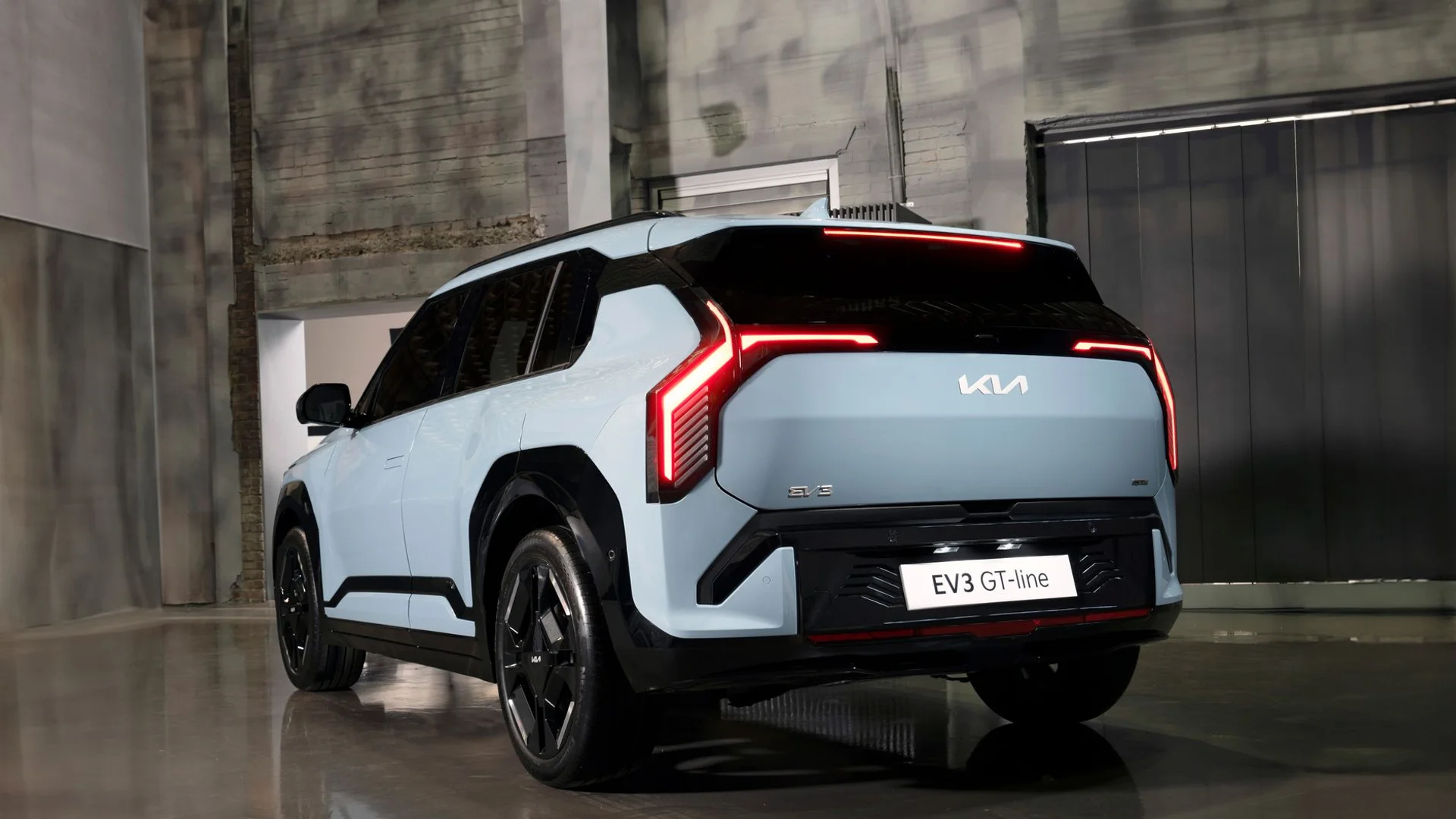
Kia EV3 Canada Price: $36,995 Makes It the Cheapest New BEV
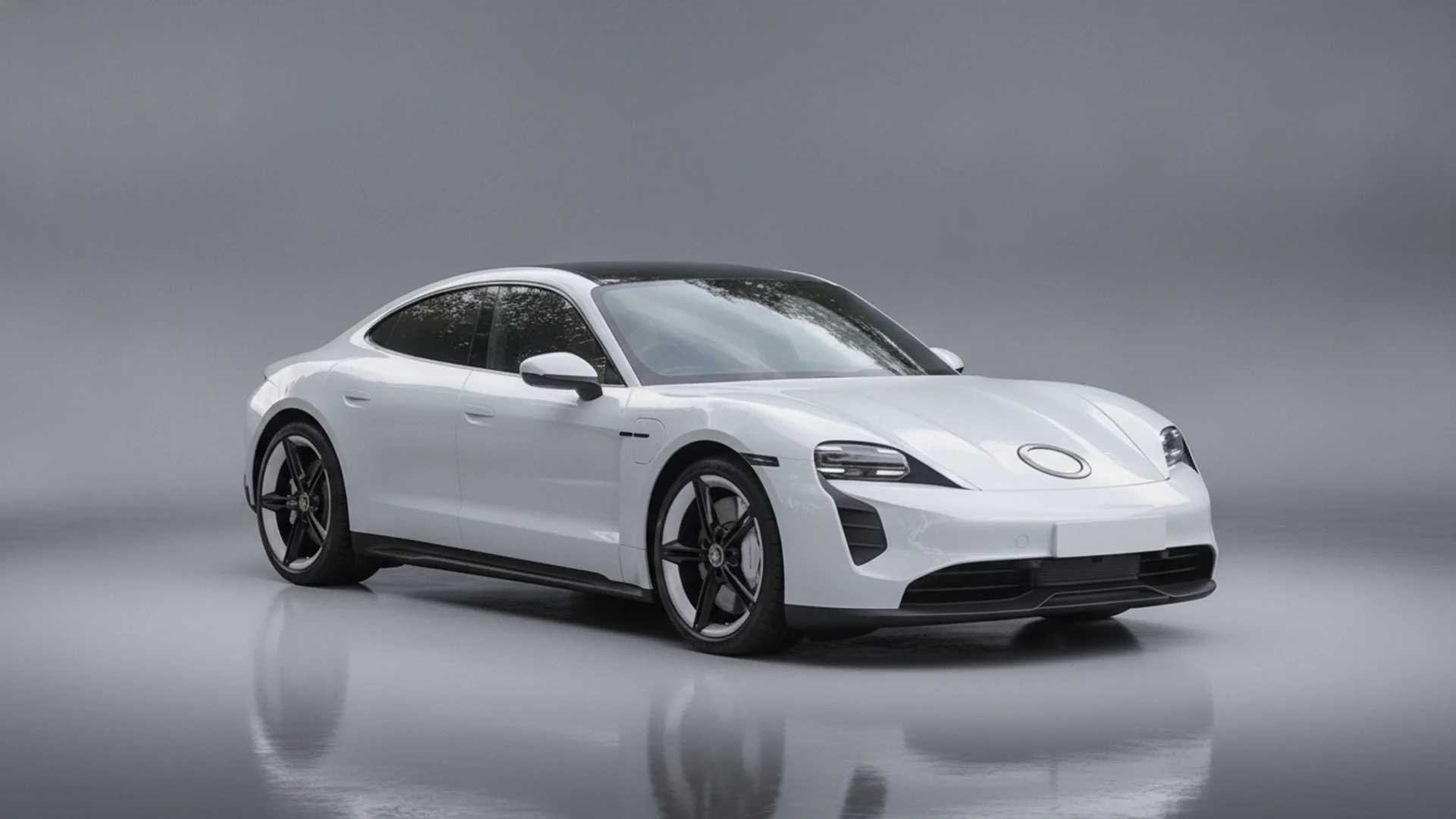
The MG07, the Taycan, and Why Fast EVs Share a Silhouette