Key takeaways
- Chinese-built EVs like BYD and NIO don't qualify for Canada's $5,000 federal EVAP rebate, which requires assembly in Canada or a free-trade partner country.
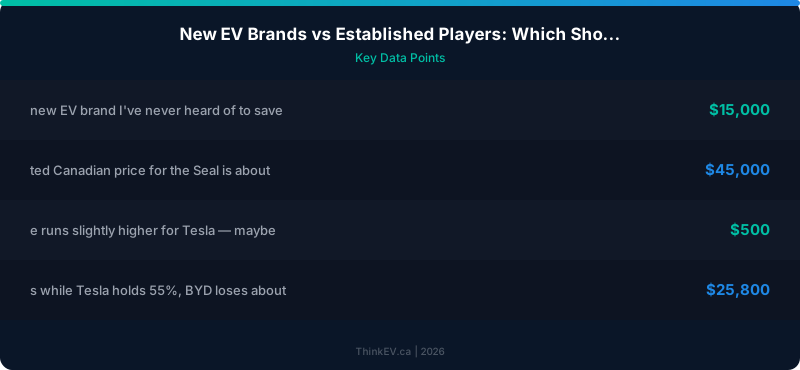
- Canada's 6.1% tariff on Chinese EVs, down from 100% in October 2024 under a 49,000-vehicle quota, adds about $2,500–$3,000 to a $42,000 BYD, yet the brand's price advantage still holds.
- BYD sold over 3 million plug-in vehicles worldwide in 2024 on $75 billion USD in revenue, making it the largest EV maker by volume.
- The BYD Seal, Atto 3, and NIO ET5 all earned 5-star Euro NCAP ratings, matching the Tesla Model 3 and Hyundai Ioniq 6, though the Model 3 leads on subcategory scores.
- Every major automaker, BYD and NIO included, is moving to NACS from 2025, giving new EVs access to Tesla's 500-plus Canadian Supercharger stalls regardless of brand.
The question I keep getting is not really about BYD versus Tesla, or NIO versus BMW. It is bigger than that.
The question is: should I buy from an EV brand I have never heard of to save $15,000–$25,000, or should I stick with something familiar and pay the premium?
That is the actual decision facing Canadian buyers in 2026. And it is not a simple one, because neither answer is obviously wrong. The new brands offer genuinely impressive hardware at prices that make the established players look expensive. The established brands offer infrastructure, resale confidence, and a service network that actually exists right now, not in a press release about 2028 expansion plans.
This comparison covers every dimension that matters: price, range, charging, build quality, technology, safety, dealer networks, warranty, resale value, winter performance, and total cost of ownership. Each section ends with a winner declaration.
If you are already leaning one direction, the verdict section at the bottom gives you a framework for confirming or challenging that instinct.
For background on which new brands are actually entering the Canadian market, see our guide to new EV brands coming to Canada.
PRICE
Winner: Emerging brands, by a wide margin
This is where the conversation starts and where the emerging brands make their strongest case. The price gap is not marginal. It is $15,000–$25,000 depending on the segment, and that is enough to change the financial calculus of car ownership entirely.
The BYD Seal is expected to land in Canada around $42,000–$45,000 for the base model. The Tesla Model 3 Long Range, the cheapest Model 3 available in Canada, since there is no standard range trim here, starts at $54,990. That is roughly a $10,000–$13,000 gap for vehicles with comparable performance, range, and feature sets. Move up to the BYD Seal AWD Performance variant and you are still looking at roughly $50,000 versus the Model 3 Performance at $64,990. The gap holds.
In the crossover segment, the story is similar. The BYD Atto 3 is projected at $38,000–$42,000 CAD. The Hyundai Kona EV starts at $42,999, the Kia EV6 at $48,995, and the Chevrolet Equinox EV at $47,495. If the Atto 3 lands near those estimates, it undercuts every one of them while offering a distinctive interior and a battery story many long-term buyers will find appealing.
The NIO ET5, if it arrives in Canada at all in the near term, would likely slot around $50,000–$55,000 CAD for a vehicle positioned against the BMW i4. That is an interesting scenario, but still a scenario.
How do these brands hit these prices? Three factors. First, Chinese manufacturing costs are genuinely lower, labour, raw materials, and vertically integrated supply chains (BYD makes its own batteries, motors, and semiconductors) keep production costs down. Second, BYD is the world's largest EV manufacturer by volume, selling over 3 million plug-in vehicles in 2024 alone. Scale matters. Third, these brands are pricing for market entry, accepting lower margins to build brand awareness in new markets like Canada. That last factor may not last forever, but right now it benefits buyers.
The counterargument is that the Canada Border Services Agency imposes a 6.1% tariff on Chinese-manufactured EVs (reduced from the initial 100% tariff imposed in October 2024, with a 49,000-vehicle annual quota). That tariff is already baked into the projected Canadian prices above. Even after the tariff, the price advantage holds.
One more financial reality: Chinese-manufactured vehicles do not qualify for the $5,000 federal EVAP rebate. That narrows the gap. A Hyundai Kona EV at $42,999 minus the $5,000 EVAP rebate comes to $37,999, suddenly competitive with a BYD Atto 3 at $40,000 that gets no rebate. But the Tesla Model 3 at $54,990 also does not qualify for EVAP (it exceeds the $50,000 final transaction value cap for non-Canadian-made vehicles), so the BYD-versus-Tesla comparison is apples to apples.
The bottom line: if your primary constraint is budget, emerging brands give you more vehicle per dollar than anything the established players offer. That is not an opinion, it is arithmetic.
RANGE AND BATTERY
Winner: Emerging brands, slight edge on longevity, draw on range
Range numbers between these two categories are broadly comparable. The BYD Seal offers 550–570 km WLTP. The Tesla Model 3 Long Range delivers 629 km WLTP. The Hyundai Ioniq 6 Long Range sits at 614 km WLTP. The NIO ET5 with the 100 kWh pack claims 580 km CLTC (roughly 500–520 km in real-world Canadian conditions). On headline range, established brands have a slight edge, particularly Tesla, whose efficiency per kWh remains best-in-class.
But range is only half the battery story. The other half is battery longevity, and this is where emerging brands, specifically BYD, have a genuine technical advantage.
BYD's Blade Battery uses lithium-iron-phosphate (LFP) chemistry. Broadly speaking, LFP tends to offer stronger cycle-life characteristics than many nickel-rich chemistries. That matters most for buyers who plan to keep the car a long time or put a lot of kilometres on it.
For the average Canadian driver covering 40–60 km per day and charging a few times per week, both chemistries will outlast the vehicle. The difference matters more for high-mileage drivers, rideshare operators, long-distance commuters, fleet vehicles, where the LFP advantage translates to thousands of dollars in avoided battery replacement costs over the vehicle's life.
LFP has another advantage: it is generally more forgiving of high daily state-of-charge than many NMC packs. That can narrow the practical day-to-day range gap between an LFP car and an NMC car whose owner prefers a more conservative charging routine.
The trade-off? LFP has lower energy density by weight. LFP packs are heavier for the same capacity, which is why BYD's vehicles tend to be heavier than comparable Teslas. That weight penalty affects efficiency, the BYD Seal uses about 16.5 kWh/100 km compared to the Model 3's 14.4 kWh/100 km. Tesla's efficiency advantage is real, but it is partly offset by LFP's tolerance for full charges.
Tesla has started using LFP in some base models, which blurs the lines. But BYD's in-house battery integration remains one of the stronger parts of its technical case.
For buyers who plan to keep their vehicle for 8–10 years or drive high annual kilometres, LFP's cycle life advantage is meaningful. For buyers who lease or trade in every 3–4 years, the chemistry difference is academic.
CHARGING
Winner: Draw, converging fast
This category used to be a clear win for established brands, specifically Tesla. That is no longer true, and the gap is closing rapidly.
The charging scene in Canada has been fundamentally reshaped by the NACS (North American Charging Standard) adoption wave. Starting in 2025, every major automaker, Hyundai, Kia, GM, Ford, BMW, Mercedes, Volkswagen, Rivian, and yes, BYD and NIO, has committed to NACS connectors on new vehicles sold in North America. This means every new EV, regardless of brand, can access Tesla's Supercharger network.
That changes the conversation entirely. The Supercharger network's advantage was never about charging speed, it was about reliability and coverage. Tesla has 500+ Supercharger stalls across Canada, strategically placed along major corridors. Those stalls are now accessible to everyone. BYD Seal owners will plug into the same Supercharger stalls as Model 3 owners. The brand-specific infrastructure moat is dissolving.
On charging speed, the comparison is competitive. The BYD Seal supports DC fast charging up to 150 kW, achieving a 10–80% charge in approximately 30 minutes. The Tesla Model 3 peaks at 250 kW on V3 Superchargers, hitting 10–80% in about 25 minutes. The Hyundai Ioniq 6 peaks at 240 kW, managing 10–80% in 18 minutes thanks to its 800V architecture. Kia's EV6 matches that with 233 kW peak charging and an 18-minute 10–80% time.
Here is the assessment: the 800V vehicles from Hyundai and Kia currently have the fastest charging speeds. Tesla is close behind. BYD's 400V architecture is noticeably slower at the top end. If you do frequent long-distance road trips and those extra 10–12 minutes per stop matter to you, established brands (particularly Hyundai/Kia and Tesla) have an edge.
But for the 90% of Canadian EV owners who charge at home overnight using a Level 2 charger, DC fast charging speed is irrelevant to daily life. Both emerging and established brands charge from empty to full in 6–10 hours on a 40-amp Level 2 home charger. You plug in at night, you wake up full. The brand on the hood does not matter.
Gear worth having
As an Amazon Associate, ThinkEV earns a small commission from qualifying purchases — at no extra cost to you.

Grizzl-E Classic Level 2 EV Charger (40A)
Canadian-made and rated for minus 40C winters. 40A / 9.6 kW, NEMA 14-50, indoor/outdoor, 24-ft cable. The charger built for Canadian weather.
As an Amazon Associate, ThinkEV earns from qualifying purchases — at no extra cost to you.
The Electrify Canada, Petro-Canada, FLO, and ChargePoint networks continue to expand. Combined with universal NACS access, the charging anxiety gap between new and established brands has effectively closed for any driver who has a home charging setup. For apartment dwellers relying exclusively on public charging, Tesla's network density still provides a marginal advantage, but it is no longer brand-exclusive.
For a deeper look at why the Supercharger network is becoming universal infrastructure, see our analysis of BYD's Canadian market entry and the tariff situation.
DRIVING AND BUILD QUALITY
Winner: Established brands, but the gap is narrower than you think
Let me separate two things that often get conflated: driving dynamics and build quality.
On driving dynamics, established brands still hold an edge. Tesla's Model 3 has one of the best-tuned chassis in the EV space, low centre of gravity, well-weighted steering, predictable handling at the limit. Hyundai and Kia have decades of suspension tuning experience for North American roads, and it shows in how the Ioniq 6 and EV6 absorb frost heaves and potholes without the secondary bounce that makes passengers carsick. BMW's i4 drives like a BMW, the brand promise of "Ultimate Driving Machine" translates honestly to the electric platform.
BYD's Seal drives well, better than you would expect from a brand most Canadians have never heard of. The suspension is tuned for comfort rather than sport, which means it soaks up broken pavement effectively but feels floaty at highway speed compared to a Model 3. The steering is light and slightly disconnected around centre. It is a comfortable car. It is not an engaging car. For the majority of buyers who want comfortable, that is perfectly fine.
NIO's ET5, in markets where it is available, draws favourable comparisons to the BMW 3 Series for ride quality and the Mercedes C-Class for cabin quietness. If NIO delivers the same product in Canada, it would be competitive on driving dynamics with the best the established brands offer.
On build quality, the picture is more nuanced. Early Chinese EVs had legitimate quality concerns, inconsistent panel gaps, cheap interior plastics, rattles that developed within the first year. BYD's current generation has addressed most of these issues. The Seal's panel gaps are consistent and comparable to the Hyundai Ioniq 6. The Atto 3's interior materials, particularly the seat leather and dashboard trim, feel premium for the price point. Independent teardowns by firms like Munro and Associates have praised BYD's manufacturing precision and the clever packaging of the Blade Battery.
That said, long-term durability data for BYD in Canadian conditions does not exist yet. The Atto 3 has been selling in Australia since 2022, and warranty claim rates there are comparable to Hyundai's, which is encouraging. But Australia does not have Canada's freeze-thaw cycles, road salt, and -30 degree Celsius mornings. How BYD's door seals, underbody coatings, and electrical connectors hold up after five Canadian winters is genuinely unknown.
Established brands have this data. Toyota's reliability reputation is earned over millions of vehicles and decades of Canadian winters. Hyundai and Kia have improved dramatically, their EV-specific platforms benefit from years of Canadian market feedback. Tesla's build quality was historically inconsistent (early Model 3 production was notoriously variable), but has improved significantly with the Highland refresh.
Paint quality is another area where established brands have historically held an advantage. Japanese and Korean manufacturers use multi-layer paint processes refined over decades, primer, base coat, colour coat, clear coat, with thickness and adhesion standards that survive road salt, gravel chips, and UV exposure. Early reports from BYD vehicles in Australia suggest paint thickness is competitive but stone chip resistance may be slightly lower than Hyundai or Toyota. This is the kind of detail that only matters after 3–4 Canadian winters, and there is no long-term Canadian data to confirm or deny it.
Underbody protection matters in Canada more than almost any other market. Road salt and calcium chloride solutions attack undercarriage components relentlessly from November through April. Established brands selling in Canada have decades of experience specifying corrosion-resistant coatings, drainage channels, and fastener materials for this environment. Whether BYD's underbody protection holds up equally well is an open question, one that will only be answered by time and mileage on Canadian roads.
For buyers who prioritize driving engagement and proven long-term durability, established brands still win this category. For buyers who prioritize ride comfort and are willing to bet on the trajectory of improvement, emerging brands are closer than the skeptics suggest.
TECHNOLOGY
Winner: Emerging brands, hardware advantage, software draw
This is where the emerging brands make a compelling case that goes beyond price. BYD, NIO, and XPeng are shipping hardware that established brands either do not offer or charge significant premiums for.
The most visible example is LiDAR. In markets where NIO and XPeng ship those systems, LiDAR gives them a different hardware philosophy from Tesla's camera-only approach.
In fog, heavy snow, and low light, conditions that define Canadian driving for four to five months of the year, LiDAR has demonstrable advantages for object detection. A camera can struggle to distinguish a pedestrian from a shadow at dusk. A LiDAR sensor measures the physical geometry of the scene regardless of lighting conditions. This is not theoretical, it is why Waymo, Cruise, and every serious autonomous driving programme (except Tesla) uses LiDAR.
Does this matter for Level 2 driver assistance, which is what all of these vehicles actually offer? The advantage is modest in practice. Tesla's camera-only system is well-calibrated and handles most situations competently. But in the specific edge cases that cause accidents, a dark-clothed pedestrian on an unlit road, a construction barrier in heavy snow, LiDAR provides an additional layer of detection that cameras cannot match.
On infotainment, BYD's rotating 15.6-inch screen on the Seal is a standout feature. It pivots between portrait and horizontal orientation, portrait for navigation (showing more road ahead), horizontal for media and settings. The Atto 3 has a 12.8-inch rotating screen with the same functionality. NIO's systems include a proprietary digital assistant (NOMI) with a physical face-display that reacts to voice commands, it is gimmicky but genuinely charming, and the underlying voice control system is responsive.
Tesla's infotainment is minimalist and polarizing. Everything runs through the single 15.4-inch centre screen, climate, wipers, glove box, turn signals (on newer models). The software is fast and the interface is clean, but the lack of physical controls frustrates many drivers. Hyundai and Kia maintain a better balance with physical climate controls and dedicated buttons for key functions alongside their touchscreens.
On over-the-air (OTA) updates, Tesla pioneered this approach and remains the gold standard. Tesla pushes meaningful functionality updates, new Autopilot features, performance improvements, range optimisations, multiple times per year. BYD and NIO both support OTA updates, but the cadence and significance of updates in the Canadian market remains to be seen. Hyundai and Kia have adopted OTA updates but primarily for navigation maps and bug fixes, not the significant feature additions that Tesla delivers.
The technology verdict: emerging brands ship more hardware per dollar, LiDAR, larger screens, more standard features. Established brands (specifically Tesla) lead on software maturity and the OTA update ecosystem. If you value hardware features you can see and touch today, emerging brands win. If you value software that improves your car over the years you own it, Tesla has the edge.
SAFETY
Winner: Draw, both categories earn top marks
The narrative that new EV brands are unsafe does not survive contact with the data. Let me lay out the numbers.
Euro NCAP, the independent European safety testing organisation, has tested vehicles from both categories with identical protocols. The results are unambiguous:
- BYD Seal: 5 stars, 89% adult occupant protection, 88% child occupant, 77% vulnerable road user, 69% safety assist
- BYD Atto 3: 5 stars, 91% adult, 89% child, 69% VRU, 73% safety assist
- Tesla Model 3 (Highland): 5 stars, 96% adult, 87% child, 82% VRU, 98% safety assist
- Hyundai Ioniq 6: 5 stars, 97% adult, 87% child, 63% VRU, 90% safety assist
- NIO ET5: 5 stars, 92% adult, 90% child, 73% VRU, 95% safety assist
Every single one of these vehicles earned the maximum 5-star overall rating. The subcategory scores vary, and Tesla's Model 3 leads in adult protection and safety assist, partly because its Autopilot system scores exceptionally well in the automated emergency braking tests. But the differences are marginal in real-world crash scenarios. A 5-star vehicle is a 5-star vehicle.
The one exception worth noting is the BYD Seagull, the ultra-affordable mini EV that earned only 1 star from Euro NCAP. The Seagull is not expected to be sold in Canada (it is designed for the Chinese domestic market where crash testing standards differ), but it is worth mentioning because critics sometimes conflate it with BYD's broader lineup. The Seal and Atto 3 are completely different vehicles built to completely different safety standards. Judging the Seal by the Seagull's score is like judging the Corolla by the Hilux's, they share a brand, not an engineering platform.
For a comprehensive analysis of how Chinese EVs perform in safety testing, see our detailed breakdown of Chinese EV safety and Euro NCAP ratings.
BYD's Blade Battery deserves specific mention for fire safety. LFP chemistry is generally more thermally stable than NMC, and BYD's own demonstrations have made that a major part of the brand story. That does not mean NMC batteries are unsafe. It means the failure modes and engineering trade-offs are different.
All EVs, regardless of brand or origin, are significantly safer than gasoline vehicles, which carry 40–60 litres of flammable liquid fuel. The EV fire rate is roughly 25 per 100,000 vehicles annually, compared to approximately 1,530 per 100,000 for gasoline vehicles. The safest EV from any brand is dramatically safer than the average gas car.
DEALER AND SERVICE NETWORK
Winner: Established brands, by a landslide
This is the biggest gap in the entire comparison, and it is not close.
GM has over 450 dealerships across Canada. Hyundai has approximately 230. Kia has about 190. Toyota has more than 280. Ford has over 400. These are not just sales points, they are service centres with trained technicians, diagnostic equipment, parts inventories, and established relationships with Canadian customers spanning decades.
Tesla operates differently, it has 50+ company-owned service centres in major Canadian cities, plus a mobile service fleet that handles minor repairs at your home or workplace. Tesla's service model is more modern than the traditional dealership, but the coverage footprint is smaller than the legacy networks.
BYD? As of early 2026, BYD appears to be building Canadian partnerships, but the service footprint is still small and evolving. NIO has no Canadian presence at all, its Canadian launch timeline remains uncertain.
Gear worth having
As an Amazon Associate, ThinkEV earns a small commission from qualifying purchases — at no extra cost to you.
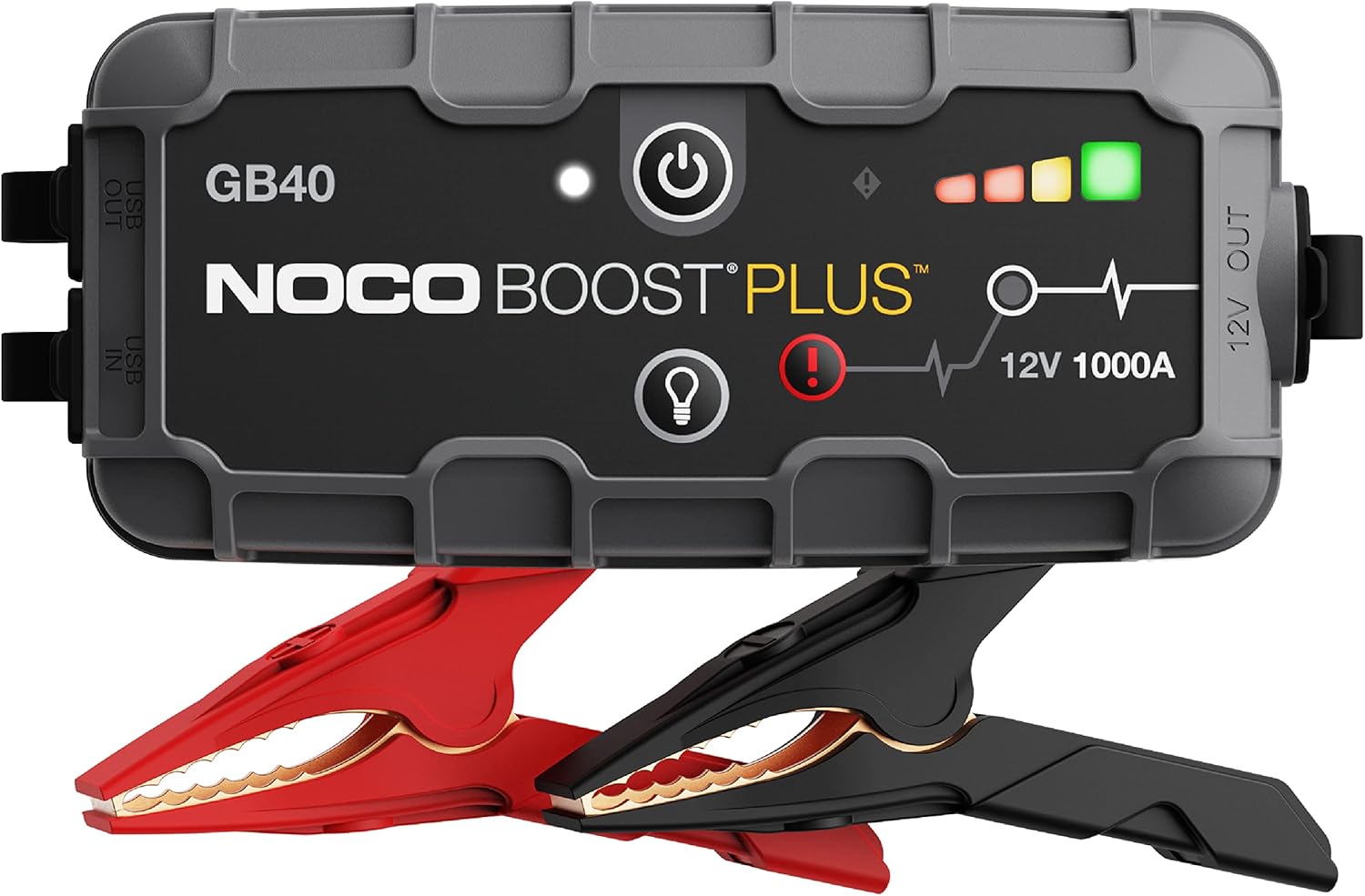
NOCO Boost Plus GB40 Jump Starter
A 1000A lithium jump starter that fits in your glovebox and works on any 12V battery. Your insurance against a dead 12V in a parking lot.
As an Amazon Associate, ThinkEV earns from qualifying purchases — at no extra cost to you.
What this means in practice: if you buy a Hyundai Kona EV and something goes wrong, you drive to one of 230 dealerships, most of which are within an hour of any major Canadian population centre. The technicians have worked on Hyundai EVs for years. Parts are in stock or available within days. Your warranty claim follows a well-established process.
If you buy a BYD Seal and something goes wrong, your options in 2026 are limited. The nearest service point might be in a different city. Parts availability for a brand-new entrant to the Canadian market is uncertain. Wait times for non-urgent repairs could stretch into weeks. This is not speculation, it is the reality of building a service network from scratch in a country the size of Canada.
Gear worth having
As an Amazon Associate, ThinkEV earns a small commission from qualifying purchases — at no extra cost to you.
PULIDIKI Car Cleaning Gel (Detailing Putty)
Press it into vents, buttons, and seams and it lifts out dust you did not know was there. Weirdly satisfying, genuinely useful.
As an Amazon Associate, ThinkEV earns from qualifying purchases — at no extra cost to you.
This matters most for buyers outside major metropolitan areas. In Toronto, Vancouver, and Montreal, early BYD service points will likely be accessible. In Saskatoon, Halifax, or Kamloops? You might be driving several hours for warranty work.
The service network gap will narrow over time. BYD has the financial resources to build Canadian infrastructure, they generated $75 billion USD in revenue in 2024. But the infrastructure does not exist today, and "it will be better in two years" is cold comfort when your vehicle needs service now.
For buyers who live in a major metro area, are comfortable with early-adopter inconvenience, and plan to handle minor issues through mobile service or independent EV shops, this gap is manageable. For buyers in rural or semi-rural Canada who depend on nearby, reliable service access, this gap is a dealbreaker.
WARRANTY AND SUPPORT
Winner: Established brands, proven track records matter
On paper, the warranty terms across both categories are competitive. BYD's published terms in other markets are strong, but Canadian buyers should still verify the exact local warranty package at launch rather than assume the global pattern carries over untouched.
The numbers look comparable. The difference is what happens when you actually need to use the warranty.
Hyundai has processed hundreds of thousands of warranty claims in Canada over the past decade. The process is documented, the dealership staff understand it, and the turnaround time is predictable. When the Hyundai Kona EV had a battery recall in 2020–2021 affecting certain production years, Hyundai replaced the entire battery packs at no cost. The process was not flawless, some owners waited months, but the infrastructure to handle the recall existed.
Tesla's warranty process is more variable. Some owners report smooth service centre experiences. Others report weeks-long waits, difficulty reaching customer service, and inconsistent communication. Tesla does not have a traditional dealer network with local ownership and accountability, every service interaction goes through a centralized corporate structure.
BYD's warranty track record in Canada does not exist yet. In Australia, where BYD has been selling the Atto 3 since 2022, warranty experiences have been generally positive, comparable to the Korean brands. But Australia has a mature consumer protection framework (Australian Consumer Law provides additional protections beyond manufacturer warranties), and BYD has had time to establish its service operations there. Canada is starting from zero.
The risk with an emerging brand's warranty is not that they will refuse to honour it, it is that the logistics of honouring it in a country where they have limited infrastructure may result in longer wait times, fewer loaner vehicle options, and more inconvenience than what established brands deliver. A warranty is only as good as the network that services it.
One additional factor: Canada's provincial consumer protection laws provide a backstop regardless of brand. In Quebec, the Consumer Protection Act implies warranties on all new vehicles sold in the province, independent of manufacturer terms. In Ontario, the Motor Vehicle Dealers Act requires dealers to honour warranty commitments. These legal protections apply equally to BYD, Tesla, and Hyundai, but enforcing them against a brand with minimal Canadian infrastructure is practically harder than enforcing them against one with 230 dealerships.
For risk-averse buyers, established brands offer peace of mind that comes from proven warranty execution. For buyers willing to tolerate early-adopter friction in exchange for the $15,000–$25,000 purchase price savings, the warranty terms themselves are competitive, the delivery mechanism is the unknown.
RESALE VALUE
Winner: Established brands, with a caveat
Resale value is the established brands' most persuasive financial argument, and it is worth taking seriously.
After five years, Tesla Model 3 vehicles in Canada retain approximately 50–60% of their original purchase price. Hyundai Ioniq 5 models hold 45–55%. BMW i4 retains 40–50%. These numbers are based on actual Canadian resale data from thousands of transactions.
For emerging brands in Canada, the resale data does not exist. BYD has not sold vehicles here yet. NIO has not sold vehicles here yet. There are no five-year-old BYD Seals on Canadian used car lots to generate price data. This is not a gap that can be filled with projections, it is a genuine unknown.
What we can do is look at comparable situations. When Hyundai first entered the Canadian market in the 1980s, resale values were poor, buyers perceived the brand as cheap and unproven, and used Hyundai prices reflected that skepticism. Over time, as Hyundai demonstrated reliability and built brand equity, resale values improved dramatically. The same pattern played out with Kia in the 2000s. It takes roughly a decade for a new brand to establish stable resale curves in a market.
BYD's resale trajectory in Australia offers a preliminary data point. Atto 3 models from 2022 are holding roughly 65–70% of their purchase price after two years, which is competitive with the Toyota bZ4X and Hyundai Kona EV in the same market. Two years is not five, and Australia is not Canada, but it suggests BYD's resale story may not be as catastrophic as skeptics assume.
For more detail on EV resale trends in the Canadian market, see our analysis of EV resale values in Canada for 2026.
The risk-reward calculation is straightforward. If a BYD Seal costs $43,000 and retains only 35% after five years, you lose $27,950 to depreciation. If a Tesla Model 3 costs $54,990 and retains 55%, you lose $24,746. The Tesla costs more upfront but loses less to depreciation, a net advantage of roughly $3,200 over five years.
But if BYD holds 45% (a plausible scenario if the brand establishes itself successfully), you lose $23,650, less than the Tesla. And you had $12,000 extra in your pocket for five years, earning interest or reducing financing costs.
The assessment: if you plan to sell or trade in within five years and resale value is central to your financial planning, established brands offer less risk. If you plan to keep the vehicle for 8–10 years (where all cars depreciate to roughly the same low percentages), or if the upfront savings matter more than the resale uncertainty, emerging brands present a rational gamble.
WINTER PERFORMANCE
Winner: Draw, both handle Canadian cold competently
Canadian winters are the ultimate stress test for any vehicle, and EVs face specific challenges that internal combustion engines do not. Battery chemistry, cabin heating efficiency, and traction management all matter in ways that differentiate brands, or, as it turns out, mostly do not.
Range reduction at -20 degrees Celsius runs about 25–35% for both categories. The BYD Seal loses approximately 25–30% of its rated range in deep cold. The Tesla Model 3 loses 30–35%. The Hyundai Ioniq 6 loses about 25–30%. The NIO ET5 claims 20–25% loss, which would be best-in-class if verified in Canadian conditions. These numbers are close enough that none of them should drive your purchase decision.
What does differ is how each vehicle manages cold-weather cabin heating. New brands like BYD and NIO include heat pumps as standard equipment on all trims. A heat pump moves heat rather than generating it, which is 2–3 times more energy-efficient than a resistive heater. Tesla includes a heat pump on the Model 3 Highland and Model Y, but it was not standard on earlier Model 3 variants. Hyundai and Kia include heat pumps on most EV trims.
The LFP battery chemistry used by BYD has a subtle winter advantage: LFP cells can be charged to 100% daily without degradation concerns. This means you start every winter morning with maximum range. NMC battery owners who follow the recommended 80% daily charge limit start each day with 20% less buffer, a meaningful difference when cold weather is already cutting your range by a third.
Battery preconditioning, heating the battery before DC fast charging to ensure optimal charge speeds, is available on all vehicles in both categories. Tesla's system is well-integrated with the navigation, automatically preconditioning when you route to a Supercharger. BYD and NIO offer manual preconditioning through their apps. Hyundai and Kia precondition automatically when fast charging is initiated but do not route-based precondition as smoothly as Tesla.
For AWD, which many Canadians consider essential for winter driving, established brands currently offer more options. Tesla sells AWD variants of the Model 3 and Model Y. Hyundai and Kia offer AWD on the Ioniq 5, EV6, and several other models. BYD's Seal offers a dual-motor AWD variant, but the Atto 3 is front-wheel-drive only. NIO's ET5 is available in AWD.
Here is the reality check: front-wheel-drive with good winter tyres outperforms AWD with all-season tyres in virtually every winter driving scenario. The tyre matters more than the drivetrain. A FWD BYD Atto 3 on Michelin X-Ice tyres will outbrake, out-corner, and generally outperform an AWD Tesla Model Y on all-seasons in Canadian winter conditions. Do not let the FWD-versus-AWD question override the tyre question.
Both categories handle Canadian winters. Neither category has a decisive advantage. Your winter tyre choice matters more than your brand choice.
TOTAL COST OF OWNERSHIP
Winner: Emerging brands, in most scenarios
Let me run three five-year ownership scenarios using real Canadian numbers. These scenarios capture the range of outcomes for both categories.
Scenario 1: BYD Seal vs Tesla Model 3 Long Range in Ontario
Purchase: BYD Seal at $43,000 vs Tesla Model 3 LR at $54,990. Neither qualifies for EVAP (BYD due to Chinese manufacturing, Tesla due to the $50,000 cap). Both qualify for Ontario's $1,000 used vehicle rebate if applicable, but these are new purchases, so no provincial incentive applies.
Insurance: Tesla insurance premiums in Ontario average approximately $2,400/year. BYD, as a new brand, may see similar or slightly lower premiums, estimated $2,100/year based on comparable vehicle values and safety ratings. Five-year insurance difference: roughly $1,500 in BYD's favour.
Electricity: Both vehicles consume approximately 15–17 kWh/100 km. At Ontario's off-peak rate of $0.076/kWh and 20,000 km/year, annual electricity cost is roughly $250–$290. Negligible difference between brands.
Maintenance: Both are EVs with minimal maintenance, tyre rotations, cabin air filters, brake fluid every few years. Estimated $500–$800/year for both. Tesla's service centre pricing tends to be slightly higher than independent shops, but the difference is minor. Call it a wash.
Depreciation: This is where the math gets interesting. Conservative estimate, BYD retains 35% after five years: $27,950 lost. Tesla retains 55%: $24,746 lost. Tesla wins on depreciation by $3,204. Moderate estimate, BYD retains 45%: $23,650 lost. Tesla retains 55%: $24,746 lost. BYD wins on depreciation by $1,096.
Five-year TCO with conservative depreciation: BYD at approximately $36,600 vs Tesla at $33,600. Tesla wins by $3,000.
Five-year TCO with moderate depreciation: BYD at approximately $32,300 vs Tesla at $33,600. BYD wins by $1,300.
For the complete methodology on EV ownership costs, see our guide to EV vs gas total cost of ownership in Canada.
Scenario 2: BYD Atto 3 vs Hyundai Kona EV in Quebec
Purchase: BYD Atto 3 at $40,000 vs Hyundai Kona EV at $42,999. The Kona qualifies for $5,000 EVAP and $2,000 Quebec Roulez vert: net $35,999. The Atto 3 qualifies for Quebec's $2,000 only: net $38,000. After incentives, the Kona is $2,000 cheaper.
Insurance and operating costs are comparable for both. Depreciation is the wildcard, but even with conservative BYD depreciation assumptions, the five-year total cost difference is under $4,000 in the Kona's favour. That $4,000 gap is real, and it is mostly driven by the EVAP rebate that Chinese manufacturers cannot access.
In Quebec, the incentive structure tips the balance toward established brands for budget-conscious buyers.
Scenario 3: NIO ET5 vs BMW i4 eDrive35 in British Columbia
Purchase: NIO ET5 at approximately $52,000 vs BMW i4 at $56,500. Both qualify for BC's $3,000 Go Electric rebate but neither qualifies for EVAP (both exceed the $50,000 cap after the rebate calculation). Net: NIO at $49,000, BMW at $53,500.
The BMW will depreciate to roughly 45% after five years (based on historical BMW EV data): $29,425 lost. The NIO's depreciation is unknown, if it holds 40%, it loses $31,200; if it holds 50%, it loses $26,000.
Five-year TCO is likely comparable between these two, with the NIO offering a slight advantage if its resale story is even moderately positive. The BMW offers the certainty of known depreciation curves and an established service network. The NIO offers more technology (LiDAR, NOMI assistant, potential battery swap capability) at a lower entry price.
The pattern across all three scenarios: emerging brands win on purchase price and hold their own on operating costs. Established brands win on incentive eligibility and resale predictability. The total cost difference over five years is typically $2,000–$5,000, meaningful, but not significant. The real financial decision is whether the upfront savings or the resale certainty matters more to your household budget.
For the broader picture on affordable EV options in Canada, see our roundup of the most affordable EVs in Canada for 2026.
VERDICT
Who should buy an emerging brand:
You should seriously consider BYD, NIO, or another emerging brand if you meet most of these criteria. You charge at home and do not depend heavily on public fast charging for daily life. You plan to keep the vehicle for 7 years or more, which neutralises the resale uncertainty. You live in or near a major metro area (Toronto, Vancouver, Montreal) where early service access will be available. You value getting the most hardware, LiDAR, larger screens, LFP batteries, premium interiors, for your money. You are comfortable being an early adopter and can tolerate the growing pains of a brand building its Canadian infrastructure. And the $15,000–$25,000 savings represents a meaningful improvement to your household finances.
The ideal emerging-brand buyer is a pragmatic risk-taker: someone who has done the research, understands the trade-offs, and has concluded that the financial and technological advantages outweigh the infrastructure and resale unknowns.
Who should buy an established brand:
You should stick with Tesla, Hyundai, Kia, GM, BMW, or another established brand if you meet most of these criteria. You road trip frequently on routes where charging network coverage and speed matter. You lease or plan to trade in within 3–5 years, making resale value predictability important. You live outside a major metro area where service access is limited. You want the peace of mind that comes from a brand with a proven Canadian track record and an established warranty infrastructure. You qualify for the $5,000 EVAP rebate (which eliminates much of the emerging brand price advantage for eligible vehicles). Or you simply prefer the certainty of a known quantity over the uncertainty of a promising newcomer.
The ideal established-brand buyer is a rational conservative: someone who values proven performance over maximum value and is willing to pay a premium for reduced risk.
The bigger picture:
The competition itself benefits all Canadian buyers, a point that gets buried in brand-versus-brand arguments. Tesla, Hyundai, BMW, and other established players cannot ignore BYD pricing forever. When a comparable EV costs $15,000 less, that puts pressure on margins. Prices come down. Features go up. Value improves across the board.
Even if you ultimately choose an established brand, the existence of affordable alternatives from BYD and NIO makes your negotiation position stronger and your options broader. That is the real story here. The Canadian EV market is becoming genuinely competitive for the first time. Whoever you buy from, you benefit from that competition.
If you want my personal lean: for most Canadian buyers in 2026, I would suggest test-driving both categories before deciding. The BYD Seal's value proposition is genuinely impressive, and dismissing it based on brand unfamiliarity alone is leaving money on the table. But buying one without a clear-eyed understanding of the service network limitations is setting yourself up for frustration. Know what you are getting into, budget for the possibility of inconvenience, and make the choice that fits your life, not the choice that fits a headline.
There is no universally correct answer. But there is your correct answer, based on your priorities, your risk tolerance, your geography, and your financial situation.
Gear worth having
As an Amazon Associate, ThinkEV earns a small commission from qualifying purchases — at no extra cost to you.

WixGear Magnetic Air Vent Phone Mount (2-Pack)
A magnet strong enough that your phone never flinches over potholes or rail crossings. Two in the box, one for each car.
As an Amazon Associate, ThinkEV earns from qualifying purchases — at no extra cost to you.
Related Reading
- New EV Brands Coming to Canada, Which emerging brands are entering the Canadian market and when.
- Chinese EV Safety Ratings, Euro NCAP results for BYD, NIO, and XPeng.
- BYD Coming to Canada, The tariff deal, pricing expectations, and dealer network plans.
- EV Resale Values in Canada, How EVs hold their value and what it means for your purchase decision.
- EV vs Gas: Total Cost of Ownership, Complete five-year cost comparison for Canadian buyers.
- Most Affordable EVs in Canada 2026, The best value EVs available in Canada right now.
Gear worth having
As an Amazon Associate, ThinkEV earns a small commission from qualifying purchases — at no extra cost to you.

Car Cup Holder Coasters (4-Pack)
Drop-in coasters that catch spills and crumbs so your cup holders stay clean. Rinse and reuse forever.
As an Amazon Associate, ThinkEV earns from qualifying purchases — at no extra cost to you.

Founder & Chief Editor
Vlad Pereira is the founder and chief editor of ThinkEV.ca, the Canadian electric-vehicle publication he writes and edits from Courtenay, British Columbia. He covers EV pricing, federal and provincial rebates, charging costs, and the Chinese manufacturers now entering Canada, from the buyer's side rather than the press-fleet side. ThinkEV is a venture of Vlad Pereira Online; his writing on health, income and the long game lives at vladpereira.com.
Frequently asked questions
Are new EV brands reliable in Canada?
Do new EV brands qualify for the federal EVAP rebate?
What happens if a new EV brand leaves Canada?
How does the 6.1% tariff affect BYD pricing in Canada?
Is BYD's Blade Battery safer than Tesla's battery?
Can I service a BYD at any mechanic in Canada?
Will emerging EV brands hold their value in Canada?
Do new EV brands handle Canadian winters as well as Tesla or Hyundai?
Should I wait for BYD to arrive or buy a Hyundai now?
More EV & road-trip finds
Affordable upgrades worth a look — tap any to check the price on Amazon.
 ★ 68
★ 68WeatherTech FloorLiner for Tesla Model 3
View on Amazon ★ 8,681
Chemical Guys Complete Car Wash Kit
View on Amazon ★ 164
★ 164Solar-Powered LED Ambient Light
View on Amazon ★ 900
★ 900Personalized Photo Car Air Freshener
View on Amazon ★ 865
★ 865Collapsible Trunk Organizer
View on Amazon ★ 1,944
VIOFO A229 Pro 4K Dash Cam
View on Amazon ★ 87
★ 87Car Window Sun Shades for Kids (4-Pack)
View on Amazon ★ 268
★ 268Anti-Slip Leather Steering Wheel Cover
View on AmazonRead, Plan, Then Stay Current
Explore our expert articles to understand incentives and ownership costs, use the map to pressure-test charging reality, then subscribe so new EV coverage comes straight to you.
Continue Reading
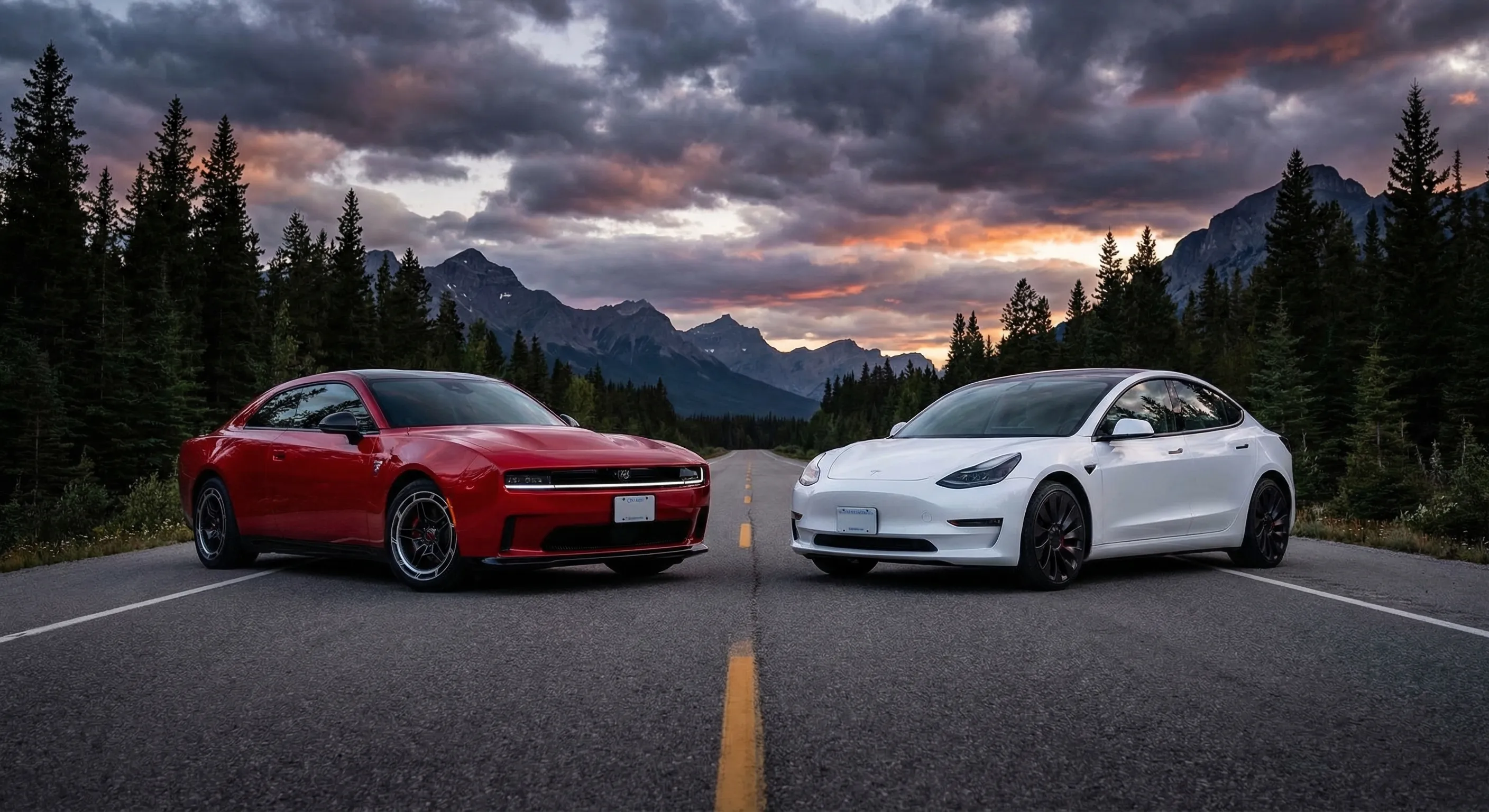
Dodge Charger Daytona vs Tesla Model 3 Performance
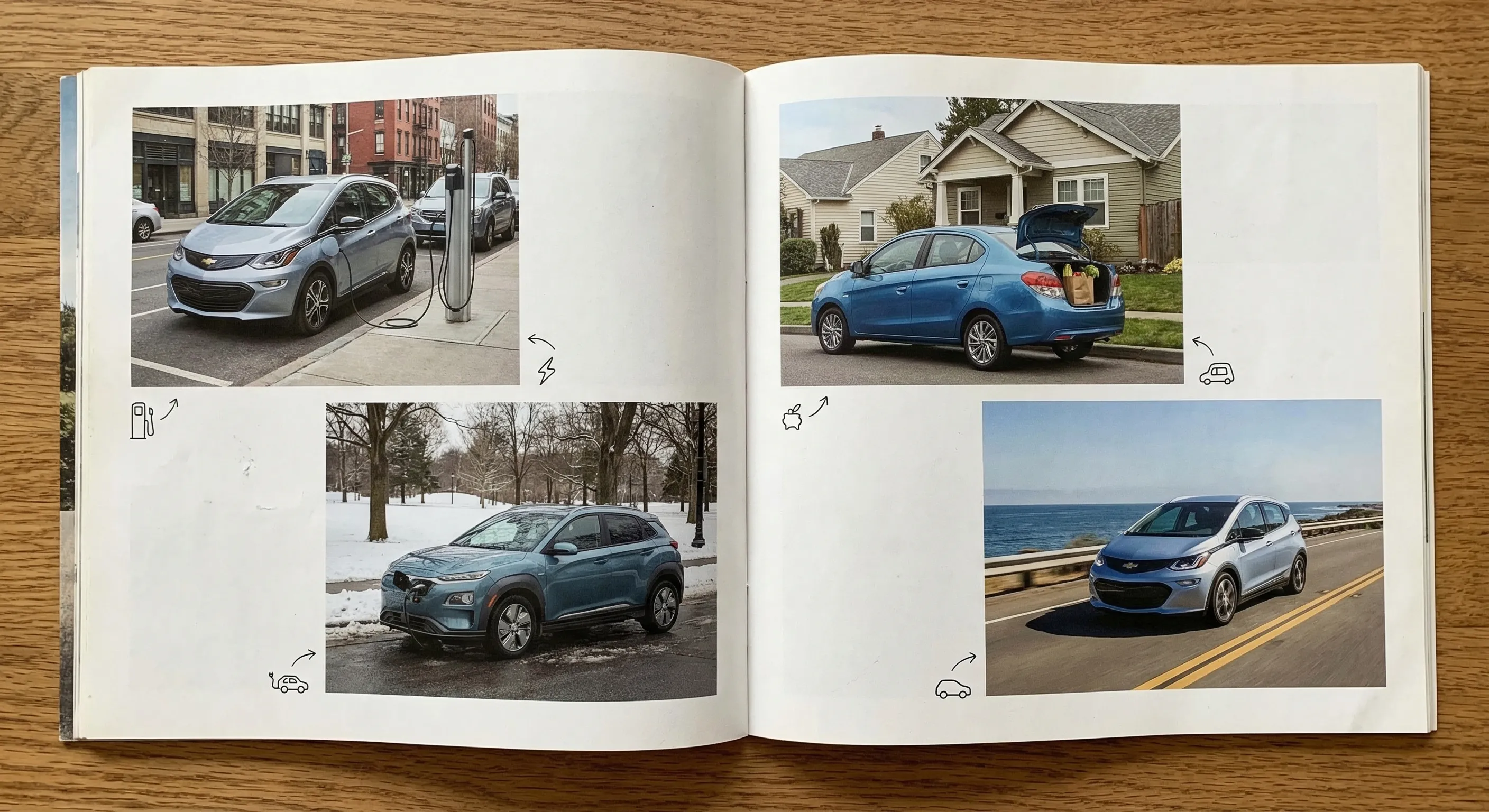
Affordable EVs in Canada 2026: What Stands Out
Chevy Equinox EV Canada Review: $45K, 513 km
Ford F-150 Lightning Canada Review: The Real Math
Ford Mustang Mach-E Review 2026: Still Worth It?