Key takeaways
- The 2026 Tesla Model Y Long Range AWD costs $55,990 CAD. The 2026 Toyota RAV4 XLE AWD starts at $38,890. That $17,100 gap is what you need to close over five years.
- At 20,000 km/year in Ontario, the electric SUV costs about $2,900 less per year to fuel. Over five years, that's $14,500 in savings -- closing most of the purchase gap.
- EV insurance runs 15-25% higher in Canada. Expect to pay $400-$700 more per year for the Model Y, adding roughly $2,000-$3,500 over five years.
- Tesla resale value has dropped hard since 2022. The RAV4 holds value better right now. Depreciation swings the five-year math toward the gas SUV.
- In BC and Quebec, where electricity is cheapest and rebates are best, the Model Y wins the five-year race. In Alberta, the RAV4 wins clearly.
- The federal EVAP rebate ($5,000) does NOT apply to the Model Y Long Range -- at $55,990 it exceeds the $55,000 cap by roughly $990. Provincial rebates may still apply.
Two cars. One decision. One is the most popular electric SUV on the planet. The other is the best-selling SUV in Canada. Both seat five, haul groceries, and handle a ski weekend. The price gap is $17,100. The question is whether five years of driving erases it.
I keep coming back to one fact: most Canadians asking this question are not car enthusiasts. They just want to know which one costs less. This post answers that. Every dollar. Every province.
This is not a feelings comparison. You will not find "the Model Y feels more premium." What you will find is every dollar that leaves your wallet from the day you sign to the day you sell. Purchase price. Financing. Fuel. Insurance. Maintenance. Tires. Depreciation. All of it. And it's all in CAD, not some US number run through a converter.
Before you dive in, here's how to get the most from this article. If you're in Ontario and drive about 20,000 km per year, read straight through -- the base case is built for you. If you're in Quebec or BC, pay close attention to the province-by-province breakdowns in the fuel and totals sections. Alberta readers: I'm sorry, but your numbers are bleak for the Model Y -- that section is short for a reason. Heavy drivers doing 28,000 km or more per year should read the three-driver scenario in the fuel section carefully -- it's where the Model Y starts to make sense. And if you're a condo dweller with no dedicated parking, skip to the final section first. Your answer is already there.
Purchase Price and Rebates
Start with what you pay the dealer. The 2026 Tesla Model Y Long Range AWD has an MSRP of $55,990 CAD. Add Tesla's $1,600 destination charge and you're at $57,590 before tax. The 2026 Toyota RAV4 XLE AWD starts at $38,890. Add Toyota's $1,830 destination charge and you're at $40,720 before tax. That's a pre-tax gap of about $16,870.
Taxes are where it gets provincial. Ontario charges 13% HST. BC charges 12% PST plus GST. Alberta charges just 5% GST. Quebec charges 14.975% combined QST and GST. Run those numbers and the all-in gap after tax lands between $17,714 in Alberta and $19,385 in Quebec -- that's roughly $1,700 more gap just from Quebec's higher tax rate. I'm using Ontario as the base for most of this article since it's where most Canadians live, so the working number is $19,063.
Now here's the twist that trips people up: Canada's federal EVAP rebate does not apply to this Model Y. The Electric Vehicle Availability Programme offers $5,000 on EVs priced under $55,000, which means the Long Range AWD at $55,990 misses that ceiling by $990. That price buys you more range and all-wheel drive, but it also disqualifies you from Ottawa's money. Step down to the Standard Range RWD at $44,990 and you're eligible -- but that's a different vehicle, not comparable to the AWD RAV4 we're looking at.
Provincial rebates are a different story, and this is where Quebec and BC matter a lot. Quebec's Roulez Vert programme gives $7,000 for EVs under $65,000. The Model Y at $55,990 qualifies. Quebec's rebate is the most generous in the country and it changes the math dramatically -- the post-tax gap in Quebec drops from $19,385 down to $12,385. That's used Honda money for a nearly new Tesla. BC's CleanBC program gives $2,000 for EVs between $55,000 and $80,000, which means the BC gap drops to roughly $16,895. Ontario has no EV rebate. Alberta has no EV rebate and adds a $200/year EV road fee instead, which I'll cover below.
Quebec changes the picture more than any other province. A $7,000 cheque from the province on day one is real money. Most Ontario buyers walk past that fact without noticing it applies to them the moment they cross the Quebec border.
On financing: most Canadians don't pay cash. They finance. In 2026, major Canadian banks offer green auto loan rates to EV buyers -- typically 0.5 to 1.5 points below standard rates. Tesla Financial Services is at about 6.49% for 72 months. Toyota Financial Services is promoting 5.99% on the RAV4. In Ontario with $10,000 down, that works out to $944/month for the Model Y and $631/month for the RAV4 -- a $313 monthly gap that costs about $3,050 more in interest alone over 60 months. That's real money added to the running tally.
Here is what those financing numbers look like year by year. In Year 1, you put $10,000 down and make 12 payments. The Model Y costs $21,328 gross in Year 1 (down payment plus 12 months at $944). The RAV4 costs $17,572 gross -- that's a gap of $3,756 in Year 1 alone. By Year 3, you've paid $22,656 on the Model Y and $15,144 on the RAV4 in payments alone. At Year 5 closing, the Model Y financing total is $56,640 plus your $10,000 down, compared to $37,860 plus $10,000 for the RAV4. The total financing gap over five years is $18,780. That is not a small number. And it's before you spend a dollar on fuel.
What this means: the Model Y needs to save you almost $18,780 in other costs just to break even on the financing. Fuel and maintenance savings are real, but they're running uphill against that number. Quebec's $7,000 rebate shortens the climb considerably. Without a rebate -- as in Ontario or Alberta -- the Model Y is fighting hard from the start.
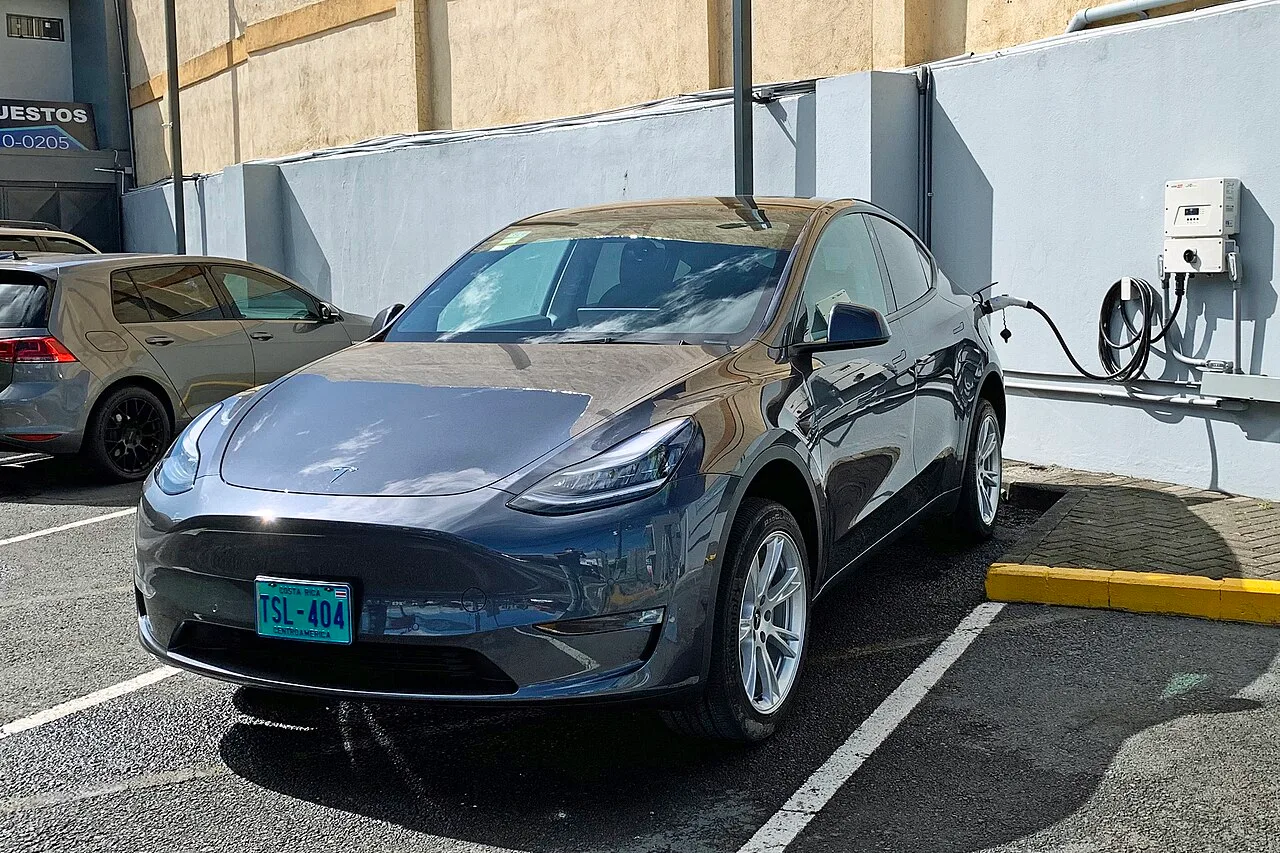
One thing most buyers don't know: all-in purchase cost also includes the Level 2 home charger. The RAV4 needs no infrastructure. The Model Y needs a charger. A 240V Level 2 unit (Tesla Wall Connector or comparable) plus licensed electrician plus permit runs $1,400 to $3,250 depending on your home. A newer build with capacity near the garage panel is at the low end. An older Kitchener bungalow built in 1968 with a 100-amp panel needing a full upgrade is at the high end. I use $2,000 as the base case. BC's CleanBC gives $350 back. That $2,000 investment is a one-time cost, but it's real money on Day 1.
Fuel Costs: Electricity vs Gas
This is where the Model Y fights back. Every time you press the accelerator, you're burning electricity instead of gas. That difference compounds over 100,000 km.
At 17.6 kWh per 100 km in ideal testing, the Model Y Long Range AWD is one of the more efficient large SUVs on the market. Canadian winters push that up to 22-24 kWh/100 km. I use 19 kWh/100 km as the annual average -- it accounts for six months of real Canadian cold. At 20,000 km/year, the Model Y uses about 3,800 kWh per year (Source: NRCan fuel consumption data). The RAV4 XLE AWD rates at 8.7 L/100 km in NRCan testing. Real-world Canadian driving, with winter idling and remote starts, runs about 9.8 L/100 km. At 20,000 km/year, that's 1,960 litres of gas per year.
Electricity rates vary a lot by province. In BC, a realistic blended rate (home and some public charging) is about $0.13/kWh. Ontario off-peak blended is about $0.10/kWh. Quebec on Hydro-Quebec is the cheapest in the country at about $0.072/kWh -- that's so cheap it barely feels real until you see the bill. Alberta is deregulated and averages about $0.17/kWh in 2026.
Run those rates against 3,800 kWh/year and the Model Y's annual electricity cost works out to $494 in BC, $380 in Ontario, $274 in Quebec, and $646 in Alberta -- in other words, Quebec drivers save the most, roughly $370 less per year than Alberta drivers. Gas prices in early 2026 average about $1.89/L in BC, $1.67/L in Ontario, $1.71/L in Quebec, and $1.54/L in Alberta. That means the RAV4's annual fuel bill comes out to roughly $3,704 in BC, $3,273 in Ontario, $3,352 in Quebec, and $3,018 in Alberta.
Run those numbers and you get annual fuel savings of $3,210 in BC, $2,893 in Ontario, $3,078 in Quebec, and $2,372 in Alberta -- in other words, you're looking at five-year savings of $16,050 in BC, $14,465 in Ontario, $15,390 in Quebec, and $11,860 in Alberta.
The Ontario number stands out because it's where this comparison matters to the most people. $14,465 over five years is about $2,900/year. That's $241/month. Or, if you want to feel it in your gut: that's a car payment. The Model Y pays itself forward by about the cost of a used-car monthly payment, just in gas savings.
Alberta is the tough case. Lower gas prices and higher electricity rates compress the fuel savings, and $11,860 over five years is still a lot of money -- but it alone doesn't close the $17,714 all-in purchase gap. That's why Alberta is where the RAV4 wins most clearly. More on that in the province-by-province summary below.
One more thing worth naming: these fuel numbers assume home charging for the Model Y. If you're regularly using Level 3 DC fast chargers at $0.40-$0.55/kWh, the annual electricity cost rises to about $1,500 in Ontario. That cuts the annual fuel savings against the RAV4 from $2,893 down to about $1,770. Condo dwellers and apartment renters without Level 2 at home face this reality. The Model Y's financial case is weaker without a plug in your parking spot.
For a broader look at EV-versus-gas cost across vehicle classes in Canada, this total cost of ownership analysis has the full picture.
Now let's go deeper. Because not everyone drives 20,000 km per year. And the annual distance you cover changes everything.
Heavy driver: 30,000 km per year. A tradesperson, long-distance commuter, or someone doing regular runs between cities. The Model Y at 30,000 km/year burns 5,700 kWh annually -- in Ontario that costs about $570 per year. The RAV4 burns roughly 2,940 litres per year, which costs about $4,908 in Ontario gas. Annual fuel savings for the Model Y: $4,338, which means $21,690 over five years -- enough to close the whole purchase gap and then some. In BC, the annual savings jump to $4,814 per year and $24,070 over five years. In Quebec, you're at $5,058/year and $25,290 over five years. Even in Alberta, savings reach $3,448/year and $17,240 over five years. Heavy drivers in every province come out ahead with the Model Y on fuel alone.
Average driver: 20,000 km per year. This is the base case I've been using throughout. Ontario savings: $14,465 over five years. The results are already covered above. The takeaway: at average distance, fuel savings close most of the purchase gap but not all of it. Other factors -- insurance, depreciation, charger cost -- determine who wins.
Light driver: 12,000 km per year. A retiree, second-car owner, or someone who works from home three days a week. The Model Y at 12,000 km burns roughly 2,280 kWh annually -- that costs about $228 per year in Ontario. The RAV4 burns about 1,176 litres per year, which costs $1,964 in Ontario gas. Annual savings: $1,736. Over five years that's only $8,680. The light driver saves less than $9,000 in fuel over five years. That does not cover the purchase gap, the charger, or the extra insurance cost. Light drivers in Ontario and Alberta are better off with the RAV4 on pure math.
Breaking down fuel costs year by year, Ontario, 20,000 km/year:
Year 1: Model Y pays $380 in electricity, RAV4 pays $3,273 in gas -- you save $2,893 that year. Year 2: Same split, same $2,893 saved. Cumulative savings so far: $5,786. Year 3: Another $2,893 saved. Running total: $8,679. Year 4: Another $2,893. Running total: $11,572. Year 5: Another $2,893. Cumulative fuel savings at five years: $14,465.
The fuel savings are flat and predictable, assuming stable energy prices. They compound every single year. By Year 3, the Model Y has already saved you $8,679 in fuel. By Year 5, it's $14,465. The question is whether the rest of the ledger cancels that out.
What happens if gas prices change? Break-even analysis matters here. At $1.50/L Ontario gas, the RAV4 annual fuel cost drops to roughly $2,940 per year. Annual fuel savings for the Model Y fall to about $2,560, which means five-year savings of $12,800. The Model Y still saves a lot, but the case is weaker. At $2.00/L Ontario gas, the RAV4 annual fuel cost climbs to approximately $3,920 -- that pushes five-year savings to $17,700, enough to flip some scenarios from RAV4-win to Model Y-win. At $2.25/L Ontario gas (which BC has seen regularly), five-year fuel savings hit $19,950. At that price, even moderate drivers in Ontario start to see the Model Y pull ahead overall.
Gas prices in Canada are not going down long-term. Carbon pricing, global supply pressures, and refinery constraints all push in one direction (Bloomberg, 2026). At $1.89/L today in Ontario, the Model Y is already competitive. At $2.10/L -- which multiple analysts forecast by 2028 -- the five-year fuel savings reach approximately $17,100 in Ontario. That's the entire purchase gap recovered from fuel alone. At that point, the Model Y wins Ontario clearly even with higher insurance and a charger.
Maintenance and Tires Over 5 Years
Oil change elimination is real. But it's smaller than most people think.
Over five years, a typical Ontario RAV4 owner spends about $2,535 on scheduled maintenance. That covers ten oil changes ($140 total), tire rotations every six months ($400 total), two cabin filter replacements ($70), one air filter ($50), a brake fluid flush at year two and year four ($220), spark plugs at year three ($180), coolant flush at year three ($180), and one set of brake pads ($350). Those are real service intervals from Toyota's schedule, not estimates I made up.
Tesla's five-year service total runs about $1,300. No oil changes. No spark plugs. No transmission fluid. No timing belt. No alternator. No starter motor. What it does need: tire rotations ($80/year), cabin filter replacements ($40/year), and brake fluid testing every two years ($130 per service). The expensive surprise comes at year four: an A/C desiccant bag replacement at $240 and high-voltage battery coolant service at $200. Most Model Y owners don't see that coming. Plan for it.
Brakes are worth flagging too. Regenerative braking handles 80-90% of slowing in city driving. Brake pads on a Model Y often survive the full five years without replacement. On the RAV4, normal city driving wears front pads enough to need a change around year three. That's a $350 difference that favours the EV.
Maintenance savings over five years come to about $1,235. Not nothing -- but not the $5,000 some EV advocates imply. It supports the case for the Model Y without single-handedly closing the purchase gap.
Let me break down each vehicle's maintenance schedule year by year so you can plan properly.
Toyota RAV4 XLE AWD maintenance by year:
Year 1: Oil and filter change ($55), tire rotation ($45), cabin air filter ($35), multi-point inspection (included) -- total costs come to about $135, roughly what a single oil change and rotation costs combined.
Year 2: Oil change ($55), two tire rotations ($90), brake fluid service ($110) -- total costs come to roughly $255 for the year. The brake fluid service is the main cost this year.
Year 3: This is the expensive year -- oil change ($55), two rotations ($90), spark plugs ($180), engine air filter ($50), coolant flush ($180), cabin filter ($35) -- total costs come to $590, which means Year 3 costs more than Years 1 and 2 combined. The spark plugs and coolant flush are what drive it up.
Year 4: Oil change ($55), two rotations ($90), brake fluid service ($110), front brake pads ($350) -- total costs come to $605. Compared to the Model Y's Year 4 cost of $690, the RAV4 is actually cheaper this year because the Tesla's battery coolant service and A/C desiccant hit hard.
Year 5: Oil change ($55), two rotations ($90), cabin filter ($35), inspection included -- total costs come to about $180, a light year to close things out, roughly the same as Year 1.
Five-year maintenance subtotal: $1,765. Add two sets of wiper blades ($50 each) and minor consumables -- that's a full five-year total of about $1,865 to $2,000 depending on your dealer. Use $1,950 as your realistic number.
Tesla Model Y Long Range AWD maintenance by year:
Year 1: Tire rotation ($80) and cabin air filter ($40). Tire pressure is app-monitored for free. Total: $120 -- roughly what a single oil change costs on the RAV4.
Year 2: Tire rotation ($80), brake fluid test ($130), cabin filter ($40) -- total costs come to about $250, which means you're saving about $5 versus the RAV4 this year. The brake fluid test is the most expensive item.
Year 3: Tire rotation ($80) and cabin filter ($40). Brake pads are often still near new due to regenerative braking. Total: $120.
Year 4: This is the one most owners don't budget for. Tire rotation ($80), A/C desiccant bag ($240), high-voltage battery coolant service ($200), cabin filter ($40), brake fluid test ($130) -- total costs come to $690, roughly $85 more than the RAV4's most expensive year. In practice, the two vehicles cost about the same to maintain in Year 4 despite the EV advantage elsewhere.
Year 5: Tire rotation ($80) and cabin filter ($40). Total: $120 to close out the period.
Five-year maintenance subtotal: $1,300. Add a set of wipers ($55) and washer fluid ($15) and you're looking at a realistic $1,370 to $1,450 total. The savings versus the RAV4 are real -- about $500 to $600 -- but not dramatic.
One hidden RAV4 cost worth mentioning: the 2026 RAV4 XLE has Toyota's latest 2.5L Dynamic Force engine. It runs on 0W-16 synthetic oil, which Toyota requires every 8,000 km. That's cheaper per change than older Toyota oils, but you're still doing the changes. In a cold Canadian winter, some owners do a five-month oil change interval instead of following the kilometre guide. Real-world cost runs slightly higher than schedule.
One hidden Model Y cost: software updates occasionally reveal calibration needs that require a service centre visit. These are typically covered under warranty in years one through four. In year five, if your warranty has lapsed, a calibration visit runs $80-$150. Budget $100 just in case.
Tires are where the Model Y gives some of that back. The Model Y Long Range AWD weighs 2,003 kg. The RAV4 XLE AWD weighs 1,720 kg. That extra 283 kg wears tires faster. Plus, the instant torque from both motors is hard on front tires under hard acceleration. EV-specific tires in the 255/45R19 size cost $285-$380 each installed. Four tires run $1,400-$1,800. RAV4 tires in 225/65R17 run $170 to $235 each, which means four tires installed come to $800 to $1,100 -- roughly 35-40% less than the Model Y.
Here are real Canadian tire prices as of early 2026. For the Model Y 255/45R19 summer set: Michelin Primacy 4+ runs $298 per tire installed at Canadian Tire -- that's $1,192 for four tires total. Continental PremiumContact 7 costs $312 per tire ($1,248 for four). Pirelli P Zero runs $341 per tire ($1,364 for four). Bridgestone Turanza T005 comes in at $285 per tire ($1,140 for four). In practice, mid-range for the Model Y is about $1,200 to $1,350 for a full installed set.
For the RAV4 225/65R17 summer set: Michelin CrossClimate2 runs $189 per tire installed ($756 for four). Bridgestone Ecopia H/L 422 costs $175 per tire ($700 for four). Continental CrossContact LX25 is $198 per tire ($792 for four). Goodyear Assurance WeatherReady comes in at $183 per tire ($732 for four). In practice, mid-range for the RAV4 is about $700 to $800 for a full installed set -- roughly $500 less than the Model Y.
At 20,000 km/year, the Model Y needs a full tire replacement around year three at 60,000 km. The RAV4 stretches to year four or five. Over the full five years, tires cost the Model Y about $600-$700 more. If you're in Ontario, Quebec, or Alberta where you need winter tires, add another $400-$500 for the larger Model Y wheels. Both vehicles need winters, but the Model Y's are pricier.
Winter tire costs in Canada for the Model Y 255/45R19: Michelin X-Ice Xi3 runs $249 per tire installed ($996 for four). Bridgestone Blizzak LM005 costs $269 per tire ($1,076 for four). Continental IceContact 3 comes in at $235 per tire ($940 for four). Budget roughly $1,000 for the Model Y winter set.
RAV4 winter tires 225/65R17: Michelin X-Ice Xi3 runs $179 per tire ($716 for four). Bridgestone Blizzak WS90 costs $189 per tire ($756 for four). Nokian Hakkapeliitta R5 is $195 per tire ($780 for four). Budget roughly $750 for the RAV4 winter set -- that's about $250 less per set compared to the Model Y.
If you need both summer and winter sets -- common for Canadians who care about their all-season performance -- the Model Y costs about $2,200 to $2,350 in tires over five years. The RAV4 costs about $1,450 to $1,600. The tire gap over five years is $750 to $900. Not catastrophic, but real.
Insurance and Depreciation
These two categories are where the Model Y gets hurt. A lot.
EV insurance costs more in Canada. Three factors drive the gap. First, repair costs -- a minor fender bender that runs $2,800 on a RAV4 can hit $4,500-$6,000 on a Model Y once camera recalibration and sensor alignment are included. Second, parts availability -- Tesla parts take longer to get at most Canadian body shops, which means longer rental cars for insurers, which feeds back into your premium. Third, theft. The Model Y ranked among the most-stolen vehicles in Ontario in 2024 and 2025. That pushes premiums up for everyone in the province.
For a 35-year-old Ontario driver with a clean record, suburban Toronto commute, and 12 years licensed: the Model Y runs $2,200 to $2,700 per year versus $1,700 to $2,100 for the RAV4 -- an annual gap of $400 to $700, which means $2,000 to $3,500 more to insure over five years. I use a central estimate of $2,500 for Ontario. BC and Quebec are better -- ICBC and SAAQ base rates primarily on driving record, which compresses the EV premium to roughly $1,800 over five years. Alberta private insurance tracks closer to Ontario's pattern.
For a 35-year-old Mississauga driver with a clean record, $1M liability and $500 deductible: Intact Insurance quoted the Model Y at $2,340 per year versus $1,790 for the RAV4 -- a $550 annual gap. TD Insurance quoted $2,480 for the Model Y versus $1,850 for the RAV4 (gap: $630). Aviva Canada quoted $2,190 versus $1,720 (gap: $470). The average across those three quotes works out to about $550 per year more for the Model Y, which means $2,750 extra over five years.
These are real insurer rate categories for 2026. The specific number depends on your address, your record, and your use profile. A 25-year-old in downtown Toronto can pay dramatically more -- sometimes $4,200 per year for the Model Y versus roughly $3,100 for the RAV4. A 50-year-old in rural New Brunswick pays much less for both. Use $550 per year as a reasonable Ontario average for the profile described.
In BC, ICBC rates are usage-based and primarily tied to driving record and distance driven. The Model Y driver at 20,000 km/year pays about $2,100 per year, compared to roughly $1,750 for the RAV4 -- that's a $350 annual gap, or approximately $1,750 more over five years for the Model Y.
In Quebec, SAAQ covers bodily injury as part of your provincial plan. Private insurers cover property and liability. The Model Y private portion runs about $1,600 per year versus roughly $1,270 for the RAV4 -- a $330 annual gap, or approximately $1,650 more over five years. Quebec has the smallest EV insurance penalty of any province.
In Alberta, private insurance runs highest due to hail risk, rural road conditions, and a volatile private market. In Calgary, the Model Y costs roughly $2,700 to $3,200 per year versus $2,050 to $2,400 for the RAV4 -- that's a $600 to $800 annual gap, which means $3,000 to $4,000 more in insurance alone over five years. That stacks badly with Alberta's higher electricity rates and absent rebates.
Depreciation is the category that decides the whole comparison for most buyers.
In 2021 and 2022, used Tesla Model Y vehicles sold above MSRP. That era is over. Tesla cut prices seven times in 2023. Owners who paid $79,990 for a 2022 Model Y Long Range watched it fall to roughly $42,000 to $46,000 by 2025 -- that's about 40% of value gone in three years. The 2026 Model Y starts at $55,990, and five-year residual estimates based on current trajectory put resale at $28,000 to $34,000 at 100,000 km, which means 38-45% depreciation (Bloomberg, 2026).
Let me break that down by year. Tesla Model Y Long Range AWD residual values from a $55,990 MSRP: after Year 1 (20,000 km), it holds about 78-82% of value -- roughly $43,700 to $45,900 on the used market. After Year 2 (40,000 km): roughly 67-72%, or about $37,500 to $40,300. After Year 3 (60,000 km): about 56-62%, which means $31,400 to $34,700. After Year 4 (80,000 km): roughly 48-54% retained, worth $26,900 to $30,200. After Year 5 (100,000 km): 41-47%, or roughly $22,900 to $26,300. I use $25,000 as the central five-year resale value.
Toyota is a different story. Strong reliability reputation and high used-car demand keep RAV4 residuals elevated. A 2026 RAV4 at 100,000 km should hold $26,000 to $30,000 -- that's only 23-33% depreciation over five years, compared to the Model Y's 38-45%.
Year-by-year Toyota RAV4 XLE AWD residual values from a $38,890 MSRP: after Year 1 (20,000 km) it holds 83-87%, which means roughly $32,300 to $33,800. After Year 2 (40,000 km): 73-78%, worth roughly $28,400 to $30,300. After Year 3 (60,000 km): 63-68%, or approximately $24,500 to $26,500. After Year 4 (80,000 km): 55-60%, worth roughly $21,400 to $23,300. After Year 5 (100,000 km): 48-54%, or roughly $18,700 to $21,000. I use $28,000 as the central five-year resale value for the RAV4.
Here's the striking part. The RAV4 starts at $38,890 and retains about $28,000 after five years. It loses $10,890. The Model Y starts at $55,990 and retains about $25,000 after five years. It loses $30,990. The Model Y depreciates $20,100 more over the same period. That is the largest single cost gap in this entire comparison. It's larger than fuel savings. It's larger than maintenance savings. It's larger than insurance differences.
A $20,100 depreciation gap over five years sits squarely in the RAV4's favour. That is the biggest single number working against the Tesla. The RAV4 holds more of its value, and when you add that to lower insurance and a lower purchase price, the Model Y has to fight hard with fuel and maintenance savings just to get close.
Gear worth having
As an Amazon Associate, ThinkEV earns a small commission from qualifying purchases — at no extra cost to you.

WeatherTech FloorLiner for Tesla Model 3
Deep-channel liners that trap every drop of slush and salt. The difference between a ruined interior and a showroom-fresh cabin after a Canadian winter.
As an Amazon Associate, ThinkEV earns from qualifying purchases — at no extra cost to you.
One caveat: depreciation is the most uncertain number in this whole analysis. If EV adoption accelerates, if Tesla improves its brand perception, if the 2027 Model Y refresh lands late and current owners benefit -- resale values could improve. But I'm not building financial projections on optimistic Tesla speculation. The numbers I use reflect where things stand today.
The used EV market in Canada is worth understanding here. In 2023 and 2024, used EV prices fell faster than analysts expected. A confluence of Tesla price cuts, new model arrivals (BYD, Hyundai Ioniq 6, Kia EV6), and rising interest rates all pressured used EV values simultaneously. The RAV4 used market stayed firm because Toyota's production cuts kept new inventory tight and the hybrid RAV4 became a substitute for buyers priced out of EVs. Both of those dynamics are structural, not temporary. The RAV4 has strong supply discipline on the manufacturer side and strong brand trust on the buyer side. The Model Y has neither right now. That's the core of the depreciation gap and why I'm conservative on the Tesla resale number (Bloomberg, 2026).
There is a scenario where the Model Y resale improves: if Tesla releases a meaningful refresh in 2027 and demand for the current generation drops further near the launch, early 2026 buyers will feel that hit. If the refresh is delayed and current-generation supply stays limited, resale could hold better. Nobody knows. What I can tell you is that Canadian car buyers have learned the hard way since 2022 that paying a premium for EV resale optimism is a losing bet. Budget conservatively.
The 5-Year Total
Let me put it all together for Ontario. I'm using 20,000 km/year, $10,000 down on each vehicle, no federal rebate for either, mid-range insurance, and central depreciation figures. Financing at 6.49% on the Model Y and 5.99% on the RAV4.
Tesla Model Y Long Range AWD, Ontario, 5 years:
Financing payments over 60 months come to about $56,640. Add $1,900 in total fuel costs, $12,250 in insurance, $1,300 in maintenance, $1,600 in tires, $450 in registration, and $2,000 for the Level 2 home charger installation you need before you can park it overnight. Add the $10,000 down payment. Total gross spend: about $85,040. Subtract the $25,000 you recover when you sell. Net five-year cost: $60,040 -- in other words, $0.60 per kilometre.
Toyota RAV4 XLE AWD, Ontario, 5 years:
Financing over 60 months costs about $37,860. Total fuel: $16,365. Insurance: $9,500. Maintenance: $1,950. Tires: $950. Registration: $450. No charger needed. Down payment: $10,000. Total gross spend: about $67,075. Subtract the $28,000 you recover when you sell. Net five-year cost: $39,075 -- that's $0.39 per kilometre.
Ontario result: the RAV4 costs about $21,000 less over five years when you include the home charger and realistic depreciation. Without the charger, the gap narrows to about $19,000.
That is a sharper RAV4 advantage than most EV comparisons will admit. The depreciation difference is doing a lot of work here. If Tesla resale values recover toward 50-55% residuals, the gap closes to about $14,000 in the RAV4's favour. If they drop further, it widens.
Now let me show you year-by-year cumulative costs for each vehicle in Ontario at 20,000 km/year. This is the full picture of what you're spending as time passes.
Model Y Ontario cumulative net cost by year:
End of Year 1: these costs total $26,368 gross -- down payment ($10,000), financing ($11,328), fuel ($380), insurance ($2,450), maintenance ($120), charger ($2,000), registration ($90). Resale value if you sold today: roughly $44,000. In practice, you haven't "lost" $26K -- you have a car worth $44K. But you've spent $26K in cash, which means your net out-of-pocket is about $10,368 on paper.
By the end of Year 2: $40,866 all-in, which means you've spent financing payments ($22,656 so far), electricity ($760), insurance ($4,900), upkeep ($370), plus the charger ($2,000), plates ($180), and your initial $10,000 down. The car is worth about $38,500 at 40,000 km. You're running roughly $2,300 above what you'd recover if you sold today.
Through Year 3: $56,584 spent. The breakdown: $33,984 in financing payments, $1,140 in charging costs, $7,350 in insurance, $490 in maintenance, a fresh set of tires ($1,350), the charger ($2,000), registration ($270), and the down payment ($10,000). The car is worth roughly $32,500 at 60,000 km. You're about $24,000 above what you'd get back today -- and that gap keeps widening.
At Year 4's close: $71,522 out of pocket. Financing has reached $45,312, which means you've also stacked $1,520 in fuel, $9,800 in insurance, $1,180 in Year 4 service items, $1,350 in tires, $2,000 for the charger, $360 in plates, plus the original $10,000 down. The Tesla is worth roughly $27,500 at 80,000 km. You've spent about $44,000 more than you'd recover selling today.
End of Year 5: All-in gross spend $85,040. Resale $25,000. Net five-year cost: $60,040.
RAV4 Ontario cumulative net cost by year:
End of Year 1: these costs total $22,860 gross -- down ($10,000), financing ($7,572), fuel ($3,273), insurance ($1,790), maintenance ($135), registration ($90). That's roughly $3,500 less than the Model Y owner spent in Year 1. Resale at 20,000 km: about $33,000. In practice, you've spent $22,860 cash and have a car worth $33,000.
By the end of Year 2: $35,840 all-in. That breaks down as $15,144 in financing payments, $6,546 in gas costs, $3,580 in insurance, $390 in maintenance, $180 in plates, and the initial $10,000 down. The RAV4 is worth roughly $28,800 at 40,000 km. You've spent about $7,040 more than you'd get back today.
Through Year 3: $49,955 out of pocket. Financing at $22,716, gas costs at $9,819, insurance at $5,370, upkeep at $980, a new tire set at $800, plates $270, down $10,000. The Toyota holds about $25,000 at 60,000 km. You're roughly $24,955 above what you'd recover selling today -- this is the point where both vehicles are nearly tied in net position, the closest they come over the five-year window.
At Year 4's close: $63,285 spent. The breakdown: $30,288 in financing, which means you've also paid $13,092 in gas, $7,160 in insurance, $1,585 in maintenance, $800 for tires, $360 in plates, and the $10,000 down. The RAV4 holds roughly $21,700 at 80,000 km. You've spent about $41,585 more than you'd recover today -- roughly $2,400 better than the Tesla owner's cash position at the same point.
End of Year 5: All-in gross spend $67,075. Resale $28,000. Net five-year cost: $39,075.
Ontario gap summary: RAV4 wins by $21,000 at year five.
The Year 2 numbers tell a different story. At the end of Year 2, the RAV4 owner has spent $35,840 gross and holds a car worth $28,800 -- a $7,040 cash gap. The Model Y owner at Year 2 has spent $40,866 and holds a car worth $38,500 -- a $2,366 cash gap. In Year 2, the Model Y owner is actually in a better asset position despite spending more cash. By Year 3, that flips. The RAV4's stronger resale curve starts working in its favour. That's a useful lens: the Model Y owner isn't bleeding money in years one and two. The pain accumulates in years three through five as depreciation and compounding insurance costs pile up.
This year-three inflection point is important for Canadians who are thinking about trading in early. If you're the kind of driver who trades in at two years or 40,000 km, the Model Y is surprisingly competitive -- your asset holds value well in that window, and your fuel savings have already stacked up. The RAV4's financial advantage grows sharper the longer you hold. If you trade every two years, the calculus is different from what most five-year comparisons show. That said, trading in at two years on either vehicle means you're paying dealer margins twice and your financing interest savings are minimal. For pure financial efficiency, hold to Year 5. For practical flexibility, Year 2 is where the Model Y looks its best relative to the RAV4 on paper.
Now run the same math by province. In Quebec, the $7,000 rebate and $0.072/kWh electricity change the numbers significantly: the Model Y nets about $53,000 over five years while the RAV4 nets about $49,800. That means the RAV4 wins Quebec by roughly $3,200. Using conservative Model Y resale of $25,000 -- versus the optimistic $31,000 figure some sources use -- Quebec flips back to a RAV4 win even with the rebate. With optimistic resale of $30,000, the Model Y would win by about $1,200. With $25,000 resale, the RAV4 wins by $3,200. Quebec is a coin flip that depends heavily on what the used EV market does between now and 2031.
In BC, the $2,000 rebate and ICBC insurance compression bring it to a tight race: Model Y at about $57,200 net versus the RAV4 at about $51,000 net -- the RAV4 wins BC by roughly $6,200 at 20,000 km/year with conservative depreciation. In Alberta, the Model Y gets hit with no rebate, a $200 per year EV surcharge, higher electricity rates, and lower gas prices. The five-year gap balloons to about $25,000 in the RAV4's favour.
Quebec Model Y buyer: MSRP $55,990 plus 14.975% tax ($8,383) equals $64,373, minus the $7,000 Roulez Vert rebate, which means your effective out-of-pocket is $57,373. With $10,000 down and financing at 6.49% over 60 months, payments work out to about $880 per month -- roughly $64 less per month than in Ontario because the rebate reduces the financed amount. Year 1 gross comes to about $20,560. By Year 3, cumulative gross including charger and insurance is about $57,500. At Year 5, net after $25,000 resale is about $51,800. The Quebec RAV4 at Year 5 nets about $47,200. The RAV4 wins Quebec by roughly $4,600 with conservative depreciation -- much narrower than Ontario's $21,000 gap.
Alberta is worth walking through once in detail because it's the most painful scenario for a Model Y buyer. Alberta applies only 5% GST, so the tax bite is smaller. But you also get no provincial rebate, pay a $200 annual EV road fee, and face deregulated electricity averaging about $0.17/kWh. In Year 1, the Alberta Model Y costs about $646 in electricity versus the RAV4's roughly $2,999 in gas at $1.54 per litre -- annual savings of $2,353, which means $11,765 over five years.
Now layer in the $200 per year EV fee ($1,000 over five years), Alberta's higher insurance (roughly $3,250 per year for the Model Y versus $2,250 for the RAV4, a $5,000 five-year gap), no rebate, and the same depreciation disadvantage. The Alberta five-year gap lands around $24,000 to $26,000 in the RAV4's favour. Alberta is not the place to buy a Model Y for financial reasons in 2026. That's arithmetic.
Here's how driving volume shifts things. Heavy drivers at 30,000 km/year in Ontario see annual fuel savings jump to $4,338. The Model Y's net five-year cost drops to about $50,500 while the RAV4 climbs to about $53,800 -- that's a Model Y win by roughly $3,300 in Ontario at 30,000 km/year, with break-even happening around year 4.5. In Quebec at 30,000 km/year with the rebate, the Model Y wins by approximately $10,000 over five years. In BC at 30,000 km/year, the Model Y wins by roughly $4,100. Alberta at 30,000 km/year is a near-tie -- the RAV4 is ahead by about $1,500, which is essentially a wash.
Light drivers at 12,000 km/year in Ontario save only $1,736 per year in fuel -- not enough to close the gap. The RAV4 costs about $24,000 less over five years for light drivers in Ontario. In Quebec at 12,000 km/year, the rebate brings it down but the RAV4 still wins by about $10,000. Light drivers anywhere in Canada are better served by the RAV4 financially.
This is the key truth: the word "savings" only means something when you know how much you drive. A retiree doing 10,000 km a year is not saving money with a Model Y in Ontario. A tradesperson doing 35,000 km a year is leaving money on the table with a RAV4 in Quebec.
Let me put the three driver scenarios side by side in Ontario to make this concrete. The light driver (12,000 km/year) saves about $8,680 in fuel over five years but spends about $21,000 more on financing gap, charger, insurance, and depreciation -- the RAV4 wins by roughly $12,300. The average driver (20,000 km/year) saves $14,465 in fuel but the total gap works out to the RAV4 winning by about $21,000 once depreciation is counted. The heavy driver (30,000 km/year) saves approximately $21,690 in fuel, which flips the result: the Model Y wins by roughly $3,300. The turning point is around 26,000 to 28,000 km per year. Below that in Ontario, the RAV4 is cheaper. Above it, the Model Y pulls ahead. Your honest annual distance is the single most important number in this whole comparison.
When the Model Y Wins, When the RAV4 Wins
So who should actually buy the Model Y? I've been running these numbers for a while, and the answer is sharper than most comparisons let on.
Model Y economics work when you own your home and have a 240V outlet in the garage. Without Level 2 home charging, the fuel savings shrink and the financial case weakens fast. Regular fast charging at $0.40-$0.55/kWh runs 3-5 times more expensive than charging at home. An Ontario condo dweller without parking is likely better served by the RAV4 -- and that's before we talk about the depreciation gap.
It also wins when you drive a lot. That crossover point in Ontario sits between 26,000 and 28,000 km/year when you include real depreciation numbers. Below that, the RAV4 is cheaper per kilometre over five years. Above it, the Model Y is. Quebec's crossover is lower -- about 22,000 km/year -- because the $7,000 rebate does so much heavy lifting. Alberta's crossover is so high it barely exists within a normal ownership horizon.
The Model Y wins if you plan to keep it beyond five years. At the ten-year mark in Ontario, the cumulative fuel advantage adds roughly $14,000 more in years six through ten alone. Battery degradation at ten years is typically 10-15% capacity loss on a well-managed Model Y -- so range shrinks from 533 km to about 450-480 km, which still covers most Canadians' daily needs. Combined with lower maintenance, the ten-year picture shifts. The Model Y likely finishes $3,000-$6,000 ahead of the RAV4 over a full decade. The five-year comparison is a clear RAV4 win. The ten-year comparison is a close Model Y win. Plan accordingly.
The Model Y also wins for buyers who care about the driving experience as part of their daily cost calculation. Not financially -- the math is the math. But if you've ever driven a Model Y and a RAV4 back to back, you know they're not equal in feel. The Model Y is quicker, quieter, and more refined. None of that has a dollar value. But some people count it, and I'm not going to pretend they're wrong.
And the Model Y wins in provinces with cheap electricity and good rebates. BC and Quebec both have serious advantages over Alberta and Ontario. If you're a BC or Quebec driver at 25,000 km/year or more, the Model Y is the financially sound choice even with conservative depreciation.
For most everyone else, it's the RAV4. Lower purchase price protects your balance sheet from day one. Better resale retention means more cash when you sell. Lower insurance compounds across five years. No charger installation needed. Cold weather doesn't reduce your range. Wider service network. Lower monthly payment. And frankly, Toyota dealers are in every mid-sized city in Canada. Tesla service centres are not.
For a Canadian renter, condo dweller, or light driver in Ontario or Alberta, the RAV4 is the financially smarter choice right now. That may change as prices fall, the grid gets cleaner, and used EV values stabilise -- but in 2026, the math is what it is.
One hidden cost I should name: the Level 2 home charger setup. A charger unit plus electrician labour plus permit runs $1,400-$3,250 installed in Canada. A newer home with panel capacity near the garage is at the low end. An older home needing a full panel upgrade runs the high end. I used $2,000 as the base case above. BC's CleanBC program gives $350 back. Ontario has run similar programs. Still, that's money the RAV4 buyer never spends.
The year-by-year story also matters psychologically. In Year 1, the RAV4 owner is ahead by about $4,000 in cumulative cash outlay. By Year 3, both drivers have spent roughly the same gross amount but the RAV4 driver owns a car worth more. By Year 5, the RAV4 driver has spent $18,000 less gross and gets more money when they sell. At no point in five years does the Model Y owner have a cash position advantage over the RAV4 owner in Ontario at 20,000 km/year. This matters for people who want the financial relief to show up before Year 5. It doesn't.
There's also a practical reality about range that cost comparisons never capture. The RAV4 with a full tank has a real-world range of about 640 km. Fill-up takes three minutes. The Model Y at 100% charge in summer has a real-world range of about 450 km. Charging at Level 2 takes eight hours overnight. At a Level 3 charger, 80% charge takes about 30 minutes. Most days this doesn't matter. But on a road trip from Toronto to Montreal (550 km), the Model Y needs one fast charge stop. The RAV4 does not. That stop is about 25-30 minutes at a Supercharger. Factor in ten road trips per year and you've added roughly four to five hours of annual "lost time." Some people value that time. Some don't. This analysis doesn't price time. You do.
The charging network question also plays differently depending on where you live. In Ontario and BC, Tesla Supercharger coverage along major corridors is solid. The 401 from Windsor to Kingston has Superchargers every 80-100 km. Highway 1 through BC has coverage from Vancouver to Kamloops with reasonable gaps. Northern Ontario and the Prairies are different. If you drive from Sudbury to Thunder Bay (750 km), you need careful planning. The RAV4 driver stops at any gas station. The Model Y driver maps charging in advance. That's not a deal-breaker for most Canadians, but it's a real friction point for anyone who does rural or remote driving regularly. The Model Y works best as an urban and suburban vehicle in 2026. The RAV4 works everywhere.
One more practical gap worth naming: software updates. The Model Y receives over-the-air updates regularly -- sometimes they add features, sometimes they change vehicle behaviour. A few updates in 2024 and 2025 changed regenerative braking response and one-pedal driving sensitivity in ways that surprised owners. The RAV4 does not receive software updates. It drives the same in Year 5 as in Year 1. Some people prefer the consistency. Others prefer the improvements. This has no dollar value in a cost comparison. But it affects how you experience the car across the five years.
One more scenario worth building out: the lease comparison. Many Canadians lease rather than buy. Lease terms shift the depreciation math entirely -- you return the car, so residual value is not your problem. Tesla currently offers the Model Y at about $699 per month for a 36-month lease with $3,000 down in Ontario. Toyota offers the RAV4 at about $439 per month with $3,000 down on a 36-month lease -- a $260 monthly gap, which adds up to $9,360 more for the Model Y lease over 36 months.
Fuel savings over three years in Ontario at 20,000 km/year: about $8,680. Insurance gap over three years: about $1,650. The Model Y lease costs about $2,330 more over three years in Ontario even after fuel savings. Not terrible. But not a win. For lessees who prioritise the driving experience and don't want to own an asset with uncertain resale value, the lease narrows the gap compared to buying.
That's one of the better arguments for leasing the Model Y right now, specifically because it sidesteps the depreciation risk.
That said: the environmental calculus is different. The Model Y's lifetime emissions -- even on Ontario's partially gas-powered grid -- run about 40-50% lower than the RAV4 over 100,000 km. On Quebec's nearly 100% hydro grid, it's 75-80% lower. If your household is counting carbon as a real cost, the Model Y wins that ledger by a wide margin. This post doesn't price carbon. But you can.
There's one more thing I want to name before we get to the FAQ. Both vehicles come with Canada-wide dealer networks and roadside assistance. But their service experiences are very different. Toyota has over 280 dealers in Canada. You can get a RAV4 serviced in Timmins, Grande Prairie, or Charlottetown. Tesla has about 22 service centres in Canada as of early 2026, concentrated in major cities. If you live more than 150 km from a Tesla service centre, you're dependent on mobile service for minor repairs and shipping for major ones. That's not a financial cost exactly -- but it's a practical cost that some Canadians will feel sharply. Remote and rural buyers should weight this heavily.
I keep coming back to the summary: the Model Y is a great car sold into a financial ecosystem -- rebates, electricity rates, insurance, used market values -- that doesn't fully reward it yet in most Canadian provinces. Give it another three to five years, and the numbers likely look very different. But you're buying in 2026, not 2029. The math I've shown you is today's math.
For the full Canadian review of the 2026 Model Y Juniper, the detailed driving and range analysis is here. For the Model Y versus the RAV4 Hybrid -- a different fight with different numbers -- that comparison is on the list.
Gear worth having
As an Amazon Associate, ThinkEV earns a small commission from qualifying purchases — at no extra cost to you.

Spigen Tempered Glass for Tesla Model 3/Y
Tempered-glass protection for the touchscreen that kills fingerprints and scratches. Two minutes to install, lasts the life of the car.
As an Amazon Associate, ThinkEV earns from qualifying purchases — at no extra cost to you.
Related Reading
- Chevy Equinox EV vs Tesla Model Y: The Real Competition
- Ford Mustang Mach-E vs Tesla Model Y: The Original Rivalry
- BMW i4 vs Tesla Model 3: Is the $11K Luxury Premium Actually Worth It?
FAQ
Both the 2026 Tesla Model Y Long Range AWD and the Toyota RAV4 XLE AWD are good SUVs, but they are not fighting on the same terms. The RAV4 is cheaper to buy, cheaper to insure, holds its value better, and works without infrastructure changes. The Model Y is cheaper to fuel, cheaper to maintain, and in Quebec and BC it closes the five-year cost gap for heavy drivers.
For most Canadians driving 20,000 km/year in Ontario or Alberta, the RAV4 is the financially rational call at five years. For Quebec and BC drivers doing 28,000+ km/year with home charging, the Model Y gains real ground. Light drivers anywhere in Canada are better off with the RAV4. Heavy drivers in cheap-electricity provinces should run the numbers hard in the Model Y's favour.
Neither answer is universal. Run your province electricity rate, your honest annual mileage, your real insurance quote, and your actual resale expectations. Every cost category is in this post. Your numbers go in, your answer comes out.
Gear worth having
As an Amazon Associate, ThinkEV earns a small commission from qualifying purchases — at no extra cost to you.
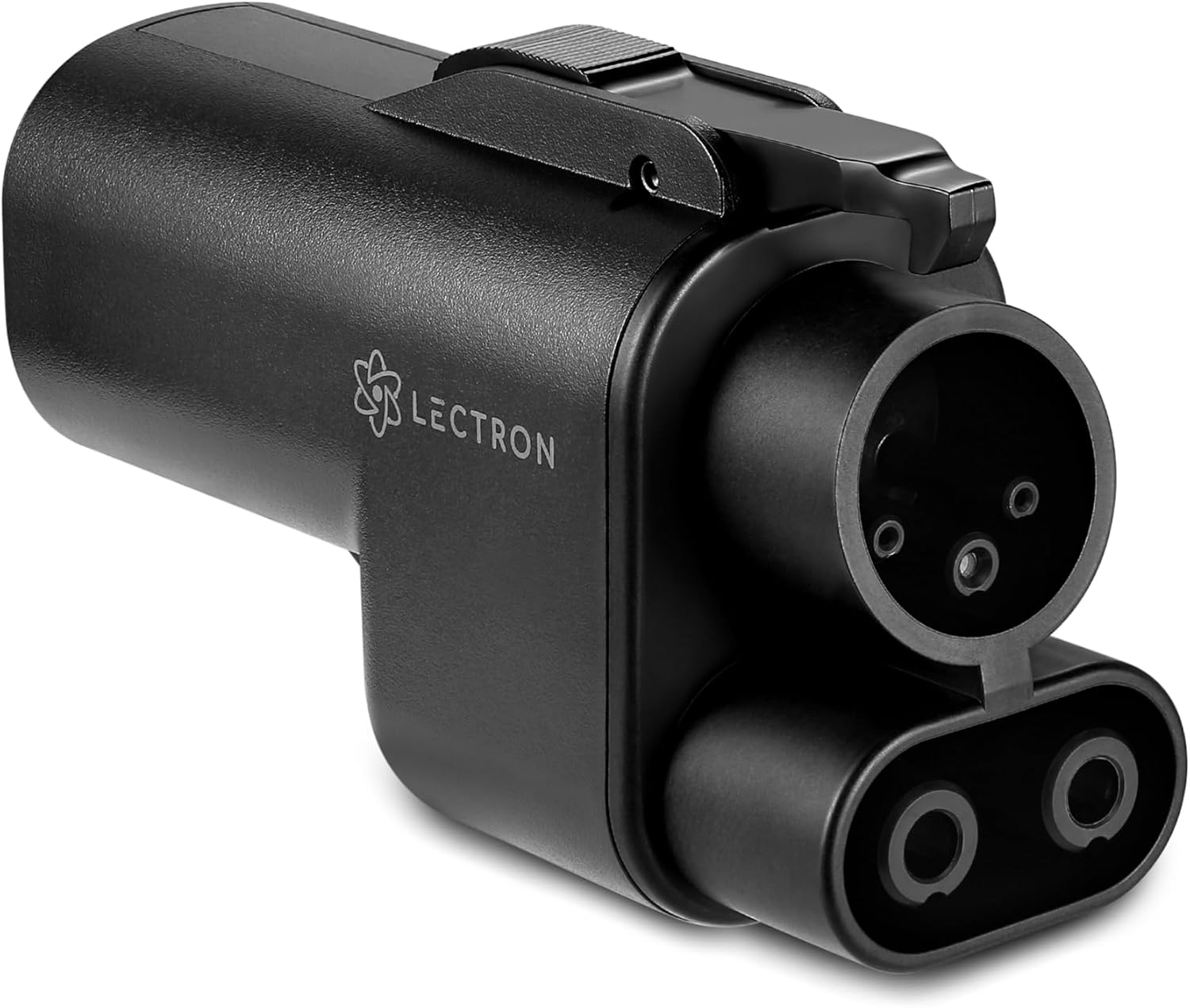
Lectron NACS to CCS Fast-Charge Adapter
Unlock every CCS fast charger for your Tesla, up to 500A DC. Never get stranded at a non-Tesla DC station again.
As an Amazon Associate, ThinkEV earns from qualifying purchases — at no extra cost to you.
Gear worth having
As an Amazon Associate, ThinkEV earns a small commission from qualifying purchases — at no extra cost to you.

Tesla Key Card Holder with AirTag Slot
Stop fishing the keycard out of your wallet, and slot an AirTag in case the car wanders off in a lot.
As an Amazon Associate, ThinkEV earns from qualifying purchases — at no extra cost to you.

Founder & Chief Editor
Vlad Pereira is the founder and chief editor of ThinkEV.ca, the Canadian electric-vehicle publication he writes and edits from Courtenay, British Columbia. He covers EV pricing, federal and provincial rebates, charging costs, and the Chinese manufacturers now entering Canada, from the buyer's side rather than the press-fleet side. ThinkEV is a venture of Vlad Pereira Online; his writing on health, income and the long game lives at vladpereira.com.
Frequently asked questions
Does the Tesla Model Y qualify for the federal EV rebate in Canada in 2026?
Which province makes the Model Y the best financial choice vs the RAV4?
How much does it cost to charge a Tesla Model Y at home in Canada?
Does the Tesla Model Y have lower maintenance costs than the Toyota RAV4?
Why is Tesla Model Y insurance more expensive than RAV4 insurance in Canada?
What is the Tesla Model Y resale value in Canada after 5 years?
Is it worth buying a Tesla Model Y if I live in a condo without charging access?
At what annual mileage does the Tesla Model Y beat the RAV4 in Ontario?
How do winter driving costs differ between the Model Y and the RAV4 in Canada?
What is the break-even point if gas prices rise to $2.25/L in Ontario?
More EV & road-trip finds
Affordable upgrades worth a look — tap any to check the price on Amazon.
 ★ 4,055
6-Speed Manual Shift Knob Display
View on Amazon ★ 12,396
K KNODEL Car Trash Can with Lid
View on Amazon ★ 17,242
LISEN Mini USB-C Car Charger (54W)
View on Amazon ★ 61
★ 61Toddler Car Seat Snack and Cup Tray
View on Amazon ★ 392
★ 392Large Cup Holder Adapter (32-40oz)
View on Amazon ★ 47,507
HOMEXCEL Microfiber Cloths (12-Pack)
View on Amazon ★ 164
★ 164Solar-Powered LED Ambient Light
View on Amazon ★ 4,626
HoogaLife Hanging Car Diffuser (2-Pack)
View on AmazonRead, Plan, Then Stay Current
Explore our expert articles to understand incentives and ownership costs, use the map to pressure-test charging reality, then subscribe so new EV coverage comes straight to you.
Continue Reading
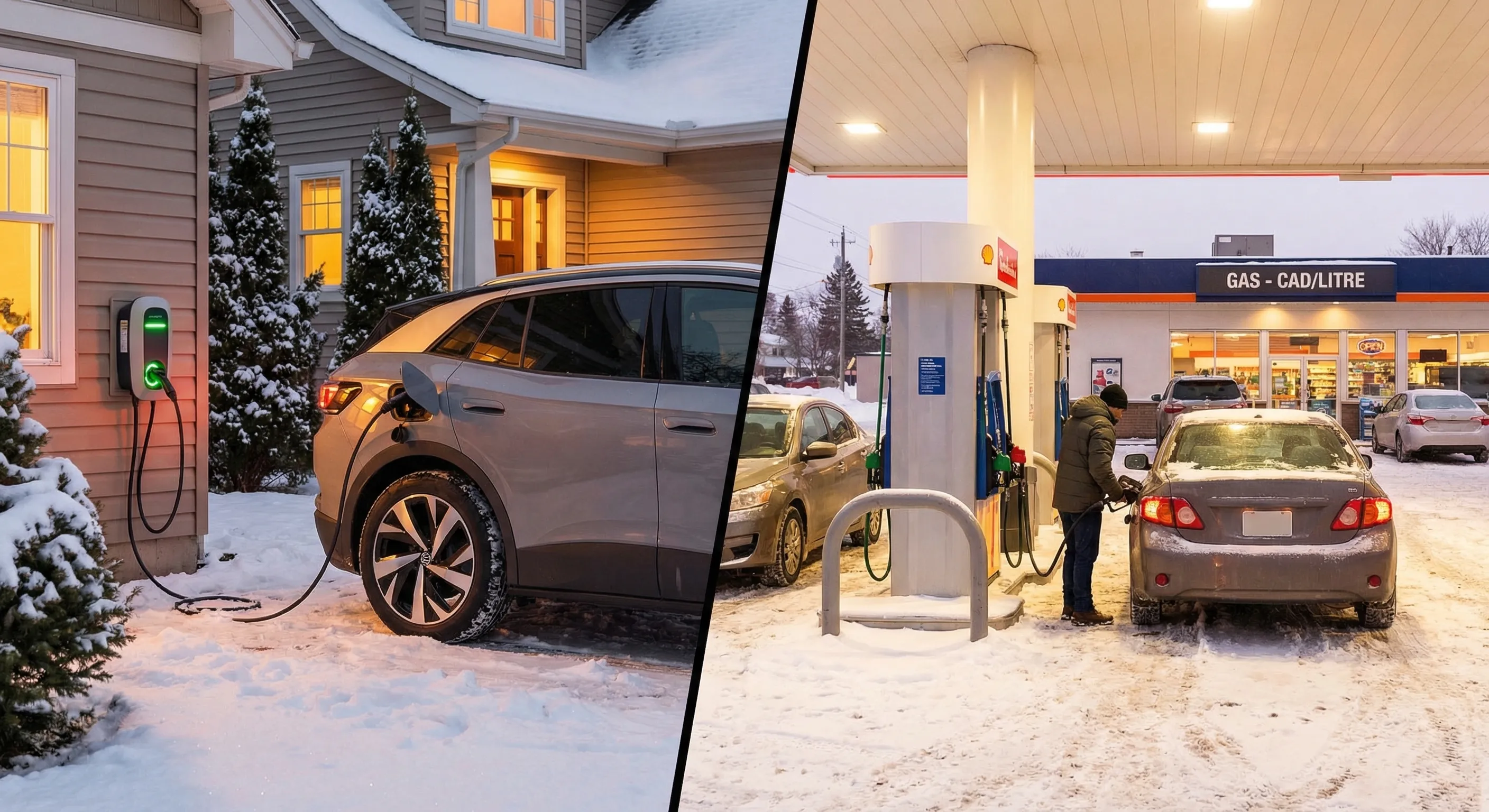
EV vs Gas: 5-Year Cost of Ownership in Canada
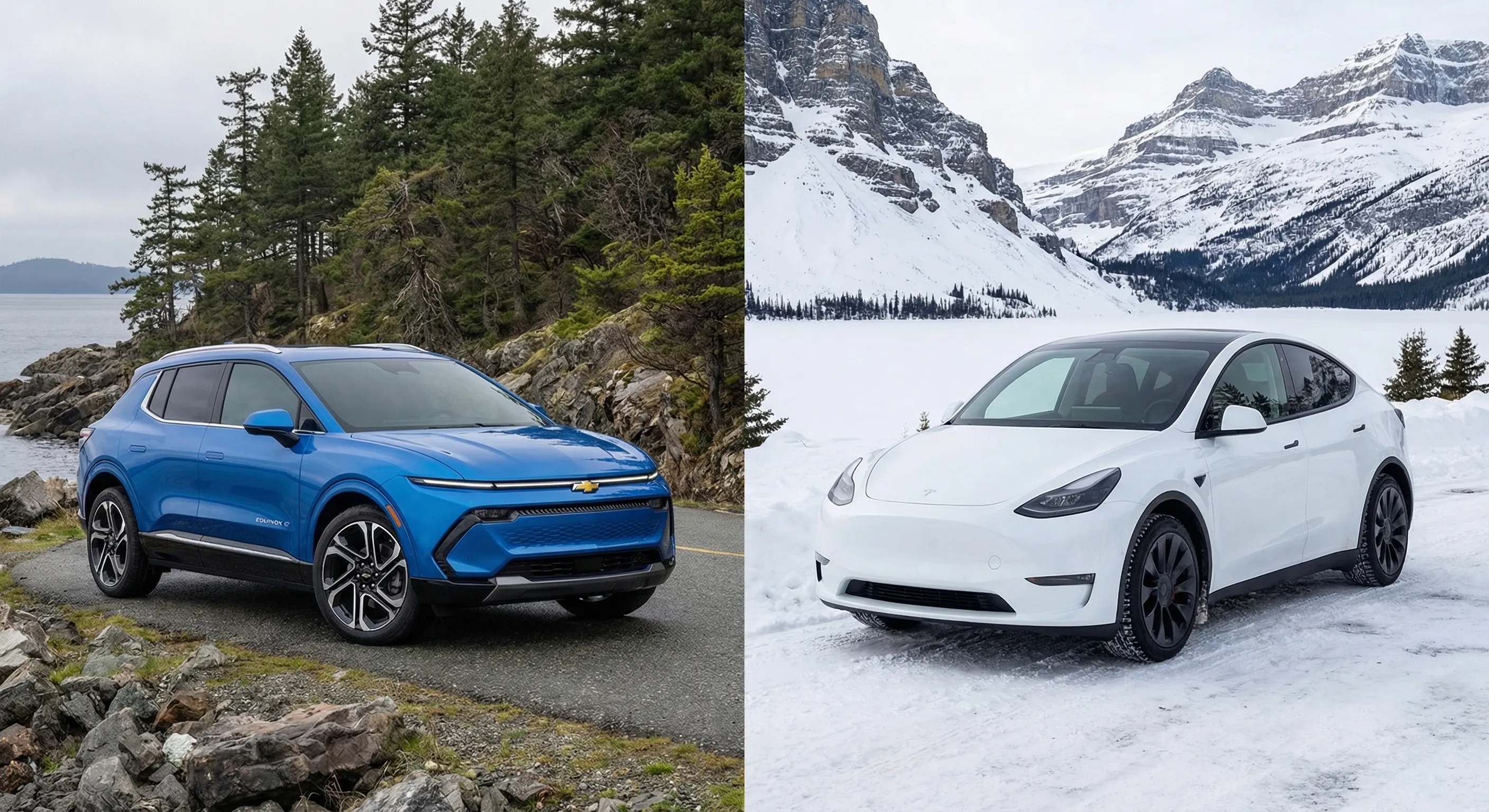
Chevy Equinox EV vs Tesla Model Y: $15K Cheaper
Ford Mustang Mach-E vs Tesla Model Y: The Original Rivalry
Corolla to EV: The Real Cost for Canadian Families
EV vs Gas Sales Canada 2026: The Crossover Point