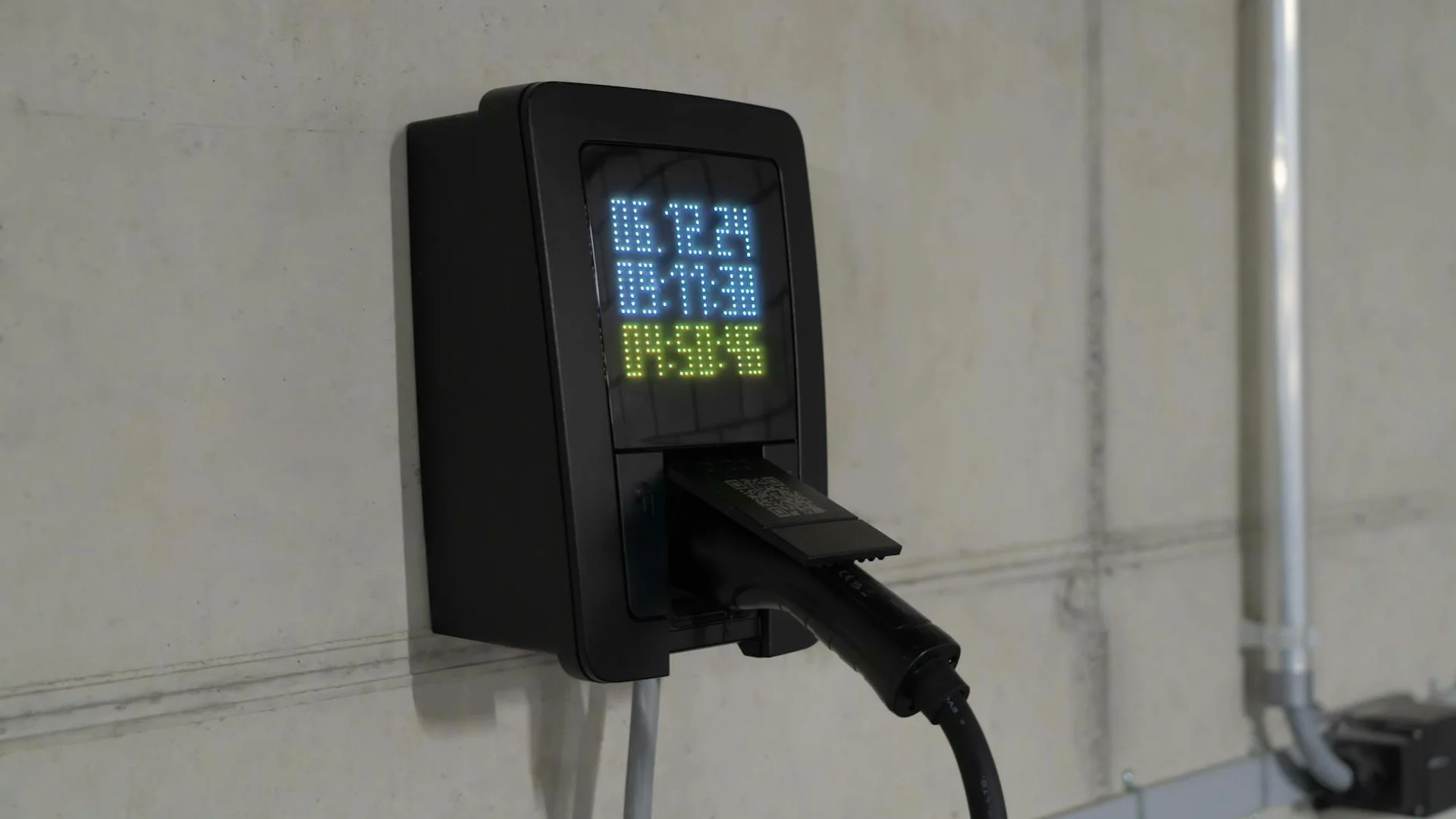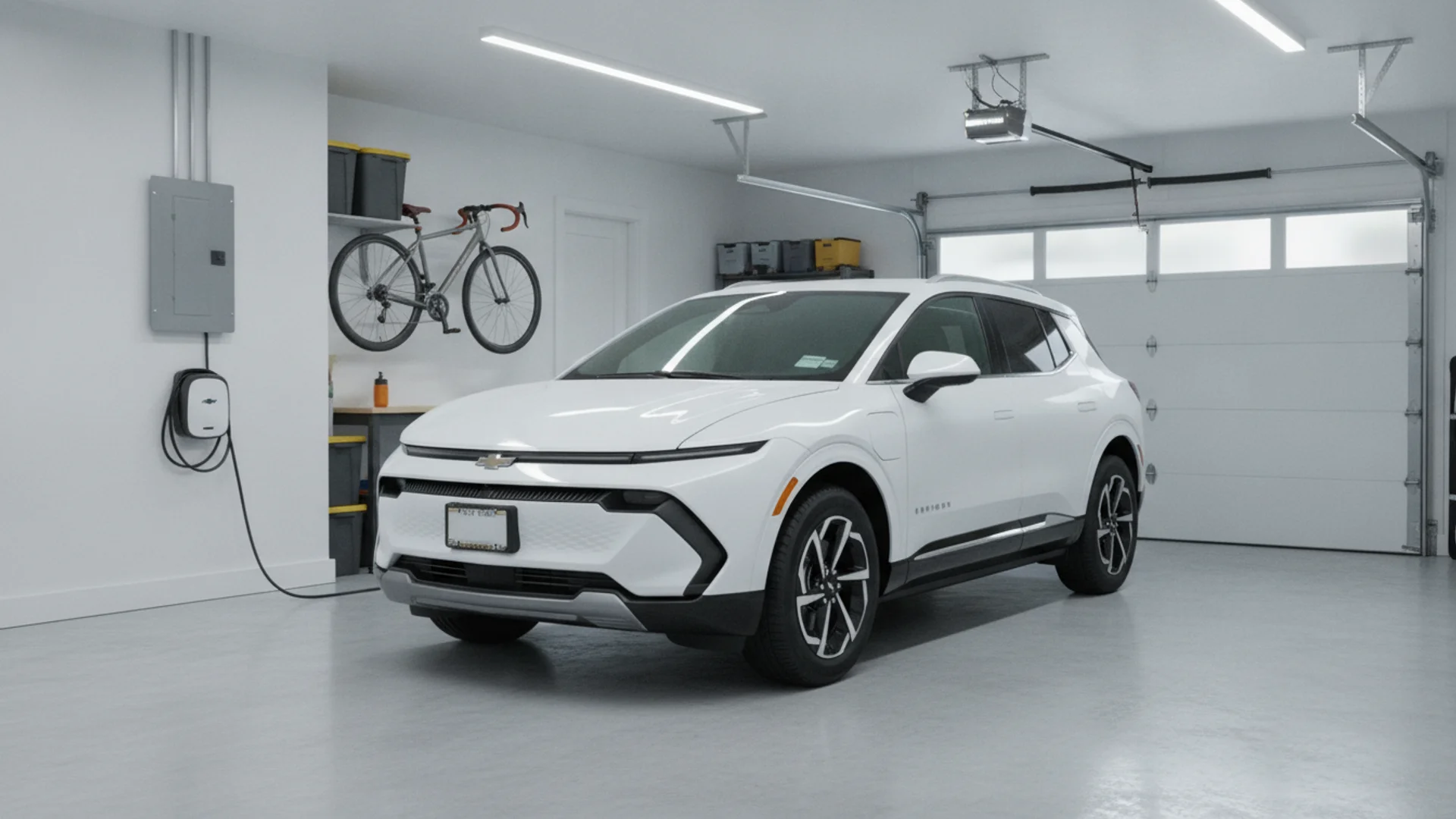
Most home EV chargers assume you have a 200A panel with nothing else on it. The Emporia Pro assumes you don't. That difference, a single design premise, baked into the hardware, is the entire story of why this charger reads differently from the field it competes in.
The way ChargePoint solves the residential charging problem, and Emporia doesn't, is by treating the EV as a privileged appliance. Dedicated circuit, dedicated breaker, dedicated 48 amps of continuous draw, and the implicit assumption that if your panel can't accommodate that, the panel is your problem. Emporia inverted the assumption. The charger watches the mains, negotiates with everything else in the house, and throttles itself to fit the available headroom. By monitoring a home's main service lines, the Emporia Pro has the smarts to save EV drivers thousands of dollars, MotorTrend's editors named it a Best Tech of 2026 winner on exactly that premise.
In the Canadian context, that inversion stops being clever and starts being load-bearing. Two-thirds of the housing stock in this country was wired for a different century's appliance mix. A charger that can't think its way around a 100-amp service is a charger that asks the homeowner to spend three grand before plugging in.
Key takeaways
- Emporia's two clip-on current transformers monitor your service entrance continuously, throttling output from 48A down to 6A as household demand spikes.
- On a 100A panel, common in pre-1985 Canadian homes, the Pro delivers overnight charging without tripping breakers or requiring a $1,800–$3,500 panel upgrade.
- ChargePoint, JuiceBox, and Grizzl-E all use static scheduling or fixed draws; only Emporia responds to live whole-home load in real time.
- MotorTrend named the Emporia Pro a Best Tech of 2026 winner specifically because its load balancing can save EV drivers thousands in avoided panel upgrades.
- Choose the hardwired version over the NEMA 14-50 plug variant, NEC limits cap the plug at 40A, leaving throughput on the table for capable panels.
The Problem Every Home Charger Pretends Doesn't Exist
A Level 2 EVSE running at 48 amps continuous is, by code, demanding 80 percent of a 60-amp breaker for hours at a stretch. That math is fine on paper. It is fine in the marketing material. It is fine when the photographer stages the install in a new-build garage with a 200-amp panel and a heat pump that hasn't been commissioned yet.
It stops being fine in February in Winnipeg, when the electric range, the dryer, the furnace blower, the block heater, and the EV are all asking the panel for headroom that does not exist. The charger does not know about any of this. It draws what it was told to draw. The main breaker trips, the freezer thaws, the homeowner curses the EV.
Most chargers in the residential market, Grizzl-E, JuiceBox, ChargePoint Home Flex, Wallbox Pulsar Plus, treat this as someone else's problem. The someone else is the electrician, and the solution is a load calculation followed by, in many cases, a recommendation to upgrade the service. Canadian panel upgrades typically run between $1,800 and $3,500 depending on province, utility cooperation, and whether the meter base needs swapping at the same time. That cost lives in the install quote, not the charger's price tag, but it is no less real for being deferred.
Emporia's design premise refuses the deferral. The Pro arrives with two current transformers, small clip-on sensors that hug the mains feeding the panel, and the charger's firmware treats those sensors as primary inputs. The grid at your curb is finite. The panel inside your house is finite. The EV's appetite is the variable that gets compressed when those finites are stressed.
This is the spec-as-philosophy move. A continuous-48A charger says: I matter most, accommodate me. A load-balanced charger says: I matter last, accommodate everything else first, give me what is left. The first design wins on a quiet panel. The second design wins on every panel that exists in actual Canadian houses.
The case against this design is plain: load balancing is engineering complexity sold to homeowners who don't want engineering complexity. Add two CTs, add a firmware controller that polls them, add an installation step where the electrician has to clamp them correctly, and you have introduced three new failure points where a dumb 48A charger has none. The counter is that the dumb 48A charger has one enormous failure point the load-balanced one doesn't, the panel itself, and that the dumb charger pushes that failure point onto the homeowner's wallet rather than absorbing it in the device. Trading three small, recoverable failure modes for one expensive, non-recoverable one is the trade every honest residential customer should want.
The reason this matters editorially, beyond installation economics, is that it changes what the charger is for. Most EVSEs are extension cords with safety logic. The Emporia Pro is closer to an inverter or a smart breaker: a device that reasons about the grid it lives on. That is a different category of object, and the price tag does not reflect the gap.
PowerSmart Architecture: What Load Balancing Actually Means in Hardware
The mechanism is unglamorous, which is part of why it works. Two split-core current transformers clip onto the L1 and L2 conductors entering the service panel. They are passive devices, they induce a small current proportional to the magnetic field around the conductor, and they feed real-time draw data to the charger's controller over a low-voltage signal line.
The controller polls that data continuously. When the home's draw climbs, the charger steps its output down. When the dryer finishes its cycle and the draw collapses, the charger steps back up. The throttling range runs from 48 amps at the top to roughly 6 amps at the bottom, below which the charger pauses entirely rather than deliver power so trickle it would be useless. Emporia describes this as Dynamic Load Balancing, PowerSmart regulates the charger's output downward to avoid overloading the service panel, and the description is one of the few pieces of EVSE marketing copy that survives translation into engineering terms without losing meaning.
The Emporia Pro Charger is available in black or white, and you can choose between a hardwired or NEMA 14-50 Plug version. The hardwired version is the one that earns its keep, the plug variant caps at 40A by NEC limits regardless of panel headroom, which leaves throughput on the table for homes that could otherwise sustain the full 48A.
The clipping point matters. The CTs sit on the service entrance, not on a sub-panel and not on a single circuit. This is the difference between Emporia's approach and the load-management dongles that some utilities and electricians retrofit onto existing chargers. A circuit-level load manager protects one breaker. Service-entrance monitoring protects the whole house. The former is a workaround; the latter is an architecture.
In practice, on a 150A panel with typical Canadian draw, the Emporia Pro will deliver close to its full 48A through the small hours of the night and step down to roughly 32–40A during the dinner-cooking peak. On a 100A panel, common in Canadian housing built before 1985, the ceiling sits closer to 32A even at quiet hours, and the throttling becomes more active. A 100A panel can charge an EV overnight. It cannot do so while pretending the rest of the house does not exist.
Compare this to the ChargePoint Home Flex, which is the closest direct competitor at the price point. ChargePoint will negotiate its output down via app-based scheduling, but it will not respond to live whole-home draw. JuiceBox is similar, schedule-based, not draw-based. Grizzl-E, the Canadian-made favourite of cold-weather buyers, has no app and no negotiation at all; it draws what its breaker permits and stops there. Car and Driver's test of the top home EV chargers reaches the same field map: at the 48A tier, the differentiator is not throughput, the chargers are identical on the wire, but what the charger does with information about the rest of the house. Most of them do nothing.
The way Emporia solves this, and the rest of the residential field doesn't, is by accepting that "what the breaker permits" is a static answer to a dynamic question. The panel's capacity is fixed. The panel's available headroom is not. Treating those as the same number is the engineering compromise that defines the rest of the category.
For Canadian buyers running older panels or facing a panel-upgrade quote, the math on how load management replaces a $3,000 upgrade is the same math that powers Emporia's PowerSmart. The device-class differs; the principle does not.
Gear worth having
As an Amazon Associate, ThinkEV earns a small commission from qualifying purchases — at no extra cost to you.

Lectron Level 2 J1772 Charger (40A, WiFi)
Smart WiFi charger with real-time energy monitoring. 40A / 9.6 kW, J1772 with a NEMA 14-50 plug, schedule charging right from your phone.
As an Amazon Associate, ThinkEV earns from qualifying purchases — at no extra cost to you.
Installation Reality: Where the Engineering Meets the Electrician
A charger that ships with two CTs and a service-entrance clamp instruction is a charger that asks more of the electrician than a standard EVSE. The added work is real, and small. Owner reports from early Canadian installs describe a few speed bumps, mostly CT orientation, before settling into genuinely plug-and-play operation at full output. That hands-on field experience captures the install honestly: not effortless, not difficult, and crucially not a justification for skipping the CTs to save thirty minutes.
The orientation of the current transformers is where amateur installs go sideways. The CTs are directional, the arrow on the housing must face the load side, away from the meter. Reversed CTs report negative current, the controller reads zero draw on the rest of the house, and the charger happily pulls full 48A whether or not the panel can support it. The protective logic is intact; the data feeding the protective logic is corrupted. This is the kind of failure that does not show up in a one-night test and shows up in February.
For homeowners hiring out the install, the right question to ask the electrician is whether they have wired an Emporia Pro before, or, if not, whether they understand that the CTs must be installed on the line side of the main breaker with arrows facing the panel. A competent electrician handles this in under thirty minutes. An incompetent one creates a charger that behaves correctly under normal load and fails dangerously under peak.
The hardwired-versus-plug decision is the second install question. The NEMA 14-50 plug version is portable, capped at 40A continuous, and demands a properly rated receptacle, which, in older Canadian homes, often means a new circuit anyway. The hardwired version reaches the full 48A, costs the same, and gives up portability. For 90 percent of installs, hardwired is the right answer. The plug version exists for renters and for buyers who expect to move within the warranty window.
There is also a quiet GFCI trap. Emporia notes that GFCI breakers used in conjunction with a Level 2 charger, itself GFCI-protected internally, can cause nuisance tripping that halts charging on the vehicle, creating headaches that look like charger faults but are actually breaker-stacking faults. Some Canadian inspectors require a GFCI breaker upstream regardless; the resolution is usually a non-GFCI breaker of the correct rating on a hardwired install, but it is a conversation to have with the electrician before the wire is pulled, not after.
The 208V case is notable: for anyone in a Canadian multi-unit building or a condo with stacked townhouse wiring. On a 208V single-phase service, the Emporia Pro still functions but at a reduced rate, roughly 10kW for the 48A hardwired setup rather than the 11.5kW you would get on residential 240V, a real difference, not catastrophic, and one most owners will not notice on an overnight charge. It does mean that the marketing-throughput numbers do not apply to MURB installs without translation.
The pairing question, two chargers on one circuit for two-EV households, is increasingly common. The wire-gauge math for dual EV chargers on a 60A circuit covers what most installers get wrong, and Emporia's load-sharing logic extends naturally to the two-charger case: the CTs see total draw, the firmware allocates between chargers, the homeowner does not babysit cable amperages.
Charging Throughput: The Numbers That Actually Matter for a 77 kWh Battery
The headline number is 11.52 kilowatts at 48 amps and 240 volts. Take a 77 kWh battery, Hyundai Ioniq 5, Kia EV6, Ford Mustang Mach-E standard range, and a 20-to-80-percent fill at full output completes in roughly four hours.
That is the marketing number. It is also, on most Canadian panels, the wrong number to plan around.
The load-balanced number is what a real Canadian panel delivers, and it depends on concurrent draw. For a typical evening, dryer cycling, range hood running, lights and television on, furnace cycling, the Emporia Pro on a 150A panel will settle at somewhere between 8 and 9 kilowatts of sustained output. The same 60-percent fill that takes four hours at peak output takes closer to five and a half at the throttled rate. On a 100A panel, the same fill might stretch to six and a half or seven hours, depending on appliance overlap.
Seven hours is not a problem. The EV is plugged in at 6 p.m. and unplugged at 7 a.m. The charge completes well before the morning commute. The marketing number says four hours; the lived number says six; both are overnight, and neither inconveniences the driver.
The lived number does matter, though, for the small fraction of EV owners who actually need fast home charging, fleet drivers, ride-share operators, two-EV households with high daily mileage. For them, the Emporia Pro's throttling is a feature only insofar as their use case fits inside the throttled output. If they need the full 48A for four hours of un-interrupted charge, they need a panel that can deliver it, and at that point they are back to the panel-upgrade conversation that Emporia's design was meant to defer.
Gear worth having
As an Amazon Associate, ThinkEV earns a small commission from qualifying purchases — at no extra cost to you.

TP-Link Kasa Smart Plug with Energy Monitoring
Track exactly how much electricity your Level 1 charger uses and schedule it for off-peak hours. Know your real cost per kWh.
As an Amazon Associate, ThinkEV earns from qualifying purchases — at no extra cost to you.
A ranking of Level 2 chargers for Canadian winters puts the field's honest throughput at seven hours for a 77 kWh battery under typical panel load, the same number the Pro hits on a normally-loaded 100A panel. The Pro is not slower than the field; the field's headline numbers are simply less honest than Emporia's lived ones.
NACS and CCS connector options come standard, no proprietary lock-in. The connector decision tracks the vehicle, not the charger, and Emporia ships both versions at the same price. For a household running a Tesla and a CCS-equipped Hyundai or Kia, the same logic that governs the BYD Atto 3 and Hyundai Kona EV's CCS1 standardization on the Canadian market applies: the charger is the constant, the connector is the variable, and the household should buy the connector that matches the car it owns longest.

Gear worth having
As an Amazon Associate, ThinkEV earns a small commission from qualifying purchases — at no extra cost to you.

Grizzl-E Classic Level 2 EV Charger (40A)
Canadian-made and rated for minus 40C winters. 40A / 9.6 kW, NEMA 14-50, indoor/outdoor, 24-ft cable. The charger built for Canadian weather.
As an Amazon Associate, ThinkEV earns from qualifying purchases — at no extra cost to you.
Software Stack and Energy Monitoring: The Data Layer Most Chargers Omit
The Emporia app shows the EV's draw and, this is the distinguishing move, the rest of the house's draw at the same time, on the same dashboard. The current transformers that protect the panel also serve as a whole-home energy monitor. The charger arrives bundled with what Emporia sells separately as the Vue energy monitor, minus the per-circuit granularity but with the same service-entrance data.
This matters for a reader who is trying to understand how their house actually consumes electricity. Most homeowners cannot tell you whether their dryer or their HVAC is the bigger draw. Most cannot tell you what their baseload is at 3 a.m. The Emporia dashboard answers both questions, plots them over hours and days, and lets the homeowner make decisions about time-of-use rates that were previously made on intuition.
Off-peak scheduling exists, as it does on every smart charger. What Emporia adds is the ability to schedule against measured baseline rather than a clock. The charger can be told to charge only when total home draw is below a threshold, or only when the system has unused capacity, rather than only between 11 p.m. and 7 a.m. The scheduling logic is responsive to the house, not the wall clock.
The headline software differentiators worth listing, and they matter because the category trends the other way:
- No subscription required for any core feature, including scheduling, energy monitoring, and remote control.
- Whole-home energy data included via the same CTs that drive load balancing, no separate Vue purchase required.
- Local protective logic that survives a server outage, the charger keeps load-balancing even if Emporia's cloud is down.
- NACS and CCS connector options at the same price, with no proprietary lock-in.
- Threshold-based scheduling that responds to measured baseline rather than a fixed clock window.
ChargePoint requires an account; some of its scheduling features are gated behind that account. Grizzl-E has no app at all, which is its own kind of statement. Emporia sits deliberately between, full app functionality, full data access, no recurring fee, no feature gating. It is the same pattern the Tesla Model Y inverted in the other direction by refusing to support Apple CarPlay or Android Auto: a deliberate refusal to lock the customer into a paid ecosystem, in a market where most players have chosen the opposite.
The cloud dependency risk is real and worth naming. If Emporia's servers go down, the charger continues to charge but loses scheduling and remote control until connectivity returns. The CT-based load balancing is local, it does not need the cloud, and the protective logic survives a server outage. The convenience layer is what disappears.
The Emporia Pro is the cheaper, more direct version of what ChargePoint built, a hardware-first charger with software that adds value without holding it hostage. That is a rarer combination than the marketing material in this category would suggest.
Canadian Context: Cold Weather, Older Panels, and the $399 USD Price Point
The NEMA 4X enclosure rating handles weather. -40°C is the spec floor, which covers everywhere in Canada except a handful of weeks in Yukon and Northern Manitoba. Two-Prairie-winter reliability reports from owner forums match the spec. The cable stays flexible at cold temperatures; the connector locking mechanism does not freeze; the LED indicator survives ice. These are unspectacular outcomes that a surprising number of competitor chargers fail.
The price point is where the Canadian-buyer math gets specific. US$399 hardwired translates to roughly CAD$550 at current rates, plus cross-border shipping, plus the 13 percent HST that becomes due at the border for an Ontario address. Landed cost lands somewhere between CAD$640 and CAD$720 depending on shipping method and province. Against that, the Canadian market alternatives, Grizzl-E, EVIQO, and the rest of the field start lower but generally lack the load-balancing architecture.
ChargePoint Home Flex in Canada lists at roughly CAD$899 at major retailers, sometimes CAD$799 on sale. The Emporia Pro undercuts that by roughly $150 USD on the original spec sheet, the gap narrows once cross-border friction is included, but does not close.
Canadian retail distribution is the soft spot. The Emporia Pro is not yet available through Canadian Tire, Home Depot Canada, or Rona at the time of writing. Cross-border ordering means warranty service routes through Emporia US, which adds friction if something fails in year two. For a buyer who values local retail and local warranty handling, the Grizzl-E retains a real advantage despite lacking the load-balancing logic.
The panel-upgrade math is where the value case crystallizes. A $1,800 to $3,500 Canadian panel upgrade is the alternative path for a 100A-service home that wants to install any 48A charger. The Emporia Pro, by virtue of its CTs, makes that upgrade optional rather than required. The charger pays for itself against the upgrade quote inside the first year of ownership, and continues paying for itself every winter the panel does not need to be swapped. EV Charging Stations' technical review reaches the same conclusion from the engineering side: the Pro can be installed on services that would not typically permit a 48-amp charger, because it intelligently monitors total power draw and refuses to overdraw the home's capacity.
This is the case where the cross-border price gap matters less than the panel-upgrade gap. The buyer who saves $2,000 on the panel does not care about the $150 difference in charger price. The buyer who already has a 200A panel might care, and for that buyer, the local-retail Grizzl-E or the local-warranty ChargePoint becomes the easier choice.
Gear worth having
As an Amazon Associate, ThinkEV earns a small commission from qualifying purchases — at no extra cost to you.

ChargePoint Home Flex Level 2 Charger (50A)
Premium 50A / 12 kW charger with the best app ecosystem. Hardwired or NEMA 14-50, with real-time energy tracking and smart scheduling.
As an Amazon Associate, ThinkEV earns from qualifying purchases — at no extra cost to you.
What the Emporia Pro Gets Right That Its Competitors Refuse To
Load balancing is a solved problem at the commercial EVSE level. Every parking-garage and fleet-depot charger has been doing dynamic allocation across multiple ports for years. The residential market, bigger by volume, smaller by margin, declined to bring that capability down-market because the dominant customers (new-build homeowners with 200A panels) did not need it.
Emporia brought it down-market anyway, at a price point that competes with chargers that lack it. The strategic read is that Emporia understands its actual customer better than the legacy residential brands do. The actual customer is not the new-build homeowner. The actual customer is the existing-home retrofit buyer with a 100 or 150A panel and a contractor's quote that says "upgrade required."
The case against giving Emporia too much credit here is that the company is also running the Classic at a lower price point, a more conventional 48A charger without the CTs, and aggressively discounting its home battery product alongside. The risk is that the Pro becomes a halo product the company under-invests in once the Classic outsells it three-to-one in big-box retail. The counter-evidence is that Emporia's own product page positions the Classic as the entry point and the Pro as the standard-setter, with the implication that the brand intends to keep both tiers alive rather than collapse them. Whether that holds through 2027 is the open question for buyers who care about long-tail firmware support.
The weakness, and there is one, is that Emporia has not integrated this load-balancing logic with home solar or battery storage in any deep way. The Vue energy monitor exists separately. Solar inverters from Enphase or SolarEdge do not talk natively to the Emporia Pro. A buyer building toward a fully-integrated home energy system will eventually outgrow the architecture. For now, that buyer is rare enough that the omission does not undermine the product; in three years, it might.
The conditional answer to "worth it" depends on the panel. If your panel is 200A and dedicated, the Emporia Pro is a competent charger competing on price against a dozen competent chargers, and the load-balancing logic is unused capacity. If your panel is 100 or 150A and shared with the rest of a normal Canadian household, the Emporia Pro is a category of one, the only sub-$500 charger that lets you skip the panel upgrade.
The forward-looking bet is that the residential EVSE market will follow Emporia's lead within three years, and that load balancing will become table stakes the way scheduling did a half-decade ago. The brand that arrived first will not necessarily be the brand that wins the category. But the design premise, that the grid at the curb is a shared resource, will outlast the brand that articulated it. That premise is what makes the Emporia Pro worth the install, and what makes the competitors that refuse it worth skipping until they catch up.
The three signals worth tracking: whether Tesla brings dynamic load balancing to the Universal Wall Connector; whether Grizzl-E ships a CT-equipped sibling; and whether Ontario or BC utility TOU rebate programmes begin preferentially rewarding chargers that already do at the device level what the utility wants to do at the meter. The first to integrate cleanly with provincial time-of-use signalling wins the next round. The condition that would flip the recommendation on the Pro itself: a Canadian retail listing at Canadian Tire or Home Depot that closes the warranty-friction gap, or a Grizzl-E firmware update that adds CT-based load balancing at the same price point, at which point the made-in-Canada alternative becomes the easier recommendation, and Emporia's first-mover lead becomes a footnote.
Bottom line: for a Canadian buyer with a panel under 200A, the Emporia Pro is the rare charger whose design philosophy actually matches the houses it has to live in.
Gear worth having
As an Amazon Associate, ThinkEV earns a small commission from qualifying purchases — at no extra cost to you.

Magnetic EV Charger Plug Cover
A magnetic cap that keeps rain, road salt, and grit out of your home charger handle between sessions.
As an Amazon Associate, ThinkEV earns from qualifying purchases — at no extra cost to you.

Founder & Chief Editor
Vlad Pereira is the founder and chief editor of ThinkEV.ca, the Canadian electric-vehicle publication he writes and edits from Courtenay, British Columbia. He covers EV pricing, federal and provincial rebates, charging costs, and the Chinese manufacturers now entering Canada, from the buyer's side rather than the press-fleet side. ThinkEV is a venture of Vlad Pereira Online; his writing on health, income and the long game lives at vladpereira.com.
Frequently asked questions
Will the Emporia Pro work with a 100-amp panel without an upgrade?
Does load balancing mean slower charging every night?
Are the current transformers something an electrician has to install?
How does it compare to the Grizzl-E for Canadian winters?
Is the NEMA 14-50 plug version worth considering to avoid hardwiring?
More EV & road-trip finds
Affordable upgrades worth a look — tap any to check the price on Amazon.
 ★ 4,626
HoogaLife Hanging Car Diffuser (2-Pack)
View on Amazon ★ 12,396
K KNODEL Car Trash Can with Lid
View on Amazon ★ 848
★ 848Coiled USB-C to USB-C Car Cable (2-Pack)
View on Amazon ★ 87
★ 87Car Window Sun Shades for Kids (4-Pack)
View on Amazon ★ 68
★ 68WeatherTech FloorLiner for Tesla Model 3
View on Amazon ★ 47,507
HOMEXCEL Microfiber Cloths (12-Pack)
View on Amazon ★ 314
★ 314Mini USB LED Ambient Lamps (4-Pack)
View on Amazon ★ 1,349
Cool Swinging Duck Dashboard Ornament
View on AmazonRead, Plan, Then Stay Current
Explore our expert articles to understand incentives and ownership costs, use the map to pressure-test charging reality, then subscribe so new EV coverage comes straight to you.
Continue Reading
EV Charging in Canada 2026: Networks, Cost, Setup
Level 1 vs Level 2 EV Charging: Which to Choose

Two EV Chargers on a 60A Circuit: What Gauge to Use
Level 2 Plug-and-Charge: J1772 vs CCS Data Explained
ChargePoint Billing by kWh and Time: What to Watch