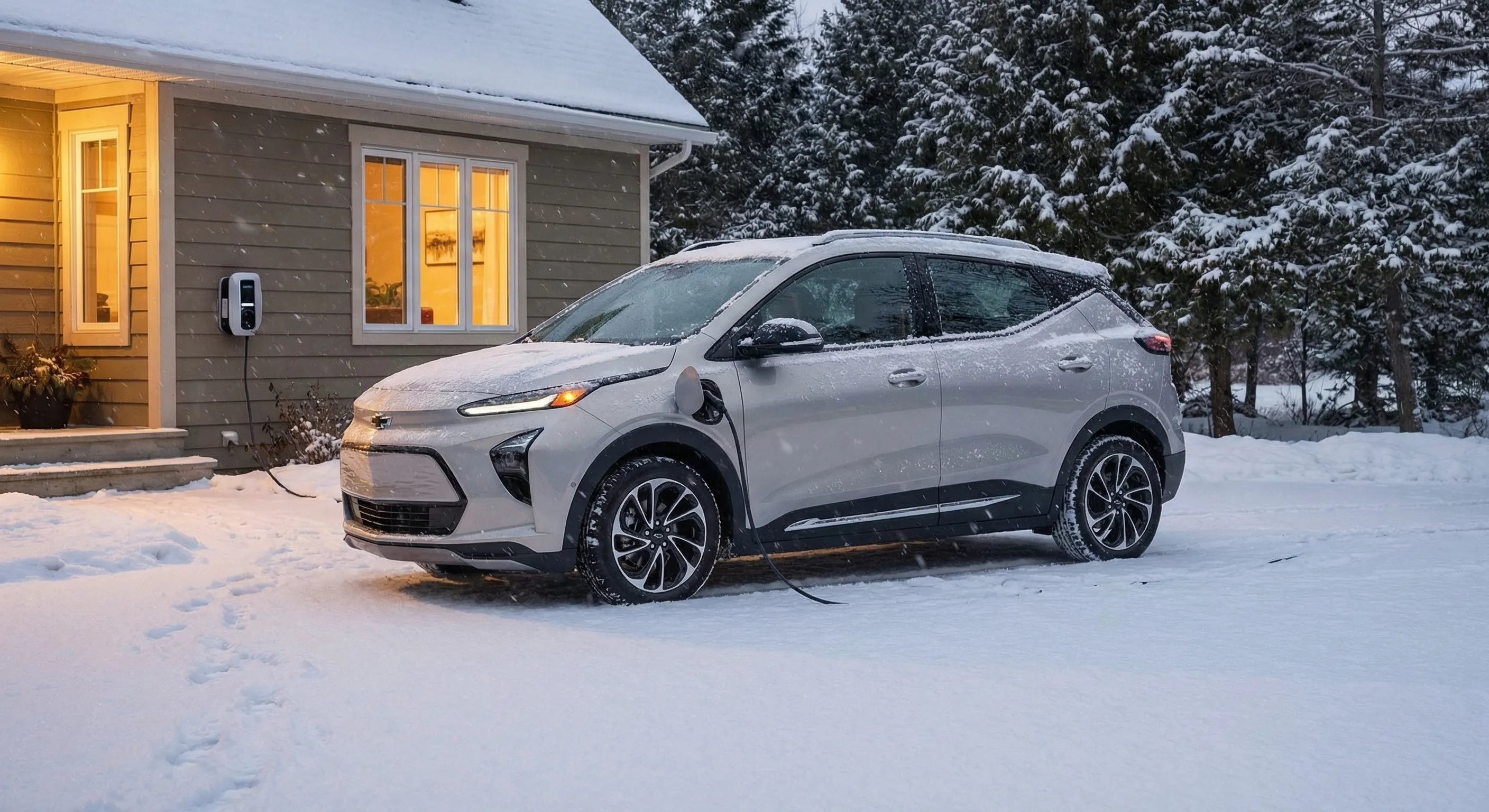
You plugged in for 45 minutes, added 18 kWh, and the receipt shows $14. The math doesn't add up, until you find the time fee buried in the fine print. That's the moment a lot of Canadian drivers discover what ChargePoint actually is, and what it isn't.
ChargePoint isn't really a single price. It's a platform. The company sells hardware and software to property owners, malls, condos, Walmarts, municipalities, and those owners set their own rates. A single station can bill per kWh, per hour, with a flat fee, a minimum or maximum fee, or an overnight or idle fee, sometimes stacked together. Six levers, one receipt. That's the whole game.
For a driver topping up at a Walmart while groceries get loaded, that flexibility shows up as a receipt that doesn't match the per-kWh number on the screen. The kWh rate is real. So is the time rate stacked on top of it. So is the new session fee. Add a slow onboard charger to the mix, and the bill can climb past what gasoline would have cost for the same distance.
This guide is for the driver who looked at a ChargePoint receipt and thought something's off here. We'll walk through how the billing actually works, which Canadian networks are cleaner, what a home Level 2 install costs by comparison, and how to read any charger's rate card before you commit. There's no single rule. But there are five or six questions you can ask at any station that will tell you exactly what you're about to pay.
Key takeaways
- ChargePoint lets property owners stack up to six billing levers, kWh, per-minute, session fee, idle fee, on one station.
- A 2019 Nissan Leaf on a hybrid-rate station pays an effective $1.16/kWh versus $0.77/kWh for a 2024 Model 3 at the same spot.
- ChargePoint's new 2026 per-session flat fee hits small top-ups hardest, an 8-kWh stop takes a 20%-plus cost hit.
- Pre-2020 EVs with 3.3–6.6 kW onboard chargers pay effectively double per kWh on per-minute stations compared to newer 11 kW cars.
- Screenshot the rate card before plugging in, some stations display idle-fee language, others don't, and community reports confirm misconfigured billing exists.
How ChargePoint Actually Bills You (It's Not Just Per kWh)
ChargePoint's billing system gives property owners three primary modes, and they can be combined. Figuring out the ChargePoint cost per session isn't as simple as reading a price on a gas pump: there's the price per kWh, a possible session fee, and maybe an idle fee if you leave your car sitting too long. What trips people up is that those three levers aren't either/or. A single station can charge you for energy, time, and the plug-in itself.
The per-kWh mode is the simplest and the closest to what most drivers expect. You pay for the energy that actually flows into the battery. If the station charges $0.25/kWh and you take 20 kWh, the bill is $5. Clean.
The per-minute mode bills you for the time you're connected, regardless of how much energy your car can pull. This is where slower-charging vehicles get punished. A 2019 Nissan Leaf with a 6.6 kW onboard charger sitting on a per-minute station pays the same per minute as a 2024 Model 3 next to it pulling 11 kW, but the Leaf takes nearly twice as long to add the same energy. The fee structure is identical; the cost-per-kWh outcome is not.
The case for per-minute billing, to be fair, isn't pure greed. Property owners argue it manages dwell time, keeps people from parking-and-forgetting in scarce stalls, which matters at a 10-stall parkade serving a downtown of thousands of EVs. The rebuttal is that idle fees already solve dwell-time abuse without penalising the driver whose car simply charges slowly. A 6.6 kW Leaf isn't squatting; it's pulling every electron it's allowed to. Conflating slow vehicles with idle vehicles is the structural mistake.
The hybrid mode, and this is the one that surprises drivers most, charges both at the same time. Energy and connection time, simultaneously. A property owner sets a kWh rate and a per-minute rate, and your session bill sums them both. There's no rule that says it has to be one or the other.
On top of that, ChargePoint added a per-session service fee in early 2026. It's a flat charge for plugging in, separate from energy and time. The structural problem with a fixed fee is that it's regressive against small sessions, an 8-kWh errand top-up takes a much bigger percentage hit than a 50-kWh overnight fill. A rideshare driver charging 40–50 kWh overnight described the new fee as "maybe two extra kwh of cost for me … like a 4% hike for me on electricity being sold at cost in my municipality." Scale that same flat fee down to an 8-kWh top-up and you're looking at a 20%+ hike instead. Same fee, very different bite.
Then there's the idle fee, the one that catches people in parkades. After your car is full (or after a grace window the station owner sets), the meter switches modes. Some stations clearly label this, some don't. The tell is the phrase "while not charging" on the rate screen; that's the indicator the time component is gated to post-completion. Without that language, the per-minute meter may keep running the whole session. Community reporting suggests some property owners "meant to set it as an idle fee but just did it wrong," and at least one ChargePoint DCFC starts charging a fee on top of power after 30 minutes, not strictly an idle fee at all.
That ambiguity is the real risk. The station screen might say "while not charging." It might not. Assume nothing, screenshot everything.
The Hybrid Billing Trap: When kWh + Time Adds Up Fast
The hybrid mode deserves its own section because it's the format most likely to make a receipt look wrong. Picture a Metro Vancouver parkade ChargePoint station priced at $0.25/kWh plus $0.10/minute. A driver pulls in with a 2019 Leaf (6.6 kW onboard charger) and plugs in for two hours.
The math runs like this: 6.6 kW over two hours adds 13.2 kWh, so the energy cost is 13.2 × $0.25 = $3.30, while the time cost is 120 minutes × $0.10 = $12, a total of $15.30 for 13.2 kWh, or an effective $1.16/kWh. Now drop the same scenario in front of a 2024 Model 3 with an 11.5 kW onboard charger. Same two hours, same rate card, but the Model 3 pulls 23 kWh: $5.75 in energy plus the same $12 in time equals $17.75, or $0.77/kWh effective.
Same parking spot. Same time connected. The Leaf paid 50% more per kWh than the Model 3, because its slower onboard charger couldn't convert connected minutes into kWh at the same rate. This is the part the marketing copy never quite explains. Per-minute and hybrid stations are taxes on slow onboard chargers.
The defence of hybrid billing is that the energy component still reflects what you took, and the time component is essentially rent on a scarce stall. Fair argument in theory. The problem in practice is that a $0.10/minute clock running against a 6.6 kW vehicle is rent indexed to the wrong variable, it scales with the car's weakness, not the stall's value. A stall is a stall whether a Leaf or a Model 3 occupies it; charging the Leaf driver 50% more per delivered kWh isn't pricing the stall, it's penalising the equipment.
This matters for used-EV buyers especially. Plenty of pre-2020 EVs shipped with 3.3 or 6.6 kW onboard chargers. They're fine vehicles. But on a per-minute or hybrid public station, the effective energy cost can run double what a newer 11 kW car pays in the same parking spot. Compare a 2019 Leaf at 6.6 kW against a VW ID.Buzz with its 11 kW onboard charger: on the same hybrid station for the same two hours, the Buzz adds roughly 22 kWh while the Leaf adds 13, and they each pay the same $12 in time fees. Anyone considering an older EV in a city where public charging dominates needs to factor this in, and ideally have a home Level 2 option.
The technical breakdown on why DC fast-charging in Canada runs 3–5x typical home overnight rates is worth a look here. The hybrid-billing exposure on public L2 sits on top of that gap, not parallel to it.
There's also the slow-public-L2 question that doesn't get asked enough: if a station is going to bill you per minute, the right move on a fast-charging-capable car is to stay shorter and leave with less charge added. Counterintuitive, but the cost math says so. The stations are not designed to reward long sessions on cars that can't draw full power.
What the data shows globally is that public Level 2 in Canada generally runs at the pricier end. Modern infrastructure is going the other direction at the high end, stations like Ystad in Sweden now deliver 400 kW with space for two cars. That's DC fast charging, a different category. The Level 2 problem we're describing here is about slow chargers billed in ways that don't match how fast your car can actually accept energy.
Gear worth having
As an Amazon Associate, ThinkEV earns a small commission from qualifying purchases — at no extra cost to you.

Lectron Level 2 J1772 Charger (40A, WiFi)
Smart WiFi charger with real-time energy monitoring. 40A / 9.6 kW, J1772 with a NEMA 14-50 plug, schedule charging right from your phone.
As an Amazon Associate, ThinkEV earns from qualifying purchases — at no extra cost to you.
Which Other Canadian Networks Charge by Time, and Which Don't
Not every network plays the hybrid game. Here's how the major Canadian options break down.
FLO is the cleanest of the bunch for most users. The Quebec-based operator runs predominantly per-kWh billing on public Level 2 stations across the country, with rates typically in the $0.20–$0.35/kWh range or $1.50–$3.00/hour where time-based pricing applies. FLO's installed base is heavily skewed toward multi-unit residential buildings, where flat per-kWh is the norm. For a driver with a slower onboard charger, FLO is usually the better deal.
Tesla Supercharger, now open to non-Tesla EVs in much of Canada via NACS, uses per-kWh billing exclusively in this market, with rates running $0.39–$0.55/kWh. There's no time component on the Supercharger network in Canada. You pay for the electrons you take, period. (Idle fees still apply once the session ends and you don't move the car, but that's a different lever than ongoing time billing.)
Electrify Canada is per-kWh on DC fast charging, generally $0.32–$0.49/kWh, often with a session fee added. For DC fast charging in particular, the per-kWh model is the right structure, cars that can take 150 or 250 kW shouldn't be penalised for the few that can only take 50.
Petro-Canada EV runs flat per-minute pricing on its DC fast-charging network at many sites. This is the worst structure for any vehicle that can't take the station's full output. A car capped at 50 kW DC pays the same per minute as a 250 kW-capable car next to it. The effective per-kWh rate can be punishing on older or smaller-battery EVs.
Legacy AeroVironment / CAA-affiliated L2 stations in some Atlantic provinces and rural locations still run per-hour billing on older hardware. These were among the first deployed in Canada and the pricing structures haven't all been modernised. Per-hour is the worst possible structure for high-kW cars (they finish before the hour is up but still pay for it) and merely bad for slower cars.
The counter-argument to writing off Petro-Canada and per-hour legacy stations is coverage: in a stretch of northern Ontario or rural New Brunswick, the per-minute Petro-Canada DC charger may be the only DC option for 150 km. Paying a premium effective rate beats not making it to the next town. Concede the point on rural redundancy; reject it on metro routes where two or three cleaner alternatives sit within walking distance.
Here's the rough hierarchy for a Canadian driver who wants billing simplicity:
- Best for slow-charging cars: FLO, Tesla Supercharger, Electrify Canada (per-kWh structures)
- Variable, read the rate card first: ChargePoint (depends entirely on station owner)
- Worst for slow-charging cars: Petro-Canada (per-minute DC), legacy CAA-affiliated L2 (per-hour)
The interesting part is that ChargePoint's bad reputation on pricing isn't really ChargePoint's fault. It's the platform model. The same network that runs a clean $0.20/kWh station at one Walmart will run a hybrid $0.25/kWh + $0.10/min station at the Walmart across town. Different owners, different rate cards, same app.
How to Read Any Charger's Pricing Before You Plug In
This is the section to bookmark. The ChargePoint app, and most network apps, show the complete rate structure on the station detail screen before you start the session. Open the app. Tap the specific charger. Look for three line items:
- Energy rate, usually expressed as $/kWh
- Time rate, expressed as $/minute or $/hour (this is the one that catches people)
- Session fee, flat per-plug-in charge, separate from the above
If all three are present, you're on a hybrid station. If only the energy rate appears, you're on a clean per-kWh station. If only the time rate appears, your car's onboard charger speed matters a lot.
Gear worth having
As an Amazon Associate, ThinkEV earns a small commission from qualifying purchases — at no extra cost to you.

TP-Link Kasa Smart Plug with Energy Monitoring
Track exactly how much electricity your Level 1 charger uses and schedule it for off-peak hours. Know your real cost per kWh.
As an Amazon Associate, ThinkEV earns from qualifying purchases — at no extra cost to you.
PlugShare is the second tool worth installing. The community check-in notes often flag stations with surprise fees, billing anomalies, or stations that have changed pricing recently. A station that was per-kWh six months ago might be hybrid now. The PlugShare comments will usually surface that before the app rate screen catches up in your memory.
There's also the billing-accuracy problem nobody likes to talk about. Networks authenticate the session against your account, not against the specific car physically plugged in, which means a phantom session, an account-fraud session, or a session started by someone else on your card can be billed to you with no easy way for the operator to verify the vehicle was even present. That's a rarer failure mode than hybrid-billing shock, but it's the reason screenshot habits matter. If your account fires a session you didn't actually start, the rate-card screenshot is useless. The session-history timestamp is what wins the dispute.
Three habits worth adopting:
- Screenshot the rate screen before you start. If the bill comes back wrong, that screenshot is your dispute ammunition. Sessions that don't match the advertised rate are reversible if you have evidence.
- Check the idle fee terms. Look for language like "while not charging", that's the indicator that the time component is gated to post-completion only, which is much friendlier than ongoing per-minute billing.
- Match the station to your car. A 6.6 kW car on a per-minute station is going to lose money. A 250 kW-capable car on a per-hour DC station is going to lose money. The structure has to match the vehicle's actual draw capability.
There's no shame in walking away from a station after seeing the rate card. The five-minute walk to a different network's charger can save more than the cost of dinner.
What a Level 2 Install Actually Costs vs. Paying Public Rates Long-Term
For a lot of Canadian drivers, the hybrid-billing math eventually points to the same conclusion: get a home charger. The numbers back this up clearly.
A typical home Level 2 install in Canada runs roughly $1,200–$2,000 total, the unit itself plus the electrician. The Grizzl-E Smart at $649 CAD is a common Canadian-made pick (Wi-Fi, app scheduling, energy monitoring) and pairs with $500–$1,500 in electrical work depending on panel distance and amperage requirements. The full home-install breakdown, real costs, steps, and what nobody tells you walks through the wiring, permits, and panel-upgrade questions in detail.
The break-even math against public charging:
- Home overnight rate: $0.08–$0.13/kWh depending on province (Quebec lowest, Alberta variable)
- Typical public L2 rate (effective, hybrid stations included): $0.30–$0.60/kWh
- Per-kWh savings at home: $0.20–$0.45 depending on the comparison
At a savings of $0.25/kWh against public L2, a $2,000 install pays for itself in roughly 8,000 kWh of charging, about 40,000–50,000 km of driving for a typical EV. For most Canadian drivers, that's 2–3 years. After that, every public L2 session avoided is pure savings.
The counter-case for staying public-only is real for some drivers. Someone driving under 10,000 km a year, with a free workplace charger and a Quebec-priced home alternative that's already cheap, may never reach the $2,000 break-even. Renters in short-term housing face the same calculus from a different angle: spend $2,000 on a unit they can't take with them, or pay $0.30/kWh public for two more years. The home-install argument is strongest for owners doing 20,000+ km annually outside Quebec; it weakens at every step away from that profile.
Provincial rebate programmes can shrink the install cost further. BC Hydro, Hydro-Québec, and several Ontario LDCs offer rebates of $250–$700 on home charger installs. Check the utility's current programme before signing the electrician's quote, the application is usually short and the rebate covers a meaningful chunk of the hardware cost.
The full ranking of the best home EV chargers tested for Canadian winters is the cleanest starting point for the unit selection. Cold-rated hardware matters in any province north of Toronto, some chargers throttle at –20°C, some don't.
The one caveat is condo and apartment dwellers. Roughly 40% of Canadian EV-owners-to-be don't have a dedicated parking spot with electrical access. The dedicated condo and apartment EV-charging playbook for Canada walks through the building-side conversations that make home install possible, strata bylaws, electrical capacity, cost-sharing. It's harder, but it's doable.
For drivers stuck with public-only charging, the network hierarchy in the previous section is the next-best lever. Default to FLO and Tesla Supercharger when possible. Read the ChargePoint rate card every single time.
Gear worth having
As an Amazon Associate, ThinkEV earns a small commission from qualifying purchases — at no extra cost to you.

Grizzl-E Classic Level 2 EV Charger (40A)
Canadian-made and rated for minus 40C winters. 40A / 9.6 kW, NEMA 14-50, indoor/outdoor, 24-ft cable. The charger built for Canadian weather.
As an Amazon Associate, ThinkEV earns from qualifying purchases — at no extra cost to you.
Province-by-Province: Where Public L2 Pricing Hurts Most
Pricing patterns vary meaningfully by province. Here's the rough lay of the land for public Level 2.
British Columbia. ChargePoint L2 stations in Metro Vancouver parkades commonly run $0.30/kWh plus time components, the hybrid format is the default rather than the exception, because parkade operators are using the time lever as a dwell-time manager. FLO has decent coverage in BC and tends cleaner. BC Hydro DC fast charging is per-kWh, $0.27–$0.34/kWh depending on station tier. The takeaway for a Vancouver-based driver: assume hybrid until the rate card proves otherwise.
Ontario. The most mixed market and the one where rate-card discipline pays off most. Toronto municipal chargers still often run flat per-hour structures, relics of older deployments that nobody's bothered to modernise. ChargePoint, FLO, and Electrify Canada all operate in the GTA with overlapping coverage, so the alternatives are usually within a kilometre. Highway 401 corridor DC fast charging is mostly per-kWh.
Alberta. Alberta's deregulated electricity market is the wild card, same network logos as everywhere else, wildly different receipts. Some public L2 stations price the equivalent of $0.45/kWh or more once time components are factored in. Edmonton and Calgary have growing coverage from ChargePoint and FLO, but the rate cards need checking on each visit because the regulatory ceiling that constrains pricing in other provinces simply isn't there. Provincial rebates for home install are leaner than BC or Quebec, making public-charging exposure more consequential.
Quebec. The cheapest province for public charging, largely because FLO dominates and Hydro-Québec's base power cost is low. Per-kWh billing is the norm. Public L2 commonly $0.10–$0.18/kWh effective. The break-even math on home install is slower here simply because public rates are already so reasonable, which is the only province where "stay on public" is genuinely defensible long-term.
Atlantic provinces. Sparse coverage, older hardware. CAA-affiliated stations in some locations still run per-hour billing on legacy hardware that nobody's incentivised to replace at current utilisation rates. The good news is that for most Atlantic drivers, charging is overwhelmingly at home; public is a backup, not a daily routine.
The pattern across all provinces: where FLO has strong coverage, the math is friendlier. Where ChargePoint and legacy operators dominate, read the rate card. Where Tesla Supercharger has opened to non-Tesla EVs, the per-kWh structure is reliable even if the price isn't the cheapest.
For drivers who road-trip frequently, whether EV road trips are actually viable in Canada in 2026 covers the DC fast network's current state, a different question from daily L2 billing, but related on the cost-management front.
Gear worth having
As an Amazon Associate, ThinkEV earns a small commission from qualifying purchases — at no extra cost to you.

P3 Kill A Watt Electricity Usage Monitor
Plug in your charger and see exactly what you spend in kWh, cost, and watts. Settle the is-my-EV-really-cheaper debate with data.
As an Amazon Associate, ThinkEV earns from qualifying purchases — at no extra cost to you.
FAQ: ChargePoint Fees and Canadian Public Charging Costs
ChargePoint's Pricing Is Variable, Not Expensive
ChargePoint's pricing isn't expensive or cheap, it's variable. The platform model means every station's pricing reflects the property owner's preferences, not a national rate sheet. That's the part the marketing language smooths over, and it's the part Canadian drivers have to read past.
The practical playbook is short. Read the rate card on the app before plugging in. Default to FLO, Tesla Supercharger, or Electrify Canada per-kWh stations when possible. Avoid per-minute and per-hour stations if your car has a slower onboard charger. Screenshot the price screen if you're suspicious. Install home Level 2 as soon as the apartment/condo/house situation allows, the break-even math runs in your favour inside three years for most drivers.
What's worth watching over the next 12 months is whether ChargePoint's March 2026 session fee triggers a network-by-network re-evaluation. If FLO and Tesla Supercharger gain noticeable share among Canadian drivers because the fee math tilts that way, expect property owners to push back on ChargePoint's pricing flexibility, or migrate to operators with cleaner per-kWh defaults. The interesting question isn't whether ChargePoint will lose share. It's whether the platform model can survive a competitive market where simpler billing wins drivers over.
Within 18 months, at least one major Canadian property-owner segment, most likely big-box retail or grocery, will quietly mandate per-kWh-only pricing across its national footprint, citing customer complaint volume. The signal to watch is the first chain that publishes a pricing standard rather than letting each franchisee or property manager configure rate cards individually. If that happens, ChargePoint either ships a "simple mode" toggle for property owners or starts losing site contracts to FLO at renewal. What would change my mind: a quiet retreat on the March 2026 session fee, which would signal ChargePoint heard the noise and is willing to compete on simplicity rather than feature flexibility. Watch the quarterly investor calls for either language.
For now, the rule is the one Canadian drivers learn the hard way: every receipt has three possible line items, every station tells you about them in the app, and every screenshot you take before plugging in is cheaper than the dispute you'll otherwise file later.
Gear worth having
As an Amazon Associate, ThinkEV earns a small commission from qualifying purchases — at no extra cost to you.

ChargePoint Home Flex Level 2 Charger (50A)
Premium 50A / 12 kW charger with the best app ecosystem. Hardwired or NEMA 14-50, with real-time energy tracking and smart scheduling.
As an Amazon Associate, ThinkEV earns from qualifying purchases — at no extra cost to you.

Founder & Chief Editor
Vlad Pereira is the founder and chief editor of ThinkEV.ca, the Canadian electric-vehicle publication he writes and edits from Courtenay, British Columbia. He covers EV pricing, federal and provincial rebates, charging costs, and the Chinese manufacturers now entering Canada, from the buyer's side rather than the press-fleet side. ThinkEV is a venture of Vlad Pereira Online; his writing on health, income and the long game lives at vladpereira.com.
Frequently asked questions
Can a ChargePoint station charge both per kWh and per minute?
Why does my older Leaf cost more per kWh than a newer EV?
What does ChargePoint's new session fee actually cost me?
How do I know if an idle fee kicks in before or after charging?
Are any Canadian public networks cleaner on billing than ChargePoint?
More EV & road-trip finds
Affordable upgrades worth a look — tap any to check the price on Amazon.
 ★ 1,340
Car Seat Gap Filler (Universal)
View on Amazon ★ 17,242
LISEN Mini USB-C Car Charger (54W)
View on Amazon ★ 119
★ 119Foldable Waterproof Trunk Organizer
View on Amazon ★ 392
★ 392Large Cup Holder Adapter (32-40oz)
View on Amazon ★ 9,349
Auto Detailing Brush Set (10-Piece)
View on Amazon ★ 164
★ 164Solar-Powered LED Ambient Light
View on Amazon ★ 1,083
Crystal Push-Start Button Ring (2-Pack)
View on Amazon ★ 4,424
Sun Visor Card and Document Organizer
View on AmazonRead, Plan, Then Stay Current
Explore our expert articles to understand incentives and ownership costs, use the map to pressure-test charging reality, then subscribe so new EV coverage comes straight to you.
Continue Reading
Level 1 vs Level 2 EV Charging: Which to Choose
Emporia EV Charger Review: Worth It for Canadian Homes?
Level 2 Plug-and-Charge: J1772 vs CCS Data Explained
EVIQO Level 2 Home Charger: A Canadian Review
NEMA 14-50 or a New Charger? The $15 Fix First