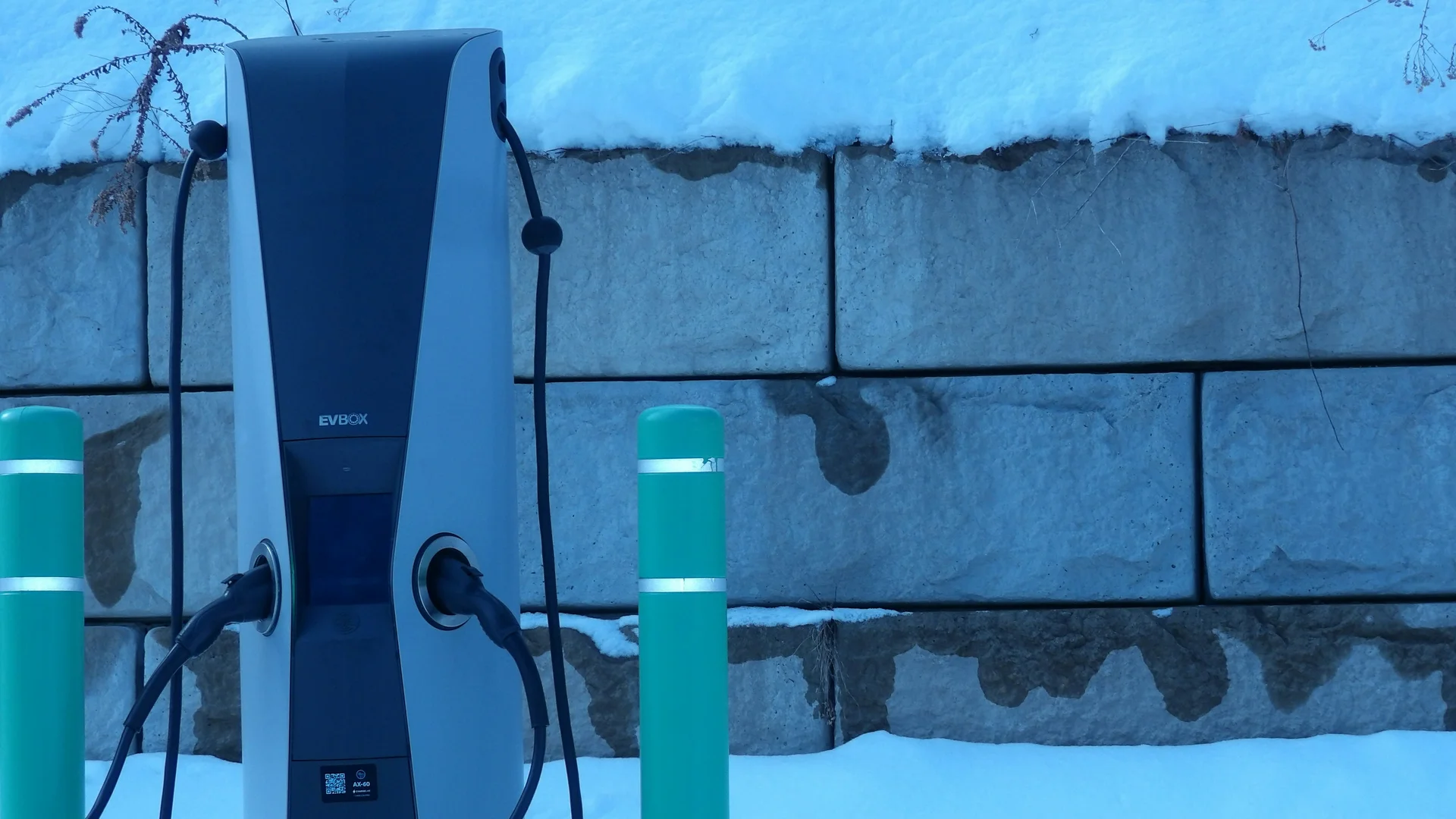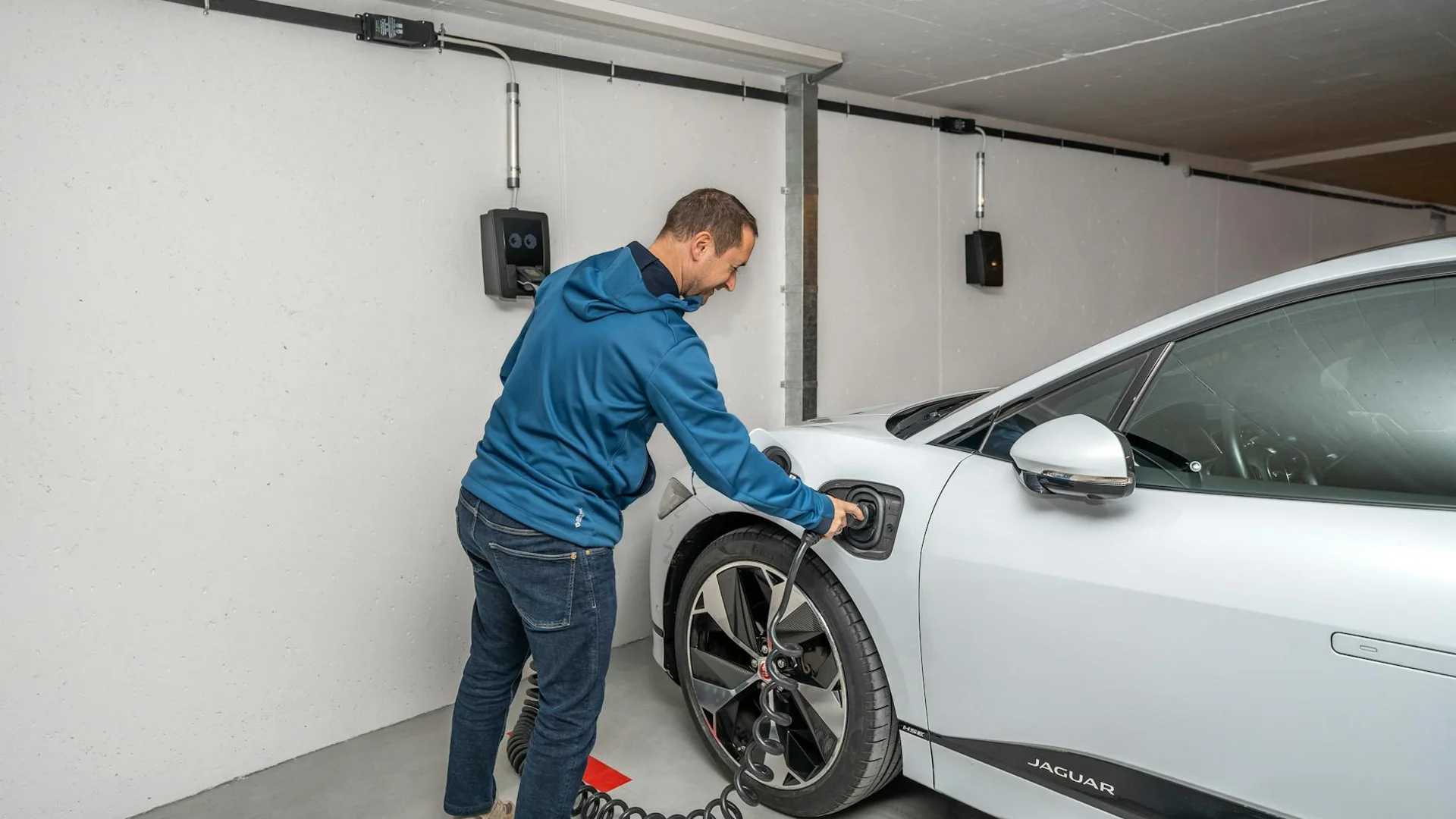
You pull up to a public Level 2 charger in a Toronto parking garage. You plug in. Nothing happens. You dig out your phone, open the network's app, wait for it to load, scan a QR code, agree to the session, and finally, current starts to flow. Three minutes you'll never get back. The charger was fine. The experience was not. Meanwhile, the same car at a DC fast charger across town would have started charging the moment the connector clicked into the inlet. No app. No card. No fob.
That difference isn't physics. It isn't even, strictly speaking, about the charger's hardware ambitions. It's about which protocol the two stations speak, and a clever question has been circulating: could a Level 2 charger just pretend to be a DC fast charger long enough to complete the digital handshake, exchange vehicle ID and billing credentials, then quietly drop back to plain AC delivery? The short version of the answer is: you don't need to. The standard already permits AC Plug-and-Charge over ISO 15118. The reason it isn't on your local FLO unit isn't a protocol gap. It's a hardware-and-deployment gap.
This guide is the long version. What J1772 actually says to your car. What the "pretend DCFC" workaround would and wouldn't accomplish. Why ISO 15118 already covers Level 2. What would have to change at FLO, ChargePoint, and Electrify Canada before you could pull up to any L2 unit in the country and just plug in. And whether someone with an OpenEVSE board and patience could prove the concept in their garage this year.
Key takeaways
- ISO 15118 has permitted AC Plug-and-Charge since its 2014 edition, the protocol gap never existed.
- J1772's single Control Pilot wire carries no vehicle ID, VIN, or billing credentials, only a duty-cycle amperage signal.
- Spoofing a CCS DC handshake on a Level 2 unit would break the car's insulation tests and contactor pre-charge safety sequence.
- FLO and ChargePoint still rely on RFID cards and apps because no deployed Canadian L2 hardware includes a HomePlug GreenPHY modem.
- The real barrier to Level 2 Plug-and-Charge is a hardware-and-deployment gap, not a missing standard.
What J1772 Actually Tells Your Car (And What It Can't)
Open up the SAE J1772 connector and you'll find five conductors: two AC line pins, ground, a proximity pin, and a single Control Pilot wire. Almost the entire conversation between your car and the charger happens on that one Control Pilot. The signaling is a 1-kHz square wave with a variable duty cycle. The charger flips the duty cycle to advertise the maximum amperage the circuit can deliver, 16 percent duty equals 10 amps, 50 percent equals 30 amps, and so on through a defined table. The car answers by pulling the pilot voltage down through a resistor. That tells the station: present, ready, energize. That's it. That is the full protocol on a stock J1772 Level 2 station.
There's no vehicle identifier on that wire. No VIN. No certificate. No billing token. No request to schedule charging for 2 a.m. when Hydro-Québec rates drop. No way for the station to know whether the car plugged in is yours, your neighbour's, or a Bolt that wandered in from the next block. The Control Pilot was designed in the late 1990s as a safety interlock, keep humans from getting electrocuted, keep cars from drawing more current than the circuit can handle. It does that job beautifully. It was never meant to carry identity.
To be fair, there's a real argument for simplicity here. A single-wire protocol that almost never fails in weird ways is worth defending. Every Canadian winter, a Grizzl-E rated to operate at -30°C in adjustable 16/24/32/40 amp configurations does its job without a software stack to crash. Add a HomePlug GreenPHY modem, an X.509 certificate store, and a TLS session manager and you've added three new failure modes for every car that pulls in. The honest rebuttal: those failure modes already exist on the network side, the app, the cloud auth call, the cellular backhaul, they're just located somewhere worse than the cable, which is why they fail so visibly. Moving identity into the cable trades one set of fragilities for a smaller, more local set, and frankly, if you're a condo-dweller shopping public chargers today, I'd rather you trust the cable than the cell signal in your underground lot.
This is why every public Level 2 station in Canada bolts an authentication layer on top. FLO uses RFID cards and a mobile app. ChargePoint does the same. Petro-Canada's L2 sites lean on app-based session start. The station knows nothing about the car, it knows about the human who tapped the card or hit "start" in the app, and it bills that account. The car is, from the network's perspective, an anonymous load.
That works. It also creates exactly the friction you feel in the parking garage. Apps crash. RFID cards get demagnetized in wallets. Cell service in underground lots is famously terrible. None of those failures would happen if the car itself could say "I am vehicle ABC123, here is my certificate, bill the owner's account", directly to the charger, over the cable, the instant the connector latches. That's the promise of Plug-and-Charge. And it's the thing J1772's Control Pilot, on its own, simply cannot deliver.
The "Pretend to Be a DCFC" Idea, What the Workaround Actually Proposes
The clever proposal goes like this. CCS DC fast chargers don't rely on the Control Pilot for their data conversation. They use Power Line Communication, a HomePlug GreenPHY modem riding the same wires the high-voltage DC will eventually flow through. That PLC link runs ISO 15118, the international standard for the digital handshake: vehicle authentication, billing contracts, energy negotiation, the whole choreography. The car and the station exchange X.509 certificates, agree on a charging schedule, and the station knows exactly which account to bill. No app. No card. Just plug.
So the question: what if a Level 2 charger had a PLC modem too? It could initiate a CCS-style handshake, present itself as a DC station, complete the full ISO 15118 session, vehicle ID exchanged, billing contract confirmed, and then drop the DC pretense and deliver plain old AC through the Control Pilot like any other J1772 station. The data conversation happens once at the start. The actual energy delivery happens the boring J1772 way. Plug-and-Charge on Level 2, slipped in through a side path that wasn't designed for it.
What I'd tell anyone who pitched this idea at a dinner party: It's elegant. Delete the post, build the proof of concept, file the patent, retire. It treats the existing standards as Lego blocks and snaps two together that weren't supposed to fit. It would, in principle, let a manufacturer ship a Plug-and-Charge Level 2 unit without waiting for the wider industry to agree on anything. The first time I worked through the idea, I wanted it to be right too, it has the satisfying shape of a hack that exploits real bureaucratic inertia.
But there's a problem with the cleverness. The workaround assumes ISO 15118 only works for DC. It doesn't. The standard has covered AC charging from the start, and that's been openly documented since at least the 2014 edition of ISO 15118-2, long before any of the Reddit-thread proposals showed up. The "pretend" step is solving a problem that the standards body already solved, and the real obstacle isn't the protocol design, it's that almost nobody has shipped the hardware to support it on the Level 2 side. Which means the patent the joke gestured at would run straight into prior art written into ISO 15118-2 a decade ago.
That doesn't make the question dumb. It makes the answer interesting. The clever workaround is a symptom, there really is a deployment gap, but the fix doesn't require any pretending at all. And there's a second-order reason to be glad of that. A "pretend DCFC" station that lies about its mode would also be lying to the car's safety logic. EVs that see a CCS DC handshake expect a specific sequence of insulation tests, contactor pre-charge, and isolation monitoring. Spoofing it convincingly enough to extract billing credentials, then dropping back to AC, isn't a clean hack, it's a protocol fork that breaks if any future ISO 15118 revision tightens the state machine. The cleaner path is to do what the standard already says.
Gear worth having
As an Amazon Associate, ThinkEV earns a small commission from qualifying purchases — at no extra cost to you.

Lectron Level 2 J1772 Charger (40A, WiFi)
Smart WiFi charger with real-time energy monitoring. 40A / 9.6 kW, J1772 with a NEMA 14-50 plug, schedule charging right from your phone.
As an Amazon Associate, ThinkEV earns from qualifying purchases — at no extra cost to you.
Why You Don't Actually Need the Workaround: ISO 15118 Already Covers AC
ISO 15118 is the international standard for vehicle-to-grid communications, and it's modal. Part 2 (ISO 15118-2) defines the application layer, the actual conversation between car and station about identity, authorization, and energy. Part 3 (ISO 15118-3) defines the physical layer that carries it: HomePlug GreenPHY Power Line Communication over either the CCS DC pins or the Control Pilot wire on AC charging. The standard explicitly contemplates both. AC charging with full digital handshake is not a hack. It's been on paper since 2014.
What changed more recently is implementation gravity. NACS, formalized by SAE as J3400 in 2024, didn't invent AC digital communications, it referenced the existing ISO 15118 stack and made the AC handshake part of the spec everyone now has to design around. SAE's J1772 documentation has referenced ISO 15118 data comms since at least the 2017 revision, which is why the careful engineering point keeps coming up: the digital-comms hooks aren't new in J3400. They were already there. The wireless side of the standards body has been parallel-tracking the same idea, SAE J2954 covers the physical layer of wireless EV charging while ISO 15118-20 handles the digital handshake, authentication, billing, and smart charging, which tells you how seriously the standards community takes keeping the comms layer modal across delivery methods.
Tesla's North American network is the visible proof. A Tesla pulls into a V3 Supercharger, the connector latches, and current flows. No app. No card. No tap. The car presents a credential, the station validates it against the account, billing happens in the background. That's Plug-and-Charge working at scale in production, and the AC version of the same handshake is defined in the same family of standards. Electrify America has been rolling out ISO 15118 Plug-and-Charge on its DC network, with partial support on certain vehicles. Ford, Porsche, Lucid, and a growing list of OEMs ship vehicle-side support.
The Canadian Level 2 picture is different, not because the standard fails, but because the installed base predates serious AC Plug-and-Charge ambition. Hundreds of thousands of FLO and ChargePoint Level 2 stations are already in the field across Canada, and almost none of them carry a HomePlug GreenPHY modem inside the box. They were built to deliver AC and authenticate the human, not the car. Here's what I'd tell anyone weighing the upgrade story: adding ISO 15118 AC to that fleet means either retrofitting hardware (expensive, and on stations bolted to apartment walls and parking-garage pillars, often impractical) or shipping new units. The good news is that any new Level 2 design could integrate the PLC modem at the bill-of-materials stage for tens of dollars per unit. The standard is ready. The supply chain is ready. The deployment is what's missing, and if you're a network operator reading this, that's the embarrassing part, not the engineering.
Compare what Tesla did on the DC side to where the AC public network sits today. Tesla shipped a closed-loop Plug-and-Charge experience years before ISO 15118 was a serious deployment story anywhere else, and they did it by owning both endpoints, car and station. The open ecosystem can't do that. It needs car OEMs, charger OEMs, network operators, and a trust federation all to land in the same release window. That coordination cost is the actual reason ISO 15118 AC hasn't shipped in Canada, and it's the reason the first network to commit to it will look heroic in retrospect even though they're just implementing a ten-year-old standard.
So if a charger startup wanted Plug-and-Charge on Level 2 in Canada tomorrow, they wouldn't need any pretense. They'd implement ISO 15118-2 AC mode the way the standard says to implement it. The novelty isn't in the trick. The novelty would be in being the first network to ship it at scale.
What Plug-and-Charge at Level 2 Would Actually Mean for Canadian Drivers
For an owner, the experience change is small in description and large in feel. You pull up to a Level 2 station, at a Loblaws in Mississauga, an office tower in Calgary, your condo's visitor stall in Vancouver. You plug in. The session starts. No app launch. No fumbling for a card. No "the network is having issues, please retry" message. Billing happens against your vehicle-linked account in the background, the way Supercharging already does. If your phone is dead, you still charge. If the parking garage has zero cell signal, you still charge. The friction layer that drives a lot of Canadian L2 abandonment just disappears.
Gear worth having
As an Amazon Associate, ThinkEV earns a small commission from qualifying purchases — at no extra cost to you.

TP-Link Kasa Smart Plug with Energy Monitoring
Track exactly how much electricity your Level 1 charger uses and schedule it for off-peak hours. Know your real cost per kWh.
As an Amazon Associate, ThinkEV earns from qualifying purchases — at no extra cost to you.
Here's what I'd tell a condo-dweller shopping chargers today, because this is the question I get most often. The second-order effect matters more than the convenience. Public Level 2 is the awkward middle of Canadian charging, slower than DC fast, more expensive per minute than home, and dragged down by sign-up overhead that makes a 20-minute top-up feel like 30. Apartment dwellers and condo residents, the population most dependent on public L2 because they can't install a Level 2 charger at home, are also the population most punished by the current authentication friction. Plug-and-Charge would meaningfully change the math for the third of Canadians who don't own a single-family home. If you're in that group, the practical move right now is to pick a car with ISO 15118 support already shipping (most 2024-and-later EVs) so you're ready the day a network turns it on.
There's a counter-argument worth airing. Networks could reasonably say their app-based flow already does most of what Plug-and-Charge promises, auto-start on tap, saved payment, session history, even some scheduling. Why spend on a hardware refresh to shave forty seconds off a session start? My answer: the forty seconds is the visible cost; the invisible cost is the percentage of sessions that fail outright because the app can't reach the backend, the QR sticker is scratched, or the user hasn't updated their card on file. Tesla's network has trained a generation of drivers to expect zero-touch. Every Tesla owner who tries a public CCS station and has to install an app is doing comparative math against the Supercharger experience, and the L2 networks lose that comparison every time.
It also opens smart charging. Once the car and the charger can exchange identity and contracts, they can negotiate schedules. The charger says "rates drop to 7.4 cents per kWh from 11 p.m. to 7 a.m." The car says "I need 40 kWh by 6:30, optimize for cost." They agree. The station bills off-peak rates automatically, the car charges when the grid wants it to charge, and the owner doesn't program anything. It's exactly the V2G / smart-charging coordination ISO 15118 was designed to enable. AC stations participating means the bulk of overnight charging in this country could actually coordinate with the grid, not just home wallboxes that owners manually schedule.
Workplace charging is the other obvious unlock. Office buildings that install eight or twelve Level 2 stations today usually need a load-management controller to keep the panel from tripping. The honest version of the engineering math:
- A 200-amp panel with twelve 32-amp Level 2 stations can't run all twelve at full tilt, that's 384 amps of demand on 200 amps of supply.
- Manual app-based session management can't really coordinate that load, the station doesn't know which car is leaving at 2 p.m. and which is parked till 6.
- Plug-and-Charge plus ISO 15118 schedule negotiation lets each station know the car's target state-of-charge and departure time, so the load controller can throttle intelligently instead of round-robin.
- The result for the building owner: more stations on the same panel, fewer "wait your turn" complaints from tenants.
The load-management engineering problem gets quantitatively easier when the stations have identity to work with.
The Canadian regulatory side is largely permissive, Measurement Canada handles billing-accuracy approval for any new metering pathway, but the protocol layer isn't where the friction would live. The friction is the same one that's been there for five years: nobody has prioritized shipping it.
Gear worth having
As an Amazon Associate, ThinkEV earns a small commission from qualifying purchases — at no extra cost to you.

Grizzl-E Classic Level 2 EV Charger (40A)
Canadian-made and rated for minus 40C winters. 40A / 9.6 kW, NEMA 14-50, indoor/outdoor, 24-ft cable. The charger built for Canadian weather.
As an Amazon Associate, ThinkEV earns from qualifying purchases — at no extra cost to you.
Could OpenEVSE or DIY Hardware Prove This Works Today?
OpenEVSE is the obvious proof-of-concept platform, and that instinct is right. It's an open-source Level 2 EVSE controller, the firmware is on GitHub, the hardware is documented, and the community has been extending it for over a decade. If anyone is going to demonstrate AC ISO 15118 in a garage workshop, it's that crowd, and I'd quietly bet on them over any of the big network OEMs to ship the first working bench demo in Canada.
The work, though, isn't trivial. OpenEVSE's stock build handles the J1772 Control Pilot signaling and contactor control beautifully, that's its bread and butter. What it doesn't include is a HomePlug GreenPHY modem chip, the PLC firmware to drive it, or the ISO 15118-2 protocol stack on top. Add-on PLC modules exist (Qualcomm's QCA7000 series is the usual reference part), and there are open-source ISO 15118 implementations like Pionix's EVerest project and the Josev stack that handle the application layer. Wiring it together is an embedded-systems project measured in weeks of focused work, not days. The PKI side, managing vehicle certificates, contract certificates, the whole X.509 dance, is more software than hardware, but it's not casual.
For a hobbyist with the right background, it's reachable. There are already public demos of AC ISO 15118 between development boards and test vehicles in Europe, where the standard has more deployment momentum. The path from "works on the bench" to "ships in a product Canadians can buy," though, runs straight through certification. Any EVSE sold or installed for use in Canada needs CSA approval, which for Level 2 typically means CSA C22.2 No. 280 compliance, plus whatever the local electrical authority requires. Adding a PLC modem and a new communications stack means re-certifying, months of paperwork and lab testing, not a firmware push.
That's the honest blocker. The technology is reachable; the regulated path to public deployment is the slow part. The bench-to-product gap also has a quieter cost most hobbyists underestimate: interoperability testing across the actual fleet of cars on Canadian roads. A demo that works with a single test vehicle and a known certificate is a demo. A product has to handshake cleanly with a 2022 Ioniq 5, a 2024 Lightning, a 2025 Model Y, a 2026 BYD Seal that's just landed under the post-tariff quota, and whatever the next Chinese OEM ships in 2027. ISO 15118 implementations have historically had quiet incompatibilities at the edges, TLS handshake timing, certificate chain ordering, EXI encoding quirks, that only surface when you plug in the eighth car. That's why CharIN exists, why their Testival events run for a week at a time, and why no serious charger OEM ships a new comms stack without doing that lap first.
What Canadian Networks and Charger Brands Would Need to Change
Realistically, three things have to line up before a Canadian driver pulls into a random public Level 2 and gets Plug-and-Charge.
- First, the hardware. The next generation of public Level 2 stations from FLO, ChargePoint, Electrify Canada, and any new entrant needs a HomePlug GreenPHY PLC modem on the J1772 cable. This is a board-level change, not a firmware update, the chip has to be physically present. The bill-of-materials cost is modest at scale (the modems sell for under $20 in quantity), but it requires a hardware refresh. Older installed units almost certainly stay on RFID/app authentication for their service life. New deployments could ship ISO 15118-ready from day one if the manufacturers prioritized it.
- Second, the back-end infrastructure. Plug-and-Charge isn't just two boxes talking, it requires a public-key infrastructure where vehicles carry credentials issued under root certificates trusted by the charging networks, and charging networks have contract relationships with mobility service providers and OEMs. Hubject's OICP and ISO 15118's Contract Certificate Pool are the existing scaffolding for this in Europe. North American adoption is partial. Canadian networks would need to either join those federations or build equivalent national infrastructure with Transport Canada and provincial energy regulators in the loop. The technical pieces aren't novel; the institutional coordination is the hard part.
- Third, the vehicles. ISO 15118 AC Plug-and-Charge requires car-side support too. Most 2024-and-later EVs from VW Group, Ford, GM, Hyundai-Kia, Stellantis, Mercedes, BMW, Tesla, and the Chinese OEMs entering Canada have or are adding ISO 15118 support, usually with focus on DC, but the AC mode is the same standard. Owners of pre-2022 EVs would likely never get Plug-and-Charge regardless of what the charging network does. That's not a flaw; it's the natural cadence of a standard rolling through a vehicle fleet that turns over slowly.
Compare timelines and the gap gets sharper. Tesla shipped DC Plug-and-Charge in production around 2019. Electrify America rolled out ISO 15118 DC Plug-and-Charge across a meaningful slice of its US network in 2022-2023. Europe has had AC ISO 15118 deployments since roughly 2020 in pilot form, with Hubject-federated AC stations live in Germany and the Netherlands today. Canada's public Level 2 networks are, by the most generous reading, four to six years behind on AC Plug-and-Charge, not because the technology is harder here, but because the market signal hasn't been loud enough to force a hardware refresh. The Canadian tariff drop on Chinese EVs from 100 percent to 6.1 percent in January, opening a 49,000-vehicle quota that BYD, Geely, and others are already lining up for, may be the signal. New OEMs entering a market tend to bring expectations from their home market, and BYD owners in China expect zero-touch charging the way Tesla owners in Canada do.
The good news for Canadian buyers shopping today: even modest home Level 2 chargers like the Grizzl-E or EVIQO don't need Plug-and-Charge, they're for one car, one owner, no billing required. The Plug-and-Charge question is entirely a public-charging problem. Your home setup is unaffected. The folks who feel this gap are the apartment renters and condo residents charging at strata-owned stalls, the workplace fleet drivers, the visitors at retail lots, anywhere a network is doing the billing. If you're shopping a BYD Seal or comparing it to a Tesla Model 3 on the post-tariff Canadian market, the ISO 15118 question is the one I'd put under the question of trunk space, it matters, but it'll be solved network-side, not by your purchase decision.
Gear worth having
As an Amazon Associate, ThinkEV earns a small commission from qualifying purchases — at no extra cost to you.

ChargePoint Home Flex Level 2 Charger (50A)
Premium 50A / 12 kW charger with the best app ecosystem. Hardwired or NEMA 14-50, with real-time energy tracking and smart scheduling.
As an Amazon Associate, ThinkEV earns from qualifying purchases — at no extra cost to you.
FAQ: Level 2, CCS, and Plug-and-Charge in Plain Language
The real story here isn't that someone discovered a clever workaround. It's that the workaround illuminates a deployment gap that the industry has been quietly sitting on. ISO 15118 AC has been a documented option for a decade. Tesla proved Plug-and-Charge works at scale years ago. The Canadian Level 2 networks could ship it on new units starting with their next hardware generation, and the first one that does will quietly own a lot of consumer mindshare. The thing I'd watch is which network announces ISO 15118 AC support in a 2026 or 2027 hardware refresh. Not because the technology is hard, but because the first mover gets the apartment-dweller market locked in for a decade. Watch for a FLO or ChargePoint press release naming a HomePlug GreenPHY modem in a next-generation public L2 unit, or a CharIN Testival result showing a Canadian-market charger passing AC ISO 15118 interoperability against five or more OEM cars. Absent those signals, the bet is that 2027 is the earliest a Canadian driver pulls into a non-Tesla public Level 2 station and just plugs in. Somebody is going to ship this. The only open question is whether they have the nerve to do it as the standard, not as a stunt.
Gear worth having
As an Amazon Associate, ThinkEV earns a small commission from qualifying purchases — at no extra cost to you.

MECMO J1772 Charger Holster (Wall Mount)
A weatherproof dock for the J1772 nozzle so your charging handle has a home instead of the garage floor.
As an Amazon Associate, ThinkEV earns from qualifying purchases — at no extra cost to you.

Founder & Chief Editor
Vlad Pereira is the founder and chief editor of ThinkEV.ca, the Canadian electric-vehicle publication he writes and edits from Courtenay, British Columbia. He covers EV pricing, federal and provincial rebates, charging costs, and the Chinese manufacturers now entering Canada, from the buyer's side rather than the press-fleet side. ThinkEV is a venture of Vlad Pereira Online; his writing on health, income and the long game lives at vladpereira.com.
Frequently asked questions
Does my car need CCS hardware to use Plug-and-Charge at Level 2?
Why doesn't my FLO charger support Plug-and-Charge already?
Would a home charger like OpenEVSE ever support this?
What actually happens to my billing if Plug-and-Charge runs over Level 2?
Is underground parking cell signal actually the main failure point today?
More EV & road-trip finds
Affordable upgrades worth a look — tap any to check the price on Amazon.
 ★ 2,941
Microfiber Cleaning Cloths (Multi-Pack)
View on Amazon ★ 537
★ 537USB Star Projector Roof Light
View on Amazon ★ 1,083
Crystal Push-Start Button Ring (2-Pack)
View on Amazon ★ 27,769
Car Cup Holder Coasters (4-Pack)
View on Amazon ★ 15,014
Spigen Tempered Glass for Tesla Model 3/Y
View on Amazon ★ 119
★ 119Foldable Waterproof Trunk Organizer
View on Amazon ★ 392
★ 392Large Cup Holder Adapter (32-40oz)
View on Amazon ★ 96,686
PULIDIKI Car Cleaning Gel (Detailing Putty)
View on AmazonRead, Plan, Then Stay Current
Explore our expert articles to understand incentives and ownership costs, use the map to pressure-test charging reality, then subscribe so new EV coverage comes straight to you.
Continue Reading
Level 1 vs Level 2 EV Charging: Which to Choose

EV Battery Replacement: What a Failed Pack Actually Costs
EV Charging Connectors Explained: NACS, CCS, and J1772

EREVs Explained: The Backup Engine Comeback for 2026
What Driver-Assist Features Actually Do, and What They Don't