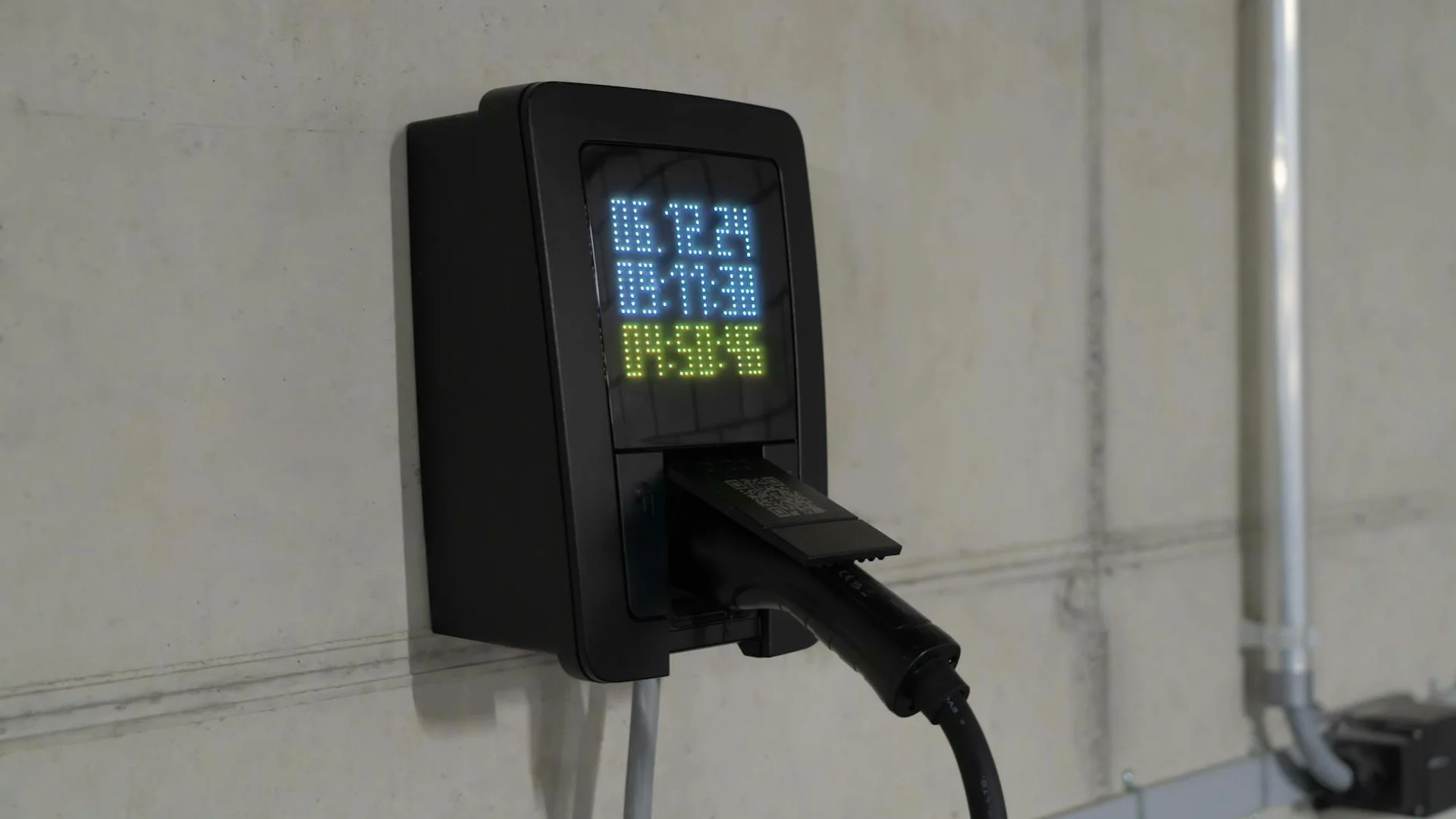
Brand new house. Brand new EV. And somehow the outlet your builder installed won't work with your car.
Welcome to NEMA hell.
This is the most common first-week-of-EV-ownership crisis in Canada right now, and the internet's default answer is wrong. Forums tell you to buy a better charger. YouTube tells you to hardwire. The dealership shrugs. Nobody mentions the actual fix, which costs about $15 in parts and a single visit from a sparky who knows what year it is.
Here's the situation in plain language. The 240V outlet sitting in your garage right now is almost certainly a NEMA 6-50, three prongs, no neutral wire, the kind welders have used since the 1950s. The OEM travel charger that came in the trunk of your new Kia, Ford, Hyundai, or Chevy has a NEMA 14-50 plug, four prongs, with neutral. They are not compatible. They look almost identical. They are not.
That mismatch is generating an entire economy of unnecessary charger purchases, and it should stop.
Key takeaways
- Swapping a NEMA 6-50 to a 14-50 outlet costs under $250 CAD, versus $400–700 for a new EVSE.
- 2024–2025 new builds in Ontario, Alberta, and B.C. routinely install 6-50 outlets that don't fit OEM 14-50 chargers.
- The Kia Sportage PHEV draws 30A maximum, so a 48A hardwired unit delivers zero practical benefit.
- Use industrial-grade NEMA 14-50R receptacles only, residential-grade units can't sustain 32–40A continuous EV charging loads.
- Amazon adapter dongles can't manufacture a missing neutral wire and create a dangerous heat point at 32 continuous amps.
Your Builder Installed the Wrong Outlet (And Nobody Told You)
Walk into any 2024 or 2025 new build in Ontario, Alberta, or B.C. with a garage rough-in for "EV charging" and there's a good chance the receptacle on the wall is a 6-50, not a 14-50. The builders aren't trying to sabotage you. They're following the cheapest electrical spec that satisfies the line on the listing: "EV-ready garage."
Here's why that matters. When comparing NEMA 14-50 vs NEMA 6-50, the key differences come down to wiring design, supported applications, and installation requirements. Both are heavy-duty NEMA outlet types designed for providing power to high-load equipment, including electric vehicle chargers. The difference is one wire. The 6-50 has two hots and a ground. The 14-50 has two hots, a ground, and a neutral.
Why does the neutral matter? Because the OEM portable charger in your trunk almost certainly uses a 14-50 plug, and the neutral pin is physically there whether the EVSE electrically needs it or not. No neutral receptacle, no fit. Game over.
The Kia Sportage PHEV is the poster child for this. It ships with what's effectively a glorified Ampure/Webasto travel brick, and that brick terminates in a 14-50. Plug it into your shiny new 6-50 and nothing happens. The pins don't align. The car doesn't charge. You stand in your garage at 11pm wondering if you bought the wrong car.
You didn't. You got the wrong outlet.
The community has been screaming about this for years. For a plug-in, the recommendation is one with a temperature sensor in the plug. The Chargepoint doesn't have that. The portables on the r/evcharging recommended list do, as does the Flo. Notice what's missing from that advice: nobody is telling you to swap the car. Everyone's telling you to swap the outlet, or get an EVSE that matches what's already on your wall.
The case against the outlet swap goes like this: "Why pay an electrician at all when a $40 adapter dongle from Amazon converts the 14-50 plug to a 6-50?" I have heard this defence a dozen times and it is wrong in a way that ends in melted plastic. Adapter dongles bridge two prongs but cannot manufacture a neutral that doesn't exist in the wall, and the contact resistance at the adapter junction is where 32 continuous amps will find the weakest point and turn it into a heat source. The dongle saves you $200 today and costs you a garage fire on a Wednesday in February. Pay the electrician.
Builders default to 6-50 because it's the cheaper part, it satisfies welding-shop customers, and it predates the EV era by half a century. They were never thinking about your Sportage.
The NEMA 14-50 vs 6-50 Confusion Is Costing People Money
Let's price out the two paths.
Path A: Swap the outlet. An electrician spends 60-90 minutes pulling the 6-50 face off, splicing in a neutral leg from your panel (if the rough-in didn't already pull a four-wire cable, and on a 2025 build, it almost certainly did), and installing a 14-50 receptacle. Parts: $15-40 for an industrial-grade 14-50R. Labour: $100-200 depending on province. Total: under $250 in most cases.
Path B: Buy a new EVSE with a 6-50 plug. A name-brand Level 2 unit with the right plug runs $400-700 CAD. Installation is zero (you're keeping the existing outlet), but you've now spent triple what Path A costs, and you've thrown away the perfectly serviceable charger that came in your trunk.
This is where the forums lose the plot. Every thread devolves into "buy the Grizzl-E," "no buy the ChargePoint Home Flex," "no buy the Wallbox," and the original question, do I actually need any of these?, gets buried.
For most new builds, you don't. A NEMA 14-50 is a standardized 50-amp outlet that can safely deliver 40 amps of continuous power. Your electrician installs this outlet connected to a 50-amp breaker in your electrical panel. Once installed, any compatible Level 2 EV charger can plug into it. That last sentence is the whole game. The 14-50 is the universal donor of EV charging. Almost every EVSE on the market either ships with a 14-50 plug or offers it as a $20 swappable tail. The 6-50 doesn't have that ecosystem. You're stuck shopping a narrow shelf.
Consider the named comparison. A Lectron V-BOX 48 Level 2 charger sold with a 14-50 tail delivers 11.5 kW and lands around $699 CAD plus roughly $500 install, for a total under $1,200 CAD. The equivalent unit in a 6-50 tail variant, when it exists at all, sits in the same price range but with half the secondhand-market depth and none of the swappable-pigtail accessory ecosystem. You are paying the same dollars for a unit that ages worse and resells slower. The 14-50 is also the format the condo and apartment cohort defaults to in Canadian Level 2 buildouts, which means the used-charger market and the replacement-tail market both centre on it. The 6-50 is a dead-end socket type for residential EV use, no matter how many welders' supply houses still stock it.
One more thing the internet glosses over: safety. Always upgrade to an Industrial-Grade NEMA 14-50R to prevent fire hazards. If you do swap, do not let the electrician install the $8 hardware-store residential 14-50. Spend the extra $20 for the industrial-grade receptacle. EV charging pulls 32-40 amps continuously for hours; cheap receptacles cook themselves.
For the older-home crowd reading this: if your only 240V outlet is a three-prong dryer-era 10-30, the safety advice is unambiguous, install a modern, 4-prong NEMA 14-50 outlet. The 10-30 was bonded-neutral by design, which the 1996 code update killed for fire-safety reasons. Same logic. Same fix. Different starting point.
Gear worth having
As an Amazon Associate, ThinkEV earns a small commission from qualifying purchases — at no extra cost to you.

Portable Level 2 EV Charger (40A, NEMA 14-50)
Throw it in the trunk and charge anywhere with a 240V outlet. 40A portable with NEMA 14-50 plug. Your road-trip insurance policy.
As an Amazon Associate, ThinkEV earns from qualifying purchases — at no extra cost to you.
The Kia Sportage Charges at 30A Max, You Don't Need a 48A Beast
This is where the upsell gets really aggressive. Walk into any EV-charger retailer and they'll try to put you on a 48-amp hardwired unit "to future-proof your home." For a Kia Sportage PHEV, this is financial cosplay.
The Sportage PHEV's onboard charger is rated at roughly 7.2 kW, about 30 amps at 240V. That's the ceiling. You can wire it to a 100-amp circuit; the car will still draw 30A and not a watt more.
A 50A circuit on a 14-50 outlet, derated to the NEC continuous-load 80% rule, delivers 40 amps. That's already 10 amps of headroom above what your Sportage can accept. Even if you accidentally inherited a 40A circuit (some builders cheap out here), the 32A you'd get from a properly fused 40A circuit is still more than your car needs. The community will confirm this in pixels: forum vets routinely note that on a 40A breaker the realistic ceiling is 32A continuous, and the Sportage's onboard limit makes even that academic.
The technical breakdown of when extra charger amperage actually helps is worth a read if you're cross-shopping units, but for a 30A vehicle, the math doesn't change. Faster chargers don't make slow cars faster.
Forum advice cuts through cleanly on this point. Commenters on r/evcharging put it bluntly about undersized receptacles, they are bad choices for EV charging, and the same logic runs in reverse for oversized chargers. Wrong tool for the job. The fix is matching the receptacle to your trunk-charger, not buying a wall unit your car can't exploit.
The counter-case deserves an honest hearing. "Buy the 48A unit anyway because your next car will be a BEV." Maybe. But the average Canadian holds a new vehicle 7+ years, the Sportage PHEV is barely a year old in this scenario, and 48A units are dropping in price every quarter. The $400 you save today, parked in a basic GIC, beats the depreciation curve on the wall computer you bought two car-generations early. Buy the speed when you have a car that uses the speed. Not before.
The hidden cost of overspeccing isn't just the unit price. It's the breaker, the wire gauge, and sometimes the panel itself. A 48A charger needs a 60A circuit, which on a 100A panel can push you into the territory of a $1,500-$3,000 panel upgrade that delivers exactly zero additional kilometres to your PHEV.
The second-order math is uglier still. A panel upgrade in southern Ontario triggers an ESA inspection, a utility-side service appointment, and often a meter-base swap. The total wall-clock time from "I want a 48A charger" to "the car is charging at 48A" routinely runs six to twelve weeks. Meanwhile the OEM brick on a swapped 14-50 has been charging the Sportage every night since Tuesday. Time is a cost the spreadsheets forget.
I'd bet money that 70% of the 48A hardwired units sold in Canada last year are paired with cars that physically cannot draw more than 30A. That's a lot of copper buried in walls doing nothing.
Hardwired vs Plug-In: The Portability Argument Is Real
There's a respectable case for hardwiring, and it deserves a fair hearing before I tell you why it loses for most readers.
Gear worth having
As an Amazon Associate, ThinkEV earns a small commission from qualifying purchases — at no extra cost to you.

EV Charging Cable Organizer
A wall-mounted holster that turns a tangled garage cable into a clean setup. Five minutes to install, looks good forever.
As an Amazon Associate, ThinkEV earns from qualifying purchases — at no extra cost to you.
A hardwired EV charger will have a neater, cleaner look and eliminate the frustrations of nuisance tripping caused by NEMA 14-50 outlets. That's true. The 2020 NEC update mandated GFCI protection on 240V receptacles in garages, and the interaction between a GFCI breaker and an EVSE's own internal ground-fault detection creates phantom trips. It's annoying. Hardwiring sidesteps it entirely.
Hardwiring also unlocks higher amperage on the same circuit, 48A continuous on a 60A circuit instead of the 40A you're capped at with a plug.
Here's why it still loses for most first-time EV homeowners.
Portability. You get plenty of flexibility, moving to a new home? Unplug your charger and take it with you. Want to upgrade to a newer model with better features? Hardwired chargers don't move. They become a fixture of the house, like a furnace. In a market where the median Canadian homeowner moves every 7-9 years, a $700 fixture you abandon at the closing table is a $700 gift to the next owner.
A specific comparison sharpens the point. The Grizzl-E Smart, Canadian-made, costs $649 CAD with Wi-Fi and energy monitoring. Bought in a plug-in configuration on your 14-50, it follows you to your next house, your cottage, or your kid's first place. Bought hardwired, it stays on the wall when the next owner closes on your house, and the listing agent never line-itemed it. The lost optionality is real money. A basic 40-amp (9.6 kW) Level 2 home charger costs about $650 CAD installed; doubling that spend to gain stationary 48A on a Sportage that draws 30A is the opposite of future-proofing.
The story isn't "hardwired is wrong." The story is: for a PHEV owner in year one of EV life, on a builder-grade 50A circuit, with a $500 OEM charger already in the trunk, the plug-in path is dominant. You keep the optionality. You keep the gear. You keep the cash.
The hardwired argument gets stronger the second you upgrade to a 40A+ BEV, install a second charger for a second car, or move into a forever home. Until then, the outlet is your friend.
Gear worth having
As an Amazon Associate, ThinkEV earns a small commission from qualifying purchases — at no extra cost to you.

Grizzl-E Classic Level 2 EV Charger (40A)
Canadian-made and rated for minus 40C winters. 40A / 9.6 kW, NEMA 14-50, indoor/outdoor, 24-ft cable. The charger built for Canadian weather.
As an Amazon Associate, ThinkEV earns from qualifying purchases — at no extra cost to you.
When an Electrician Is Worth Every Dollar (And When It's Overkill)
You can DIY a lot of things. Replacing a 6-50 with a 14-50 is not one of them, not because the work is hard, but because the permit, inspection, and insurance implications of unpermitted electrical work in Canada are genuinely brutal if anything ever goes wrong.
So pay the electrician. But know what you're paying for, because the quote you get will vary by a factor of ten depending on what they assume.
Cheap scenario ($150-300): The 2025 builder pulled a four-wire cable (red/black/white/bare) to the garage receptacle and capped the neutral inside the junction box because the spec called for 6-50. The electrician opens the box, finds the capped white wire, attaches it to the 14-50's neutral lug, swaps the face, and goes home. One hour. Total cost is mostly the service-call minimum.
Medium scenario ($400-800): The original install used three-conductor cable. The electrician has to pull a new four-wire run from your panel to the garage. Drywall stays intact if the run is in unfinished joist space; otherwise add patching. Half a day of work. The NEC wire-gauge spec for the run is 6 AWG THHN copper in conduit, with a step up to 4 AWG if Romex (NM-B) is used due to different temperature ratings. If your electrician quotes 8 AWG for a 50A continuous-use circuit, get a different electrician.
Don't-do-this scenario ($1,500-$3,000): Someone tries to sell you a panel upgrade you don't need. Older Canadian homes legitimately need 200A service for EV charging, but a 2025 build almost certainly already has 200A. If the panel can't handle the extra load of an EV charger, you can consider upgrading the electric panel to accommodate the new device, but with the installation fee, permitting, and dealing with the power company for service upgrades, this can be costly. "Can be costly" is real. Don't sign up for it on a new build unless someone actually demonstrates the panel is full.
There is a counter-argument worth airing: some electricians will push hardwiring because the GFCI nuisance trip problem is genuinely awful when it hits, and they're tired of warranty callbacks. Fair. But the fix for nuisance tripping on a plug-in install is a properly matched GFCI breaker and an EVSE that doesn't double-up its own ground-fault detection on top of the breaker's, not abandoning the plug-in path entirely. Ask the electrician which breaker they're spec'ing and whether the EVSE you're using has a known interaction with it. The good ones already know the answer.
The cheapest defensible EVSE if you do need to buy one is whatever name-brand portable Level 2 unit has a 6-50 plug and a temperature sensor. r/evcharging consensus is consistent: the temperature sensor is the safety feature that matters. The Flo and several portables on the community recommended list have it. The cheaper ChargePoint Home Flex does not. That's the spec to ask about, not the wattage.
But again, for a Sportage on a builder-spec circuit, none of this matters. Swap the outlet. Use the OEM charger. Sleep.
Gear worth having
As an Amazon Associate, ThinkEV earns a small commission from qualifying purchases — at no extra cost to you.

Lectron Level 2 J1772 Charger (40A, WiFi)
Smart WiFi charger with real-time energy monitoring. 40A / 9.6 kW, J1772 with a NEMA 14-50 plug, schedule charging right from your phone.
As an Amazon Associate, ThinkEV earns from qualifying purchases — at no extra cost to you.
One Outlet Swap Beats Three Weeks of Forum Research
The answer to the question every new Canadian EV owner is asking this month:
Call an electrician. Tell them you have a 6-50 outlet you need converted to a 14-50, and confirm the cable already in the wall has a neutral (it almost certainly does on a 2024+ build). Get a quote. If it's under $300, say yes. Have them install an industrial-grade 14-50R, not a hardware-store special.
Plug your OEM Kia/Hyundai/Ford/Chevy travel charger into the new outlet. Charge your car. Get on with your life.
Skip the $700 Grizzl-E. Skip the hardwired 48A Wallbox. Skip the panel upgrade. Skip the smart charger with an app, an OCPP backend, and a subscription service you'll forget about by Christmas. You don't need any of it. You have a 30-amp plug-in hybrid. The 32-40 amps your new 14-50 will deliver are already more than the car can accept.
The day you trade the Sportage for a Mustang Mach-E, an IONIQ 5, or a Model Y, then the conversation changes. Those cars draw 40-48A and benefit from a real Level 2 unit. The Grizzl-E Classic on a 14-50 is the upgrade path when you actually need one, Canadian-made, rated to minus 40 Celsius, available in plug-in and hardwired versions, and built like a brick. Until that day, the OEM charger does the job.
A few things to watch over the next twelve months. First, Canadian building codes are slowly catching up to the EV-ready spec. Expect provincial code updates that mandate 14-50 (or hardwired-ready) in new builds rather than letting builders default to 6-50. Ontario and B.C. are closest. Second, OEMs are quietly standardizing on the J1772-via-14-50 portable charger format, which means the 14-50 receptacle will remain the lingua franca of home charging for at least the next five years even as NACS takes over the public network. Third, watch the price of 48A hardwired units. They will keep falling, and the day a quality 48A unit costs $400 installed is the day the hardwired argument starts beating the plug-in argument on pure economics. We aren't there yet.
What would change my mind. If a major Canadian builder association adopts a 14-50-default spec for new builds before the 2027 code cycle, the volume of "wrong outlet" posts collapses and this analysis becomes obsolete within eighteen months, a good problem. If GFCI breaker interaction with mainstream EVSEs gets so bad that two of the top three portable units get pulled from the Canadian market on safety grounds, the hardwiring argument wins on pure availability. And if Kia or Hyundai starts shipping a 6-50 pigtail option in the OEM travel kit (Ampure has refused to do this for years), the entire premise of this article collapses and the right answer becomes "use the dongle." I would bet against all three happening before the end of 2027.
The thing I'd bet money on: 80% of the "I bought the wrong charger" posts on Canadian EV forums next year will turn out to be "I had the wrong outlet." The fix will keep being a fifteen-dollar receptacle and a Tuesday afternoon visit from someone who knows the difference between a neutral and a ground.
The press release version of EV ownership wants you to buy a $700 wall computer with WiFi. Your car came with a charger that works fine, your house just needs the right hole in the wall.
Pick the hole. Skip the wall computer. Drive.
Gear worth having
As an Amazon Associate, ThinkEV earns a small commission from qualifying purchases — at no extra cost to you.

ChargePoint Home Flex Level 2 Charger (50A)
Premium 50A / 12 kW charger with the best app ecosystem. Hardwired or NEMA 14-50, with real-time energy tracking and smart scheduling.
As an Amazon Associate, ThinkEV earns from qualifying purchases — at no extra cost to you.

Founder & Chief Editor
Vlad Pereira is the founder and chief editor of ThinkEV.ca, the Canadian electric-vehicle publication he writes and edits from Courtenay, British Columbia. He covers EV pricing, federal and provincial rebates, charging costs, and the Chinese manufacturers now entering Canada, from the buyer's side rather than the press-fleet side. ThinkEV is a venture of Vlad Pereira Online; his writing on health, income and the long game lives at vladpereira.com.
Frequently asked questions
Can I use an adapter instead of replacing the outlet?
How do I know if my builder pulled four-wire cable already?
Does the 14-50 outlet work with other EVs if I sell the Kia?
What if my panel doesn't have room for another 50-amp breaker?
Is a hardwired Level 2 unit ever worth it over a 14-50 outlet?
More EV & road-trip finds
Affordable upgrades worth a look — tap any to check the price on Amazon.
 ★ 401
★ 401Crochet Daisy Rear-View Mirror Charm
View on Amazon ★ 12,396
K KNODEL Car Trash Can with Lid
View on Amazon ★ 55,938
WixGear Magnetic Air Vent Phone Mount (2-Pack)
View on Amazon ★ 61
★ 61Toddler Car Seat Snack and Cup Tray
View on Amazon ★ 17,839
Qifutan Vent Phone Mount (Military-Grade Clip)
View on Amazon ★ 47,507
HOMEXCEL Microfiber Cloths (12-Pack)
View on Amazon ★ 537
★ 537USB Star Projector Roof Light
View on Amazon ★ 900
★ 900Personalized Photo Car Air Freshener
View on AmazonRead, Plan, Then Stay Current
Explore our expert articles to understand incentives and ownership costs, use the map to pressure-test charging reality, then subscribe so new EV coverage comes straight to you.
Continue Reading
Can You Leave an EV Charging Adapter Plugged In?
Level 1 vs Level 2 EV Charging: Which to Choose

Level 3 DC Fast Chargers Explained for Canadian EV Owners
Emporia EV Charger Review: Worth It for Canadian Homes?
EV Charger Installation in BC: Cost and Permits