Key takeaways
- Canada sold roughly 200,000 EVs in 2024. Each one carries a battery that will eventually need recycling. The infrastructure is not ready for the wave that's coming.
- A single EV pack weighs 400 to 800 kg and holds lithium, cobalt, nickel, and manganese. That material is worth $1,000 to $3,000 per pack if recovered correctly.
- Li-Cycle (Ontario, NYSE: LICY) is Canada's biggest battery recycler. It can recover up to 95% of materials from a dead pack using a process called hydrometallurgy.
- Second-life storage is the bridge. Batteries at 70 to 80% capacity still work well for stationary energy storage for 5 to 10 more years.
- Canada has no national battery recycling law. The EU does. That gap will cost Canadian companies market access if it isn't closed.
Canada bought about 200,000 electric vehicles in 2024. That number will keep growing. Each of those vehicles carries a battery pack that will reach end of life in 8 to 15 years. Most Canadians don't know what happens to those packs. Neither does most of the government, if we're being honest.
I've watched this industry for years. The recycling question is the one that serious EV people argue about behind closed doors. In public, the story sounds clean. In the real world, the infrastructure is years behind where it needs to be.
That doesn't mean EVs are a bad idea. It means the job isn't finished. Selling millions of EVs without a serious recycling plan is like building a city without sewage treatment. You can do it. You'll regret it.
This post covers what's inside EV batteries, how they're recycled, and what the second-life option looks like. It also covers where Canada's regulations stand, who the companies are, what the economics say, and what you as an EV owner should actually do.
What's Inside an EV Battery and Why That Matters
The short answer is that an EV battery pack is a dense collection of valuable metals. Understanding what's in there explains why recycling is both profitable and complicated.
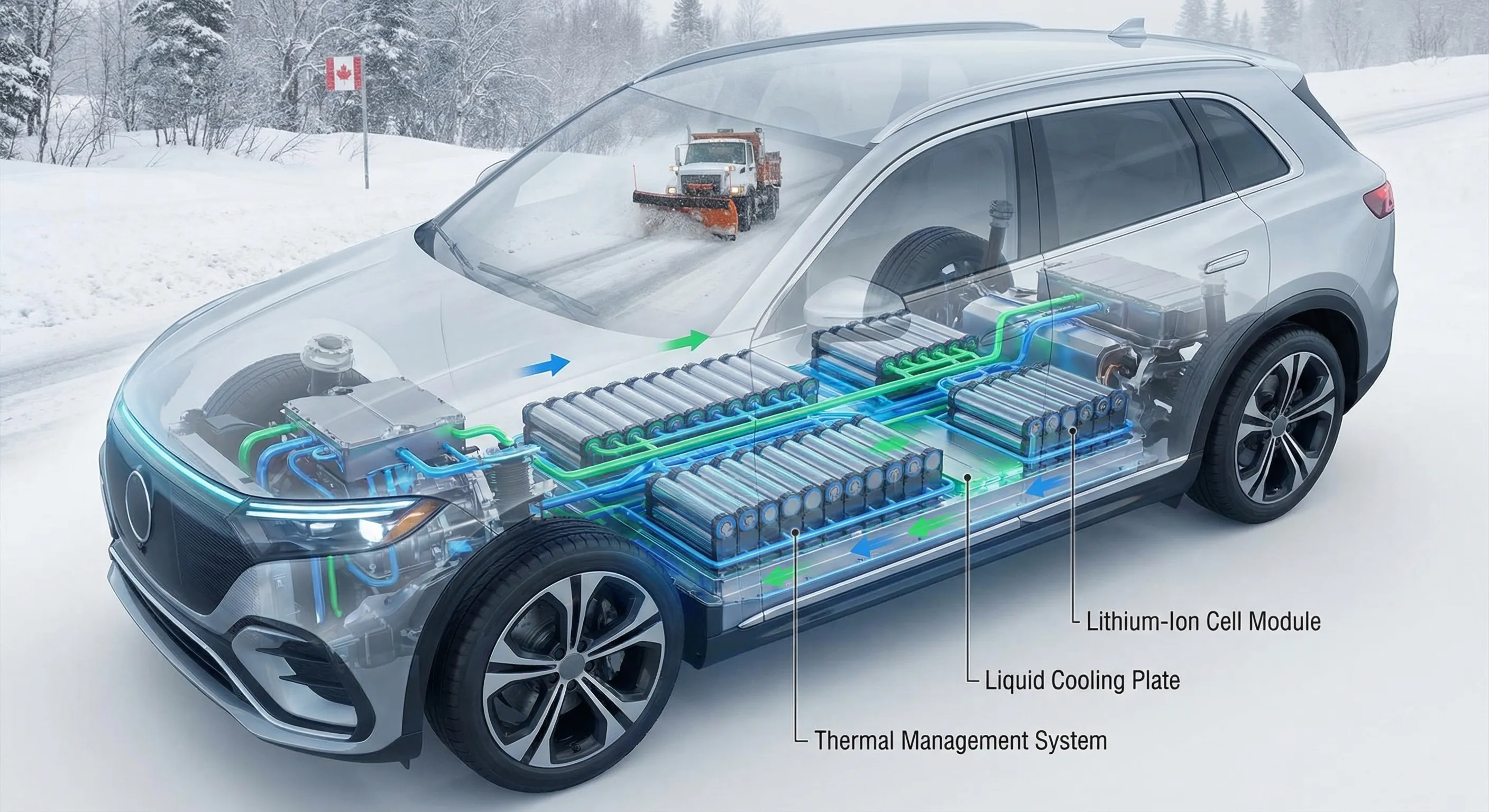
An EV battery is not one single unit. It's a system made of hundreds or thousands of small cells. Those cells are grouped into modules. The modules are grouped into the full pack. A thermal management system runs through the whole thing to keep temperatures in range.
Most EV batteries in Canada use one of two cell chemistries. The first is NMC (nickel manganese cobalt). The second is LFP (lithium iron phosphate). Tesla now uses LFP in its standard-range vehicles. Most other automakers still use NMC. Both types contain lithium. NMC packs also contain cobalt and nickel, which are expensive and hard to source cleanly.
The battery pack in a typical Tesla Model Y weighs about 480 kg. A Ford F-150 Lightning battery weighs closer to 820 kg. Inside a 60 kWh NMC pack you'll find roughly:
- 8 to 10 kg of lithium carbonate equivalent
- 12 to 15 kg of nickel
- 6 to 8 kg of cobalt
- 7 to 9 kg of manganese
- Significant copper, aluminium, and steel in the casing and wiring
Those numbers don't sound big on their own. Multiply them by 200,000 vehicles per year and the total is enormous. Canada is sitting on a growing mountain of critical minerals locked inside used car batteries.
Cobalt is the most contentious of those materials. It's expensive. Most of it comes from the Democratic Republic of Congo, where mining conditions are often dangerous. Nickel comes largely from Indonesia and the Philippines. Lithium comes from salt flats in Chile and Argentina, or from hard-rock mines in Australia. Canada has its own lithium deposits. Almost none of them are producing at commercial scale yet.
The electrolyte inside the battery is a liquid or gel that carries ions between the anode and cathode. It contains fluorine compounds. Those compounds are toxic if released. Handling a damaged or end-of-life battery carelessly means dealing with those chemicals. This is one reason battery recycling needs trained workers and proper equipment.
The anode is typically made of graphite. Most graphite is processed in China. Canada imports nearly all of it.
The battery also includes a Battery Management System (BMS). This is the electronic brain that watches voltage, temperature, and charge state in real time. When a battery reaches end of life, the BMS data tells recyclers which cells still have healthy capacity and which have degraded. That data is also where the second-life opportunity begins.
In practice, this means every EV sitting in a Canadian driveway is a concentrated package of critical minerals. Those minerals are worth recovering. Letting them go to landfill is waste in both senses of the word.
The chemistry mix is shifting. LFP batteries contain no cobalt and less nickel. They're cheaper to produce and more thermally stable. They're also harder to recycle at a profit because the recovered materials are worth less. This chemistry shift changes the economics of recycling and requires different processing approaches. Canada's recycling industry needs to handle both NMC and LFP streams at scale.
New chemistries are coming. Sodium-ion batteries are entering commercial production. Solid-state batteries are close to commercial viability for cars. Each new chemistry needs different recycling methods. Building recycling systems flexible enough for multiple chemistries is much harder than building one for a single type.
Battery pack design also matters for recycling. Some manufacturers glue cells directly into the pack structure. Breaking those bonds without damaging the cells is slow and expensive. Other manufacturers design packs for disassembly, using bolts and modular groups that come apart cleanly. The EU Battery Regulation now requires that batteries sold in Europe be designed for disassembly. Canada has no equivalent requirement. This design gap will translate into higher recycling costs for every pack that comes offline over the next decade. (EU Battery Regulation, 2023)
Most of this is invisible to you as a driver. You just drive the car. But the materials inside that battery connect to mining operations on multiple continents. Recovering those materials at end of life is how Canada closes that loop and builds a domestic supply chain.
The global demand picture makes this more urgent. The International Energy Agency projects that global EV battery demand will grow by a factor of 20 between 2020 and 2040. Primary mining alone can't keep pace with that growth. Recycling isn't a side activity in that future. It's a core part of the supply model.
Canada has the mineral wealth to be a major supplier in that future. We also have the technical expertise and the clean electricity grid to do it with lower carbon emissions than most competitors. What we lack is the policy structure and the investment scale to connect those advantages into a working system.
How EV Batteries Age and When They're Actually Dead
The word "dead" misleads people thinking about EV batteries. A battery doesn't stop on a specific date. It degrades slowly over years.
An EV battery is generally considered end-of-life for vehicle use when its capacity drops below 70 to 80 percent of original. At that point, the driver's range drops too much to be practical. The battery isn't truly dead, though. It can still store and release energy. It just can't do the job the car needs.
The rate of degradation depends on several factors. Charging to 100 percent too often stresses cells. Frequent DC fast charging generates heat. Heat is the primary enemy of lithium-ion cell longevity. Cold temperatures slow the chemical reactions inside cells. The thermal management system then works harder to keep the pack at its optimal operating temperature.
Canadian winters are hard on batteries. A vehicle sitting outside at minus 25 in Winnipeg or Yellowknife loses range quickly from cold alone. The thermal management system burns energy to warm the pack before driving even starts. Over years, repeated cold exposure speeds up degradation in ways that don't show up in test-cycle data from warmer climates.
A well-managed battery in a modern EV should retain 80 percent capacity after 1,500 to 2,000 charging cycles. At one full charge per day, that's four to five years of cycling. Most EV owners charge far less often. A realistic lifespan for an EV battery before hitting the 80 percent threshold is 8 to 15 years in Canadian conditions.
The first wave of mass-market EVs in Canada arrived between 2012 and 2016. That means the first significant wave of end-of-life packs is arriving now or within the next few years. The recycling system doesn't have the capacity to handle this wave cleanly. That's not speculation. It's a math problem.
The question of when a battery is actually dead is more complicated than a single percentage threshold. Battery capacity fades unevenly. Some cells degrade faster than others. A pack with a few failed cells in one module can often have those modules replaced, extending the vehicle's life. This is called pack repair or module replacement. It's common in commercial fleets where maintenance budgets justify the labour. It's rare for individual consumers because most dealerships don't support it and the diagnostic tooling is expensive.
Battery health can be assessed through several methods. Capacity testing puts the battery through a full charge-discharge cycle and measures how much energy it actually holds. Impedance testing checks the internal resistance of cells. Higher resistance means more energy lost as heat during charging and discharging. State-of-health algorithms built into the BMS track degradation trends over time and project future capacity.
Automakers publish battery warranty terms that give you a useful rough guide. Most Canadian EV warranties cover the battery for 8 years or 160,000 km at 70 percent capacity retention. (Automakers, various) If your battery drops below 70 percent within that period, the automaker is supposed to replace it. In practice, triggering that warranty requires documentation and testing that most owners don't pursue proactively.
Once a battery can no longer serve a vehicle, it enters one of three possible futures. It gets repurposed for second-life stationary storage. It gets sent to a recycler to recover materials. Or it sits in a storage yard waiting for one of those two options to become available. That third option is the one that Canada needs to shrink. Storage costs money and delays material recovery.
The degradation curve also interacts with battery chemistry in important ways. LFP batteries tend to degrade more linearly and predictably than NMC batteries. They hold up better over more charge cycles. They're less sensitive to high charge states, so charging to 100 percent doesn't stress them as much. This means LFP packs often have longer useful lives in vehicles and higher residual capacity when they finally reach end of life. That's good for second-life applications but can make the economics of recycling them marginal.
NMC batteries degrade faster and less predictably. They're more sensitive to heat, high charge states, and deep discharges. An NMC pack that's been treated poorly can degrade to 70 percent capacity in five or six years. The same pack treated carefully can last fifteen years. Driver behaviour is one of the most important variables in battery lifespan, which makes fleet management for recycling planning very difficult.
The timing of the recycling wave also depends on how quickly people trade in their EVs. If consumers sell their first EV after three years and buy a newer model, the battery in that first EV might have 90 percent capacity. It then enters the used car market and goes through another few years of use before it's done. It then goes through another few years of use before it's actually done. The battery doesn't enter the recycling stream in year three. It might enter in year twelve or thirteen. Fleet sales and commercial vehicles tend to cycle faster, so the first major volumes of commercial EV batteries are already arriving at recyclers now.
The geography of that wave matters for Canada. Most used EVs in Canada concentrate in Ontario, Quebec, and British Columbia. Those provinces also have the most developed EV infrastructure and the cleanest electricity grids. It's no coincidence that Canada's major battery recycling operations are in the same provinces. But rural Canada and smaller cities will generate batteries too. The collection and transport logistics for scattered batteries across a country as large as Canada are difficult. A battery doesn't drive itself to a recycling facility. Someone has to move it there safely.

How Battery Recycling Actually Works: From Pack to Black Mass to New Metal
Recycling an EV battery involves three major steps: disassembly, shredding, and chemical processing. Each step is more complex than it sounds.
Before anything else, the battery has to be discharged safely. A fully charged EV battery pack holds enough electrical energy to start a serious fire if handled incorrectly. Certified technicians discharge the pack to near-zero before any physical work begins. This alone requires training and equipment that most ordinary auto shops don't have.
After discharge, the pack is physically disassembled. The outer casing comes off. The modules are separated. Wiring and electronics are removed. This step is labour-intensive, especially for packs that were designed with manufacturing efficiency in mind rather than disassembly. Some packs use adhesive bonding throughout. Others use mechanical fasteners that come apart cleanly.
Once the modules are separated, they go into a shredder. The shredder breaks down the cells into a fine mixture of materials. This mixture is called black mass. It contains lithium, cobalt, nickel, manganese, graphite, and traces of electrolyte compounds. Black mass is the intermediate product that most battery recyclers produce and sell. It's valuable because it contains concentrated battery materials.
The next step is hydrometallurgy. This is where black mass gets transformed into usable battery-grade materials. Hydrometallurgy means using liquids (usually acidic solutions) to dissolve the metals out of the black mass and separate them from each other. The process works roughly like this:
- Black mass is dissolved in acid
- Impurities are filtered out
- Metals are selectively precipitated or extracted at different pH levels
- The output is battery-grade lithium, cobalt, nickel, and manganese compounds
These recovered compounds can go directly back into new battery manufacturing. Li-Cycle, Ontario's leading recycler, claims a recovery rate of up to 95 percent of the materials in the packs it processes using this hydrometallurgical approach. (Li-Cycle, 2025) That's an extremely high recovery rate. For context, typical lead-acid battery recycling recovers about 98 percent, but lead-acid packs are far simpler in chemistry and construction.
There's an older and simpler method called pyrometallurgy. This means smelting -- burning the battery materials at high temperatures to separate metals. It's faster and works on batteries without discharging them first, which matters for safety in some cases. But it loses most of the lithium and graphite (they burn off or form slag), recovers cobalt and nickel at lower purity, and produces significant emissions. The hydrometallurgical approach is more complex but captures far more value and produces far less pollution.
A newer approach combines both. Some recyclers do a partial pyrometallurgy step (called calcination) to remove electrolyte and organic materials, then apply hydrometallurgy to the resulting powder. This gives some of the safety advantages of high-temperature processing while preserving more material for chemical recovery.
The difference between recycling methods isn't just technical. It's economic. Hydrometallurgy requires more capital investment and more complex operations. But it produces higher-purity outputs that command better prices. A recycler selling battery-grade nickel sulphate from hydrometallurgical processing gets a much better return than one selling a mixed cobalt-nickel alloy from smelting. The economics of modern battery recycling favour the hydrometallurgical route, which is why Li-Cycle and Redwood Materials both use it as their primary process.
The throughput numbers tell you something about the scale of the challenge. Li-Cycle's Spoke operations (the shredding and black mass production stage) are designed to process 5,000 to 10,000 tonnes of battery material per year each. Their Hub operation (the hydrometallurgical processing stage) in Rochester, New York was designed for 35,000 tonnes per year. (Li-Cycle, 2025) Canada's total end-of-life battery volume is still relatively small today, but the growth trajectory points toward needing much larger capacity within this decade.
The black mass intermediate product is also worth examining from a business standpoint. Some recyclers choose to produce black mass and sell it to chemical processors rather than running the full hydrometallurgical process themselves. This lowers capital requirements but also lowers margins. The value in the supply chain concentrates at the point where you're producing battery-ready chemical compounds, not where you're producing black mass. Canada needs domestic capacity at both stages. Producing black mass and shipping it to processors in South Korea or Japan defeats a significant part of the purpose of domestic recycling. Supply chain security requires that the full refining process happen in Canada.
Transportation of batteries to recycling facilities is also a regulated activity. Damaged or defective lithium-ion batteries are classified as hazardous goods under Transport Canada regulations. They require specific packaging, labelling, and documentation. This adds cost and complexity to collection logistics, especially for individual consumers or small businesses that have a single battery to dispose of. The logistics burden falls disproportionately on parties that aren't well-equipped to handle it, which means many batteries end up sitting in storage longer than they should.
Fire risk is the environmental concern that most people don't think about until it's too late. A lithium-ion battery in a poor state of health can enter a condition called thermal runaway. This is where heat inside one cell triggers a chain reaction. The cell overheats. That heat spreads to neighbouring cells. The pack can catch fire and burn at temperatures above 1,000 degrees Celsius. Water doesn't extinguish the fire easily because the battery contains its own oxygen source. Fire crews need massive amounts of water to cool the pack and stop the chain reaction. A single EV fire can take hours to fully extinguish.
This is not a daily occurrence. The rate of EV fires per vehicle is lower than the rate of gasoline car fires. But when an EV battery fire happens at a recycling or storage facility, the consequences are serious. Battery storage facilities need fire suppression systems designed specifically for lithium-ion fires. They need separation between battery packs so one fire can't spread to a whole yard. The fire safety requirements for proper battery storage are strict. Informal battery storage -- a pile of dead packs in a corner of a warehouse -- is a real fire hazard.
The environmental risk from improper disposal is also real. Lithium, cobalt, and fluorine compounds in battery electrolytes are harmful to soil and water if they leach out from a landfill. Canada's landfill regulations generally prohibit disposing of hazardous materials. But enforcement requires that people know they're dealing with hazardous material. An EV battery module that ends up in a general waste bin because the owner didn't know better is a genuine environmental problem. Education and accessible collection infrastructure both matter here.
Recovery rates in modern hydrometallurgical operations are high but not perfect. Li-Cycle's claimed 95 percent recovery rate is for the metals in the cathode and anode. Some electrolyte material is lost. Some graphite is not captured in all processes. The remaining 5 percent ends up as processed waste that still requires disposal. At scale, 5 percent of a large volume is still a significant amount of material. Improving recovery rates for lithium from electrolyte residues is an active area of research. Companies that crack that problem will have a meaningful cost advantage as lithium prices rise.
The quality of black mass also varies depending on how batteries are handled before shredding. A battery that was properly discharged and stored produces cleaner black mass with more consistent material composition. A battery that was damaged, improperly stored, or mixed with other battery types produces messier black mass that's harder to process. Quality control at the intake stage -- sorting, testing, and properly preparing batteries before shredding -- is as important as the chemistry of the processing steps that follow.
The Second Life Option: Your Old Battery as a Power Grid
Recycling isn't the only path for a battery that's done its job in a car. A battery at 70 to 80 percent of original capacity still works well for applications that don't move and don't need maximum energy density. This is called second-life use.
For most people, the most familiar second-life application is home energy storage. You might know products like the Tesla Powerwall or the LG RESU. These are new battery systems designed for stationary use. A second-life EV battery can do the same job at a lower cost. It's already been manufactured. The capital cost is a fraction of buying new cells. The carbon cost of manufacturing is already paid.
The economics work like this. An EV battery at 80 percent capacity might be worth $500 to $1,500 as a vehicle component (depending on chemistry and age). The same battery pack repurposed for a grid storage system might deliver 5 to 10 more years of useful service. At current electricity prices in Canada, that's a meaningful amount of stored energy value. The processing cost to prepare an EV battery for second-life use is lower than recycling it. Second-life is often the more profitable option when battery health permits it.
The largest second-life deployment in Canada to date was a 2 MWh energy storage project using retired Nissan Leaf batteries. It was designed to store solar and wind energy for grid-balancing purposes. Projects like this are still experimental at scale, but the technical principles are well-established.
Automakers are paying attention. Nissan partnered with Eaton in Europe to deploy second-life Leaf packs in commercial energy storage systems. BMW's second-life programme repurposed battery modules from the i3 for grid storage in Hamburg. (BMW Group, 2019) Toyota has second-life programmes running in Japan. These programmes demonstrate that the concept works. They haven't yet produced the scale of capacity that a mature second-life market would require.
The barriers to second-life deployment in Canada are partly technical and partly business-model problems. On the technical side, every EV pack is slightly different. Cell voltages vary. Module connections vary. Battery management protocols vary. Building a second-life storage system from used packs requires either accepting some performance variability or investing in repacking systems that standardise the input. Neither option is trivial.
The business model problem is about liability and warranty. A used battery installed in a home or commercial energy system is an asset that customers expect to perform reliably for years. Who warrants that performance? The original automaker's warranty doesn't transfer to second-life applications. The recycler or second-life processor would need to provide performance guarantees backed by their own testing. Developing those testing and certification systems takes time and investment.
There's also the question of data access. A battery's second-life value depends heavily on its actual health, not just its age. The BMS data tells you the real story. But that data often lives inside proprietary software systems controlled by the original automaker. Getting access to accurate battery health data for second-life assessment is harder than it should be because automakers haven't standardised or opened those data formats.
Grid applications are the highest-value use case for second-life EV batteries. Utility companies and grid operators need large amounts of energy storage to balance renewable power generation. Wind and solar generate electricity at variable times. Storage smooths that variability. A second-life battery that's no longer good enough for a car can still store and release grid electricity reliably for years.
The economic comparison to new grid storage systems is favourable. A new lithium iron phosphate grid storage system costs roughly $250 to $350 per kWh of capacity (2026 pricing, falling). A repurposed second-life EV battery system, factoring in the cost of acquisition, testing, and integration, might come in at $100 to $200 per kWh. That's a real cost advantage. The gap will narrow as new storage cells get cheaper, but for this decade, second-life economics often pencil out.
Commercial buildings are another promising application. A large office building or shopping centre might use a second-life battery array to reduce peak demand charges, store cheap overnight electricity, and provide backup power during outages. These buildings have existing electrical infrastructure and on-site technical staff. They're better positioned to manage a repurposed battery system than residential customers are.
The ideal flow for an end-of-life EV battery isn't always straight to the recycler. The best outcome is often: car to second-life storage to recycler. You get more years of useful service from the materials before recovery. The energy and carbon cost of manufacturing is amortised across a longer useful life. The recycler gets a battery that's been more thoroughly discharged and cycled, which can actually simplify some processing steps.
The capacity wave coming for Canada over the next decade will likely produce enough second-life batteries to supply a significant portion of the country's residential and commercial storage market. But only if the business models, testing protocols, and regulatory frameworks catch up to the technical possibility. That catch-up is the work that needs to happen now.
Canada's Regulations vs.
What the EU Is Actually Doing
The short answer is that Canada has very little battery-specific regulation. The EU has a comprehensive framework that's already reshaping the global industry. That gap will hurt Canadian companies.
The EU Battery Regulation came into force in 2023. It covers the full lifecycle of batteries sold in Europe, from the sourcing of raw materials through to end-of-life recycling. The key requirements include:
- Minimum recycled content in new batteries (starting at 12% cobalt, 4% lithium by 2027, scaling up by 2031)
- Collection targets for consumer batteries (63% by 2027, 73% by 2030)
- Mandatory recycling efficiency targets by chemistry
- A digital battery passport showing the history and health of each battery
- Design-for-disassembly requirements for EV packs
The regulation also includes due diligence requirements for raw material sourcing, which means battery makers must be able to show where their lithium and cobalt came from.
In practice, this means any battery sold in Europe must meet these standards. That includes batteries in vehicles sold by North American automakers. Canadian automakers selling into the European market are already adapting. The cost of compliance flows through to product design and supply chain decisions globally, not just in Europe.
Canada's current approach relies on provincial e-waste programmes. Ontario's RRCA (Recycling Revenue Canada Association) and British Columbia's Product Care Association manage e-waste collection. But EV batteries are specifically complex and require separate handling from consumer electronics. The provincial systems weren't designed at the scale that EV batteries require.
The federal government has made some commitments. The Critical Minerals Strategy released in 2022 mentioned battery recycling as a priority. Funding has gone to Li-Cycle and other recyclers through the Strategic Innovation Fund. But there is no national battery recycling legislation with specific targets, timelines, or compliance mechanisms comparable to the EU regulation.
The contrast with the EU is striking when you look at the specific numbers. The EU requires specific recovery targets by 2031. At least 70 percent of lithium, 95 percent of cobalt, 95 percent of nickel, and 70 percent of copper must be recovered from recycled packs. These are legally binding targets with real penalties for non-compliance. Canada has no equivalent targets.
The battery passport requirement is worth understanding in detail because it creates a data infrastructure that benefits the entire supply chain. A battery passport is a digital record linked to each individual battery by a unique identifier (likely a QR code). It contains data on the materials in the battery, its manufacturing history, its carbon footprint, its health metrics over its life, and its recycling information at end of life. This makes it possible to verify recycled content claims, certify battery health for second-life applications, and trace materials through the supply chain. Canada has no battery passport programme. The absence of this data infrastructure puts Canadian recyclers at a disadvantage relative to European competitors who will have standardised data to work with.
Gear worth having
As an Amazon Associate, ThinkEV earns a small commission from qualifying purchases — at no extra cost to you.
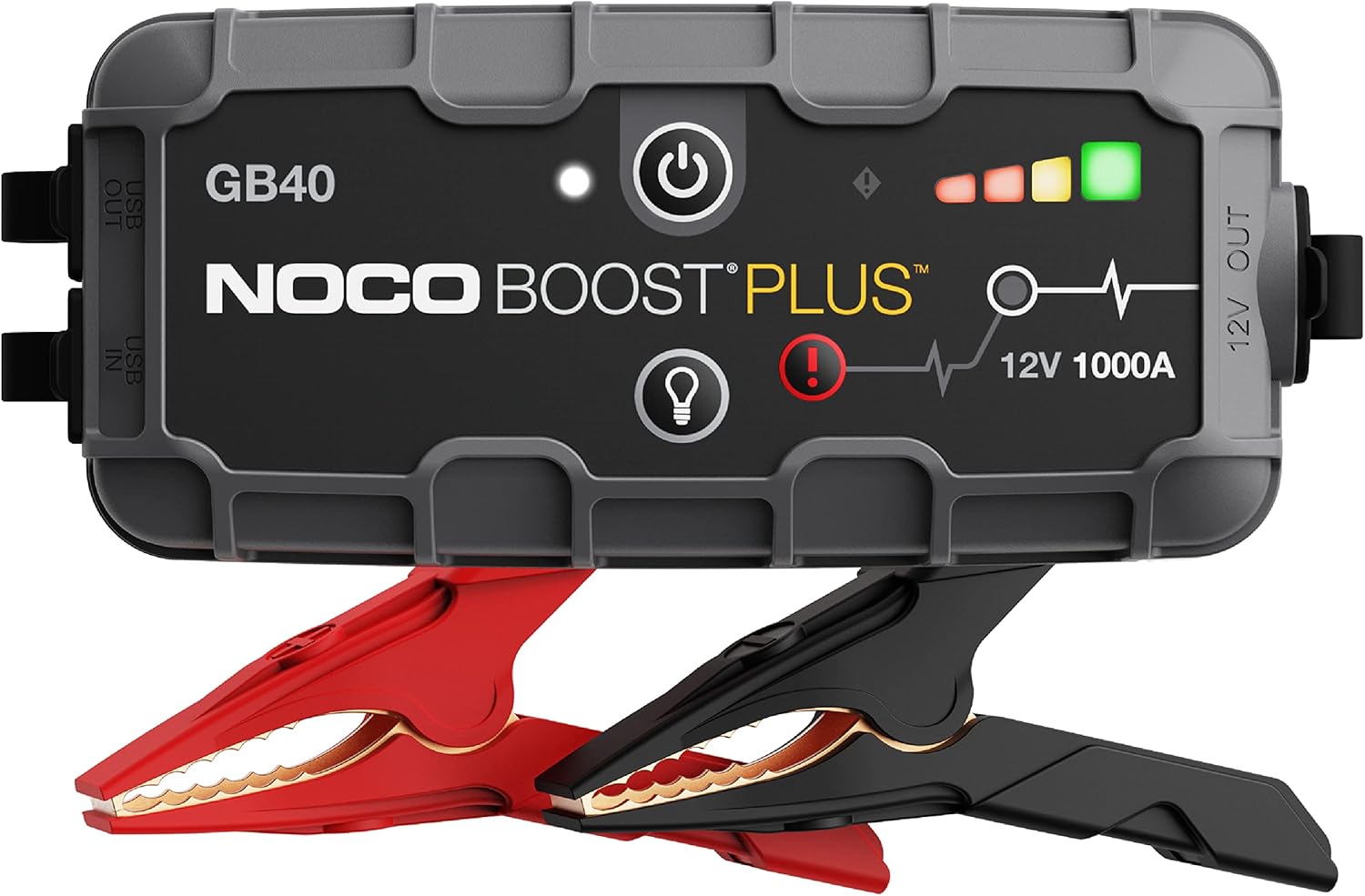
NOCO Boost Plus GB40 Jump Starter
A 1000A lithium jump starter that fits in your glovebox and works on any 12V battery. Your insurance against a dead 12V in a parking lot.
As an Amazon Associate, ThinkEV earns from qualifying purchases — at no extra cost to you.
Extended Producer Responsibility (EPR) is the policy mechanism that the EU uses to make automakers financially responsible for their batteries at end of life. Under EPR, the company that puts a battery on the market is required to fund its collection and recycling. This shifts the financial burden from municipalities and taxpayers to the manufacturers who profit from battery sales. Canada has provincial EPR programmes for some product categories. There is no national EPR framework for EV batteries.
The US has taken some action through the Inflation Reduction Act, which includes provisions for domestic battery supply chains and recycling. The IRA's domestic content requirements for EV tax credits incentivise the use of North American-sourced materials, including recycled materials. This creates a market signal that benefits Canadian recyclers selling into the US market. Canada's proximity to the US and the Canada-US-Mexico Agreement (CUSMA) means Canadian recyclers can participate in that supply chain. But Canada hasn't created its own equivalent incentive structure.
Provincial regulations vary enough to create real complications. Moving a battery from one province to another for recycling crosses provincial jurisdictions. Each province has its own rules for hazardous materials transport and waste management. A battery collected in Alberta might face different paperwork requirements than the same battery collected in Quebec. This fragmentation adds friction and cost to the collection system. A national framework would solve this. Canada doesn't have one.
The speed of EU implementation is also relevant. The EU Battery Regulation was enacted in 2023 but the most stringent requirements don't kick in until 2027 and 2031. This gives industry time to build capacity. Canada, if it starts working on equivalent legislation now, would have a similar ramp-up period. But every year of delay is a year less of preparation time. The battery wave is coming regardless of whether the regulatory framework is ready.
Some Canadian provinces are moving independently. Quebec has announced battery collection targets as part of its electric mobility plan. British Columbia has strong EV adoption and is working through its own extended producer responsibility framework. Ontario, which hosts Li-Cycle and several auto manufacturing facilities, has the most at stake from a supply chain perspective but has been slower to enact specific battery recycling targets.
The argument for federal leadership is simple. Battery supply chains cross provincial borders. A battery made in Quebec, put into a vehicle assembled in Ontario, used in Alberta, and recycled in British Columbia crosses four jurisdictions. Provincial-level regulation can't manage that chain efficiently. A national framework can. The EU succeeded partly because it created rules that apply across all 27 member states. That uniform market is what makes investment in large-scale recycling facilities viable. Canada can do the same thing across provinces with federal coordination.
The critical minerals angle also favours federal action. Lithium, cobalt, and nickel are all on Canada's critical minerals list. The federal government has declared these materials strategically important. But declaring them important and then having no recycling policy for the batteries that contain them is a contradiction. Federal industrial policy and battery recycling policy need to be connected. Right now, they're handled by different departments with different timelines and different incentive structures.
What would a serious Canadian battery recycling framework look like? At minimum, it would include national take-back targets for EV batteries. It would also require a standardised data system for battery health tracking, extended producer responsibility for automakers, and minimum recycled content rules for batteries sold to government fleets and public transit. It would fund collection infrastructure in regions where private investment alone won't build it. It would set recovery rate targets by chemistry with a timetable and accountability mechanism. None of this is technically impossible. Most of it already exists in the EU. Canada is choosing not to implement it, not failing to understand what's needed.
The Companies Doing the Work: Li-Cycle, Redwood, and Retriev
Canada's battery recycling industry is young but active. Three companies lead the North American market for lithium-ion battery recycling.
Li-Cycle is the most prominent Canadian player. Founded in 2016 and based in Toronto, Ontario, the company listed on the New York Stock Exchange in 2021 (NYSE: LICY). Li-Cycle uses a two-stage process it calls Spoke and Hub. Spokes are shredding facilities that take in used batteries and produce black mass. The Hub is a hydrometallurgical processing facility that turns black mass into battery-grade materials.
Li-Cycle has Spoke facilities operating in Kingston, Ontario and Rochester, New York. The company planned a major Hub facility in Rochester designed to process 35,000 tonnes of battery material per year and produce lithium carbonate, nickel sulphate, cobalt sulphate, and other compounds. Construction on the Rochester Hub was paused in late 2023 due to cost increases and financing challenges. (Li-Cycle, 2025) The company has been restructuring since then and is actively seeking strategic partners and additional financing to restart construction. The pause is a setback, not a shutdown. But it illustrates how capital-intensive this industry is and how difficult it is to scale up quickly.
Li-Cycle's Spoke model is designed to be deployed in many locations close to where batteries are generated. This reduces transport costs and logistics complexity. A Spoke can be built for significantly less capital than a Hub. The company's strategy is to build a distributed network of Spokes feeding a smaller number of Hubs. This makes geographic and economic sense for a country the size of Canada.
Redwood Materials was founded in 2017 by JB Straubel, one of Tesla's co-founders. Redwood is headquartered in Nevada but is not a Canadian company. It's worth understanding because it's one of the most technically advanced recyclers in North America and a potential partner for Canadian operations. Redwood recovers lithium, cobalt, nickel, and copper from battery scrap and sells them back to battery manufacturers. The company has supply agreements with Panasonic, Ford, Volkswagen, and Volvo. Its recovery rates and the quality of its outputs are competitive with the best global operators.
Retriev Technologies (formerly Toxco) is a Canadian-American company with facilities in Trail, British Columbia. Retriev has been recycling batteries for decades, starting with lithium-primary batteries and expanding into lithium-ion. The Trail facility uses a different process that includes cryogenic treatment to deactivate batteries safely before processing. Retriev handles a wide range of battery types, including EV batteries. It's not as specialised or scaled for EV packs as Li-Cycle, but it has proven operational capacity and a long track record.
Several other companies are entering the space. Battery Resources (now owned by Ascend Elements) operates in the US and is expanding North American capacity. Raw battery materials recycler Cyclic Materials is based in Kingston, Ontario and focuses specifically on rare earth magnets from EV motors in addition to battery materials. Cyclic Materials raised CAD $53 million in 2023, reflecting real investor interest in Canadian recycling capacity. (Cyclic Materials, 2023)
Automakers are also getting involved directly. GM has a partnership with Li-Cycle for battery recycling. Ford has a relationship with Redwood Materials. Stellantis is working with several recyclers in Europe. The automaker involvement matters because automakers control the flow of end-of-life batteries from their service networks. An automaker that routes its batteries to a specific recycler gives that recycler a predictable supply. Predictable supply is essential for running a large-scale processing facility economically.
Battery manufacturers themselves are investing in recycling. CATL, the world's largest EV battery manufacturer, has its own recycling operations in China. LG Energy Solution has a recycling business in South Korea. Panasonic is working with Redwood in Nevada. These manufacturer-recycler partnerships are shaping the supply chain for recovered materials going back into new battery production.
The investment picture for Canadian battery recycling includes significant government funding. Li-Cycle received a US$375 million conditional loan from the US Department of Energy in 2022. (Li-Cycle, 2025) The Canadian Strategic Innovation Fund has funded Li-Cycle and Cyclic Materials. Natural Resources Canada has channelled funding through the Critical Minerals Strategy. The funding commitments are real. The challenge is that private capital is still cautious. The economics of battery recycling are sensitive to commodity prices for cobalt, nickel, and lithium. All three have been volatile.
The commodity price problem is real and worth examining directly. When nickel prices are high, the economics of recovering nickel from used batteries are favourable. When nickel prices drop (as they did sharply in 2023 and 2024 due to Indonesian production growth), the margin on nickel recovery thins. The lithium price spike in 2021 and 2022 made lithium recovery economics very attractive. The price correction in 2023 made those economics tighter. Recycling companies need to build business models that work across commodity price cycles, not just at peak prices. This is difficult. It's one reason Li-Cycle's Hub financing became complicated.
The recycling industry's relationship with battery manufacturers is also worth watching. Battery manufacturers want to source recycled materials for two reasons. It reduces their exposure to primary mining supply chains. And in the EU, it's now required by regulation. But they need those recycled materials to be battery-grade, meaning high purity and consistent specification. The gap between what early recyclers can produce and what battery manufacturers need has been a friction point. Companies like Li-Cycle and Redwood have invested heavily in getting their output purity to battery-grade levels. That investment is starting to pay off with supply agreements.
Canada has real recycling capacity and some world-class companies working on the problem. What Canada lacks is the policy environment and scale of investment that would let those companies grow fast enough to handle the incoming wave of batteries. That's the gap that federal and provincial policy needs to close.
The Raw Material Economics: What's a Dead Battery Actually Worth?
Numbers matter here. Let's do the math.
A 60 kWh NMC battery pack from a typical electric car contains several key metals. It has roughly 8 to 10 kg of lithium carbonate equivalent, 12 to 15 kg of nickel, 6 to 8 kg of cobalt, and 7 to 9 kg of manganese. At mid-2025 commodity prices, the recovered material value per pack looks like this:
- Lithium carbonate: roughly $10 to $20 per kg = $80 to $200 value
- Nickel sulphate (battery grade): roughly $15 to $20 per kg = $180 to $300 value
- Cobalt sulphate: roughly $18 to $25 per kg = $108 to $200 value
- Manganese: roughly $2 to $3 per kg = $14 to $27 value
- Copper from wiring: roughly $9 to $10 per kg (est. 5 to 8 kg) = $45 to $80 value
Aluminium and steel from the casing add another $20 to $50 in scrap value.
Adding those up gives a gross recovered material value of roughly $450 to $850 per pack for a 60 kWh NMC battery. A larger pack (the F-150 Lightning's 131 kWh pack, for example) would yield proportionally more. That's why the range of $1,000 to $3,000 per pack often cited in industry discussions is realistic for larger EV packs and when commodity prices are at stronger levels.
Against that recovered value, you have processing costs. Collecting the battery and transporting it to a facility might cost $100 to $300 depending on distance and logistics. Disassembly and shredding to produce black mass costs roughly $100 to $200 per pack at current operating costs. Hydrometallurgical processing to turn black mass into battery-grade compounds adds another $150 to $300 per tonne of black mass processed (spread across many packs). Total processing cost per pack: roughly $350 to $800 for a full chain from collection through to battery-grade output.
That math is tight. It gets better as commodity prices rise and processing costs fall with scale. It gets worse when commodity prices dip, as happened with lithium and nickel in 2023. This is why battery recycling is often described as a business that works at scale and in a policy environment that values domestic supply chains. On its own at current commodity prices, the economics are marginal for many operators.
The LFP chemistry changes this picture significantly. An LFP battery contains no cobalt and much less nickel. The gross recovered material value for an LFP pack is closer to $150 to $400 (depending on lithium prices and pack size). Against similar processing costs, the economics are harder. Some industry observers expect LFP recycling to remain marginal without policy support for the foreseeable future. Others argue that the volume will be large enough to drive processing costs down. Lithium recovery will carry the economics as lithium demand grows and its value per kg rises.
Solid-state batteries, when they reach commercial scale, will change the picture again. Solid electrolyte materials are currently expensive and varied by manufacturer. Their recovery economics aren't yet well-established.
The second-life value proposition sits above the recycling economics but below the value of a new battery. A battery pack at 80 percent capacity might be worth $800 to $2,000 for a second-life storage application, depending on chemistry and capacity. This is above the recycling recovery value but requires more complex testing and repacking work. The best business outcome for an end-of-life battery is often second-life followed by recycling, not direct recycling.
Automakers are working on the financing side of battery lifecycle costs. Battery leasing models separate the ownership of the battery from the ownership of the car. Under a leasing model, the customer leases the battery from the manufacturer or a financing company. The manufacturer retains ownership of the battery at end of vehicle life and can route it to second-life or recycling as they choose. This simplifies collection logistics and gives automakers control over the material recovery value. Renault used this model in Europe with the Zoe for years. It reduces the sticker price of the vehicle but adds a monthly lease cost. Canadian automakers haven't widely adopted this model yet.
The critical mineral supply chain argument for battery recycling extends beyond per-pack economics. Canada's position as a major mining country means that recovering battery materials domestically reduces import dependence for future battery manufacturing. A Canadian gigafactory (like the Volkswagen plant planned for St. Thomas, Ontario) would ideally source recycled materials from Canadian recyclers. Closing that loop creates a domestic critical minerals supply chain that is more resilient to geopolitical disruptions than one dependent on imports from China, the DRC, or Indonesia.
The federal government's Critical Minerals Strategy explicitly targets building domestic supply chains for battery materials. Federal investment in recycling capacity is partly motivated by this supply chain security argument, not just by environmental goals. The economics of recycling are stronger when you include the full value of supply chain resilience in the calculation.
The "is recycling worth it?" question has a complicated answer. At the pack level, on its own, the margins are thin. At the supply chain level, taking into account policy goals, supply chain security, and the cost of not recovering critical minerals, the answer is clear.
Canada needs policy that creates predictable demand for recovered battery materials. The EU's minimum recycled content requirements create exactly that demand signal. A Canadian gigafactory that must use a minimum percentage of recycled content (to qualify for government incentives or to sell into regulated markets) generates a guaranteed market for recyclers. That guaranteed market makes investment in recycling capacity bankable. Without that demand signal, recycling investment remains speculative.
Gear worth having
As an Amazon Associate, ThinkEV earns a small commission from qualifying purchases — at no extra cost to you.

Grizzl-E Classic Level 2 EV Charger (40A)
Canadian-made and rated for minus 40C winters. 40A / 9.6 kW, NEMA 14-50, indoor/outdoor, 24-ft cable. The charger built for Canadian weather.
As an Amazon Associate, ThinkEV earns from qualifying purchases — at no extra cost to you.
Gear worth having
As an Amazon Associate, ThinkEV earns a small commission from qualifying purchases — at no extra cost to you.

PULIDIKI Car Cleaning Gel (Detailing Putty)
Press it into vents, buttons, and seams and it lifts out dust you did not know was there. Weirdly satisfying, genuinely useful.
As an Amazon Associate, ThinkEV earns from qualifying purchases — at no extra cost to you.
What Canadian EV Owners Should Actually Do With a Dead Battery
You have an EV. One day the battery will need to go. This section covers what you should actually know and do.
First, a reality check on timing. If your EV is newer than 8 years old, you almost certainly don't need to think about battery disposal yet. Modern EV batteries in normal use in Canada don't reach end-of-life on the fast timeline that some anxious articles suggest. Your battery is almost certainly fine. If you're losing more than 20 to 25 percent of your original range and your vehicle is under warranty (most are covered 8 years or 160,000 km), contact your dealer. That might be a warranty claim.
If your battery has truly reached end of life, your first call should be your automaker's service network. Most major automakers have end-of-life battery take-back programmes. They're not always well-advertised, but they exist. GM, Ford, Tesla, Hyundai, and Nissan all have programmes in Canada. The battery won't just sit in a warehouse. It will flow into the automaker's recycling partner relationships.
Your second option is to call a certified battery recycler directly. Li-Cycle has facilities in Kingston and can accept batteries from other locations with proper transport documentation. Retriev Technologies in Trail, BC handles batteries from western Canada. For smaller packs (from scooters, bikes, or plug-in hybrids), local provincial e-waste programmes may be the right answer.
What you should not do is put an EV battery pack in your regular trash. Don't leave it at a scrapyard without battery handling certification. And don't try to disassemble it yourself. A fully charged or damaged EV battery pack can cause serious fires. The electrolyte is toxic. The voltage is dangerous. This is not a job for someone without proper training and equipment.
If you're buying a used EV, the battery health question matters more than it might seem. A battery that's been through many DC fast charges in hot climates will be in worse shape than one that's been slowly charged in a temperate climate. Ask for the battery health report. Most modern EVs can generate one through the car's own software or through a dealer diagnostic scan. A battery at 85 percent capacity is normal and fine. A battery at 65 percent capacity in a 5-year-old vehicle is a problem. Understand what you're buying.
The battery recycling industry also matters to you as a taxpayer, not just as an EV owner. The cost of building recycling infrastructure is significant. Government money is going into it. What you get back is a domestic supply chain for critical minerals, reduced environmental risk from improperly disposed batteries, and a stronger position for Canadian industry in the global battery economy.
For most people, the practical action items are simple. Know your warranty. Know your automaker's take-back programme. Don't do anything DIY with a battery pack. And consider battery health when buying used.
If you're curious about how well your battery is holding up over time, look at your EV's range at a known state of charge over several months. Consistent drops of more than a few percent per year are worth paying attention to. Most EVs show you a rough battery health indicator in the settings menu. Some third-party apps (like Recurrent for Tesla, or ABRP for many models) track battery health over time and can show you how your battery compares to similar vehicles.
The infrastructure for returning batteries at end of life will get easier over the next five years. Collection points will multiply. Automaker take-back programmes will become better publicised. Provincial regulations will likely strengthen. You don't need to solve this problem yourself. You just need to not make it worse by disposing of a battery carelessly.
One thing worth knowing is the difference between a battery that's failed completely and one that's just degraded. A failed battery (one that won't charge at all, or one with a thermal event) is a more urgent handling problem. It may be unsafe to transport without special precautions. Your automaker's roadside assistance programme should be able to help with a vehicle that's completely battery-failed. Don't attempt to tow a fully discharged or damaged battery vehicle on a flatbed without contacting the automaker first. There are protocols for this. Follow them.
The connection between battery recycling and the broader EV value proposition is direct. EVs produce less lifetime carbon than comparable gasoline vehicles even accounting for battery manufacturing. Recycling the battery at end of life recovers materials that would otherwise need to be mined. That further improves the lifecycle emissions profile. The environmental case for EVs is stronger, not weaker, when recycling works well.
There's a behavioural side to battery longevity that's worth understanding as an owner. Keeping your battery between 20 and 80 percent charge for daily use reduces cell stress significantly. Only charge to 100 percent when you need the full range for a specific trip. Avoid letting the battery sit at a very low state of charge for extended periods. These habits don't require expensive equipment. They just require understanding how lithium-ion chemistry works at a basic level.
The temperature management question matters too. If you're parking outside in a Manitoba winter, try to plug in the car while parked. Most EVs will use grid power to pre-condition the battery before a planned departure rather than drawing energy from the battery itself. This reduces the cold-weather energy penalty and reduces wear on the cells. Letting a cold battery warm itself using its own charge means the pack is doing extra work just to get ready to work. Plugging in avoids that.
Buying an EV in Canada today is still the right environmental decision. The carbon math works even before accounting for battery recycling. A study from the IEA found that EV lifecycle emissions are lower than gasoline vehicles in Canada even accounting for battery manufacturing. Canada's electricity grid is already one of the cleanest in the world. As more renewable energy comes online, the emissions advantage of EVs over gasoline vehicles grows over the life of the vehicle.
The recycling problem doesn't negate that advantage. It's a supply chain problem that needs solving. It's not a reason to avoid buying an EV. It is a reason to pressure your elected representatives. Support national battery recycling legislation. Push for funding for recycling infrastructure. Ask for policies that make Canadian companies competitive in the global battery materials market.
Owning an EV is part of a larger system. The mining of battery materials, the manufacturing of the pack, the use phase in your car, and the recycling at end of life are all connected. Second-life deployment, where applicable, fits in the middle of that chain. Understanding where your battery fits in that system makes you a more informed owner and a more informed voter when battery recycling policy comes up.
For more on how battery health affects your EV's real-world range, see EV Battery Degradation: How Long Do EV Batteries Last?. For what's coming in the next generation of battery technology, see Solid-State Batteries: The EV Breakthrough Everyone's Waiting For. And for a full picture of what owning an EV actually costs in Canada, see EV Maintenance Costs in Canada: What You Actually Pay.
Sources: Li-Cycle (2025), NRCan (2026), EU Battery Regulation (2023), IEA World Energy Outlook (2025), BloombergNEF New Energy Outlook (2025), Cyclic Materials (2023), various automaker warranty documentation.
Gear worth having
As an Amazon Associate, ThinkEV earns a small commission from qualifying purchases — at no extra cost to you.

WixGear Magnetic Air Vent Phone Mount (2-Pack)
A magnet strong enough that your phone never flinches over potholes or rail crossings. Two in the box, one for each car.
As an Amazon Associate, ThinkEV earns from qualifying purchases — at no extra cost to you.

Founder & Chief Editor
Vlad Pereira is the founder and chief editor of ThinkEV.ca, the Canadian electric-vehicle publication he writes and edits from Courtenay, British Columbia. He covers EV pricing, federal and provincial rebates, charging costs, and the Chinese manufacturers now entering Canada, from the buyer's side rather than the press-fleet side. ThinkEV is a venture of Vlad Pereira Online; his writing on health, income and the long game lives at vladpereira.com.
Frequently asked questions
How long does an EV battery actually last in Canada?
What is Li-Cycle and how does it recycle batteries?
What is battery "second life" and is it actually viable?
Does Canada have laws about EV battery recycling?
What should I do with the EV battery when it reaches end of life?
More EV & road-trip finds
Affordable upgrades worth a look — tap any to check the price on Amazon.
 ★ 17,242
LISEN Mini USB-C Car Charger (54W)
View on Amazon ★ 61
★ 61Toddler Car Seat Snack and Cup Tray
View on Amazon ★ 17,839
Qifutan Vent Phone Mount (Military-Grade Clip)
View on Amazon ★ 2,941
Microfiber Cleaning Cloths (Multi-Pack)
View on Amazon ★ 314
★ 314Mini USB LED Ambient Lamps (4-Pack)
View on Amazon ★ 4,055
6-Speed Manual Shift Knob Display
View on Amazon ★ 4,424
Sun Visor Card and Document Organizer
View on Amazon ★ 848
★ 848Coiled USB-C to USB-C Car Cable (2-Pack)
View on AmazonRead, Plan, Then Stay Current
Explore our expert articles to understand incentives and ownership costs, use the map to pressure-test charging reality, then subscribe so new EV coverage comes straight to you.
Continue Reading
BYD Blade 2.0 Battery: What 5-Minute Charging Needs
EV Battery Degradation: How Long They Last in Canada
What BYD's Solid-State Battery Means for Canada

EV Battery Replacement: What a Failed Pack Actually Costs
EV Charge Limits: NMC vs LFP and What Owners Miss