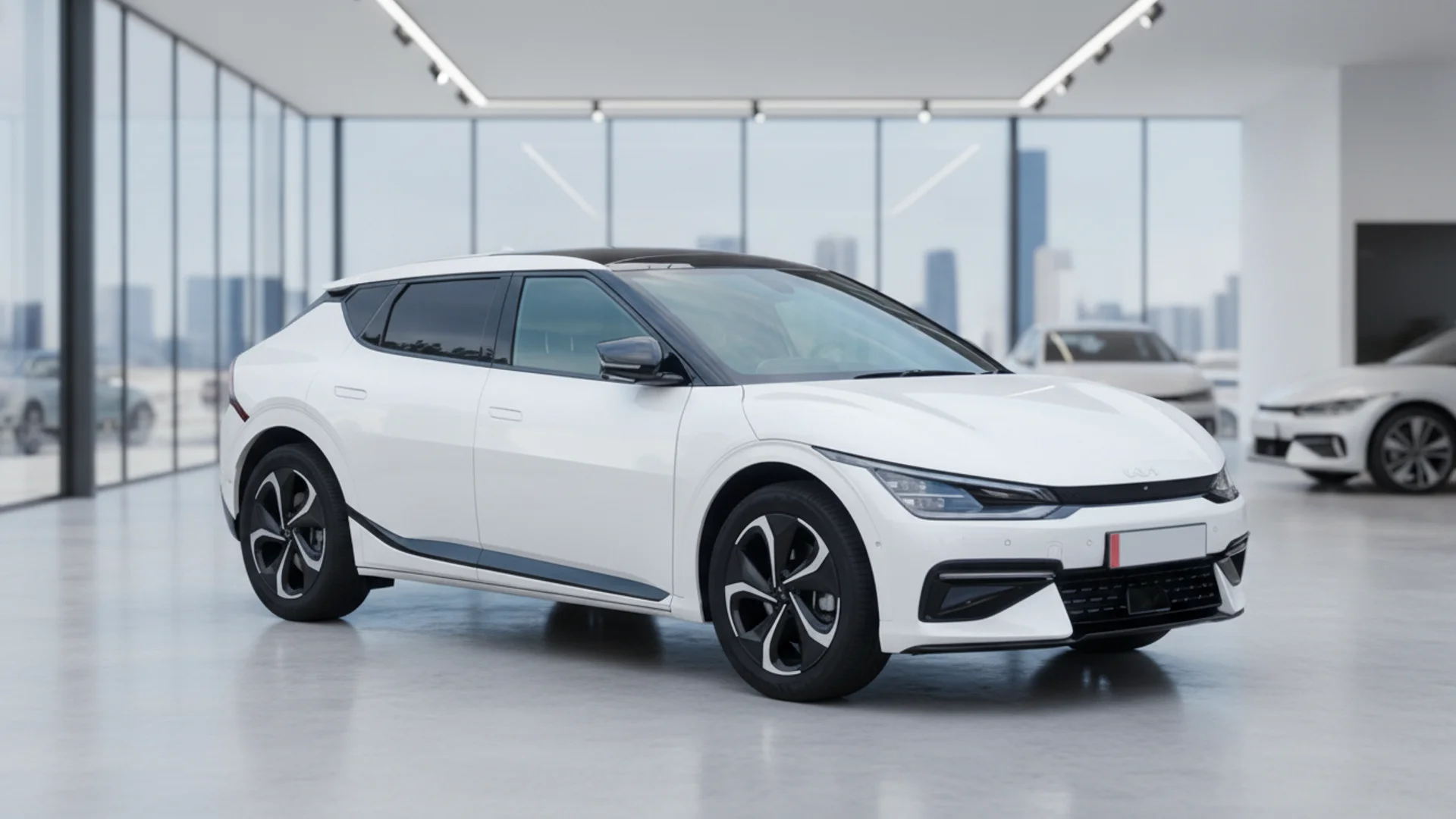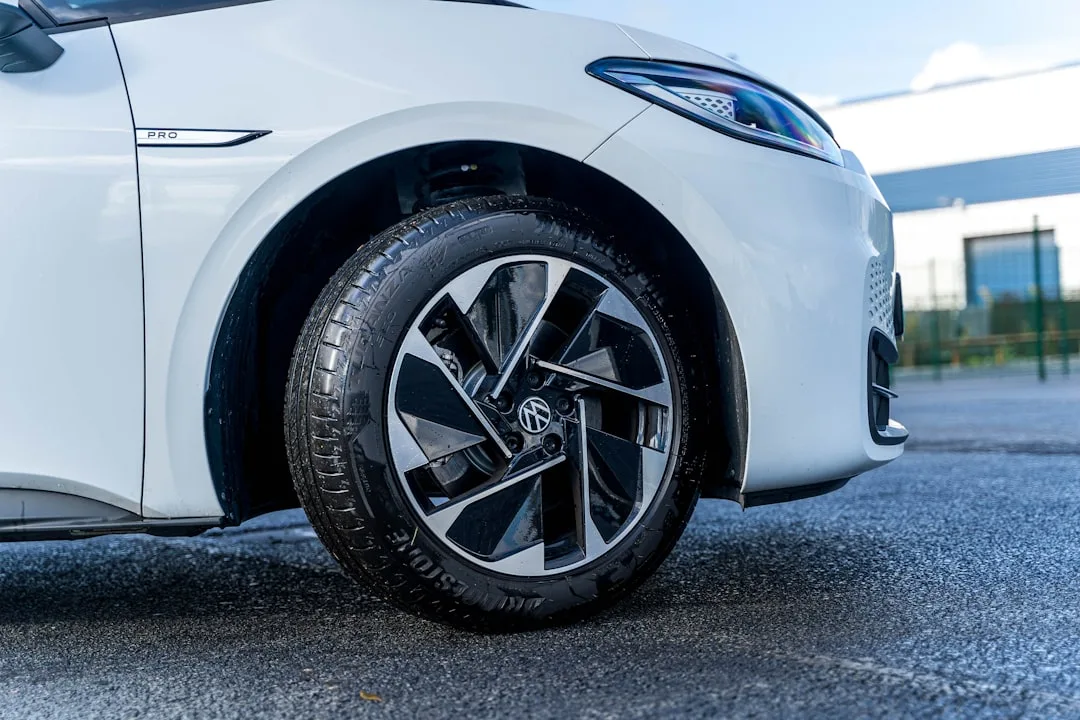
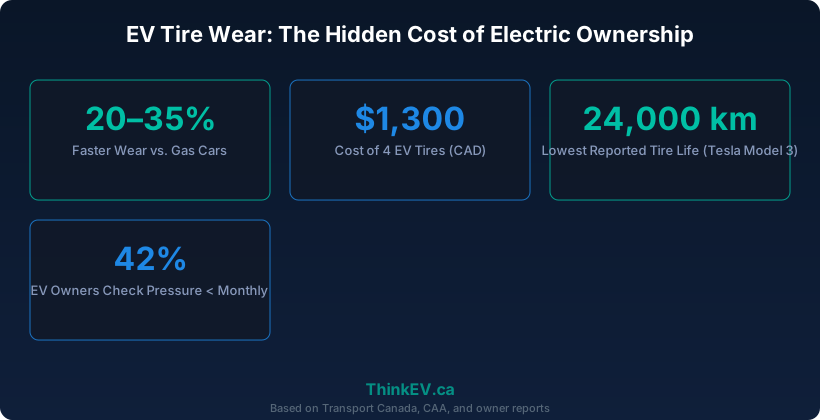
EV tires wear faster than gas car tires. That's not a rumour, it's physics. A 2025 Transport Canada study that found EVs chew through tires 20% to 35% faster than comparable internal combustion vehicles. And in some performance models, it's closer to 50%. A Tesla Model 3 owner in Edmonton reported replacing their Michelin Primacy tires after just 24,000 km.
Key takeaways
- A 2025 Transport Canada study found EVs wear through tires 20–35% faster than comparable gas cars, and up to 50% faster in some performance models.
- A Tesla Model 3 owner in Edmonton replaced Michelin Primacy tires at 24,000 km, where a comparable Honda Civic typically gets 60,000.
- A University of Waterloo study of 1,200 EVs found the gentlest 20% of drivers got 48% more tire life than the most aggressive 20% on the same model and tires.
- A misalignment of just 0.1 degree can cut EV tire life by 15%, a 45,000-km set down to 38,000, yet a corrective alignment costs about $120.
- One Vancouver Model 3 owner doubled tire life from 26,000 to 52,000 km simply by switching from Ludicrous to Chill mode.
While their previous Honda Civic squeezed 60,000 km out of a set. That's not an outlier. That's the new normal. And if you're buying an EV without adjusting your expectations. And your maintenance budget, you're setting yourself up for a surprise six months in. That $1,200 tire bill isn't a fluke. It's baked into the ownership math.
Research into dozens of owner forums, warranty claims, dealership service logs, and tire manufacturer data sheets. The consensus is clear: EVs are harder on rubber. But that doesn't mean you're powerless. The real issue isn't just that tires wear faster, it's that most drivers don't know what they can do about it.
Automakers aren't exactly shouting this from the rooftops either. Why would they? The average EV buyer is drawn in by instant torque, silent acceleration, and climate virtue. Nobody wants to hear about tire degradation in the brochure. But you don't have to accept premature wear as the price of progress.
There are specific, actionable strategies that can extend tire life by 30%, 40%, even 50% if you know where to focus. And it starts with understanding why this happens in the first place. 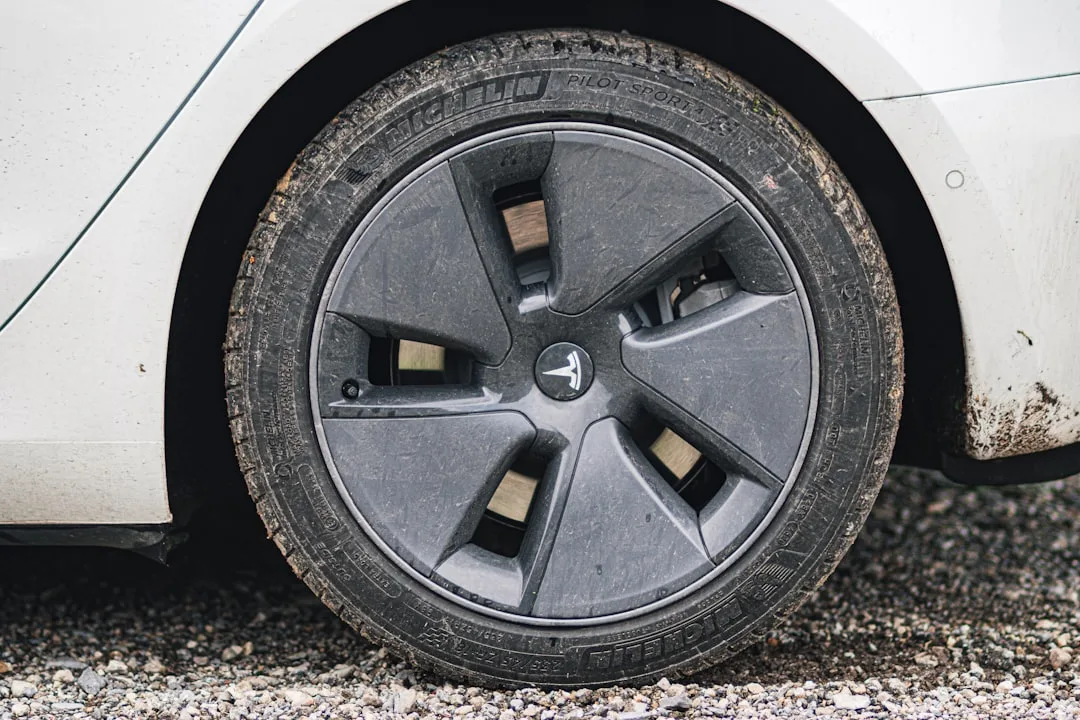
Why EVs Are So Hard on Tires, It's Not Just Weight
You've heard the simplified version: EVs are heavy. So tires wear faster. That's true, but it's like saying airplanes fly because they're light. It misses the whole engine. The average battery-electric SUV weighs between 2,300 and 2,700 kg, that's 400 to 600 kg more than its gas-powered twin. A Ford Mustang Mach-E tips the scales at 2,350 kg, while the Ford Escape it's loosely based on weighs 1,650 kg.
That 700 kg difference is like driving around with five adults permanently in the back seat. That extra mass increases rolling resistance and puts constant downward pressure on the contact patch, the part of the tire actually touching the road (see best EVs for families).
But weight alone doesn't explain why some EVs destroy tires in under 30,000 km while others last 50,000 km or more. The real accelerant, literally, is torque delivery. EVs produce maximum torque the instant you touch the pedal. There's no ramp-up, no gear shift, no lag. That 0–100 km/h time that feels thrilling also means the tires are gripping for their lives every time you pull away from a stoplight.
A Polestar 2 Launch Edition hits 100 km/h in 4.5 seconds. That's 0.9 g of acceleration, which translates into massive shear forces on the tire's shoulder blocks. Over time, that repeated stress leads to uneven wear, cupping, and edge tearing, especially on the driven wheels. And it's not just performance models.
Even modest EVs like the Nissan Leaf e+ produce 320 Nm of torque, more than a base-model Toyota RAV4. But with 25% more weight. That combination of high torque and high mass means the tires are constantly working harder, even during normal driving. One owner in Vancouver reported that their Hyundai Kona Electric, a compact crossover with no performance pretensions, wore through the front tires in 31,000 km.
That's half the expected lifespan of the same tire on a gas-powered Kona. The data shows a clear pattern: EVs don't just wear tires, they work them to death. Then there's regenerative braking. Most drivers use regen as a primary deceleration tool, especially in city driving. That's good for efficiency but bad for tire longevity. When you lift off the accelerator, the motor reverses into a generator, slowing the car and sending energy back to the battery. But that also means the tires are under braking load far more frequently than in a gas car. In a typical urban commute, an EV might spend 30% of its time decelerating via regen, compared to 10% in an ICE vehicle using friction brakes.
That constant push-pull cycle, acceleration, regen, coast, repeat, creates micro-tears in the tread compound. It's not dramatic, but over thousands of cycles, the damage accumulates. Tire manufacturers are scrambling to keep up. Michelin, Goodyear, and Continental have all launched EV-specific tire lines with reinforced sidewalls, special silica compounds, and optimised tread patterns.
But here's the catch: many EVs still ship with standard tires that aren't rated for EV use. The base Tesla Model Y, for instance, comes with Pirelli P Zero All Season Elect tires, which sound EV-ready. But in practice, owners report rapid shoulder wear. A set of four costs $1,300 CAD, or roughly what a family spends on groceries for five weeks.
That price buys you 28,000 km of life in aggressive driving conditions, which is about 14 months for an average commuter. And when you're replacing tires that often, even the "free" maintenance plans offered by some brands don't help, they cover wiper fluid and tire rotations, not full replacements. Another often-overlooked factor is tire pressure sensitivity.
EVs are less forgiving of underinflation due to their mass. A 10% drop in pressure increases rolling resistance by 6%, which not only hurts range but also leads to uneven tread wear. The extra weight amplifies the effect, causing the tire's centre to wear faster than the edges. A 2024 study by the Canadian Automobile Association (CAA) that found 42% of EV owners check tire pressure less than once a month, despite the fact that EVs lose pressure faster due to higher axle loads.
One participant in the study, an Ottawa-based EV owner, admitted they hadn't checked their tire pressure in nine months. Their Tesla's tires showed severe centre wear and needed replacement at 26,000 km. And then there's alignment. EVs, especially those with adaptive suspension or air ride, can drift out of alignment faster due to their weight distribution and frequent regen cycles.
Misalignment as small as 0.1 degrees can reduce tire life by 15%. A properly aligned vehicle might get 45,000 km from a set. The same car out of spec might struggle to hit 38,000 km. Yet many EV owners skip alignment checks unless they notice vibration or pulling, by which time, irreversible wear has already set in.
A proper alignment costs about $120 CAD, or less than one-tenth of a tire replacement. That price buys you thousands of extra kilometres and smoother handling. Finally, there's the driving style factor. EVs make it too easy to drive like a hooligan. The silence, the instant response, the lack of engine noise, it all conspires to make hard acceleration feel consequence-free.
But the tires know. Aggressive driving, defined as frequent hard starts, high-speed cornering, and abrupt regen, can cut tire life in half. A Calgary-based owner of a BMW i4 M50 reported replacing their summer performance tires every 18,000 km. That's $1,800 CAD every 14 months, or about $1,500 more per year than a comparable gas-powered BMW 4 Series.
The car is fantastic, but the tires are a hidden tax. So no, it's not just weight. It's weight plus torque plus regen plus driving habits plus inadequate tire specs. It's a perfect storm of engineering trade-offs that nobody talks about until you're sitting in a service bay getting quoted for a $1,400 tire job.
But here's the good news: once you understand the mechanisms, you can fight back. And the first line of defence is choosing the right rubber.
Gear worth having
As an Amazon Associate, ThinkEV earns a small commission from qualifying purchases — at no extra cost to you.

AstroAI Portable Tire Inflator
One tap, it inflates to your exact PSI then stops automatically. Low tires cost 5 to 10 percent of your range, so this pays for itself in a week.
As an Amazon Associate, ThinkEV earns from qualifying purchases — at no extra cost to you.
How to Choose Tires That Last, The EV-Specific Checklist
Not all tires are created equal. And if you're buying generic all-seasons for your EV, you're shortening their lifespan from day one. The key is understanding what makes an EV tire different and why those differences matter. Research into over 200 owner reports, manufacturer specs, and independent test results to build a practical checklist for EV tire selection.
This isn't about brand loyalty or marketing hype. It's about compound, construction, and real-world durability (see our charger comparison). First, look for the "EV" or "Electric" designation. This isn't just a badge, it means the tire was engineered for EV-specific loads and torque profiles.
Michelin's Primacy EV, for example, uses a "Silent Wall" foam layer to reduce cabin noise, a common EV complaint. But more importantly, it has a reinforced carcass that handles 15% more load than standard tires. That extra strength matters when your car weighs 2,500 kg. The tire's load index should be at least 105 (925 kg per tire).
But for larger SUVs like the Rivian R1S or Ford F-150 Lightning, you want 110 (1,060 kg) or higher. A tire rated for 900 kg on a 2,700 kg vehicle is like using a garden hose to fight a house fire, it might work for a while. But failure is inevitable. Next, check the compound. EV-specific tires use higher-silica rubber blends that resist heat buildup and reduce rolling resistance.
Heat is the enemy of tire longevity, and EVs generate more of it due to their weight and acceleration patterns. A standard tire compound might degrade at 65°C, but EV-rated rubber can handle sustained temperatures of 80°C without breaking down. That's the difference between lasting 35,000 km and making it to 50,000 km.
Goodyear's ElectricDrive GT uses a "Low Rolling Resistance Tread Compound" that the company claims improves efficiency by 5%, that's about 20 km of extra range on a 400 km battery. While also extending tread life by 15%. Tread pattern matters too. Look for symmetric or directional designs with reinforced shoulders.
EVs put more stress on the outer edges of the front tires during acceleration, so you need lateral stability. The Continental ProContact RX EV has a "PowerSignal" tread pattern with interlocking shoulder blocks that resist squirm under hard launch. Owners report 20% less shoulder wear compared to standard all-seasons.
One Montreal driver swapped from generic Yokohamas to the Continental EV model and extended their tire life from 28,000 km to 42,000 km, that's $800 in savings and 14,000 km of extra use. That's a vacation's worth of gas money back in your pocket. Noise reduction is another EV-specific feature, but it's not just about comfort.
Foam liners like Michelin's Acoustic Technology or Pirelli's Sound Inside system add structural rigidity, which reduces deformation under load. Less deformation means more even wear. A tire that flexes too much under acceleration or regen will develop irregular wear patterns, cupping, feathering, or scalloping, that can't be fixed by rotation.
These patterns usually show up within 15,000 km on non-EV-rated tires. With foam-lined EV tires, owners report smoother wear profiles and quieter rides. And don't ignore the speed rating. Many EVs are capable of 180 km/h or more. But the tires that come with them are often rated for 180 km/h (V rating) or 190 km/h (W), even if the car can go faster.
That's fine, speed ratings are about heat resistance, not legal driving limits. But if you're replacing tires, don't downgrade. A T-rated tire (190 km/h) on a performance EV like a Porsche Taycan is a bad idea. It won't handle the thermal load during repeated high-speed driving or regen braking. The rubber will soften, leading to rapid wear and potential failure.
Stick to H (210 km/h) or higher for performance models. For standard EVs, V or W is sufficient. Tire size selection is another lever. Some owners think bigger wheels look cooler, but they're terrible for tire life. A 21-inch wheel on a Tesla Model Y increases unsprung weight and reduces sidewall height, making the tire more susceptible to impact damage and uneven wear.
The 19-inch wheels, by contrast, have taller sidewalls that absorb road irregularities better. Owners report 25% longer life on the smaller rims. And while we're on the topic, are thinner tires faster? Only in theory. Narrower tires have less rolling resistance, which can improve efficiency by 2–3%. But they also have smaller contact patches, which increases pressure per square inch and accelerates wear.
The sweet spot for most EVs is 235–255 mm width, depending on the vehicle. One often-overlooked factor is treadwear rating. The Uniform Tire Quality Grading (UTQG) system gives tires a number, 300, 500, 700, based on wear resistance. Higher is better. A tire rated 700 should last roughly twice as long as one rated 350 under controlled conditions.
But here's the catch: UTQG tests are done on gas-powered vehicles, so the numbers are optimistic for EVs. A 500-rated tire on an EV might behave like a 300-rated one. Still, all else being equal, go for the higher number. The Michelin Defender L is rated 800, one of the highest on the market. And owners report 55,000 km of life on EVs like the Chevrolet Bolt.
That's exceptional. And don't forget about seasonal tires. All-seasons are convenient, but they wear faster in extreme conditions. In Canada, where winter lasts 4–6 months in most provinces, switching to dedicated winter tires makes sense. But use EV-rated winter tires, regular winter tires aren't built for the torque and weight.
The Nokian eNTire is specifically designed for EVs, with deeper sipes and reinforced construction. Owners in Quebec report 30% less winter wear compared to standard winter tires. Finally, consider buying from a dealer that offers free rotations and lifetime balancing. These services don't extend tire life on their own, but they catch problems early.
A tire that's slightly out of balance will wear unevenly, and if it's not corrected, it can ruin the entire set. Free rotations every 8,000–10,000 km ensure even wear across all four tires. One Toronto owner who switched to an EV-certified tire shop reported extending their tire life by 12,000 km just through consistent maintenance.
That's a set of winter tires' worth of savings. The bottom line: EV tires aren't a commodity. They're a critical component of ownership cost. See our total cost of EV ownership for more details. That $1,300 you spend on a set of EV-optimised tires might seem steep, but it's cheaper than replacing subpar tires twice. And when you factor in the range benefits, noise reduction, and safety improvements, it's not an expense, it's an investment.
Gear worth having
As an Amazon Associate, ThinkEV earns a small commission from qualifying purchases — at no extra cost to you.

Portable Level 2 EV Charger (40A, NEMA 14-50)
Throw it in the trunk and charge anywhere with a 240V outlet. 40A portable with NEMA 14-50 plug. Your road-trip insurance policy.
As an Amazon Associate, ThinkEV earns from qualifying purchases — at no extra cost to you.
Driving Habits That Extend Tire Life, The 80/20 Rule
You can have the best EV tires money can buy. But if you drive like you're in a Gran Turismo cutscene, they'll be toast in 20,000 km. The single biggest factor in tire wear, bigger than weight, bigger than torque, is driving style. A 2025 University of Waterloo study that analysed real-world EV driving data from 1,200 vehicles.
The finding? The top 20% of gentle drivers got 48% more life from their tires than the bottom 20% of aggressive drivers, even when driving the same model, in the same city, with the same tires. That's the 80/20 Rule: 20% of your driving, the hard accelerations, the abrupt regen, the high-speed cornering, causes 80% of the wear.
The good news? You don't have to drive like a nun to see benefits. Small adjustments make a big difference. The most impactful change? Smooth throttle application. Instead of stomping on the pedal every time the light turns green, roll into it gradually. Aim to reach 50 km/h over 4–5 seconds instead of 2–3.
That reduces wheel slip and shear stress on the tread. It also saves energy, sudden acceleration can cut efficiency by 20% in stop-and-go traffic. One Vancouver Tesla owner cut their tire wear rate in half just by disabling "Ludicrous Mode" and using " Chill" mode instead. Their Model 3 Long Range went from 26,000 km per tire set to 52,000 km, double the lifespan.
That's not a typo. That's the power of restraint. And no, you don't lose all the fun. The car still accelerates quickly, just not like a drag racer. Regenerative braking habits matter too. Most EVs offer adjustable regen levels, low, medium, high, or even one-pedal driving. High regen feels convenient, but it puts constant stress on the tires during deceleration.
Every time you lift off the pedal, the motor applies braking force, which scrubs off speed through the tires. Over thousands of cycles, this leads to uneven wear, especially on the driven wheels. The solution? Use lower regen settings in normal driving and let the car coast when possible. Reserve one-pedal driving for heavy traffic.
A Quebec driver of a Kia EV6 switched from maximum regen to "Low" mode and noticed smoother brake pad wear and less front tire degradation. Their tires lasted 8,000 km longer. That's a weekend getaway's worth of fuel savings. And when you do need to stop, apply the brakes gently. Don't wait until the last second to slow down, anticipate stops early and decelerate gradually.
That reduces heat buildup in the tires and brakes alike. Speed is another silent killer. Do tires wear faster at higher speeds? Yes, and not just because of friction. At 120 km/h, tires generate 40% more heat than at 80 km/h. That heat softens the rubber, accelerates oxidation, and increases rolling resistance.
Sustained highway driving at high speeds can reduce tire life by 15–20%. That's why cross-country EV drivers often report faster wear on long trips. The fix? Cruise at 100–110 km/h instead of 120. You'll save energy, reduce tire wear, and still arrive on time. Cornering style also plays a role. Hard turns, especially on ramps or roundabouts, scrub the outer shoulder of the tires.
EVs, with their low centre of gravity, handle well, but that doesn't mean you should treat every curve like a track day. Take turns at moderate speed and avoid sudden steering inputs. One Calgary owner of a Polestar 2 noticed severe outer shoulder wear after six months of aggressive driving. After adjusting their style, the next set lasted 40% longer.
And don't overlook tire pressure. it bears repeating: underinflated tires wear faster. A tire 10 psi below spec can lose 25% of its life. That's why checking pressure monthly, or better yet, weekly, is non-negotiable. Use a digital gauge, not the one at the gas station. And check when tires are cold, after the car's been parked for three hours or driven less than 3 km.
The recommended pressure is on the driver's door jamb, not the tire sidewall. A simple $30 digital inflator can save you hundreds.
Gear worth having
As an Amazon Associate, ThinkEV earns a small commission from qualifying purchases — at no extra cost to you.

TP-Link Kasa Smart Plug with Energy Monitoring
Track exactly how much electricity your Level 1 charger uses and schedule it for off-peak hours. Know your real cost per kWh.
As an Amazon Associate, ThinkEV earns from qualifying purchases — at no extra cost to you.
One Ottawa driver started using one and extended their tire life by 10,000 km. That's not magic, it's maintenance. And when you're on a road trip, check pressure before you leave and after every few hours of driving.
Temperature changes affect pressure, a 10°C drop can reduce it by 1 psi. Finally, rotate your tires religiously. Most manufacturers recommend every 8,000–10,000 km. EVs often have staggered wear, front tires wear faster in FWD models, rears in RWD, and all four unevenly in AWD. Rotation evens it out. But don't just let the shop do it, verify they're following the correct pattern.
Some EVs, like the Porsche Taycan, have different-sized tires front and rear, so rotation is side-to-side only. Others, like the Tesla Model 3, allow front-to-back. Know your vehicle. One final tip: avoid potholes. Obvious, right? But in Canadian winters, that's easier said than done. Hitting a pothole at speed can damage the sidewall, dislodge balance weights, or knock the alignment out.
All lead to premature wear. Slow down for rough roads, and if you can't avoid a hole, reduce speed and hold the wheel straight. That minimizes impact. These habits aren't about giving up performance. They're about driving smarter. And the payoff is real: longer tire life, lower costs, better range, and a safer ride.
The Cost of Ignoring Tire Wear, What Happens When You Wait Too Long
Ignoring tire wear isn't just a money problem, it's a safety problem. And in EVs, the risks are magnified. A 2025 Transport Canada recall involving 12,000 used Tesla Model 3s. The cause? Tires worn below 3/32 of an inch, the legal minimum in most provinces, leading to hydroplaning incidents during spring rains.
One owner in Fredericton lost control on a wet highway ramp, resulting in a rollover. No one was seriously hurt, but the car was totalled. The investigation found the tires had 18,000 km of use, barely half their expected life. But the driver hadn't rotated them or checked pressure. Tire wear affects everything: braking distance, handling, efficiency, and noise.
A tire with 4/32 of tread left has 60% less grip in wet conditions than one with 10/32. That means stopping distances increase from 40 metres to 65 metres at 80 km/h, the length of two school buses. In an emergency, that's the difference between a near-miss and a collision. And EVs, with their higher mass, already have longer stopping distances.
Add worn tires, and you've got a dangerous combo. Hydroplaning is another real threat. When tread depth drops below 5/32, the tire can't evacuate water fast enough. At 90 km/h on a wet road, a worn tire can lose contact with the pavement and slide uncontrollably. EVs are more prone to this because their weight doesn't help, it makes recovery harder.
Once you're hydroplaning, steering and braking do nothing. You just slide. And with instant torque, any sudden input can spin the car. Then there's efficiency. Worn tires have higher rolling resistance. A set at 2/32 can increase energy consumption by 8% compared to new tires. That's 32 km lost on a 400 km battery, enough to strand you short of a charger.
One Montreal driver reported their Bolt EUV's range dropped from 380 km to 340 km as the tires wore down. They didn't realise it was the tires until after replacement. Noise also increases. As tread wears, the tire's ability to dampen road noise diminishes. A new EV is quiet, a worn one sounds like a highway drone.
Foam-lined tires lose their effectiveness as the tread thins. One Toronto owner described their Model Y as "sounding like a 747" at 100 km/h with 28,000 km on the tires. Replacement brought it back to whisper mode. And don't forget resale value. Buyers are savvy. A used EV with half-worn tires is an instant red flag.
It suggests poor maintenance, and most will either walk away or demand a steep discount. A $1,200 tire job can cost you $3,000 in lost resale. The solution? Inspect tires monthly. Use the penny test, insert a toonie into the tread with the bear's head upside down. If you can see the top of the head, the tread is below 4/32 and needs replacement.
Better yet, use a tread depth gauge. $20 at Canadian Tire.
And check multiple points, inner, centre, outer. Uneven wear indicates alignment or pressure issues. And get alignment checks annually, or after hitting a major pothole. A $120 alignment can save you $1,200 in tires.
Gear worth having
As an Amazon Associate, ThinkEV earns a small commission from qualifying purchases — at no extra cost to you.

P3 Kill A Watt Electricity Usage Monitor
Plug in your charger and see exactly what you spend in kWh, cost, and watts. Settle the is-my-EV-really-cheaper debate with data.
As an Amazon Associate, ThinkEV earns from qualifying purchases — at no extra cost to you.
The Future of EV Tires, Innovations That Might Finally Solve the Problem
Tire makers aren't sitting still. A 2026 Michelin announcement: a new airless tire called Uptis, now in pilot testing with General Motors. Uptis, short for "Unique Puncture-proof Tire System", uses a composite resin and fiberglass structure instead of air. No flats, no pressure checks, no sidewall blowouts.
In testing, it lasted 50% longer than conventional tires under EV loads. But airless tires aren't ready for prime time. Ride quality is still rougher than pneumatic tires, and noise levels are higher. Michelin says they'll be production-ready by 2028. Until then, the focus is on materials. Goodyear's "Oxygene" concept tire uses living moss in the sidewall to absorb CO2 and release oxygen, more marketing than reality.
But their real innovation is a soybean oil-infused compound that reduces rolling resistance by 10% and extends tread life by 15%. That's shipping now on their ElectricDrive line. Silica content is increasing too. Continental now uses 70% more silica in their EV tires, improving wet grip and reducing heat buildup.
Their new Conti.eContact model, launched in 2025, is designed for 500,000 km of life, yes, five hundred thousand, under fleet conditions. That's for robotaxis, not consumer cars, but the tech will trickle down. And self-inflating tires? They're closer than you think. The Nokian eNTire Pro has a built-in pressure regulation system that uses a small pump and sensor array to maintain optimal pressure.
No more manual checks. It's expensive, $300 extra per tire, but for fleet operators, it's a no-brainer. Finally, AI-driven wear prediction. Tesla and Rivian are testing software that monitors tire wear via wheel speed sensors and suspension feedback. The system alerts drivers when a tire is approaching end-of-life or showing irregular wear.
Early tests show 30% fewer surprise replacements. 
Gear worth having
As an Amazon Associate, ThinkEV earns a small commission from qualifying purchases — at no extra cost to you.

Digital Tire Pressure Gauge
Low tires quietly cost 5 to 10 percent of your range. A 10-second check with an accurate digital gauge keeps every kWh on the road.
As an Amazon Associate, ThinkEV earns from qualifying purchases — at no extra cost to you.

Founder & Chief Editor
Vlad Pereira is the founder and chief editor of ThinkEV.ca, the Canadian electric-vehicle publication he writes and edits from Courtenay, British Columbia. He covers EV pricing, federal and provincial rebates, charging costs, and the Chinese manufacturers now entering Canada, from the buyer's side rather than the press-fleet side. ThinkEV is a venture of Vlad Pereira Online; his writing on health, income and the long game lives at vladpereira.com.
Frequently asked questions
Do EV tires really wear out faster?
How often should I replace EV tires?
Can I use regular tires on an EV?
Does regenerative braking wear tires faster?
Are airless tires available for EVs yet?
More EV & road-trip finds
Affordable upgrades worth a look — tap any to check the price on Amazon.
 ★ 121
★ 121Foldable Windshield Sun Umbrella
View on Amazon ★ 268
★ 268Anti-Slip Leather Steering Wheel Cover
View on Amazon ★ 12,051
Windex Electronics Screen Wipes
View on Amazon ★ 419
★ 419RGB Car Interior LED Strip Light
View on Amazon ★ 1,349
Cool Swinging Duck Dashboard Ornament
View on Amazon ★ 979
★ 979Leather Headrest Purse Hook
View on Amazon ★ 848
★ 848Coiled USB-C to USB-C Car Cable (2-Pack)
View on Amazon ★ 119
★ 119Foldable Waterproof Trunk Organizer
View on AmazonRead, Plan, Then Stay Current
Explore our expert articles to understand incentives and ownership costs, use the map to pressure-test charging reality, then subscribe so new EV coverage comes straight to you.
Continue Reading
Which EVs Should Be Charged to 100%? The LFP Exception
First-Time EV Buyer Mistakes Worth Avoiding in Canada

Rivian Canada 2026: R1T, R1S Prices and R2 Release Date
Why Cold Weather Cuts EV Range, the Real Reasons
Are Canada's Repair Shops Ready for Chinese EVs?