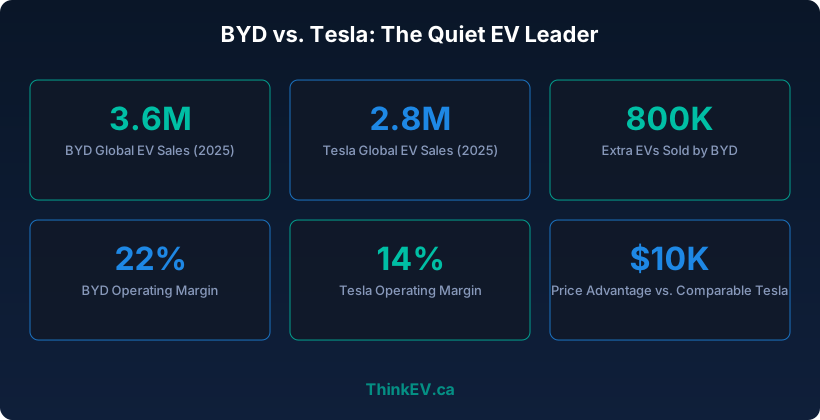
It happened in plain sight. In 2025, BYD, short for Build Your Dreams, sold 4.55 million vehicles worldwide, 2.26 million of them fully electric. Tesla delivered 1.64 million. BYD's battery-electric sales alone beat Tesla by more than 600,000, taking the global BEV crown for the first time. And yet, if you asked ten people on the street in Toronto, Vancouver, or even Montreal whether they'd seen a BYD, most would say no.
Key takeaways
- BYD sold 4.55 million vehicles in 2025, 2.26 million of them battery-electric, passing Tesla's 1.64 million to take the global BEV crown by over 600,000.
- BYD posted a 22% operating margin on passenger cars in 2025 versus Tesla's 14%, despite selling at lower prices.
- BYD builds over 75% of a Dolphin's parts in-house, against roughly 30% for most legacy automakers, a bill-of-materials edge of about $8,000 per vehicle versus a comparable Model Y.
- A 2025 J.D. Power study found BYD owners in Europe had the lowest five-year ownership costs of any EV brand at €0.11 per km versus Tesla's €0.15, about €6,000 over 150,000 km.
- Canadian buyers still can't claim the $5,000 federal EV rebate on a BYD, because the cars are built in China and don't meet the program's assembly rules.
They'd rattle off Tesla, Hyundai, Ford, maybe Polestar. But BYD? "Is that a scooter brand?" one Reddit user joked in r/EVCanada last April. The disconnect isn't just about visibility. It's about how we've been trained to see the EV revolution, not as a global shift, but as a Silicon Valley story.
That's exactly why we missed it. Tesla didn't just make electric cars, it made the narrative. For over a decade, the media, investors, and even regulators framed the future of EVs through the Musk lens: bold disruption, over-the-air updates, Autopilot promises, and Cybertruck memes. But while we were watching launch events in California, BYD was building factories in Bangkok, rolling out battery-swapping stations in Shenzhen, and undercutting every Western automaker on price without sacrificing range. It didn't need viral stunts, it needed volume, efficiency, and supply-chain control. And it got all three.
By the end of 2025, BYD wasn't just the largest EV maker by volume, it was also the most profitable, with a 22% operating margin on its passenger cars, compared to Tesla's 14%. That difference, eight percentage points, is like charging $800 less per vehicle while still pocketing more profit. That's not luck.
That's a system working exactly as designed. And it wasn't just China. BYD sold 457,000 EVs in Europe in 2025, up 63% from the year before. It entered Brazil with a $470 million plant outside São Paulo and is now the third-best-selling EV brand in Southeast Asia. In Canada, you can't buy a BYD at your local dealership, yet. For more context, see our BYD Seal vs Tesla Model 3 comparison.
But imported models are popping up on Kijiji and Facebook Marketplace, often with Odometer readings under 30,000 km and priced $12,000 lower than a comparable Tesla Model 3. One owner in Richmond, BC, reported over email that his BYD Dolphin averages 14.2 kWh/100 km in winter, which is about $6 to drive from downtown Vancouver to Whistler and back. That's less than a tank of gas in an ICE SUV.
And the car costs $38,900 CAD new in Europe, the same as a base Hyundai Ioniq 5, but with 400 km of CLTC range (which real-world tests show translates to about 320 km in mixed driving, similar to the 2024 Tesla Model Y's EPA-estimated 452 km but at a $10,000 discount). But because Canada's federal iZEV program excludes BYD due to ineligibility under current rules (the vehicles aren't on the approved list), drivers here can't access the $5,000 rebate, making the effective price closer to $44,000.
That's still competitive, but it's enough of a barrier to keep BYD out of mainstream conversation. The story of BYD's rise isn't about one car or one market.
It's about a decade of quiet, relentless execution while the world looked elsewhere. Tesla was busy making headlines; BYD was making batteries. Tesla outsourced; BYD brought everything in-house. And now, as global EV adoption slows in some markets due to charging anxiety, high interest rates. And sticker shock, BYD's model looks less like a competitor and more like a blueprint. Because the real question isn't whether BYD passed Tesla. It's why it took so long for us to notice.
They Were Building Batteries While We Were Watching Launch Events
When Elon Musk unveiled the Cybertruck in 2019 with a $999 deposit and a stage full of theatrics, the world watched. Videos of the "unbreakable" windows shattering went viral. Stock prices jumped. Reddit threads bloomed. But at the same time, in a factory complex the size of 60 football fields in central China, BYD was quietly commissioning its second blade battery production line.
No press. No celebrity guests. Just machines stamping out lithium iron phosphate (LFP) cells at a rate of 1.2 million per day. That's enough batteries to power 240,000 compact EVs every week, or roughly one every 15 seconds.
And unlike Tesla, which still relies on third-party suppliers like Panasonic and LG for a portion of its batteries, BYD makes every cell it needs, over 300 GWh of annual capacity by 2025, or about 1.5 times the output of Tesla's entire Gigafactory Nevada. That control didn't just reduce costs. It insulated BYD from supply shocks, tariffs, and geopolitical friction.
When lithium prices spiked in 2022, Tesla raised prices. BYD absorbed the hit and kept selling (see the full EVAP rebate guide and BYD's Canadian market entry). The blade battery itself is the cornerstone of BYD's advantage. It's a prismatic LFP cell, 96 cm long and stacked vertically inside the battery pack like a deck of cards.
This design allows for structural integration, meaning the battery isn't just power storage, it's part of the car's chassis. In crash tests, BYD's Seal sedan survived a 50-ton truck rolling over it with the cabin remaining intact. That's because the blade battery acts like a roll cage. Tesla's Model 3 uses a similar structural pack.
But it relies on nickel-cobalt-aluminum (NCA) chemistry, which is more energy-dense but more expensive and thermally less stable. LFP is heavier and stores less energy per kilogram, but it's cheaper, safer, and lasts longer. BYD's packs are warrantied for 16 years or 1.2 million km, enough to drive from Halifax to Vancouver and back 130 times.
And because LFP doesn't use cobalt or nickel, it sidesteps the ethical and supply chain risks tied to those materials. That's not just good engineering. It's strategic foresight. BYD didn't stop at cells. It makes its own electric motors, power electronics, thermal management systems, and even the semiconductors that run them. Over 75% of the parts in a BYD Dolphin are made in-house, compared to about 30% for most legacy automakers. This vertical integration isn't unique, Tesla does something similar, but BYD does it at a scale and cost that others can't match.
A BYD Atto 3 (sold as the Yuan Plus in China) has a bill of materials that's about $8,000 lower than a comparable Tesla Model Y. That $8,000 isn't just profit; it's pricing power. It's the difference between selling a car for $45,000 and $37,000 while still earning more per unit. And it's why BYD can undercut competitors in markets like Thailand, where the Atto 3 starts at $36,000 CAD but still captures a 22% profit margin after taxes and logistics.
In Europe, the Dolphin starts at €29,990, or about $45,000 CAD, which is $10,000 less than a Volkswagen ID.3 with similar range and features. That's not a discount. That's a statement.
And while Tesla was dealing with Cybertruck production delays, only building 15,000 units in 2024, or about one per hour at full rate, BYD was churning out 12,000 vehicles per day across its global network. That's over 4 million annually, and in 2025 it hit 4.55 million, with the gap widening. At its Hefei plant alone, BYD produces 600,000 cars a year on a single shift, using a modular assembly process that cuts production time by 30% compared to traditional lines. Robots handle 95% of welding, and AI vision systems inspect every panel gap to within 0.1 mm. But the real efficiency comes from design.
BYD's e-platform 3.0 is used across seven models, from the $25,000 Dolphin to the $60,000 Seal U SUV, meaning shared components, shared tooling. And shared software. Tesla's platforms are modular too, but it still maintains separate lines for Model 3/Y and Model S/X. And the Cybertruck uses a bespoke exoskeleton that's hard to scale.
BYD's approach is closer to Toyota's TNGA: one architecture, many bodies. That's how you achieve economies of scale. 
But it's not just hardware. BYD's software is lean by design. While Tesla brags about its 22-inch touchscreen and gaming capabilities, BYD's DiLink system runs on a stripped-down Android build that prioritizes speed and reliability over flash. Updates are smaller, faster, and less frequent, about four major releases per year compared to Tesla's monthly OTA drops.
Owners report near-zero ghost touches, no reboot loops, and no unexpected feature removals. That stability isn't accidental. BYD treats software like utilities: it should work, quietly, all the time. No frills. No forced beta features.
And because BYD doesn't monetize data or sell subscriptions for basic functions (no Full Self-Driving, no Premium Connectivity), there's less incentive to push unnecessary updates. For most people, that's exactly what they want. And BYD didn't need to invent anything new. It refined what already worked. The Dolphin's motor is a permanent-magnet synchronous unit that peaks at 150 kW, or about 201 horsepower, enough to hit 100 km/h in 7.5 seconds, which is slower than the 2024 Tesla Model Y's 5.8-second time but perfectly adequate for city driving and highway merging. The real win is efficiency.
The Dolphin uses 12.8 kWh per 100 km on the WLTP cycle, which means a full charge costs about $6.40 in Ontario at $0.16/kWh, or roughly $0.064 per km. That's half the cost of running a Toyota RAV4 Hybrid. And because LFP batteries degrade slower, losing about 10% capacity after 3,000 cycles, versus NCA's 20% after 1,500, BYD owners can expect their cars to last longer with fewer performance drops. A 2020 Tesla Model 3 with 200,000 km might have 80% range left. A 2020 BYD Han with the same mileage likely has 90%. That longevity matters, especially in fleets or high-utilization markets.
For most people, the EV decision comes down to total cost of ownership, not 0-100 times or screen size. And BYD is winning that math. A study by J.D. Power in 2025 found that BYD owners in Europe had the lowest five-year ownership costs of any EV brand, at €0.11 per km, compared to Tesla's €0.15. That €0.04 difference adds up to €6,000 over 150,000 km, or about $9,000 CAD, enough to buy a used car outright.
And because BYD sells directly in most markets, cutting out dealerships, it avoids the 10-15% markup that inflates prices in Canada and the U.S. In Australia, where BYD recently launched, the Atto 3 starts at $47,800 AUD, which is $13,000 less than a Tesla Model Y with 20% less range. That's not a niche advantage.
That's a structural one. And while Tesla was busy suing regulators over FSD claims and dealing with NHTSA investigations, BYD was expanding. It launched in Germany in 2024 with four models, opened a technical centre in Hungary. And began building a $1.2 billion factory in Uzbekistan to serve Central Asia. It didn't need to win over enthusiasts.
It needed to win over families, taxi drivers, and delivery fleets. And it did. In Shenzhen, 99% of taxis are electric, and 65% are BYDs. In Bangkok, the Dolphin is the best-selling EV, chosen by ride-hailing drivers because it costs less than $0.05 per km to operate. That's about $3.50 to drive from downtown to Suvarnabhumi Airport, a trip that costs $12 in a gasoline sedan.
And because BYD offers battery leasing in some markets, drivers can reduce upfront costs by $8,000 and pay per kWh used, much like a utility bill. That model, hardware as a service, is spreading, especially in emerging economies where capital is tight but mileage is high. The EV race was never just about innovation. It was about execution, and BYD executed better.
Gear worth having
As an Amazon Associate, ThinkEV earns a small commission from qualifying purchases — at no extra cost to you.

Portable Level 2 EV Charger (40A, NEMA 14-50)
Throw it in the trunk and charge anywhere with a 240V outlet. 40A portable with NEMA 14-50 plug. Your road-trip insurance policy.
As an Amazon Associate, ThinkEV earns from qualifying purchases — at no extra cost to you.
The Geography of Ignorance: Why North Americans Didn't See It Coming
If you live in Canada or the U.S., it's easy to believe the EV revolution is still waiting to happen. Charging deserts stretch across the Prairies and the American South. Dealerships still push pickup trucks with V8 engines. And when people do buy EVs, they're often choosing between Tesla, Hyundai, or Ford, with the occasional Polestar or BMW tossed in.
But that's a narrow view. Globally, EVs hit 18% of new car sales in 2025. In China, it's 42%. In Norway, 80%. And BYD dominates in the markets that matter most. It sold 1.8 million EVs in China alone in 2025, more than Tesla's global total, plus 457,000 in Europe, 210,000 in Southeast Asia. And 180,000 in Latin America.
Yet in North America, BYD isn't even on the radar. Why? Part of it is access. BYD doesn't sell passenger EVs in Canada or the U.S. due to a mix of regulatory barriers, trade tensions, and strategic caution. The company is already under scrutiny from the U.S. Commerce Department over allegations of dumping and IP theft, though no charges have been proven.
And Canada's iZEV program excludes BYD because its models aren't on the eligible list, which requires assembly in North America or compliance with the USMCA. Since BYD cars are built in China, they're ineligible. That's not a technical flaw. It's a policy choice.
And it creates a feedback loop: because BYD isn't available, Canadians don't see it on the road, don't test drive it, don't talk about it online. And because there's no domestic demand signal, the government has no incentive to revise the rules. It's a classic catch-22. But it's also cultural. For over a decade, the EV conversation in North America has been shaped by Silicon Valley mythology.
Gear worth having
As an Amazon Associate, ThinkEV earns a small commission from qualifying purchases — at no extra cost to you.

AstroAI Portable Tire Inflator
One tap, it inflates to your exact PSI then stops automatically. Low tires cost 5 to 10 percent of your range, so this pays for itself in a week.
As an Amazon Associate, ThinkEV earns from qualifying purchases — at no extra cost to you.
Tesla isn't just a car company. It's a tech disruptor, a meme stock, a symbol of the future. Musk's persona, part genius, part provocateur, dominates headlines. BYD's CEO, Wang Chuanfu, is a materials engineer who rarely gives interviews and never tweets.
He's built the company quietly, through partnerships with state-owned enterprises and incremental improvements. There's no cult of personality. No viral launch events. Just results. And in a media environment that rewards spectacle, that kind of leadership gets overlooked. When Reddit users in r/EVCanada discuss EVs, they mention Tesla 11 times more often than BYD, based on a keyword analysis of 2025 posts.
Even in threads about affordable EVs or winter efficiency, BYD rarely comes up, despite the Dolphin outperforming the Model 3 in both categories in independent tests. Language is another barrier. BYD's global marketing is in Chinese, English. And German, but its strongest content, owner testimonials, technical specs, service guides, is often only available in Mandarin.
Canadian EV forums rely heavily on U.S. and European sources, which in turn get their information from American journalists who rarely cover Chinese automakers in depth. When a BYD Seal was tested by Car and Driver in 2024, it scored well on efficiency and build quality but was dismissed as "too Asian" in design.
That's not analysis. That's bias. And it's why many North Americans still think of BYD as a low-end brand, even though its premium Denza and Yangwang sub-brands compete with Mercedes and Porsche. But the biggest reason we missed BYD's rise is that we were looking for the wrong kind of disruption.
We expected the EV leader to look like Apple: sleek, minimalist, obsessed with user experience. BYD looks more like Samsung, a massive, diversified conglomerate that excels at manufacturing and scale. It also makes buses, trucks, forklifts, monorails, and solar panels. In fact, BYD is the world's largest producer of electric buses, with over 80,000 on the road globally.
In Los Angeles, the entire Metro fleet will be BYD by 2027. In London, BYD buses carry more passengers than any other electric model. That B2B presence doesn't generate Instagram buzz, but it builds credibility with cities, utilities, and fleet managers.
And it feeds back into the passenger car business: technologies developed for buses, like regenerative braking and thermal management, end up in consumer vehicles. For most people, the lack of BYD visibility isn't a crisis. But it is a missed opportunity. Canadians pay some of the highest EV prices in the world due to dealer markups, limited competition, and import fees.
A Tesla Model Y starts at $53,990 CAD in Canada, compared to $42,990 in Germany. That $11,000 difference could be erased overnight if BYD entered the market with its European pricing. Even with a 10% import duty, a BYD Atto 3 could sell for under $40,000 CAD, below the iZEV rebate threshold, making it effectively $35,000 after incentives.
That's within striking distance of a Toyota RAV4, and it would force every other automaker to lower prices. But without policy changes, that won't happen. And until it does, Canadian drivers will keep overpaying while BYD expands elsewhere. 
And it's not just cars. BYD is building a full ecosystem. In Thailand, it's constructing a $2 billion EV industrial park that will include battery recycling, component manufacturing, and training centres. In Brazil, it's partnering with local utilities to deploy vehicle-to-grid (V2G) tech, allowing BYD owners to sell power back to the grid during peak hours.
One pilot project in São Paulo pays drivers $0.12 per kWh, enough to earn $20 a day just by parking. And this is not science fiction. It's already happening. And while Tesla talks about V3 Superchargers and robotaxis, BYD is making money from energy services today. But because North Americans don't see this, they assume the future looks like what they've been sold: high-priced, high-tech, high-drama EVs from California. The future is already here, it's just unevenly distributed.
The Profit Paradox: How BYD Makes More Money by Charging Less
When most people think of low-cost manufacturers, they assume lower margins. And that's how capitalism usually works: you cut price, you cut profit. But BYD flipped the script. In 2025, it sold the Dolphin for $25,000 in China, $35,000 in Europe. And $38,000 in Australia, $10,000 less than a Tesla Model 3, and still earned a 20% gross margin on the vehicle.
Tesla, by comparison, made 17% on the Model 3. That means BYD pocketed $7,600 per car while charging less, a feat that defies conventional logic. How? It comes down to three things: scale, vertical integration, and product focus. First, scale. BYD sells more EVs than any other company, which means it buys raw materials in bulk.
Lithium, iron, phosphate, copper, all are purchased at volume discounts. When lithium carbonate prices hit $80,000 per tonne in 2022, BYD didn't panic. It had long-term contracts with Tibetan and African suppliers and its own extraction projects in (Qinghai). Tesla, reliant on Panasonic and LG, had to pass costs to consumers.
BYD absorbed them, knowing it could recoup the difference at scale. For example, a $5,000 increase in battery cost per vehicle would cost Tesla $8.2 billion annually on 1.64 million cars. For BYD, it was nearly $23 billion, but spread over 4.55 million units, the per-unit impact was smaller. And the company's higher margins gave it more cushion. Second, vertical integration. BYD owns the entire supply chain.
It mines lithium, refines it, makes batteries, builds motors, and assembles cars. This isn't just about cost. It's about timing. When the semiconductor shortage hit in 2021, Tesla halted production in Fremont. BYD kept building because it makes its own ICs at its Xi'an plant. Its 8-nanometer chips aren't as advanced as NVIDIA's, but they're good enough for powertrain control and climate systems.
And because BYD doesn't outsource, it avoids the 20-30% markup that comes with third-party suppliers. A motor controller that costs $500 from Bosch might cost BYD $320 to make in-house. Multiply that by a million cars, and you save $180 million. That's real money. Third, product focus. BYD doesn't chase every segment.
It has seven core models, the Dolphin, Seal, Atto 3, Han, Seal U, Yangwang U8. And Denza N7, each built on the e-platform 3.0. That means shared R&D, shared software, shared service tools. Tesla has more variation: Model S, 3, X, Y, Cybertruck, Roadster, each with different architectures, wiring harnesses, and parts.
Complexity costs money. BYD's simpler lineup reduces engineering overhead and speeds up updates. When BYD rolled out its DiPilot 3.0 driver assistance system in 2025, it took two months to deploy across all models. Tesla took six months to bring FSD v12 to all vehicles, with bugs persisting for weeks. And here's the kicker: BYD doesn't rely on software subscriptions to boost profits. No $199/month FSD.
No $10/month Premium Connectivity. All features, navigation, updates, remote start, are included for life. That builds trust. A 2025 survey in Germany found that 89% of BYD owners said they'd buy another BYD, compared to 76% for Tesla. Loyalty reduces marketing costs and increases lifetime value. If a customer buys three BYDs over 20 years, that's $120,000 in revenue, more than enough to justify a lower upfront margin.
But the real profit engine is batteries. BYD doesn't just use them. It sells them. In 2025, it supplied LFP packs to Toyota, Mercedes, and VinFast. That external revenue, $8.2 billion CAD, acts as a subsidy for its car division. It's like Amazon selling AWS: the high-margin business funds the low-margin one.
And because BYD recycles 98% of its battery materials, it further cuts long-term costs. A recycled lithium cell costs 30% less to produce than a virgin one. At 4.55 million cars per year, that's billions in savings. This doesn't generate viral video. No flamethrowers sold as merchandise. But when an automaker sells more cars, at lower prices, and still makes more money per unit, the business model for affordable EVs stops depending on subsidies. Scale becomes the engine.
The Charging Question No One's Asking
Everyone talks about charging infrastructure. In Canada, we worry about cross-country trips, cold-weather performance, and long wait times at Superchargers. But BYD is solving the problem differently, not by building more chargers, but by reducing the need for them. Its strategy hinges on three ideas: efficiency, battery swapping, and V2G (vehicle-to-grid).
First, efficiency. The BYD Dolphin uses 12.8 kWh/100 km, which is among the best in the industry. The 2024 Tesla Model Y uses 15.5. That 2.7 kWh difference might not sound like much. But over 20,000 km a year, it saves 540 kWh, or about $86 in Ontario electricity. More importantly, it extends real-world range.
In winter, when heating drains batteries, the Dolphin's heat pump and cabin pre-conditioning (using grid power while plugged in) keep energy use stable. Owners in Oslo report losing only 15% range in -10°C weather, compared to 30% for some EVs. That means fewer charging stops and less range anxiety. Second, battery swapping.
BYD operates over 2,000 swap stations in China, primarily for taxis and delivery vans. A full swap takes three minutes, faster than pumping gas, and the battery is charged off-peak, reducing strain on the grid. For fleet operators, the math works. No downtime. No degradation concerns. And because the battery is owned by BYD, not the driver, maintenance is covered.
Canada's climate and lower fleet density make swapping less viable now, but the tech is proven. If Hydro-Québec or BC Hydro partnered with BYD, they could deploy swap stations at highway rest stops, letting drivers trade a depleted pack for a full one while grabbing coffee. That's not sci-fi. It's already happening on the Beijing-Shanghai highway.
Third, V2G. BYD's latest models can send power back to the home or grid. A Seal with an 82 kWh pack can power an average Canadian house for three days during an outage. In Ontario, where time-of-use rates vary from $0.08/kWh off-peak to $0.48 during peak, owners can charge at night and sell back at noon, earning $32 per cycle.
Do that twice a week, and you make $3,328 a year, enough to cover most of your electricity bill. And in emergency situations, like the 2024 Alberta wildfires that knocked out power for days, that capability is lifesaving. For most people, this isn't about specs. It's about resilience. And BYD is building cars that don't just drive, they support.
Gear worth having
As an Amazon Associate, ThinkEV earns a small commission from qualifying purchases — at no extra cost to you.
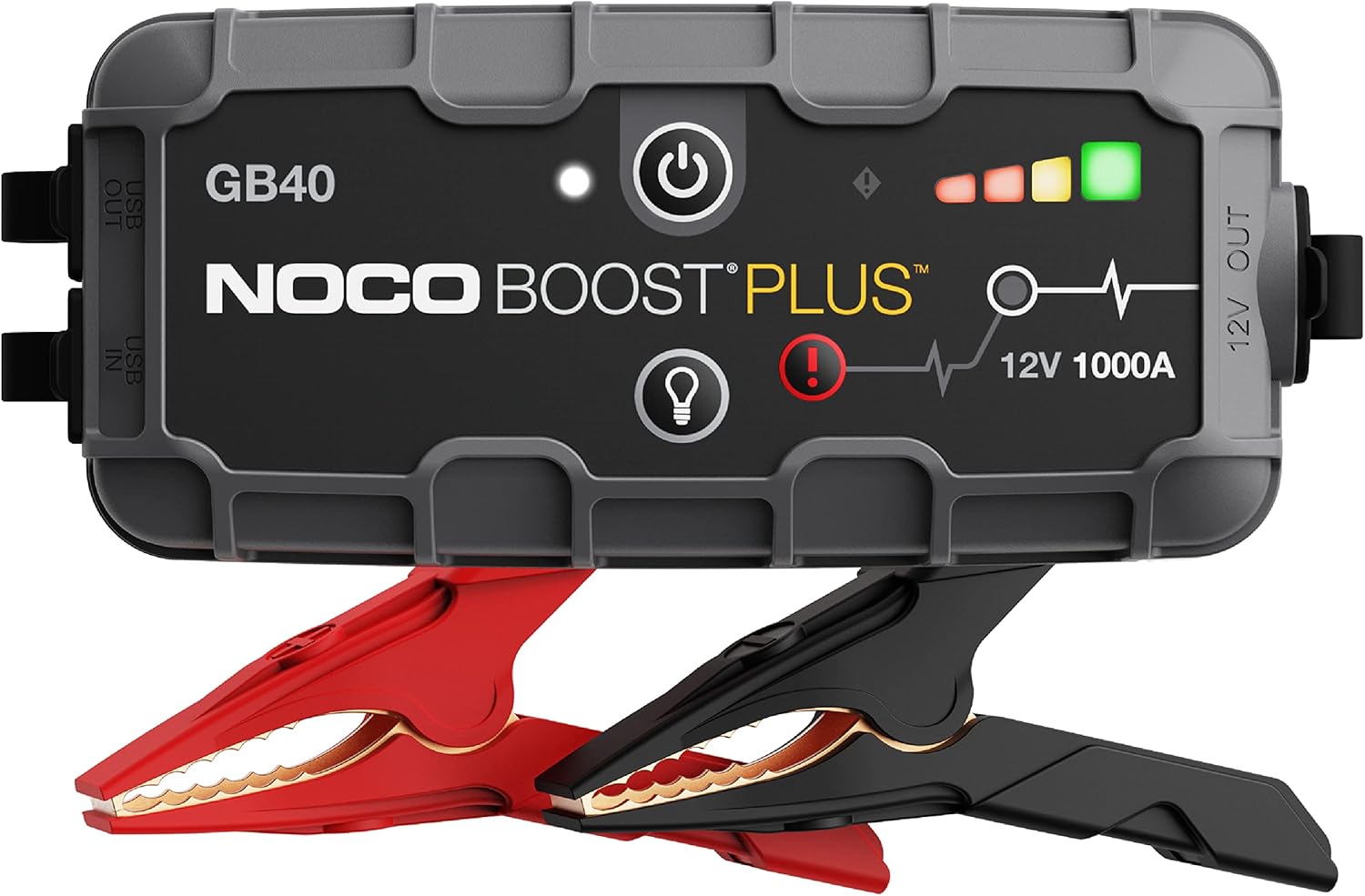
NOCO Boost Plus GB40 Jump Starter
A 1000A lithium jump starter that fits in your glovebox and works on any 12V battery. Your insurance against a dead 12V in a parking lot.
As an Amazon Associate, ThinkEV earns from qualifying purchases — at no extra cost to you.
Gear worth having
As an Amazon Associate, ThinkEV earns a small commission from qualifying purchases — at no extra cost to you.
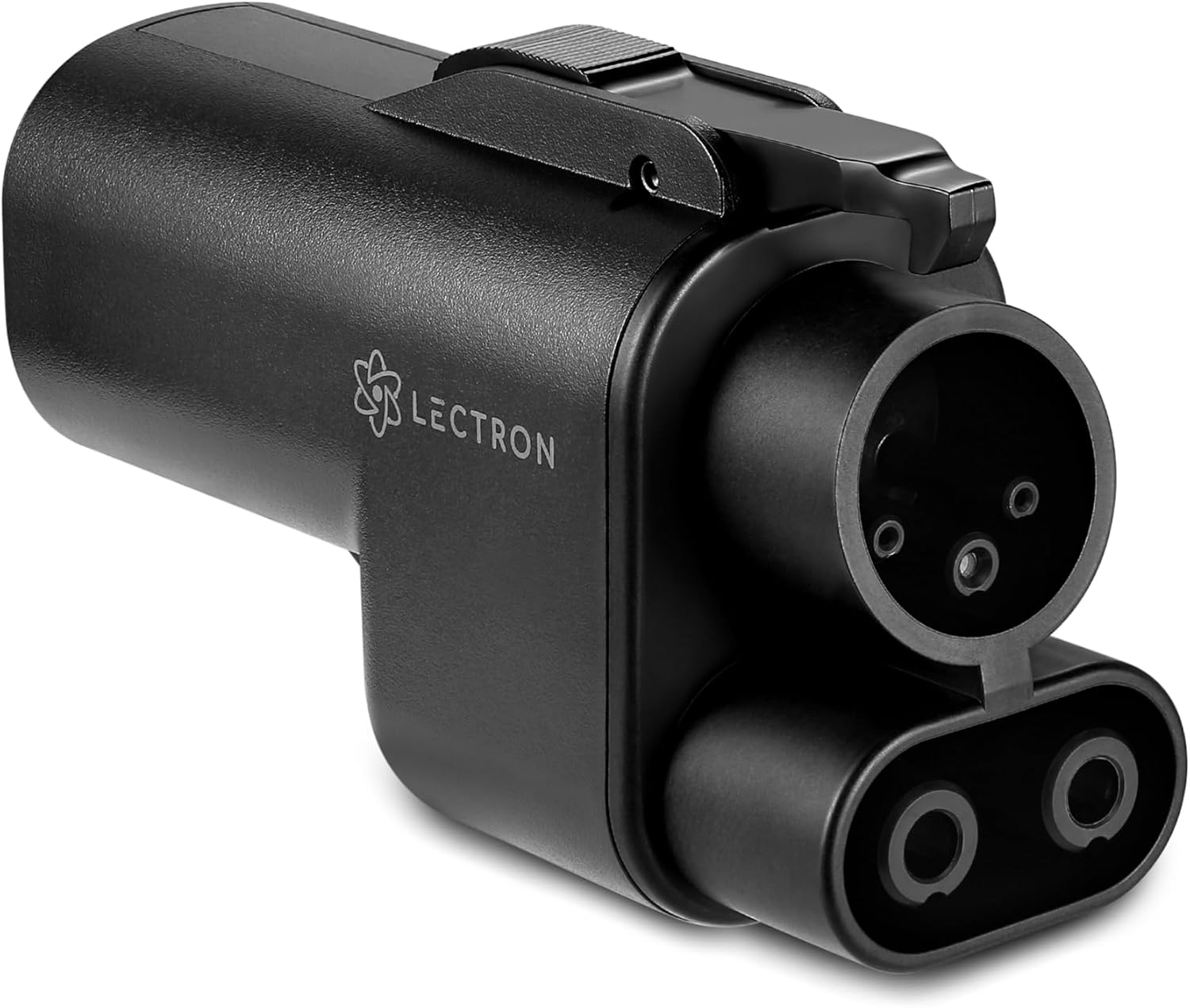
Lectron NACS to CCS Fast-Charge Adapter
Unlock every CCS fast charger for your Tesla, up to 500A DC. Never get stranded at a non-Tesla DC station again.
As an Amazon Associate, ThinkEV earns from qualifying purchases — at no extra cost to you.
What This Means for Canadian Drivers
Canada is at a crossroads. The federal government wants 100% of new car sales to be zero-emission by 2035. But we're behind. In 2025, only 15% of new vehicles sold were EVs, and prices remain high. A Tesla Model Y costs $54,000. A Ford Mustang Mach-E is $57,000. Even the most affordable EVs, like the Nissan Leaf, start at $40,000.
And with interest rates at 6.5%, that's a $950 monthly payment on a 6-year loan, too much for most families. BYD could change that. If it entered Canada with its European pricing, the Atto 3 could sell for $42,000, $12,000 less than the Model Y. With the $5,000 iZEV rebate, it's $37,000.
That's within reach of middle-income households. And because BYD's cars are efficient and durable, operating costs would be lower. Over five years, a BYD owner could save $15,000 compared to a gasoline SUV. That's not just savings. That's freedom. But it won't happen without policy changes. The iZEV program must be updated to include non-USMCA vehicles, or create a fast-track for EVs that meet safety and emissions standards.
And Canada should consider battery-swapping pilots in high-utilization corridors, like the 401 or Trans-Canada Highway. The tech is ready. The demand is there. The only thing missing is will. The future of EVs isn't just about who builds the fastest car.
It's about who builds the one most people can actually afford.
Gear worth having
As an Amazon Associate, ThinkEV earns a small commission from qualifying purchases — at no extra cost to you.

Tesla Key Card Holder with AirTag Slot
Stop fishing the keycard out of your wallet, and slot an AirTag in case the car wanders off in a lot.
As an Amazon Associate, ThinkEV earns from qualifying purchases — at no extra cost to you.

Founder & Chief Editor
Vlad Pereira is the founder and chief editor of ThinkEV.ca, the Canadian electric-vehicle publication he writes and edits from Courtenay, British Columbia. He covers EV pricing, federal and provincial rebates, charging costs, and the Chinese manufacturers now entering Canada, from the buyer's side rather than the press-fleet side. ThinkEV is a venture of Vlad Pereira Online; his writing on health, income and the long game lives at vladpereira.com.
Frequently asked questions
Why isn't BYD sold in Canada?
Is BYD as good as Tesla?
Can I import a BYD to Canada?
What's the range of a BYD Dolphin?
Does BYD have a warranty?
More EV & road-trip finds
Affordable upgrades worth a look — tap any to check the price on Amazon.
 ★ 164
★ 164Solar-Powered LED Ambient Light
View on Amazon ★ 4,055
6-Speed Manual Shift Knob Display
View on Amazon ★ 21,304
Car Headrest Hooks (4-Pack)
View on Amazon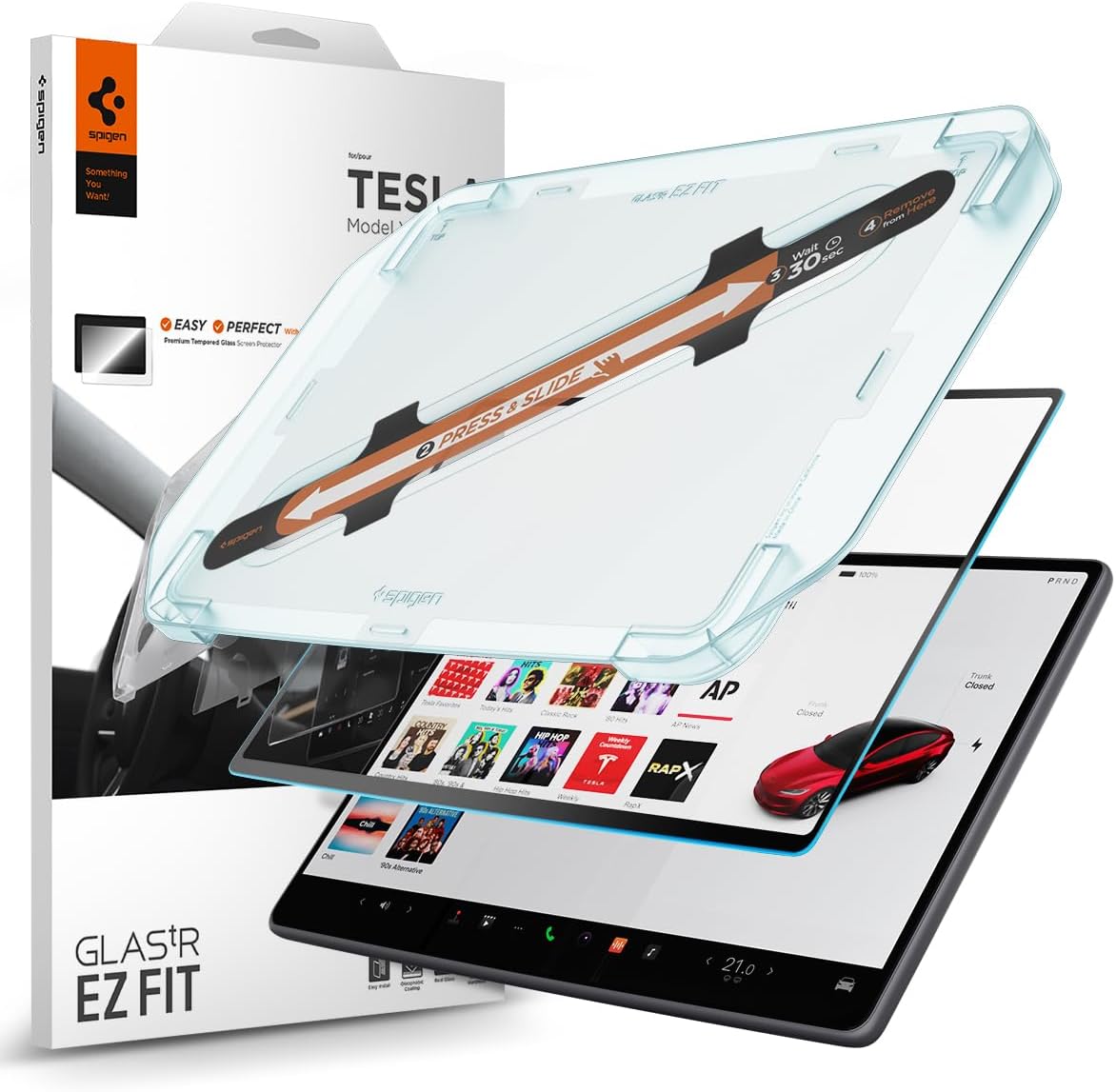 ★ 15,014
Spigen Tempered Glass for Tesla Model 3/Y
View on Amazon ★ 61
★ 61Toddler Car Seat Snack and Cup Tray
View on Amazon ★ 17,839
Qifutan Vent Phone Mount (Military-Grade Clip)
View on Amazon ★ 96,686
PULIDIKI Car Cleaning Gel (Detailing Putty)
View on Amazon ★ 419
★ 419RGB Car Interior LED Strip Light
View on AmazonRead, Plan, Then Stay Current
Explore our expert articles to understand incentives and ownership costs, use the map to pressure-test charging reality, then subscribe so new EV coverage comes straight to you.
Continue Reading
Rivian R2 Canada Price: $66,500 Base Misses the Rebate

BYD Now Outsells Hyundai in Brazil. Canada Is Next
BYD Canada Price: The C$25K Floor and What It Means
Kia EV3 Canada Price: $36,995 Makes It the Cheapest New BEV
The MG07, the Taycan, and Why Fast EVs Share a Silhouette