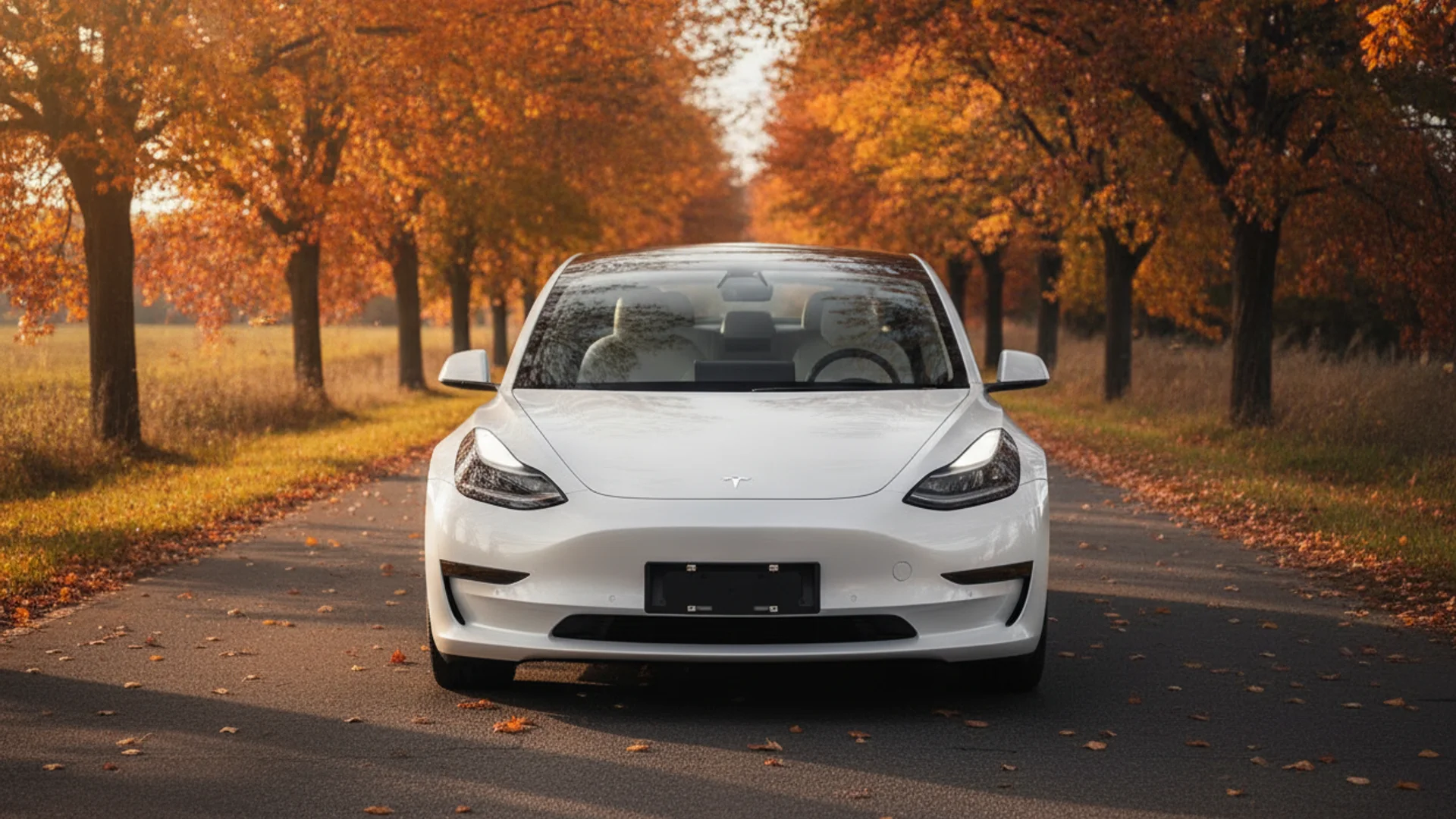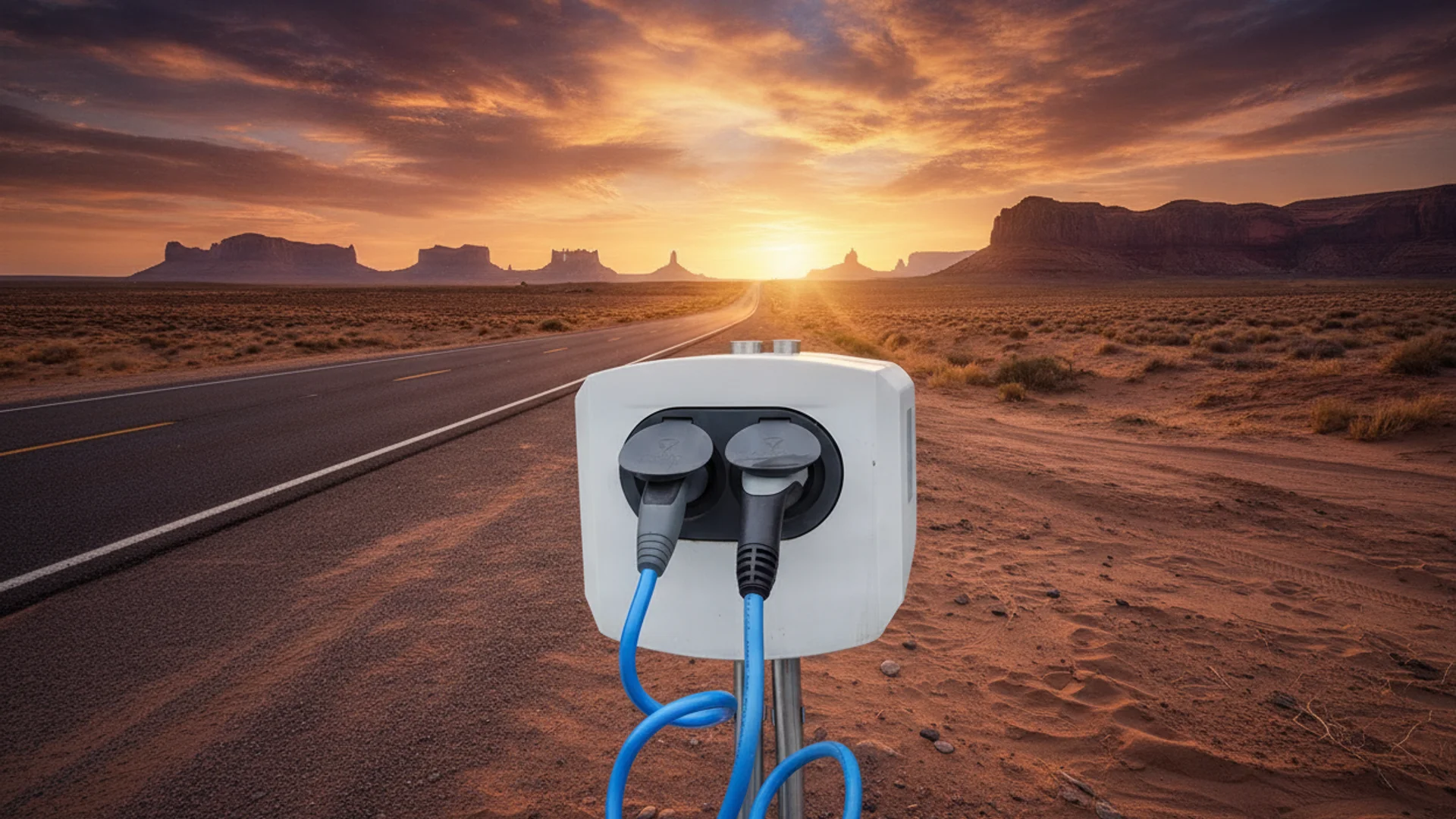
Your EV has 60 to 100 kWh sitting in the floor. A standard kettle draws 1.5 kW. The math on a power outage is not complicated, assuming your EV has vehicle-to-load, which most in Canada still don't.
V2L is the least glamorous of the three bidirectional acronyms and, for now, the only one most Canadian buyers will actually use. V2H needs a panel integration and an electrician. V2G needs a utility agreement and hardware most provinces haven't approved. V2L needs an outlet and a switch on the infotainment screen. The feature exists on roughly a dozen retail EVs sold in Canada and is absent from most of the volume sellers, which tells you something about how manufacturers price a feature that costs almost nothing to include.
Here is what V2L does, what it does not, and which vehicles ship with it in Canada right now.
Key takeaways
- The Cybertruck delivers 9.6 kW of V2L output, roughly three times what any Hyundai or Kia system provides.
- V2L is absent from Canada's volume sellers: Model Y, Equinox EV, and VW ID.4 don't include it standard.
- Most V2L systems stop drawing power around 15–20% battery, leaving enough range to reach a charger.
- BYD and Zeekr include V2L as standard in their home markets and are entering Canada after the January 2026 tariff cut.
- V2L needs only an outlet and an infotainment switch, no electrician, no utility agreement, no panel integration required.
What V2L Actually Is (and What It Isn't)
V2L draws AC power directly from the traction battery through an onboard inverter. That is the whole mechanism. No panel connection, no external hardware, no utility approval. The car becomes a wall outlet on wheels, with the caveat that vehicle-to-load and vehicle-to-vehicle are related concepts to vehicle-to-grid, but the AC phase is not synchronised with the grid, which is precisely why you cannot back-feed your house through the meter without additional hardware.
The three-acronym family is worth getting straight because the marketing collapses them constantly:
- V2L (vehicle-to-load), AC output from the car to a device. No panel. No grid. Plug and go.
- V2H (vehicle-to-home), the car powers your home through the main panel. Requires a bidirectional charger, a transfer switch, and an electrician. This is a real installation, not an outlet.
- V2G (vehicle-to-grid), the car sells power back to the utility. Requires grid-sync hardware, a utility interconnection agreement, and, in most Canadian provinces, permission that does not yet exist.
Output is standard AC. Whatever runs off a wall outlet will run off V2L, within the wattage limit. That limit is the whole story for what V2L can actually do, and it varies enormously. Most V2L systems deliver 1.8 to 3.7 kW continuous. That is enough for a kettle, a laptop, a fridge, a CPAP, or a decent set of camping electronics. It is not enough to run a house.
Then there is the Cybertruck. The dual-motor and tri-motor Cybertruck configurations provide up to 9.6 kW of continuous vehicle-to-load (V2L) AC power through five integrated outlets. That is a job-site number. It is roughly three times the output of any Hyundai or Kia V2L system and puts the Cybertruck in a category by itself for North American retail V2L. The number is real, whatever you think of the truck it sits inside.
Gear worth having
As an Amazon Associate, ThinkEV earns a small commission from qualifying purchases — at no extra cost to you.

Lectron Level 2 J1772 Charger (40A, WiFi)
Smart WiFi charger with real-time energy monitoring. 40A / 9.6 kW, J1772 with a NEMA 14-50 plug, schedule charging right from your phone.
As an Amazon Associate, ThinkEV earns from qualifying purchases — at no extra cost to you.
How to Actually Use It: Outlets, Adapters, and Activation
There are two access points and not every vehicle has both. The external port uses an adapter that plugs into the charge port and terminates in a standard household outlet, this is how the Hyundai/Kia group delivers most of its V2L output. The interior outlet is exactly what it sounds like: a household socket built into the cabin or bed. Ford's F-150 Lightning uses this approach heavily. Some vehicles offer both; some offer only one.
Activation is deliberately layered. Renault's manual for the V2L function specifies that with the vehicle stationary and the parking brake applied, the system provides AC power up to 16 A / 3.7 kW using electrical energy stored in the traction battery. That 16 A / 3.7 kW ceiling is the European standard limit, and most retail V2L systems land within a hair of it, the Hyundai/Kia group targets 3.6 kW across the EV6, Ioniq 5, EV9, and Ioniq 9 through the same shared platform architecture. For readers weighing family three-row EVs where the feature is standard equipment rather than an option, the Kia EV9 versus Hyundai Ioniq 9 Canadian comparison shows how that shared output plays across two vehicles that otherwise diverge on price, range, and cabin philosophy.
You typically enable V2L one of two ways: through the infotainment system (settings, energy, V2L, on) or via a physical switch on the adapter itself. Once enabled, you plug in devices exactly as you would at home. There is no ceremony to it. The one non-negotiable is that the vehicle must be stationary with the parking brake applied. V2L is not a moving-generator use case, you cannot run a power tool from a driving pickup, which is a rule the physics and the safety interlocks both enforce.
One practical note the manufacturers rarely emphasise: most V2L systems will keep drawing until the battery hits a floor state of charge, usually around 15 to 20 percent. You can override this on some vehicles, but the default is designed to leave you with enough range to reach a charger. Ignore this at your own scheduling risk.
Which EVs Have V2L in Canada Right Now
The confirmed V2L list in Canada as of mid-2026 is shorter than the marketing suggests. Standard-equipment V2L ships on:
- Hyundai Ioniq 5, Ioniq 6, and Ioniq 9
- Kia EV6 and EV9
- Genesis GV60 and GV70 Electrified
- Ford F-150 Lightning
- Tesla Cybertruck
That is roughly it for retail volume.
The absences matter more than the presences. Most Tesla Model 3 and Model Y trims sold in Canada do not include V2L. The Chevrolet Equinox EV, GM's Canadian volume play, does not include V2L standard. The Volkswagen ID.4 does not include V2L. These are the vehicles most Canadians are actually buying, and the feature is missing at the price points where it would matter most to a working household. Manufacturers keep V2L as a differentiator on premium and pickup trims and quietly leave it off the volume sellers, which is a pricing decision, not an engineering one, the inverter hardware is trivial relative to the rest of an EV powertrain.
Gear worth having
As an Amazon Associate, ThinkEV earns a small commission from qualifying purchases — at no extra cost to you.

TP-Link Kasa Smart Plug with Energy Monitoring
Track exactly how much electricity your Level 1 charger uses and schedule it for off-peak hours. Know your real cost per kWh.
As an Amazon Associate, ThinkEV earns from qualifying purchases — at no extra cost to you.
Chinese-brand entrants complicate the picture. BYD and Zeekr ship V2L as standard in their home markets, and both are moving into Canada under the January 2026 tariff cut. Canadian specification confirmation is pending for most models, but the home-market feature set is a reasonable baseline for what will land here. The Chery Canada model and price outlook breaks down the Omoda and Jaecoo pipeline; the BYD, Zeekr, and cost-versus-price debate covers the tariff mechanics.
If V2L is a purchase driver, confirm the specific trim's output wattage before signing. Trims within the same model can differ, and the number that matters is continuous kW, not peak. A 3.6 kW rating on a base trim and a 3.6 kW rating on a top trim will support the same devices, but the accessible outlets (interior versus exterior port) can differ.
Gear worth having
As an Amazon Associate, ThinkEV earns a small commission from qualifying purchases — at no extra cost to you.

Grizzl-E Classic Level 2 EV Charger (40A)
Canadian-made and rated for minus 40C winters. 40A / 9.6 kW, NEMA 14-50, indoor/outdoor, 24-ft cable. The charger built for Canadian weather.
As an Amazon Associate, ThinkEV earns from qualifying purchases — at no extra cost to you.
Real Use Cases: What You Can and Can't Power
At 3.6 kW, V2L handles the essentials of an outage or a weekend without effort: a laptop, phone bank, mini-fridge, CPAP, LED lighting, an induction hotplate on low, corded power tools within their draw, a coffee maker, camping gear, tailgate appliances. This is the use case the feature was designed for and the one it delivers on cleanly.
Marginal at 3.6 kW: a full-size fridge with its compressor startup surge (running draw of 200 watts, startup surge of 1200 to 2000 watts, usually fine, occasionally not), a small window air conditioner, a corded lawnmower on thick grass. The number that matters for these is surge wattage, not steady-state, and manufacturers publish only running wattage on the sticker. If a device has a compressor or a heating element, assume the surge is two to three times the running draw and budget accordingly.
Out of scope at 3.6 kW: an electric dryer, central air conditioning, a whole-home circuit, DC fast-charging another EV. You can trickle-charge another EV via a Level 1 adapter, which will add about 40 kilometres of range per hour of donor draw. This is not a speed. It is a philosophy.
The Cybertruck's 9.6 kW opens a different set of scenarios: job-site tools running simultaneously, a whole-home essential-circuits panel through a properly installed transfer switch, an actual RV hookup rather than a compromise version of one. The gap between 3.6 kW and 9.6 kW is roughly the gap between "camping and outages" and "small contractor and outages that last a week."
Gear worth having
As an Amazon Associate, ThinkEV earns a small commission from qualifying purchases — at no extra cost to you.

ChargePoint Home Flex Level 2 Charger (50A)
Premium 50A / 12 kW charger with the best app ecosystem. Hardwired or NEMA 14-50, with real-time energy tracking and smart scheduling.
As an Amazon Associate, ThinkEV earns from qualifying purchases — at no extra cost to you.
Battery Impact and Practical Limits
Every kWh drawn through V2L is a kWh subtracted from your driving range. This is the honest ledger. If you run a fridge and a few devices for a weekend and pull 10 kWh out, you have 10 kWh less to drive home on. The inverter losses are small, a few percent, but the accounting is otherwise one-to-one. Budget for it before the trip, not during.
Heat is the other constraint. High continuous loads generate heat in the inverter and the battery, and the vehicle's thermal management system will throttle output or shut V2L off entirely if temperatures climb past the safe envelope. Block the vents, park where the cooling exhaust cannot escape, or run at full output through a summer afternoon and the system will protect itself. Some manufacturers publish continuous-duty limits in the manual, check yours if you are planning to run V2L for extended stretches. The Hyundai/Kia group historically allowed sustained V2L use without a hard time cap; Ford's Lightning documentation covers longer-duration home backup scenarios explicitly. Others hedge.
Battery degradation from V2L use is real but modest at normal depths of discharge. The physics is the same as driving, a cycle is a cycle, and the battery does not know whether the electrons went to a motor or to your kettle. A weekend of V2L costs roughly the same in degradation as a weekend of equivalent driving. Panic is not warranted. Monitoring is, particularly if you are running V2L to a low state of charge frequently, because deep-discharge cycles do accelerate wear on any lithium chemistry.
The practical limits reduce to three numbers. First, your vehicle's continuous kW output, usually 3.6, sometimes 9.6, and non-negotiable once you're past it. Second, the surge wattage of whatever you plug in, which lives on the appliance's own spec plate rather than the retail sticker. Third, the state of charge you are willing to draw down to, 15 to 20 percent by default, lower only if you enjoy calling a tow truck. Line those three up with what you actually want to power and V2L works. Miss on any of them and it either shuts off partway through the job or leaves you stranded.
For buyers weighing whether the feature is worth prioritising in a purchase decision: on a road-trip and camping vehicle, yes, the number of times a Canadian household will genuinely need it in five years is small, but the cost when you need it and don't have it is high. On a commuter-only second car, probably not, you have a house with outlets and a grid connection that will hold up in most weather, and V2L is a feature you will use once every three years to run a laptop at a park.
The vehicles that ship with V2L standard in Canada are almost all vehicles you would buy for other reasons. Treat V2L as a tiebreaker rather than a purchase driver, unless you live somewhere the grid genuinely cannot hold, rural BC after a wind event, northern Ontario in a January cold snap, the Atlantic storm belt after a hurricane clips the coast, in which case the Cybertruck's 9.6 kW is the only retail number that does what you actually need it to do.
Gear worth having
As an Amazon Associate, ThinkEV earns a small commission from qualifying purchases — at no extra cost to you.

Magnetic EV Charger Plug Cover
A magnetic cap that keeps rain, road salt, and grit out of your home charger handle between sessions.
As an Amazon Associate, ThinkEV earns from qualifying purchases — at no extra cost to you.

Founder & Chief Editor
Vlad Pereira is the founder and chief editor of ThinkEV.ca, the Canadian electric-vehicle publication he writes and edits from Courtenay, British Columbia. He covers EV pricing, federal and provincial rebates, charging costs, and the Chinese manufacturers now entering Canada, from the buyer's side rather than the press-fleet side. ThinkEV is a venture of Vlad Pereira Online; his writing on health, income and the long game lives at vladpereira.com.
Frequently asked questions
Does V2L work while the car is still plugged in at home?
Will V2L void my EV warranty if I use it regularly?
Can I power a sump pump or electric furnace during an outage?
Do Chinese EVs arriving in Canada include V2L as standard?
Is a special adapter needed, or does any extension cord work?
More EV & road-trip finds
Affordable upgrades worth a look — tap any to check the price on Amazon.
 ★ 121
★ 121Foldable Windshield Sun Umbrella
View on Amazon ★ 268
★ 268Anti-Slip Leather Steering Wheel Cover
View on Amazon ★ 12,051
Windex Electronics Screen Wipes
View on Amazon ★ 164
★ 164Solar-Powered LED Ambient Light
View on Amazon ★ 1,349
Cool Swinging Duck Dashboard Ornament
View on Amazon ★ 979
★ 979Leather Headrest Purse Hook
View on Amazon ★ 1,866
70mai A810 4K Dual Dash Cam
View on Amazon ★ 119
★ 119Foldable Waterproof Trunk Organizer
View on AmazonRead, Plan, Then Stay Current
Explore our expert articles to understand incentives and ownership costs, use the map to pressure-test charging reality, then subscribe so new EV coverage comes straight to you.
Continue Reading
How to Test-Drive an EV: What Gas-Car Buyers Miss
The Best Electric SUVs in Canada (2026): Ranked by Value
First-Time EV Buyer Mistakes Worth Avoiding in Canada
Why Cold Weather Cuts EV Range, the Real Reasons

Are Canada's Repair Shops Ready for Chinese EVs?