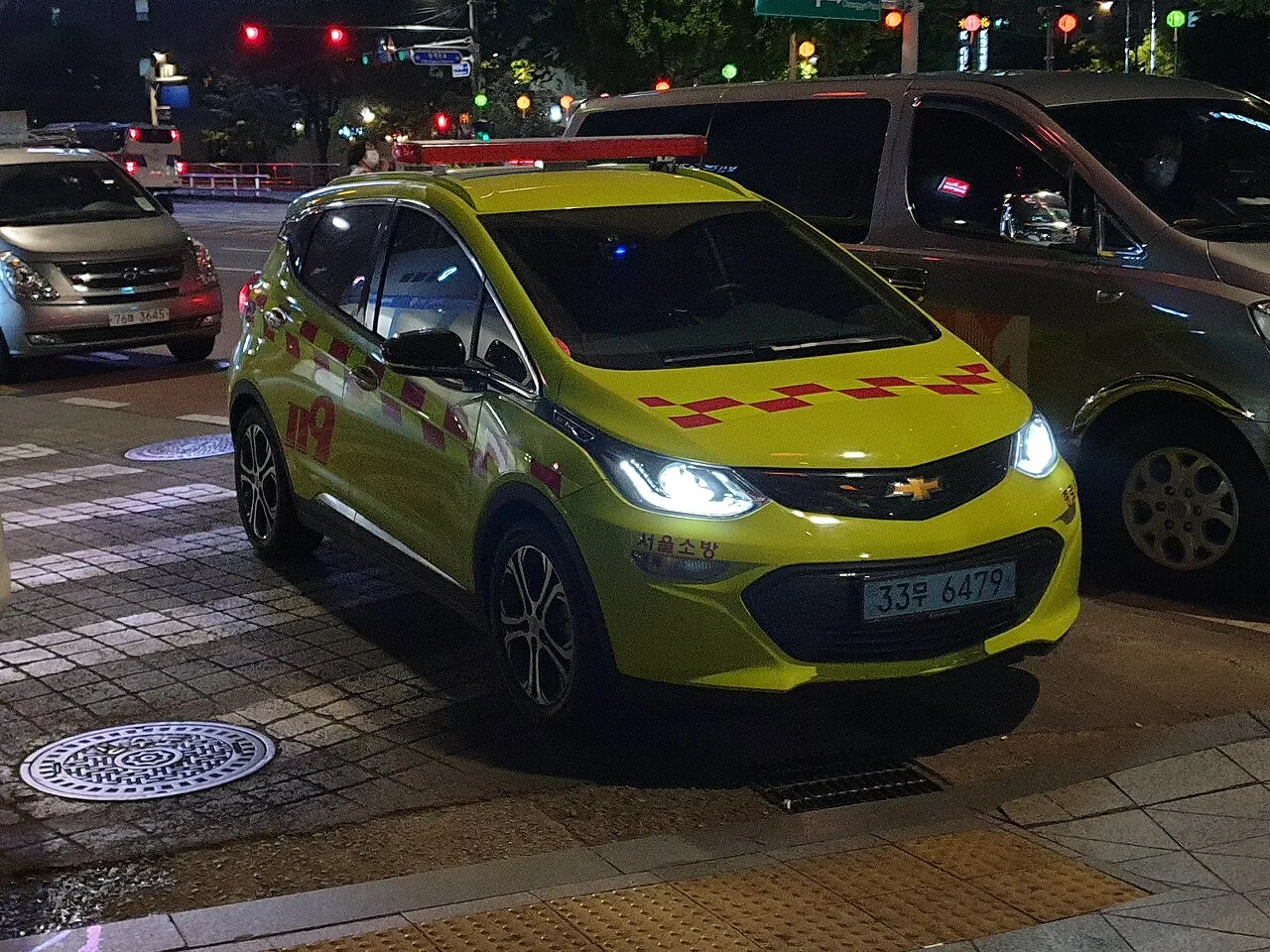
The NHTSA logs roughly 0.03 thermal events per 100 million miles driven in EVs. The same statistic for internal-combustion vehicles sits closer to 1.5. That's a fiftyfold gap, and it has been the dominant fact in EV safety for several years now, which is awkward, because the public conversation still moves in the opposite direction.
The reason the gap exists is not that EV batteries can't fail. They can, and when they do the failure mode is genuinely different from a fuel fire. The reason is that the architecture of an EV, a rigid battery floor, a low centre of gravity, no engine block in the crumple zone, a high-voltage system designed to isolate itself the instant an airbag fires, is a fundamentally different crash structure. The data has caught up with the engineering. The framing hasn't.
Key takeaways
- EVs ignite at 0.03 thermal events per 100 million miles, ICE vehicles run at 1.5, a fiftyfold difference.
- A battery pack bonded to the body shell reroutes side-impact energy around occupants instead of through them.
- LFP chemistry raises the thermal runaway threshold roughly 80°C higher than NMC, buying the BMS critical response time.
- Hyundai's 82,000-unit Kona recall shows that sound pack engineering means nothing if the BMS software watchdog fails.
- Every EV sold in Canada must clear UN R100 and UN R136, including Chinese imports entering under the 2026 quota.
Quick Answer: The Safety Numbers Favour EVs
The short version: on the metrics that matter, EVs win.
The NHTSA's thermal-event rate, roughly 0.03 per 100 million miles for EVs versus 1.5 for ICE vehicles, is the headline number, but it isn't the only one. Euro NCAP's five-star list is now dominated by EVs, and the reason is structural rather than incidental: a battery pack mounted in the floor drops the centre of gravity to around 45 centimetres, against 55 to 60 for an equivalent gasoline car. Rollovers, the single most dangerous crash mode for occupants, become harder to initiate.
Every EV sold in Canada also clears two international floor standards: UN R100 (electrical safety) and UN R136 (battery safety in crash), referenced through Transport Canada's adoption of FMVSS 305. That's true regardless of whether the vehicle was built in Ontario, Tennessee, Ulsan, or Shenzhen, the full 2026 regulatory breakdown covers how the gate applies to Chinese imports entering under the new quota.
The numbers are not subtle, and they have been public for three years.
Why the Floor Matters: Battery Pack as Structural Member
The single biggest engineering shift between an ICE car and an EV is what's under the floor. In a combustion vehicle, the floorpan is a stamped steel panel with a transmission tunnel running down the centre. In an EV, the floor IS the battery, a sealed pack, typically aluminum-cased, structurally bonded to the body shell. The pack isn't a passenger; it's a load-bearing member of the chassis.
This changes the crash physics. Side-impact energy in a conventional car has to be absorbed by the door beams and the B-pillar, then transmitted through the seat cross-members. In a skateboard-platform EV, the pack itself is a torsional box running the full length of the wheelbase. The load path reroutes around the occupants instead of through them.
Cell-to-pack and cell-to-body designs push this further. BYD's Blade architecture eliminates the module layer entirely, long, thin LFP cells bond directly into the pack housing, which in turn bonds to the body. Tesla's structural pack on the Model Y does the same with cylindrical 4680 cells. The result is a stiffer cabin floor than any ICE platform of comparable size, with the battery doing structural work it used to need separate steel to do. The pack architecture and its industry-wide consequences are covered in the Blade Battery's industry impact.
The low centre of gravity that comes with this packaging also kills rollover risk. A Model Y or an Atto 3 will not roll in scenarios that would put a comparable SUV on its roof, the centre of mass is sitting between the axles, low to the road, and any lateral force has to lift the entire pack to tip the vehicle. The structural advantage in a side impact is a consequence of where the heaviest component sits, not a marketing claim.
Gear worth having
As an Amazon Associate, ThinkEV earns a small commission from qualifying purchases — at no extra cost to you.

WeatherTech FloorLiner for Tesla Model 3
Deep-channel liners that trap every drop of slush and salt. The difference between a ruined interior and a showroom-fresh cabin after a Canadian winter.
As an Amazon Associate, ThinkEV earns from qualifying purchases — at no extra cost to you.
Thermal Runaway: What It Is, What Triggers It, How It's Contained
Battery fires are the part of EV safety the public actually worries about, so this section earns its space.
Thermal runaway is an exothermic chain reaction: a lithium-ion cell exceeds its safe temperature ceiling (typically around 80°C internal, though chemistry-dependent), the separator between anode and cathode breaks down, an internal short circuit forms, the short generates more heat, more cells fail, and the cascade can propagate through the pack. Once it starts, it's hard to stop, water cools the surroundings but doesn't reach the cell core, and the reaction supplies its own oxygen.
The engineering response operates at three levels. At the cell level, modern lithium-ion cells use ceramic-coated separators and electrolyte additives that raise the temperature at which an internal short can form. Sodium-ion chemistry is also entering the EV market through programs like CATL's collaboration with Li Auto, which shifts the thermal-runaway threshold higher still, a chemistry-level safety margin on top of the existing pack-level engineering. At the pack level, venting channels and intumescent barriers between cells or modules are designed to isolate a failing cell before its neighbours are dragged in. LFP chemistry, used by BYD, increasingly by Tesla on standard-range trims, and adopted across the Chinese fleet, runs the cell-failure temperature roughly 80°C higher than NMC, which buys the BMS time to act before cascade.
At the systems level, the Battery Management System monitors voltage, temperature, and state-of-charge cell-by-cell, several hundred times a second. It clips charging current at the safe upper voltage. It throttles power when a cell trends hot. It will refuse to charge a pack outside its operating temperature window, which is why your EV won't fast-charge at -25°C until the pack warms.
The failure mode worth understanding is the BMS itself. Hyundai recalled roughly 82,000 Kona Electric vehicles globally after a BMS flaw allowed cells to charge past their safe voltage ceiling, which is the exact condition that lets thermal runaway start. The pack-level engineering was sound. The software watchdog wasn't. The brand-by-brand fire incident data on Tesla, BYD and Hyundai tracks this and similar cases.
A modern EV battery has perhaps four independent layers of protection before a failing cell can take down a pack:
Gear worth having
As an Amazon Associate, ThinkEV earns a small commission from qualifying purchases — at no extra cost to you.

High-Visibility Reflective Vest (2-Pack)
Pull one on if you ever have to stand roadside at a dead charger after dark. Folds into the door pocket.
As an Amazon Associate, ThinkEV earns from qualifying purchases — at no extra cost to you.
- Cell-level: ceramic-coated separators and electrolyte additives raise the internal-short threshold
- Pack-level: venting channels and intumescent barriers isolate a failing cell from its neighbours
- Chemistry-level: LFP (and emerging sodium-ion) push the cascade temperature 80°C higher than NMC
- Software-level: the BMS clips voltage, throttles current, and refuses out-of-window charging hundreds of times a second
The base rate, 0.03 events per 100 million miles, is what those layers produce in aggregate.
Crash Structure Differences a Driver Should Actually Know
There is no engine block. In a frontal impact, an ICE car's powertrain is a roughly 200-kilogram mass that intrudes into the firewall, a known crash-engineering problem solved with carefully tuned subframe rails and engine-cradle drop paths. An EV doesn't have that mass to manage, so the crumple zone can be longer and more progressive. Many EVs use the freed-up space for a frunk, which doubles as additional impact-absorbing volume.
Tesla has openly stated that future vehicles will use batteries that double as structure, making the chassis extra stiff while improving efficiency, safety and cost, and the refreshed Model Y is already shipping the first volume application of that structural-pack logic. The same approach, with varying levels of integration, applies across the rest of the industry.
The high-voltage system disconnects itself in a crash. Every production EV in Canada uses a pyrofuse, a small explosive charge that severs the main battery contactor, triggered by the same crash sensors that fire the airbags. The full 400 to 800 volts of DC running through the orange-jacketed bus bars is dead within milliseconds of impact. This is also why first responders don't get electrocuted reaching into a crashed Model Y, even though the public assumption is that they should.
Active safety adds another layer. Automatic emergency braking reduces rear-end collisions by roughly 50%, and Canadian fleet data shows AEB-equipped EVs have a 35% lower front-impact claim rate. This is not unique to EVs, AEB is increasingly standard on ICE vehicles too, but EVs reached high AEB-fitment rates faster, and the Canadian insurance claim-rate data on EVs versus ICE reflects that gap.
The combination, longer crumple, no engine intrusion, instant electrical isolation, near-universal AEB, is why EV crash test scores cluster at the top of the rating scales. The structure is built for the missing engine, not despite it.
Gear worth having
As an Amazon Associate, ThinkEV earns a small commission from qualifying purchases — at no extra cost to you.
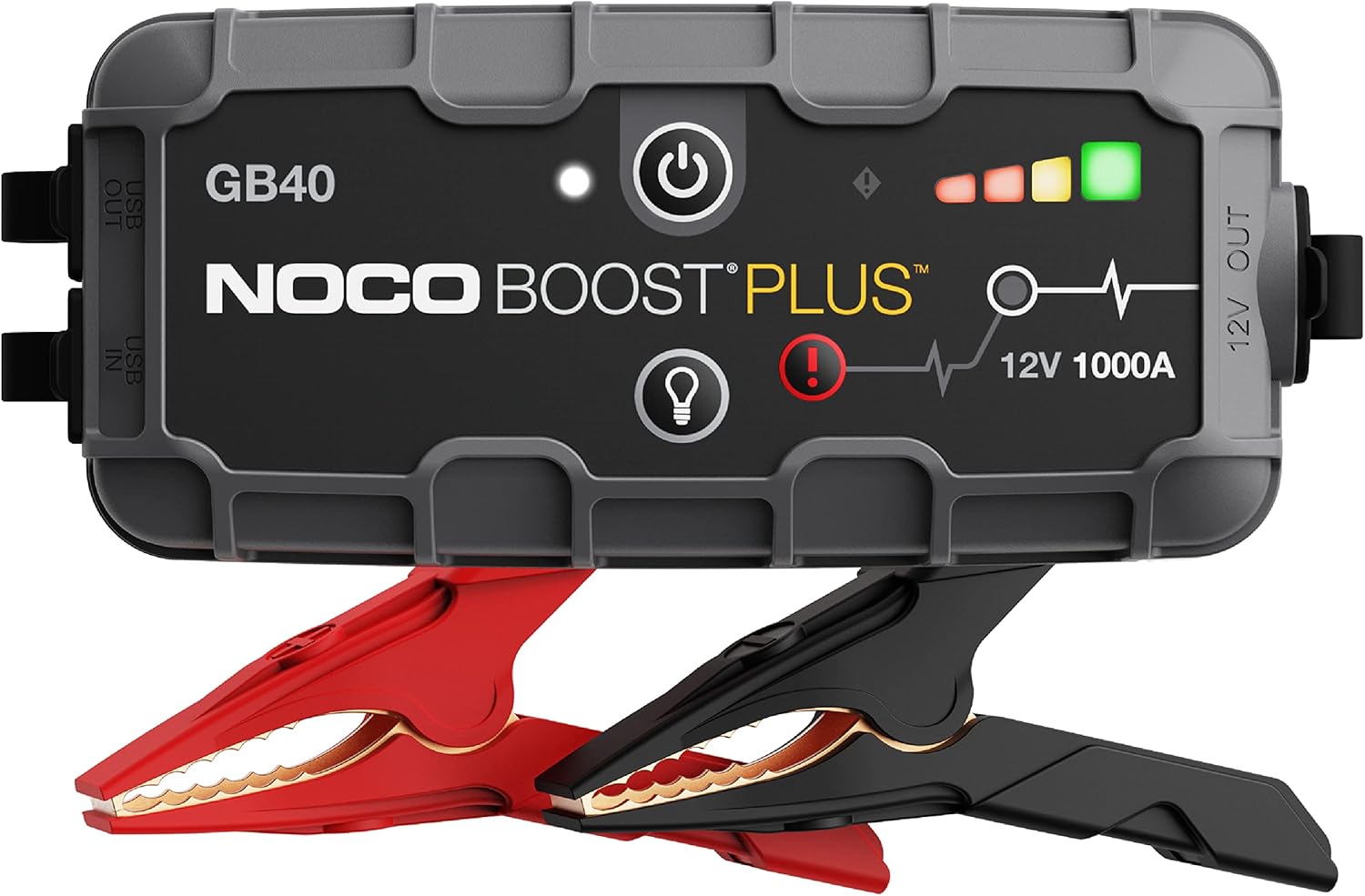
NOCO Boost Plus GB40 Jump Starter
A 1000A lithium jump starter that fits in your glovebox and works on any 12V battery. Your insurance against a dead 12V in a parking lot.
As an Amazon Associate, ThinkEV earns from qualifying purchases — at no extra cost to you.
After a Collision: What Changes for Responders and Owners
The differences that matter post-crash are real and specific.
High-voltage cabling is jacketed in orange and carries 400 to 800 volts DC. Even after the pyrofuse fires, residual capacitance in the inverter can hold a charge for several minutes. First responders working from current Transport Canada and provincial EMS protocols treat any visible orange cable as live until the vehicle's de-energization procedure is confirmed, which is the right default.
Delayed thermal events are the other meaningful change. A pack that has taken impact damage, even damage that didn't ignite at the time, can re-initiate thermal runaway hours or days later as a damaged cell heats up under load or sun exposure. Most manufacturers and most provincial responders now specify that a crashed EV should sit outside enclosed structures for 24 to 72 hours, in a quarantine zone, until the pack temperature has been confirmed stable. This is genuinely different from ICE protocol, and it's the single piece of post-collision behaviour every EV owner should know.
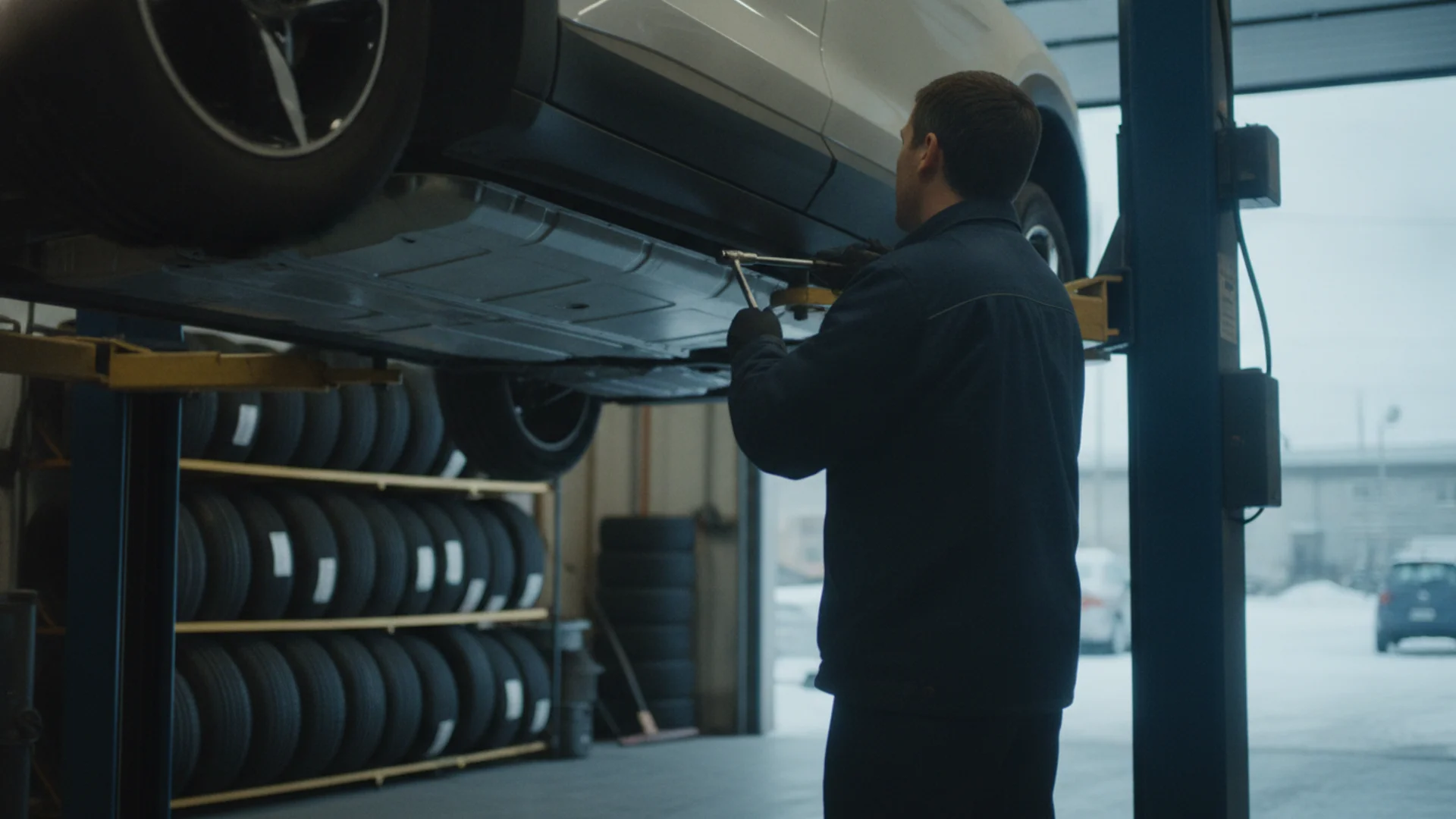
Repair is the other piece. An EV pack is not a fuel tank, it cannot be patched, drained, or swapped at a general body shop. Certified EV technicians, OEM-approved procedures, and (in many cases) factory-supplied replacement modules are the only legitimate path. Improper reassembly compromises both the BMS calibration and the pack's structural role in the chassis. Canadian insurers are starting to write this into policy wording. Read your policy, an at-fault repair outside the OEM network can void coverage on subsequent claims.
The protocol is more demanding than for an ICE car. The frequency of incidents that invoke it is lower. Both can be true.
Gear worth having
As an Amazon Associate, ThinkEV earns a small commission from qualifying purchases — at no extra cost to you.

Amazon Basics Seat Belt Cutter and Window Hammer
The 10-dollar tool you hope to never use: cuts a jammed belt and shatters a window in an emergency. Mount it within reach.
As an Amazon Associate, ThinkEV earns from qualifying purchases — at no extra cost to you.
The Canadian Context: Standards, Climate, and What to Watch
Transport Canada adopts FMVSS 305 (post-crash electrical safety) and UN R100/R136 as the minimum gate. Every EV sold in Canada clears these, including Chinese-origin models entering under the 6.1% tariff and 49,000-unit quota that took effect in January 2026. The first round of Chinese EV import permits issued by Transport Canada covers which manufacturers have already cleared certification.
Cold-weather BMS behaviour is a range issue, not a safety issue. At -20°C, a typical EV will show 30–40% less usable capacity until the pack warms; the thermal management system protects the cells from damage, but the driver sees fewer kilometres. The pack is fine. The chemistry is just slower in the cold, and this gets confused with safety risk only because the public conversation has not caught up with the distinction.
The number to watch in late 2026 is the first full year of Chinese-origin EV crash data from European NCAP, the sample size is finally large enough to compare brand-level safety performance in the real-world fleet, not just in regulatory testing. If the EuroNCAP scores hold up in road data, the "Chinese EVs are unsafe" framing collapses entirely.
EVs crash less often, burn less often, and protect occupants better in the impacts that do happen. The remaining gap is responder training: as of late 2026, only a minority of Canadian municipal fire departments have current EV de-energization and quarantine certification on staff, a number worth tracking through 2027, because it's the one piece of this safety story that infrastructure has to fix, not engineering.
Gear worth having
As an Amazon Associate, ThinkEV earns a small commission from qualifying purchases — at no extra cost to you.

Roadside Emergency Safety Kit
Jumper cables, a portable air compressor, tow strap, first aid, and more for when something goes wrong between chargers. Canadian winters do not forgive the unprepared.
As an Amazon Associate, ThinkEV earns from qualifying purchases — at no extra cost to you.

Founder & Chief Editor
Vlad Pereira is the founder and chief editor of ThinkEV.ca, the Canadian electric-vehicle publication he writes and edits from Courtenay, British Columbia. He covers EV pricing, federal and provincial rebates, charging costs, and the Chinese manufacturers now entering Canada, from the buyer's side rather than the press-fleet side. ThinkEV is a venture of Vlad Pereira Online; his writing on health, income and the long game lives at vladpereira.com.
Frequently asked questions
Does a thermal runaway fire behave differently from a gas fire?
Will my EV actually refuse to charge in a Canadian winter?
Are Chinese EVs held to the same crash standards as North American ones?
What actually failed in the Hyundai Kona recall, the battery or the software?
Does the heavy battery pack make rollover crashes worse?
More EV & road-trip finds
Affordable upgrades worth a look — tap any to check the price on Amazon.
 ★ 2,941
Microfiber Cleaning Cloths (Multi-Pack)
View on Amazon ★ 55
★ 55LED Car Door Logo Projector Light
View on Amazon ★ 546
★ 546Funny Headrest Face Covers (2-Pack)
View on Amazon ★ 27,769
Car Cup Holder Coasters (4-Pack)
View on Amazon ★ 721
★ 72145W USB-C Fast Car Charger
View on Amazon ★ 119
★ 119Foldable Waterproof Trunk Organizer
View on Amazon ★ 392
★ 392Large Cup Holder Adapter (32-40oz)
View on Amazon ★ 96,686
PULIDIKI Car Cleaning Gel (Detailing Putty)
View on AmazonRead, Plan, Then Stay Current
Explore our expert articles to understand incentives and ownership costs, use the map to pressure-test charging reality, then subscribe so new EV coverage comes straight to you.
Continue Reading

Are EV Batteries Safe in Floods and Deep Water?
Chinese Court Orders Blogger to Pay BYD $294,000
EV Fires vs Gas Cars: What the Safety Data Shows
Why Cold Weather Cuts EV Range, the Real Reasons
Are Canada's Repair Shops Ready for Chinese EVs?