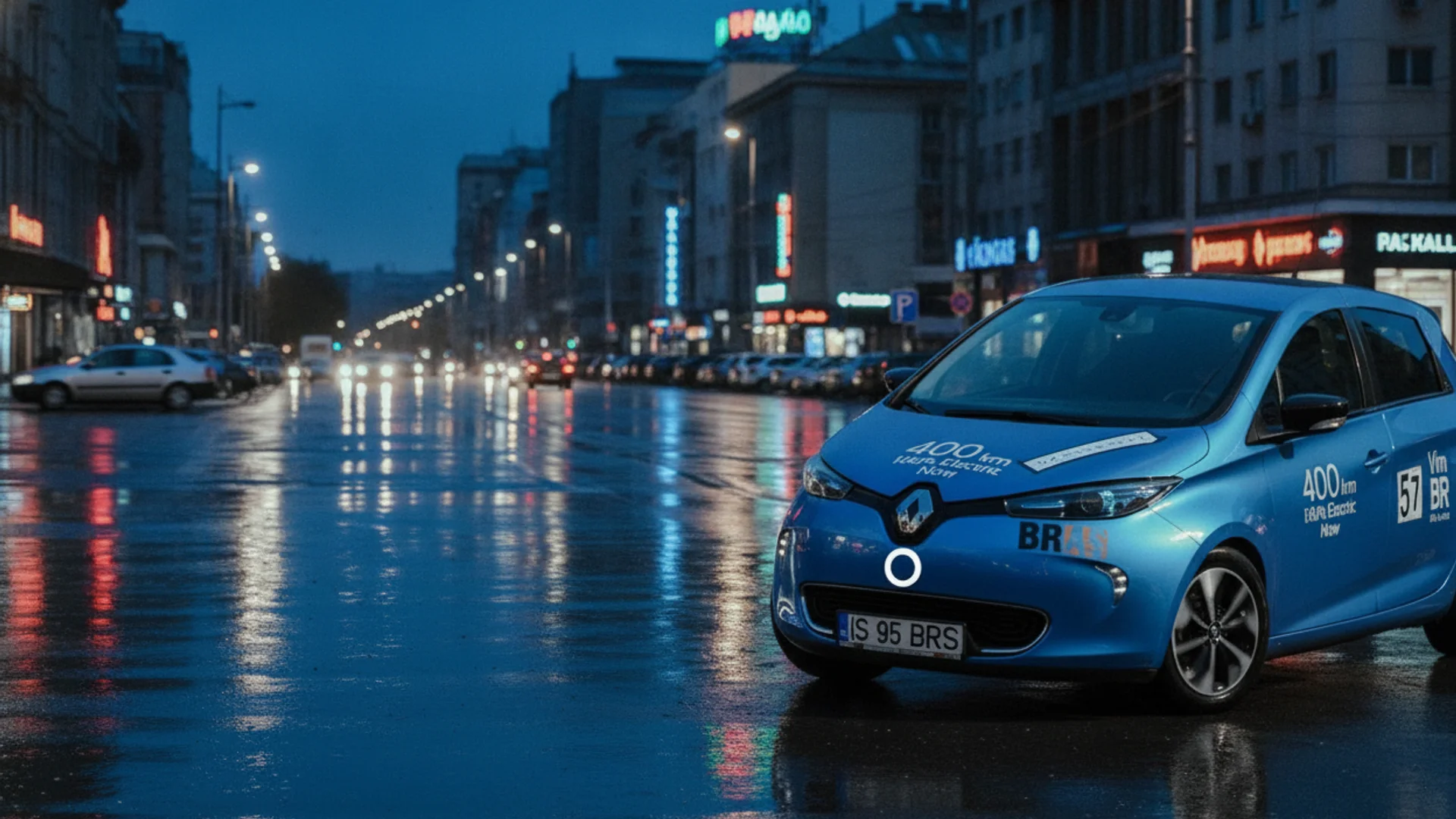
The sticker on a three-year-old Bolt EUV says $18,000. The federal EVAP rebate says new vehicles only. That gap, between the rebate a buyer expects and the rebate the program actually pays on a used EV, is the whole point of this guide, and the answer is smaller than most people want it to be.
Federal: zero. Provincial: one clear yes, one non-profit workaround, and a long list of nos. Cross-border: an edge case worth naming and mostly not worth chasing. That is the map. The rest is knowing which lines on it lead somewhere.
Key takeaways
- Federal EVAP pays $5,000 on new EVs but explicitly $0 on used, by design, not oversight.
- Yukon is Canada's only jurisdiction where used EVs qualify for rebates on the same terms as new ones.
- Ontario's Plug'n Drive non-profit pays $1,000 on used BEVs from participating dealers, the largest used-EV incentive most Ontario buyers will ever see.
- California's MyFirstEV program stacks to over $5,000 on used EVs, a benchmark Canada's programs don't come close to matching.
- The U.S. Section 25E credit pays up to $4,000 on used EVs, but Canadian residents without U.S. tax liability can't access it.
Quick Answer: The Federal EVAP Does Not Cover Used EVs
The Electric Vehicle Availability Program pays $5,000 on a qualifying new BEV and $2,500 on a qualifying new PHEV, applied at point of sale by the participating dealer. It pays nothing on a used one. There is no federal used-EV rebate in Canada as of August 2026, and the program's own eligibility criteria make that explicit.
The program went live on February 16, 2026, replacing the retired iZEV framework, and Transport Canada positioned it as a new-vehicle affordability lever rather than a broad EV-purchase subsidy. It runs to March 31, 2031 or earlier if funding is exhausted, backed by $2.275 billion over five years. A used vehicle, certified pre-owned, private-sale, dealer-stock, all of it, sits outside the program by design.
This is not an oversight. Ottawa modelled EVAP around lowering the price of new BEVs to internal-combustion parity, on the theory that a healthier new market feeds a healthier used one three years downstream. The strongest objection to that design choice is straightforward: waiting three years for lease returns to trickle down does nothing for the household priced out of a new EV today, and the affordability program that skips the affordable half of the market is the one that fails the buyer it was named for. The rebuttal Ottawa has offered in committee is that a used-EV rebate risks inflating used prices rather than lowering them, dealers absorb the subsidy into the sticker within a quarter, and the buyer nets zero. That is a real risk in a supply-constrained market, and it is the argument keeping the used line at zero. What matters for a buyer signing paperwork this month is that the federal line on a used EV is zero, and no amount of dealer optimism changes it.
Gear worth having
As an Amazon Associate, ThinkEV earns a small commission from qualifying purchases — at no extra cost to you.

Magnetic EV Charger Plug Cover
A magnetic cap that keeps rain, road salt, and grit out of your home charger handle between sessions.
As an Amazon Associate, ThinkEV earns from qualifying purchases — at no extra cost to you.
What Provincial Programs Actually Pay Out on Used EVs
Below the federal layer, the map goes patchy.
Yukon is the clean exception. The Good Energy Program covers both new and used EVs on the same terms, the only Canadian jurisdiction that treats a used electric vehicle as rebate-eligible in the same category as a new one. Yukon's willingness to pay on both new and used is a deliberate design choice that no other province has copied. For a Whitehorse buyer, the used-EV rebate is real. For everyone south of 60, Yukon is a data point, not an option.
Ontario has no provincial rebate at all, new or used. The provincial program was cancelled in 2018 and has not returned. What Ontario does have is Plug'n Drive, a non-profit funded by a mix of utilities and federal grants, which pays $1,000 on a used fully electric vehicle purchased from a participating dealer. It is not a government program, the dealer list is finite, and PHEVs do not qualify. It is also the largest single used-EV incentive most Ontario buyers will ever see, which is either a useful workaround or a comment on the state of the provincial file, depending on your mood. A second Plug'n Drive top-up of roughly $1,000 stacks for income-qualified buyers who scrap an older gas vehicle, pushing the ceiling toward $2,000 for the narrow slice of Ontario buyers who qualify on both counts.
British Columbia's CleanBC Go Electric program pays up to $4,000 on a qualifying new BEV and nothing on a used one. The province's used-EV framing sits inside the broader affordability picture rather than inside a dedicated rebate line. Municipal and utility top-ups exist in pockets, but the provincial rebate itself is new-vehicle only.
Quebec wound down Roulez vert on new EVs at the end of 2026's first quarter and never operated a used-EV equivalent. Nova Scotia, New Brunswick, PEI, Newfoundland, and Manitoba each run new-vehicle programs of varying generosity; none pay out on used. Alberta and Saskatchewan have no provincial EV rebate of any kind.
The pattern is uniform enough to state plainly: outside Yukon and Ontario's non-profit workaround, provincial and territorial governments in Canada do not pay rebates on used EVs in 2026. If a buyer is being told otherwise on a dealer lot, the number they are quoting is a dealer discount dressed up in rebate language, and it is worth reading the pre-signing checks that separate a used EV deal from a debt before treating it as one.
The U.S. Section 25E Credit: $4,000 for Cross-Border Context
South of the border, the picture is very different, and it is worth naming because a small number of Canadian buyers have U.S. tax exposure that makes it relevant.
The IRS Section 25E used clean vehicle credit pays up to $4,000, calculated as 30% of the sale price, on a used EV purchased from a licensed dealer. The vehicle must have a sale price under $25,000, must be at least two model years old, and must be the buyer's first Section 25E claim. Income caps are firm: $75,000 modified adjusted gross income for a single filer, $150,000 for joint. The credit is now delivered at point of sale, so eligible buyers get the price cut on the lot rather than waiting for a tax return.
For a Canadian resident with no U.S. tax liability, Section 25E is inaccessible, the credit reduces U.S. federal income tax owed, and a return you do not file is not a return the credit lands against. For a dual citizen, a green-card holder living in Canada, or a cross-border commuter with a U.S. filing obligation, the credit is theoretically available on a vehicle purchased in the U.S. from a U.S. dealer, subject to import rules that will erase most of the savings. It is an edge case, not a strategy.
Gear worth having
As an Amazon Associate, ThinkEV earns a small commission from qualifying purchases — at no extra cost to you.

TP-Link Kasa Smart Plug with Energy Monitoring
Track exactly how much electricity your Level 1 charger uses and schedule it for off-peak hours. Know your real cost per kWh.
As an Amazon Associate, ThinkEV earns from qualifying purchases — at no extra cost to you.
California's picture is broader and gives useful context for what a functioning used-EV rebate stack looks like. The state's MyFirstEV program is now live, providing an up-front $3,500 discount for purchases of new EVs, and $1,750 for used ones. The caps are tight, new EVs must carry an MSRP of $50,000 or less, while secondhand cars can't go for more than $25,000. One quirk worth naming: these caps don't apply to California-headquartered EV companies, so Lucid and Rivian are exempt, a piece of industrial policy tucked inside a consumer rebate that Canada's EVAP does not attempt in either direction. Stacked with utility rebates that can add $1,000 to $4,000 for income-qualified buyers, the California used-EV total occasionally clears $5,000. A Canadian buyer reading that number should read it as a benchmark for what a serious used-EV incentive looks like, not as something available in Kelowna.
Gear worth having
As an Amazon Associate, ThinkEV earns a small commission from qualifying purchases — at no extra cost to you.

Grizzl-E Classic Level 2 EV Charger (40A)
Canadian-made and rated for minus 40C winters. 40A / 9.6 kW, NEMA 14-50, indoor/outdoor, 24-ft cable. The charger built for Canadian weather.
As an Amazon Associate, ThinkEV earns from qualifying purchases — at no extra cost to you.
How to Stack What Is Available in Canada
Assembling the realistic stack takes about a minute per province.
- Federal EVAP: $0. Confirmed by the program's new-vehicle-only eligibility criteria on Transport Canada's own page.
- Provincial rebate: Yukon yes, on the same terms as a new vehicle. Everywhere else, $0 direct from the province on a used EV.
- Non-profit and utility layer: Ontario's Plug'n Drive pays $1,000 on a used BEV from a participating dealer. Some municipal utilities in BC and Ontario run small charger-purchase or off-peak-charging rebates in the $250 to $500 range that indirectly offset the cost of ownership, though they are not vehicle-purchase rebates.
- Dealer incentives and CPO financing: manufacturer-certified pre-owned programs from Hyundai, Kia, Nissan, and (through franchised dealers) GM often include subvented financing rates and extended-warranty add-ons that function as effective price cuts. These are not rebates and should not be counted as such, but they change the total-cost math and are the real substitute for the rebate that does not exist.
For most Canadians buying a used EV in 2026, the total realistic government-adjacent stack is $0 to $1,000. A Yukon buyer gets meaningfully more. An Ontario buyer at a Plug'n Drive-participating dealer gets $1,000. Everyone else budgets zero and treats any dealer-quoted "rebate" as a discount, which it is.
The one place this math changes materially is on cross-shopping between a used EV and a new one that qualifies for the full $5,000 EVAP. On a Bolt EUV at $38,998 new or $22,000 used, the $5,000 rebate on the new car narrows the price gap to something a lot of buyers had not modelled. The most affordable new EVs on the Canadian market in 2026 are worth pricing against the used inventory before assuming used is automatically the cheaper path.
Gear worth having
As an Amazon Associate, ThinkEV earns a small commission from qualifying purchases — at no extra cost to you.

PULIDIKI Car Cleaning Gel (Detailing Putty)
Press it into vents, buttons, and seams and it lifts out dust you did not know was there. Weirdly satisfying, genuinely useful.
As an Amazon Associate, ThinkEV earns from qualifying purchases — at no extra cost to you.
Whether the Gap Will Close, and When to Expect It
Used-EV rebates were excluded from EVAP deliberately, not accidentally. NRCan's stated priority on rollout was lowering the cost of new BEVs to a point where price stopped being the primary purchase objection, on the theory that used-market supply and prices would correct on their own as new-vehicle sales scaled and lease returns arrived in volume from 2027 onward.
That theory has held partially. New-vehicle prices came down through 2026 as the tariff cut on Chinese EVs opened a lower price tier, but used-EV registrations still surged, inventory doubled through 2025 and average transaction prices dropped fast enough that the affordability gap the program was designed to solve started resolving itself from the used side. The political pressure to add a used-EV rebate has been building in provincial submissions to Transport Canada and in the Standing Committee on Environment's spring 2026 hearings.
The realistic policy window is the EVAP mid-term program review, scheduled inside the 2027 fiscal year. That is the earliest structured opportunity to broaden eligibility without opening the program design entirely. Anything before that would require a supplementary funding decision, which is possible but not indicated in Ottawa's current fiscal framing. Anything after 2028 runs into the program's own tapering schedule, where per-vehicle rebate amounts are already scheduled to decline toward $2,000 by 2030, adding used vehicles into a shrinking pool would produce a rebate too small to move behaviour.
Two dated checkpoints are worth marking on a calendar. First: whether the Fall Economic Statement in November 2026 references a used-EV supplementary inside the EVAP envelope, if it does not, the mid-term review is the next real window. Second: whether the average asking price on a three-year-old Model 3 in Canadian dealer inventory drops below $28,000 before Q1 2027. That would confirm the used-price collapse Ottawa is waiting for and remove the strongest argument against a used-EV rebate, because the affordability problem the program was designed to solve would already be solving itself without one. A collapse severe enough to push used-inventory sitting-time past 90 days on dealer lots would produce industry lobbying and provincial-minister letters loud enough to force a supplementary rather than waiting for the mid-term. Absent both signals, the used-EV rebate line stays at zero through at least the second half of 2027.
For a buyer this month, the honest budget on a used EV federal rebate is $0. Yukon and Plug'n Drive are the two lines that are not zero. Everything else, the dealer discount presented as a rebate, the vague reference to "government programs" on a listing, the utility rebate that turns out to apply to the charger and not the car, is a footnote, and treating it as one saves the buyer from a negotiation built on a number that was never there.
Gear worth having
As an Amazon Associate, ThinkEV earns a small commission from qualifying purchases — at no extra cost to you.

WixGear Magnetic Air Vent Phone Mount (2-Pack)
A magnet strong enough that your phone never flinches over potholes or rail crossings. Two in the box, one for each car.
As an Amazon Associate, ThinkEV earns from qualifying purchases — at no extra cost to you.

Founder & Chief Editor
Vlad Pereira is the founder and chief editor of ThinkEV.ca, the Canadian electric-vehicle publication he writes and edits from Courtenay, British Columbia. He covers EV pricing, federal and provincial rebates, charging costs, and the Chinese manufacturers now entering Canada, from the buyer's side rather than the press-fleet side. ThinkEV is a venture of Vlad Pereira Online; his writing on health, income and the long game lives at vladpereira.com.
Frequently asked questions
Can I stack Plug'n Drive with Ontario's provincial rebate?
Why hasn't Ottawa extended EVAP to used vehicles?
Does a certified pre-owned EV from a dealer qualify for anything federal?
Which province actually pays a rebate on used EVs in 2026?
Is the U.S. Section 25E credit ever worth pursuing for Canadians?
More EV & road-trip finds
Affordable upgrades worth a look — tap any to check the price on Amazon.
 ★ 546
★ 546Funny Headrest Face Covers (2-Pack)
View on Amazon ★ 12,396
K KNODEL Car Trash Can with Lid
View on Amazon ★ 297
★ 297360-Degree One-Hand Dashboard Phone Mount
View on Amazon ★ 119
★ 119Foldable Waterproof Trunk Organizer
View on Amazon ★ 392
★ 392Large Cup Holder Adapter (32-40oz)
View on Amazon ★ 47,507
HOMEXCEL Microfiber Cloths (12-Pack)
View on Amazon ★ 419
★ 419RGB Car Interior LED Strip Light
View on Amazon ★ 4,055
6-Speed Manual Shift Knob Display
View on AmazonRead, Plan, Then Stay Current
Explore our expert articles to understand incentives and ownership costs, use the map to pressure-test charging reality, then subscribe so new EV coverage comes straight to you.
Continue Reading

New or Used EV: Which Is the Smarter Buy in 2026?
How to Test-Drive an EV: What Gas-Car Buyers Miss
How to Buy a Used EV: What to Check Before You Sign
Do Teslas Qualify for Canada's EV Rebates in 2026?
Chinese EV Resale Value in Canada: What to Expect