Key takeaways
- Doug Ford called Chinese EVs "spy vehicles" and has pushed for a Canada-wide boycott, but no documented case of a BYD or other Chinese consumer vehicle being used for surveillance in any Western country has ever been confirmed.
- China's National Intelligence Law (2017) does legally obligate Chinese companies to cooperate with state intelligence services, and that is a legitimate concern worth taking seriously, not dismissing as xenophobia.
- Every modern connected vehicle, Tesla, GM, Ford, Hyundai, collects comparable telemetry data. The question is who controls the servers, not whether the car spies on you.
- The EU investigated and chose tariffs over a ban. Australia allows BYD freely and BYD is now the top-selling EV brand there. Security experts specifically recommend restricting Chinese vehicles at military and government installations, not a blanket consumer ban.
- BYD's prices sit between $25,000 and $45,000, undercutting almost every comparable EV in Canada even before any rebate. The Blade Battery's safety record is the best in the industry.
- 53% of Canadians favor lower tariffs on Chinese EVs specifically for affordability reasons. The Conservative plan is the opposite: scrap the quota, ban Chinese vehicle software entirely.
The headline practically writes itself. A provincial premier calls a class of electric vehicles "spy vehicles." A national conversation erupts. Half the country nods along, half rolls their eyes, and the Chinese EV sitting in a dealership showroom in Mississauga just keeps getting cheaper while everyone argues about it.
Both sides of the Chinese EV debate in Canada are partially right. Both sides are being dishonest about what they are actually arguing. And the people who lose are Canadian drivers who just want an affordable car they can plug in at night.
I have been covering the EV industry long enough to spot when a technical concern gets swallowed whole by a political narrative. I have also been covering it long enough to know that when a legitimate national security researcher raises a flag, you do not wave it away because the other side of the debate happens to be inconvenient for your preferred political position.
So let us go through it. All of it. The law, the data, the cars, the politics, the evidence from other countries, and the $28,000 question that everyone is dancing around.
The Claim: Chinese EVs Are Spy Vehicles
The claim did not originate with Doug Ford. It has been circulating in American defense and intelligence circles for years, gaining particular traction after the U.S. Commerce Department launched an investigation into connected vehicle technology from China in early 2024. The concern, stated plainly, is this: modern electric vehicles are rolling data centers. They carry cameras, microphones, GPS systems, proximity sensors, and cellular modems. They know where you go, how fast you drive, what you say in the cabin, and increasingly, what they can see outside the windows.
If the company that built that vehicle is legally required to hand its data to a foreign government on request, and if that company maintains control over the servers where that data is stored, then the vehicle is not just transportation. It is a potential intelligence asset operating on foreign soil.
That is the claim. It is not inherently absurd. It deserves a serious answer rather than a political dismissal.
The counterargument, and it is substantial, is that this description applies to virtually every connected vehicle on the road today, regardless of national origin. The question then becomes whether Chinese-origin data pipelines represent a meaningfully higher risk than American, Korean, or German ones. And that is where the analysis gets complicated and the political theatre tends to drown it out.
What Doug Ford Actually Said
In early 2026, Ontario Premier Doug Ford went further than calling for caution. He called Chinese EVs "spy vehicles" and urged a Canada-wide boycott. He framed it in terms of national security, invoking concerns about data collection and Chinese state access to that data.
Ford has been one of the loudest voices on the file in Canada, but he is not alone. The federal Conservative Party has floated a policy that would go even further: scrap the existing import quota framework and ban Chinese vehicle software entirely. This is a harder line than anything the EU or Australia has taken, and significantly harder than the approach of most security researchers who have looked at the specific risk surface.
The word "spy" carries implications the evidence does not fully support. Spy implies active, targeted surveillance of individual Canadians. The actual concern, which is real and documented, is more about bulk data collection, potential fleet-level telemetry aggregation, and the theoretical ability of a foreign state to compel a company to produce data about vehicle movements, locations, and cabin recordings.
These are not the same thing. The first is a Le Carré novel. The second is a legitimate policy debate about data sovereignty and what standards we hold connected-device manufacturers to.
Ford is not wrong that the concern exists. He is, arguably, inflating it in ways that obscure what a proportionate response would actually look like, and what it would cost Canadian drivers who are trying to afford an EV on a real budget.
What China's National Intelligence Law Actually Says
This part of the debate gets lost almost every time it is reported.
China enacted its National Intelligence Law in 2017. Article 7 of that law states that any organization or citizen shall support, assist, and cooperate with state intelligence work in accordance with law. Article 14 gives intelligence agencies the authority to ask for that cooperation from any individual or organization. The law applies to Chinese companies and Chinese citizens regardless of where in the world they operate.
This is not a hypothetical. It is not Western intelligence agency speculation. It is the text of Chinese law, and it means that BYD, SAIC, Geely, NIO, and every other Chinese automaker is legally obligated to cooperate with Chinese state intelligence services if asked. They cannot refuse without violating Chinese law. They cannot acknowledge that they have been asked without risking the same.
This is structurally different from the situation facing American, European, or Korean automakers. When the U.S. government wants data from Tesla, it issues a warrant through a legal system that allows Tesla to challenge the request, notify users in many circumstances, and refuse requests that exceed legal authority. The process is imperfect and subject to its own abuses, the history of NSA bulk collection programs makes that abundantly clear, but it has procedural checks that China's system lacks.
The concern is real. Security researchers are not making it up. Intelligence analysts at CSIS and its allied agencies take it seriously. The question is not whether the risk is zero. It is whether the risk justifies the specific policies being proposed, and whether those policies are the most effective way to address it.
There are also important questions of proportion and evidence. China's National Intelligence Law creates theoretical access. It does not prove that BYD is transmitting real-time cabin audio to Beijing. No intelligence agency in a Western country has publicly presented evidence that a consumer BYD vehicle has been used to conduct surveillance of a private citizen. The absence of evidence is not proof of innocence, these things can be difficult to detect. But it matters to the policy question.
What ALL Connected Cars Actually Collect
Politicians rarely mention this:
A 2023 Mozilla Foundation study looked at the data collection practices of 25 major automakers, including Tesla, GM, Ford, Toyota, Hyundai, and Volkswagen. The findings were damning across the board. Not damning for Chinese automakers specifically, damning for the entire connected vehicle industry.
Tesla collects camera footage from inside and outside the vehicle, location data, driving behavior, and in some configurations, voice commands. GM has been caught sharing detailed driving behavior data with insurance companies. Hyundai and Kia collect location data, speed, acceleration, and braking patterns. Ford's connected services gather similar telemetry. Volkswagen had a significant data breach in 2021 affecting millions of customers.
Every modern connected vehicle with a cellular modem is, to some degree, a surveillance device. It knows where you park at night, which tells an insurance company, a data broker, or a curious government whether you are having an affair, attending a political meeting, or frequenting a medical clinic. It knows how hard you brake, which tells an insurer whether to raise your rates. It hears what happens in the cabin, in some vehicles, always-on microphones for voice assistants mean continuous audio sampling.
The difference with Chinese EVs is not that they collect data. It is who controls the servers where that data lives, and what legal obligations govern access to it.
Your Hyundai Ioniq 6 sends data to servers in South Korea and potentially the United States. Your Chevrolet Equinox EV sends data to GM's servers, which are subject to American legal process. Your BYD Atto 3 sends data to servers in China, where the legal framework for government access is the 2017 National Intelligence Law with no independent judicial review.
That distinction is real. Your Chinese-made smartphone collects comparable data and operates under comparable legal constraints. There is an excellent chance you are reading this on one: nearly every major phone brand manufactures in China, and many of the most popular budget and mid-range handsets are Chinese-branded. The risk calculus does not begin and end with the vehicle.
The conversation we should be having is about data sovereignty standards for all connected devices, enforced through technical requirements about where data is stored and who can access it. That is a harder policy problem than "ban the Chinese cars." It is also a more honest one.
The Real Security Concern Versus the Political Theatre
Let us be precise about what security experts actually recommend, because it gets lost in the noise.
Reputable security researchers and intelligence analysts who have looked at the Chinese EV data question tend to converge on a specific set of concerns: government and military fleets, proximity to sensitive installations, and the use of Chinese-manufactured cellular modems in vehicles that regularly operate near defense sites.
Poland banned Chinese-manufactured vehicles and devices from military bases. This is the policy that reflects the serious end of the security community's concern. It is targeted, proportionate, and addresses the actual risk surface, which is state-level intelligence collection about military and government activity, not whether a Scarborough accountant is being surveilled while commuting to Finch station.
What the security community is much more divided on, and what the evidence does not clearly support, is a blanket consumer ban. The argument for a blanket ban typically rests on the theoretical risk that a Chinese automaker could activate surveillance capabilities on consumer vehicles to build aggregate intelligence about civilian populations. This is possible in principle. It requires the automaker to take an action that would be both illegal under their operating agreements and detectable by security researchers monitoring outbound traffic from vehicles.
The gap between "theoretically possible" and "actively occurring" matters for policy. A government that bans Chinese EVs from consumer sale on a theoretical risk that it cannot demonstrate is doing something that looks less like security policy and more like industrial policy with security rhetoric attached.
And that is where the political theatre becomes impossible to ignore. Canada imposed 100% tariffs on Chinese EVs in the fall of 2024, explicitly following the American lead, an act that had everything to do with protecting North American auto manufacturing and trade relationships with the United States, and was then wrapped in security language to make it more palatable. Doug Ford, whose political base is concentrated in manufacturing communities across Ontario that directly compete with Chinese EV production, calling Chinese EVs "spy vehicles" is not a coincidence.
Gear worth having
As an Amazon Associate, ThinkEV earns a small commission from qualifying purchases — at no extra cost to you.

VIOFO A229 Pro 4K Dash Cam
4K front plus 2K rear with parking mode and GPS. Your silent witness for insurance claims, with always-on sentry recording while parked.
As an Amazon Associate, ThinkEV earns from qualifying purchases — at no extra cost to you.
None of this means the security concern is fabricated. It means the security concern is being used to advance an argument that its proponents would be making regardless of the security concern. Honest analysis requires holding both things simultaneously.
What Other Countries Actually Decided
The global policy picture on Chinese EVs is instructive, because it shows that there is no consensus that a ban is the right answer, and in some of the most relevant comparisons, the opposite choice produced strong results.
The European Union conducted a serious anti-subsidy investigation into Chinese EVs throughout 2024. The investigation found that Chinese automakers benefit from state subsidies that depress prices below market levels, creating an unfair competitive advantage. The EU's response was tariffs, substantial ones, ranging from around 17% to over 45% depending on the manufacturer, not a ban. The EU investigated the same security concerns that Canadian politicians are raising. It concluded that tariffs to address trade distortion were the appropriate response, while allowing Chinese EVs to continue to be sold to European consumers who choose to buy them.
Australia took a different path. Australia has no domestic auto manufacturing industry to protect. It looked at the security concerns, made a judgment that the risk to consumers did not warrant restricting their choices, and allowed Chinese EVs to enter the market freely. The result: BYD is now the top-selling EV brand in Australia. Australian consumers chose it in overwhelming numbers because the price-to-value proposition is simply stronger than what domestic or other foreign brands offer at the same price point.
The United States has gone furthest in the restriction direction, imposing 100% tariffs on Chinese EVs and launching the commerce department investigation into connected vehicle technology. The investigation's preliminary conclusions focused on the data sovereignty concern as legitimate, particularly for fleet and government applications, but the policy response has been driven primarily by trade and industrial policy motivations.
No Western country has enacted a full consumer ban based on the security concern alone. The most targeted and expert-supported response remains Poland's approach: restrict Chinese vehicles and components at military and government sites, while treating the consumer market differently.
Canada's current position, 100% tariffs that price Chinese EVs out of the market without formally banning them, is functionally similar to a ban for most consumers, achieved through trade policy rather than security policy. The proposed Conservative approach of banning Chinese vehicle software would be more explicit but addresses a narrower technical concern than the full vehicle restriction.
The Value Proposition That Is Getting Buried
The security debate is making it difficult to talk honestly about this: Chinese EVs are, on the available evidence, extraordinarily good value for money, and the gap between what they offer and what comparable Canadian-market vehicles offer is significant enough to matter to a lot of families.
BYD's current lineup spans roughly $25,000 to $45,000 CAD. At the low end of that range, you are getting a full battery electric vehicle with a Blade Battery pack, which is lithium iron phosphate chemistry, meaning no thermal runaway risk, the best nail penetration test results in the industry, and a chemistry that degrades more slowly at high temperatures than the nickel-manganese-cobalt packs in most competing vehicles. You are getting a connected vehicle platform, modern safety systems, a usable range, and a warranty.
The Blade Battery deserves specific attention because it is genuinely a technical achievement. BYD's cell-to-pack LFP design eliminates the separate battery module layer, improving energy density and reducing manufacturing cost simultaneously. When BYD's battery engineers ran the nail penetration test, the standard test for thermal runaway risk, the Blade Battery did not catch fire. Competing NMC batteries at the time did. This is not marketing. It is reproducible test data.
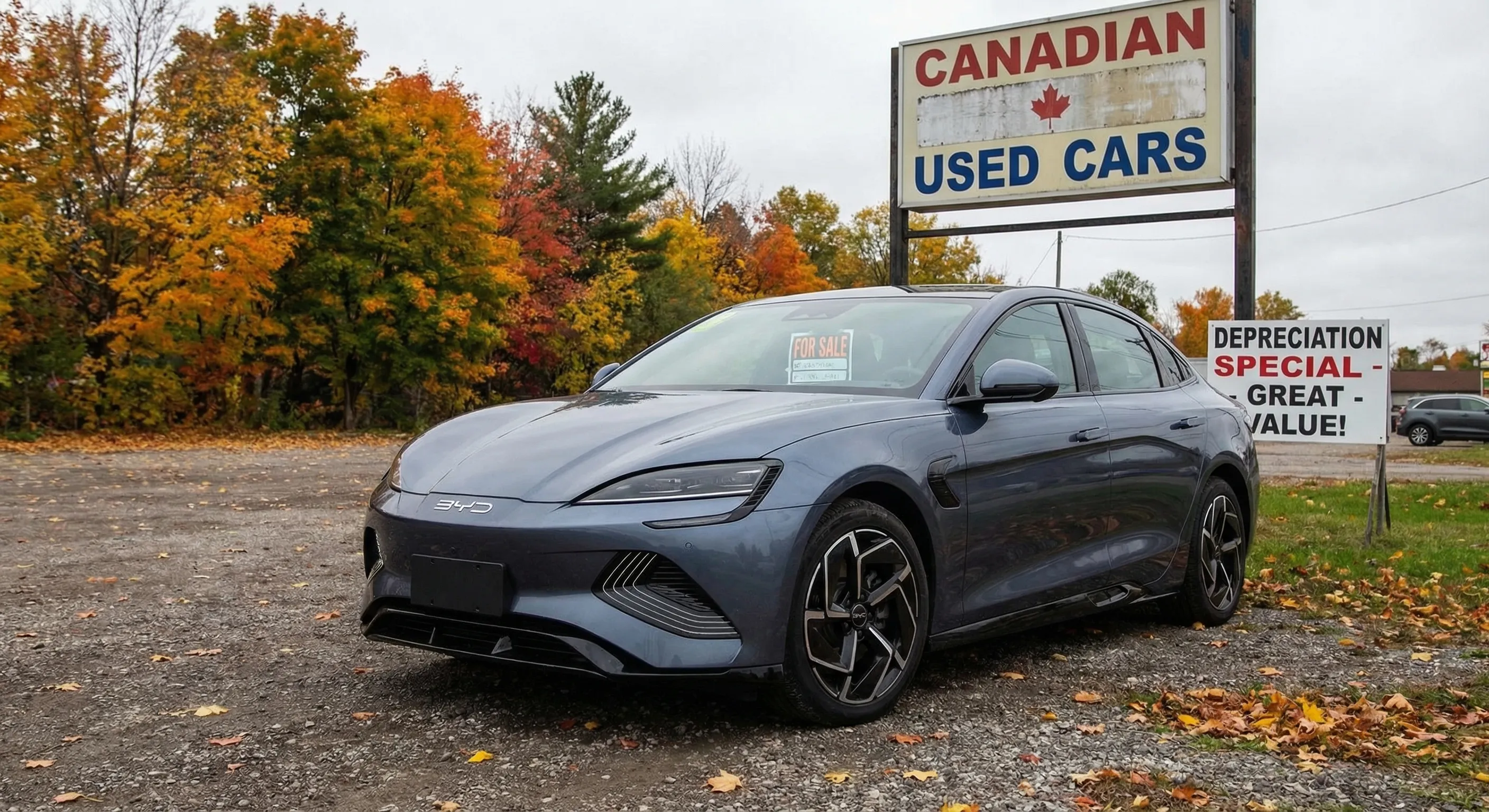
At $28,000, hypothetically speaking, in a market without 100% tariffs, a BYD Atto 3 or Seal would undercut a base Tesla Model 3, a base Hyundai Ioniq 6, and virtually every comparable Canadian-market EV. With the federal EV rebate, the gap widens further. The total cost of ownership calculation, factoring in fuel savings and lower maintenance costs, would make Chinese EVs the most affordable way for a middle-income Canadian family to own an EV.
The tariffs change the math, but not the underlying product reality. If Canadian policy removes those tariffs, or if Chinese automakers find ways to manufacture or assemble vehicles outside China to qualify for tariff exemptions, the value proposition returns immediately.
The concern about Chinese vehicle software is complicated further by the fact that Geely, a Chinese automaker, already operates in Canada through its Volvo and Polestar subsidiaries. Polestar vehicles are marketed as premium Swedish EVs. They are engineered in Sweden and manufactured partly in China. The software stack has Chinese-origin components. The parent company is subject to the same National Intelligence Law. This does not make Polestar vehicles spy tools. It does complicate the bright line that "Chinese EV software" proponents are trying to draw.
The 53% of Canadians who favor lower tariffs on Chinese EVs for affordability reasons are not naive about the trade-offs. They are making a rational judgment that the theoretical security risk of owning a Chinese EV as a private citizen is outweighed by the concrete financial benefit of being able to afford one. That is a legitimate position. It deserves to be engaged with seriously rather than dismissed as foreign influence or ignorance.
Gear worth having
As an Amazon Associate, ThinkEV earns a small commission from qualifying purchases — at no extra cost to you.
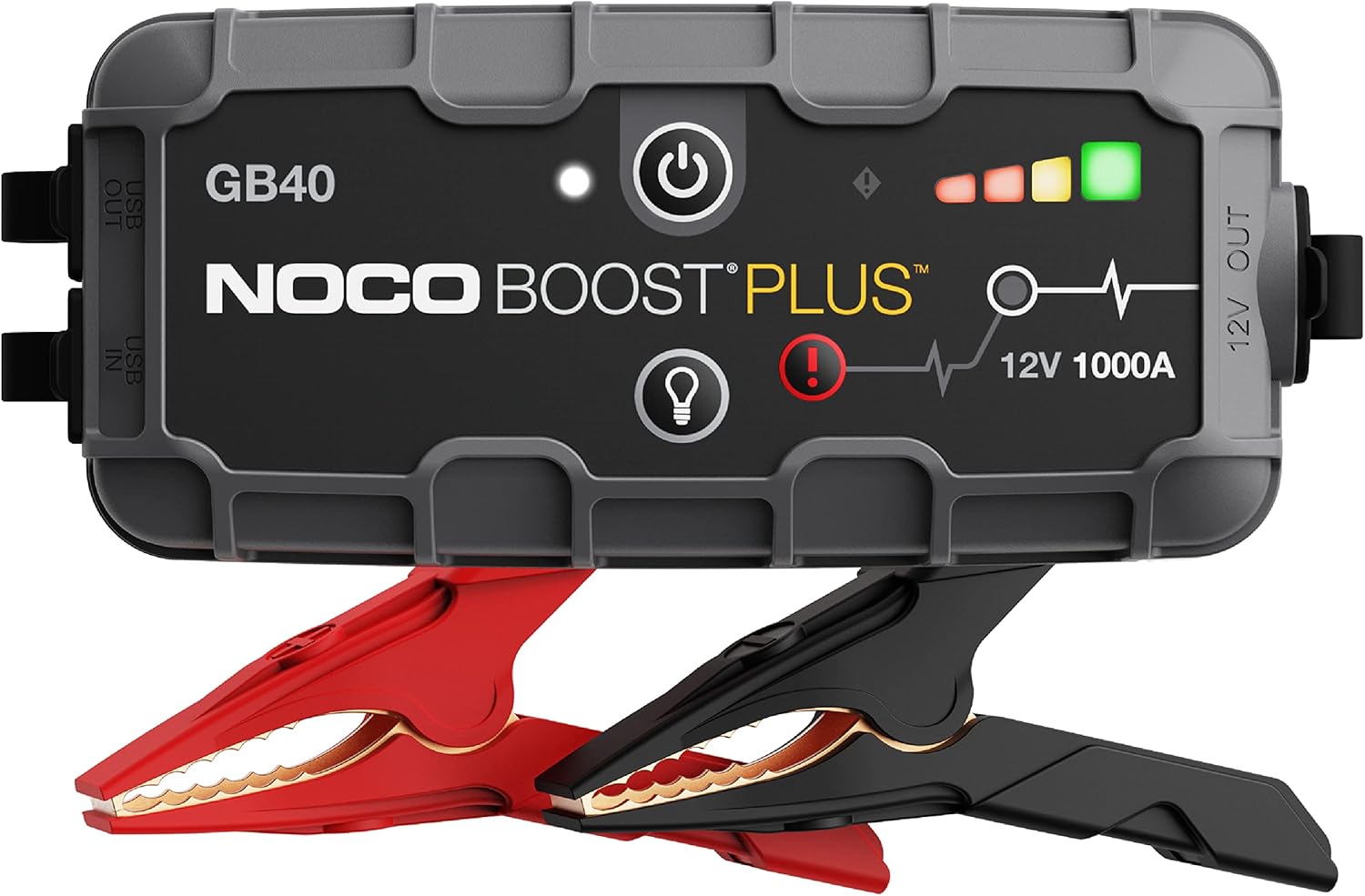
NOCO Boost Plus GB40 Jump Starter
A 1000A lithium jump starter that fits in your glovebox and works on any 12V battery. Your insurance against a dead 12V in a parking lot.
As an Amazon Associate, ThinkEV earns from qualifying purchases — at no extra cost to you.
The Verdict: Legitimate Concern, Inflated Politics, Real Value
Where does the analysis land?
The security concern is real and specific. China's National Intelligence Law creates a legal obligation on Chinese companies that does not have a Western equivalent. Data stored on servers in China is subject to state access in ways that data stored on servers in democratic countries with independent judiciaries is not.
This is a meaningful distinction for certain applications, government fleets, military proximity, sensitive installation access, and security policy should address it proportionately.
The consumer surveillance claim is not supported by available evidence. There is no documented case of a BYD or other Chinese consumer vehicle being used to conduct surveillance of a private citizen in a Western country.
The theoretical risk exists. It has not materialized in detectable ways. Treating it as an established fact, as the "spy vehicle" framing does, is not honest analysis.
The "spy vehicle" framing specifically is political theatre that happens to align with the industrial and trade interests of the people using it most loudly. This does not make it wrong.
It does mean you should read it skeptically and ask who benefits from the policy outcomes they are advocating for.
All connected vehicles collect comparable data. The data sovereignty question is real and should inform a serious policy conversation about where vehicle data must be stored, what legal frameworks govern its access, and what technical standards manufacturers must meet to operate in Canada.
That conversation should apply to all connected vehicles, not just Chinese ones. It would also, incidentally, address the Chinese EV risk without requiring a consumer ban.
The value proposition is real and the people it matters most to are not wealthy. A $28,000 BYD with a best-in-class battery and a full EV warranty is not an abstract policy question.
It is the difference between a family in Regina or Windsor or Halifax being able to afford an EV or not. The tariff debate and the security debate are happening at the expense of those families, and the politicians who benefit from protecting Canadian and American auto manufacturing have very little incentive to acknowledge that.
The proportionate response, the one that matches the actual evidence, looks something like what the EU did: enforce trade rules on subsidies through tariffs, require data localization and sovereignty standards for all connected vehicles sold in Canada, restrict Chinese vehicles from government and military fleets, and allow Canadian consumers to make their own choices with accurate information about what those choices involve.
That is not the response we are getting.
We are getting "spy vehicle" and boycott calls from a premier who represents the heart of Canadian auto manufacturing, and a federal policy conversation that oscillates between tariff warfare and software bans.
The cars are not going away. The security questions are not going away. The affordability pressure on Canadian EV buyers is not going away.
What has to change is the quality of the conversation, and the honesty about who the current conversation serves.
Gear worth having
As an Amazon Associate, ThinkEV earns a small commission from qualifying purchases — at no extra cost to you.

Faraday Key Fob Pouch (Anti-Theft)
Keyless EVs are a target for relay-attack theft. A Faraday pouch blocks your fob signal for the price of lunch.
As an Amazon Associate, ThinkEV earns from qualifying purchases — at no extra cost to you.
Gear worth having
As an Amazon Associate, ThinkEV earns a small commission from qualifying purchases — at no extra cost to you.

RFID Key Fob Signal Blocker (2-Pack)
A slim hard case that blocks relay-attack theft of keyless EVs. Cheaper than a deductible, smaller than your fob.
As an Amazon Associate, ThinkEV earns from qualifying purchases — at no extra cost to you.
Related Reading
-
Will Chinese EVs Hold Their Value in Canada? Resale and Depreciation Guide
-
Are Chinese EVs Actually Safe? What 5-Star Euro NCAP Ratings Tell Us
-
Are Chinese EVs a Cybersecurity Risk? What the Data Actually Says If you want to understand the full picture of Chinese EVs in Canada, these pieces provide the essential context:
-
Chinese EVs Entering Canada: What's Actually Happening in 2026, The policy timeline, the tariff structure, and which brands are actually trying to enter the market
-
BYD Opens 20 Dealerships in Canada, Starting in Toronto, On-the-ground look at what BYD's Canadian retail expansion means for buyers
-
Compare EVs Available in Canada, Side-by-side specs, pricing, and range data for every EV sold in Canada
Gear worth having
As an Amazon Associate, ThinkEV earns a small commission from qualifying purchases — at no extra cost to you.

70mai A810 4K Dual Dash Cam
4K front and 2K rear with STARVIS 2 HDR night vision and 24/7 parking surveillance, recording while parked without draining the 12V. A budget alternative to Tesla Sentry.
As an Amazon Associate, ThinkEV earns from qualifying purchases — at no extra cost to you.

Founder & Chief Editor
Vlad Pereira is the founder and chief editor of ThinkEV.ca, the Canadian electric-vehicle publication he writes and edits from Courtenay, British Columbia. He covers EV pricing, federal and provincial rebates, charging costs, and the Chinese manufacturers now entering Canada, from the buyer's side rather than the press-fleet side. ThinkEV is a venture of Vlad Pereira Online; his writing on health, income and the long game lives at vladpereira.com.
Frequently asked questions
Is there any proof that BYD vehicles have spied on Canadians or Americans?
What does China's National Intelligence Law actually require of Chinese automakers?
Does the Tesla or Hyundai collect less data than a BYD?
Why does Australia allow BYD if there are real security concerns?
What would a proportionate Canadian policy on Chinese EVs actually look like?
More EV & road-trip finds
Affordable upgrades worth a look — tap any to check the price on Amazon.
 ★ 1,340
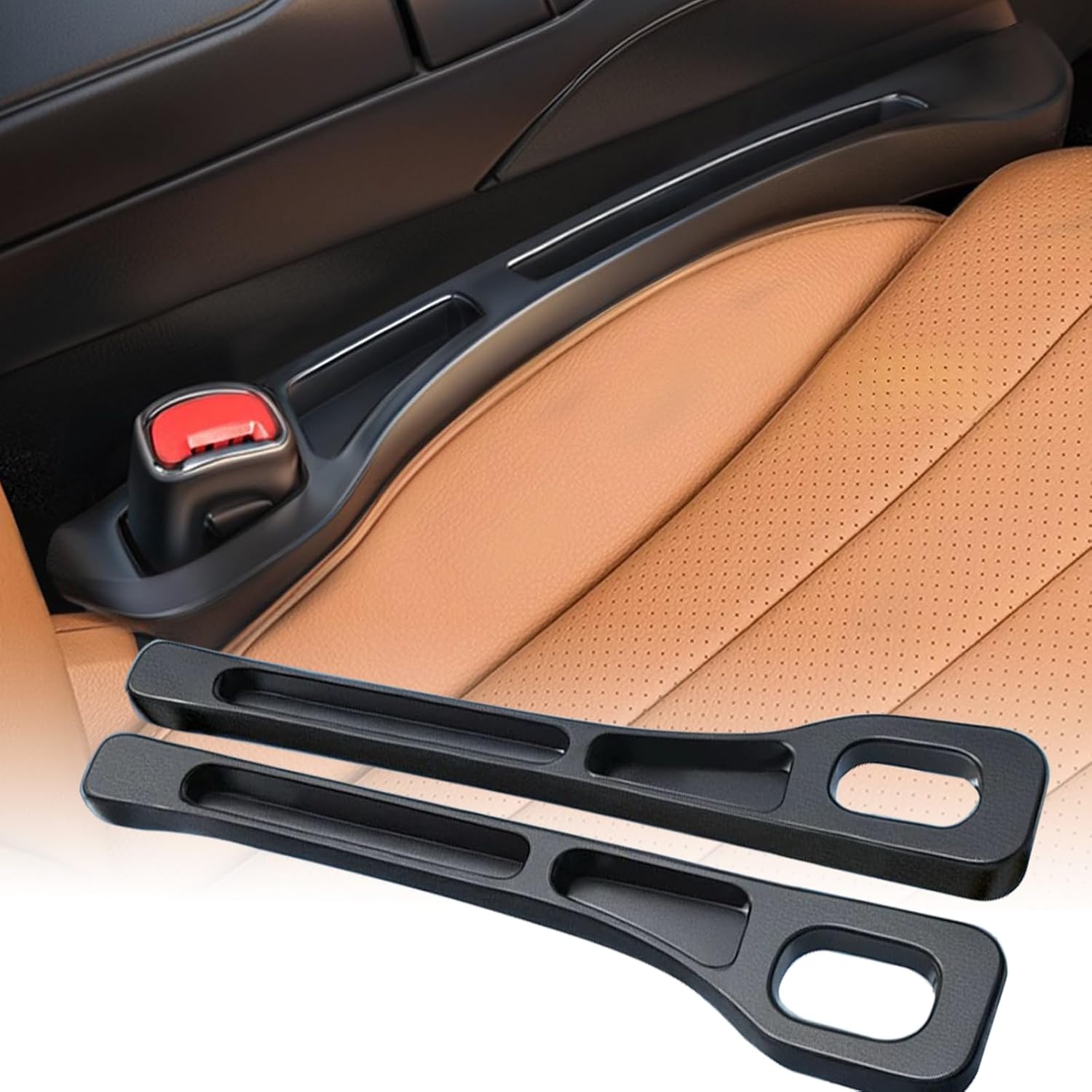
Car Seat Gap Filler (Universal)
View on Amazon ★ 308
★ 308Coiled Lightning Car Cable for iPhone (2-Pack)
View on Amazon ★ 121
★ 121Foldable Windshield Sun Umbrella
View on Amazon ★ 268
★ 268Anti-Slip Leather Steering Wheel Cover
View on Amazon ★ 9,349
Auto Detailing Brush Set (10-Piece)
View on Amazon ★ 419
★ 419RGB Car Interior LED Strip Light
View on Amazon ★ 568
★ 568Personalized Photo and Text Keychain
View on Amazon ★ 4,424
Sun Visor Card and Document Organizer
View on AmazonRead, Plan, Then Stay Current
Explore our expert articles to understand incentives and ownership costs, use the map to pressure-test charging reality, then subscribe so new EV coverage comes straight to you.
Continue Reading

Should I Wait for BYD to Come to Canada?
Chinese EV Resale Value in Canada: What to Expect
Are Chinese EVs Safe? What Euro NCAP Ratings Show
What BYD's Solid-State Battery Means for Canada

Norway's -27C Winter EV Test: Chinese Cars Beat Tesla