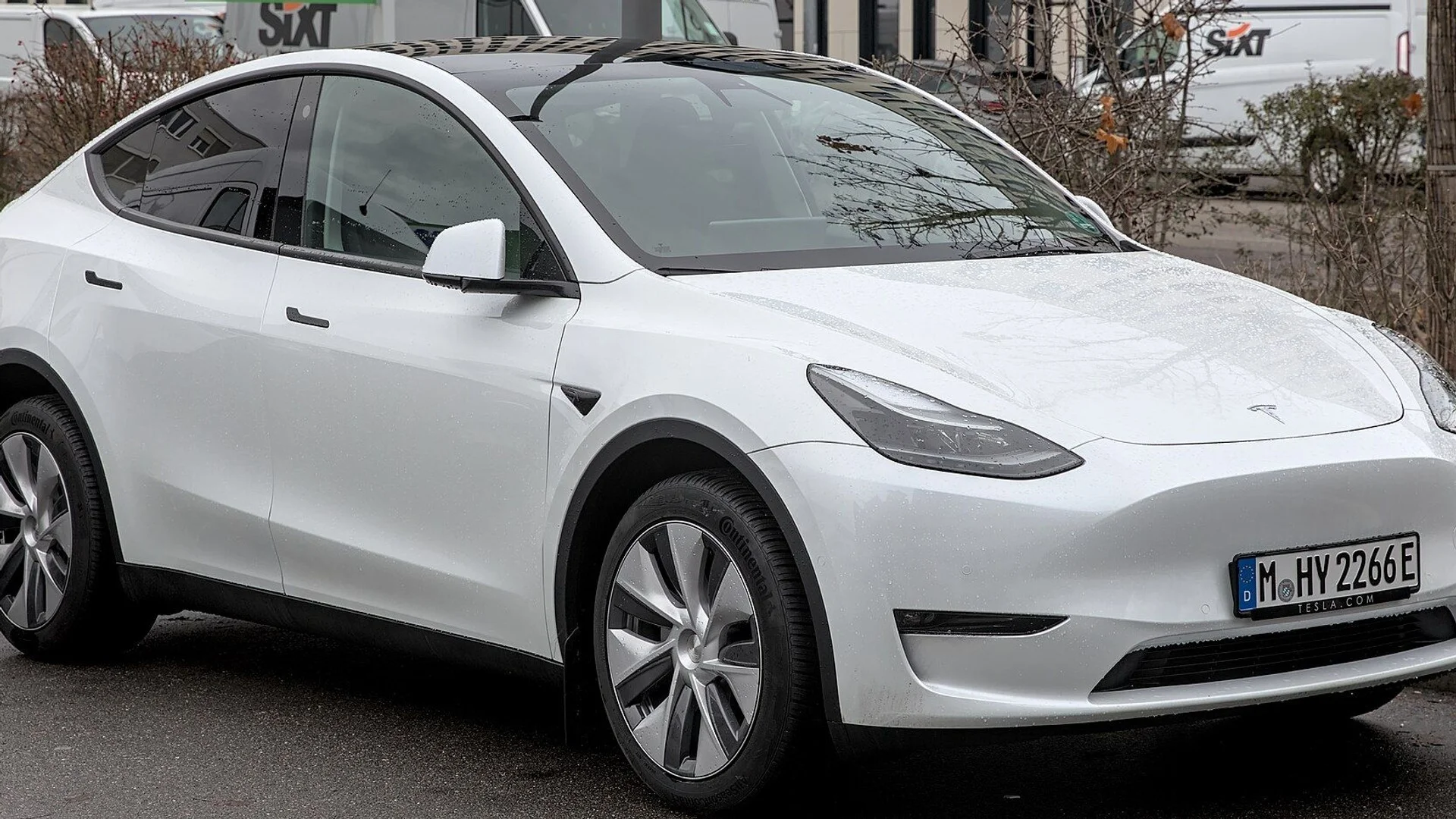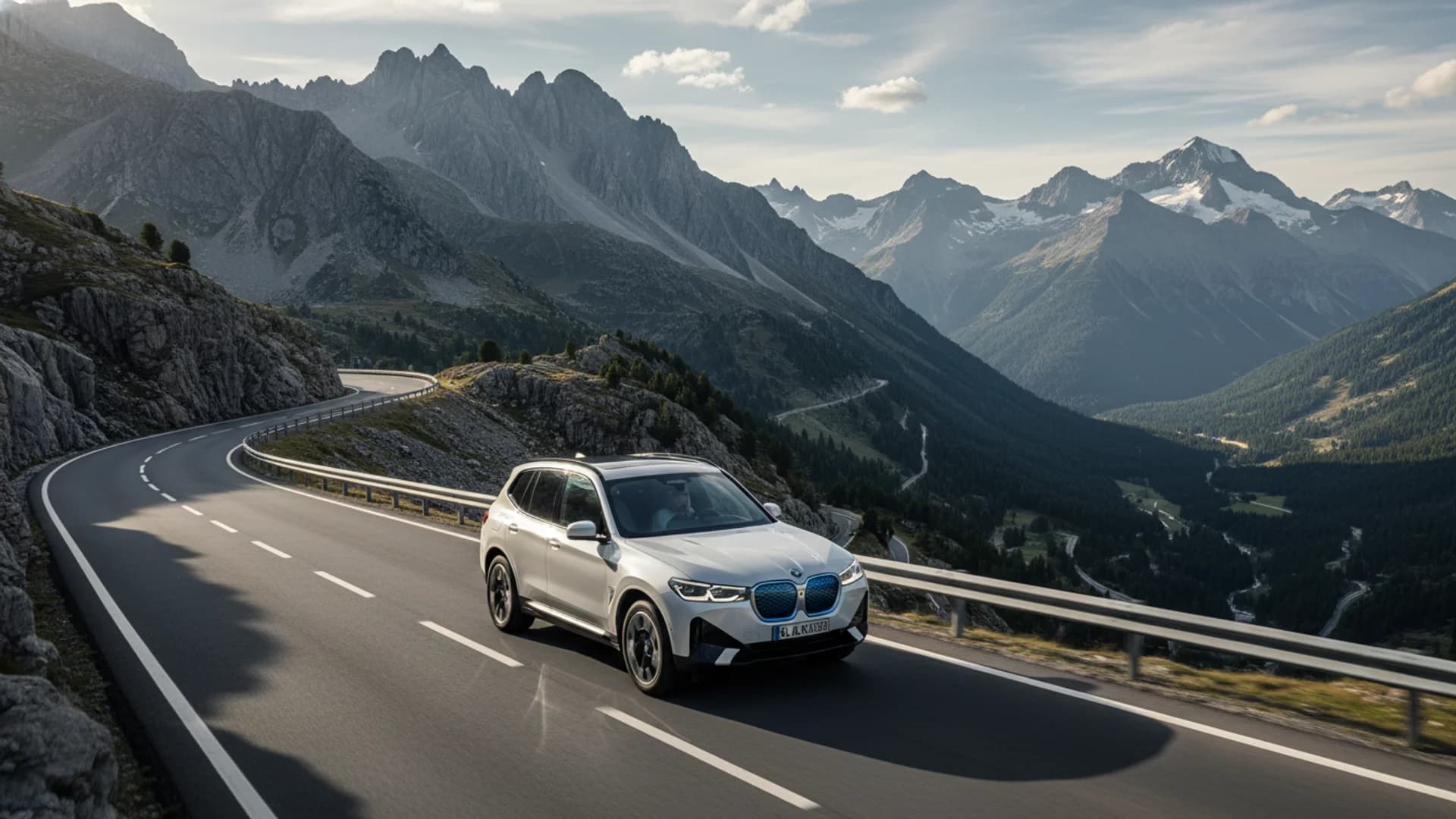
A 500-mile real-world range result is a policy artifact before it is a marketing artifact, and the gap between those two readings is where Canadian and European incentive frameworks are quietly breaking. A long-wheelbase iX3 drove the Qinghai Lake grand loop, starting from Xining and returning to the same place after over 500 miles on a single charge. The number is real. The methodology is BMW's. And the regulatory frameworks that decide whether any of this translates into rebate eligibility, tariff treatment, or compliance credit are still calibrated to laboratory cycles that no longer describe the vehicles being sold.
That is the analytical problem worth unpacking, not the headline figure, which will be reproduced uncritically across the trade press by the end of the week. The substantive question is narrower and more useful: when a vehicle's manufacturer-controlled range result, its independent third-party range result, and its homologated regulatory rating diverge by 15 to 25 percent, which number is the one that should govern public spending?
Canada's EVAP framework, the EU's WLTP-anchored CO₂ compliance regime, and the US IRA's tax-credit architecture all answer that question differently. None of them have updated their answers to reflect the past three years of real-world test data.
Key takeaways
- BMW's iX3 posted 485 miles in NAF's independent summer test, beating Lucid Gravity and Mercedes-Benz CLA.
- The Qinghai Lake 500-mile result used long descents at 6,500 feet, conditions a February Trans-Canada run cannot replicate.
- WLTP overstates real-world highway range by 15–25% because its speed-profile assumptions predate the vehicles now being tested against it.
- Transport Canada inherits EPA-derived figures and applies its own adjustment, making Canadian window stickers incomparable to German spec sheets.
- The iX3's 108.7 kWh pack and BMW's usable-capacity disclosure expose a gap: Transport Canada has no standardised mechanism to surface gross-versus-net battery differences.
What the Qinghai Lake Test Actually Measured, and What It Didn't
The Qinghai Lake loop is a useful piece of engineering theatre. The test route covers more than 800 kilometres at altitudes that climb past 6,500 feet, with long descents that favour any vehicle equipped with aggressive regenerative braking calibration. According to the route's energy-consumption profile, the long-wheelbase iX3 averaged 12.6 kWh per 100 kilometres on the loop, aided by long descents around Qinghai Lake that gave the regen system ideal conditions to operate, a figure that would be remarkable in a compact hatchback, let alone a long-wheelbase electric crossover.
The structural advantage matters. Long descents are where regen recovers meaningful energy back into the pack; the same vehicle on flat highway terrain at sustained 120 km/h cannot replicate the figure. The Qinghai number is a real measurement of a real test, but it is not a transferable forecast for a Canadian driver doing the Trans-Canada at 110 km/h in February. The counter-argument here is that any standardised cycle, regulatory or otherwise, also fails to model a February Trans-Canada run, so why single out the Qinghai test? The answer is jurisdictional: a regulatory cycle's failures are public, documented, and applied uniformly across the competitive field, while a manufacturer-administered loop's failures are private, undocumented, and applied selectively to a vehicle whose marketing budget depends on the result.
The vehicle's pack is the other variable worth naming. The long-wheelbase iX3 50 xDrive carries a 108.7 kWh battery and posts unprecedented highway efficiency at 130 km/h on 21-inch wheels and summer tyres, a usable capacity disclosure that BMW has been more transparent about than several peers. Gross-versus-net pack disclosure remains inconsistent across jurisdictions, and Transport Canada does not require manufacturers to publish a standardised usable-capacity figure on Monroney-equivalent labelling. The result is that two vehicles with identical advertised range can have meaningfully different real-world energy budgets, and the regulator has no current mechanism to surface the difference.
There is also a category distinction the press release elides. BMW has made it pretty clear that the new iX3 electric crossover is one of the longest-range and fastest-charging mainstream EVs on the market right now. To make it even clearer, the German automaker's Chinese arm just bagged another impressive achievement. A test administered by the manufacturer's regional arm is not equivalent to one administered by NAF or Edmunds. Both produce data. Only one set of data was generated under conditions the manufacturer did not control.
The distinction is not a slight on BMW's engineering. It is the distinction regulators are supposed to be making when they decide which test result earns a vehicle a place on an incentive-eligibility list.
Cross-Methodology Range Reality: NAF, Edmunds, and WLTP Compared
The independent data is more interesting than the controlled data, because it is internally consistent across vehicles tested under the same protocol. BMW's new iX3 drove 485 miles on a single charge in Motor and NAF's summer range test, the longest result in that field. NAF's summer protocol is the closest thing the European market has to a public-interest range methodology, it is run by a motorists' association, not by an OEM, and it publishes its full leaderboard.
The ranking matters as much as the figure. The BMW iX3 ranked highest in that test at 485 miles, followed by the Lucid Gravity and Mercedes-Benz CLA. A 485-mile result that leads Lucid and Mercedes is a different claim than a 500-mile result that leads only itself. The first tells the reader where the vehicle sits in the competitive field. The second tells the reader what the engineering team can produce when the route and the weather cooperate.
Methodology variance compounds the comparison problem. Edmunds' latest range test shows the rear-wheel-drive Tesla Model 3 Premium easily beating its official range by roughly 30 miles, with remarkable efficiency for the vehicle's class. The Model 3 result illustrates that the EPA cycle is now systematically conservative for at least some vehicles, while WLTP is systematically generous for nearly all of them. The case against treating either as a regulatory benchmark is that the directional bias of each cycle is, at least, predictable, buyers and policymakers can mentally discount a WLTP figure by 15 to 25 percent and inflate an EPA figure by 5 to 10 percent and arrive at something operationally useful. That mental arithmetic is exactly what a well-designed regulatory cycle is supposed to eliminate, and its continued necessity is the indictment.
The implication is structural. WLTP, EPA, and Transport Canada's RRTE-derived ratings each produce a different number from the same vehicle, and the deltas are not random. WLTP overstates real-world highway range by a consistent margin because its speed-profile assumptions are dated. EPA's five-cycle methodology is more pessimistic on highway-dominant duty cycles. Transport Canada inherits the EPA-derived figures for most vehicles and applies its own combined-cycle adjustment, which means a buyer comparing a German spec sheet to a Canadian window sticker is comparing two numbers generated by incompatible methodologies.
Speed-sensitivity is the variable regulators have not modernised around. At sustained highway speeds, the only speeds that matter for cross-country driving in Canada, the iX3's efficiency degrades faster than its low-speed efficiency would suggest, which is true of every aerodynamically optimised crossover and not a fault unique to BMW. The point is that no current regulatory test cycle adequately weights the 110-to-130 km/h band where Canadian and Northern European drivers spend most of their highway time.
Gear worth having
As an Amazon Associate, ThinkEV earns a small commission from qualifying purchases — at no extra cost to you.

Lectron Level 2 J1772 Charger (40A, WiFi)
Smart WiFi charger with real-time energy monitoring. 40A / 9.6 kW, J1772 with a NEMA 14-50 plug, schedule charging right from your phone.
As an Amazon Associate, ThinkEV earns from qualifying purchases — at no extra cost to you.
How Official Range Ratings Gate Incentive Access Across Jurisdictions
Canada's EVAP framework, the post-iZEV federal incentive that replaced the suspended consumer rebate, does not impose an explicit minimum-range floor. The operative constraint is the MSRP ceiling, which excludes most luxury crossovers from eligibility regardless of how far they drive on a charge. A 500-mile iX3 priced above the EVAP threshold is treated identically to a 250-mile iX3 priced above the threshold: both are ineligible. Range performance, in other words, has no policy weight at the federal Canadian level once the price gate has closed.
The US Inflation Reduction Act's §30D credit follows a similar logic. There is no range floor; the operative constraints are the $80,000 SUV MSRP cap, the final-assembly requirement, and the critical-mineral and battery-component sourcing schedules. A vehicle that meets the assembly and sourcing tests qualifies for the full credit whether it delivers 250 miles or 500.
The EU is the jurisdiction where range methodology has the most direct policy consequence, because WLTP figures feed directly into the CO₂ fleet-average targets that determine manufacturer compliance fines. Inflated WLTP range translates into inflated WLTP efficiency, which translates into a softer compliance burden for OEMs and a more generous accounting of fleet decarbonisation than the real-world data supports. The buyer is not the beneficiary of that arithmetic.
Gear worth having
As an Amazon Associate, ThinkEV earns a small commission from qualifying purchases — at no extra cost to you.

WeatherTech FloorLiner for Tesla Model 3
Deep-channel liners that trap every drop of slush and salt. The difference between a ruined interior and a showroom-fresh cabin after a Canadian winter.
As an Amazon Associate, ThinkEV earns from qualifying purchases — at no extra cost to you.
The UK's ZEV mandate sidesteps the methodology problem by ignoring range entirely. The mandate set a 22 percent zero-emission new-car sales share for 2024 and escalates the requirement to 80 percent by 2030. A vehicle either is or is not a zero-emission vehicle for compliance purposes; how far it drives on a charge is commercially relevant but regulatorily irrelevant. That is a defensible policy design, it removes the OEM incentive to game the test cycle, but it leaves the buyer without a regulator-vetted range figure to anchor a purchasing decision.
The composite picture is a regulatory landscape in which range methodology matters most where it is least reliable (EU CO₂ accounting) and matters least where the data is most useful (UK ZEV compliance). For Canadian buyers and policymakers tracking which figure should govern public spending, the winter-range test results from CAA's 2026 14-vehicle sub-zero protocol are a more honest input than any WLTP figure published this year.
The China-Spec Wrinkle: Long-Wheelbase iX3 and Regulatory Arbitrage
The vehicle that drove the Qinghai loop is not the vehicle sold in Canada or in most of Europe. The long-wheelbase iX3 is a BMW Brilliance product, a joint-venture vehicle built in China for the Chinese market, with dimensional and trim specifications that diverge from the standard-wheelbase version BMW exports to Western markets. The 500-mile result is a result for the China-spec variant, on a Chinese route, on Chinese-market tyres.
The regulatory implication is direct. Canada's 100 percent surtax on Chinese-built EVs, in place since October 2024, applies to vehicles manufactured in China regardless of the badge on the hood. A BMW Brilliance long-wheelbase iX3, were BMW to attempt to import it, would face the same surtax wall as a BYD Seal or a Geely-built Volvo EX30. The January 2026 reform of the tariff structure, moving from a flat 100 percent to a 6.1 percent rate within a 49,000-unit quota, does not change the calculus for a low-volume luxury variant that BMW has no current plans to export.
The EU is in a similar position. The European Commission's countervailing duties on Chinese-built EVs apply to BMW Brilliance products at a rate the Commission published in its provisional findings; BMW negotiated its own rate through the appeals process, and the resulting figure makes Chinese-built BMW exports to Europe commercially marginal. The standard-wheelbase iX3 sold in European showrooms is built in Debrecen, Hungary, which is the regulatorily and commercially defensible sourcing pathway.
This is not a story about a vehicle Canadians can buy. It is a story about a vehicle whose performance data is being used to market a related but materially different vehicle that Canadians can buy. The distinction is the kind of thing that consumer-protection regulators in Ottawa would, in a more attentive era, require to be flagged on the marketing materials.
For context on how Chinese-built EVs are performing in independent winter testing, Norway's El Prix winter results showing Chinese vehicles outperforming Tesla on sub-zero range retention are a more rigorous comparison than the Qinghai loop, because they were run by a neutral third party under controlled adverse conditions.
Gear worth having
As an Amazon Associate, ThinkEV earns a small commission from qualifying purchases — at no extra cost to you.

Grizzl-E Classic Level 2 EV Charger (40A)
Canadian-made and rated for minus 40C winters. 40A / 9.6 kW, NEMA 14-50, indoor/outdoor, 24-ft cable. The charger built for Canadian weather.
As an Amazon Associate, ThinkEV earns from qualifying purchases — at no extra cost to you.
Sales Data vs. Range Headlines: iX3's European Milestone in Context
Range leadership and sales leadership are not the same metric, and the iX3's commercial performance is the harder figure to dismiss. BMW reports that more than 10,000 iX3 units have been sold in Europe through the April reporting window, a rate-of-sale figure that places the vehicle credibly in the European premium crossover segment but does not yet challenge the volume leaders.
The competitive context is worth naming. The 2026 Hyundai Ioniq 5 Long Range RWD is rated by Transport Canada at 488 km, and the Kia EV6 Long Range RWD at 499 km. Both compete in the same operational band as the European-spec iX3, at materially lower price points, and both benefit from the V2L and 800-volt architecture that BMW does not yet offer on the iX3 platform. BMW's own forward product plan complicates the picture further: the 2027 BMW i3 sedan, positioned as the electric equivalent of the 3 Series, will cannibalise the iX3's share of the premium-electric wallet within BMW's own showrooms before any Korean competitor lands a finishing blow.
Range leadership without charging-network parity is a marketing position, not a structural advantage. The iX3's 330 kW peak DC fast-charge rate is competitive on paper, but the rate is only realised on chargers capable of delivering that power, which remain unevenly distributed across the Canadian Trans-Canada corridor and the secondary highway network that Canadian buyers actually drive on weekends. Peak charging speed is a policy-adjacent metric: federal and provincial deployment programmes, the ZEV Infrastructure Programme, NRCan's deployment funding, and the provincial DCFC build-outs led by BC Hydro and Hydro-Québec, determine whether peak-rate hardware reaches the routes where it would matter.
Gear worth having
As an Amazon Associate, ThinkEV earns a small commission from qualifying purchases — at no extra cost to you.

AstroAI Portable Tire Inflator
One tap, it inflates to your exact PSI then stops automatically. Low tires cost 5 to 10 percent of your range, so this pays for itself in a week.
As an Amazon Associate, ThinkEV earns from qualifying purchases — at no extra cost to you.
What Regulators Should Take From Real-World Range Divergence
The lab-to-road delta is no longer a methodological quirk; it is a structural feature of the WLTP and EPA cycles, and regulators are aware of it. Independent test data, NAF, Edmunds, ADAC, CAA, converges on a 15 to 25 percent gap between homologated range and real-world summer range for most vehicles, with winter deltas substantially worse. The data has been stable for several model years. The regulatory response has not arrived.
A real-world floor, a requirement that the rated range published on a vehicle's window sticker not exceed the NAF-equivalent independent result by more than a defined margin, would tighten OEM claims and protect the integrity of any incentive programme that uses range as a qualifying criterion. The UK's range-agnostic ZEV mandate is one defensible answer to the problem; a real-world-anchored Canadian RRTE would be another. Both would be better than the current arrangement, in which the headline number is generated by a methodology the regulator already knows is wrong.
The forecast worth committing to: within the next 18 months, at least one European regulator, most plausibly Germany's KBA, prompted by the persistent NAF-versus-WLTP delta, will publish a consultation document proposing a real-world correction factor on WLTP-rated range for fleet-CO₂ accounting purposes. What would change my mind on that prediction is the EU Commission absorbing the methodology question into the post-2035 review and quietly burying it; what I would watch for is whether NAF's autumn 2026 protocol expands its vehicle pool to include Chinese-built models on European specification, because that is the data set most likely to embarrass the current WLTP architecture into reform.
Transport Canada has not announced a methodology update aligned to current real-world test protocols. EVAP's MSRP-ceiling design effectively sidesteps the range question for the federal Canadian buyer, but provincial programmes, Quebec's Roulez vert in its remaining form, BC's CleanBC top-up, could in principle incorporate a real-world range qualifier. None currently do. The Canadian EV pricing landscape for 2026 and 2027 tracks where these programmes have landed; the range-methodology question is the part of the framework that has not caught up.
Bottom line: a 500-mile range result generated by a manufacturer's regional arm on a route designed to favour the vehicle's regenerative-braking profile is a marketing input. A 485-mile independent NAF result is a competitive input. Neither is a regulatory input, because no Canadian, European, or American framework currently treats real-world range data as a qualifying criterion for the public spending it gates. Until that changes, range headlines belong on the advertising page, not in the policy memo.
Gear worth having
As an Amazon Associate, ThinkEV earns a small commission from qualifying purchases — at no extra cost to you.

Digital Tire Pressure Gauge
Low tires quietly cost 5 to 10 percent of your range. A 10-second check with an accurate digital gauge keeps every kWh on the road.
As an Amazon Associate, ThinkEV earns from qualifying purchases — at no extra cost to you.

Founder & Chief Editor
Vlad Pereira is the founder and chief editor of ThinkEV.ca, the Canadian electric-vehicle publication he writes and edits from Courtenay, British Columbia. He covers EV pricing, federal and provincial rebates, charging costs, and the Chinese manufacturers now entering Canada, from the buyer's side rather than the press-fleet side. ThinkEV is a venture of Vlad Pereira Online; his writing on health, income and the long game lives at vladpereira.com.
Frequently asked questions
Does the iX3's 500-mile result change its Canadian EVAP eligibility?
Why do the NAF and Qinghai results differ by 15 miles?
Is the iX3's 108.7 kWh pack unusually large for the segment?
How badly does the iX3's range degrade at Trans-Canada highway speeds?
Which independent range methodology should Canadian buyers actually trust?
More EV & road-trip finds
Affordable upgrades worth a look — tap any to check the price on Amazon.
 ★ 164
★ 164Solar-Powered LED Ambient Light
View on Amazon ★ 900
★ 900Personalized Photo Car Air Freshener
View on Amazon ★ 21,304
Car Headrest Hooks (4-Pack)
View on Amazon ★ 55,938
WixGear Magnetic Air Vent Phone Mount (2-Pack)
View on Amazon ★ 87
★ 87Car Window Sun Shades for Kids (4-Pack)
View on Amazon ★ 392
★ 392Large Cup Holder Adapter (32-40oz)
View on Amazon ★ 96,686
PULIDIKI Car Cleaning Gel (Detailing Putty)
View on Amazon ★ 419
★ 419RGB Car Interior LED Strip Light
View on AmazonRead, Plan, Then Stay Current
Explore our expert articles to understand incentives and ownership costs, use the map to pressure-test charging reality, then subscribe so new EV coverage comes straight to you.
Continue Reading
EV Efficiency Ratings Compared Across Four Markets
China's EV Transition Is Four Different Markets, Not One
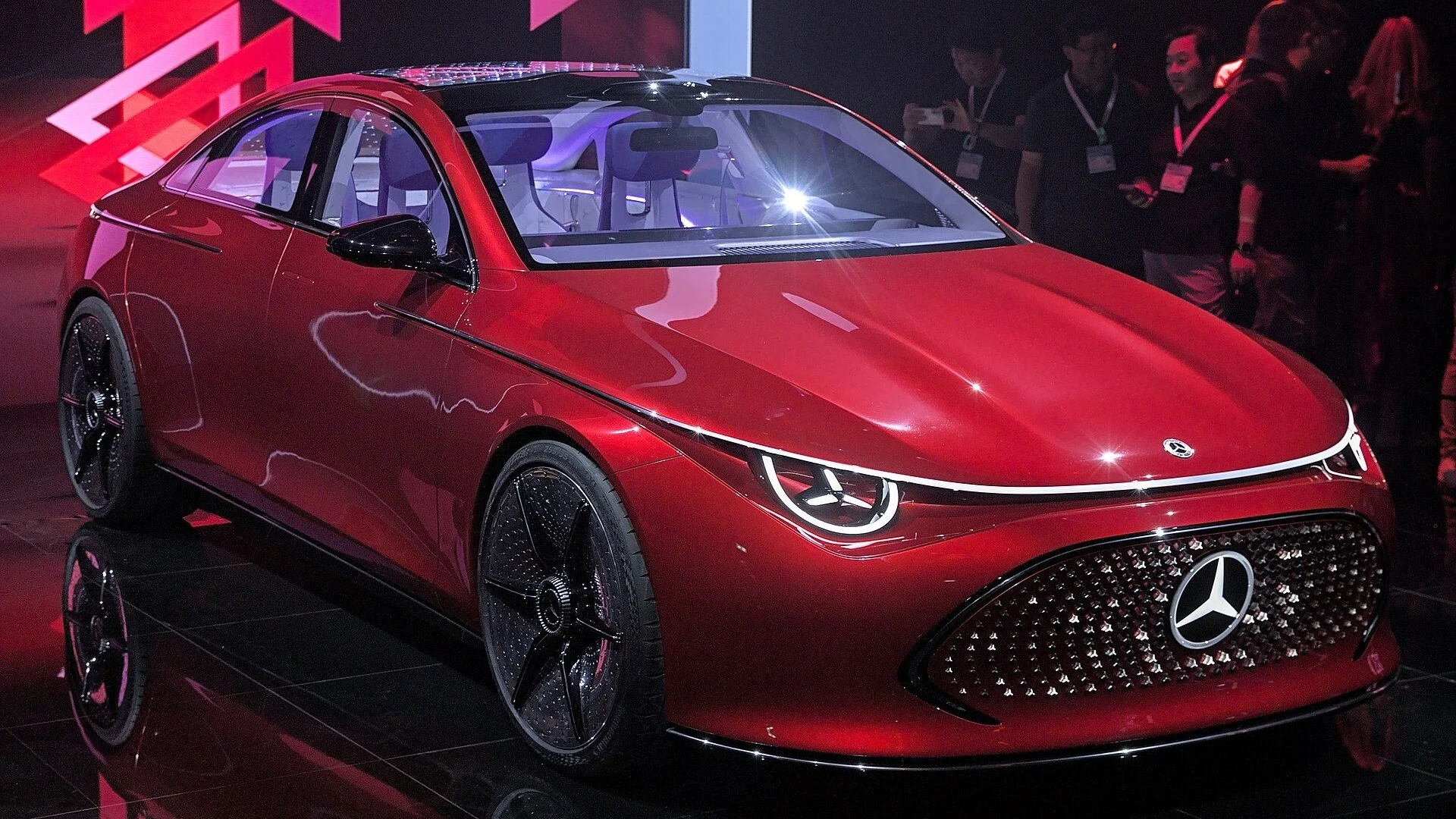
Mercedes CLA EV Beat Its EPA Range in Real Testing
Canada's EVAP EV Rebate 2026: Every Update Tracked
Why Cold Weather Cuts EV Range, the Real Reasons