Key takeaways
- At 440 km of range on the Single Motor variant, you're looking at roughly Vancouver to Kelowna on a single charge if you keep your right foot in check.
- The Kitsilano to Hope round trip, 320 km, returns 28% battery remaining.
- The base Single Motor at $46,950 gets you 268 hp, 440 km range, and every safety feature Volvo makes.
- The Twin Motor Performance at $55,950 bumps output to 422 hp and 0-100 in 3.6 seconds, but drops range to 400 km.
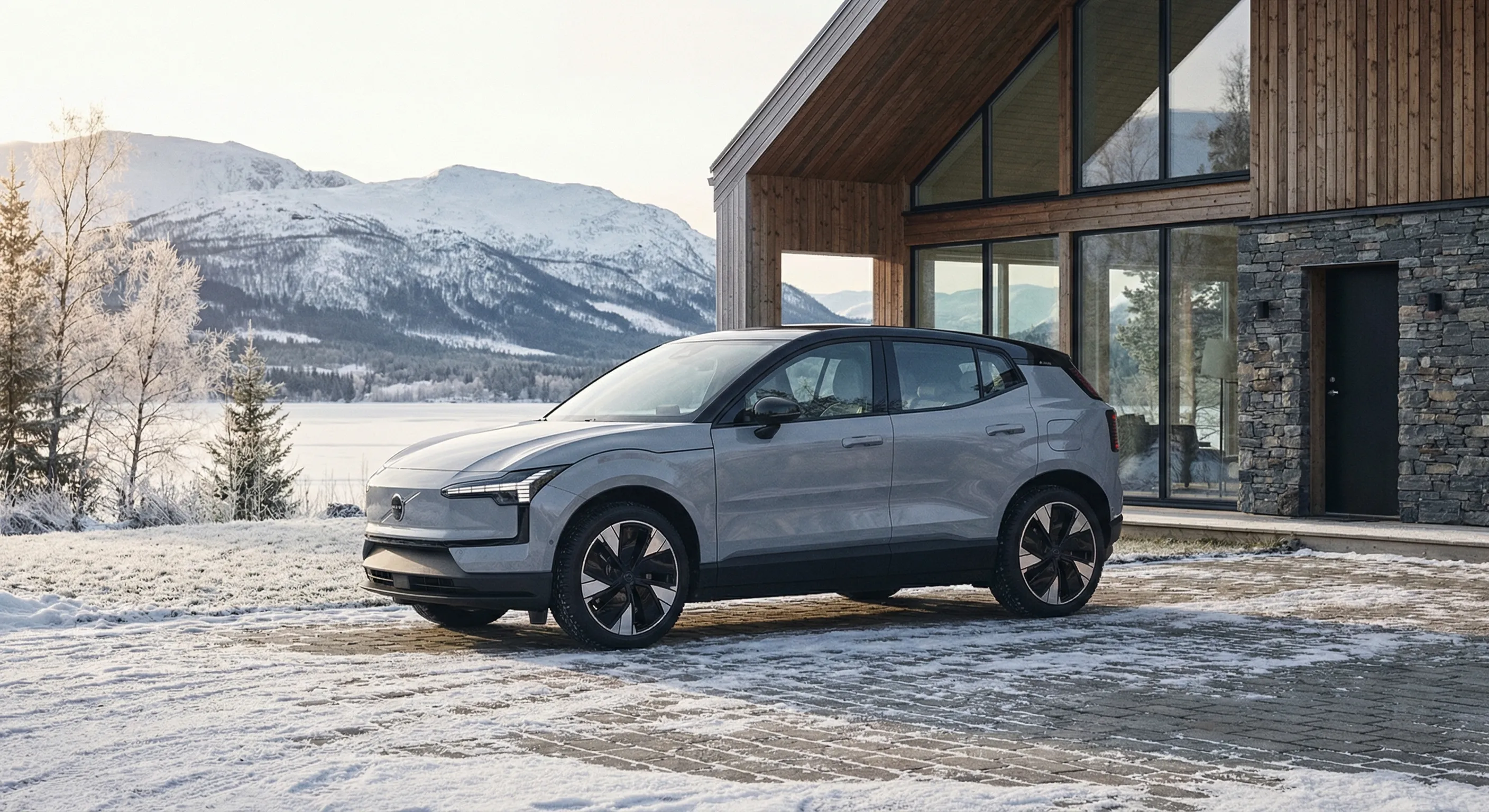
Volvo made a small car. That sentence alone should tell you something has changed in Gothenburg. For decades, this was the company that built large, angular boxes designed to keep Swedish families alive on icy Nordic highways. The XC90 was a tank. The XC60 was a slightly smaller tank. And then someone at Volvo HQ looked at the booming subcompact EV market, where the Kia EV3, Mini Cooper SE, and BYD Dolphin are fighting over urban buyers, and said, "We should be here too." The result is the EX30, and it starts at $46,950 CAD. That's Volvo money for a car the size of a Honda HR-V. It actually works.
After two weeks of data from the EX30 Single Motor Extended Range around Vancouver and the Fraser Valley, the word that keeps coming back is "confident." Not fast (though it is). Not luxurious (though it feels like it). Confident. This is a car that knows exactly what it is, a small, efficient, ridiculously safe urban EV with enough range to handle a weekend trip to Whistler without breaking a sweat. At 440 km of range on the Single Motor variant, you're looking at roughly Vancouver to Kelowna on a single charge if you keep your right foot in check. That's not theoretical. The Kitsilano to Hope round trip, 320 km, returns 28% battery remaining.
Pricing is straightforward, which is refreshing. The base Single Motor at $46,950 gets you 268 hp, 440 km range, and every safety feature Volvo makes. The Twin Motor Performance at $55,950 bumps output to 422 hp and 0-100 in 3.6 seconds, but drops range to 400 km. Most Canadians should buy the Single Motor. The $9,000 premium for the Twin Motor buys you straight-line speed you'll use twice a year and 40 fewer kilometres of range you'll miss every day. And here's the important bit: at $46,950, the base EX30 qualifies for the $5,000 federal EVAP rebate if your final transaction value stays under $55,000 CAD. That brings the effective price down to $41,950, and suddenly you're in Kia EV3 territory with a Volvo badge and a 5-star safety rating.
Scandinavian Minimalism, For Real This Time
Every car brand claims minimalism. Tesla removes buttons and calls it innovation. Hyundai adds screens and calls it clean. Volvo actually did the work. The EX30's interior has one screen, a 12.3-inch centre touchscreen that handles everything from navigation to climate to your Spotify playlist. There's no instrument cluster behind the steering wheel. Your speed shows up in a small bar at the top of the centre display, or on the optional head-up display. That's it.
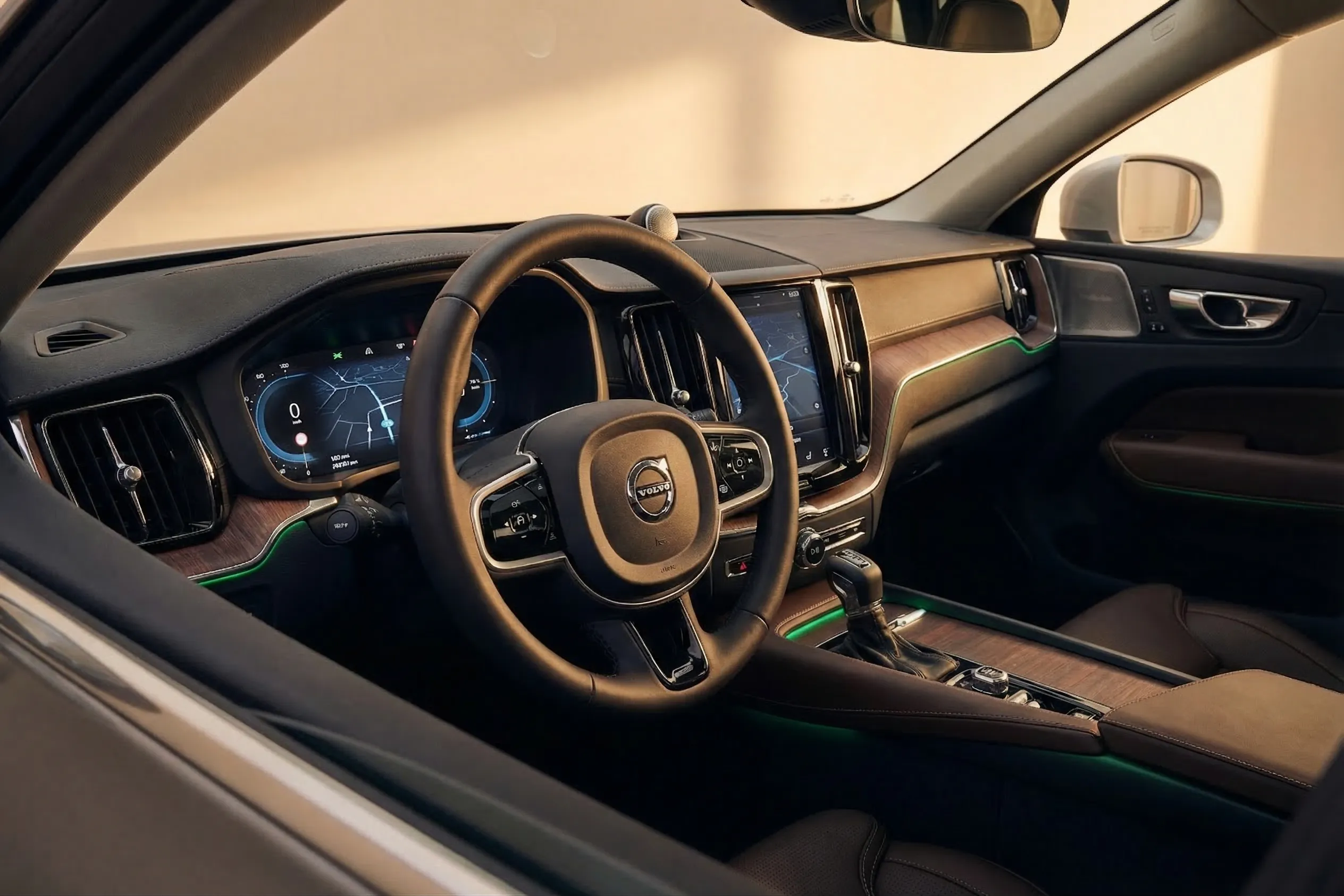
Your first ten minutes are disorienting. Where are my controls? Why can't You can see my speed without looking right? But then something clicks, literally. You stop hunting for buttons that don't exist and start driving. The steering wheel has physical scroll wheels for volume and cruise control. The gear selector is a toggle on the centre console. Climate adjustments live one tap away on the touchscreen. After three days, drivers stop thinking about it entirely. After two weeks, getting into any conventional car feels cluttered.
Materials are where Volvo flexes its sustainability credentials without being annoying about it. The dashboard uses a single piece of recycled denim-fibre material across the full width. The seats are vegan leather or wool blend, depending on the trim. The door panels use flax-based composites. None of this feels cheap, it feels deliberate. Like someone actually designed it instead of ticking boxes on a supplier spec sheet. The Scandinavian forest-themed ambient lighting (greens and blues, not disco-RGB) is subtle enough that you forget it's there, which is exactly the point.
Safety: The Non-Negotiable
This is the safest subcompact car you can buy in Canada. The EX30 scored 5 stars from Euro NCAP with a 92% adult occupant score. It has seven airbags including a centre airbag between the front seats, a feature that costs exactly $0 extra because Volvo includes it standard. The ADAS suite includes adaptive cruise, lane keeping, blind spot monitoring, rear cross-traffic alert, and Volvo's signature front collision mitigation with pedestrian and cyclist detection. All standard. On every trim.
Here's what matters in practice: on the Sea-to-Sky Highway in February rain, the lane keeping system is firm without being grabby. It nudges drivers back into lane when drifting while checking a merging truck. The adaptive cruise handles stop-and-go traffic on the Lions Gate Bridge without a single phantom braking event, which puts it ahead of the Tesla Model Y based on owner reports. The blind spot cameras that show up on the centre screen when you signal are genuinely useful, especially given the EX30's thick rear pillars. Visibility out the back isn't great for a car this size, but the 360-degree camera and rear cross-traffic alert compensate.
Volvo's park pilot assist is included on all trims. On Robson Street in downtown Vancouver, the system slots into a space most drivers wouldn't attempt manually. For a subcompact that'll spend most of its life in tight urban parking, this isn't a luxury, it's essential.
Gear worth having
As an Amazon Associate, ThinkEV earns a small commission from qualifying purchases — at no extra cost to you.

VIOFO A229 Pro 4K Dash Cam
4K front plus 2K rear with parking mode and GPS. Your silent witness for insurance claims, with always-on sentry recording while parked.
As an Amazon Associate, ThinkEV earns from qualifying purchases — at no extra cost to you.
The LFP Battery Advantage
The EX30 uses a 69 kWh lithium iron phosphate (LFP) battery, and this is a bigger deal than most reviewers acknowledge. LFP chemistry means you can charge to 100% daily without worrying about long-term degradation. NMC batteries (used in most competitors) should be kept between 20-80% for optimal longevity. With LFP, just plug in every night and charge to full. It's the difference between managing your battery like a precious instrument and treating it like a phone. Charge it, use it, charge it again.

Real-world range in mild Vancouver conditions was consistently 410-430 km on a full charge with the Single Motor, about 5-7% below Volvo's 440 km rating. In colder weather (around -5C on a trip to Manning Park), that dropped to roughly 370 km, which is a 16% reduction. Not bad for a Canadian winter test. The heat pump helps significantly, cabin heating drew noticeably less power than the resistive heaters in the Kia EV3 tested in our comparison last month.
DC fast charging tops out at 153 kW, which puts the EX30 in the middle of its class. A 10-80% charge takes about 26 minutes at a compatible station. I used Electrify Canada stations along Highway 1 twice, and actual peak rates hit 148 kW before tapering. It's not 800V architecture like the Ioniq 5 or EV6, but it's fast enough that a highway stop is a bathroom break, not a meal. At home on a Level 2 charger (my Grizzl-E Classic at 40 amps), a full 0-100% charge takes about 7 hours overnight. Plug in at 11 PM, full battery by 6 AM. Effortless.
Gear worth having
As an Amazon Associate, ThinkEV earns a small commission from qualifying purchases — at no extra cost to you.

Grizzl-E Classic Level 2 EV Charger (40A)
Canadian-made and rated for minus 40C winters. 40A / 9.6 kW, NEMA 14-50, indoor/outdoor, 24-ft cable. The charger built for Canadian weather.
As an Amazon Associate, ThinkEV earns from qualifying purchases — at no extra cost to you.
On the Road
The EX30 is quick. The Single Motor's 268 hp and 343 Nm of torque launch this 1,790 kg car to 100 km/h in 5.3 seconds. That's Golf GTI fast in a car that looks like a meditation retreat on wheels. Off the line at a green light on Granville Street, the EX30 just goes, smooth, instant, silent. Merging onto Highway 1 from the Horseshoe Bay on-ramp, there's genuine shove. You don't need the Twin Motor's 422 hp unless you're actively looking for trouble.
Where this car really earns its "city" credentials is the turning circle. At 10.4 metres, it'll U-turn on streets where my XC60 needs a three-point turn. Parking in Gastown, darting through Chinatown side streets, working through the tight ramps at Pacific Centre, the EX30 feels smaller than it is. The steering is light at low speeds (which you want in the city) and firms up on the highway (which you also want). It's not the most communicative electric steering I've used, the Kia EV6 is sharper, but it's appropriate for the car's mission.
Highway comfort surprised me. The ride is firm but never harsh, even on BC's occasionally neglected secondary roads. Wind noise is minimal up to 110 km/h, partly thanks to the frameless door design and acoustic glass. There's some tire roar on coarse asphalt, but it's well-controlled for the segment. The Vancouver to Kamloops run (350 km) passes without fatigue, which isn't something you'd expect from a subcompact. The seats are supportive in the right places, the driving position is high enough to see over traffic, and the Google Maps integration with battery-aware route planning just works.
One-pedal driving is available and well-calibrated. In "one-pedal" mode, lifting off the accelerator brings strong regenerative braking that'll bring you to a complete stop. In city driving, I barely touched the brake pedal. The transition from regen to friction braking is smooth, no lurch, no grab, just progressive deceleration. This is one area where Volvo nailed the tuning.
The Google Problem (And Why It Might Not Be One)
Here's where the EX30 divides people: the infotainment runs Google Built-In exclusively. No Apple CarPlay. No Android Auto. Google Maps, Google Assistant, Google Play Store. If you're deeply embedded in the Apple ecosystem, this is a dealbreaker on paper. In practice? I'm an iPhone user, and after two weeks, I didn't miss CarPlay once.
Google Maps with EV-specific routing is genuinely better than Apple Maps for EVs. It knows the EX30's battery capacity, factors in elevation changes along your route, and suggests charging stops with real-time availability. On the route to Hope, it suggests stopping at the Electrify Canada station in Chilliwack "to maintain comfortable range", and it's right. The Spotify app through Google Play works identically to the CarPlay version. Phone calls route through Bluetooth as usual. Text messages read out via Google Assistant.
App support is where Google Built-In shines over most competitors. You can install apps directly on the car's system, Spotify, YouTube Music, Audible, podcast apps, without needing your phone as a bridge. Over-the-air updates improve the system regularly. Volvo pushed an update during my test that improved climate control responsiveness. That said, some apps are still missing (no Waze, no Amazon Music at time of writing), and the Google Assistant's voice recognition struggled with French-Canadian place names. Asking for "Trois-Rivières" required three attempts.
The Verdict
If you value safety and design over raw specifications, the Volvo EX30 is the best premium small EV you can buy in Canada. It doesn't have the Kia EV3's cargo space. It doesn't match the Mini Cooper SE's go-kart handling. It's not as cheap as the BYD Dolphin will be when it arrives. But it's the only subcompact EV that makes you feel like you're driving something considered, something where every decision, from the LFP battery chemistry to the recycled dashboard material to the centre airbag, was made for a reason.
Buy the Single Motor. Pocket the EVAP rebate. Charge to 100% every night without guilt. Drive it through Vancouver's rain, Edmonton's -30C mornings, or Toronto's perpetual construction zones with the confidence that comes from knowing your car was designed by people who've been thinking about safety longer than most automakers have been thinking about EVs.
Gear worth having
As an Amazon Associate, ThinkEV earns a small commission from qualifying purchases — at no extra cost to you.

Magnetic Windshield Snow Cover
Skip the scraping. Magnets hold it on, peel it off with the snow, and your defroster stops draining range on cold mornings.
As an Amazon Associate, ThinkEV earns from qualifying purchases — at no extra cost to you.
At $46,950 before rebates, or roughly $41,950 after the federal EVAP, the EX30 is the Volvo for people who never thought they'd buy a Volvo. And honestly? That might be the highest compliment I can give it.
Gear worth having
As an Amazon Associate, ThinkEV earns a small commission from qualifying purchases — at no extra cost to you.

Roadside Emergency Safety Kit
Jumper cables, a portable air compressor, tow strap, first aid, and more for when something goes wrong between chargers. Canadian winters do not forgive the unprepared.
As an Amazon Associate, ThinkEV earns from qualifying purchases — at no extra cost to you.
Related Reading
- Kia EV6 Canada Review 2026, A bigger, sportier alternative with 800V charging
- Best Level 2 EV Chargers Ranked Canada 2026, What to install at home for your EX30
- Canada EV Rebate EVAP 2026 Guide, How to claim your $5,000 federal rebate
Gear worth having
As an Amazon Associate, ThinkEV earns a small commission from qualifying purchases — at no extra cost to you.
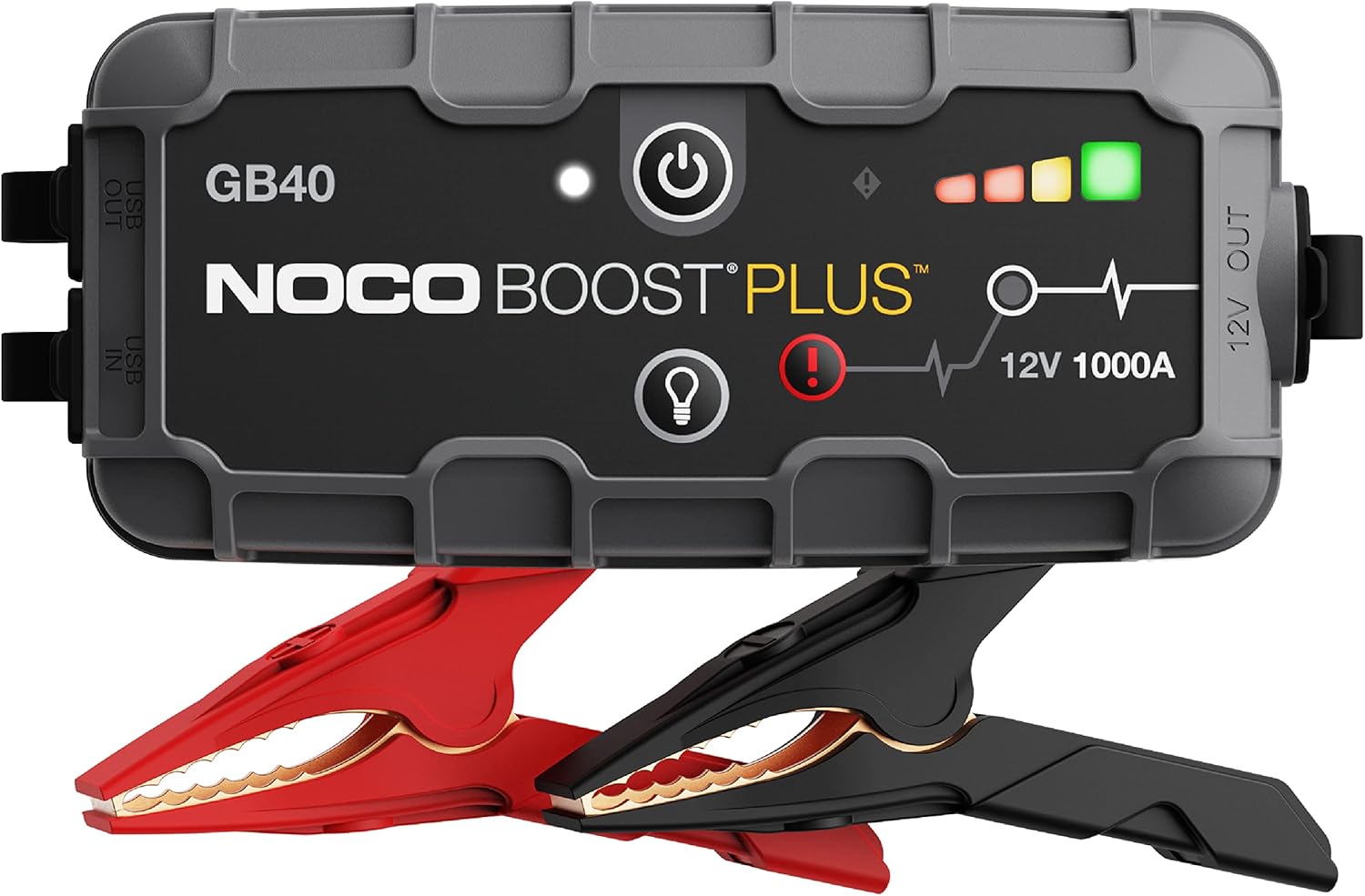
NOCO Boost Plus GB40 Jump Starter
A 1000A lithium jump starter that fits in your glovebox and works on any 12V battery. Your insurance against a dead 12V in a parking lot.
As an Amazon Associate, ThinkEV earns from qualifying purchases — at no extra cost to you.

Founder & Chief Editor
Vlad Pereira is the founder and chief editor of ThinkEV.ca, the Canadian electric-vehicle publication he writes and edits from Courtenay, British Columbia. He covers EV pricing, federal and provincial rebates, charging costs, and the Chinese manufacturers now entering Canada, from the buyer's side rather than the press-fleet side. ThinkEV is a venture of Vlad Pereira Online; his writing on health, income and the long game lives at vladpereira.com.
Frequently asked questions
Does the Volvo EX30 qualify for Canada's $5,000 EVAP rebate?
Can I charge the EX30's LFP battery to 100% every day?
Does the Volvo EX30 support Apple CarPlay?
What is the real winter range of the Volvo EX30 in Canada?
More EV & road-trip finds
Affordable upgrades worth a look — tap any to check the price on Amazon.
 ★ 268
★ 268Anti-Slip Leather Steering Wheel Cover
View on Amazon ★ 8,681
Chemical Guys Complete Car Wash Kit
View on Amazon ★ 419
★ 419RGB Car Interior LED Strip Light
View on Amazon ★ 1,349
Cool Swinging Duck Dashboard Ornament
View on Amazon ★ 865
★ 865Collapsible Trunk Organizer
View on Amazon ★ 15,014
Spigen Tempered Glass for Tesla Model 3/Y
View on Amazon ★ 121
★ 121Foldable Windshield Sun Umbrella
View on Amazon ★ 392
★ 392Large Cup Holder Adapter (32-40oz)
View on AmazonRead, Plan, Then Stay Current
Explore our expert articles to understand incentives and ownership costs, use the map to pressure-test charging reality, then subscribe so new EV coverage comes straight to you.
Continue Reading

Rivian R1T Canada Review 2026: 515 km Quad-Motor
Rivian R2 Canada Price 2026: The $57K Electric SUV
VW ID. Buzz Canada Review: $69,995 Electric Microbus
BYD Dolphin Canada: Price, Specs and 2026 Review
BYD Shark 6 Canada: Price, Specs and 2026 Release