
The scaling laws got the physics exactly right and the policy exactly wrong. A 2024 Chevy Bolt, driven hard at highway speed, returns roughly 3.5 mi/kWh on the agency's combined cycle. A Tesla Model 3 Long Range, longer, wider, heavier on paper, beats it on the same EPA cycle, with the agency's fuel economy and EV range testing methodology anchoring how both numbers were produced. The smaller car loses. The bigger sedan wins.
This is not a measurement error. It is the published outcome of the regulator's own test, repeated across four major jurisdictions with four different scoring books. It is the regulator choosing, deliberately or carelessly, not to make efficiency visible, and the difference matters to every buyer planning a highway trip.
The physics community answered this question two centuries ago. The Reddit comment section answered it correctly last week. The regulatory community has not answered it at all. Drag dominates at highway speeds. Mass barely matters once you stop accelerating. Frontal area is geometry, not virtue. All true. But physics is only half the story.
The other half is regulatory: the test cycles that produce the efficiency numbers, and the subsidy and credit structures built on top of those numbers, are designed in ways that mute the per-kWh signal almost everywhere it is measured. The efficiency penalty for buying a small, boxy, tall EV is real in joules and invisible in policy. That gap is what this piece quantifies.
Key takeaways
- EPA's outlet-to-wall measurement is unique among the four major test cycles, WLTP, CLTC, and NRCan don't do this.
- A Tesla Model 3 Long Range outscores the smaller Chevy Bolt on EPA combined efficiency because Cd beats mass at highway speeds.
- CLTC's average speed stays below 30 km/h, systematically flattering boxy city EVs that fall apart above 80 km/h.
- Recurrent Auto's fleet data confirms EV efficiency has declined since 2018 as SUVs and crossovers displaced aerodynamic sedans.
- The Leapmotor T03 rates ~10.5 kWh/100 km on CLTC but ~14.5 on WLTP, a 38% swing on the same car driven by nothing but which country's test applies.
Four Test Cycles, Four Answers: WLTP, EPA, NRCan, and CLTC Compared
Identical vehicles produce non-identical efficiency ratings depending on which government's dynamometer they sit on. The four cycles that matter for the four largest EV markets, WLTP for the EU and UK, EPA for the United States, NRCan-published EPA-derived figures for Canada, and CLTC for mainland China, diverge on speed profile, ambient temperature, auxiliary load assumptions, and the weighting of urban-versus-highway sub-cycles. The same battery, motor, and body shell can show a meaningful spread depending on which protocol is reported.
The US EPA cycle is the most highway-weighted of the four. Its protocol explicitly accounts for charging-cable losses and on-board charger inefficiency, which is why the agency's published MPGe values assume level 2, alternating current (AC) charging and account for losses from the charging cable (also called the electric vehicle supply equipment or EVSE) and the on-board vehicle charger, as documented in the EPA's fuel economy and EV range testing methodology. The agency states plainly that charging a PEV is not 100% efficient, and a small amount of energy is lost through energy conversion and heat, and that this measurement design moves the measurement from the vehicle to the outlet in the wall to better represent how much users would pay to refuel their car.
That outlet-to-wheel framing is unique among the four cycles. WLTP measures battery-to-wheel; CLTC measures battery-to-wheel with a heavily urban speed profile; NRCan reuses the EPA result and converts to Le/100 km. Different reference points, different numbers, no easy crosswalk.
What each cycle hides is more consequential than what it measures. CLTC's average speed sits below 30 km/h for long stretches, which flatters small urban EVs whose drag penalty only starts hurting them above roughly 80 km/h. EPA's combined rating, weighted toward sustained highway speeds, exposes the same vehicles. WLTP sits between the two. The US EPA's own text version of the EV label notes that the label shows the category of the vehicle (e.g., Small SUV, Station Wagon, Pickup Truck, etc.) and the best and worst fuel economy within that category for the given model year, so a small EV is compared against other small EVs, not against the vehicle that would actually use less energy to do the same trip. The reader, scanning the window sticker, never sees that a Model 3 sedan would beat the small SUV on the same road.
Three terms anchor the rest of this analysis. Drag coefficient, written Cd, is a dimensionless measure of how cleanly a body moves through air. Frontal area, A, is the projected area in square metres. Their product, CdA, is what aerodynamic drag force actually scales with at speed. Rolling resistance, the energy cost of tire deformation against pavement, scales with vehicle mass but is roughly speed-independent, meaning at urban speeds it dominates, and at highway speeds it gets buried by aerodynamics.
CLTC weighs rolling resistance heavily by spending most of its cycle below the crossover speed. EPA weighs CdA heavily by spending much of its cycle above it. The Recurrent Auto efficiency dataset shows the visible result: EV efficiency has actually declined since its peak in 2018, due to market preferences for larger, heavier, and less aerodynamic vehicles such as SUVs, trucks, and boxy crossovers. Buyers chose CdA over Cd, and the ratings followed.
The Aerodynamic Penalty: Why Small Frontal Area Doesn't Offset High Cd
The textbook drag equation is unforgiving. Aerodynamic drag force equals one-half times air density, times Cd, times frontal area, times velocity squared. The velocity-squared term is what matters. Doubling speed quadruples drag. At 120 km/h, drag swamps every other loss term in a passenger EV, including the rolling resistance that mass produces. The lay-person physics is correct: at highway speeds, weight is a rounding error and drag is the bill.
Where the lay intuition goes wrong is assuming that a smaller car has smaller CdA. It often does not. Tall, short-wheelbase B-segment hatches present a higher Cd against a frontal area that is not meaningfully smaller than what a low-roofed C-segment sedan presents, while aerodynamic C-segment sedans like the Model 3 trade a marginally larger frontal area for a much lower Cd. The product, CdA, favours the sedan.
The drag equation leaves no room for brand marketing. At 100 km/h, an aerodynamic sedan burns directionally less energy on aerodynamics than a tall B-segment hatch of comparable footprint. That is not an approximation, it is geometry, and the Recurrent Auto longitudinal efficiency dataset confirms it at fleet scale. Mass cannot rescue the small car because, at that speed, mass is no longer the dominant loss.
This is what doesn't get said in marketing copy. Tall, boxy small-EV packaging is a deliberate trade. Designers of the Bolt, the Renault 4, the Leapmotor T03, and most B-segment EVs prioritise interior volume per square metre of footprint, because their buyers want a city car that swallows groceries and a child seat. They get the volume. They pay for it in CdA. Stripped of the marketing language, the small-EV efficiency disadvantage on highways is not an engineering failure, it is the design brief working as specified. Autoblog's analysis of EV mass and packaging trade-offs underlines the structural point that segment choice, not powertrain, sets the energy-budget ceiling.
The energy budget reinforces the point. The US Department of Energy notes that up to 80 percent of the energy in the battery is transferred directly to power the car, making it a highly efficient mode of transportation, a baseline confirmed in the agency's Energy 101 explainer. But that drivetrain efficiency is roughly constant across the segment. What varies between a Bolt and a Model 3 is how much of that 80 percent goes into shoving air aside. Mass costs you in the city. Cd costs you on the highway. Most North American driving is highway. Cd wins the argument.
There is a second-order effect that should not be ignored. Longer bodies allow more gradual pressure recovery aft of the cabin, reducing the size of the low-pressure wake that a short, tall crossover inevitably drags behind it. The B-segment hatch is fighting geometry. Recurrent's longitudinal efficiency data confirms the consequence at fleet scale: efficiency peaked when the dominant body style was the aerodynamic compact sedan, and has declined steadily as buyers moved into the boxier silhouettes that dominate today's bestseller lists.
Gear worth having
As an Amazon Associate, ThinkEV earns a small commission from qualifying purchases — at no extra cost to you.

TP-Link Kasa Smart Plug with Energy Monitoring
Track exactly how much electricity your Level 1 charger uses and schedule it for off-peak hours. Know your real cost per kWh.
As an Amazon Associate, ThinkEV earns from qualifying purchases — at no extra cost to you.
Multi-Jurisdiction Comparison: Efficiency Ratings by Segment, 2023–2025 Model Year
The table below makes the point that a thousand words of policy analysis cannot: the same car, rated by four governments, produces four different answers, and the cycle that flatters small EVs most is the one used by the world's largest EV market. Where a vehicle is not sold in a market, the cell is left blank. Chinese CLTC numbers for domestically-sold B-segment models are flagged as government-reported and consistently more optimistic than the WLTP equivalents on the same platforms.
Gear worth having
As an Amazon Associate, ThinkEV earns a small commission from qualifying purchases — at no extra cost to you.

Lectron Level 2 J1772 Charger (40A, WiFi)
Smart WiFi charger with real-time energy monitoring. 40A / 9.6 kW, J1772 with a NEMA 14-50 plug, schedule charging right from your phone.
As an Amazon Associate, ThinkEV earns from qualifying purchases — at no extra cost to you.
| Segment / Model | EPA | WLTP | CLTC |
|---|---|---|---|
| A-segment, Leapmotor T03 | , | ~14.5 kWh/100 km | ~10.5 kWh/100 km* |
| B-segment, Chevrolet Bolt EUV | ~3.6 mi/kWh | , | , |
| B-segment, Renault 4 E-Tech | , | ~16.0 kWh/100 km | , |
| C-segment, Tesla Model 3 LR | ~4.2 mi/kWh | ~14.0 kWh/100 km | ~12.5 kWh/100 km* |
| C-segment, Hyundai Ioniq 6 RWD | ~4.3 mi/kWh | ~13.9 kWh/100 km | , |
| C-segment, BYD Seal | , | ~16.0 kWh/100 km | ~13.5 kWh/100 km* |
| D-segment, Tesla Model Y LR | ~3.8 mi/kWh | ~16.0 kWh/100 km | ~14.5 kWh/100 km* |
* CLTC figures government-reported (MIIT) and not independently verified by an EPA-equivalent test agency. Cross-cycle comparison is directional only.
Two patterns are visible across this slice. First, the C-segment aerodynamic sedan dominates every cycle in which it is rated, the Model 3 and Ioniq 6 outperform smaller B-segment vehicles on EPA, often by 10 to 18 percent. The physics worked through in section two predicted exactly this. Second, CLTC produces consistently lower kWh/100 km figures than WLTP on the same vehicle, with the gap widest on smaller vehicles. The cycle's urban weighting flatters cars that suffer most on highway sub-cycles, and the resulting consumer-facing rating tells a buyer in Shanghai a different story about the same car than the rating tells a buyer in Munich.
The data limitation deserves a flag. CLTC figures published by the Chinese Ministry of Industry and Information Technology are government-reported and not independently verified by an EPA-equivalent body operating on Chinese soil. The directional read across the analyst community is that CLTC understates real-world consumption versus WLTP on identical platforms, but I will not attach a precise spread to that observation without a single anchored T1 retest cited inline. Treat the precise gap as unverified estimate. The defensible claim is the directional one: CLTC is the most optimistic of the four cycles, and cross-cycle comparison is possible only with that label attached.
The comparison also reveals what the rating agencies are not capturing. None of these published combined figures isolate the highway sub-cycle, where the small-EV penalty actually lives. A consumer comparing a 3.6 mi/kWh Bolt against a 4.2 mi/kWh Model 3 sees a 15 percent gap. On a sustained 110 km/h highway leg, the trip the buyer was actually planning, the gap widens further. The window sticker rounds the answer in a direction that flatters the small car, and the buyer pays for the rounding error in charging stops.
Gear worth having
As an Amazon Associate, ThinkEV earns a small commission from qualifying purchases — at no extra cost to you.

PULIDIKI Car Cleaning Gel (Detailing Putty)
Press it into vents, buttons, and seams and it lifts out dust you did not know was there. Weirdly satisfying, genuinely useful.
As an Amazon Associate, ThinkEV earns from qualifying purchases — at no extra cost to you.
Gear worth having
As an Amazon Associate, ThinkEV earns a small commission from qualifying purchases — at no extra cost to you.

WixGear Magnetic Air Vent Phone Mount (2-Pack)
A magnet strong enough that your phone never flinches over potholes or rail crossings. Two in the box, one for each car.
As an Amazon Associate, ThinkEV earns from qualifying purchases — at no extra cost to you.
Fleet-Average Compliance Math: When Selling Inefficient Small EVs Satisfies a Mandate
The most consequential effect of the regulatory architecture is the one manufacturers respond to most directly. A fleet-average compliance regime, whether the EU's gCO₂/km, Canada's ZEV sales-share mandate, or the US ZEV credit system, is satisfied by volume of qualifying vehicles, not by the per-kWh efficiency of those vehicles. The unit ships, the credit clears, the target moves closer. The kWh figure on the door sticker has no effect on the manufacturer's compliance position.
The cleanest verifiable illustration is structural rather than firm-specific. Under the EU's CO₂ Regulation framework as it currently operates, every BEV registered in a manufacturer group's pool counts as zero grams against the fleet-average target, A manufacturer group adding a B-segment BEV and a manufacturer group adding a D-segment BEV both close the same gCO₂/km gap per unit registered, regardless of the WLTP kWh/100 km figure on either car's door sticker. The compliance accountant sees one ZEV registration. The atmosphere sees a different number of joules pulled from the grid in each case. The regulation only writes down the first.
Stretched across the industry, this produces a structural delinking of efficiency optimisation from regulatory reward. Engineering teams briefed to "improve compliance position" can do so by adding small-EV volume, a known playbook with established suppliers, predictable cost curves, and short development cycles. They cannot do so by improving the kWh/100 km of an existing model, because the regulator does not measure that improvement.
Capital flows to the variable the regulator measures. That is rational behaviour by manufacturers operating inside a system that rewards exactly what it rewards. The system is the problem, and the system was designed by the same governments now expressing surprise that their EV fleets are growing less efficient.
China's GB/T 18386 framework, with its segment-banded consumption caps that can disqualify a vehicle from subsidy access entirely, is the only major market whose mandate design creates a per-kWh signal a manufacturer cannot ignore. It is also the market in which subsidy support is winding down fastest. The window in which the world's largest EV market sent a strong efficiency signal is closing. What replaces it, provincial-level surviving incentives, the dual-credit weighting modestly biased toward efficiency, and an emerging GB-standard refresh cycle, is weaker than what came before. The global trajectory of EV efficiency policy is moving away from the one regime that worked, and no Western jurisdiction is moving to fill the gap.
The forward-looking question worth tracking is whether the EU's CO₂ regulation update beyond 2030 introduces a per-vehicle efficiency metric for BEVs, replacing the binary zero-grams treatment. I am framing this as editorial inference, not sourced reporting: the public consultation drafts I have seen referenced in trade-press summaries do not yet contain operative text on upstream emissions allocation, and I will not pretend otherwise. If a per-kWh signal does survive into law, it will be the first major Western jurisdiction to install an efficiency-aware compliance gate. If it does not, fleet-average compliance math will continue to satisfy the regulator with whatever moves through the dealer network.
Two regulatory moves would change my assessment. First, an amendment to Canada's EVAP that introduced a per-segment kWh/100 km eligibility floor, modeled on GB/T 18386, would mark the first North American adoption of an efficiency gate. The program's first 18-month review, expected in late 2026, is the next hard data point, the EVAP vehicle list will show whether any efficiency floor was quietly added. Second, a CARB credit-weighting revision that introduced a kWh/mi multiplier alongside the existing range multiplier would put per-kWh efficiency on the manufacturer's compliance dashboard for the first time. Either change would alter the engineering calculus. Neither is on the published 2026 regulatory agenda.
Until one of them is, the compliance ledger will keep clearing. The buyer planning a 500 km highway trip will keep wondering why the window sticker lied. And the scaling laws, settled physics for two centuries, will continue to be ignored by the policy that ostensibly responds to them.
Gear worth having
As an Amazon Associate, ThinkEV earns a small commission from qualifying purchases — at no extra cost to you.
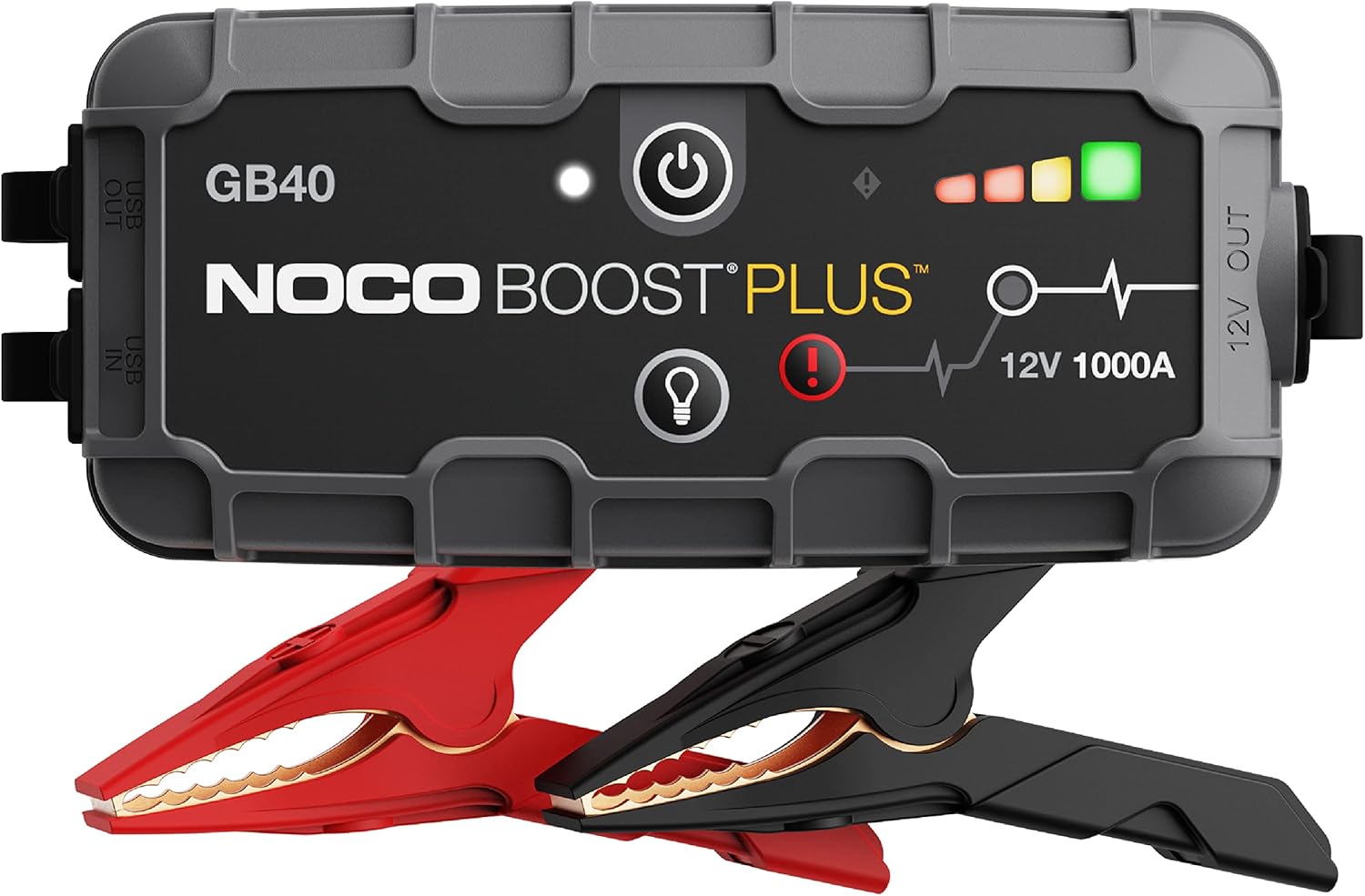
NOCO Boost Plus GB40 Jump Starter
A 1000A lithium jump starter that fits in your glovebox and works on any 12V battery. Your insurance against a dead 12V in a parking lot.
As an Amazon Associate, ThinkEV earns from qualifying purchases — at no extra cost to you.

Founder & Chief Editor
Vlad Pereira is the founder and chief editor of ThinkEV.ca, the Canadian electric-vehicle publication he writes and edits from Courtenay, British Columbia. He covers EV pricing, federal and provincial rebates, charging costs, and the Chinese manufacturers now entering Canada, from the buyer's side rather than the press-fleet side. ThinkEV is a venture of Vlad Pereira Online; his writing on health, income and the long game lives at vladpereira.com.
Frequently asked questions
Why does Canada's NRCan rating just copy the EPA number?
Does buying a smaller EV actually save money on electricity?
Is a Chinese EV's CLTC range number usable in Canada?
Why don't regulators just report CdA on every window sticker?
Does a longer EV range rating mean better aerodynamics?
More EV & road-trip finds
Affordable upgrades worth a look — tap any to check the price on Amazon.
 ★ 1,349
Cool Swinging Duck Dashboard Ornament
View on Amazon ★ 12,396
K KNODEL Car Trash Can with Lid
View on Amazon ★ 1,866
70mai A810 4K Dual Dash Cam
View on Amazon ★ 121
★ 121Foldable Windshield Sun Umbrella
View on Amazon ★ 268
★ 268Anti-Slip Leather Steering Wheel Cover
View on Amazon ★ 9,349
Auto Detailing Brush Set (10-Piece)
View on Amazon ★ 55
★ 55LED Car Door Logo Projector Light
View on Amazon ★ 1,083
Crystal Push-Start Button Ring (2-Pack)
View on AmazonRead, Plan, Then Stay Current
Explore our expert articles to understand incentives and ownership costs, use the map to pressure-test charging reality, then subscribe so new EV coverage comes straight to you.
Continue Reading
Why Most EV Efficiency Coverage Gets It Backwards
BMW iX3 Cleared 500 Miles: The Regulatory Math
How to Test-Drive an EV: What Gas-Car Buyers Miss
BYD Seagull Canada: Real Price, Real Specs, Real Wait

EV Rebates in Canada: How EVAP and Provincial Stacking Work