Key takeaways
- Vehicles are driven until the battery reaches 10% charge, then fast-charged from 10% back to 80%.
- the Ford Capri, which lost 47.1%, nearly half its rated range, gone, in the cold.
- the planning math is simple: in severe Canadian cold, plan on 60-70% of your official rated range on the worst days.
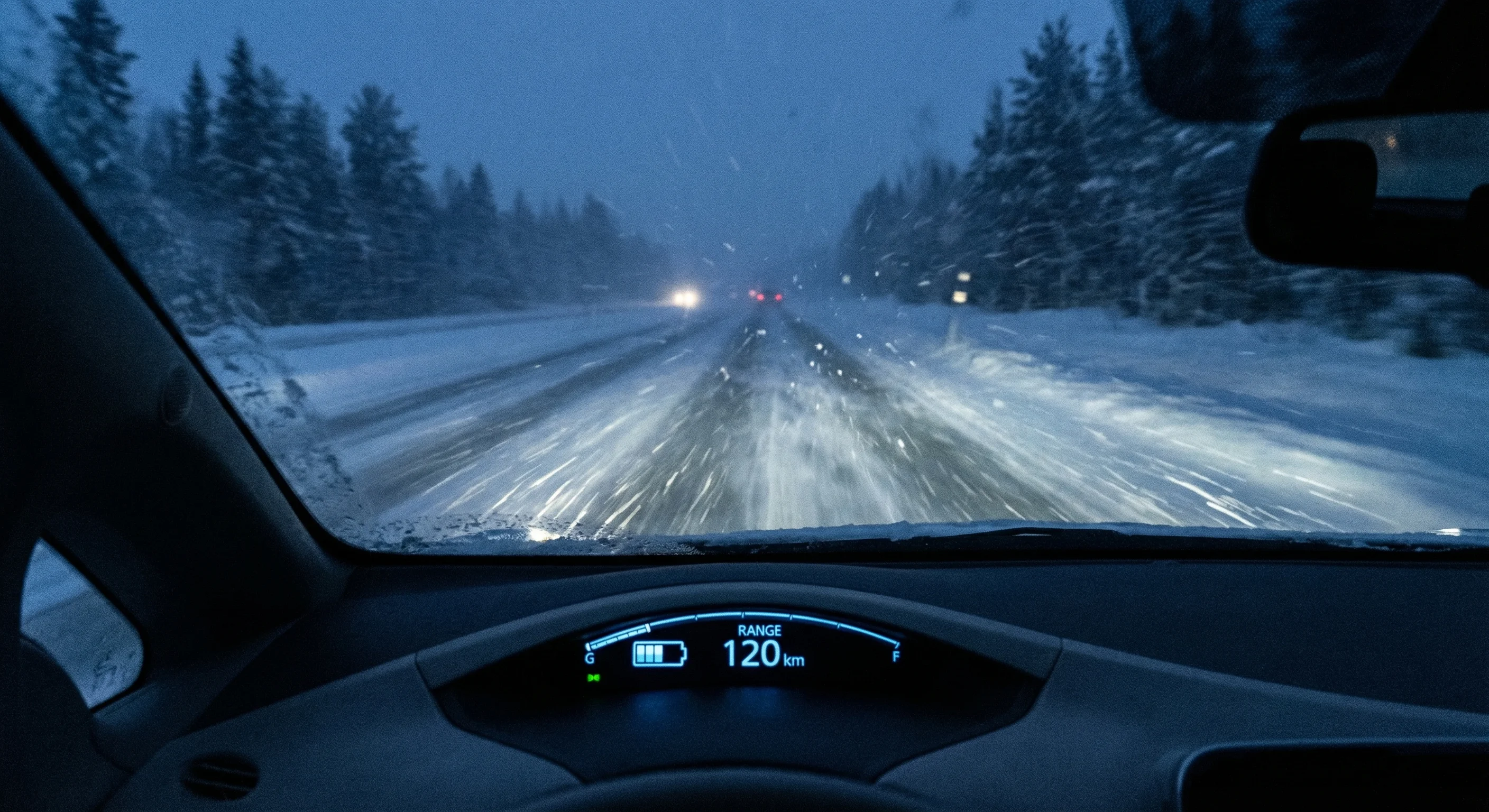
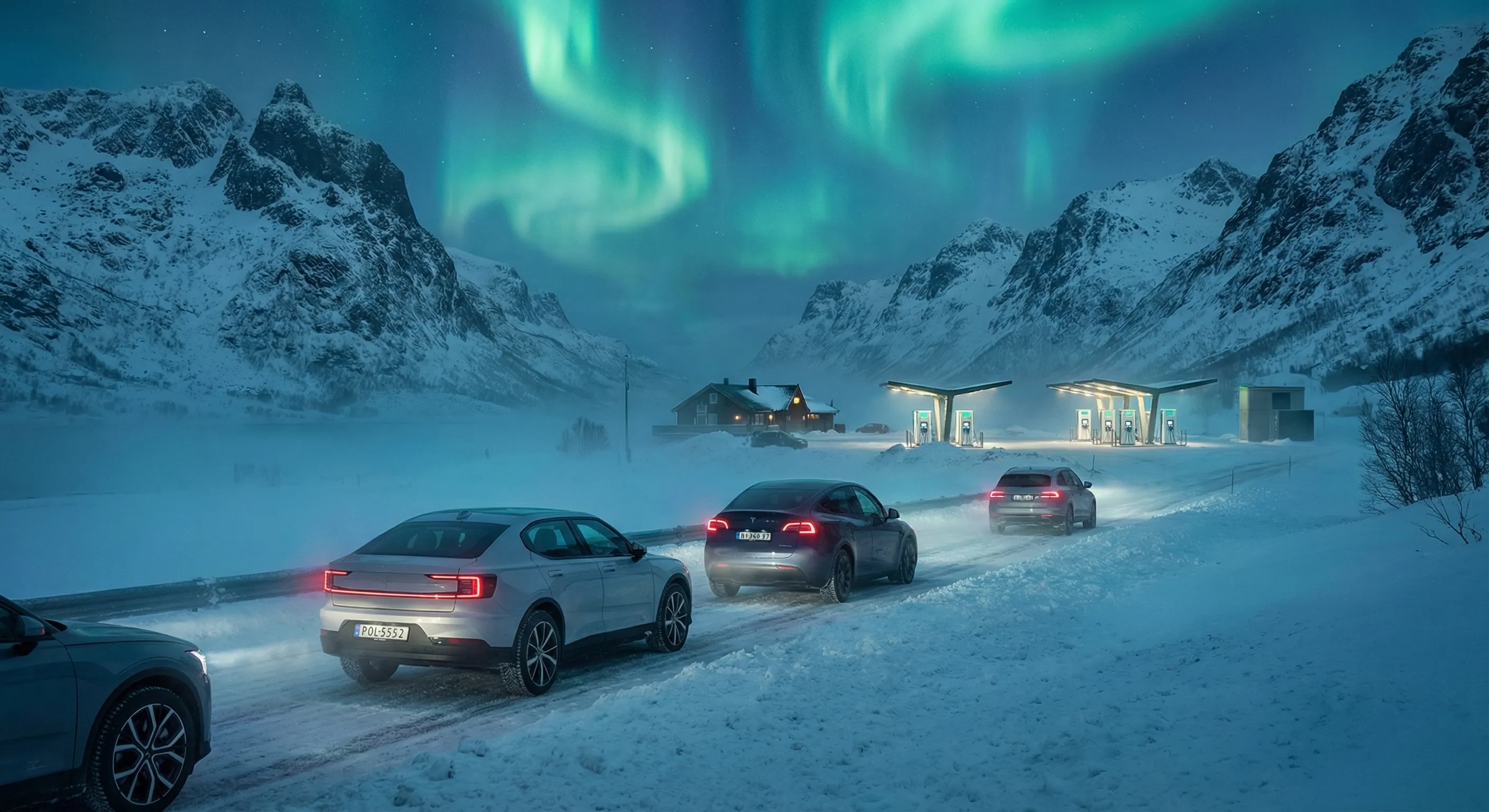
If you've been told that EVs are all more or less equal in cold weather, Norway just proved that wrong, loudly. The El Prix annual winter EV range test ran a 400 km route through Norwegian mountains and valleys at -27°C, and the gap between the best and worst performers was nearly 18 percentage points. That's not a rounding error. That's the difference between getting where you're going and standing on a frozen roadside wondering where things went wrong.
The headline result: six of the top ten performers were Chinese-made EVs. Tesla, one of the most recognizable names in the industry, landed deep in the bottom half of the pack. And if you're shopping for an EV in Canada, where the prairies and northern regions regularly hit -30°C to -40°C in January, this test is probably the most relevant real-world data you're going to find anywhere.
What the El Prix Test Actually Measures
The El Prix test isn't a lab simulation. It's a real-world winter drive on actual Norwegian roads, in actual Norwegian winter weather. Vehicles are driven until the battery reaches 10% charge, then fast-charged from 10% back to 80%. The test measures how far each vehicle actually travels compared to the manufacturer's stated range, which is almost always calculated at a comfortable 23°C.
That 23°C baseline matters. Every EV on the market has an official range rating, and essentially every one of those ratings was established in conditions that look nothing like a Canadian January. Norway, with its mountainous terrain, extended sub-zero temperatures, and demanding road conditions, is about as close as you can get to a controlled real-world stress test for cold weather range.
This is also why Norway is the most useful comparison available for Canadian buyers. There's no equivalent Canadian test with this level of rigour and this many vehicles. Norway has the infrastructure, the climate, and frankly the political will to take cold-weather EV performance seriously in a way that most other countries haven't matched yet. If you're trying to figure out how an EV will perform on a January commute between Edmonton and Red Deer, the El Prix results are your best available proxy.
The Results: Chinese EVs Dominated
Let's go through the numbers directly, because they tell a clear story.
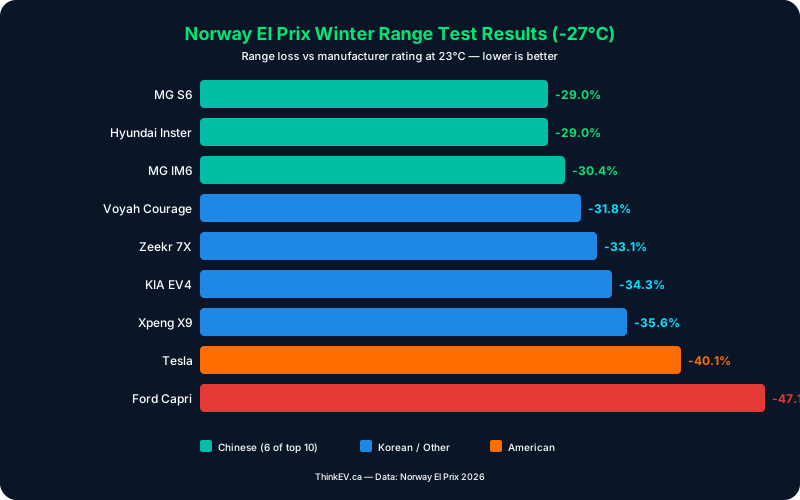
The top performers by range retention at -27°C were:
- MG S6: lost 29% of rated range (tied first)
- Hyundai Inster: lost 29% of rated range (tied first)
- MG IM6: lost 30.4% (third place)
- KGM Musso (Korean): lost 30.6%
- Voyah Courage: lost 31.8%
- Zeekr 7X: lost 33.1%
- KIA EV4: lost 34.3%
- Xpeng X9: lost 35.6%
Then there's Tesla, which posted a 40.1% range loss. And the Ford Capri, which lost 47.1%, nearly half its rated range, gone, in the cold.
Of the top ten vehicles in the overall test, six were Chinese-made and three were Korean. That breakdown didn't happen by accident. As one analyst put it bluntly: "Top performers have always been Chinese and Korean cars." This isn't a one-year anomaly. It's a pattern.
One notable absence this year: BYD didn't enter a vehicle. BYD has been a strong performer in previous cold-weather tests, so their absence left a gap at the top of the field. Whether they return next year remains to be seen, but their track record suggests they'd likely be competitive if they did.
And the MG result deserves special attention. MG is a brand that many Canadian buyers still associate with the old British sports car marque, not realising it's now owned by SAIC Motor in China. The S6 tying for first at -27°C is not a fluke, it reflects real investment in thermal management and battery engineering.
Why Battery Preconditioning Matters
The single biggest technical differentiator in cold-weather EV performance isn't battery chemistry or motor type. It's battery preconditioning, the vehicle's ability to warm the battery pack to an optimal operating temperature before and during driving.
Lithium-ion batteries don't like cold. At -27°C, an unmanaged battery pack will have dramatically reduced capacity and slower charge acceptance. The vehicles that performed best in Norway aren't just equipped with better batteries, they're equipped with better systems for managing those batteries in cold conditions. They're actively heating the pack before departure, maintaining thermal stability during the drive, and preparing for fast charging before the vehicle even arrives at the charger.
This is why the 10-80% fast charge portion of the El Prix test is just as revealing as the range portion. A vehicle with poor preconditioning will charge slowly in the cold even when connected to a high-powered charger. The cars that topped the leaderboard didn't just go farther, they recovered charge faster too. That matters enormously on a long winter road trip where you're stopping to charge in -25°C weather.
Chinese automakers have been investing heavily in cold-climate testing, specifically because they're targeting European, Canadian, and northern Asian markets where cold weather performance isn't a nice-to-have feature, it's a purchase requirement. That investment is showing up directly in the El Prix results.
For a closer look at how range varies across different Canadian conditions, the EV Winter Range Test Canada 2026 breaks down what to expect across different provinces and temperature bands.
What This Means for Canadian Buyers
Canada's winters are not Norway's winters, they're often worse. In Winnipeg, Regina, and Saskatoon, January temperatures routinely hit -30°C. In northern Alberta and the Northwest Territories, -40°C is not unusual. The El Prix test at -27°C is actually a mild entry point for what Canadian buyers face.
Gear worth having
As an Amazon Associate, ThinkEV earns a small commission from qualifying purchases — at no extra cost to you.
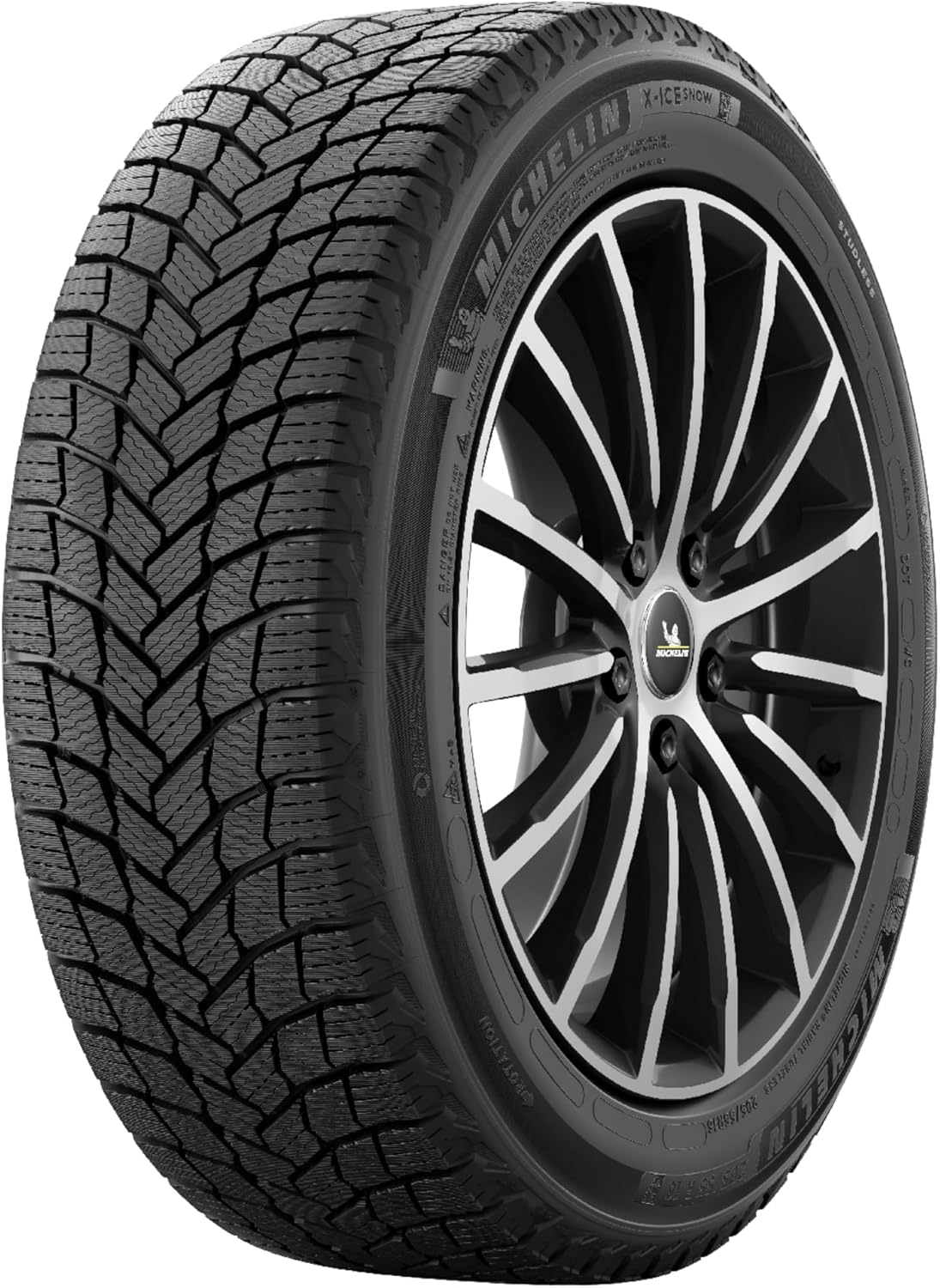
Michelin X-Ice Snow Tires (EV-rated)
EV-specific winter tires with low rolling resistance that recover up to 15 percent of cold-weather range. Mandatory in Quebec, smart everywhere else.
As an Amazon Associate, ThinkEV earns from qualifying purchases — at no extra cost to you.
The practical implications here are straightforward:
- Expect to lose 30-50% of your official range in severe cold, depending on which vehicle you buy and how cold it gets
- The gap between the best and worst performers is wide enough to matter, nearly 20 percentage points separates the MG S6 from the Ford Capri in this test
- Chinese and Korean EVs are currently leading on cold-weather performance, not just on price
- Tesla, despite its brand recognition and Supercharger network dominance, is not a leader in cold-weather range efficiency
That last point is worth sitting with. Tesla's Supercharger network is still an advantage for long-distance travel in Canada. But the vehicle's cold-weather range retention is measurably worse than the top Chinese competitors. For someone doing daily winter driving in Saskatchewan rather than cross-country road trips, the charging network matters less than how far the car goes on a cold morning.
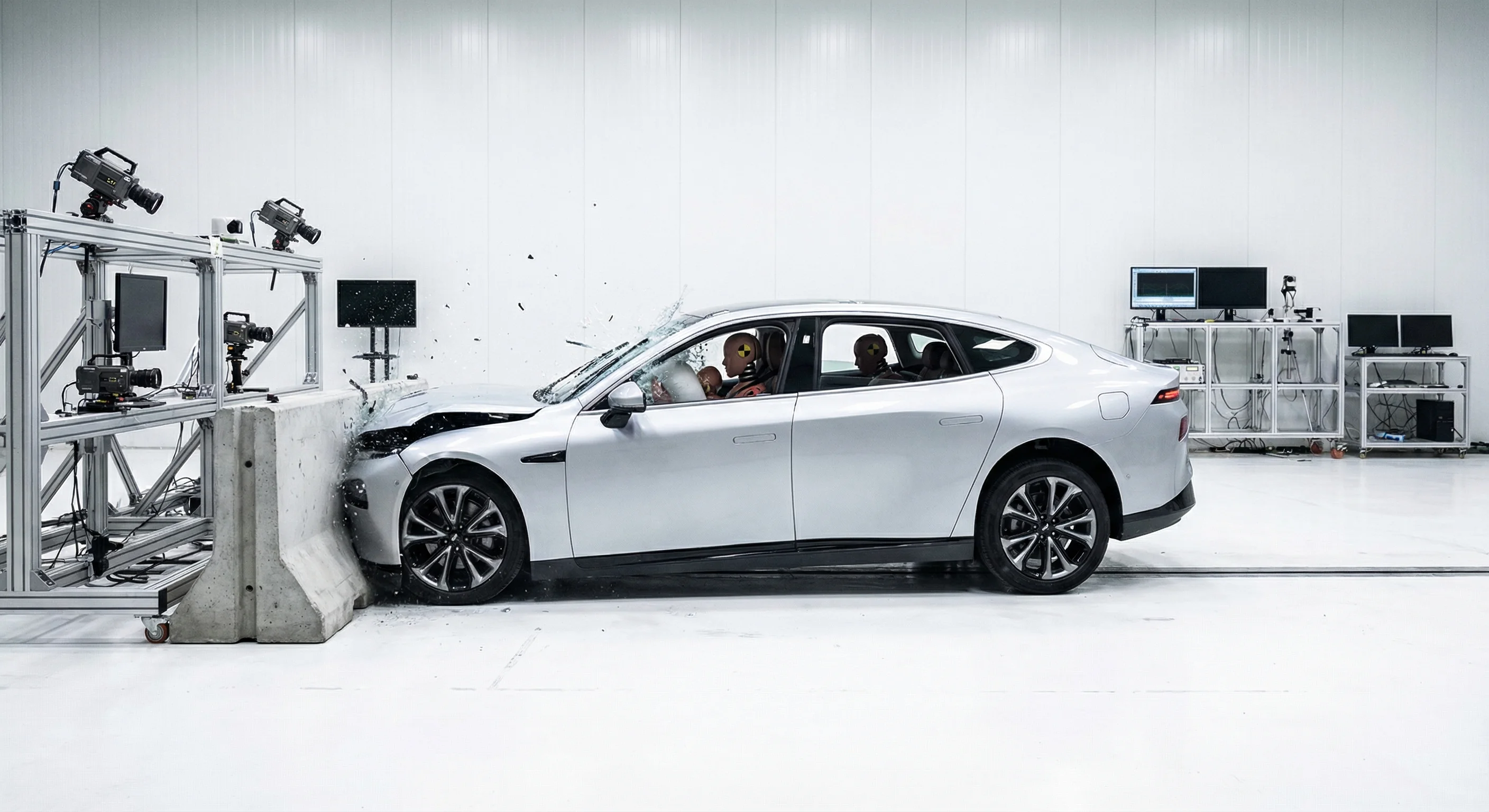
There's also a safety dimension to this conversation. Some buyers have concerns about buying Chinese EVs, quality, build standards, parts availability. Those are legitimate questions worth researching. The Chinese EVs Safety: Euro NCAP Ratings post goes through the crash test data in detail. The short version: most of the Chinese brands performing well in Norway have also scored well in Euro NCAP testing. Performance in cold weather and structural safety aren't in conflict.
The reality for Canadian buyers is that the market is changing. Chinese EVs are arriving in Canada, some directly, some through existing brand networks (MG through SAIC dealerships, for instance). The range data from Norway should make those vehicles worth taking seriously, not dismissing based on brand unfamiliarity.
And the planning math is simple: in severe Canadian cold, plan on 60-70% of your official rated range on the worst days. Better preconditioning systems can push that closer to 70-75%. Buying a vehicle with weaker thermal management means planning for 50-55%. On a 400 km battery, that difference is 80 km, and in northern Alberta in January, 80 km is not abstract.
How to Maximize Your Winter Range
The El Prix test results show what the vehicles can do. What they can't measure is what you do as a driver and vehicle owner. There are real, practical things that move the needle on winter range.
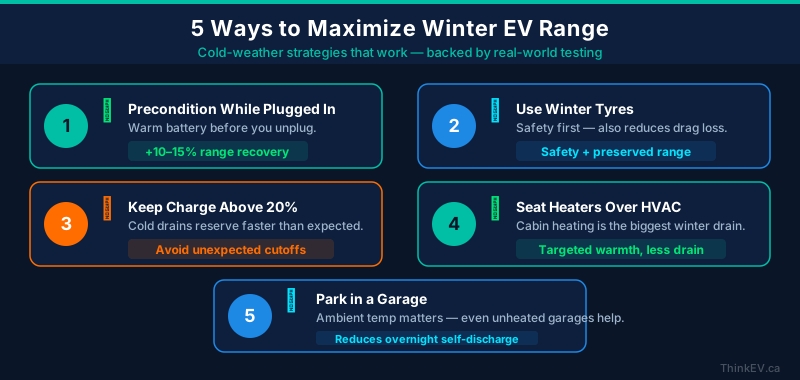
Battery preconditioning is the first one. If your vehicle has a preconditioning feature, and most newer EVs do, use it. Start it while the car is still plugged in so you're using grid power to warm the battery, not drawing down your range before you've even left the driveway. This alone can recover 10-15% of range on cold mornings.
Winter tyres are not optional in Canada. All-season tyres get harder and less grippy below 7°C, and you're fighting more rolling resistance and less traction. Winter tyres improve safety and reduce the energy the motor has to use to maintain speed on cold, slippery roads. The range benefit is secondary to the safety benefit, but both are real.
Gear worth having
As an Amazon Associate, ThinkEV earns a small commission from qualifying purchases — at no extra cost to you.

WeatherTech FloorLiner for Tesla Model 3
Deep-channel liners that trap every drop of slush and salt. The difference between a ruined interior and a showroom-fresh cabin after a Canadian winter.
As an Amazon Associate, ThinkEV earns from qualifying purchases — at no extra cost to you.
Keeping the battery charged above 20% in severe cold helps maintain thermal stability. The bottom portion of the battery is more vulnerable to cold-related capacity loss, and the vehicle's thermal management system works harder when the pack is nearly depleted. A quick top-up to 60-70% before a cold drive is better than running it down and trying to recover from 5% in -30°C weather.
Cabin heat is a significant draw on winter range, typically one of the largest single consumers in cold weather driving. Seat heaters and steering wheel heaters are more efficient than the main HVAC system for keeping you comfortable. If your vehicle lets you prioritise radiant heat over blowing hot air, do it. The range difference is noticeable.
Gear worth having
As an Amazon Associate, ThinkEV earns a small commission from qualifying purchases — at no extra cost to you.
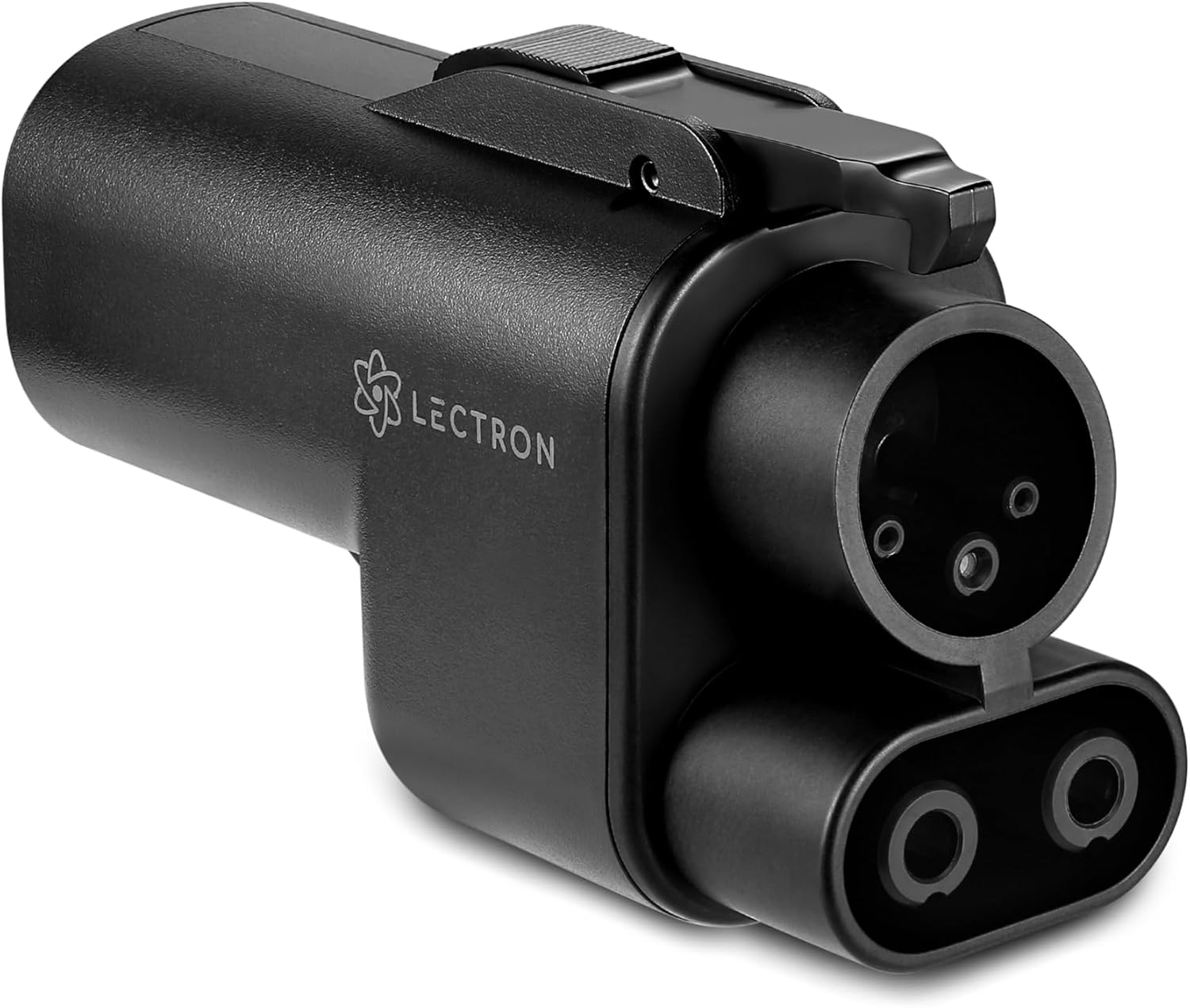
Lectron NACS to CCS Fast-Charge Adapter
Unlock every CCS fast charger for your Tesla, up to 500A DC. Never get stranded at a non-Tesla DC station again.
As an Amazon Associate, ThinkEV earns from qualifying purchases — at no extra cost to you.
Parking in a garage, even an unheated one, makes a measurable difference. An unheated garage at -5°C versus an outdoor parking spot at -25°C means your battery starts warmer and requires less energy to bring to operating temperature. If you have any indoor parking option, use it.
For home charging infrastructure that handles Canadian winters reliably, the Best Level 2 EV Chargers for Canada covers the hardware that holds up in cold climates and delivers consistent charge rates when you need them.
Gear worth having
As an Amazon Associate, ThinkEV earns a small commission from qualifying purchases — at no extra cost to you.

EcoNour 27-inch Snow Brush and Ice Scraper
An aluminum brush and scraper combo that clears a windshield fast without scratching. Non-negotiable for Canadian mornings.
As an Amazon Associate, ThinkEV earns from qualifying purchases — at no extra cost to you.
Related Reading
- EV Winter Range Test Canada 2026, How different EVs perform in Canadian winter conditions across provinces
- Chinese EVs Safety: Euro NCAP Ratings, Crash test data for Chinese EVs entering Canada
- Best Level 2 EV Chargers for Canada, Home chargers built for Canadian cold
Gear worth having
As an Amazon Associate, ThinkEV earns a small commission from qualifying purchases — at no extra cost to you.

Tesla Key Card Holder with AirTag Slot
Stop fishing the keycard out of your wallet, and slot an AirTag in case the car wanders off in a lot.
As an Amazon Associate, ThinkEV earns from qualifying purchases — at no extra cost to you.

Founder & Chief Editor
Vlad Pereira is the founder and chief editor of ThinkEV.ca, the Canadian electric-vehicle publication he writes and edits from Courtenay, British Columbia. He covers EV pricing, federal and provincial rebates, charging costs, and the Chinese manufacturers now entering Canada, from the buyer's side rather than the press-fleet side. ThinkEV is a venture of Vlad Pereira Online; his writing on health, income and the long game lives at vladpereira.com.
Frequently asked questions
How much range do EVs lose in Canadian winter?
Which Chinese EV is best for cold weather?
Does battery preconditioning actually help in winter?
Will BYD participate in next year's El Prix test?
Are Norwegian winter test results actually relevant to Canada?
More EV & road-trip finds
Affordable upgrades worth a look — tap any to check the price on Amazon.
 ★ 546
★ 546Funny Headrest Face Covers (2-Pack)
View on Amazon ★ 12,396
K KNODEL Car Trash Can with Lid
View on Amazon
TP-Link Kasa Smart Plug with Energy Monitoring
View on Amazon ★ 119
★ 119Foldable Waterproof Trunk Organizer
View on Amazon ★ 268
★ 268Anti-Slip Leather Steering Wheel Cover
View on Amazon ★ 47,507
HOMEXCEL Microfiber Cloths (12-Pack)
View on Amazon ★ 164
★ 164Solar-Powered LED Ambient Light
View on Amazon ★ 4,055
6-Speed Manual Shift Knob Display
View on AmazonRead, Plan, Then Stay Current
Explore our expert articles to understand incentives and ownership costs, use the map to pressure-test charging reality, then subscribe so new EV coverage comes straight to you.
Continue Reading
Chinese EVs in Canada: Security Politics vs Value
Should I Wait for BYD to Come to Canada?
Which EV Actually Works in a Canadian Winter?
Chinese EV Resale Value in Canada: What to Expect
Are Chinese EVs Safe? What Euro NCAP Ratings Show