Key takeaways
- Canada's 2026 EVAP program pays $5,000 for battery-electric vehicles and $2,500 for shorter-range plug-in hybrids.
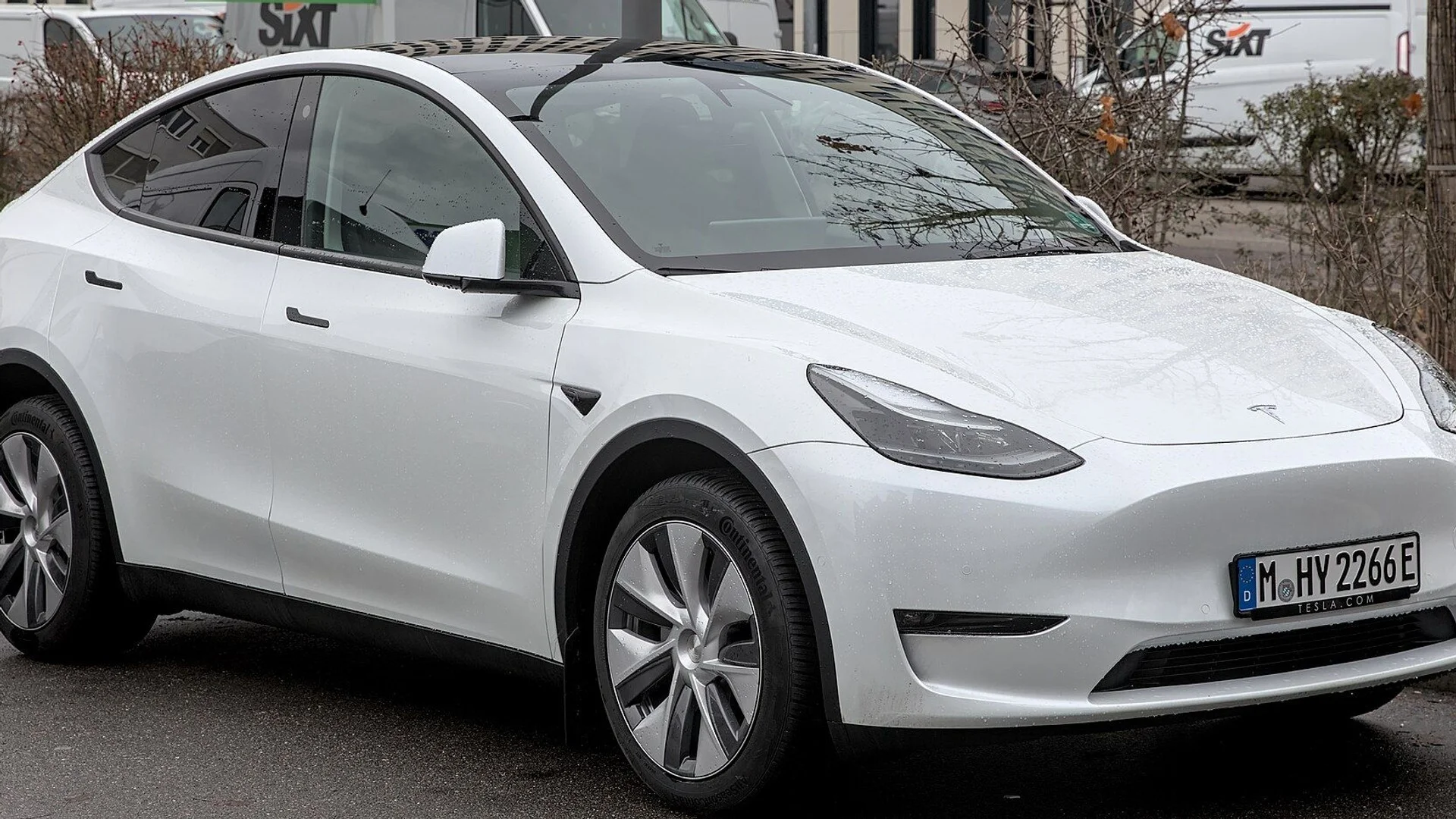
- The Tesla Model Y RWD at $49,990 qualifies for the full $5,000 under the SUV category's price cap; the Model Y Performance at $72,000 is excluded for exceeding it.
- EVAP lease rebates are pro-rated: a 48-month lease gets the full $5,000, a 24-month lease $2,500, and a 12-month lease only $1,250.
- In the Yukon, the territorial $5,000 clean-energy rebate stacks with the federal $5,000 for $10,000 off a qualifying Tesla.
- Quebec's provincial rebate dropped to $2,000 on April 1, 2026 and falls to $0 by 2027, so the stacking window is closing.
I will put a band on the total potential savings for a Tesla buyer in Canada in 2026: $5,000 to $12,000, depending on your postal code and income bracket. If you are expecting the "good old days" of flat, universal rebates regardless of price or origin, you haven't been paying attention to the shift in federal policy. The 2026 landscape is no longer just about rewarding early adopters; it is a strategic tool used by Ottawa to manage trade quotas and local affordability.
The question isn't just "Does a Tesla qualify?" It is "Which specific VIN qualifies this week?" Between the 49,000-unit quota on Chinese-made EVs and the shrinking MSRP windows for the Electric Vehicle Affordability Program (EVAP), buying a Tesla in Canada has become a game of tactical timing.
The Evolution of Incentives: From iZEV to EVAP
To understand where we are in 2026, we have to look at the wreckage of the original iZEV program. Launched in 2019, iZEV was a blunt instrument designed to jumpstart a non-existent market. By 2024, it had become a victim of its own success, burning through billions in taxpayer funds while often subsidizing buyers who would have purchased an EV anyway.
In late 2025, the federal government pivoted. The Electric Vehicle Affordability Program (EVAP) was born not just to subsidize, but to steer the market. The mission shifted from "any EV" to "affordable EVs not built by geopolitical rivals."
The 2026 EVAP is leaner. It maintains the $5,000 baseline incentive for battery electric vehicles (BEVs) and $2,500 for shorter-range plug-in hybrids (PHEVs), but the "Affordability" part of its name is enforced with surgical precision. The price caps haven't moved much, but the definition of what counts toward that cap has become a battleground for Tesla's legal team.
The Federal Landscape: The Rules of the Game in 2026
By mid-2026, the federal government has held the line on price caps, much to the chagrin of luxury manufacturers. To qualify for the $5,000 EVAP rebate, a vehicle must meet one of two strict categories:
- Passenger Cars: The base model must have an MSRP under $55,000. If the base model qualifies, higher trim levels of that same model are eligible up to a ceiling of $65,000.
- Larger Vehicles (SUVs, Trucks, Vans): The base model must have an MSRP under $60,000. Higher trims are eligible up to a $70,000 ceiling.
For Tesla, this creates a "Model 3 Squeeze" and a "Model Y Opportunity." Because the Model Y is classified as an SUV, it enjoys a $5,000 higher ceiling on both its base and top-tier trims. This is why you see Tesla pushing the Model Y so aggressively in the Canadian market; it is simply easier to keep it under the government's "luxury" threshold.
The MSRP vs. "Fees" Confusion
I see more buyers lose their rebates over math errors than over car choices. In 2026, the EVAP price cap applies to the MSRP (Manufacturer’s Suggested Retail Price). This excludes:
- Freight and PDI (Delivery fees), which for Tesla are currently $1,880.
- The "Air Conditioning Tax" ($100).
- Tire taxes and regulatory fees.
- Sales taxes (HST/GST/PST).
If your Model Y Long Range shows a "Total Price" of $61,500 but the MSRP line is $59,620, you qualify. If Tesla raises the MSRP by $400 tomorrow, you are out. I’d put the danger zone for any buyer within $500 of the cap; Tesla’s overnight price adjustments are the single biggest risk to your $5,000 check.
Model Y: The Rebate King of 2026
The Model Y remains the best-selling EV in Canada for a reason: Tesla has mastered the art of "rebate-engineering." By keeping the Model Y Rear-Wheel Drive (RWD) base price at $49,990, they ensure the entire "SUV" category for the Model Y stays within the federal window.
Does the Model Y RWD Qualify?
Yes. At $49,990, the Model Y RWD is comfortably under the $60,000 base MSRP cap for SUVs. It qualifies for the full $5,000 EVAP rebate across Canada. It is the safest bet in the lineup.
Does the Model Y Long Range Qualify?
This is where the strategy gets interesting. In 2026, the Model Y Long Range is priced at $59,990. Because the base trim of the Model Y (the RWD) is under $60,000, the Long Range qualifies for the rebate even though it is at the very limit of the $70,000 "higher trim" ceiling.
Does the Model Y Performance Qualify?
No. With an MSRP starting at $72,000, the Performance trim sits above the federal SUV ceiling. In 2026, we are seeing a "Performance Flight", buyers who want the speed are instead buying the Long Range and paying for the "Acceleration Boost" software upgrade after delivery, which doesn't count against the MSRP cap.
Model 3: The Sedan Squeeze
The Model 3 faces a tougher road. Categorized as a passenger car, its base MSRP cap is lower ($55,000) than that of its SUV sibling.
Model 3 RWD Eligibility
The Model 3 RWD, priced at $45,990 in 2026, is a "safe" qualifier. It sits nearly $10,000 below the cap, making it the most affordable entry point into the Tesla ecosystem when rebates are applied.
Model 3 Long Range Eligibility
The Model 3 Long Range sits at $54,990. Like the Model Y, it qualifies because the base trim is under $55,000 and the LR itself is under the $65,000 trim ceiling.
The China Factor: 49,000 Units and the Tariff Wall
You cannot talk about Canadian EV rebates in 2026 without addressing the elephant in the room: Giga Shanghai.
In late 2024, Canada followed the US lead with a 100% surtax on Chinese-made EVs. By January 16, 2026, that policy evolved into the "Managed Access" program. Canada now allows a total of 49,000 Chinese-manufactured EVs into the country at a preferential tariff rate of 6.1%.
Tesla is the primary user of this quota. When you order a Model Y RWD in British Columbia, there is a high probability it was built in Shanghai.
- If your Tesla is part of the 49k quota: It qualifies for the $5,000 EVAP rebate.
- If your Tesla is unit 49,001: It is ineligible for all federal incentives.
Provincial Layering: The 2026 Map of Savings
British Columbia: The Income-Tested Standard
BC’s "Go Electric" program remains the gold standard for complexity. In 2026, the rebate is tiered based on your individual or household income:
- Individual income under $80,000: $4,000 rebate.
- Individual income $80,001 – $90,000: $2,000 rebate.
- Individual income $90,001 – $100,000: $1,000 rebate.
- Above $100,000: $0.
Quebec: The Great Wind-Down
As of April 1, 2026, the Quebec provincial rebate has dropped to $2,000. By 2027, it will be $0.
Gear worth having
As an Amazon Associate, ThinkEV earns a small commission from qualifying purchases — at no extra cost to you.
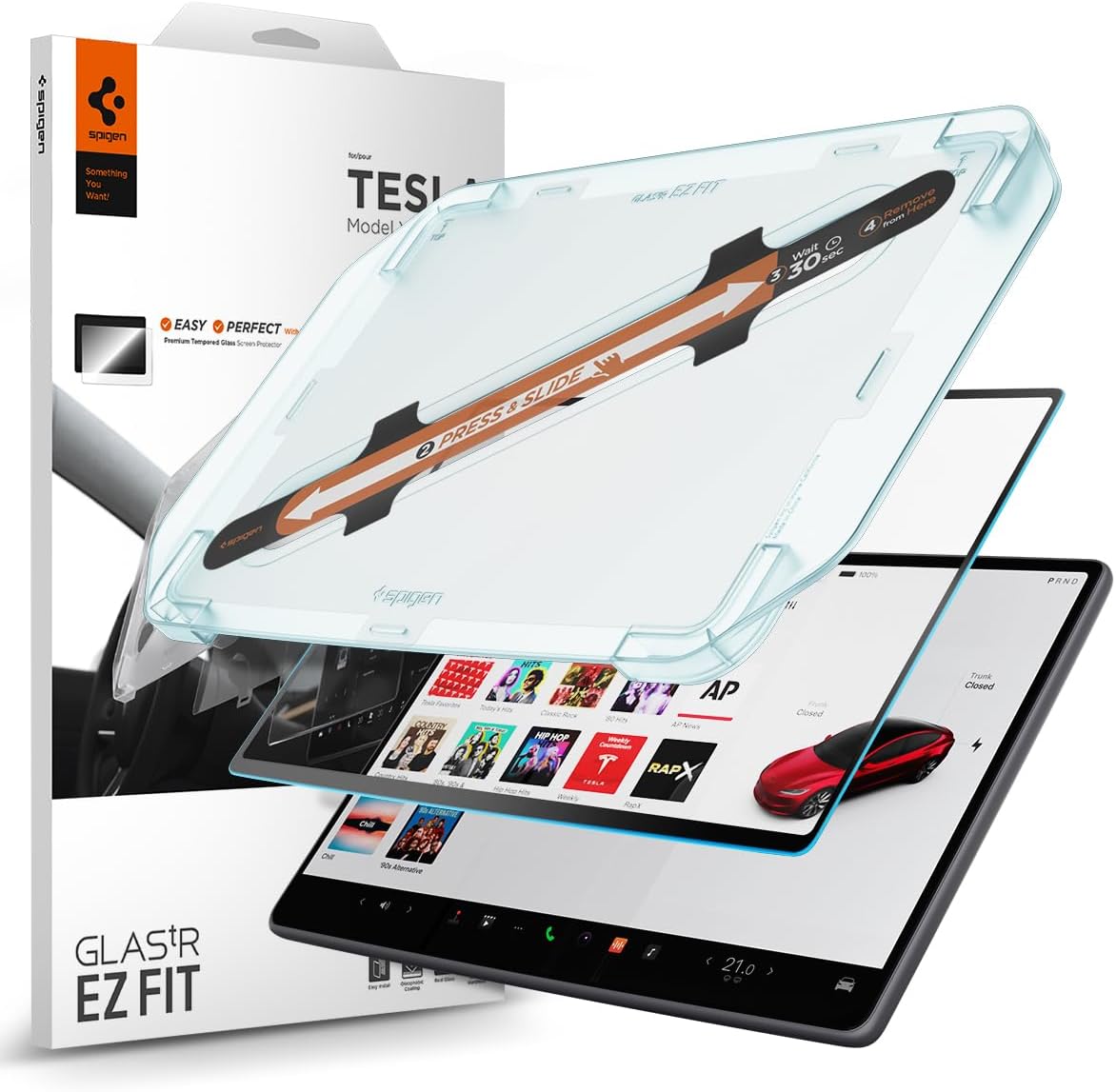
Spigen Tempered Glass for Tesla Model 3/Y
Tempered-glass protection for the touchscreen that kills fingerprints and scratches. Two minutes to install, lasts the life of the car.
As an Amazon Associate, ThinkEV earns from qualifying purchases — at no extra cost to you.
Atlantic Canada: The Surprise Leaders
Nova Scotia ($3,000), New Brunswick ($2,500), and PEI ($5,000) continue to offer significant stacks.
Regional Spotlight: The North and Rural Canada
One of the most common questions I get from readers in Whitehorse or Yellowknife is: "Does a Tesla even make sense here, and do I get extra help?"
In 2026, the Yukon government has maintained its $5,000 "Clean Energy" rebate, which stacks with the federal $5,000. This $10,000 total makes the Model 3 RWD a very compelling option for the North, where fuel prices in remote communities often exceed $2.00 per litre.
However, the "rural penalty" is real. Tesla does not have service centres in the territories. If your Model Y needs a sensor replaced, you are looking at a flatbed truck to Edmonton or Vancouver. In my view, the $10,000 rebate in the Yukon is not just a subsidy; it is a "risk premium" for the early adopter.
The Compact Tesla: A 2027 Disruption on the Horizon?
Strategic buyers are already looking toward the rumored "Model 2" or "Compact Tesla" expected in 2027. If Tesla launches a $35,000 CAD hatchback, it will fundamentally break the current rebate system.
Why? Because the government's price caps are designed to subsidize the difference between a gas car and an EV. If an EV is already $35,000, the argument for a $5,000 taxpayer gift weakens significantly. If you are waiting for a cheaper Tesla, you should also expect a much smaller rebate, or none at all.
The Trade-In Strategy: Saving on Taxes
This is a move most buyers miss. In most Canadian provinces (except BC, which has its own complex PST rules), you only pay sales tax on the net price of the vehicle after your trade-in.
If you are buying a $50,000 Model Y and trading in a gas SUV worth $20,000, you only pay tax on $30,000. In a 13% HST province (like Ontario), that is a $2,600 tax saving. When you add the $5,000 federal rebate, your total "government-assisted" saving is $7,600.
Always calculate your "Total Drive Away" price including the tax savings from your trade-in. Sometimes a lower trade-in offer from Tesla is actually better than a higher private sale price because of the tax offset.
Leasing vs. Financing: The Rebate Math
In 2026, the EVAP program remains pro-rated for leases. This is a trap for those who like short-term cycles.
- 12-month lease: $1,250 rebate (25%)
- 24-month lease: $2,500 rebate (50%)
- 48-month lease: $5,000 rebate (100%)
If you lease a Model 3 for 24 months, you are effectively "losing" $2,500 in federal money. Unless your business can write off the lease payments entirely, financing a Tesla for 4-5 years is almost always the better strategic move to capture the full government incentive.
Case Studies: The 2026 Math in Action
Case Study A: The Halifax Commuter
- Model: Model 3 RWD ($45,990)
- Location: Nova Scotia
- Rebates: $5,000 (Federal) + $3,000 (Provincial)
- Total Price (Net): $37,990 + taxes/fees.
- Verdict: This is the most efficient purchase in the country. The Model 3 at $38k is cheaper than a high-trim Toyota Corolla in 2026.
Case Study B: The Vancouver Island Family
- Model: Model Y Long Range ($59,990)
- Location: BC (Household income $120,000)
- Rebates: $5,000 (Federal) + $0 (Provincial - income capped)
- Total Price (Net): $54,990 + taxes/fees.
- Verdict: For high-income BC families, the Tesla is a luxury purchase, not a subsidized one. The strategic move here is to buy through a corporation to use the 100% CCA write-off.
Case Study C: The Montreal Tech Worker
- Model: Model Y RWD ($49,990)
- Location: Quebec (Pre-April 2026 delivery)
- Rebates: $5,000 (Federal) + $2,000 (Provincial)
- Total Price (Net): $42,990 + taxes/fees.
- Verdict: The window is closing. Getting $7,000 off a Model Y makes it a "no-brainer" before the Quebec incentives hit zero in 2027.
The Political Risk: A 2026 Reality Check
Finally, I must address the risk that no one at the Tesla dealership will mention: political volatility.
EV incentive programs live and die by the budget cycle, and EVAP, which costs billions, is a perennial target whenever fiscal priorities shift or a new government takes office. We have seen this before in Ontario (2018) and other jurisdictions. A program can be cancelled with the stroke of a pen, often with no "grandfathering" for existing orders.
If you are waiting until late 2026 to buy, you are not just betting on Tesla's prices; you are betting on the stability of Canadian climate policy. My conviction? Buy early in the year while the current rules are locked in.
Gear worth having
As an Amazon Associate, ThinkEV earns a small commission from qualifying purchases — at no extra cost to you.

WeatherTech FloorLiner for Tesla Model 3
Deep-channel liners that trap every drop of slush and salt. The difference between a ruined interior and a showroom-fresh cabin after a Canadian winter.
As an Amazon Associate, ThinkEV earns from qualifying purchases — at no extra cost to you.
Summary of 2026 Tesla Eligibility
- Model 3 RWD: Qualifies (Federal + BC/QC/PEI/NS/NB).
- Model 3 Long Range: Qualifies (Federal + QC/PEI/NS/NB). Excluded in BC due to $50k sedan cap.
- Model Y RWD: Qualifies (Federal + BC/QC/PEI/NS/NB).
- Model Y Long Range: Qualifies (Federal + BC/QC/PEI/NS/NB).
- Model Y Performance: Excluded (Exceeds all price caps).
- Model S / Model X: Excluded (Luxury category).
FAQ: Tesla Rebates Canada 2026
The 2026 Tesla buyer is no longer an "early adopter", they are a strategic consumer in a mature, regulated market. The $5,000 to $12,000 you can save is not a gift; it is a tactical window that is rapidly closing. Use the data, check your VIN, and don't let a "Long Range" badge cost you ten thousand dollars in lost incentives.
Federal EVAP Program Details
Tesla Canada Support: Incentives
Gear worth having
As an Amazon Associate, ThinkEV earns a small commission from qualifying purchases — at no extra cost to you.
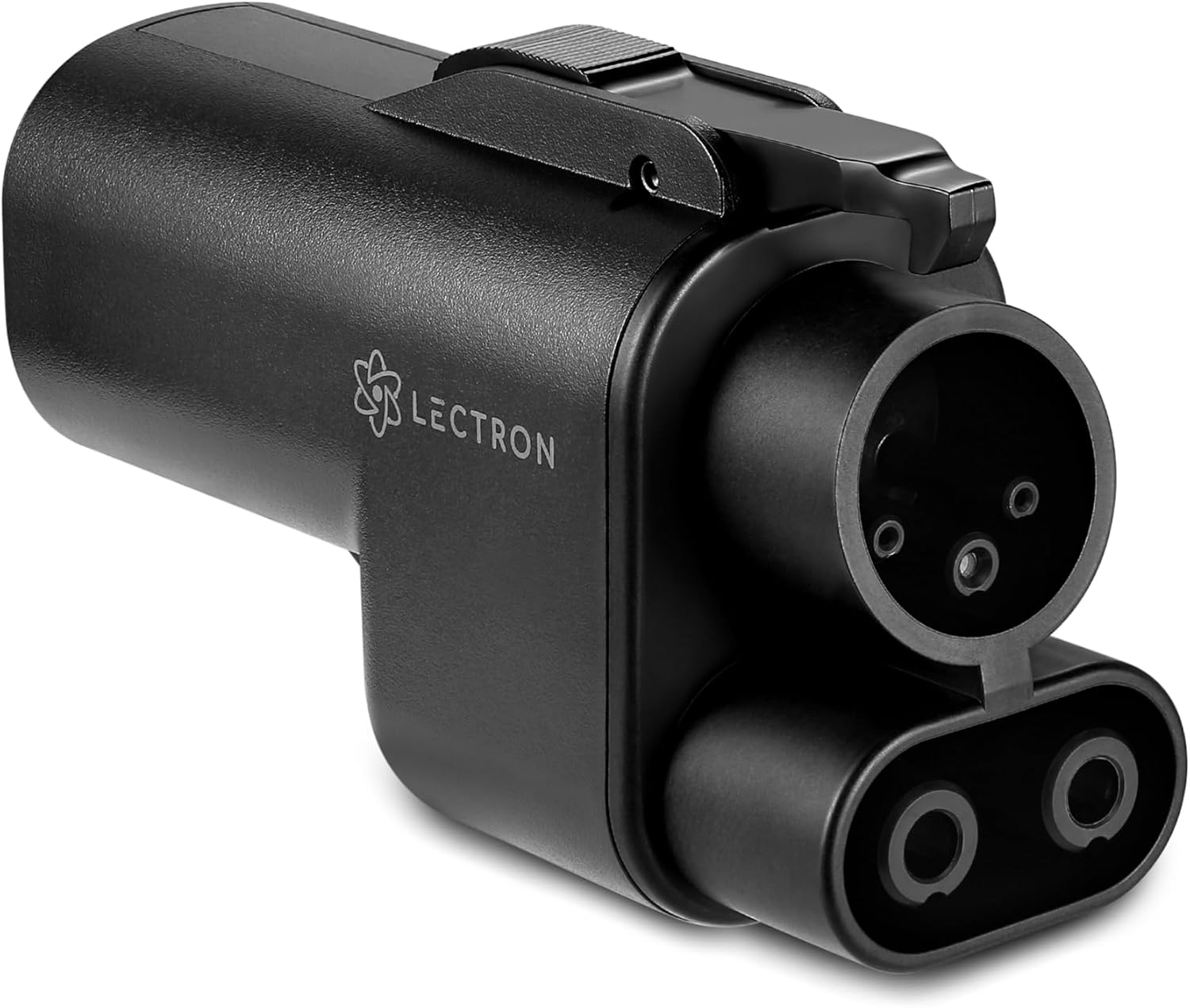
Lectron NACS to CCS Fast-Charge Adapter
Unlock every CCS fast charger for your Tesla, up to 500A DC. Never get stranded at a non-Tesla DC station again.
As an Amazon Associate, ThinkEV earns from qualifying purchases — at no extra cost to you.

Founder & Chief Editor
Vlad Pereira is the founder and chief editor of ThinkEV.ca, the Canadian electric-vehicle publication he writes and edits from Courtenay, British Columbia. He covers EV pricing, federal and provincial rebates, charging costs, and the Chinese manufacturers now entering Canada, from the buyer's side rather than the press-fleet side. ThinkEV is a venture of Vlad Pereira Online; his writing on health, income and the long game lives at vladpereira.com.
Frequently asked questions
Does the Tesla Model Y 7-seater qualify for the rebate?
Can I get the rebate if I lease my Tesla?
What happens if Tesla raises prices after I order?
Do business fleet purchases qualify for Tesla rebates?
More EV & road-trip finds
Affordable upgrades worth a look — tap any to check the price on Amazon.
 ★ 268
★ 268Anti-Slip Leather Steering Wheel Cover
View on Amazon ★ 8,681
Chemical Guys Complete Car Wash Kit
View on Amazon ★ 55
★ 55LED Car Door Logo Projector Light
View on Amazon ★ 900
★ 900Personalized Photo Car Air Freshener
View on Amazon ★ 865
★ 865Collapsible Trunk Organizer
View on Amazon ★ 1,944
VIOFO A229 Pro 4K Dash Cam
View on Amazon ★ 87
★ 87Car Window Sun Shades for Kids (4-Pack)
View on Amazon ★ 392
★ 392Large Cup Holder Adapter (32-40oz)
View on AmazonRead, Plan, Then Stay Current
Explore our expert articles to understand incentives and ownership costs, use the map to pressure-test charging reality, then subscribe so new EV coverage comes straight to you.
Continue Reading
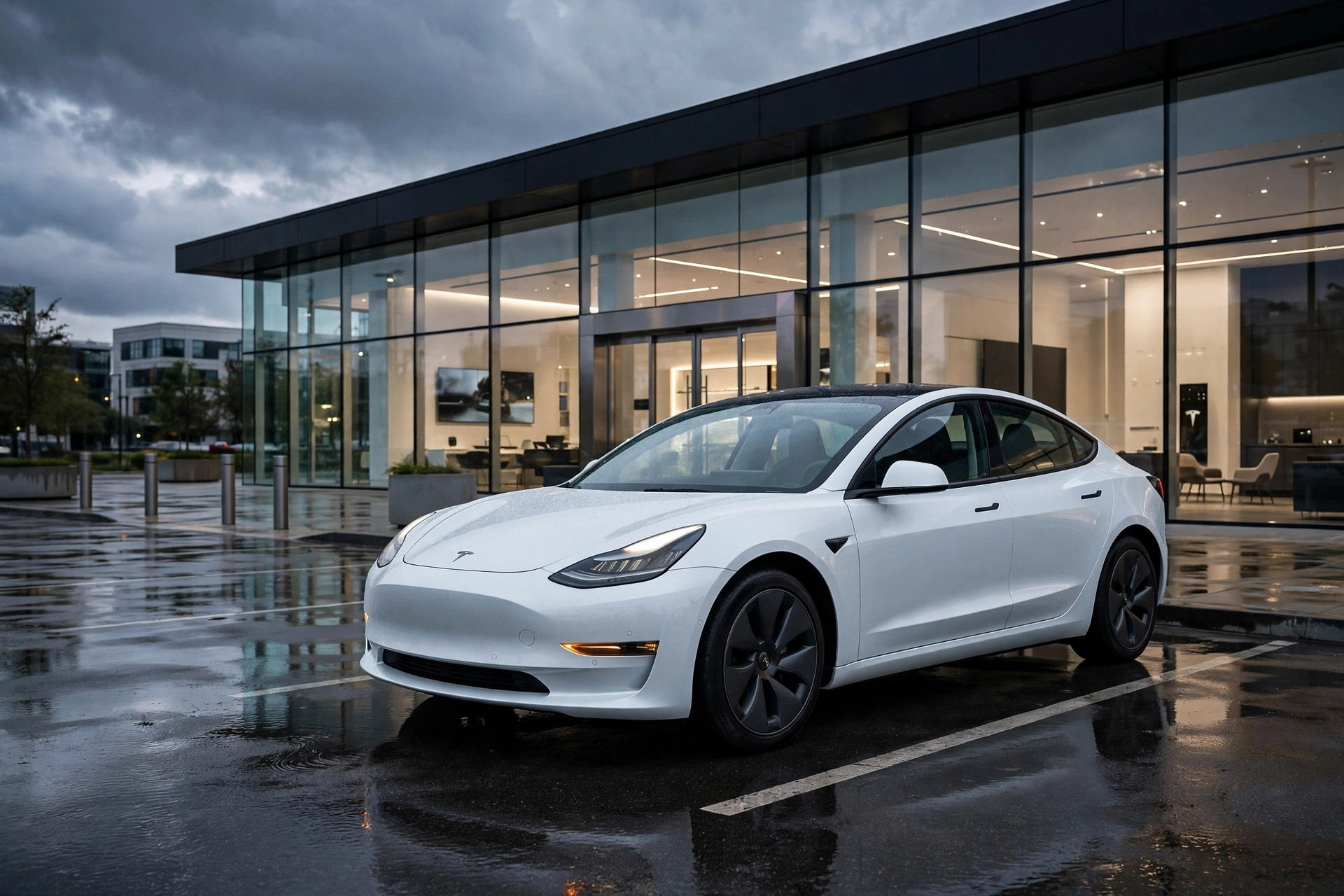
Tesla Pauses Model 3 Premium Orders in Canada, Blames the Quota. The Numbers Tell a Different Story

How to Test-Drive an EV: What Gas-Car Buyers Miss

Do Used EVs Qualify for Rebates in Canada? 2026 Guide
Chinese EV Data Privacy in Canada: The Evidence
Municipal EV Incentives Canada 2026: City by City