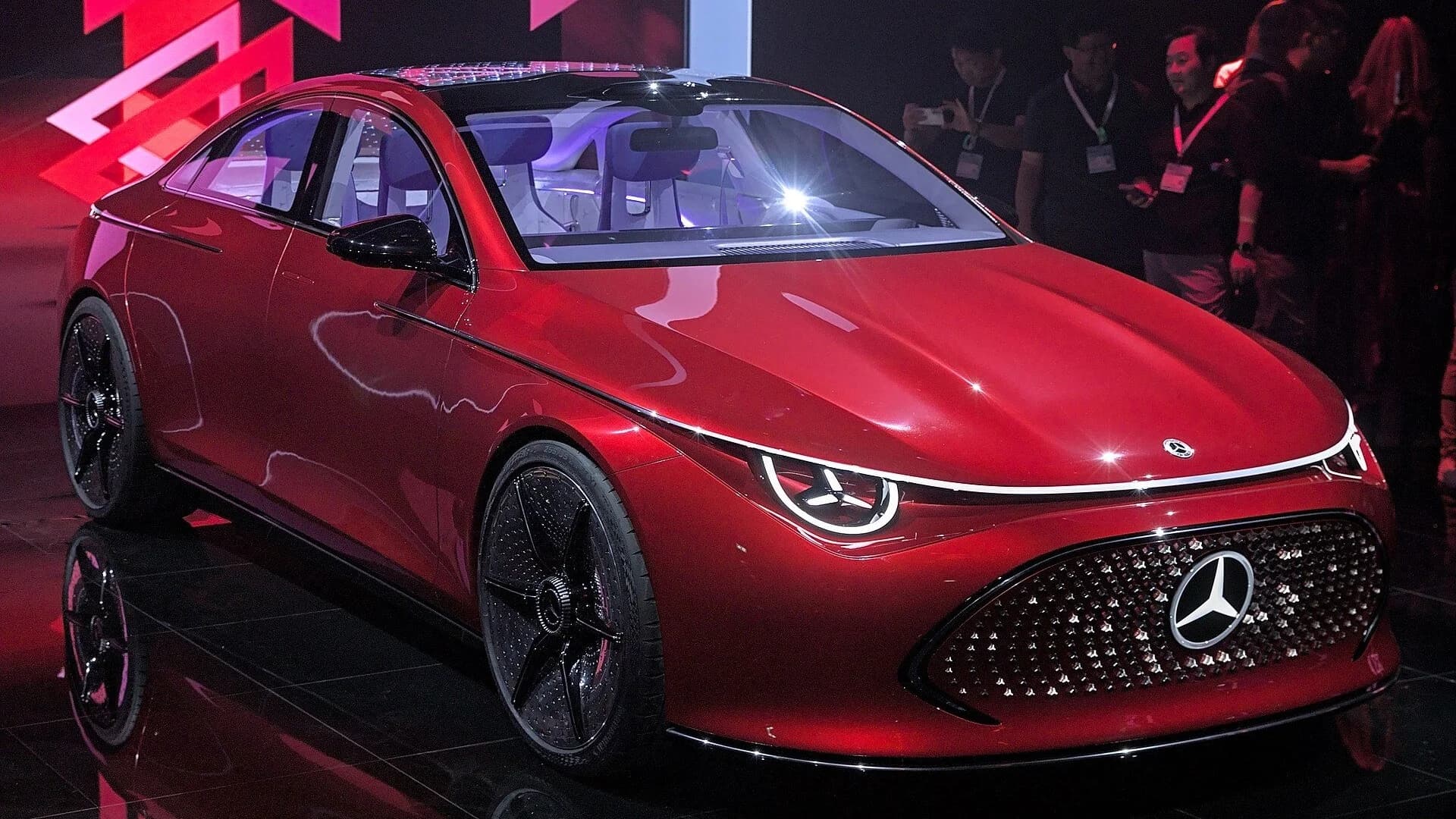
385 miles. EPA said 312. That gap isn't rounding error, that's Mercedes sandbagging its own car.
Edmunds put the 2026 Mercedes-Benz CLA 350 EV through its Real-World Range Test and the car went 385 miles, beating the 312-mile EPA estimate by 73 miles, with better-than-EPA efficiency and fast charging on top. That's a 23.2% overperformance on a brand-new luxury sedan that almost nobody was paying attention to. And it's the second time this car has embarrassed its own rating sticker.
Mercedes has been calling the CLA the "one-liter" car since before launch. Turns out they meant it.
Key takeaways
- Edmunds tested the 2026 CLA 350 EV and recorded 385 miles, 73 miles beyond its 312-mile EPA rating.
- The CLA 250+ already hit 434 miles in a December Edmunds test, making it the least expensive car past the 400-mile mark.
- Mercedes published a 0.21 drag coefficient, one of the slipperiest production cars ever built, and highway physics prove it.
- On paper the Model 3 Long Range beats the CLA 350; on the actual road, the Mercedes outruns it by 27 miles.
- Edmunds, Electrek, MotorTrend, and Jalopnik all confirmed the result within 48 hours, this isn't a one-outlet fluke.
73 Miles Over EPA Is Not a Rounding Error
Let's be specific about the numbers, because the press release wasn't.
Mercedes claims an EPA-rated 312 miles for the CLA 350 4MATIC with EQ Technology. The Edmunds real-world result delivered a 23.2 percent difference over the Environmental Protection Agency's estimate. That's not a margin you explain away with mild weather or a featherweight driver. That's a structural gap between how the EPA tests cars and how this particular Mercedes actually drives.
And the efficiency number is arguably more damning than the range number. Edmunds clocked the CLA at 23.2 kWh per 100 miles, about 16.5% better than the EPA projected. Range comes from efficiency. Efficiency this far ahead of label means Mercedes engineered the drivetrain to do exactly this, and then let the EPA sticker tell a smaller story.
This is the opposite of the Tesla problem. For years the joke was that Tesla's window stickers oversold what the car would actually deliver on a road trip. Mercedes just did the inverse, and barely mentioned it in the launch materials.
The Higher-Spec CLA Already Hit 434 Miles, Months Ago
The "73 miles over EPA" headline buries: this isn't even the first time the CLA has done this.
Back in December, Edmunds ran the same test on the CLA 250+ and it went 434 miles, beating its EPA estimate by a sizable amount, making it the least expensive car that's crossed the 400-mile mark in Edmunds testing.It also posted impressive efficiency and charging speed numbers in that earlier run.
The CLA 250+ launched with a stunning 374 miles of EPA-estimated range, and that rating turned out to be understated.
Two different trims. Two different test sessions. Same result: the EPA label is a floor, not a ceiling. Mercedes calls it the "one-liter" car for a reason, the new CLA EV has an impressive EPA range of 374 miles, and in real-world driving it goes even further.
When a single car beats its rating by 60-plus miles once, it's a good day. When the whole model line does it across multiple trims and multiple testers, it's the engineering brief.
Gear worth having
As an Amazon Associate, ThinkEV earns a small commission from qualifying purchases — at no extra cost to you.

Lectron Level 2 J1772 Charger (40A, WiFi)
Smart WiFi charger with real-time energy monitoring. 40A / 9.6 kW, J1772 with a NEMA 14-50 plug, schedule charging right from your phone.
As an Amazon Associate, ThinkEV earns from qualifying purchases — at no extra cost to you.
Why EPA Ratings Keep Getting Beaten By This Car
The EPA test cycle weights HVAC loads, aggressive acceleration phases, and a specific blend of city and highway that punishes cars optimized for steady cruising. The CLA was built for steady cruising.
Aerodynamics is doing a lot of the work here. Mercedes published a drag coefficient of 0.21 for the CLA, among the slipperiest production cars ever shipped. At highway speeds, where most EV range gets eaten alive by air resistance, that number compounds. The faster you go, the more the CLA pulls ahead of cars that look similar on paper but punch a bigger hole in the atmosphere.
Electric-car range is improving, and the CLA250+ can achieve up to an EPA-rated 374 miles depending on spec, with the loaded car on 19-inch wheels good for 317 miles, solid numbers, but what really impressed testers was its Road-Trip Range test performance. That's the part that matters for Canadian buyers staring down a Trans-Canada Highway commute or a Toronto-to-Montreal run in winter. Highway range is the only range that counts on a long trip.
This is intentional under-promise engineering. Mercedes had every incentive to chase the biggest EPA number it could publish. Instead it built a car that walks past the number on a normal commute. That's a choice.
Gear worth having
As an Amazon Associate, ThinkEV earns a small commission from qualifying purchases — at no extra cost to you.

WeatherTech FloorLiner for Tesla Model 3
Deep-channel liners that trap every drop of slush and salt. The difference between a ruined interior and a showroom-fresh cabin after a Canadian winter.
As an Amazon Associate, ThinkEV earns from qualifying purchases — at no extra cost to you.
What Community Reaction Actually Looks Like
The initial reaction on EV forums was predictable: staged test, cherry-picked route, must be downhill both ways. Then Electrek confirmed the result, the Mercedes-Benz CLA EV 350 drove close to 400 miles on a single charge against a 312-mile EPA estimate, and the skepticism collapsed into something more interesting.
Tesla loyalists dismissed it. The mainstream auto crowd didn't. Range testing is a hard discipline to fake when multiple outlets run the same car on different routes and land in the same neighbourhood. The "but it starts at $54K" reply showed up within minutes on every thread, also predictable, also beside the point. Range overperformance is range overperformance regardless of MSRP. The CLA's price doesn't change what it does on the freeway.
Nobody's mad the car goes far. They're mad it's a Mercedes that goes far. That's a different complaint, and it isn't an engineering one.
For Canadian buyers who care more about cold-weather performance than press-release optics, the CAA winter EV range test results and Norway's brutal -27°C El Prix data remain the better stress test. Summer Edmunds runs in Southern California aren't the same conversation as January in Calgary. But the CLA's aerodynamic and efficiency advantages should carry into cold weather better than most, the physics of a 0.21 drag coefficient don't change at -20°C.
Gear worth having
As an Amazon Associate, ThinkEV earns a small commission from qualifying purchases — at no extra cost to you.

AstroAI Portable Tire Inflator
One tap, it inflates to your exact PSI then stops automatically. Low tires cost 5 to 10 percent of your range, so this pays for itself in a week.
As an Amazon Associate, ThinkEV earns from qualifying purchases — at no extra cost to you.
This Reframes The Luxury EV Conversation
Tesla Model 3 Long Range EPA: 358 miles. CLA 350 EPA: 312. CLA 350 real-world: 385.
That's the comparison that matters. On paper Tesla wins. On the road, with a tester nobody accuses of being a Mercedes shill, the CLA quietly beats the most-shopped EV sedan in North America. Not by a sliver, by 27 miles.
If you're cross-shopping EVs above $50,000, the CLA now demands a slot on your list. BMW's i4 doesn't have an equivalent real-world overperformance data point. Polestar's lineup hasn't been tested at this level of overdelivery. The CLA isn't the cheapest car on the comparison sheet, but it is currently the one with the biggest gap between its label and what it actually does.
For shoppers thinking about other premium options in this segment, the Mercedes-AMG GT 4-Door EV analysis is the higher-performance read on what Mercedes is doing with its EV architecture overall, different car, same engineering philosophy. And for buyers asking whether they need to spend this much at all, the Kia EV4 Canada review is the under-$40K counter-argument worth weighing.
Mercedes just made real-world range a competitive weapon, not a footnote.
Gear worth having
As an Amazon Associate, ThinkEV earns a small commission from qualifying purchases — at no extra cost to you.

Digital Tire Pressure Gauge
Low tires quietly cost 5 to 10 percent of your range. A 10-second check with an accurate digital gauge keeps every kWh on the road.
As an Amazon Associate, ThinkEV earns from qualifying purchases — at no extra cost to you.
Mercedes Should Be Shouting About This Range Number
The press release led with the 312-mile EPA number. That was the wrong call.
InsideEVs filed the headline "The Mercedes CLA EV Just Smashed Its EPA Range Rating In A Real-World Test" on June 3. Edmunds, Electrek, MotorTrend, and Jalopnik all ran variations of the same story within 48 hours. Every one of those headlines is doing work Mercedes' own communications team should have done at launch.
Bottom line: every CLA competitor at this price point now has to answer one extra question at its own launch, "okay, but does it beat its EPA estimate the way the Mercedes did?" That's a question manufacturers used to dodge. The CLA made it mandatory.
Range anxiety isn't dying. It's losing its grip. And a sub-$60K Mercedes with a 0.21 drag coefficient and a 385-mile road-trip number just yanked the timeline forward by a year.
Watch which automaker tests next.
Gear worth having
As an Amazon Associate, ThinkEV earns a small commission from qualifying purchases — at no extra cost to you.

PULIDIKI Car Cleaning Gel (Detailing Putty)
Press it into vents, buttons, and seams and it lifts out dust you did not know was there. Weirdly satisfying, genuinely useful.
As an Amazon Associate, ThinkEV earns from qualifying purchases — at no extra cost to you.

Founder & Chief Editor
Vlad Pereira is the founder and chief editor of ThinkEV.ca, the Canadian electric-vehicle publication he writes and edits from Courtenay, British Columbia. He covers EV pricing, federal and provincial rebates, charging costs, and the Chinese manufacturers now entering Canada, from the buyer's side rather than the press-fleet side. ThinkEV is a venture of Vlad Pereira Online; his writing on health, income and the long game lives at vladpereira.com.
Frequently asked questions
Does the CLA's range advantage hold up in cold Canadian winters?
How does the CLA 350 compare to the higher-spec CLA 250+?
What actually explains the 73-mile gap over EPA?
Is $54,000 USD the Canadian purchase price for this car?
Does this real-world result change how the CLA stacks up against the Tesla Model 3?
More EV & road-trip finds
Affordable upgrades worth a look — tap any to check the price on Amazon.
 ★ 1,944
VIOFO A229 Pro 4K Dash Cam
View on Amazon ★ 121
★ 121Foldable Windshield Sun Umbrella
View on Amazon ★ 268
★ 268Anti-Slip Leather Steering Wheel Cover
View on Amazon ★ 9,349
Auto Detailing Brush Set (10-Piece)
View on Amazon ★ 55
★ 55LED Car Door Logo Projector Light
View on Amazon ★ 1,349
Cool Swinging Duck Dashboard Ornament
View on Amazon ★ 4,424
Sun Visor Card and Document Organizer
View on Amazon ★ 1,866
70mai A810 4K Dual Dash Cam
View on AmazonRead, Plan, Then Stay Current
Explore our expert articles to understand incentives and ownership costs, use the map to pressure-test charging reality, then subscribe so new EV coverage comes straight to you.
Continue Reading
BYD Denza Z9 GT Adds $50K Tri-Motor Trim to China's Top GT
BYD Denza Z: 1,000+ hp Hypercar, Canadian Price
BMW iX3 Cleared 500 Miles: The Regulatory Math
Why Cold Weather Cuts EV Range, the Real Reasons

EV Highway vs City Range: Why They Flip