Key takeaways
- The province accounts for roughly 45% of all EV registrations in the country despite representing about 23% of the population.
- Montreal's EV adoption rate is approaching 18% of new vehicle sales.
- Launched in 2012 under the broader Drive Electric program, it originally offered rebates as high as $8,000 for battery-electric vehicles.
- Over the years, the Roulez vert rebate has been reduced in stages, from $8,000 to $7,000, then to $4,000, and now to $2,000 for new BEVs.
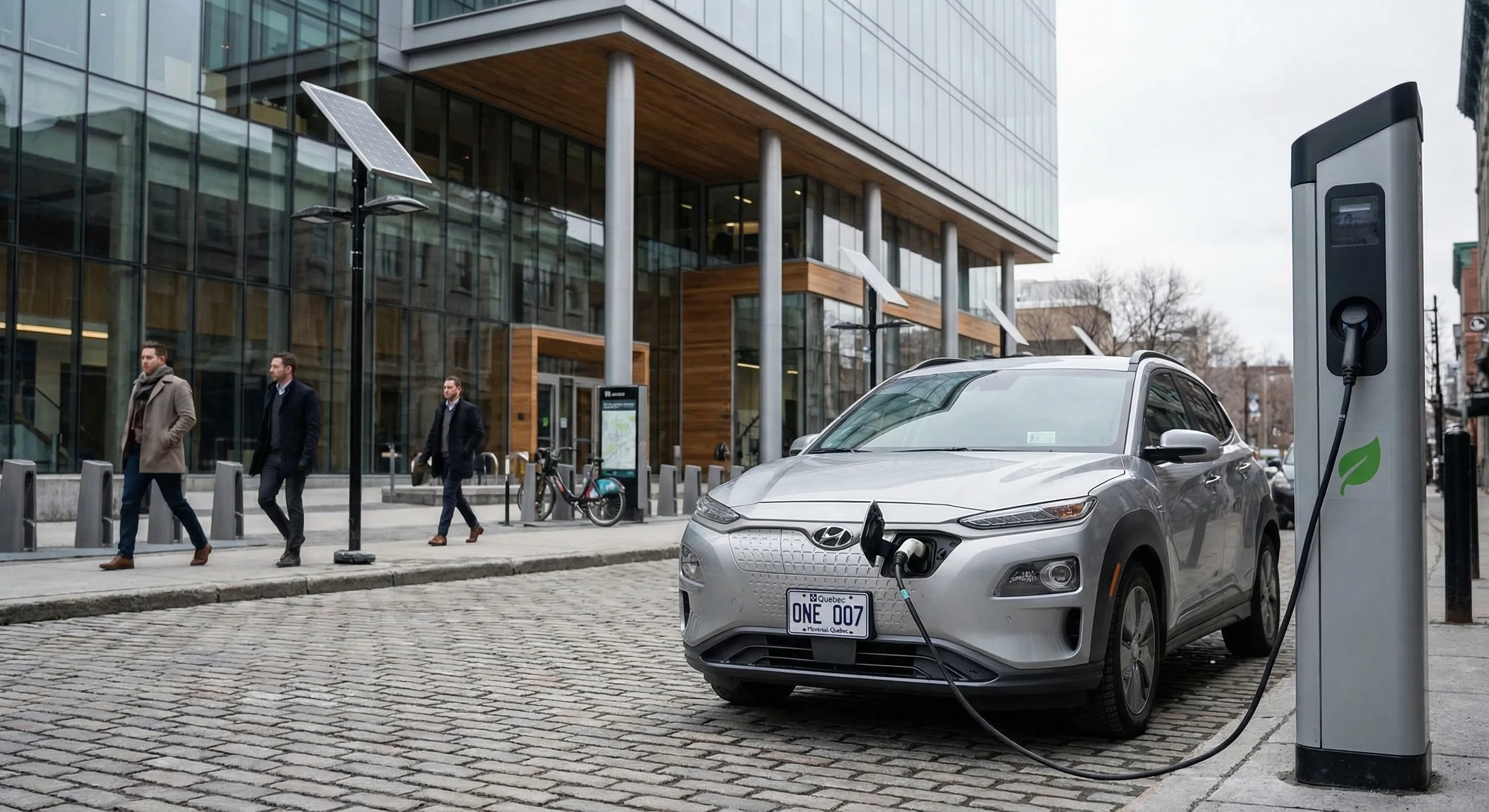
Quebec leads Canada in EV adoption, and it's not close. The province accounts for roughly 45% of all EV registrations in the country despite representing about 23% of the population. Montreal's EV adoption rate is approaching 18% of new vehicle sales. Those numbers don't happen by accident. They happen because Quebec built an ecosystem, cheap electricity, consistent purchase incentives, and a charging network that actually works, and sustained it long enough for the market to reach critical mass.
The Roulez vert program is the centrepiece of that ecosystem. Launched in 2012 under the broader Drive Electric program, it originally offered rebates as high as $8,000 for battery-electric vehicles. That was aggressive. It was also deliberate. The Quebec government understood something that most Canadian provinces still haven't figured out: if you want people to buy EVs, you need to make it financially irrational not to. You don't nudge. You shove.
Over the years, the Roulez vert rebate has been reduced in stages, from $8,000 to $7,000, then to $4,000, and now to $2,000 for new BEVs. Each reduction tracked increasing adoption rates and falling EV prices. The logic was always that the rebate existed to close a price gap, and as that gap narrowed, the rebate should shrink. You can argue about the pace of reductions, but the underlying strategy was sound. And the results speak for themselves: Quebec's EV market share dwarfs every other province in Canada.
But here's what most people miss about Quebec's EV story. The rebate was never the main event. The main event is Hydro-Quebec's electricity rates. At $0.07 to $0.09 per kWh, flat rate, no time-of-use nonsense, no demand charges, no peak pricing, Quebec has the cheapest residential electricity in North America. That's not a rounding error. That's a structural advantage that saves EV owners $2,370 to $2,430 per year compared to gas. Over a decade, that's $24,000. The rebate gets you in the door. The electricity keeps you there.
In 2026, the combined federal and provincial incentives still offer Quebec buyers up to $7,000 off a new battery-electric vehicle. But the window is narrowing. The Roulez vert program has already signalled it's moving toward charging infrastructure investment and away from purchase incentives. The federal EVAP is funded through 2026 but has no guaranteed extension. If you've been waiting for the right time to buy an EV in Quebec, the financial case has never been stronger, and it may never be this strong again.
This guide breaks down everything: the current rebate structure, how to stack provincial and federal incentives, what vehicles qualify, the electricity advantage in hard numbers, the home charger rebate, the charging network across Quebec, winter ownership realities, the best vehicles for Quebec buyers, and what's likely coming next. No fluff, no spin, just the math and the policy.
THE ROULEZ VERT REBATE
The Roulez vert program provides $2,000 for new battery-electric vehicles purchased or leased in Quebec. The rebate is applied at the point of sale by participating dealers, which means you see the discount immediately on your purchase agreement. There's no separate application form to submit, no cheque to wait for, and no portal to work through for the provincial portion. You walk into the dealership, you buy the car, the $2,000 comes off the price. It's the simplest rebate structure in Canada, and that simplicity is a feature, not an afterthought.
Here are the detailed eligibility requirements:
- The vehicle must be a new battery-electric vehicle (BEV) or plug-in hybrid electric vehicle (PHEV)
- The manufacturer's suggested retail price (MSRP) must be $60,000 or less
- The buyer must be a Quebec resident with a valid Quebec driver's licence
- One rebate per person per calendar year, you can't buy two EVs in the same year and claim the rebate twice
- The vehicle must be purchased or leased from a participating dealer registered with the program
- For leases, the rebate is applied to the capitalized cost, reducing your monthly payments
- PHEVs receive a reduced rebate amount, the exact figure depends on the vehicle's electric range, but it's significantly less than the $2,000 BEV amount
The MSRP cap of $60,000 is more generous than the federal EVAP's $50,000 transaction value limit. This matters because it means vehicles priced between $50,000 and $60,000, like certain Tesla Model 3 trims and the Volkswagen ID.4 Pro S, qualify for the provincial Roulez vert rebate even if they're excluded from federal EVAP. It's a wider net, and it catches some popular vehicles that fall through the federal program's tighter mesh.
The one-per-person-per-year rule is worth understanding clearly. It's tied to the individual, not the household. If two adults in the same household each buy a qualifying EV in the same calendar year, they each get $2,000. But if one person trades in their EV and buys another in the same calendar year, they only get the rebate once. The program tracks this through your Quebec driver's licence number, so there's no way to game it.
The Roulez vert program has evolved significantly since its launch. Here's the trajectory:
- 2012-2015: $8,000 rebate for BEVs, the launch phase, designed to kickstart adoption from near zero
- 2016-2018: $8,000 maintained, program expanded to include used EVs and home chargers
- 2019-2020: Reduced to $4,000 for BEVs as adoption accelerated
- 2021-2023: Further reduction, MSRP caps introduced and tightened
- 2024-2026: Current level of $2,000, with MSRP cap at $60,000
Each step down coincided with falling EV prices and rising adoption. When the rebate was $8,000, a Nissan Leaf cost $35,000 and had 150 km of range. Now a Chevy Equinox EV costs $44,995, gets 500+ km of range, and costs $37,995 after both rebates. The value equation has shifted dramatically. The rebate reduction reflects real market progress, not arbitrary budget cutting.
That said, if you're a policy hawk like me, there's a legitimate critique here. The $2,000 level is approaching the point where it's more symbolic than functional. A $2,000 rebate on a $45,000 vehicle is a 4.4% discount. That's not nothing, but it's not the kind of financial shove that changes behaviour for people on the fence. The real work is now being done by the electricity savings, and the program arguably should have shifted its remaining budget entirely to charging infrastructure and used EV incentives two years ago. More on that later.
For the application process at the dealership level: participating dealers are registered with the Ministere des Transports et de la Mobilite durable. They handle the paperwork, submit the rebate claim on your behalf, and discount the vehicle price accordingly. You don't need to do anything beyond verifying that the dealer is a participant (virtually all major dealers are) and confirming the rebate is reflected in your purchase agreement before you sign. Check the line items. Make sure the $2,000 is there. If it's not, ask. If the dealer claims they "don't do" Roulez vert, walk out and go to a dealer that does.
STACKING WITH FEDERAL EVAP
The federal Incentives for Zero-Emission Vehicles Program (EVAP, formerly iZEV) provides $5,000 for new BEVs with a final transaction value under $50,000. For Canadian-manufactured vehicles, there's no price cap, a deliberate policy to support domestic manufacturing. In Quebec, you get both programs:
- Provincial Roulez vert: $2,000
- Federal EVAP: $5,000
- Total: $7,000
That's $7,000 off before you drive the vehicle off the lot. Let's look at what that means for specific vehicles, with trim-level detail.
Here's what that looks like for popular models in Quebec:
Chevrolet Equinox EV (1LT trim): MSRP $44,995. Canadian-made, so no EVAP price cap applies. Full $5,000 EVAP plus $2,000 Roulez vert. After-rebate price: $37,995. This is a mid-size SUV with 500+ km of range for under $38,000. That's less than a comparably equipped gas Equinox when you factor in the rebates. The 2LT trim at $48,995 also qualifies for both, dropping to $41,995.
Hyundai Kona Electric (Essential trim): MSRP $42,999. Made in South Korea (FTA country), so it qualifies for EVAP. Full $5,000 EVAP plus $2,000 Roulez vert. After-rebate price: $35,999. The Preferred trim at $46,499 drops to $39,499. Even the top Ultimate trim at $49,499 squeaks under the $50,000 EVAP cap at $42,499 after both rebates.
Kia EV4 (watchlist scenario): Early Canadian pricing has been discussed in the high-$30,000 range. If Kia Canada lands the EV4 there and the qualifying trim remains EVAP-eligible, a Quebec buyer could plausibly see a post-rebate price in the low-$30,000s after EVAP plus Roulez vert. Treat that as a scenario, not a settled dealer sticker.
Hyundai Ioniq 5 (Essential trim): MSRP $44,999. Full EVAP plus Roulez vert. After-rebate price: $37,999. The Preferred Long Range at $49,999 drops to $42,999, right at the EVAP cap.
Chevrolet Bolt EUV (if available): When in stock, this was the value champion at around $38,000 MSRP, dropping to $31,000 after both rebates. Inventory has been limited, but if you can find one, the math is exceptional.

Now let's talk about the vehicles that don't get the full stack.
Tesla Model 3: This is the most common source of confusion. Tesla vehicles are manufactured in the United States, which is an FTA country, so the country-of-origin requirement isn't the problem. The problem is the transaction value cap. The base Model 3 starts at around $54,990 before fees, and the final transaction value, which includes destination charges and mandatory fees, pushes it over the $50,000 EVAP threshold. The Model 3 Long Range does not qualify for the $5,000 federal EVAP.
However, and this is important, the Tesla Model 3 does qualify for Quebec's Roulez vert. The Roulez vert MSRP cap is $60,000, and the Model 3 base MSRP of $54,990 falls under that. So a Tesla Model 3 buyer in Quebec gets the $2,000 Roulez vert rebate but not the $5,000 EVAP. After-rebate price: approximately $52,990. The Model 3 Long Range at $59,990 also qualifies for Roulez vert (just under the $60,000 cap) but not EVAP, dropping to $57,990.
The Tesla Model Y is a different story now. The Model Y RWD base is priced at $49,990 and is on Transport Canada's official EVAP eligible vehicle list, it qualifies for the full $5,000 federal EVAP (watch dealer fees to keep the transaction value under $50,000), plus the $2,000 Roulez vert. That's a $7,000 stack, same as a Kona Electric or Equinox EV buyer. The Model Y Long Range AWD ($59,990) and Performance ($69,990) still exceed the EVAP cap and get only the $2,000 Roulez vert.
This is a meaningful penalty for Tesla buyers in Quebec. You're leaving $5,000 on the table compared to a Kona Electric or Equinox EV buyer. If you're brand-agnostic and purely motivated by value, the non-Tesla options are substantially cheaper after rebate stacking.
Chinese-manufactured EVs: Vehicles manufactured in China are excluded from EVAP due to the 100% tariff regime (reduced to 6.1% for a 49,000-vehicle quota as of January 2026). However, Chinese-manufactured EVs that are sold in Canada through dealers do qualify for Quebec's Roulez vert, provided they meet the $60,000 MSRP cap. BYD vehicles are not yet available in Canada as of March 2026, but if and when they arrive, they'd get the $2,000 provincial rebate but not the federal $5,000. That's a significant disadvantage versus Korean and Canadian-made alternatives.
These after-rebate prices are competitive with or cheaper than equivalent gas vehicles in their class. A compact electric sedan landing in the low-$30,000s after Quebec's stacked rebates would compete directly with mainstream gas sedans while still benefiting from Quebec's electricity-cost advantage. That's the inflection point ? when an EV doesn't just save you money on fuel, it starts looking competitive from the moment you sign. Quebec is closer to that point than any other province in Canada, primarily because of the rebate stacking and electricity rates that other provinces can't match.
For the application side of EVAP: the federal rebate is also applied at the dealership for most transactions. The dealer submits the claim to Transport Canada, and you see the $5,000 reflected in your purchase price. You don't need to apply separately in most cases. Some smaller dealerships may require you to apply directly through the Transport Canada portal, but this is uncommon with major brands. Ask your dealer to confirm they handle EVAP claims at point of sale.
Gear worth having
As an Amazon Associate, ThinkEV earns a small commission from qualifying purchases — at no extra cost to you.

Grizzl-E Classic Level 2 EV Charger (40A)
Canadian-made and rated for minus 40C winters. 40A / 9.6 kW, NEMA 14-50, indoor/outdoor, 24-ft cable. The charger built for Canadian weather.
As an Amazon Associate, ThinkEV earns from qualifying purchases — at no extra cost to you.
THE ELECTRICITY ADVANTAGE
Quebec's electricity rates are the real incentive, even more valuable than the Roulez vert rebate over time. This is the part of Quebec's EV advantage that doesn't get enough attention nationally, and it's the part that no other province can replicate. Hydro-Quebec didn't stumble into cheap electricity. They built one of the world's largest hydroelectric systems over decades, and Quebec residents are the beneficiaries.
Hydro-Quebec's residential rate sits at $0.07 to $0.09 per kWh. That's a flat rate. No time-of-use pricing. No peak/off-peak differentials. No demand charges. No seasonal adjustments. You plug in your EV at 5 PM when you get home from work, and you pay the same rate as if you plugged in at 2 AM. The simplicity is almost jarring compared to what Ontario and other provinces deal with.
Let's put this in context by comparing Quebec to every other province:
- Quebec: $0.07-$0.09/kWh flat rate, cheapest in Canada
- British Columbia: $0.09-$0.14/kWh (Step 1/Step 2 structure)
- Manitoba: $0.09-$0.10/kWh (close to Quebec, another hydro province)
- Ontario: $0.08-$0.17/kWh (time-of-use, with off-peak at $0.08 and on-peak at $0.17)
- Alberta: $0.12-$0.22/kWh (deregulated market, prices fluctuate)
- Saskatchewan: $0.15-$0.18/kWh
- Nova Scotia: $0.16-$0.18/kWh
- New Brunswick: $0.13-$0.15/kWh
- Newfoundland: $0.13-$0.15/kWh
- PEI: $0.17-$0.19/kWh
Quebec is at the bottom. And unlike Ontario, where you need to charge between midnight and 7 AM to get the lowest rate, Quebec's rate is the lowest rate all the time. That matters for real-world EV ownership because people charge when it's convenient, not when the grid operator wants them to.
Now let's break down what 90% fuel savings actually means in monthly terms.
For a typical EV driven 20,000 km per year (the Canadian average):
- EV electricity cost (Quebec): 18 kWh per 100 km average consumption x $0.08/kWh average rate = $1.44 per 100 km. Over 20,000 km: $288 per year or $24 per month
- Gas car fuel cost: 8 L per 100 km average consumption x $1.65/L average Quebec gas price = $13.20 per 100 km. Over 20,000 km: $2,640 per year or $220 per month
- Annual savings: $2,352 to $2,430 depending on your specific EV efficiency and the exact rate you pay
- Monthly savings: approximately $196 to $203 per month
That's $200 per month back in your pocket. Every month. For the life of the vehicle. Over five years, the fuel savings alone total $11,850 to $12,150. Add the $7,000 in rebates and a Quebec EV buyer is $18,850 to $19,150 ahead of a comparable gas car buyer over five years. Over ten years, you're looking at $30,000 or more in total savings.
Let me put it another way. The average Canadian car payment is about $700 per month. If a compact electric sedan lands around the low-$30,000s after Quebec's stacked rebates, the effective monthly carrying cost starts to look shockingly close to mainstream gas-car territory once you subtract the province's electricity savings. Find me many new gas cars that can match that total monthly ownership picture. The list gets short quickly.
And here's the kicker: this analysis doesn't even include maintenance savings. EVs have no oil changes, no transmission servicing, no exhaust system repairs, fewer brake jobs (thanks to regenerative braking), and simpler powertrains with fewer parts to fail. Conservative estimates put EV maintenance savings at $1,000 to $1,500 per year over a gas equivalent. Add that to the fuel savings and the five-year advantage balloons to $24,000 or more.
The flat-rate structure also means there's no time-of-use pricing, you can charge whenever you want at the same low rate. Plug in when you get home and don't think about it again. No apps to monitor, no alarms to set for off-peak hours, no anxiety about whether tonight is a "high rate" night. In Ontario, EV owners set phone alarms and use smart charger apps to avoid on-peak electricity rates. In Quebec, you just plug in. That's how it should work everywhere, and it's a genuine quality-of-life advantage that's hard to quantify but absolutely real.
For a deeper comparison of charging costs across Canada, see our full EV Charging Costs by Province guide.
HOME CHARGER REBATE
Quebec also offers a rebate for home Level 2 charger installation through the Roulez vert program, up to $600 toward the purchase and installation of a home charging station. This is separate from the vehicle rebate and stacks on top of it. A typical Level 2 charger installation costs $1,100 to $2,000 depending on the complexity of the electrical work, so the $600 rebate covers 30% to 55% of the total cost. That's meaningful.
Here's what qualifies for the $600 rebate:
- The charger must be a Level 2 (240V) charging station, Level 1 (120V) chargers that come with the vehicle don't qualify
- The charger must be CSA-certified or equivalent for safety
- The charger must have a minimum output of 3.3 kW (most modern Level 2 chargers output 7.2 kW to 11.5 kW, so this is an easy threshold to meet)
- Installation must be performed by a licensed electrician (maître electricien) in Quebec
- The charger must be installed at a residential address in Quebec where the applicant lives
- The applicant must own a qualifying EV (registered in Quebec)
Popular chargers that qualify include the Grizzl-E Classic (a Canadian-made option), the ChargePoint Home Flex, the Wallbox Pulsar Plus, the JuiceBox 40, and most other major Level 2 chargers from reputable manufacturers. If it's CSA-certified and plugs into a 240V circuit, it almost certainly qualifies.
The installation process typically involves:
- An electrician assessing your electrical panel's capacity (you need a 240V, 40-amp circuit for most Level 2 chargers)
- Possible panel upgrade if your current panel doesn't have capacity for a new 240V circuit (this can add $500 to $1,500 to the cost)
- Running wiring from the panel to the garage or parking location
- Mounting the charger and testing the circuit
- The electrician providing an invoice with their licence number
For the application: unlike the vehicle rebate, the home charger rebate is not applied at the point of sale. You apply through the Roulez vert portal after installation is complete. You'll need to submit the charger purchase receipt, the electrician's installation invoice (including their licence number), proof of EV ownership (registration), and proof of Quebec residence. Processing times vary but typically run four to eight weeks. The $600 is deposited directly to your bank account or issued as a cheque.
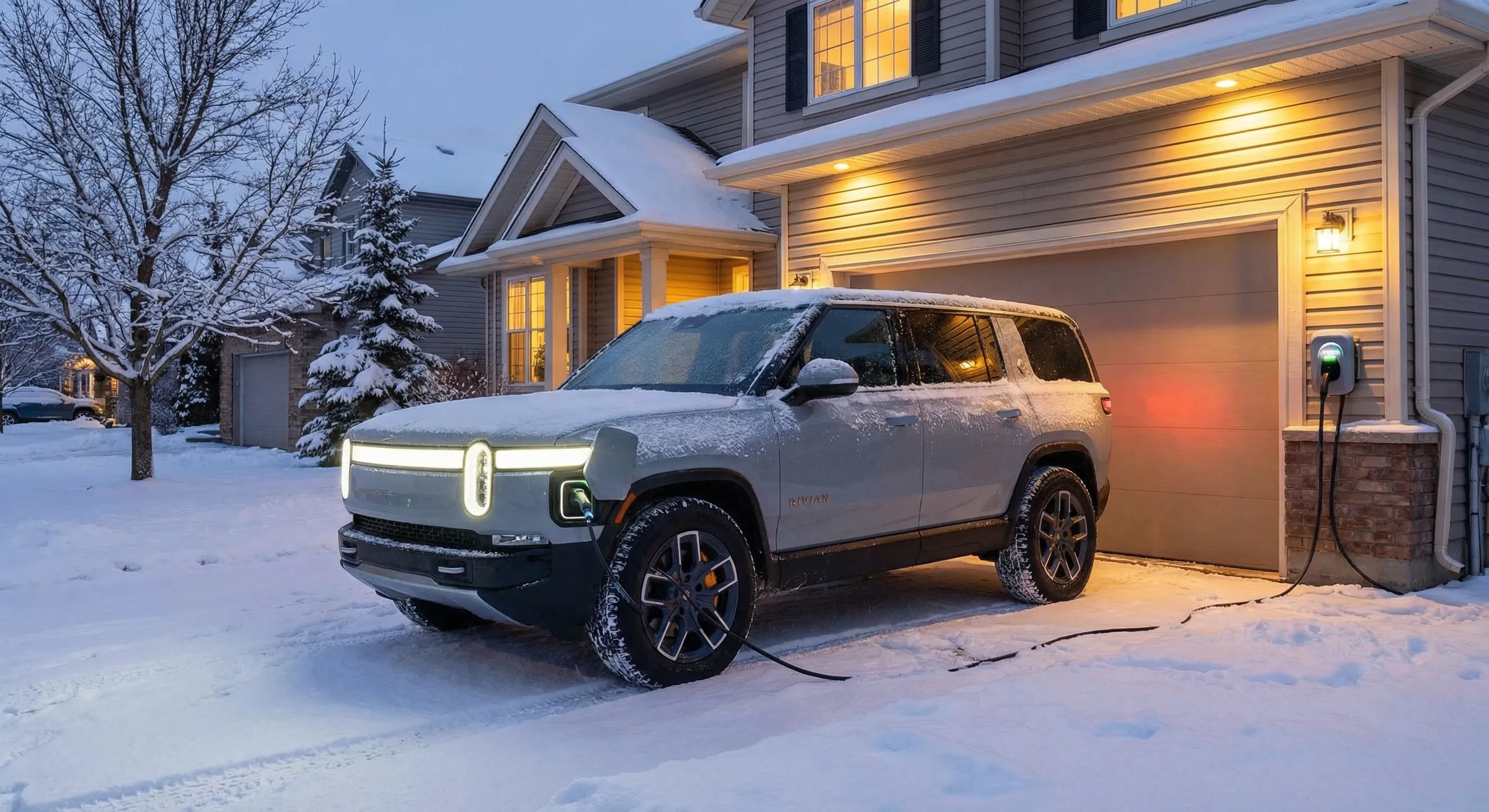
Condo and apartment residents: Quebec has some of the strongest right-to-charge legislation in Canada. Under the Civil Code of Quebec and subsequent regulations, condo owners have the right to install EV charging equipment in their parking space, and the condo board cannot unreasonably refuse. The key word is "unreasonably", they can impose conditions (like requiring a licensed electrician and proper insurance), but they can't flatly deny you the right to charge. If your condo board is blocking your charger installation, you have legal grounds to push back.
For apartment renters, the situation is more complex. Landlords are not currently required to provide EV charging, but many are voluntarily installing shared charging stations, especially in new construction. Quebec's building code is increasingly requiring EV-ready wiring in new multi-unit residential buildings, which means future installations will be simpler and cheaper.
The total charger rebate math works out well. A Grizzl-E Classic costs approximately $500 to $550. Installation by an electrician typically runs $500 to $800 for a straightforward garage install with sufficient panel capacity. Total cost: $1,000 to $1,350. After the $600 rebate: $400 to $750 out of pocket for a charger that will serve you for 10+ years. That's the cost of about five months of gas savings. After that, the charger has paid for itself.
For our recommendations on the best Level 2 chargers available in Canada, check out our Best Level 2 EV Chargers Canada 2026 guide.
WHAT'S CHANGING IN 2026
The Roulez vert program has been gradually reducing its rebate amounts as EV adoption grows. The $2,000 current level may decrease further or be restructured in the next budget cycle. The program's budget is finite, and as more Quebecers buy EVs, the per-vehicle rebate has been adjusted downward. The government has signalled that the focus is shifting from purchase incentives to charging infrastructure investment. That's the right strategic move, even if it stings for individual buyers.
Here's the policy trajectory as I read it:
Budget pressure is real. When the rebate was $8,000 and Quebec was registering 5,000 EVs per year, the annual program cost was $40 million. Now Quebec is registering 80,000+ EVs per year. At $2,000 each, that's $160 million annually. If you kept the $8,000 rebate at today's volume, you'd be spending $640 million per year on purchase incentives. That's not sustainable, and the government was right to reduce the per-vehicle amount as volumes grew.
Phase-out is likely by 2027 or 2028. The government hasn't announced a specific end date, but the trend is unmistakable. Once EV adoption crosses the 25% to 30% market share threshold, which Quebec could hit within two years, there's no political or economic justification for subsidizing purchases that the market is already making. Norway phased out its purchase incentives after crossing the 50% threshold. Quebec will likely do the same at a lower level, probably around 25% to 30%.
The federal EVAP is the bigger wildcard. The $5,000 federal rebate is funded through 2026, but its extension into 2027 is not guaranteed. Federal policy cycles are unpredictable, and there's been growing political pressure, particularly from Alberta and Saskatchewan, to redirect the EVAP budget to other priorities. If the federal rebate disappears, the Quebec stack drops from $7,000 to $2,000. That's a significant hit.
What happens when rebates end? Honestly? Not much, for Quebec specifically. The province's EV adoption has reached a self-sustaining level where the economics work without incentives, primarily because of the electricity rates. A compact electric sedan priced in the high-$30,000 range would still save roughly $2,400 per year in fuel versus a gas car in Quebec. The payback period on the price premium stretches from immediate (with rebates) to about two years (without), but the total cost of ownership still favours the EV. In provinces with expensive electricity and no provincial incentives, losing the federal EVAP would genuinely slow adoption. In Quebec, it would be a speed bump.
My policy critique: The Quebec government made a strategic error by not redirecting the remaining Roulez vert budget toward used EV incentives and multi-unit residential charging. New EVs are increasingly selling themselves in Quebec. The barriers to adoption have shifted from "new EVs are too expensive" to "I live in an apartment and can't charge at home" and "I can't afford a new EV but could afford a used one." The $2,000 per new vehicle is being spent on buyers who would have bought the EV anyway. That's subsidy capture by people who don't need the help. Redirect those funds to where they'd actually change behaviour: used EV buyers and condo/apartment charging infrastructure. End of rant.
For buyers, the message is clear: take advantage of the current rebate while it's available. The federal EVAP is also not guaranteed to continue indefinitely, though it's funded through at least 2026. The window where you can get $7,000 off a new EV in Quebec won't last forever.
Gear worth having
As an Amazon Associate, ThinkEV earns a small commission from qualifying purchases — at no extra cost to you.
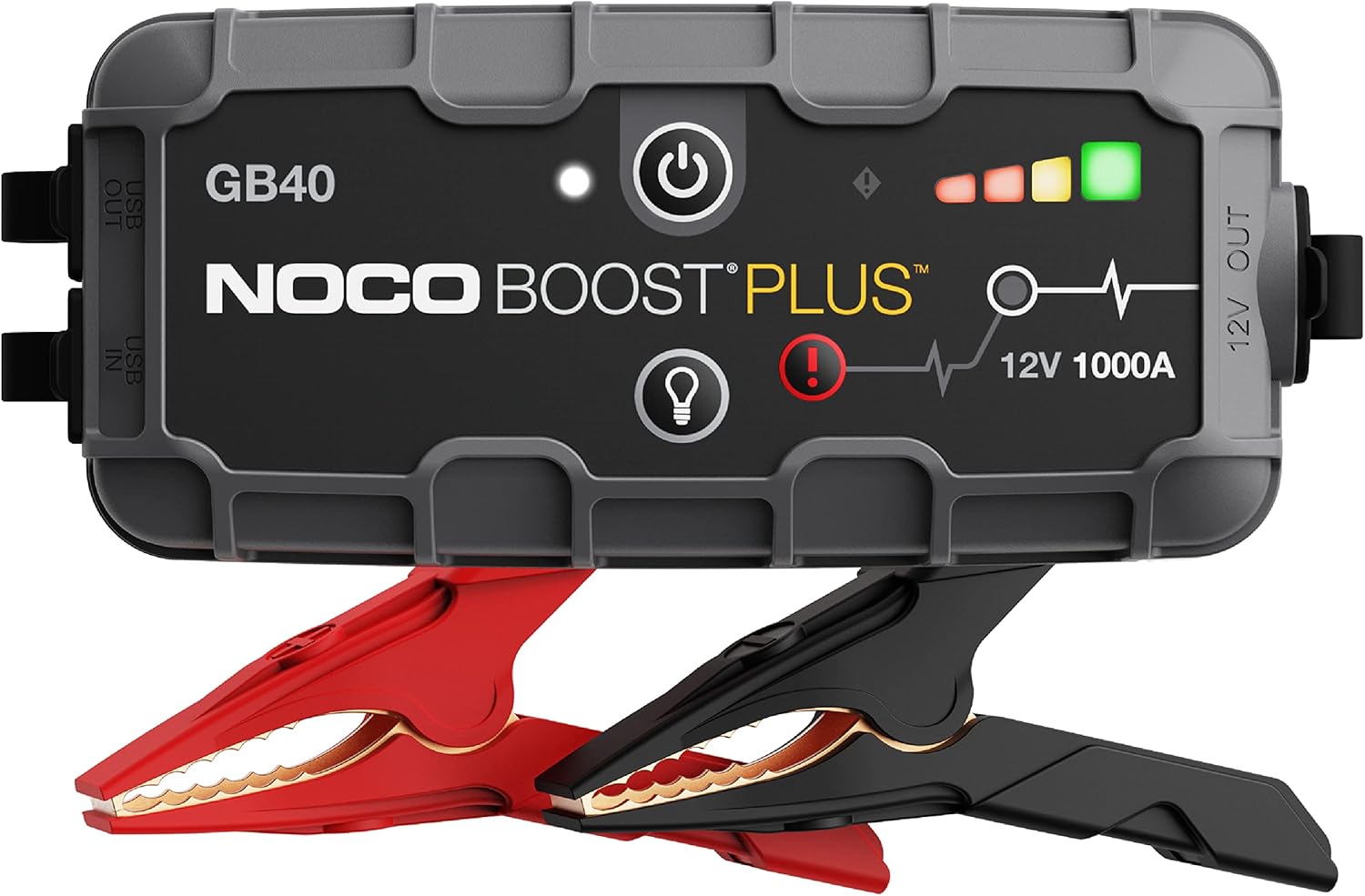
NOCO Boost Plus GB40 Jump Starter
A 1000A lithium jump starter that fits in your glovebox and works on any 12V battery. Your insurance against a dead 12V in a parking lot.
As an Amazon Associate, ThinkEV earns from qualifying purchases — at no extra cost to you.
CHARGING INFRASTRUCTURE IN QUEBEC
Quebec's charging network is extensive, the most developed in Canada outside of urban Ontario. The province benefits from having started early (the Circuit electrique network launched in 2012) and from Hydro-Quebec's direct involvement in building and operating charging stations. Here's the picture:
Gear worth having
As an Amazon Associate, ThinkEV earns a small commission from qualifying purchases — at no extra cost to you.

PULIDIKI Car Cleaning Gel (Detailing Putty)
Press it into vents, buttons, and seams and it lifts out dust you did not know was there. Weirdly satisfying, genuinely useful.
As an Amazon Associate, ThinkEV earns from qualifying purchases — at no extra cost to you.
Circuit electrique (Hydro-Quebec): This is Quebec's flagship public charging network, operated by the Electric Circuit, a Hydro-Quebec subsidiary. As of early 2026, it has over 3,500 charging stations across the province, including Level 2 stations at shopping centres, municipal lots, and workplaces, and DCFC (fast charging) stations along major highway corridors. The pricing is reasonable: Level 2 charging is typically $2.50 to $3.00 per hour, and DCFC is approximately $0.35 to $0.50 per kWh depending on the station and speed.
Tesla Superchargers: Tesla's proprietary Supercharger network is well-established along the Montreal-Quebec City corridor, in the Laurentians, the Eastern Townships, and along the Trans-Canada Highway through Quebec. With Tesla opening its Supercharger network to non-Tesla vehicles via the NACS adapter program, these stations are increasingly available to all EV owners. Tesla Supercharger pricing in Quebec is approximately $0.40 to $0.55 per kWh for non-Tesla vehicles and $0.30 to $0.45 for Tesla owners.
Electrify Canada: The Volkswagen Group's charging network has stations at major retail locations across Quebec, primarily along the Montreal-Quebec City corridor and in key suburban areas. These are high-power DCFC stations (150 kW to 350 kW) that can add significant range in short stops. Pricing is approximately $0.50 to $0.60 per kWh for non-members.
FLO (AddEnergie): A Quebec-based company that operates both Level 2 and DCFC stations across the province. FLO stations are common at shopping centres, hotels, and municipal lots. They were recently acquired by Blink Charging but continue to operate under the FLO brand in Quebec.
Coverage by region:
- Montreal and Laval: Dense coverage. You're never more than a few minutes from a public charger. Multiple DCFC options along the Trans-Canada (Highway 20/40), Highway 15 (to Laurentians), and Highway 10 (to Eastern Townships). Home charging handles 90%+ of daily needs; public charging is for emergencies and road trips.
- Quebec City: Strong coverage in the urban core and along Highway 40 corridor.
DCFC stations at major intervals for intercity travel. Highway 20 between Montreal and Quebec City has DCFC stations every 60 to 80 km, plenty for any modern EV.
- Laurentians (Mont-Tremblant, Saint-Sauveur): Good coverage along Highway 15 and Highway 117. Circuit electrique and Tesla Superchargers cover the ski resort corridor. Weekend traffic to the Laurentians is heavy, and charging infrastructure has been built to match.
- Eastern Townships (Sherbrooke, Magog): Reasonable coverage along Highway 10 and Highway 55.
DCFC stations at major towns. Some gaps in rural areas between towns.
- Gatineau/Ottawa corridor: Strong coverage, benefiting from Ottawa's charging infrastructure as well. Highway 50 and Highway 148 are well-served.
- Saguenay-Lac-Saint-Jean: Moderate coverage. Highway 175 (Montreal to Saguenay) has DCFC stations, though gaps are wider than southern corridors.
Plan your stops.
- Northern Quebec (Abitibi-Temiscamingue, Cote-Nord, Bas-Saint-Laurent): This is where the gaps are. Highway 117 north of Mont-Laurier, Highway 138 along the North Shore, and the routes into Abitibi have limited DCFC options. You can make these trips in a modern EV with 400+ km of range, but you need to plan carefully and accept that some stops will be Level 2, not DCFC.
Northern Quebec is the last frontier for EV charging infrastructure, and it will take several more years of investment to bring coverage up to southern Quebec standards.
- Gaspe Peninsula: Improving but still thin. A road trip around the Gaspe in an EV is doable with planning, but you need to be comfortable with Level 2 charging at some stops and longer-than-ideal gaps between fast chargers.
The bottom line on Quebec's charging network: if you live in Montreal, Quebec City, or any major town in southern Quebec, public charging is a non-issue. The network is mature enough that range anxiety should not be a factor in your purchase decision. For road trips to northern Quebec or remote areas, plan your route using PlugShare or the Circuit electrique app and confirm charger availability before you leave.
WINTER EV OWNERSHIP IN QUEBEC
Let's address the elephant in the room. Quebec winters are brutal. Montreal averages -10 degrees Celsius in January with regular dips to -20 and occasional drops to -30 or colder. Quebec City is worse, average January temperature of -13 degrees with wind chills pushing -35 to -40. If you're buying an EV in Quebec, you need to understand what cold does to batteries and what it means for your daily driving.
Range loss in cold weather: At -20 degrees Celsius, expect 25% to 35% range loss compared to the vehicle's rated range. A vehicle rated at 400 km in ideal conditions will deliver approximately 260 to 300 km in deep winter. At -30 degrees, range loss can reach 35% to 40%. This is physics, lithium-ion batteries deliver less energy in extreme cold, and the heating system draws significant power.
The good news: 260 to 300 km of winter range is still more than enough for virtually all daily driving in Quebec. The average Canadian drives 40 to 50 km per day. Even with a 40% range hit, a modern EV with a 60 kWh battery delivers over 200 km of usable winter range. You charge overnight and leave every morning with a full battery. You're never at risk of running out unless you're doing a 250+ km highway road trip without stopping, and even then, Quebec's DCFC network along major corridors handles that scenario.
Preconditioning: This is your best tool for winter EV ownership. Preconditioning means using grid power (while the car is still plugged in) to warm the cabin and the battery before you leave. Almost every modern EV lets you schedule preconditioning through its app. At Quebec's $0.07 to $0.09/kWh rates, a 30-minute preconditioning session costs approximately $0.20 to $0.30. For twenty cents, you step into a warm car with a warm battery and significantly better range than if you started cold. It's one of the most underappreciated advantages of EV ownership in winter, and it's especially affordable in Quebec.
Heat pumps: Many modern EVs such as the Kona Electric, Ioniq 5, Tesla Model 3/Y, and Equinox EV use heat-pump-based thermal management. The EV4 is expected to join that group, but trim-level confirmation should still come from Kia Canada. Heat pumps are dramatically more efficient at heating the cabin, which matters in Quebec because they preserve more battery energy for driving.
Quebec's winter tire law: Quebec mandates winter tires from December 1 to March 15. This applies to EVs just as it does to gas vehicles. Here's the EV-specific consideration: winter tires increase rolling resistance, which reduces range by an additional 3% to 5% on top of the cold-weather battery loss. Budget for this in your range expectations. The good news is that EVs have excellent traction control and low centres of gravity (battery packs are mounted under the floor), which means they handle exceptionally well on snow and ice with proper winter tires.
Popular winter tire choices for EVs in Quebec include the Michelin X-Ice Snow, Bridgestone Blizzak WS-90, and Nokian Hakkapeliitta R5 EV (specifically designed for EVs with lower rolling resistance). Size and fitment depend on your specific vehicle. Budget $800 to $1,400 for a set of four winter tires mounted on steel or alloy rims.
Cold-weather DCFC charging: Fast charging speeds are reduced when the battery is very cold. If you pull up to a DCFC station after driving in -25 degree weather, your initial charge rate may be 50% to 60% lower than what you'd see in summer. Most modern EVs pre-warm the battery automatically when you work through to a fast charger, which helps significantly. This is primarily a road trip consideration, for daily home charging, the overnight Level 2 session provides a full battery regardless of temperature.
Bottom line on winter: Quebec winters make EVs slightly less convenient than summer ownership, but the impact is manageable with basic planning. Precondition while plugged in, keep winter tires on, and don't worry about range for daily driving. The fuel savings are actually larger in winter because gas cars are also less efficient in cold weather (10% to 15% reduction), while your EV electricity cost stays at $0.07 to $0.09/kWh regardless of season. For more data on how EVs perform in Canadian winters, see our EV Winter Range Test Canada 2026 analysis.
BEST EVS FOR QUEBEC BUYERS
If you're buying a new EV in Quebec in 2026 and want to maximize the $7,000 combined rebate, here are the vehicles that deliver the best value after incentives. I'm ranking these on after-rebate price relative to range, features, and overall ownership cost in Quebec specifically.
1. Watchlist: compact electric sedans landing in the low-$30,000s after rebates
If Kia Canada lands EV4 pricing where early reporting suggests and the qualifying trim remains EVAP-eligible, Quebec is one of the provinces where the post-rebate math becomes most compelling. The point is less that one exact sticker is guaranteed today, and more that Quebec's stacked rebates plus cheap electricity are especially powerful for this class of vehicle.
2. Chevrolet Equinox EV (1LT), $37,995 after rebates
MSRP $44,995. Full $7,000 stack. Canadian-made, so the EVAP price cap doesn't apply. Over 500 km of rated range. This is a proper mid-size SUV, the kind of vehicle most Canadian families actually want, for under $38,000 after rebates. GM's Ultium platform is proven, and the Equinox EV has been well-received for ride quality and interior space. The 500+ km rated range means approximately 325 to 375 km in deep winter, which is still exceptional for daily driving.
3. Hyundai Kona Electric (Essential), $35,999 after rebates
MSRP $42,999. Full $7,000 stack. The Kona Electric is a subcompact SUV with a heat pump, solid range, and Hyundai's competitive warranty. It's a great city vehicle for Montreal, compact enough for tight parking but with enough range for weekend trips to the Laurentians or Eastern Townships. The Preferred trim at $39,499 after rebates adds a few creature comforts and is also excellent value.
4. Hyundai Ioniq 5 (Essential), $37,999 after rebates
MSRP $44,999. Full $7,000 stack. Larger than the Kona, with a distinctive design and an exceptionally spacious interior for a vehicle in this price range. 800V architecture means ultra-fast DC charging where available (10% to 80% in under 20 minutes at 350 kW stations). The vehicle-to-load (V2L) feature lets you power appliances during ice storms or camping trips, genuinely useful in Quebec.
5. Nissan Ariya (Engage trim), approximately $37,999 to $39,999 after rebates
MSRP approximately $44,999 to $46,999. Full $7,000 stack on qualifying trims. The Ariya is a comfortable, well-built mid-size crossover. Not the sportiest option, but refined and quiet with good winter performance and available AWD (e-4ORCE) on higher trims.
6. Tesla Model Y RWD base, $42,990 after full $7,000 Quebec stack
MSRP $49,990. The Model Y RWD base is now on Transport Canada's official EVAP eligible vehicle list. In Quebec, that means the full $7,000 stack applies ($5,000 EVAP + $2,000 Roulez vert), bringing the effective price to $42,990, competitive with other vehicles on this list. Keep dealer-added fees low to protect the final transaction value under $50,000. Higher Model Y trims (Long Range AWD at $59,990, Performance at $69,990) exceed the EVAP cap and get only the $2,000 Roulez vert.
7. Tesla Model 3 (base), $52,990 after Roulez vert only
MSRP approximately $54,990. Only the $2,000 Roulez vert applies, no EVAP. The Tesla Model 3 is an excellent EV, fast, efficient, with the best Supercharger network, but the Model 3 Long Range at $54,990 costs roughly $10,000 to $20,000 more than the rebate-stacked alternatives listed above after incentives are applied. If you want a Tesla in Quebec, the Model Y RWD base now qualifies for the full stack and is the better value play.
The common thread: every vehicle on this list qualifies for the full $7,000 stack when the base Model Y RWD is included. If maximizing your rebate savings is a priority, and it should be, the Korean, North American, and base Model Y options all deliver the maximum stack. The financial math strongly favours vehicles that qualify for both EVAP and Roulez vert over higher Tesla trims.
For a broader comparison of affordable options across Canada, see our guide to the Most Affordable EVs in Canada 2026.
USED EVS IN QUEBEC
The Roulez vert program has historically offered rebates for used EVs, though the amounts and eligibility criteria have evolved. Used EV incentives are critical because they make electric vehicles accessible to buyers who can't afford a $32,000 to $45,000 new vehicle, and that's a lot of Canadians.
Current used EV rebate terms: The used EV rebate under Roulez vert has been subject to changes, so check the Quebec government's Roulez vert portal for the most current amounts and eligibility. Historically, the used EV rebate has been in the $500 to $1,000 range for qualifying vehicles. Eligibility typically requires:
- The vehicle is a used battery-electric vehicle
- Purchased from a dealer (private sales usually don't qualify)
- The buyer has not already claimed a Roulez vert rebate that calendar year
- The buyer is a Quebec resident
The Quebec used EV market: Quebec has a strong used EV market thanks to being the province with the highest number of EVs on the road. Popular used models include:
- Nissan Leaf (2018-2021): $15,000 to $22,000 depending on battery health and mileage. The 40 kWh version offers approximately 240 km rated range (150 to 180 km in winter). Excellent for city commuting in Montreal or Quebec City. The 62 kWh e+ version offers better range at a higher price point.
- Chevrolet Bolt EV (2019-2022): $18,000 to $25,000.
The 66 kWh battery delivers approximately 417 km rated range, which translates to 260 to 310 km in Quebec winters. This is arguably the best used EV value in Canada, spacious enough for a small family, range enough for weekend trips, and priced below $25,000.
- Hyundai Kona Electric (2019-2022): $20,000 to $28,000. The 64 kWh battery provides strong range and the vehicle has proven reliable.
Heat pump on later models improves winter efficiency.
- Tesla Model 3 (2019-2021): $28,000 to $38,000 depending on trim. Tesla's strong resale values mean used Model 3s aren't cheap, but they're still significantly less than new. Access to the Supercharger network is a genuine advantage for road trips.
- Volkswagen ID.4 (2022-2023): $25,000 to $32,000. Spacious interior, decent range, and AWD available on Pro S trims.
Why used EVs are growing in Quebec: The math is even more compelling for used EVs than for new ones. A $20,000 used Chevrolet Bolt EV with Quebec electricity rates costs approximately $288 per year to fuel. A comparably priced used gas car (Civic, Elantra) costs approximately $2,640 per year. The used EV buyer saves over $2,300 per year in fuel. Over five years, that's $11,700 in fuel savings on a $20,000 vehicle, a 58% return on the purchase price from fuel savings alone. That's not an investment return; that's a financial no-brainer.
Battery health concerns: The most common hesitation with used EVs is battery degradation. Modern lithium-ion batteries (2018 and newer) degrade slowly, typically 2% to 3% capacity loss per year under normal use. A five-year-old EV with its original battery typically has 85% to 90% of its original capacity remaining. In Quebec's climate, extreme cold doesn't cause permanent battery damage, cold temporarily reduces available energy but doesn't degrade the battery faster than moderate climates.
When shopping for a used EV, ask the dealer or owner for a battery health report (many EVs display this in the infotainment system or via OBD diagnostic tools). A five-year-old EV with 88% battery health is normal and not a cause for concern.
WHY QUEBEC LEADS
Quebec accounts for 45% of all Canadian EV registrations with 23% of the population. That disproportionate share is not accidental, and it's not just about the rebates. It's the convergence of several factors that other provinces would do well to study and replicate.
Factor 1: Electricity economics. This is the foundation. Quebec's $0.07 to $0.09/kWh electricity rates make EVs cheaper to fuel than anywhere else in Canada by a significant margin. This isn't a policy choice that can be easily replicated, it's the result of decades of hydroelectric investment by Hydro-Quebec. But it demonstrates a fundamental truth: the single most important driver of EV adoption is cheap electricity. If your province has expensive electricity ($0.15+/kWh), your EV adoption will be structurally slower. Ontario, Alberta, and the Atlantic provinces need to address their electricity costs if they want to match Quebec's trajectory.
Factor 2: Policy consistency. The Roulez vert program has been in continuous operation since 2012, over 14 years of unbroken incentive availability. That consistency matters. Consumers and dealers can plan around a program that exists reliably. Compare that to Ontario, which offered an EV rebate from 2010 to 2018, then cancelled it entirely under the Ford government, then briefly considered reinstating it, then didn't. That on-again-off-again approach destroys market confidence and dealer investment in EV infrastructure.
Factor 3: Dealer point-of-sale integration. The Roulez vert rebate is applied at the dealer, not through a separate government portal. This removes friction. The buyer sees the discount immediately. There's no waiting period, no complicated application, no wondering if the cheque will arrive. BC's rebate works similarly, and BC has the second-highest adoption rate in Canada. Ontario's defunct program also applied at the dealer. There's a pattern: point-of-sale incentives drive adoption more effectively than mail-in rebates.
Factor 4: Hydro-Quebec's direct involvement in charging. Unlike most provinces where charging infrastructure is left to the private sector, Hydro-Quebec directly invested in and operates the Circuit electrique network. This public utility approach ensured coverage in areas that wouldn't attract private investment, smaller towns, rural highways, and public institutions. It also established pricing norms that private operators had to compete with. The result is a more comprehensive and competitively priced charging network than any other province.
Factor 5: Cultural alignment. Quebec has a distinct political culture that's more comfortable with government intervention in markets and more receptive to environmental policy than most English-speaking provinces. The ZEV mandate, requiring automakers to sell a minimum percentage of zero-emission vehicles, was adopted in Quebec before any other province. This cultural context makes EV-supportive policy easier to implement and sustain.
Factor 6: Population density in the Megal corridor. Over 80% of Quebec's population lives in the Montreal-Quebec City corridor, a ~250 km stretch that's ideal for EV ownership. The distances are short enough for daily EV range, the population density supports charging infrastructure investment, and the urban/suburban mix means most residents have access to home charging. Rural Quebec is a different story, but the corridor is where the volume is, and the corridor is perfectly suited to EVs.
What other provinces should learn: The lesson from Quebec is not "subsidize EVs forever." The lesson is "create the conditions where EV ownership is economically rational, and then let the market do its work." Quebec's rebates were the spark, but the electricity rates are the fuel. Ontario could match Quebec's adoption rate within five years if it offered competitive off-peak EV charging rates ($0.05 to $0.08/kWh) and reinstated a consistent point-of-sale rebate. Alberta could do the same if it addressed its electricity pricing structure and offered provincial incentives. The federal EVAP alone isn't enough without provincial support.
For a full province-by-province comparison of EV incentives across Canada, see our comprehensive EV Rebates by Province Canada 2026 guide, or compare total cost of ownership to see where each province falls.
Gear worth having
As an Amazon Associate, ThinkEV earns a small commission from qualifying purchases — at no extra cost to you.

WixGear Magnetic Air Vent Phone Mount (2-Pack)
A magnet strong enough that your phone never flinches over potholes or rail crossings. Two in the box, one for each car.
As an Amazon Associate, ThinkEV earns from qualifying purchases — at no extra cost to you.
FAQ
Related Reading
- EV Charging Costs by Province Canada 2026, Why Quebec's electricity rates make EVs so cheap to charge compared to every other province.
- Canada EVAP Rebate Guide 2026, How to claim the $5,000 federal incentive, eligibility requirements, and which vehicles qualify.
- EV Rebates by Province Canada 2026, How Quebec's incentive structure compares to every other province and territory.
- Best Level 2 EV Chargers Canada 2026, Our picks for the best home chargers, including options that qualify for Quebec's $600 rebate.
- EV vs Gas Total Cost of Ownership Canada 2026, The full five-year and ten-year ownership cost breakdown, province by province.
- Most Affordable EVs Canada 2026, The cheapest new EVs available in Canada after all rebates.
Gear worth having
As an Amazon Associate, ThinkEV earns a small commission from qualifying purchases — at no extra cost to you.

Car Cup Holder Coasters (4-Pack)
Drop-in coasters that catch spills and crumbs so your cup holders stay clean. Rinse and reuse forever.
As an Amazon Associate, ThinkEV earns from qualifying purchases — at no extra cost to you.

Founder & Chief Editor
Vlad Pereira is the founder and chief editor of ThinkEV.ca, the Canadian electric-vehicle publication he writes and edits from Courtenay, British Columbia. He covers EV pricing, federal and provincial rebates, charging costs, and the Chinese manufacturers now entering Canada, from the buyer's side rather than the press-fleet side. ThinkEV is a venture of Vlad Pereira Online; his writing on health, income and the long game lives at vladpereira.com.
Frequently asked questions
How much is the Quebec Roulez vert rebate in 2026?
Do used EVs qualify for Roulez vert?
Is Quebec the cheapest province to own an EV?
Does Roulez vert cover home charger installation?
Does Tesla qualify for Quebec EV rebates?
How much range do EVs lose in Quebec winters?
Can I install an EV charger in my Quebec condo?
How does Quebec's EV charging network compare to other provinces?
What's the best EV to buy in Quebec in 2026?
More EV & road-trip finds
Affordable upgrades worth a look — tap any to check the price on Amazon.
 ★ 4,050
Touchscreen Mist Screen Cleaner Kit
View on Amazon ★ 419
★ 419RGB Car Interior LED Strip Light
View on Amazon ★ 1,083
Crystal Push-Start Button Ring (2-Pack)
View on Amazon ★ 4,424
Sun Visor Card and Document Organizer
View on Amazon ★ 308
★ 308Coiled Lightning Car Cable for iPhone (2-Pack)
View on Amazon ★ 119
★ 119Foldable Waterproof Trunk Organizer
View on Amazon ★ 392
★ 392Large Cup Holder Adapter (32-40oz)
View on Amazon ★ 12,051
Windex Electronics Screen Wipes
View on AmazonRead, Plan, Then Stay Current
Explore our expert articles to understand incentives and ownership costs, use the map to pressure-test charging reality, then subscribe so new EV coverage comes straight to you.
Continue Reading

Alberta EV Rebates 2026: What You Actually Get

BC EV Rebates 2026: What's Left After the Cuts
Manitoba EV Rebates 2026: $4,000 Incentive Ends March 31
Newfoundland EV Rebates 2026: What You Can Claim
PEI EV Rebates 2026: The Island's Surprising $5,000 EV Deal