
Key takeaways
- A Quebec buyer gets up to $7,000 in combined rebates ($5,000 federal EVAP + $2,000 Roulez vert).
- A PEI buyer gets up to $9,000 ($5,000 EVAP + $4,000 provincial).
- A Manitoba buyer, if they act before March 31, 2026, gets $9,000 ($5,000 EVAP + $4,000 provincial, though Tesla is excluded from the provincial portion).
- The EHVIP cancellation in 2018 removed rebates of up to $14,000 for battery-electric vehicles and $3,000 for plug-in hybrids.
Ontario has zero provincial EV rebates. Not a dollar. Not a cent. The province cancelled its Electric and Hydrogen Vehicle Incentive Program (EHVIP) in July 2018, one of Doug Ford's first acts as Premier, and has shown zero interest in bringing it back. That was nearly eight years ago. In that time, every other major province in Canada has either maintained, expanded, or introduced EV purchase incentives. Ontario did nothing.
Let's be clear about what this means for you. If you're buying an EV in Ontario in 2026, your provincial government has decided you don't deserve the same support that residents of Quebec, British Columbia, Prince Edward Island, Manitoba, or half a dozen other jurisdictions receive. You're paying the same federal taxes that fund national EV programs, but your province is actively choosing not to supplement them.
The numbers are stark. A Quebec buyer gets up to $7,000 in combined rebates ($5,000 federal EVAP + $2,000 Roulez vert). A PEI buyer gets up to $9,000 ($5,000 EVAP + $4,000 provincial). A Manitoba buyer, if they act before March 31, 2026, gets $9,000 ($5,000 EVAP + $4,000 provincial, though Tesla is excluded from the provincial portion). An Ontario buyer? $5,000. Federal only. The province contributes nothing.
Here's what the government doesn't want you to think about: Ontario is the largest auto-manufacturing province in the country. It has the most EV assembly plants, the most parts suppliers, the most jobs tied to the electric vehicle transition. Ford, GM, Stellantis, and Honda are all building or retooling plants in Ontario for EV production. The province benefits enormously from EV adoption, and yet it refuses to incentivize its own residents to buy the vehicles being built in their backyards.
The EHVIP cancellation in 2018 removed rebates of up to $14,000 for battery-electric vehicles and $3,000 for plug-in hybrids. At the time, the Ford government argued the program was a subsidy for wealthy Tesla buyers. There was a grain of truth in that criticism, early EV buyers skewed affluent, but the market has changed dramatically. In 2026, you can buy a new EV in the mid-$30,000 range after the federal rebate, and the market is clearly moving down from the six-figure early-adopter era. The "rich person's toy" argument died years ago. The policy hasn't caught up.
That said, Ontario EV buyers aren't completely on their own. The federal EVAP provides $5,000, time-of-use electricity pricing creates real savings for smart chargers, the Green Licence Plate program offers tangible daily benefits, and the sheer economics of electric driving still favour the EV buyer. Here's how to maximise every dollar of what's available, because the province certainly isn't going to help you.
THE FEDERAL EVAP
The $5,000 federal Electric Vehicle Affordability Program (EVAP) rebate is the only purchase incentive available to Ontario EV buyers. Let's be clear: this is federal money, not provincial. Ontario's contribution to your EV purchase remains exactly zero.
The EVAP works like this: new battery-electric vehicles with a final transaction value under $50,000 qualify for the full $5,000 rebate. That transaction value includes base price, options, and dealer fees, but excludes taxes, freight/PDI, and provincial levies. This is a critical distinction. A vehicle with a $48,000 MSRP that ends up at $52,000 after freight, taxes, and delivery still qualifies, because those charges are excluded from the transaction value calculation.
There's an important exception: Canadian-made vehicles have no price cap. If a vehicle is assembled in Canada, it qualifies for the $5,000 EVAP regardless of transaction value. This benefits models like the Chrysler Airflow (assembled in Windsor) and certain configurations of the Equinox EV. The intent is to support domestic manufacturing, an irony not lost on those of us watching Ontario refuse to do the same at the provincial level.
Who qualifies:
- Canadian residents with a valid driver's licence
- Purchasing or leasing (minimum 12-month lease) a new, eligible zero-emission vehicle
- Vehicle must be from a participating dealer
- One rebate per person per calendar year (as of 2025 rules)
- Vehicle must be made in Canada or a Free Trade Agreement (FTA) country, this excludes Chinese-manufactured vehicles
Who does NOT qualify:
- Tesla buyers: every current Tesla model exceeds the $50,000 transaction value cap after mandatory fees and options. The base Model 3 starts at $54,990 in Canada. Even the most stripped-down configuration doesn't come under the cap. Tesla is not assembled in Canada, so the Canadian-made exemption doesn't apply
- BYD buyers: BYD vehicles are not yet available in Canada as of March 2026, and Chinese-manufactured vehicles are excluded from EVAP due to the 100% tariff (reduced to 6.1% as of January 16, 2026, under a 49,000-vehicle quota, but still excluded from EVAP eligibility)
- Used vehicle buyers: EVAP applies to new vehicles only. There is no federal rebate for used EVs
- Plug-in hybrids with less than 50 km of electric range
Popular EVAP-eligible models and their after-rebate prices:
- Chevrolet Equinox EV, MSRP $44,995, after EVAP: $39,995. This is the value leader in Ontario. Canadian-assembled (CAMI plant in Ingersoll), so it qualifies regardless of trim level or options. The 2LT and 3RS trims exceed $50K transaction value but still qualify thanks to Canadian assembly. Roughly 450 km range, Ultium platform, available AWD
- Hyundai Kona Electric, MSRP $42,999, after EVAP: $37,999. Assembled in South Korea (FTA country).
The Preferred trim qualifies easily. The Ultimate trim pushes close to the cap but stays under with careful option selection. 418 km range, excellent winter efficiency
- Kia EV4 ? early Canadian pricing in the high-$30,000 range has been widely discussed, which would put it in the low-to-mid-$30,000s after EVAP if that pricing and eligibility hold.
Treat this as a watchlist entry rather than a settled Ontario sticker
- Volkswagen ID.4, MSRP $44,995, after EVAP: $39,995. Assembled in Chattanooga, Tennessee (USMCA country). The Pro and Pro S trims qualify. The GTX performance trim may exceed the cap depending on options. 443 km range, spacious interior
- Chevrolet Equinox EV LT, MSRP $41,290, after EVAP: $36,290. The base LT trim is the most affordable Equinox configuration and qualifies on both price and Canadian-made grounds.
Rear-wheel drive, 446 km range
- Nissan Ariya, MSRP $49,998, after EVAP: $44,998. Cuts it extremely close to the $50K cap. The Engage trim qualifies; the Evolve+ and Platinum trims may not. Assembled in Japan (FTA country). 350 km range in the base configuration
The application process:
The good news, there's no separate application. The EVAP rebate is applied at the point of sale by participating dealers. The dealer handles the paperwork with Transport Canada. You see the $5,000 deducted on your purchase agreement. If you're leasing, the rebate is factored into your lease payments.
However, confirm with your dealer that they are a participating EVAP dealer before you finalize. Not every dealer is enrolled. You can check the Transport Canada website for a list of participating dealers, or simply ask before you sit down to negotiate. If a dealer isn't enrolled, you cannot claim the rebate retroactively.
The timeline is straightforward: the rebate is applied at the time of purchase. There's no waiting period, no post-purchase claim, no cheque in the mail. You walk out of the dealership having already received your $5,000.
These prices are competitive with equivalent gas vehicles, especially when you factor in the lower operating costs of an EV. But in Quebec, those same buyers would save an additional $2,000 through Roulez vert. In PEI, they'd save an additional $4,000 (Tesla excluded). Manitoba offers $4,000 provincial, though that program's future past March 31, 2026, is uncertain. Ontario's refusal to offer a provincial rebate is a real, measurable cost to its residents. For a comprehensive breakdown, see our EV rebates by province guide.
TIME-OF-USE ELECTRICITY RATES
This is where Ontario EV owners can recover some ground. The province's time-of-use (TOU) pricing structure creates a significant financial incentive to charge overnight, and if you're disciplined about it, you can achieve electricity costs that rival the cheapest provinces in Canada.
Off-peak (7 PM – 7 AM weekdays, all day weekends and holidays): $0.076/kWh. This is when you charge your EV. Period. No exceptions unless you're genuinely stranded. At this rate, a vehicle consuming 15 kWh/100 km costs approximately $1.14 per 100 km in electricity. That's comparable to Quebec's flat rate and among the cheapest driving costs in the country.
Mid-peak (varies seasonally): $0.122/kWh. These are the transition hours, generally 7 AM to 11 AM and 5 PM to 7 PM in winter, and 7 AM to 11 AM and 5 PM to 7 PM in summer (exact windows shift seasonally). Charging during mid-peak isn't catastrophic, but it's 60% more expensive than off-peak. Avoid it if you can.
On-peak (11 AM – 5 PM in summer; 7 AM – 11 AM and 5 PM – 7 PM in winter): $0.182/kWh. The most expensive time to charge. At this rate, charging costs approximately $2.73 per 100 km, still cheaper than gasoline, but more than double the off-peak rate. Never charge during these hours if you can avoid it. If you're plugging in at a public Level 2 charger during on-peak, you're paying more than you need to.
The difference between on-peak and off-peak is 2.4x. That's enormous. By scheduling your EV charger to start at 7 PM (most EVs and smart chargers have built-in scheduling), you effectively get Quebec-level electricity costs despite Ontario's higher average rates.

Smart charger scheduling is essential. A Level 2 charger like the Grizzl-E Classic has built-in scheduling that lets you set charging windows. Most EVs also have onboard charge scheduling, the Equinox EV, Kona Electric, and ID.4 all allow you to set departure times and let the car calculate when to start charging. Use both layers: set the charger to only deliver power during off-peak, and set the car to only accept charging during off-peak. Belt and suspenders.
Seasonal rate changes matter. Ontario's TOU windows shift between summer (May 1 – October 31) and winter (November 1 – April 30). The off-peak window stays the same (7 PM – 7 AM weekdays, all weekends), but the mid-peak and on-peak windows swap. In summer, on-peak is 11 AM to 5 PM (air conditioning demand). In winter, on-peak splits to 7 AM – 11 AM and 5 PM – 7 PM (heating demand). The important thing: off-peak overnight charging is always the same rate, year-round.
Tiered pricing: the alternative. Ontario gives you a choice between TOU and Tiered pricing. Under Tiered pricing, your first 1,000 kWh per month costs $0.087/kWh, and everything above 1,000 kWh costs $0.103/kWh. If you can't reliably charge off-peak, maybe you work night shifts or have an unpredictable schedule, Tiered pricing offers a predictable rate that's still reasonable. But for most EV owners who can schedule overnight charging, TOU is the clear winner. The $0.076 off-peak rate beats even the Tier 1 rate of $0.087.
The math for different vehicles:
- Chevy Equinox EV (15 kWh/100 km): 20,000 km/year at off-peak = $228/year. At Tiered Tier 1 = $261/year. At on-peak = $546/year
- Hyundai Kona Electric (14.5 kWh/100 km): 20,000 km/year at off-peak = $220/year. At Tiered Tier 1 = $252/year. At on-peak = $527/year
- Compact electric sedan scenario (about 14 kWh/100 km): 20,000 km/year at off-peak = about $213/year. At Tiered Tier 1 = about $244/year. At on-peak = about $510/year
- Tesla Model 3 (13.5 kWh/100 km): 20,000 km/year at off-peak = $205/year. At Tiered Tier 1 = $235/year. At on-peak = $491/year
Comparison to flat-rate provinces: Quebec charges a flat $0.073/kWh. Manitoba is roughly $0.099/kWh flat. BC is tiered at $0.095/$0.143. Ontario's off-peak rate of $0.076 is essentially tied with Quebec for the cheapest electricity cost in the country, but only if you charge at the right time. If you charge randomly throughout the day, your blended rate is roughly $0.127/kWh, which is mediocre. The discipline of off-peak charging is what makes Ontario competitive. For a province-by-province comparison, see our EV charging costs guide.
Over a year of driving 20,000 km, charging exclusively off-peak costs approximately $228 (Equinox EV). Charging at the blended average rate costs approximately $380. That's $150 in annual savings from a simple scheduling change. Over five years: $750 saved by being smart about when you charge. Over ten years: $1,500, more than the cost of the smart charger itself.
Gear worth having
As an Amazon Associate, ThinkEV earns a small commission from qualifying purchases — at no extra cost to you.

Grizzl-E Classic Level 2 EV Charger (40A)
Canadian-made and rated for minus 40C winters. 40A / 9.6 kW, NEMA 14-50, indoor/outdoor, 24-ft cable. The charger built for Canadian weather.
As an Amazon Associate, ThinkEV earns from qualifying purchases — at no extra cost to you.
GREEN LICENCE PLATE
Ontario's Green Licence Plate program is one of the few things the province has gotten right on EV policy. When you register a zero-emission vehicle, battery-electric or hydrogen fuel cell, you receive a distinctive green licence plate that grants access to HOV (high-occupancy vehicle) lanes regardless of how many people are in the car.
HOV lanes covered by the Green Licence Plate:
- Highway 401 through the GTA, the busiest highway in North America. HOV lanes run from roughly Highway 427 east to Salem Road in Ajax. During rush hour, the general lanes can be gridlocked while the HOV lane flows at 90-100 km/h. The time savings here alone can justify EV ownership for daily commuters
- Highway 403 from the QEW interchange to Highway 401 in Mississauga.
Key corridor for Mississauga, Hamilton, and Burlington commuters
- Queen Elizabeth Way (QEW) through Burlington and Oakville. The Hamilton-to-Toronto corridor
- Highway 404 northbound from Highway 401 to Highway 7. Major artery for North York, Markham, and Richmond Hill commuters
- Don Valley Parkway (DVP), limited HOV sections, but valuable during the morning southbound crawl into downtown Toronto
- Gardiner Expressway, limited HOV enforcement, but the plate provides access where applicable
- Highway 400, HOV lanes being expanded northward
On the 401 through the GTA, HOV lane access during rush hour can save 15-30 minutes per commute. That's 30-60 minutes per day, 150-300 minutes per week, roughly 10-20 hours per month. Over a year, a daily 401 commuter with a Green Licence Plate saves 120-240 hours of sitting in traffic. Put a dollar value on your time, even at minimum wage, that's $1,800-$3,600 per year. At a professional salary's implied hourly rate, it's far more.
How to get the Green Licence Plate:
The process is straightforward. When you register your new zero-emission vehicle at a ServiceOntario centre, request the green licence plate. There's no additional fee beyond the standard plate fee. If you've already registered your EV with standard plates, you can swap to green plates at any ServiceOntario location. You'll need your vehicle ownership (registration), driver's licence, and proof that the vehicle is a zero-emission vehicle (the VIN lookup will confirm this). The plate is a distinctive green-and-white design that's immediately recognizable to OPP and municipal police enforcing HOV lanes.
Parking benefits by city:
- Toronto: Green P (Toronto Parking Authority) offers discounted rates at select municipal parking garages for green-plated vehicles. The discount varies by location, typically 15-25% off the standard rate. Some Green P lots also have dedicated EV parking spots with Level 2 chargers
- Mississauga: Select municipal lots offer free or reduced-rate parking for EVs.
The city has installed EV chargers at several community centres and civic buildings
- Ottawa: Some municipal parking facilities offer EV-priority parking with charging. The city's Green Fleet strategy includes public charging infrastructure at city facilities
- Hamilton: Limited parking incentives, but the city has installed public chargers at several municipal lots.
The Harbour West area and downtown parkades have EV-designated spots
- Brampton: New developments are required to include EV charging infrastructure. Some municipal lots offer EV-priority parking
HOV enforcement: Ontario uses a combination of OPP patrols and automated enforcement (cameras) on HOV lanes. The fine for using an HOV lane without the required number of passengers (or a Green Licence Plate) is $110 plus three demerit points. The Green Licence Plate provides a clear, visual exemption, no transponder needed, no registration in a separate program. It's the plate itself that grants access.
It's not a financial incentive in the traditional sense, but for the hundreds of thousands of Ontarians who commute on the 401, 403, or QEW, the Green Licence Plate is genuinely life-changing. Multiple Ontario EV owners cite it as the single most valuable perk of ownership, more valuable, in their daily experience, than the $5,000 EVAP rebate.
MUNICIPAL PROGRAMS
Some Ontario municipalities have their own EV programs, though calling them "incentives" is generous compared to what provinces like Quebec or PEI offer. They're more accurately described as modest supports, helpful, but not significant.
Toronto:
- Free EV charging at select Green P (Toronto Parking Authority) locations. The city has installed Level 2 chargers at roughly 40 Green P locations across the city
- The Toronto Green Standard requires new residential developments to provide EV-ready parking (rough-in for future charger installation). This doesn't help you today, but it means condo buildings built after 2022 should have electrical capacity for charger installation
- Toronto Hydro offers a residential EV charger rebate of up to $500 for Level 2 charger installation. This helps offset the $1,500-$2,500 cost of a home charger installation
- The city's TransformTO climate plan includes targets for public charging expansion. Toronto has roughly 1,200 public charging ports as of early 2026
Ottawa:
- The City of Ottawa has installed Level 2 chargers at over 20 municipal facilities, community centres, libraries, arenas
- Ottawa's Official Plan includes EV-ready requirements for new developments
- Hydro Ottawa offers time-of-use optimization guidance and has piloted managed charging programs
- The federal government, as the largest employer in Ottawa, has installed chargers at many federal buildings, a benefit for government employees who drive EVs
Hamilton:
- Alectra Utilities (serving Hamilton and parts of the GTA) has piloted EV charging programs and offers energy management resources for EV owners
- Hamilton has installed public chargers at GO Transit stations and municipal facilities
- The city's Climate Action Strategy includes EV adoption targets and infrastructure expansion
London:
- London Hydro has been active in EV charging pilot programs
- The city has installed Level 2 chargers at select municipal facilities
- London's Climate Emergency Action Plan includes EV infrastructure targets
Mississauga and Brampton:
- Both cities have installed Level 2 chargers at municipal facilities, community centres, and transit stations
- Alectra Utilities serves both cities and offers EV load management programs
- New developments in both cities must comply with updated EV-ready parking requirements
- MiWay (Mississauga Transit) and Brampton Transit are both electrifying their bus fleets, which is expanding charging infrastructure indirectly
Workplace charging:
This is a growing area. Many large Ontario employers, banks, tech companies, government agencies, are installing Level 2 chargers in employee parking garages. Some offer free workplace charging as an employee benefit; others charge at cost. If your employer offers workplace charging, it's a significant perk, essentially free fuel during working hours. Ask your HR department or facilities manager.
Condo charging rights:
This is a pain point for Ontario EV owners. Ontario's Condominium Act was amended to make it easier for unit owners to install EV chargers, but "easier" is relative. You still need board approval in most cases, and the process can be lengthy and expensive. The electrical capacity of older condo buildings is often insufficient for multiple Level 2 chargers without panel upgrades. If you live in a condo and want a home charger, start the conversation with your condo board early, it can take 6-12 months to get approval and complete installation. Some condos have solved this with shared Level 2 chargers in visitor parking, using apps for billing and scheduling.
Utility incentives:
- Toronto Hydro, Hydro One, Hydro Ottawa, and Alectra all support TOU pricing, which benefits EV owners as discussed above
- Some utilities offer rebates or incentives for smart charger installation, chargers that can be managed by the utility during peak demand events
- Ontario's Independent Electricity System Operator (IESO) is developing Vehicle-to-Grid (V2G) programs that would allow EV owners to sell power back to the grid during peak demand, potentially earning money from your parked EV. These programs are still in pilot phase but could be significant in coming years
These programs are helpful but small. They don't compensate for the absence of a provincial purchase rebate. The real savings in Ontario come from the federal EVAP, disciplined off-peak charging, and the fuel cost difference between electricity and gasoline.
THE MATH STILL WORKS
Despite zero provincial support, buying an EV in Ontario still saves money over a gas car. The province has failed its residents on incentives, but the underlying economics of electric driving are strong enough to overcome even Ontario's policy indifference.
Here's the 5-year total cost of ownership comparison for multiple vehicle matchups, assuming 20,000 km/year, off-peak TOU charging, and Ontario insurance rates.
Comparison 1: Chevrolet Equinox EV vs. Toyota RAV4
The Equinox EV at $39,995 (after EVAP):
- Electricity (off-peak, 20,000 km/yr): $228/year x 5 = $1,140
- Insurance: $1,600/year x 5 = $8,000
- Maintenance: $400/year x 5 = $2,000
- 5-year total: $51,135
A RAV4 at $38,000:
- Gasoline ($1.55/L, 8.5L/100 km): $2,635/year x 5 = $13,175
- Insurance: $1,500/year x 5 = $7,500
- Maintenance: $1,000/year x 5 = $5,000
- 5-year total: $63,675
EV saves: $12,540 over five years.
Comparison 2: Compact electric sedan scenario vs. Honda Civic
A compact electric sedan priced around $33,995 after EVAP:
- Electricity (off-peak): $213/year x 5 = $1,065
- Insurance: $1,500/year x 5 = $7,500
- Maintenance: $400/year x 5 = $2,000
- 5-year total: $44,560
A Honda Civic at $30,000:
Gear worth having
As an Amazon Associate, ThinkEV earns a small commission from qualifying purchases — at no extra cost to you.
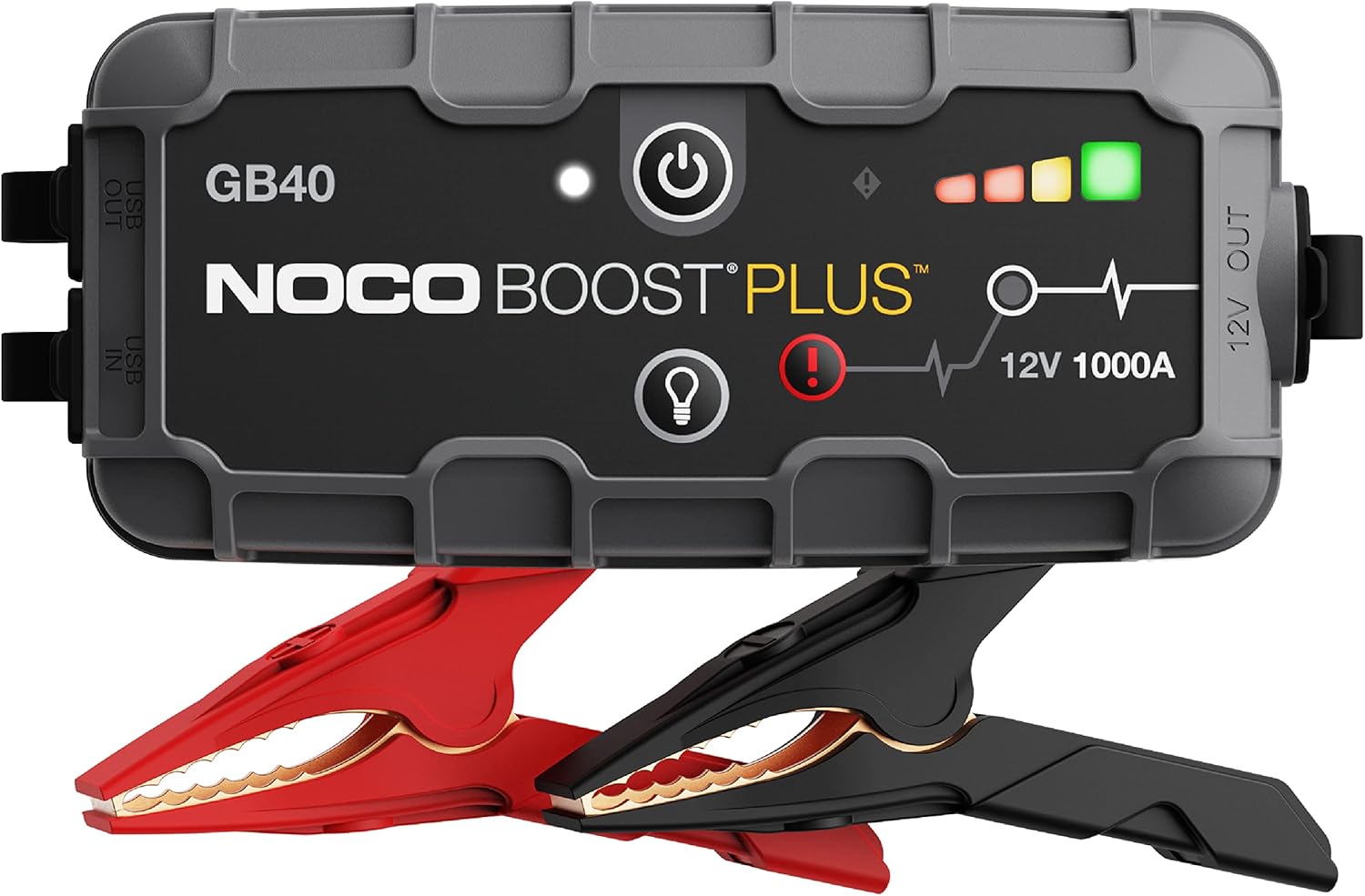
NOCO Boost Plus GB40 Jump Starter
A 1000A lithium jump starter that fits in your glovebox and works on any 12V battery. Your insurance against a dead 12V in a parking lot.
As an Amazon Associate, ThinkEV earns from qualifying purchases — at no extra cost to you.
- Gasoline ($1.55/L, 7.2L/100 km): $2,232/year x 5 = $11,160
- Insurance: $1,400/year x 5 = $7,000
- Maintenance: $900/year x 5 = $4,500
- 5-year total: $52,660
EV saves: about $8,100 over five years. The Civic's lower purchase price and fuel efficiency close the gap, but the EV still wins decisively in this scenario.
Comparison 3: Hyundai Kona Electric vs. Hyundai Tucson
The Kona Electric at $37,999 (after EVAP):
- Electricity (off-peak): $220/year x 5 = $1,100
- Insurance: $1,550/year x 5 = $7,750
- Maintenance: $400/year x 5 = $2,000
- 5-year total: $48,849
A Hyundai Tucson at $35,000:
- Gasoline ($1.55/L, 8.8L/100 km): $2,728/year x 5 = $13,640
- Insurance: $1,450/year x 5 = $7,250
- Maintenance: $950/year x 5 = $4,750
- 5-year total: $60,640
EV saves: $11,791 over five years.
Maintenance breakdown, what you actually save:
EV maintenance is simpler because there's less to maintain. No oil changes ($80-$120 each, 2-3 per year). No transmission fluid. No spark plugs. No timing belt. No exhaust system. The maintenance you do need: tire rotations ($50-$80, 2x/year), cabin air filter ($30-$50 annually), brake fluid flush every 3-4 years ($100-$150), windshield washer fluid, and wiper blades. EVs are harder on tires due to instant torque and higher vehicle weight, budget $200-$300 more per set compared to a gas equivalent. But the net maintenance cost is $500-$800/year for an EV versus $1,000-$1,500/year for a gas car. Over five years, that's $2,500-$3,500 in maintenance savings alone. For a deeper dive, read our EV maintenance cost analysis.
Insurance comparison:
Let's address the elephant in the room. Ontario has the highest auto insurance rates in Canada, and that's true for both gas and electric vehicles. The average Ontario driver pays $1,600-$2,000/year. The good news: EVs are not significantly more expensive to insure than their gas equivalents in Ontario. Some insurers charge a modest premium (5-10%) for EVs due to higher repair costs from battery and technology components. Others offer EV discounts for the reduced fire risk, EV fire rates are 25 per 100,000 vehicles versus 1,530 per 100,000 for gas cars. Shop around. TD Insurance, Intact, and Aviva all have EV-specific products in Ontario. Some credit unions and associations offer group rates that are competitive for EV owners.
Depreciation:
EVs have historically depreciated faster than gas cars, but this trend is reversing. The Equinox EV, Kona Electric, and ID.4 are expected to hold value well due to strong demand and limited supply. Tesla Models 3 and Y have shown strong resale values in the used market. The key factor for Ontario buyers: there's no provincial rebate to "lose" on resale. In Quebec, a buyer who received a $7,000 combined rebate sees that rebate effectively baked into the purchase price, when they sell, the used buyer doesn't get a rebate, so the resale price is lower relative to the original MSRP. In Ontario, the only rebate in play is the $5,000 federal, which has less impact on resale dynamics.
The savings would be even larger if Ontario offered a provincial incentive. A $2,000 provincial rebate (matching Quebec) would push the Equinox EV savings to $14,540 and the compact-electric-sedan scenario above to about $10,100. But even without it, the economics are clear. For the full comparison methodology, see our EV vs gas total cost of ownership analysis.
Gear worth having
As an Amazon Associate, ThinkEV earns a small commission from qualifying purchases — at no extra cost to you.

PULIDIKI Car Cleaning Gel (Detailing Putty)
Press it into vents, buttons, and seams and it lifts out dust you did not know was there. Weirdly satisfying, genuinely useful.
As an Amazon Associate, ThinkEV earns from qualifying purchases — at no extra cost to you.
WHAT ONTARIO SHOULD BE DOING
Let's be direct about this. Ontario's EV policy is a failure by any objective measure.
The province that manufactures more vehicles than any other in Canada, the province that is home to GM's CAMI plant in Ingersoll (Equinox EV, BrightDrop), Ford's Oakville Assembly Complex (retooling for EVs), Stellantis's Windsor Assembly Plant, and Honda's Alliston plants, refuses to incentivize its own residents to buy electric vehicles. It's incoherent. You're building the cars here but not helping your own people buy them.
Here's what the government doesn't want you to think about: Ontario's EV adoption rate lags behind Quebec and British Columbia, both of which offer provincial incentives. Quebec's Roulez vert program has driven the province to the highest EV market share in Canada, roughly 25% of new vehicle sales. BC is close behind. Ontario sits around 12-14%. The correlation between provincial incentives and adoption rates is well-documented and unambiguous.
What a reinstated program could look like:
- A $2,000-$3,000 provincial rebate for new BEVs with a transaction value under $55,000, matching the federal EVAP cap while accounting for inflation
- An additional $500-$1,000 for Ontario-manufactured vehicles, supporting the domestic auto industry that the province claims to champion
- A $500 rebate for used EVs under $30,000, targeting the growing used EV market and making electric driving accessible to lower-income Ontarians
- A $250-$500 rebate for home Level 2 charger installation, reducing the barrier for homeowners and condo residents
- Income-tested eligibility, so the program targets middle-income buyers rather than subsidizing luxury purchases
The cost? A $2,000 rebate applied to Ontario's approximately 100,000 annual EV sales would cost $200 million per year. That's 0.1% of Ontario's $200+ billion annual budget. Pocket change for a program that would accelerate EV adoption, reduce tailpipe emissions, support Ontario's own auto industry, and put money back into residents' pockets through fuel savings.
The political context:
The Ford government has tied itself to a narrative of opposition to federal climate policy, including the carbon tax. Supporting EV incentives would complicate that narrative. EV incentives aren't a "green" policy, they're an industrial policy. They support Ontario manufacturers, Ontario auto workers, and Ontario consumers. The fact that they also reduce emissions is a bonus, not the primary justification.
What other provinces do better:
- Quebec ($2,000 Roulez vert): Has driven Quebec to the highest EV adoption rate in Canada. The program pays for itself through reduced health care costs from air pollution and supports Quebec's hydroelectric surplus
- PEI ($4,000 provincial): The most generous provincial incentive in Canada. Combined with EVAP, PEI buyers save $9,000. The program has accelerated EV adoption on the island dramatically
- Manitoba ($4,000 provincial, ending March 31, 2026): Demonstrated that even prairie provinces see value in EV incentives. The program's uncertain future is concerning
- BC ($5,000 CleanBC, currently paused): When active, BC's program was among the most generous. The pause is concerning but the program infrastructure exists for reinstatement
Ontario has no excuse. The money is available. The policy infrastructure exists in other provinces as templates. The automotive industry is asking for it. The only barrier is political will.
USED EVS IN ONTARIO
Here's what the government doesn't want you to think about: the used EV market in Ontario is thriving, and it represents the most accessible path to electric driving for budget-conscious buyers, with zero government support at any level.
There is no federal rebate for used EVs. There is no provincial rebate. You're entirely on your own. But the savings from electric driving are so substantial that used EVs still make financial sense.
Popular used EVs in the Ontario market:
- Chevrolet Bolt EV (2020-2023): $18,000-$22,000. The value king of the used EV market. 417 km range (2022+), practical hatchback, no range anxiety for commuters. The battery recall of 2021-2022 actually benefits used buyers, most Bolt EVs now have brand-new batteries under the recall replacement program, which is essentially a factory-fresh battery in a used car
- Nissan Leaf (2018-2023): $12,000-$18,000.
The most affordable used EV, period. The 40 kWh version (215 km range) is perfect for urban commuters with shorter commutes. The 62 kWh Leaf Plus (363 km range) is available for $16,000-$22,000. Note: older Leafs have passive air-cooled batteries that degrade faster in hot summers, less of an issue in Ontario's climate than in southern US states
- Tesla Model 3 (2019-2022): $30,000-$38,000.
The most common used EV in Ontario. Excellent Supercharger network access, strong range (Long Range versions 500+ km), good winter performance. Higher price point but strong resale value
- Hyundai Kona Electric (2019-2022): $22,000-$28,000. Compact crossover, 415 km range, good winter efficiency. Battery recall on some 2019-2020 models, check if the replacement was done
- Volkswagen ID.4 (2021-2023): $26,000-$32,000.
Spacious, comfortable, 350-443 km range depending on battery size. Good value in the used market as early adopters trade up
- Kia Niro EV (2019-2022): $20,000-$26,000. Practical crossover, 385 km range, reliable
Where to find used EVs in Ontario:
- AutoTrader.ca, filter by fuel type "Electric" and set your province. Largest selection
- Kijiji Autos, private sales, often lower prices but less buyer protection
- CarGurus.ca, good for price comparison and dealer ratings
- EV-specific dealers: Some Ontario dealers specialise in used EVs. ChargeHub's dealer directory can help
- Tesla's used inventory, for certified pre-owned Teslas with warranty
Tips for buying used EVs in Ontario:
- Get a battery health report. For Tesla, the app shows degradation. For other brands, some OBD-II scanners (like the Konnwei KW902 with the Leaf Spy app for Nissan) can read battery state of health
- Check recall status. Transport Canada's recall database is your friend
- Ontario's used vehicle tax is calculated on the greater of the purchase price or the Canadian Black Book wholesale value, factor this into your budget
- Used EVs don't qualify for the Green Licence Plate unless they're zero-emission, PHEVs don't count
For a comprehensive look at the used EV market, see our used EV market guide.
CHARGING INFRASTRUCTURE IN ONTARIO
Ontario's charging infrastructure is the one area where the province actually performs well, not because of provincial policy, but because of private investment, federal funding, and Ontario's large population base making it economically viable for charging networks.
The numbers:
- Roughly 5,000+ public charging ports across Ontario
- Major networks represented: Electrify Canada, Petro-Canada Electric Highway, Tesla Supercharger (now open to all EVs via adapter), ChargePoint, FLO, IVY (Ontario-specific, owned by Ontario Power Generation and Hydro One)
- DCFC (DC fast charging) coverage along the 401 corridor: stations roughly every 50-100 km from Windsor to the Quebec border
- Level 2 public charging: widespread in the GTA, Ottawa, Hamilton, London, Kitchener-Waterloo. Thinner in smaller cities and rural areas
The 401 corridor:
The most important EV route in Ontario, and arguably in Canada, is well-served. You can drive from Windsor to Montreal on the 401/20 with DCFC stops available every 50-100 km. Electrify Canada, Petro-Canada, and IVY all have stations along this route. Tesla Superchargers are also available and now accessible to non-Tesla EVs via the NACS adapter (included with most new EVs or available for ~$30).
Key DCFC stops along the 401: Windsor, Chatham-Kent, London, Woodstock, Cambridge/Kitchener, Milton, Mississauga/GTA (multiple), Oshawa, Port Hope/Cobourg, Belleville, Kingston, Brockville, Cornwall. You're never more than an hour from a fast charger on this route.
Northern Ontario:
Here's where the government has failed its residents. Northern Ontario, Sudbury, Sault Ste. Marie, Thunder Bay, Timmins, North Bay, has significant gaps in DCFC coverage. The Trans-Canada Highway (Highway 17/Trans-Canada) from Sudbury to Sault Ste. Marie has limited fast charging. The stretch from Sault Ste. Marie to Thunder Bay is even more challenging, with DCFC stations few and far between.
The situation is improving. Petro-Canada's Electric Highway has extended coverage along the Trans-Canada, and the federal government's Zero Emission Vehicle Infrastructure Program (ZEVIP) has funded new stations in northern communities. But as of early 2026, driving an EV from Toronto to Thunder Bay still requires more planning than the same trip in a gas car. It's doable, people do it regularly, but you need to plan your stops, monitor your range, and carry a Level 1 charger (EVSE) as backup.
The charging networks:
- Electrify Canada: Hyper-fast (up to 350 kW). Most expensive per-session, but the fastest charges. Good 401 coverage. Pricing: approximately $0.27-$0.35/kWh depending on speed and membership
- Petro-Canada Electric Highway: Nationwide coverage, strong on Trans-Canada routes. 50-100 kW DCFC. Pricing varies by location, typically $0.25-$0.30/kWh
- Tesla Supercharger: Now open to non-Tesla EVs with NACS adapter. 150-250 kW.
Pricing for non-Tesla vehicles: approximately $0.40-$0.50/kWh (Tesla owners pay less). Excellent reliability and uptime
- ChargePoint: Largest network in North America by station count. Mix of Level 2 and DCFC. Pricing set by station hosts, varies widely. Many workplace and retail locations
- FLO: Canadian-owned (AddEnergie, Quebec). Strong presence in Ontario and Quebec.
Level 2 and DCFC. Reliable network with good app. Pricing: approximately $0.25-$0.30/kWh for DCFC
- IVY Charging Network: Ontario-specific, owned by Ontario Power Generation and Hydro One. DCFC stations along major Ontario highways. Pricing: approximately $0.29/kWh. Growing network with good 400-series highway coverage
For EV buyers worried about charging on the go, Ontario's infrastructure is adequate for southern Ontario driving and improving for northern routes. Home charging remains the primary method, roughly 85% of EV charging happens at home, and Ontario's TOU rates make home charging exceptionally affordable.
WINTER DRIVING IN ONTARIO
Let's be honest about this because too many EV articles pretend winter doesn't exist. Ontario winters are real, they're long, and they affect EV range. If you're buying an EV in Ontario, you need to understand what happens between November and April.
Range loss in winter:
Cold temperatures reduce EV battery range. At -10°C (a typical Ontario January day), expect 20-30% range loss. At -20°C or below (common in January-February across Ontario), range loss can reach 30-40%. A vehicle rated for 400 km in ideal conditions might deliver 250-280 km on a bitter February morning.
The primary causes: battery chemistry is less efficient in cold temperatures, and cabin heating draws significant power. A gas car's cabin heat is "free" waste heat from the engine. An EV must use battery power to heat the cabin, which directly reduces driving range.
Heating costs at TOU rates:
Here's where the math gets interesting. An EV's cabin heater consumes roughly 3-5 kW. Over a one-hour commute in -15°C weather, that's 3-5 kWh just for heating, equivalent to 20-35 km of driving range. At off-peak rates ($0.076/kWh), that's $0.23-$0.38 per hour of heating. At on-peak rates ($0.182/kWh), it's $0.55-$0.91 per hour. Still far cheaper than gasoline heating (which is essentially free only because you're already burning gas to move the car), but it's a real cost that affects your per-kilometre energy consumption in winter.
The preconditioning strategy:
This is the single most important winter EV tip, and it's free. Precondition your EV while it's still plugged into your home charger. Most modern EVs (Equinox EV, Kona Electric, ID.4, Tesla, and likely upcoming compact EVs in this class) allow you to schedule preconditioning ? the car heats the cabin and warms the battery using grid power, not battery power. Set it for 15-20 minutes before your departure time.
The benefits are enormous:
- Cabin is warm when you get in, no waiting
- Battery is at optimal temperature for maximum range and regenerative braking efficiency
- The 3-5 kWh used for preconditioning comes from your wall outlet at off-peak rates, not from your battery
- Net effect: you start your drive with a warm cabin, a warm battery, and full range. Winter range loss drops from 30-40% to 15-20% with proper preconditioning
Winter tires:
Ontario does not mandate winter tires by law (unlike Quebec), but most insurance companies offer a 3-5% discount for winter tires. EVs are heavier than equivalent gas cars due to battery weight, the Equinox EV weighs roughly 500 kg more than the gas Equinox. This extra weight improves traction on snow and ice but requires more stopping distance. Winter tires are not optional in Ontario, they're essential for safety. Budget $800-$1,200 for a set of winter tires on rims for a crossover-sized EV.
For a comprehensive look at how EVs perform in Canadian winters, see our EV winter range test.
BEST EVS FOR ONTARIO BUYERS
Given Ontario's specific incentive picture, $5,000 federal EVAP, zero provincial, TOU electricity, Green Licence Plate, here are the best EVs for Ontario buyers in 2026, with a focus on EVAP-eligible models.
1. Chevrolet Equinox EV, Best Overall Value
- After EVAP: $36,290 (LT) to $39,995 (2LT)
- Range: 446 km (LT RWD)
- Why it's the Ontario pick: If Kia Canada keeps pricing in the discussed range and the qualifying trim stays EVAP-eligible, this class could become one of the most affordable new-EV entry points in Ontario. Sedan body style appeals to Civic/Corolla buyers, and strong efficiency means very low off-peak charging costs
3. Hyundai Kona Electric, Best Compact Crossover
- After EVAP: $37,999
- Range: 418 km
- Why it's the Ontario pick: Compact crossover that's easy to park in Toronto and Ottawa. Excellent winter efficiency, one of the best cold-weather performers in its class. Korean-made (FTA eligible). Strong dealer network across Ontario
4. Volkswagen ID.4, Best for Families
- After EVAP: $39,995
- Range: 443 km (Pro S RWD)
- Why it's the Ontario pick: Most interior space in its price bracket. Comfortable highway ride for 401 commuting. US-made (USMCA eligible). Available AWD for Ontario winters. The ID.4 is the EV minivan buyers graduate to
5. Nissan Ariya, Best Tech Package
- After EVAP: $44,998 (Engage trim)
- Range: 350 km (Engage) to 480 km (higher trims, but may exceed EVAP cap)
- Why it's the Ontario pick: Premium feel at a sub-$45K after-rebate price. e-4ORCE AWD is excellent in snow. Japanese-made (FTA eligible). Caution: only the Engage trim reliably qualifies for EVAP. Higher trims push past the $50K transaction value cap
For a broader list of affordable options, see our most affordable EVs in Canada guide.
Gear worth having
As an Amazon Associate, ThinkEV earns a small commission from qualifying purchases — at no extra cost to you.

WixGear Magnetic Air Vent Phone Mount (2-Pack)
A magnet strong enough that your phone never flinches over potholes or rail crossings. Two in the box, one for each car.
As an Amazon Associate, ThinkEV earns from qualifying purchases — at no extra cost to you.
FAQ
Related Reading
- EV Rebates by Province Canada 2026, How Ontario's zero provincial rebate compares to every other province.
- Canada EVAP Rebate Guide 2026, How to claim the $5,000 federal incentive, step by step.
- EV Charging Costs by Province Canada 2026, Ontario's TOU rates and how they compare nationwide.
- EV vs Gas Total Cost of Ownership Canada 2026, Detailed 5-year and 10-year cost comparisons.
- Best Level 2 EV Chargers Canada 2026, The smart chargers that make TOU scheduling easy.
- Switching from Gas to EV Canada 2026 Guide, Everything Ontario buyers need to know about making the switch.
Gear worth having
As an Amazon Associate, ThinkEV earns a small commission from qualifying purchases — at no extra cost to you.

Car Cup Holder Coasters (4-Pack)
Drop-in coasters that catch spills and crumbs so your cup holders stay clean. Rinse and reuse forever.
As an Amazon Associate, ThinkEV earns from qualifying purchases — at no extra cost to you.

Founder & Chief Editor
Vlad Pereira is the founder and chief editor of ThinkEV.ca, the Canadian electric-vehicle publication he writes and edits from Courtenay, British Columbia. He covers EV pricing, federal and provincial rebates, charging costs, and the Chinese manufacturers now entering Canada, from the buyer's side rather than the press-fleet side. ThinkEV is a venture of Vlad Pereira Online; his writing on health, income and the long game lives at vladpereira.com.
Frequently asked questions
Does Ontario offer any provincial EV rebates?
What time should I charge the EV in Ontario?
What does the Green Licence Plate do?
Does Tesla qualify for the federal EVAP rebate?
Is it still worth buying an EV in Ontario without provincial incentives?
What is the cheapest new EV I can buy in Ontario after the rebate?
How does EV range change in Ontario winters?
Can I charge an EV if I live in a condo in Ontario?
Should I choose TOU or Tiered electricity pricing for the EV?
More EV & road-trip finds
Affordable upgrades worth a look — tap any to check the price on Amazon.
 ★ 1,866
70mai A810 4K Dual Dash Cam
View on Amazon ★ 121
★ 121Foldable Windshield Sun Umbrella
View on Amazon ★ 268
★ 268Anti-Slip Leather Steering Wheel Cover
View on Amazon ★ 2,941
Microfiber Cleaning Cloths (Multi-Pack)
View on Amazon ★ 314
★ 314Mini USB LED Ambient Lamps (4-Pack)
View on Amazon ★ 568
★ 568Personalized Photo and Text Keychain
View on Amazon ★ 21,304
Car Headrest Hooks (4-Pack)
View on Amazon ★ 15,014
Spigen Tempered Glass for Tesla Model 3/Y
View on AmazonRead, Plan, Then Stay Current
Explore our expert articles to understand incentives and ownership costs, use the map to pressure-test charging reality, then subscribe so new EV coverage comes straight to you.
Continue Reading

New Brunswick EV Incentives 2026: What's Available

NWT EV Incentives 2026: Driving Electric at -40C
Every Dollar You Can Save on an EV in Canada (2026 Guide)
Ontario EV Charging in 2026: Where It Stands

Alberta EV Rebates 2026: What You Actually Get