
Two chemistries split the global EV market almost evenly in 2026, and most buyers picked theirs without knowing which one they bought. The short version: lithium nickel manganese cobalt (NMC) cathodes deliver high energy density and long driving range, and lithium iron phosphate (LFP) cathodes are cheaper, safer and longer‑lasting but traditionally offer shorter range. LFP is no longer the budget chemistry; it is the mass-market default, and NMC is retreating to the trims that genuinely need density. LFP is the right call for most urban and suburban Canadian buyers, and NMC earns its premium only when the use case is long highway range or sub-arctic cold.
Key takeaways
- LFP costs ~$85/kWh to produce versus NMC's ~$115/kWh, roughly $1,800 difference on a 60 kWh pack.
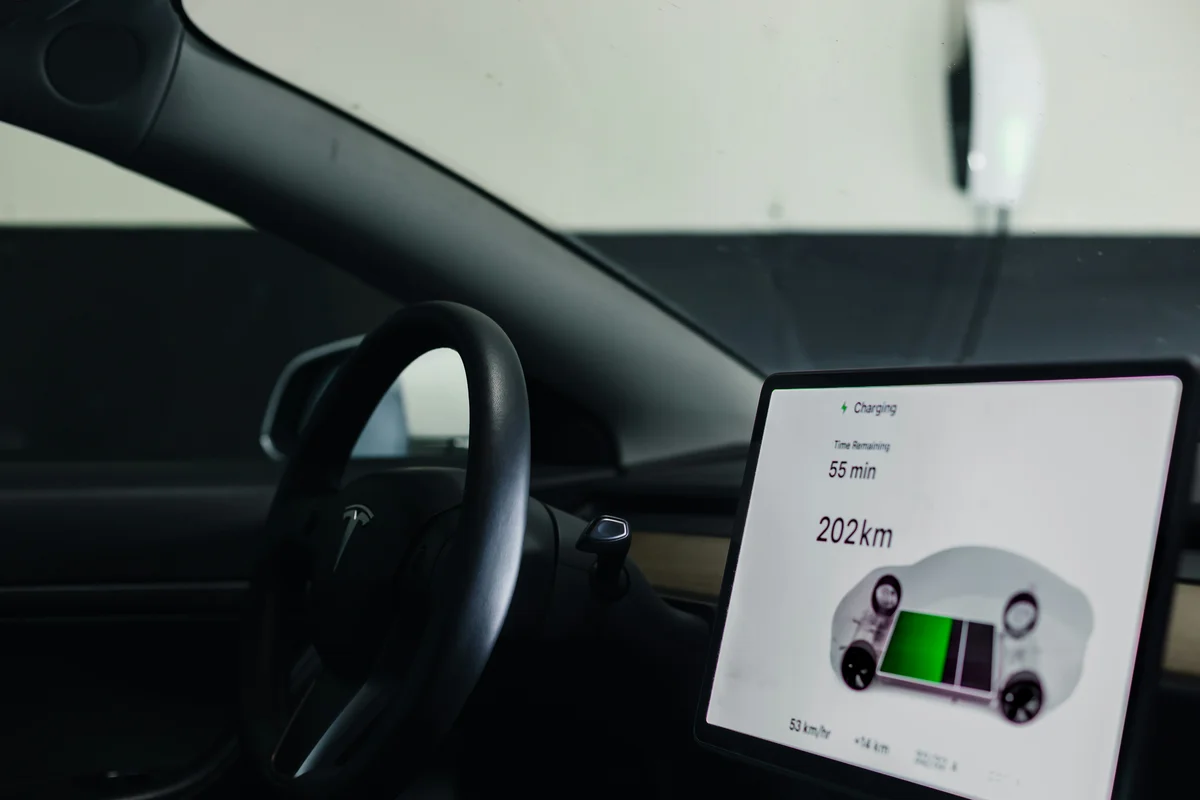
- LFP tolerates daily 100% charging by chemistry; NMC owners are advised to cap at 80% to protect longevity.
- At -20°C, LFP loses 30–40% usable capacity versus NMC's 20–30%, a real ownership gap on the prairies.
- LFP sidesteps cobalt entirely, cutting supply chain ties to the DRC and its documented ethical risks.
- BYD's Seal and Tesla's Standard Range trims now ship LFP, this is no longer a budget-only chemistry.
The Core Tradeoff: Energy Density vs. Cycle Life
The two chemistries are not interchangeable. NMC stores more energy per kilogram, roughly 20–30% more, depending on the specific formulation, which is why it has dominated long-range trims for a decade. LFP stores less per kilogram but lasts roughly twice as long in calendar terms and costs meaningfully less to produce.
The cost gap is the part reshaping the market. LFP batteries last 3,000+ charge cycles against NMC's 1,500, cost $85 per kWh to produce versus $115 for NMC, and BYD's version survived a nail through the cell at 60°C without catching fire. A $30/kWh spread on a 60 kWh pack is roughly $1,800 before the rest of the car is built, money that lands somewhere, usually in the sticker price or the warranty.
Cycle life is the other underpriced variable. A buyer who charges daily and keeps the car for ten years runs into NMC's cycle ceiling before LFP's. Real‑world NMC packs can still easily cover 150,000–250,000 miles before noticeable range loss becomes an ownership issue, but that's with best practices, defaulting to an 80% daily charge limit and reserving 100% for trips. LFP doesn't require those best practices. It tolerates daily 100% charges by chemistry, not by user discipline. For the technical pillar on this, pack architecture, density numbers, and the solid-state question, the battery guide that lays out LFP vs NMC vs solid state in plain language covers the underlying engineering in more depth than this comparison needs to.
The early verdict: LFP is the value chemistry on a per-kWh basis, and the value is real, not nominal. NMC earns its premium when the use case justifies the density.
The five-metric summary, in plain bullets:
- Production cost: LFP ~$85/kWh · NMC ~$115/kWh
- Charge cycles to meaningful degradation: LFP 3,000–5,000 · NMC 1,500–2,000
- Energy density: NMC carries a 20–30% advantage per kilogram
- Daily charge ceiling: LFP tolerates 100% daily · NMC recommended to 80%
- Capacity loss at -20°C: LFP 30–40% · NMC 20–30%
Gear worth having
As an Amazon Associate, ThinkEV earns a small commission from qualifying purchases — at no extra cost to you.

ChargePoint Home Flex Level 2 Charger (50A)
Premium 50A / 12 kW charger with the best app ecosystem. Hardwired or NEMA 14-50, with real-time energy tracking and smart scheduling.
As an Amazon Associate, ThinkEV earns from qualifying purchases — at no extra cost to you.
Cold Weather and Charging: Where the Gap Bites
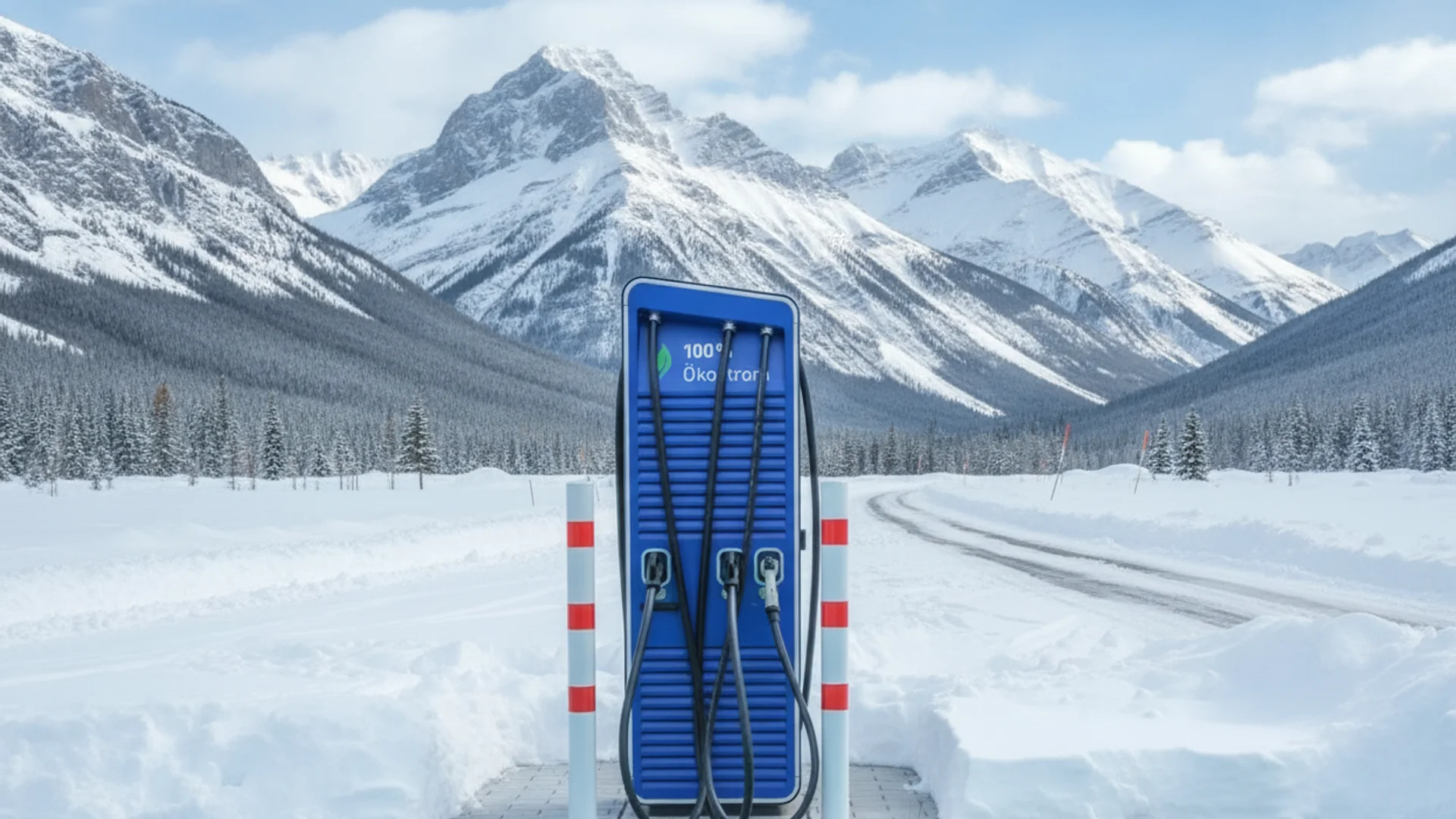
At -20°C, LFP sheds 30–40% of usable capacity versus NMC's 20–30%, the gap is chemistry, not a firmware problem. That temperature is not unusual in most of Canada between December and March, which is what makes a lab-grade differential into an ownership one. Battery preconditioning helps. Heating the pack before fast-charging and before highway driving narrows the gap in both chemistries, but it narrows it from both sides, so the relative LFP disadvantage stays roughly intact.
A buyer who plugs in nightly in a heated garage and preconditions before every drive sees a smaller gap. A buyer who parks outside in Winnipeg and skips the preconditioning step is going to feel the LFP cold penalty, every winter, for as long as they own the car. For the empirical view on how this plays out across the Canadian fleet, Geotab's degradation data from 22,700 vehicles is the cleanest dataset in the public domain.
The flip side is the charging behaviour. Many NMC‑equipped EVs default to an 80% daily charge limit and reserve 100% for trips. LFP doesn't ask for that discipline. The pack is engineered to handle 100% daily, indefinitely, and the BMS treats it as the normal operating state. For a buyer who would forget the 80% rule by week three of ownership, that matters more than the spec sheets suggest.
Net of the charging convenience and the winter penalty: the LFP cold gap is tangible, but it's narrowest in BC, southern Ontario, and the Maritimes, and widest in the prairies, the north, and northern Quebec. The geography of the call is sharper than the chemistry alone.
Gear worth having
As an Amazon Associate, ThinkEV earns a small commission from qualifying purchases — at no extra cost to you.

TP-Link Kasa Smart Plug with Energy Monitoring
Track exactly how much electricity your Level 1 charger uses and schedule it for off-peak hours. Know your real cost per kWh.
As an Amazon Associate, ThinkEV earns from qualifying purchases — at no extra cost to you.
Gear worth having
As an Amazon Associate, ThinkEV earns a small commission from qualifying purchases — at no extra cost to you.

Grizzl-E Classic Level 2 EV Charger (40A)
Canadian-made and rated for minus 40C winters. 40A / 9.6 kW, NEMA 14-50, indoor/outdoor, 24-ft cable. The charger built for Canadian weather.
As an Amazon Associate, ThinkEV earns from qualifying purchases — at no extra cost to you.
Safety, Supply Chain, and What the Chemistry Actually Costs You
LFP is thermally stable by chemistry, not by engineering. From a chemistry standpoint, LFP is inherently more tolerant of abuse and heat. The BYD nail-penetration demonstration, driving a nail through the cell at 60°C without ignition, is the benchmark the industry settled on because it's the test NMC cells reliably fail. NMC is safe in a properly engineered pack with active cooling, but the failure mode if cooling is compromised is qualitatively worse. For the broader picture on EV fire data and crash performance, the 2026 safety analysis covers Euro NCAP results, fire statistics, and the Blade Battery's role in changing the safety conversation.
Cobalt is where NMC's bill of materials gets complicated. Most global supply traces to the Democratic Republic of Congo, and the sourcing chain carries documented ethical and geopolitical risk that LFP sidesteps by not requiring the metal. The shift is structural, not preferential: the chemistry that has been winning the mass market segment globally ditches the expensive nickel, manganese and cobalt for iron phosphate. Once a cathode chemistry stops needing the most contested metal in the supply chain, the procurement teams notice before the marketing teams do.
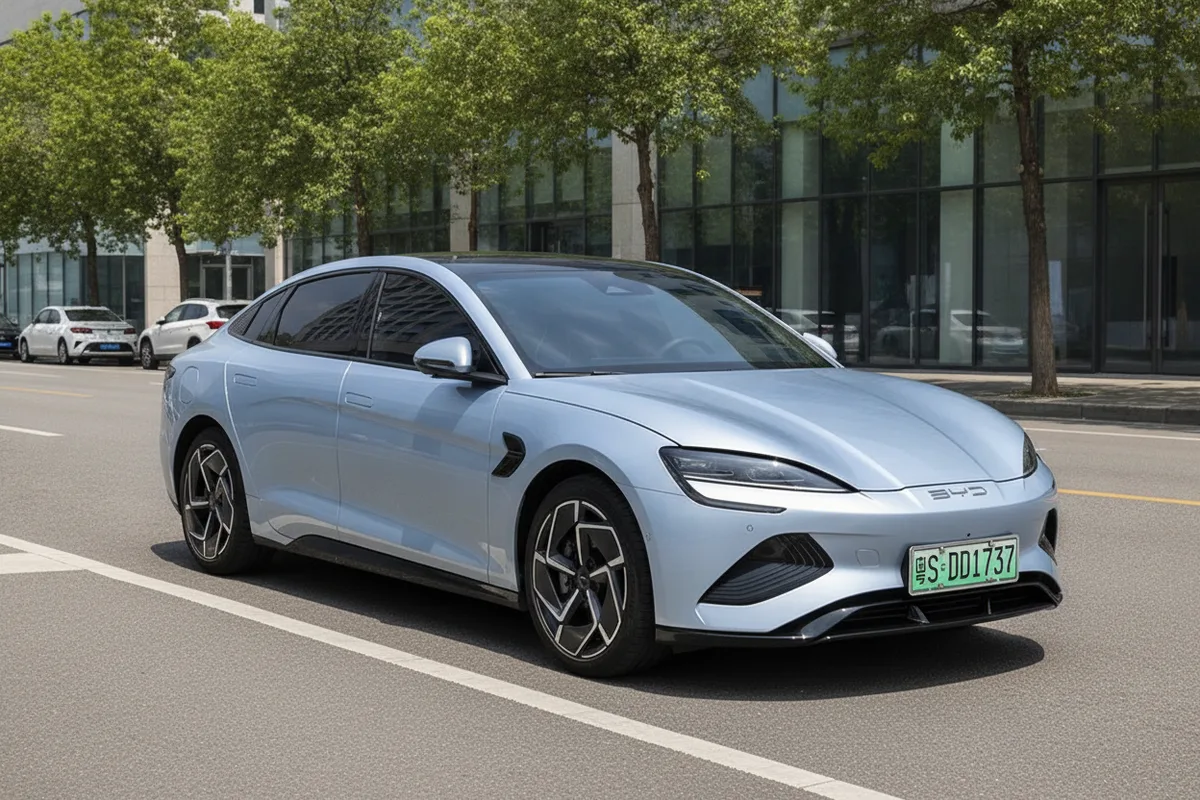
The 2023 received wisdom was LFP = small, affordable EVs only. What's changed is how far up-market it has moved since then. The BYD Seal 82 kWh trim sells into the Canadian premium-midsize bracket on LFP, and Tesla now uses LFP across both Standard Range trims of its volume sellers. The "small affordable EVs" frame undercounts where the chemistry actually ships in 2026.
The ownership-cost piece compounds. NMC's thermal management system is more complex, active cooling for a chemistry that runs hotter adds parts that compound over a ten-year ownership horizon. LFP runs cooler by default and asks less of the cooling loop. None of this shows up on the sticker price. All of it shows up by year eight.
Gear worth having
As an Amazon Associate, ThinkEV earns a small commission from qualifying purchases — at no extra cost to you.

AstroAI Portable Tire Inflator
One tap, it inflates to your exact PSI then stops automatically. Low tires cost 5 to 10 percent of your range, so this pays for itself in a week.
As an Amazon Associate, ThinkEV earns from qualifying purchases — at no extra cost to you.
Which Chemistry to Choose, and Which Cars Ship with Which
The 2026 lineup makes this easier than it was three years ago. LFP is now in the entry trims of the volume-selling Teslas, in BYD's entire Canadian launch lineup, and in a growing share of the Hyundai and Kia base models. NMC stays in the long-range and performance trims where the density tax is worth paying.
The rough split looks like this:
- LFP today: Tesla Model 3 Standard Range, Tesla Model Y Standard Range, BYD Seal, BYD Atto 3, BYD Dolphin, Chevrolet Equinox EV base trim, and an expanding list of mass-market entry trims globally.
- NMC today: Tesla Model 3 Long Range, Tesla Model Y Long Range, Hyundai Ioniq 6 long-range, Kia EV6 long-range, Volkswagen ID.4 Pro, Ford Mustang Mach-E ER, most premium German EVs, and effectively every trim where the marketing copy uses the word "range" more than twice.
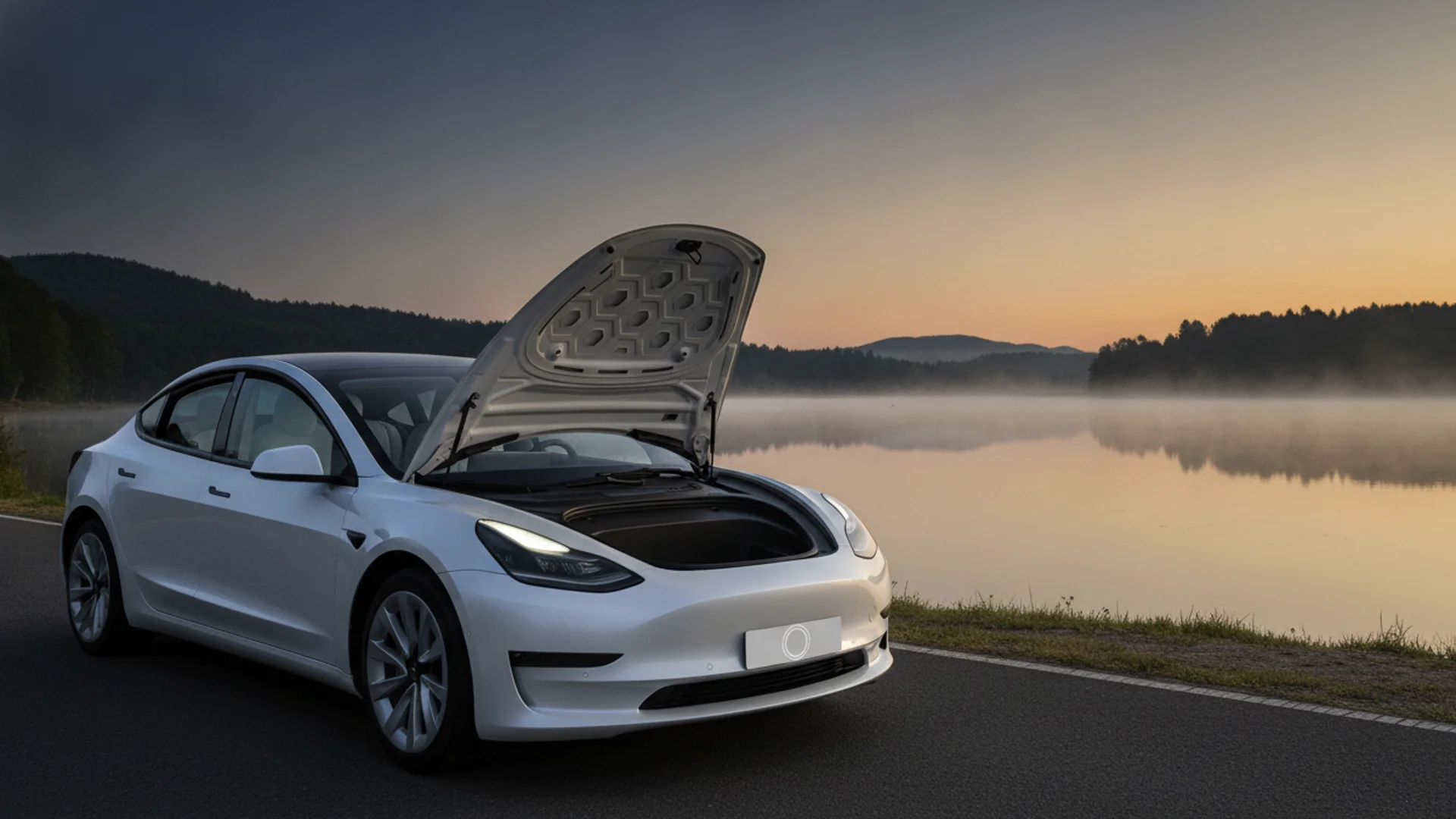
The LFP/NMC split inside Tesla's own lineup is the single most useful data point for a Canadian buyer cross-shopping trims on the country's best-selling EV: same body, same software, different chemistry, and a price gap that maps almost cleanly onto the cell cost spread.
In cold-climate driving, NMC wins on usable range, no caveat. A buyer in Yellowknife or Thunder Bay who drives 300+ km in a session, in February, with no garage, is going to be happier with NMC. A buyer in Vancouver, Toronto, or Halifax doing a 40 km commute and home-charging overnight will not notice the difference except on the four or five road-trip days a year, and on those days, the savings on the sticker price pay for the charging stops several times over.
Pack size is the variable the chemistry debate keeps forgetting about. A large-format LFP pack, BYD's 82 kWh Blade configuration is the benchmark, beats a smaller NMC pack on real-world range, because absolute kWh wins over density when you have room for the cells. Match the chemistry to the use case, not to the marketing tier.
For Canadian buyers weighing the chemistry against the manufacturer specifically, the warranty terms across the major Chinese EV brands entering Canada are the cleanest way to see how the LFP cycle-life advantage gets converted into actual contract coverage.
CATL, BYD and the Korean cell makers all have roadmaps to close the LFP density gap 15–20% over the next two generations. The 2027 density roadmap is the only number that meaningfully changes this call, if it lands on schedule, the NMC long-range case narrows to performance trims only, and most of the spec-sheet anxiety around LFP becomes obsolete.
Gear worth having
As an Amazon Associate, ThinkEV earns a small commission from qualifying purchases — at no extra cost to you.

Digital Tire Pressure Gauge
Low tires quietly cost 5 to 10 percent of your range. A 10-second check with an accurate digital gauge keeps every kWh on the road.
As an Amazon Associate, ThinkEV earns from qualifying purchases — at no extra cost to you.

Founder & Chief Editor
Vlad Pereira is the founder and chief editor of ThinkEV.ca, the Canadian electric-vehicle publication he writes and edits from Courtenay, British Columbia. He covers EV pricing, federal and provincial rebates, charging costs, and the Chinese manufacturers now entering Canada, from the buyer's side rather than the press-fleet side. ThinkEV is a venture of Vlad Pereira Online; his writing on health, income and the long game lives at vladpereira.com.
Frequently asked questions
Does LFP work if I can't charge in a heated garage?
Can I charge my LFP car to 100% every single night?
Why are some premium EVs still using NMC in 2026?
Will an NMC battery actually last ten years of daily driving?
Is the cobalt issue in NMC batteries actually a buyer's concern?
More EV & road-trip finds
Affordable upgrades worth a look — tap any to check the price on Amazon.
 ★ 17,839
Qifutan Vent Phone Mount (Military-Grade Clip)
View on Amazon ★ 8,681
Chemical Guys Complete Car Wash Kit
View on Amazon ★ 537
★ 537USB Star Projector Roof Light
View on Amazon ★ 401
★ 401Crochet Daisy Rear-View Mirror Charm
View on Amazon ★ 865
★ 865Collapsible Trunk Organizer
View on Amazon ★ 12,834
P3 Kill A Watt Electricity Usage Monitor
View on Amazon ★ 61
★ 61Toddler Car Seat Snack and Cup Tray
View on Amazon ★ 68
★ 68WeatherTech FloorLiner for Tesla Model 3
View on AmazonRead, Plan, Then Stay Current
Explore our expert articles to understand incentives and ownership costs, use the map to pressure-test charging reality, then subscribe so new EV coverage comes straight to you.
Continue Reading

LFP vs NMC vs Solid State: EV Batteries Explained
Thermal Runaway: How EVs Stop a Chain Reaction

New or Used EV: Which Is the Smarter Buy in 2026?

EV Highway vs City Range: Why They Flip
Buy or Lease an EV in Canada? The 2026 Answer