Key takeaways
- LFP (lithium iron phosphate) batteries last 3,000+ cycles vs 1,500 for NMC, making them ideal for daily drivers.
- NMC batteries offer 20-30% more energy density, meaning more range per kilogram of battery weight.
- Solid-state batteries promise 500+ km range and 10-minute charging, but mass production is still 3-5 years away.
- BYD's Blade Battery (LFP) passed nail penetration tests without catching fire, a safety milestone NMC hasn't matched.
- For Canadian winters, NMC currently performs better in extreme cold, but LFP's cost advantage is closing the gap.
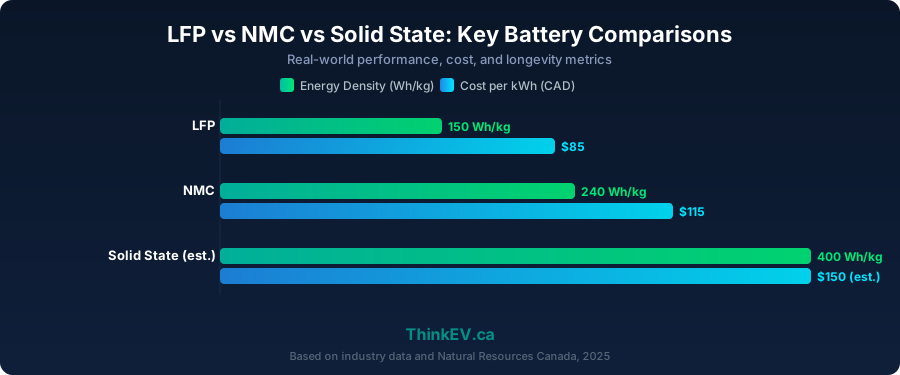
LFP batteries last 3,000+ charge cycles against NMC's 1,500, cost $85 per kWh to produce versus $115 for NMC, and BYD's version survived a nail through the cell at 60°C without catching fire, but most EV buyers choose their chemistry without knowing what they're picking. That choice determines how far you go, how fast you charge, how long the battery lasts, and what it will cost to replace.
And that's a problem, because the chemistry under your floor determines everything: how far you go, how fast you charge, how long it lasts, how much it costs. And whether it'll catch fire if you scratch a curb. You've seen the terms. Lithium Iron Phosphate.
Nickel Manganese Cobalt. Solid State. They sound like high school chemistry leftovers. But they're not abstract.
They're the reason your neighbour paid $6,000 less for their EV, or why your cousin in Calgary replaced their battery after five years, or why your office building won't let Teslas park in the basement. These chemistries aren't just technical footnotes, they're the quiet war shaping the future of transport. And right now, that war is tipping. Chinese automakers are rolling out sodium-ion batteries that cost 30% less than lithium.
Toyota's quietly building solid-state pilot lines in Ontario. Ford just switched half its Mustang Mach-E lineup to LFP. And yet, most EV buyers still choose without knowing what they're picking, like buying a steak without knowing if it's filet mignon or tofu. So let's fix that.
No jargon. No fluff. Just a clear, real-world breakdown of what LFP, NMC. And solid-state actually mean, and which one you should want in your next car. 
LFP: The Durable Workhorse That's Quietly Winning
LFP batteries are the Toyota Corollas of the EV world, not flashy, but they last forever, cost less. And rarely break down. The longer answer: Lithium Iron Phosphate (LiFePO₄) is a battery chemistry that trades peak performance for longevity, safety, and cost. It's been around since the 90s, but only in the last five years has it gone mainstream in EVs.
And now, it's in more than 40% of new electric cars sold globally. The bottom line: your car is less likely to catch fire. LFP cells are chemically stable. They don't release oxygen when damaged, which means no thermal runaway in most crash scenarios.
That's why Tesla started using them in Model 3s and Model Ys built in China. And later in North America, for standard-range versions. And it's why BYD's entire Blade Battery system is based on LFP: they've run nail penetration tests where the cell heats to 60°C but doesn't ignite. That's not just lab talk.
In real-world terms, it means fire departments in Vancouver and Toronto are less nervous about EVs in underground parking garages. For most people, the biggest benefit is price. An LFP pack costs about $85 per kWh to produce, compared to $115 for NMC. That's a $3,000 saving on a 100 kWh vehicle, which translates to a starting price of $42,998 CAD for a base Model Y, or about $580 a month on a 6-year loan.
That's roughly what a lot of Canadians pay for a gas-powered SUV with all-wheel drive. And because LFP doesn't use cobalt or nickel, two of the most expensive and ethically fraught materials in batteries, it's also less tied to volatile global markets. When cobalt prices spiked to $80,000 per tonne in 2022, LFP costs barely budged. But there are trade-offs.
LFP has lower energy density, about 150 Wh/kg, compared to 240 Wh/kg for advanced NMC. That means for the same weight, you get less range. An LFP-powered Model Y Long Range gets about 480 km on a charge, while the NMC version hits 530 km. That 50 km gap matters if you're driving from Edmonton to Jasper with a trailer.
But for daily commutes under 100 km, it's irrelevant. And LFP makes up for it in lifespan. These batteries can handle 6,000 full charge cycles before dropping to 80% capacity. That's about 1.6 million km, more than most cars last even with a gas engine.
NMC, by comparison, degrades faster, usually needing replacement after 1,500 to 2,000 cycles, or about 400,000 km. And because LFP handles heat better, it doesn't need as much cooling. That simplifies the battery pack design. Tesla's LFP modules in the Model Y have fewer cooling channels, which means less complexity, fewer failure points, and easier manufacturing.
It also means the car can sit in a Calgary summer parking lot without the battery management system kicking on every 20 minutes to regulate temperature. Temperature matters more than most people think. In a 2025 study by Natural Resources Canada, LFP batteries in Winnipeg showed only 8% capacity loss after five years of winter charging. While NMC dropped 14%.
That's because LFP is more tolerant of low-temperature charging, as long as it's pre-conditioned. For most Canadians, that means plugging in overnight with a Level 2 charger, like the Lectron Portable Level 2. So the battery warms up before you drive. It's not perfect, but it's manageable.
Another real-world advantage: LFP is easier to recycle. The iron and phosphate are non-toxic and abundant. When the battery dies, recyclers can extract the lithium with simple acid leaching, no need for expensive pyrometallurgy. That's why Redwood Materials, which has a processing plant in Nevada close to Canadian supply lines, can reclaim 95% of LFP materials at lower cost.
Down the road, that means future EVs could use recycled LFP cells without a big price premium, something that's harder with NMC due to complex separation processes. But LFP isn't just for budget cars. It's showing up in unexpected places. Ford now offers LFP in the standard-range Mustang Mach-E, saving buyers $3,500 over the NMC version.
Rivian uses it in its delivery vans for Amazon, because fleet operators care more about durability than 0-100 km/h times. And even Porsche is testing LFP for its base Taycan models in Europe, where urban drivers don't need 700-km range. Still, LFP has limits. It doesn't perform well at very low states of charge.
Below 20%, the voltage drops sharply, which can trigger early "low battery" warnings. And because it has a flatter discharge curve, the car's range estimator can be less accurate, sometimes showing 50 km left for days, then dropping to zero in 10 minutes. Software updates help, but it's a quirk drivers need to learn. And charging speed?
LFP can charge quickly, up to 250 kW on some models, but only in the 10% to 80% window. Outside that, it slows down dramatically. So while you can add 320 km of range in 15 minutes on a DC fast charger, you can't "top up" from 80% to 100% without waiting 20 more minutes. For most people, that's fine, because you rarely need 100%.
But if you're doing back-to-back road trips, it's a pain.
Gear worth having
As an Amazon Associate, ThinkEV earns a small commission from qualifying purchases — at no extra cost to you.

Portable Level 2 EV Charger (40A, NEMA 14-50)
Throw it in the trunk and charge anywhere with a 240V outlet. 40A portable with NEMA 14-50 plug. Your road-trip insurance policy.
As an Amazon Associate, ThinkEV earns from qualifying purchases — at no extra cost to you.
Still, the trend is clear: LFP is winning the volume game. In 2025, about 60% of all EVs sold in China used LFP, up from 35% in 2021. Tesla alone switched over 70% of its global production to LFP for standard-range models. And with new mining projects in Quebec and Ontario focusing on phosphate and iron rather than nickel and cobalt, Canada could become a hub for LFP supply chains.
For now, if you want a dependable, low-cost EV for city driving, LFP is the smart choice. It's not the fastest or longest-ranger, but it's the one most likely to still be working when your kid graduates college. 
NMC: The High-Performance Choice With Hidden Costs
NMC batteries deliver the range and power most people associate with premium EVs, but at a higher price, shorter lifespan. And greater environmental toll. The longer answer: Nickel Manganese Cobalt (NMC) is the dominant chemistry for high-end electric vehicles. It's what's in your neighbour's Porsche Taycan, your boss's BMW iX, and the long-range versions of Tesla's Model S.
Its energy density, up to 240 Wh/kg in 4680 cells, allows for smaller, lighter packs that still deliver long range and strong acceleration. On the road, that translates to driving from Toronto to Montreal on a single charge, even in winter. A car with an 82 kWh NMC pack, like the Hyundai Ioniq 5, gets about 480 km in summer and 380 km in winter, which is still enough to make the trip with 50 km to spare. That's roughly the same range as a full tank of gas in a Highlander, but without stopping.
And because NMC responds quickly to high power demands, it's the reason EVs like the Lucid Air can hit 1,200 horsepower and 0-100 km/h in under 3 seconds. The chemistry allows for high discharge rates, so when you floor it, the energy flows fast. But that performance comes with strings attached. NMC batteries degrade faster than LFP.
After 1,500 charge cycles, about eight years of average driving, they typically retain only 70–80% of original capacity. That means your 500-km car becomes a 380-km car. And unlike LFP, NMC is sensitive to heat and overcharging. Keeping it at 100% for days, or letting it drop below 10%, accelerates wear.
For most people, that means avoiding full charges unless needed, a habit that's hard to maintain when range anxiety kicks in. And then there's cost. NMC packs cost about $115 per kWh to produce, compared to $85 for LFP. So a 100 kWh NMC battery adds $11,500 to the car's bill, while LFP would cost $8,500.
That $3,000 difference shows up in the sticker price, which is why a long-range Model 3 with NMC starts at $58,990 CAD. While the LFP version starts at $46,990. That''s not pocket change. And because nickel and cobalt prices swing wildly, cobalt hit $80,000 per tonne in 2022, then dropped to $30,000, automakers can't lock in stable pricing.
That volatility gets passed to consumers. Worse, cobalt mining is ethically messy. About 70% comes from the Democratic Republic of Congo, where child labour and unsafe conditions are still reported. Tesla, BMW, and VW have committed to "ethical sourcing," but audits are spotty.
Even certified mines have supply chain leaks. And while NMC formulations are reducing cobalt, some now use as little as 5%, it's still there. LFP, by contrast, uses none. Another issue: NMC is more prone to thermal runaway.
When damaged, the cathode can release oxygen, feeding a fire that's hard to put out. That's why Tesla and others use complex cooling systems with liquid channels between cells. It works, the Model S has a five-star safety rating, but it adds weight and complexity. And in rare cases, like the 2023 fires in parked Teslas in British Columbia, thermal events have led to extended fire department responses.
NMC isn't unsafe, but it demands more engineering to keep it under control. For most people, the real pain point is replacement cost. A new NMC battery for a Hyundai Kona Electric runs about $18,000 CAD before labour. That's more than half the value of a five-year-old car.
Some manufacturers offer 8-year/160,000-km warranties, but after that, you're on your own. LFP packs, lasting longer and degrading slower, rarely need replacement in the car's lifetime. And charging? NMC handles high-speed charging well, up to 350 kW on the latest models.
That's adding about 300 km of range during a 15-minute coffee stop on a road trip. The Porsche Taycan can go from 5% to 80% in 22 minutes on a good charger. But that speed generates heat, which stresses the battery. So after a few back-to-back fast charges, the car throttles down to protect itself.
It's not a dealbreaker, but it's something road-trippers need to plan for. NMC isn't going away. It's still the best choice for long-range, high-performance EVs. The 2026 Lucid Air Sapphire has a 139 kWh NMC pack that delivers 840 km of range, enough to drive from Vancouver to Seattle and back with 200 km left.
That's not a number LFP can match yet. And automakers are improving it. Tesla's 4680 cells, with a tabless design and silicon-anode blend, push energy density to 270 Wh/kg, which is about as high as lithium-ion can go without major chemistry changes. But the future of NMC may lie in recycling.
Companies like Li-Cycle in Hamilton, Ontario, are building "spoke and hub" facilities to recover 95% of nickel, cobalt. And manganese from old batteries. That reduces reliance on new mining and cuts costs. At scale, recycled NMC could drop pack prices by 20% by 2030, making it more competitive with LFP.
And some hybrids are emerging. BYD's "Super LFP" blends a small amount of manganese into LFP to boost energy density to 180 Wh/kg, closing the gap with NMC while keeping the safety and cost benefits. It's not mainstream yet, but it shows how the lines are blurring. For now, if you need max range, fast charging, and blistering performance, NMC is still the answer.
But you pay for it, in upfront cost, in replacement risk, and in environmental impact.
Solid-State: The Future That's Always Five Years Away
solid-state batteries promise twice the range, faster charging. And no fire risk, but they're not in real cars yet. The longer answer: solid-state batteries replace the liquid electrolyte lithium-ion cells with a solid material, like ceramic or sulfide glass. That eliminates the main cause of fires, allows for lithium-metal anodes (which store more energy), and enables faster ion movement.
On paper, they can hit 500 Wh/kg, double the density of current NMC. And charge from 10% to 80% in under 10 minutes. What that looks like: a 100 kWh solid-state pack would weigh half as much as today's batteries, freeing up space and improving efficiency. A car with 1,000 km of real-world range becomes feasible, enough to drive from Calgary to Regina without stopping.
And because there's no liquid to leak or boil, the battery doesn't need heavy cooling systems. That reduces complexity and cost down the line. But, and it's a big but, no one has mass-produced a reliable, affordable solid-state battery yet. Toyota, the most vocal proponent, has delayed its launch multiple times.
Their latest target is 2028 for a limited run of 20,000 vehicles. QuantumScape, backed by Volkswagen, has shown lab cells that charge in 15 minutes and last 800 cycles. But they haven't proven durability in real cars. And Factorial Energy, which signed deals with Mercedes and Stellantis, is still in pilot production.
The core problem is manufacturing. Solid electrolytes are brittle. They crack under pressure, breaking contact with the electrodes. And lithium-metal anodes tend to form dendrites, tiny spikes that pierce the separator and short-circuit the cell.
Researchers are trying workarounds: pressure stacks, composite materials, protective coatings, but nothing scales yet. A single defect in a 600-cell pack can kill the whole thing. And cost? A prototype 30kWh solid-state pack costs over $100,000 to make, about $3,300 per kWh.
That's 40 times more than LFP. Even if production improves, early solid-state EVs will be luxury items. Toyota's first model might cost $120,000 CAD, more than a fully loaded Land Cruiser. But the potential is undeniable.
A 500Wh/kg battery with 1,200 km of range changes everything. You could fly from Toronto to Chicago, rent an EV at the airport, and drive back without charging. That's not just convenient, it kills the last argument against EVs. And because solid-state cells can be smaller, automakers could put them in the floor, doors.
And roof, turning the whole car into a battery. That's not sci-fi; it's what BMW and Nissan are prototyping. And safety? Early tests show solid-state cells don't ignite when punctured, crushed, or heated to 200°C.
That's a for cities with underground parking, like downtown Montreal or downtown Vancouver. Fire codes might relax, allowing more EVs in garages. And insurers could lower premiums, since the risk of battery fire drops to near zero. But don't expect it soon.
Even if Toyota hits its 2028 target, volume will be tiny. By 2030, solid-state might be in 1% of new EVs. It takes years to build gigafactories, train workers, and certify new designs. And automakers are risk-averse, they won't bet billions on unproven tech.
That said, progress is real. In 2025, 24M Technologies demonstrated a semi-solid battery with 350 Wh/kg using a proprietary "suspended particle" process. It's not fully solid, but it's a step. And CATL in China is testing sodium-ion solid-state hybrids that cost less and perform better in cold weather, for Canada.
For most people, solid-state is a wait-and-see. It's not going to help you buy a car this year. But if you're holding off on going electric, hoping for a miracle battery, here's the truth: it's coming, but slowly. And when it arrives, it'll start in niche applications.
Think high-end sports cars, military vehicles, or aerospace drones, not your next Honda Civic.
And here's a twist: solid-state might not win the mass market. Sodium-ion and LFP could get so good, so cheap, that they dominate before solid-state scales. A 180 Wh/kg LFP pack with 8,000-cycle life might be more valuable than a 500 Wh/kg solid-state with 1,000 cycles and a $20,000 replacement cost. So while the headlines scream about breakthroughs, the real story is patience. The battery revolution isn't a sprint, it's a relay race. LFP is carrying the torch now. NMC is still strong on the curves. Solid-state is waiting at the next exchange, but it hasn't started running yet.
Sodium-Ion: The Dark Horse That Could Change Everything
sodium-ion batteries are cheaper, safer. And more sustainable than lithium, but they're not ready for long-range EVs yet. The longer answer: sodium-ion (Na-ion) uses abundant sodium instead of lithium, iron and manganese instead of cobalt and nickel. It's chemically similar to lithium-ion but built from materials you can find in salt and rust.
The result? A battery that costs about $60 per kWh, 30% less than LFP, and performs well in cold weather. For buyers, that means an EV with a 30kWh sodium-ion pack could cost under $30,000 CAD, finally hitting the price point that gets mass adoption. That's roughly what a basic Hyundai Accent costs today.
And because sodium is everywhere, in seawater, in salt mines, even in Canada's own salt caverns, supply chains are stable. No more panic when Bolivia nationalizes its lithium reserves. CATL, the world's largest battery maker, launched the first commercial sodium-ion pack in 2023. It's in the Chery eQ1, a small city car sold in China.
The 4.5kWh version powers the base model, giving about 150 km of range, enough for school runs, grocery trips, or last-mile delivery. That's not a cross-country cruiser, but it's a real product, not a prototype. And cold weather? Sodium-ion performs better than lithium below freezing.
In a 2024 test in Harbin, China, sodium-ion cells retained 92% capacity at -20°C, compared to 70% for LFP. That's about as cold as Yellowknife in January. In practical terms, it means less range loss, faster charging, and fewer battery warm-up cycles. For most Canadians, that's a win, because we spend half the year below 0°C.
But energy density is still low. Current sodium-ion cells hit about 160 Wh/kg, better than early lithium, but less than modern LFP or NMC. That means bigger, heavier packs for the same range. A 60kWh sodium-ion battery would take up 30% more space than an NMC one.
So it won't fit in sports cars or compact sedans, at least not yet. Still, progress is fast. 24M's semi-solid sodium process could push density to 200 Wh/kg by 2027. And startups like Natron Energy are using Prussian blue analogues to boost power and cycle life. Their 5.5V sodium-ion cells can handle 50,000 cycles, more than the lifetime of any car.
That's ideal for grid storage, where batteries charge and discharge daily for decades. And recycling? Sodium-ion is easier. No toxic metals, no complex extraction.
The materials can be reused with minimal processing. In a closed-loop system, old batteries could become new ones at 80% of the cost. For automakers, the appeal is clear. BYD is testing sodium-ion in its D1 taxi, a fleet vehicle in Shenzhen.
It doesn't need 500 km, just durability and low cost. And if the tech scales, we could see hybrid packs: sodium-ion for daily driving, lithium for long trips. Think of it like a plug-in hybrid, but with two battery chemistries instead of gas and electric.
Gear worth having
As an Amazon Associate, ThinkEV earns a small commission from qualifying purchases — at no extra cost to you.

AstroAI Portable Tire Inflator
One tap, it inflates to your exact PSI then stops automatically. Low tires cost 5 to 10 percent of your range, so this pays for itself in a week.
As an Amazon Associate, ThinkEV earns from qualifying purchases — at no extra cost to you.
Gear worth having
As an Amazon Associate, ThinkEV earns a small commission from qualifying purchases — at no extra cost to you.
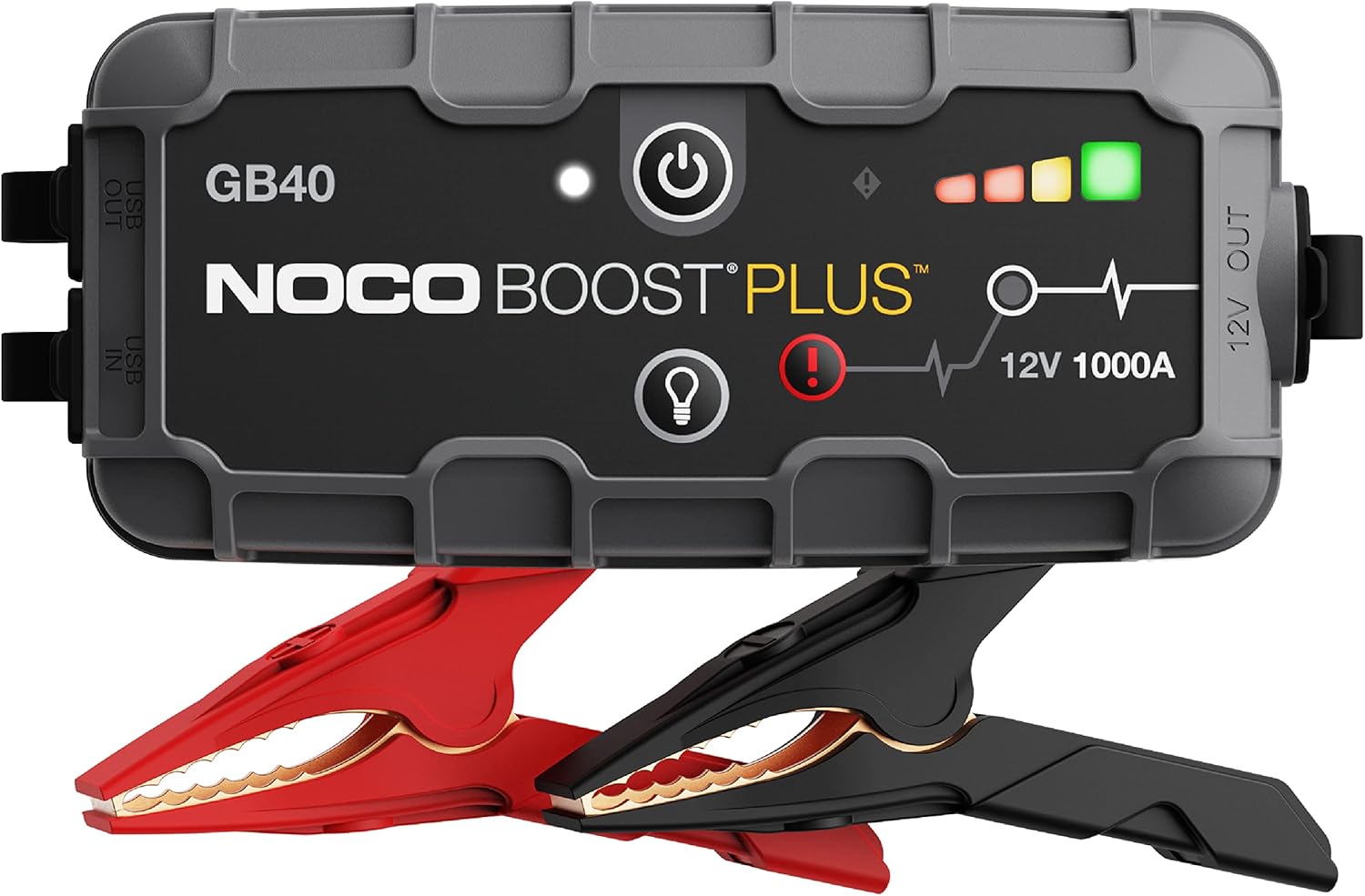
NOCO Boost Plus GB40 Jump Starter
A 1000A lithium jump starter that fits in your glovebox and works on any 12V battery. Your insurance against a dead 12V in a parking lot.
As an Amazon Associate, ThinkEV earns from qualifying purchases — at no extra cost to you.
And here's where it gets interesting: sodium-ion could revive the 12V auxiliary battery. Most EVs still use a small 12V 50Ah lead-acid battery to power lights, computers, and door locks. But startups are developing 12V 50Ah sodium-ion replacements, lighter, longer-lasting, and better in cold weather. That's a small part, but it adds up. The 32700 sodium-ion cell, a cylindrical format, is already in production.
It's being used in e-bikes, scooters, and solar storage. And companies like Tattu are selling 52V sodium-ion packs for drones and industrial equipment. They're not in Teslas yet, but they're real, they're shipping, and they're getting better. For most people, sodium-ion won't power their next family SUV. But it might power their next e-bike, their backup power, or their kid's first car. And that's enough to shift the market.
The Real Choice: What Should You Drive?
The short answer: for most Canadians, an LFP-powered EV is the smartest choice today. The longer answer: your battery decision isn't just about chemistry, it's about how you live. If you drive under 100 km a day, charge at home, and want low cost and high reliability, LFP wins. If you take weekly road trips and need every kilometre of range, NMC makes sense, but expect higher costs and earlier degradation.
Solid-state and sodium-ion are promising, but not ready for prime time. Let's break it down with real math. A base Tesla Model Y with LFP costs $42,998 CAD. Over six years, with 20,000 km a year, you'll spend about $1,200 a year on electricity, $8,400 total. Charging at home with a Grizzl-E Level 2 means full charges in 8 hours.
That's about $8 for a full charge, same as a tank of gas in a Prius. A long-range Model Y with NMC costs $58,990, $16,000 more. You'll get 50 extra km of range, but after six years, the battery might degrade 15–20%, while LFP degrades 5–10%. And if you ever need a replacement, it could cost $20,000. That's not a small risk. Sodium-ion isn't here yet for full EVs, but a 30kWh sodium car might cost $28,000 by 2028, and last 1.5 million km.
That's the future most people should watch. And solid-state? Maybe in 2030. But when it comes, it'll be in $100,000 cars first. So for now, LFP is the sweet spot. It's not flashy, but it works.
Related Reading
- What BYD's Solid State Battery Actually Means for Canadian EV Buyers
- Battery Energy Density Explained: Why It's the Number That Actually Matters
- Solid-State Batteries Are No Longer 'Coming Soon', Here's What Just Happened
Beyond Chemistry: How Battery Design is Shaping the EV Experience
Picture a garage, 'm being the same idea but from observation in Vancouver, rain tapping on the roof, looking at a Tesla Model Y lifted on a rack. The undercarriage is exposed, and there it is: a flat, sealed slab stretching from axle to axle. That's the battery. But what most people don't see.
And what doesn't make headlines, is that the chemistry inside matters less than how that slab is engineered, cooled, and integrated into the car. We've spent years obsessing over lithium iron phosphate versus nickel manganese cobalt, but the real shift is happening in how batteries are packaged, cooled. And used. Because your EV's real-world range, charging speed.
And even safety depend less on which elements are in the cells and more on how those cells are arranged, cooled, and managed. The chemistry sets the ceiling. The design determines how close you get to it. Take the Tesla Model Y, for instance.
It uses a structural battery pack, meaning the battery isn't just a component; it's part of the car's frame. The cells are glued directly into the chassis, acting like a stressed member in a race car. That saves weight. The Model Y Long Range weighs about 1,990 kg, which is roughly the same as a Subaru Outback with a spare tire, roof rack.
And full gas tank. But because the battery is structural, Tesla didn't need to build a separate floor pan or reinforcement beams. That's about 10% of the car's total mass saved, the equivalent of removing two average adults and their luggage. And because it's lighter, it uses less energy.
That translates to more range without needing a bigger battery. The 75 kWh pack in the Model Y Long Range delivers about 533 km of range on a charge, enough to drive from Vancouver to Seattle with 40 km to spare, even in winter. Other automakers are following. BMW's Neue Klasse platform, launching in 2025, will use a similar structural battery design.
They're claiming a 20% improvement in range efficiency, not from new chemistry, but from mechanical integration. That's the kind of gain that usually takes a decade of battery research. But structural batteries aren't just about range. They change how the car handles.
With the heaviest component bolted (or glued) into the core of the chassis, the centre of gravity drops. The Model Y doesn't feel like a tall SUV when you corner.It feels planted, almost low-slung. That's because the battery's mass is centred just above the axles, not hanging below like a belly. For most people, this means the car feels more stable in wind, less prone to body roll on curvy roads.
And generally more confidence-inspiring, especially in wet B.C. conditions where grip is already a concern. But structural batteries come with trade-offs. If you damage the undercarriage, say, hit a deep pothole in downtown Montreal, you might not just dent the pan.
You could crack a cell housing. And because the battery is structural, you can't just unbolt it and swap it out. Repair costs could be astronomical. Tesla says their underbody is protected by a titanium shield on some models, and they've designed the pack to survive 25-cm impacts.
But body shops won't be able to do quick battery swaps. You'd need a Tesla-certified centre, and that's not always nearby. In Yellowknife, for example, the nearest service point is over 1,800 km away. So if your battery pack is compromised, you're not just waiting for parts.
You're waiting for a semitrailer to show up and haul your car south. Then there's cooling, one of the most overlooked aspects of battery design. Every EV has a thermal management system, but how it's laid out makes a huge difference. Tesla uses a serpentine tube that snakes through the pack, carrying coolant within millimetres of each cell.
That allows precise temperature control. In cold weather, they can warm the battery evenly before fast charging, which is critical because charging a cold lithium-ion battery damages it. Preconditioning the battery to 20°C before a Supercharger stop can improve charging speed by up to 50%. That's the difference between adding 200 km in 15 minutes versus 30.
And in Canadian winters, where temperatures regularly drop to -25°C, this isn't just convenient, it's essential for usability. Compare that to some older EVs, like the first-generation Nissan Leaf. It used passive air cooling. No liquid.
No active thermal system. In summer, the pack could overheat. In winter, it charged slowly. After five years in Calgary's temperature swings, many Leafs lost 30% of their range.
That's about 60 km gone, enough to wipe out the margin on a 200-km commute. And because the cells degraded unevenly, the battery management system had to derate the whole pack to protect the weakest cells. So even if most cells were fine, the car acted like they weren't. Tesla's liquid cooling avoids that.
In a 2023 study of 10,000 Tesla vehicles, 95% retained over 90% of their battery capacity after 320,000 km, that's driving from Tofino to St. John's and back, twice. The consistency comes from even thermal management, not just chemistry. Now look at BYD's Blade Battery.
It's an LFP pack, but the innovation isn't the chemistry, it's the form factor. Instead of cylindrical or pouch cells, BYD uses long, flat prismatic cells that run the length of the pack. They're only 16 mm thick, about the width of a house key, but over a metre long. These act like structural ribs.
When packed together, they create a rigid, dense slab that's harder to puncture. BYD famously ran a nail penetration test on camera: they drove a metal rod through a Blade cell. And it didn't catch fire. The temperature peaked at 60°C, warm, but not dangerous.
In contrast, a punctured NMC cell can hit 800°C and ignite. That's why BYD claims their Blade Battery is the safest on the market. And emergency responders can approach a crashed BYD with less risk of thermal runaway, a real concern in rural areas where fire departments don't carry special EV firefighting gear. But the Blade design also improves space efficiency.
Traditional packs have gaps between cylindrical cells, like marbles in a jar. You can't pack them perfectly. There's always dead space. Blade cells, being flat and stacked, fill nearly 100% of the volume.
That's called a higher packing density. BYD achieves about 60% volume utilization, versus 45% in older cylindrical packs. That means for the same physical size, you get more energy. The BYD Han EV has a 76.9 kWh pack in a sedan that's the same length as a Honda Accord.
That gives it 550 km of range, enough to make it from Ottawa to Toronto with 50 km left, even with the heater on full blast in January.
And because the cells are integrated into the floor, the cabin is lower, improving aerodynamics and headroom. It's a small thing, but it adds up. Then there's cell-to-pack (CTP) design, used by CATL and others. In a traditional pack, you have cells grouped into modules, and modules wired into a pack.
That adds weight, complexity, and cost. CTP removes the modules. The cells go straight into the pack housing. That saves about 15% in weight and 10% in cost.
The NIO ET7 uses a 150 kWh semi-solid-state pack in CTP format. That's enough to deliver 1,000 km of range on a charge, about the distance from Edmonton to Calgary and back, twice. But more importantly, it does it without making the car massively heavier. The ET7 weighs 2,400 kg, which is comparable to a V8-powered Ford Expedition.
But it accelerates faster and handles better because the weight is low and centred. Without modules, there's less internal resistance, so the battery can deliver peak power more efficiently. That's why the ET7 can do 0–100 km/h in 3.8 seconds, quicker than a Porsche 911 Carrera. But CTP has downsides too.
Module-based packs are easier to repair. If one module fails, you can swap it. In a CTP pack, if a single cell goes bad, you might have to replace the whole pack, or at least a large section of it. That's expensive.
A full NIO battery pack replacement can cost over $25,000 CAD, about what a used Toyota Corolla costs. And while NIO offers battery leasing and swap stations in China, that model doesn't exist in North America yet. So if you're driving a CTP-equipped EV in, say, Sudbury, and your pack fails, you're not getting back on the road quickly. The trade-off is clear: higher performance and efficiency today, potentially higher repair costs tomorrow.
Manufacturers are also experimenting with cell-to-chassis (CTC) designs, the next step beyond structural packs. In CTC, the battery isn't just part of the chassis, it is the chassis. Companies like Local Motors and Rivian are prototyping this. The idea is to eliminate the floor pan entirely and build the car's structure around the battery.
This could save another 10% in weight and open up interior space. Rivian's R1T already has a flat floor because of its skateboard platform. But with CTC, they could lower it even further, improving aerodynamics and freeing up room for a frunk, rear seats, or storage. For most people, this means more usable space in the same footprint, like getting an SUV's cargo room in a midsize crossover's body.
But CTC raises big questions about safety and recyclability. If the battery is the floor, how do you protect it from road debris? How do you service it? And when the car reaches end-of-life, how do you separate the battery from the frame?
Recycling becomes harder when components are glued and welded together. The EU is already drafting rules requiring EV batteries to be removable with common tools, a direct response to Tesla's and BYD's designs. If CTC makes that impossible, automakers may have to redesign. That's not theoretical.
The EU's battery regulation, set to take full effect in 2027, includes reuse and recycling quotas. By 2031, new EVs sold in Europe must allow battery removal in under 30 minutes using standard tools. That could force a shift back toward modular, serviceable packs, even if it means sacrificing some efficiency. Meanwhile, cooling systems are getting smarter.
Some next-gen packs use phase-change materials, waxes or gels that absorb heat as they melt. These act like thermal buffers, slowing temperature spikes during fast charging. Porsche's upcoming Passport battery uses this tech. They claim it can sustain 800-kW charging for longer periods without overheating.
That's about 400 km of range added in 10 minutes, enough time to grab a coffee and a sandwich on a road trip from Quebec City to Montreal. And because the system manages heat more efficiently, the battery degrades slower. Porsche says their Passport battery will retain 95% capacity after 320,000 km, about 16 years of average driving. That kind of longevity reduces the need for recycling and lowers lifetime costs.
But high-power charging isn't just about the battery. the answer varies on the entire ecosystem, the charger, the grid, and the car's power electronics.
A 350-kW charger is useless if the car can't accept that rate. And most can't. Even the Porsche Taycan, which can briefly hit 270 kW, averages about 150 kW over a full charge. That's because the rate tapers as the battery fills.
From 10% to 80%, it might charge at 200 kW. But from 80% to 100%, it slows to 50 kW or less. That's physics, lithium ions can't be forced into the anode too quickly at high states of charge without causing damage. So the "10-minute charge" headlines are misleading.
You're still looking at 25–30 minutes for a full top-up, even on the fastest systems. And that's before you factor in queuing at busy stations or charger reliability. Which brings us to another design shift: bidirectional charging. Newer EVs like the Ford F-150 Lightning and Hyundai Ioniq 5 can send power back to your house or to other devices.
The F-150 has a 9.6 kW exportable load, enough to run a home during a blackout. That's about the same output as a midsize gas generator, but quieter and cleaner. During the 2023 B.C. wildfires, some owners used their trucks to power essential appliances when the grid went down. And because the battery is designed with bidirectional flow in mind, the inverter and controls are built in.
No add-ons needed. For most people in areas with unreliable power, this isn't just a convenience, it's a safety feature. But bidirectional charging requires different battery management. Sending power back and forth adds stress.
The cells experience more charge cycles, even if they're shallow. Over time, that can accelerate degradation, especially if the system isn't optimised. Some early adopters in Germany reported faster-than-expected wear on their KIA EV6s when using vehicle-to-grid (V2G) mode frequently. The fix?
Software updates that limit discharge depth and manage temperature more aggressively. It's a reminder that battery design isn't just hardware. It's software, too. The BMS, battery management system, is the brain that decides when to charge, when to cool, and how much power to allow.
And in modern EVs, that software is updated over-the-air, just like a phone.
Tesla updates their BMS logic regularly. One update in 2022 improved preconditioning behaviour, making Supercharging faster in cold weather. Another tweaked charging curves to reduce wear at high states of charge. These changes can add years to a battery's life, not by changing the cells, but by changing how they're used.
For most drivers, this means less anxiety about degradation and more confidence in long-term ownership. It also means the car you buy today could get better over time, a radical shift from internal combustion vehicles, which only degrade. Still, not all automakers are this proactive. Some lock their BMS algorithms tightly, making third-party upgrades impossible.
Others don't offer over-the-air updates at all. That's a problem if new battery science emerges and your car can't adapt. Imagine buying a phone that never gets software updates, that's the risk with some EVs. And as battery designs become more integrated, the cost of being left behind rises.
A car with a non-upgradable BMS might lose value faster, especially as newer models offer smarter, longer-lasting packs. The bottom line is this: we're moving beyond simple chemistry wars. LFP, NMC, sodium-ion, they're just ingredients. The real innovation is in how those ingredients are assembled, cooled, and managed.
A well-designed LFP pack can outperform a poorly designed NMC one. A structural battery with smart thermal control can deliver better real-world results than a larger, heavier pack with outdated engineering. And for Canadian drivers, who face extreme cold, long distances, and variable infrastructure, design matters more than ever. It's not just about surviving winter, it's about thriving in it.
Gear worth having
As an Amazon Associate, ThinkEV earns a small commission from qualifying purchases — at no extra cost to you.

Lectron Level 2 J1772 Charger (40A, WiFi)
Smart WiFi charger with real-time energy monitoring. 40A / 9.6 kW, J1772 with a NEMA 14-50 plug, schedule charging right from your phone.
As an Amazon Associate, ThinkEV earns from qualifying purchases — at no extra cost to you.
For most people, the right EV isn't the one with the fanciest chemistry. It's the one with the smartest design, where range, charging, safety, and longevity are balanced for real life. And that balance is shifting fast.
Gear worth having
As an Amazon Associate, ThinkEV earns a small commission from qualifying purchases — at no extra cost to you.
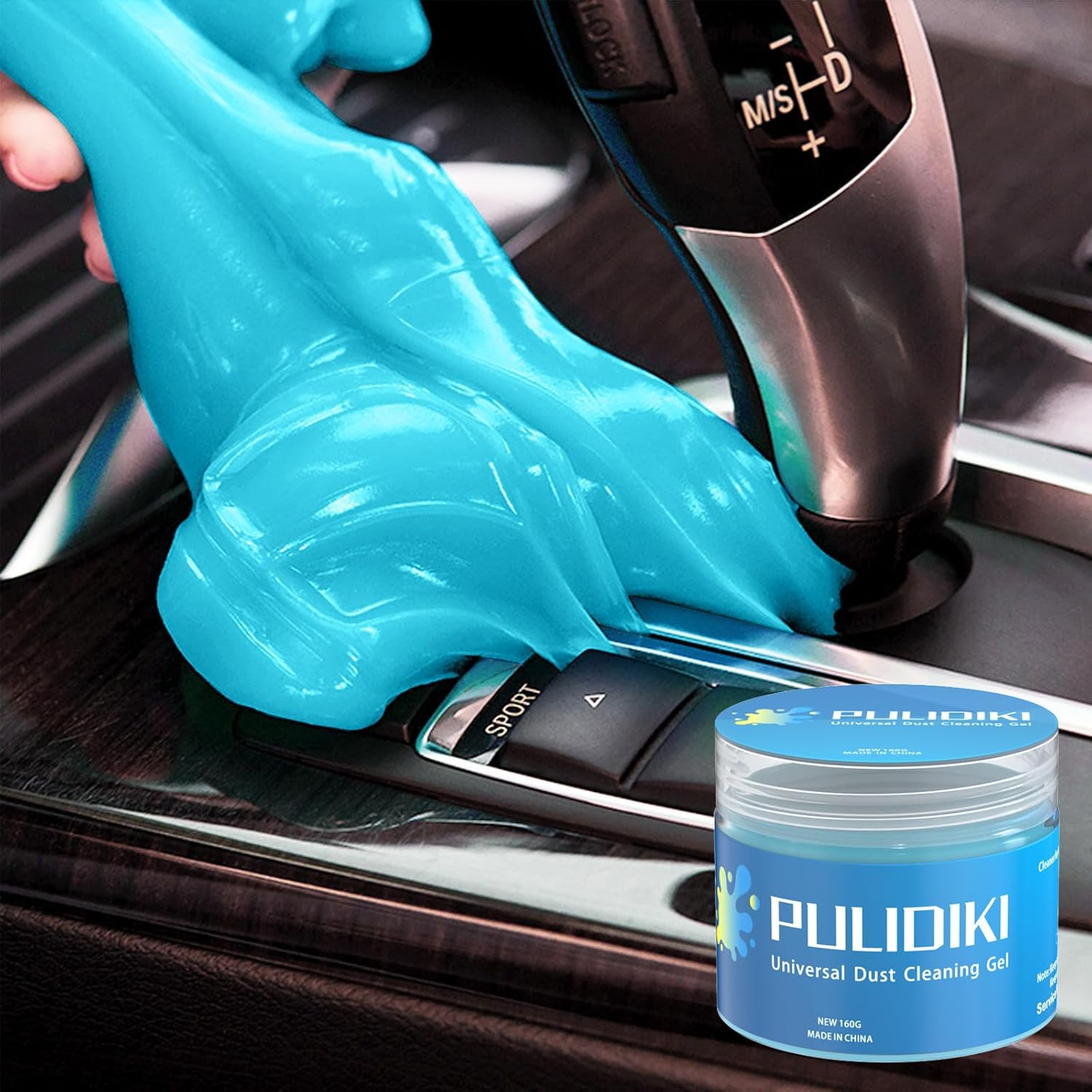
PULIDIKI Car Cleaning Gel (Detailing Putty)
Press it into vents, buttons, and seams and it lifts out dust you did not know was there. Weirdly satisfying, genuinely useful.
As an Amazon Associate, ThinkEV earns from qualifying purchases — at no extra cost to you.

Founder & Chief Editor
Vlad Pereira is the founder and chief editor of ThinkEV.ca, the Canadian electric-vehicle publication he writes and edits from Courtenay, British Columbia. He covers EV pricing, federal and provincial rebates, charging costs, and the Chinese manufacturers now entering Canada, from the buyer's side rather than the press-fleet side. ThinkEV is a venture of Vlad Pereira Online; his writing on health, income and the long game lives at vladpereira.com.
Frequently asked questions
Is LFP safe in winter?
Can I replace my 12V lead-acid battery with a sodium-ion?
Will solid-state batteries eliminate range anxiety?
Why do some Teslas use LFP and others NMC?
Is sodium-ion better than LFP?
More EV & road-trip finds
Affordable upgrades worth a look — tap any to check the price on Amazon.
 ★ 1,340
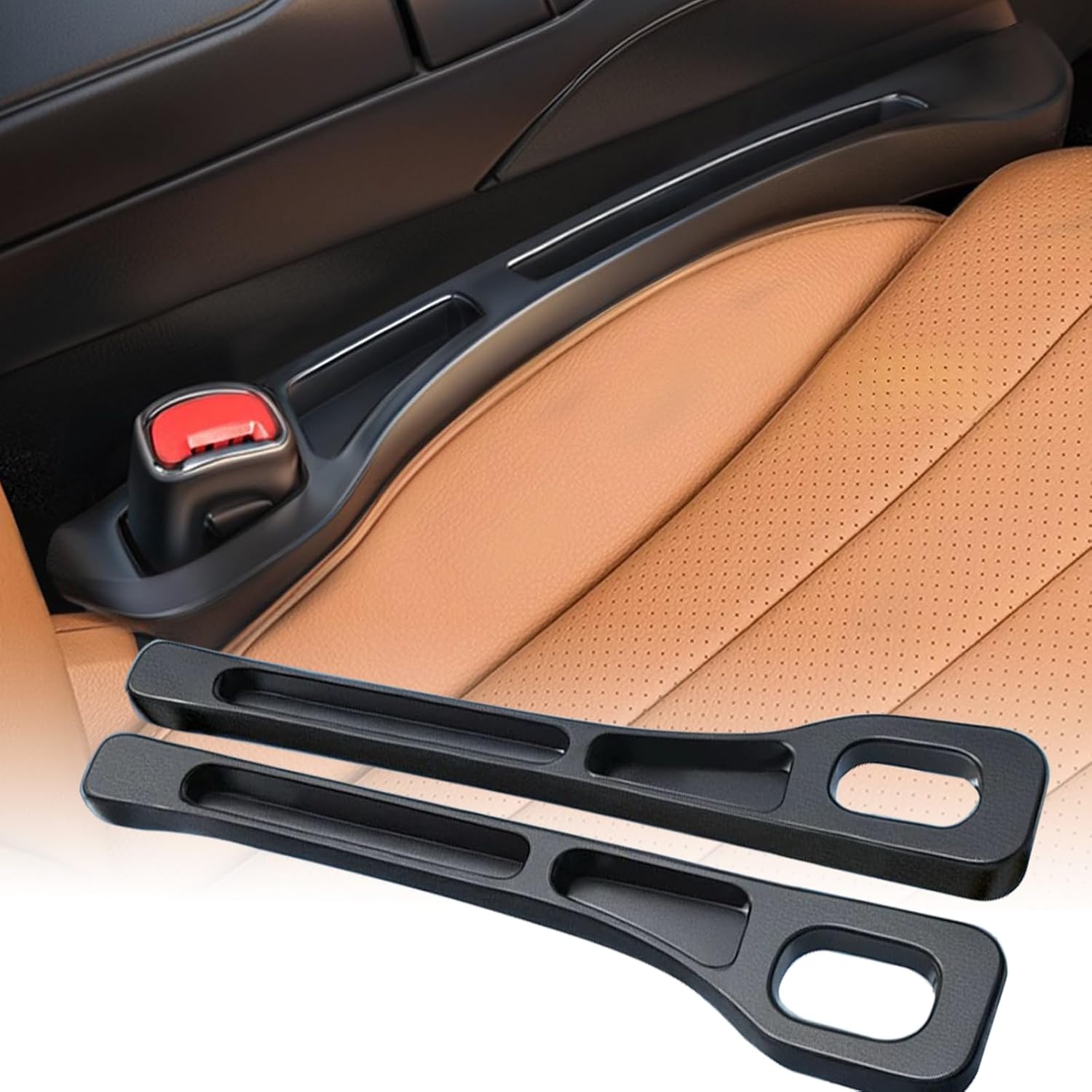
Car Seat Gap Filler (Universal)
View on Amazon ★ 17,242
LISEN Mini USB-C Car Charger (54W)
View on Amazon ★ 119
★ 119Foldable Waterproof Trunk Organizer
View on Amazon ★ 392
★ 392Large Cup Holder Adapter (32-40oz)
View on Amazon ★ 8,681
Chemical Guys Complete Car Wash Kit
View on Amazon ★ 537
★ 537USB Star Projector Roof Light
View on Amazon ★ 1,083
Crystal Push-Start Button Ring (2-Pack)
View on Amazon ★ 4,424
Sun Visor Card and Document Organizer
View on AmazonRead, Plan, Then Stay Current
Explore our expert articles to understand incentives and ownership costs, use the map to pressure-test charging reality, then subscribe so new EV coverage comes straight to you.
Continue Reading

LFP vs NMC: The EV Battery Tradeoffs, Plainly

New or Used EV: Which Is the Smarter Buy in 2026?

EV Highway vs City Range: Why They Flip
Buy or Lease an EV in Canada? The 2026 Answer

Single-Motor vs Dual-Motor EVs: What AWD Actually Adds