Key takeaways
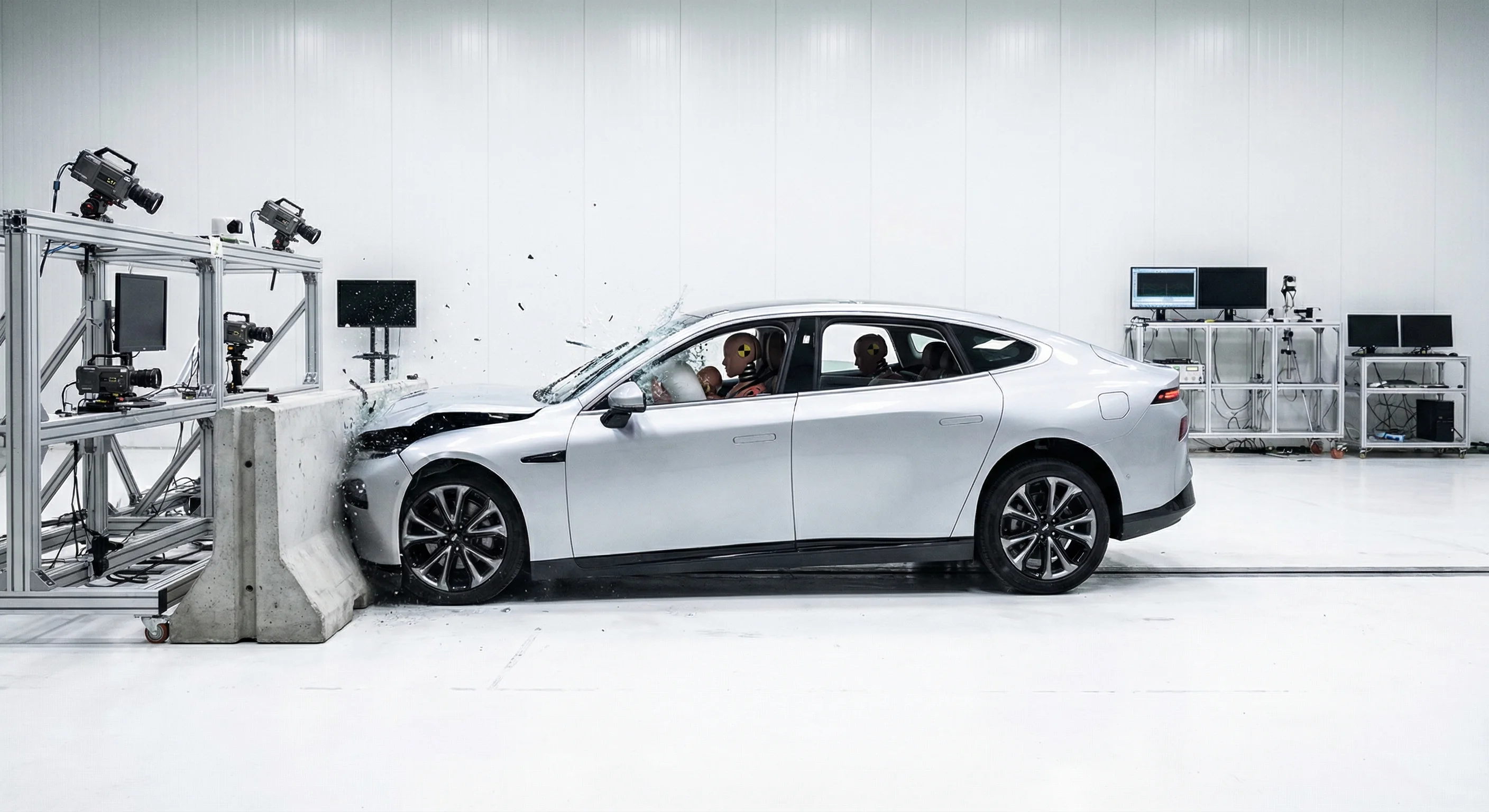
- The BYD Seal scored 5 stars in Euro NCAP testing with 91% adult occupant protection and 87% child protection.
- The NIO ET5, another newcomer from China, scored 5 stars with 92% adult protection.
- The BYD Seal loses about 25-30% of range at -20°C.
- The NIO ET5 loses about 20-25%, actually better than Tesla in cold weather.
- BYD's LFP Blade Battery stayed under 60°C in a nail-penetration test that pushes standard lithium-ion cells to 200–500°C, and it has no thermal-runaway failure mode.
Why does everyone ask if new EV brands are safe, but nobody asks that about Hyundai or Volkswagen?
I get asked the safety question constantly. "Are these Chinese EVs safe?" The assumption baked into the question is that they might not be. That somehow, a car from a brand you've never heard of is probably cutting corners on the things that matter.
It's a reasonable assumption. It's also wrong.
And not just slightly wrong. Wrong in a way that challenges long-held biases about where good cars come from.
Let me show you what the data actually says.
The Crash Tests Don't Care About Marketing
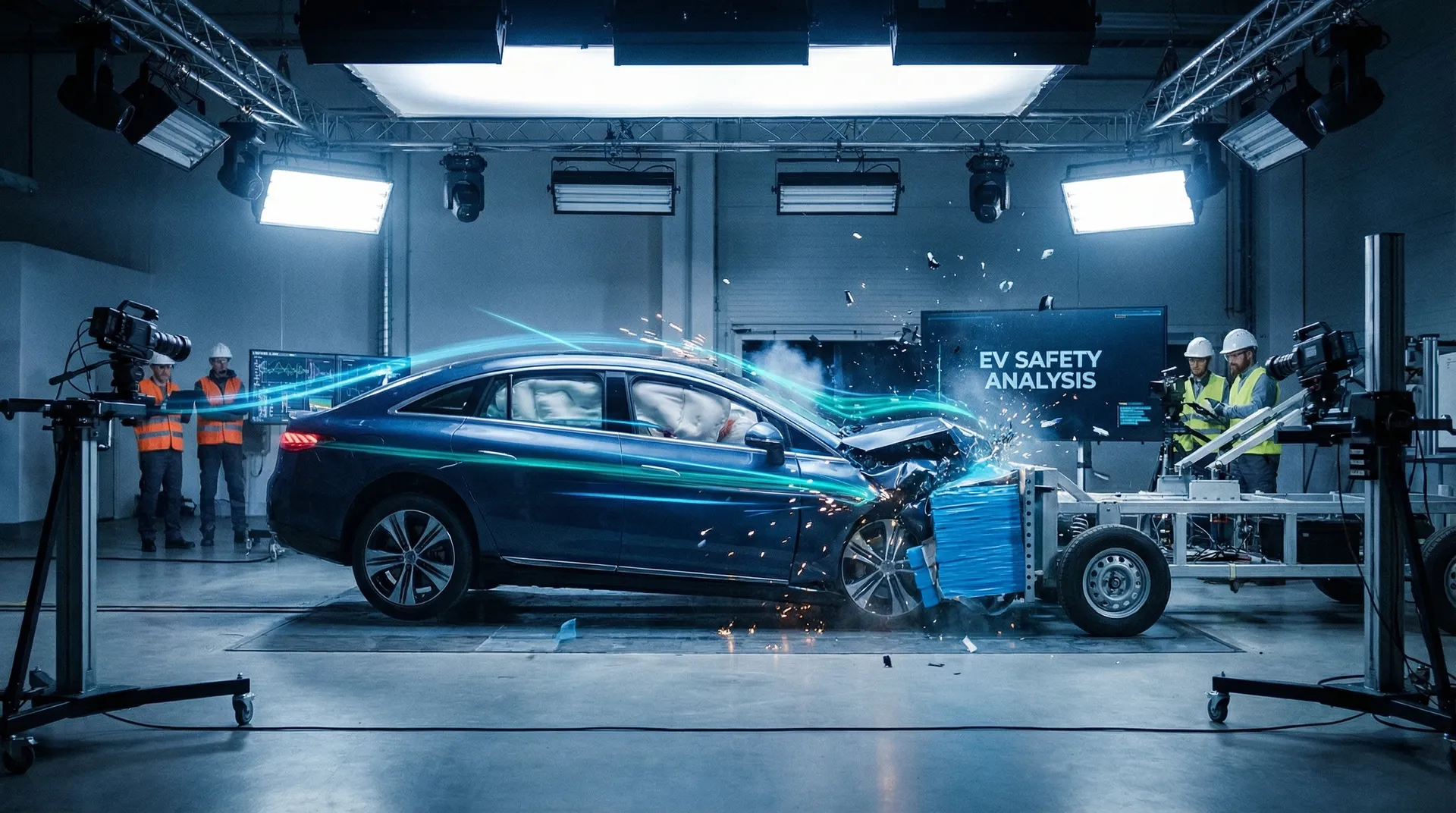
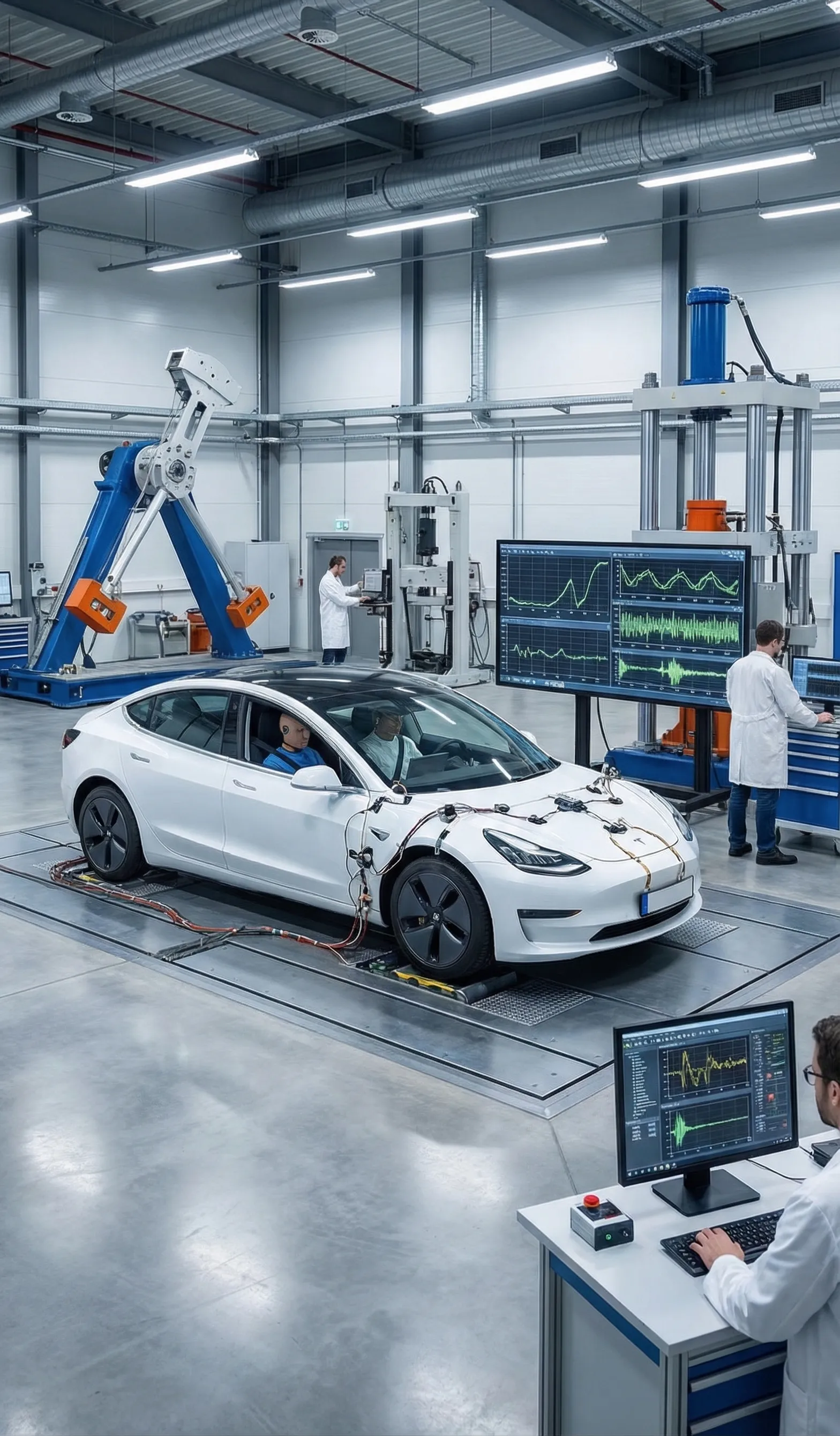
Euro NCAP is the European New Car Assessment Programme. They crash-test cars, lots of them, and publish the results. They're independent. They're rigorous. They have no stake in which cars do well. When Euro NCAP gives a rating, you can trust it.
Here's what they found when they tested the BYD Seal: 5 stars overall. 89% adult occupant protection. 87% child protection. 85% safety assist. Those numbers put it in the same tier as the Tesla Model 3, which scored 96% adult protection, and above the Hyundai Ioniq 5, which scored 89%.
The NIO ET5, another newcomer from China, scored 5 stars with 92% adult protection. That's higher than most luxury sedans from Germany.
The XPeng P7, tested back in 2020, also got 5 stars. 90% adult protection.
I keep looking at these numbers expecting to find the catch. There isn't one. These cars are genuinely, measurably safe. Not "safe for the price" or "safe for Chinese cars." Just safe.
The Battery Question Nobody Wants to Ask Honestly
"What about the batteries? Don't they catch fire?"
This is the real concern, and it deserves a real answer.
Lithium-ion batteries can enter what's called thermal runaway, uncontrolled fire that's very difficult to extinguish. It's happened to Teslas. It caused the Chevy Bolt recalls. It's a legitimate engineering challenge that every EV manufacturer faces.
But here's where things get interesting.
BYD did a nail penetration test on their Blade Battery. This is the worst-case scenario: they drove a steel nail through the battery pack while it was charged, simulating a severe collision that punctures cells. Standard lithium-ion batteries hit 200-500°C and eventually catch fire. The Blade Battery stayed under 60°C. Didn't even get warm enough to hurt if you touched it.
This isn't magic. It's chemistry.
BYD uses lithium iron phosphate cells instead of the nickel-based chemistry most other manufacturers use. LFP is thermally stable in ways that nickel isn't. It's essentially impossible to get LFP cells into thermal runaway, even under abuse conditions.
The tradeoff is energy density, LFP packs are heavier per kilowatt-hour, but BYD decided that tradeoff was worth it for safety.
Every BYD passenger EV sold since 2020 uses the Blade Battery. Seal, Atto 3, Dolphin, Han, all of them. If you're worried about battery fires, BYD is arguably the safest choice on the market.
NIO and XPeng use more conventional nickel-based chemistry, which puts them in the same risk category as Tesla and every other EV manufacturer. The risk is small, statistically, EVs catch fire far less often than gas cars, but it exists.
Winter Performance: Actually Tested
"Okay, but do they work in Canadian winters?"
This one I can answer with data too. Norway has similar winter conditions to Canada, and these EVs have been selling there for years. The Norwegian EV Association does regular winter testing.
The BYD Seal loses about 25-30% of range at -20°C. The Tesla Model 3 loses about 30-35%. The NIO ET5 loses about 20-25%, actually better than Tesla in cold weather.
These numbers are all in the normal range for EVs. Cold weather reduces battery efficiency regardless of manufacturer. The important thing is that these new brands aren't worse. In some cases they're slightly better.
Most of these vehicles include heat pumps as standard equipment, which Tesla charges $1,000+ extra for. Heat pumps are more efficient than resistive heaters for cabin warming, which reduces the range penalty in cold weather.
Battery preconditioning, warming the pack before driving, is available through the app on all these vehicles. Start the car remotely 15 minutes before you leave, and it'll be ready to go with full performance.
The Driver Assistance Question

Advanced driver assistance used to mean "Tesla Autopilot." Not anymore.
Gear worth having
As an Amazon Associate, ThinkEV earns a small commission from qualifying purchases — at no extra cost to you.

VIOFO A229 Pro 4K Dash Cam
4K front plus 2K rear with parking mode and GPS. Your silent witness for insurance claims, with always-on sentry recording while parked.
As an Amazon Associate, ThinkEV earns from qualifying purchases — at no extra cost to you.
NIO and XPeng use LiDAR sensors in addition to cameras. Tesla uses cameras only. In clear conditions, both approaches work well. In fog, heavy rain, low light, or snow, conditions that are common in Canadian winters, LiDAR has objective advantages. It sees through conditions that confuse cameras.
Is this the deciding factor? Probably not for most people. But if you're driving the 401 in February whiteout conditions, it's worth knowing that some of these new EVs have hardware advantages over Tesla's camera-only approach.
The BYD Seal has a comprehensive suite, adaptive cruise, lane keeping, blind spot monitoring, 360-degree camera, that works well for highway driving. It's not trying to be Autopilot. It's trying to be helpful and unobtrusive.
Gear worth having
As an Amazon Associate, ThinkEV earns a small commission from qualifying purchases — at no extra cost to you.

Roadside Emergency Safety Kit
Jumper cables, a portable air compressor, tow strap, first aid, and more for when something goes wrong between chargers. Canadian winters do not forgive the unprepared.
As an Amazon Associate, ThinkEV earns from qualifying purchases — at no extra cost to you.
Canadian Standards, Build Quality, and the Real Comparison
There's a persistent myth that somehow these cars are sneaking into Canada without proper safety testing. That's not how it works.
No vehicle can be sold in Canada without Transport Canada certification. Period. Every vehicle must pass CMVSS (Canadian Motor Vehicle Safety Standards), which includes crash testing, airbag certification, seatbelt requirements, and hundreds of other safety criteria. UN R100 and R136 govern battery safety specifically, international standards that all EVs must meet regardless of country of origin. Transport Canada doesn't care where a car is made. They care whether it meets the standards. If a BYD, NIO, or XPeng is for sale at a Canadian dealership, it passed the same tests as a BMW or Toyota.
Gear worth having
As an Amazon Associate, ThinkEV earns a small commission from qualifying purchases — at no extra cost to you.

First Alert Auto Fire Extinguisher
A compact extinguisher sized for vehicles and bracket-mounted under the seat. Peace of mind for the price of lunch.
As an Amazon Associate, ThinkEV earns from qualifying purchases — at no extra cost to you.
Build quality tells the same story. J.D. Power tracks problems per 100 vehicles across manufacturers. The 2024 numbers: BYD at 242, NIO at 236, Tesla (China-made) at 228. Industry average: about 250. All three come in slightly below the average, fewer problems than the typical new vehicle. The differences are marginal, we're talking about maybe one additional minor issue per vehicle, and most are the soft stuff: infotainment glitches, fit and finish, squeaks and rattles. Major problems, battery failures, safety issues, drivetrain failures, run under 0.1% for all three. These aren't poorly made cars. They're cars made to comparable standards as everything else on the market.
Here's what I keep thinking about when someone asks "are new EV brands safe?", they're implicitly comparing to what, exactly? Their 2019 Honda CR-V? Their 2015 Ford F-150? The BYD Seal scored 91% adult protection in Euro NCAP testing. That's higher than most compact cars, higher than most SUVs, higher than a lot of vehicles currently on Canadian roads. The car you're worried about is probably safer than the car you're already driving.
What the Data Says
The persistent myths, addressed directly: "They crumple like tin cans", they don't. Euro NCAP 5-star ratings require excellent body structures; they passed the same tests as Mercedes and Volvo. "The batteries catch fire", BYD's literally can't, LFP chemistry doesn't have a thermal runaway failure mode, and NIO/XPeng use conventional chemistry with the same risk profile as Tesla (which is to say, low). "They'll fail in Canadian winters", they've been tested in Norway at -25°C, and range loss is comparable to or better than Tesla. "Their safety tech doesn't work", ADAS systems score 81-90% on Euro NCAP tests, and some use LiDAR, which has objective advantages over camera-only approaches in bad weather. "They're poorly made and will fall apart", J.D. Power quality ratings say otherwise.
By the numbers: yes, these cars are safe. Euro NCAP 5-star ratings don't lie. 91% adult protection doesn't lie. Nail penetration tests don't lie. By real-world evidence: yes. These vehicles are operating in 70+ countries, including Germany, UK, Norway, and Australia. Millions of them. By Canadian standards: yes. Transport Canada certification is required before any vehicle can be sold here. The "cheap imports are unsafe" narrative made sense 20 years ago when a Chery or Great Wall might have genuinely been questionable. It doesn't match 2026 reality.
Your current gas car? Probably has a lower crash test rating than a BYD Seal.
Something to think about.
Gear worth having
As an Amazon Associate, ThinkEV earns a small commission from qualifying purchases — at no extra cost to you.
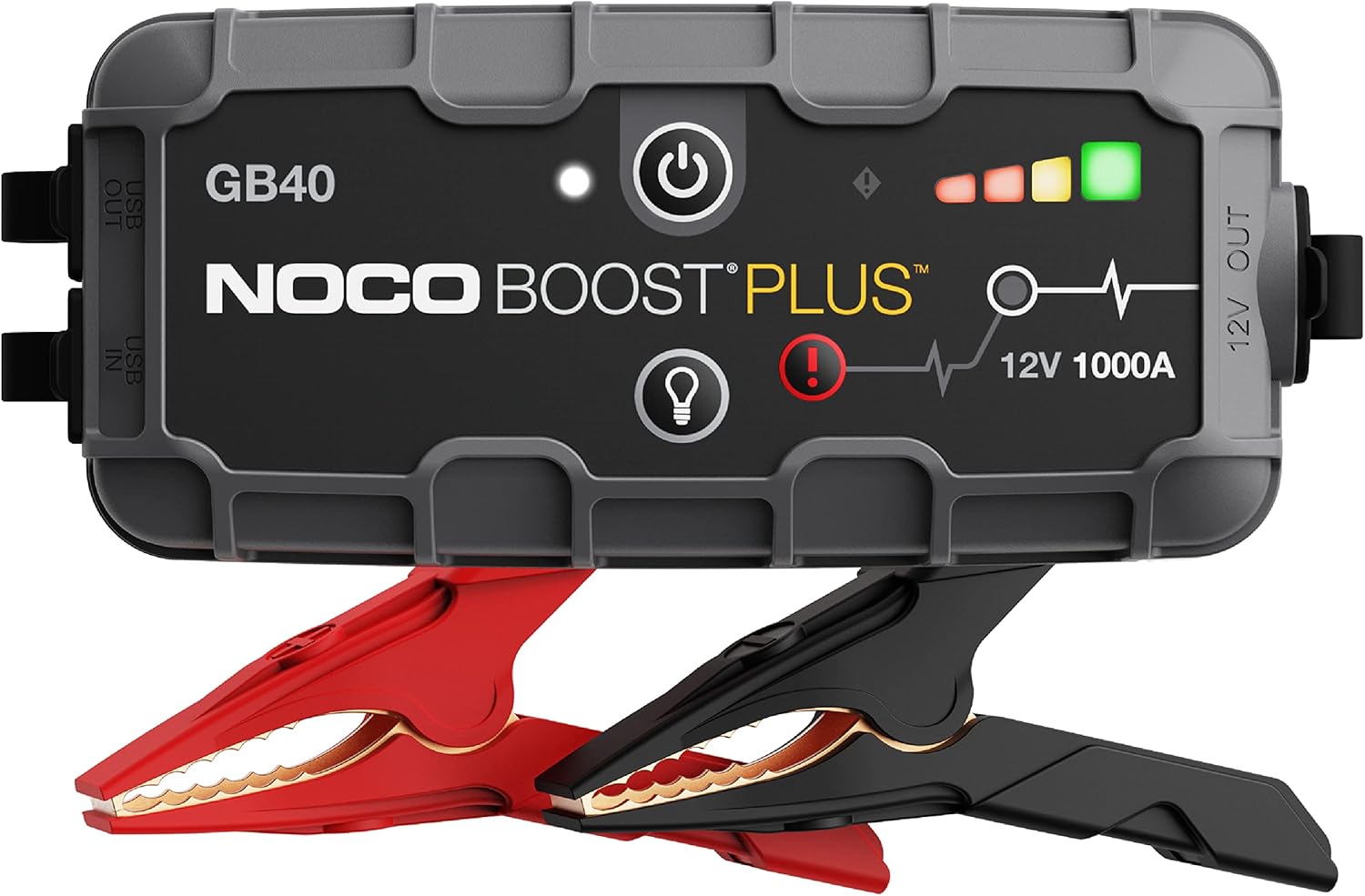
NOCO Boost Plus GB40 Jump Starter
A 1000A lithium jump starter that fits in your glovebox and works on any 12V battery. Your insurance against a dead 12V in a parking lot.
As an Amazon Associate, ThinkEV earns from qualifying purchases — at no extra cost to you.
Related Reading
- EV Safety Ratings: Euro NCAP Results, How new EV brands perform in crash testing.
- New vs Established EV Brands, Which should you buy?
- BYD Seal Review, A deep look at one of the highest-rated new EVs.
Gear worth having
As an Amazon Associate, ThinkEV earns a small commission from qualifying purchases — at no extra cost to you.

Amazon Basics Seat Belt Cutter and Window Hammer
The 10-dollar tool you hope to never use: cuts a jammed belt and shatters a window in an emergency. Mount it within reach.
As an Amazon Associate, ThinkEV earns from qualifying purchases — at no extra cost to you.

Founder & Chief Editor
Vlad Pereira is the founder and chief editor of ThinkEV.ca, the Canadian electric-vehicle publication he writes and edits from Courtenay, British Columbia. He covers EV pricing, federal and provincial rebates, charging costs, and the Chinese manufacturers now entering Canada, from the buyer's side rather than the press-fleet side. ThinkEV is a venture of Vlad Pereira Online; his writing on health, income and the long game lives at vladpereira.com.
Frequently asked questions
Are new EV brands safe to drive in Canada?
Do EV batteries catch fire more than gas cars?
Are EVs safer in crashes than gas cars?
Are EVs safe to drive in Canadian winters?
What are the best EV crash test ratings in 2026?
More EV & road-trip finds
Affordable upgrades worth a look — tap any to check the price on Amazon.
 ★ 68
★ 68WeatherTech FloorLiner for Tesla Model 3
View on Amazon ★ 8,681
Chemical Guys Complete Car Wash Kit
View on Amazon ★ 164
★ 164Solar-Powered LED Ambient Light
View on Amazon ★ 900
★ 900Personalized Photo Car Air Freshener
View on Amazon ★ 865
★ 865Collapsible Trunk Organizer
View on Amazon ★ 848
★ 848Coiled USB-C to USB-C Car Cable (2-Pack)
View on Amazon ★ 87
★ 87Car Window Sun Shades for Kids (4-Pack)
View on Amazon ★ 268
★ 268Anti-Slip Leather Steering Wheel Cover
View on AmazonRead, Plan, Then Stay Current
Explore our expert articles to understand incentives and ownership costs, use the map to pressure-test charging reality, then subscribe so new EV coverage comes straight to you.
Continue Reading
Are Chinese EVs Safe? What Euro NCAP Ratings Show
BYD 1.5MW Charging Canada: 400 km in Five Minutes
EV Fires vs Gas Cars: What the Safety Data Shows
What BYD's Solid-State Battery Means for Canada
Chinese EVs in Canada: Security Politics vs Value