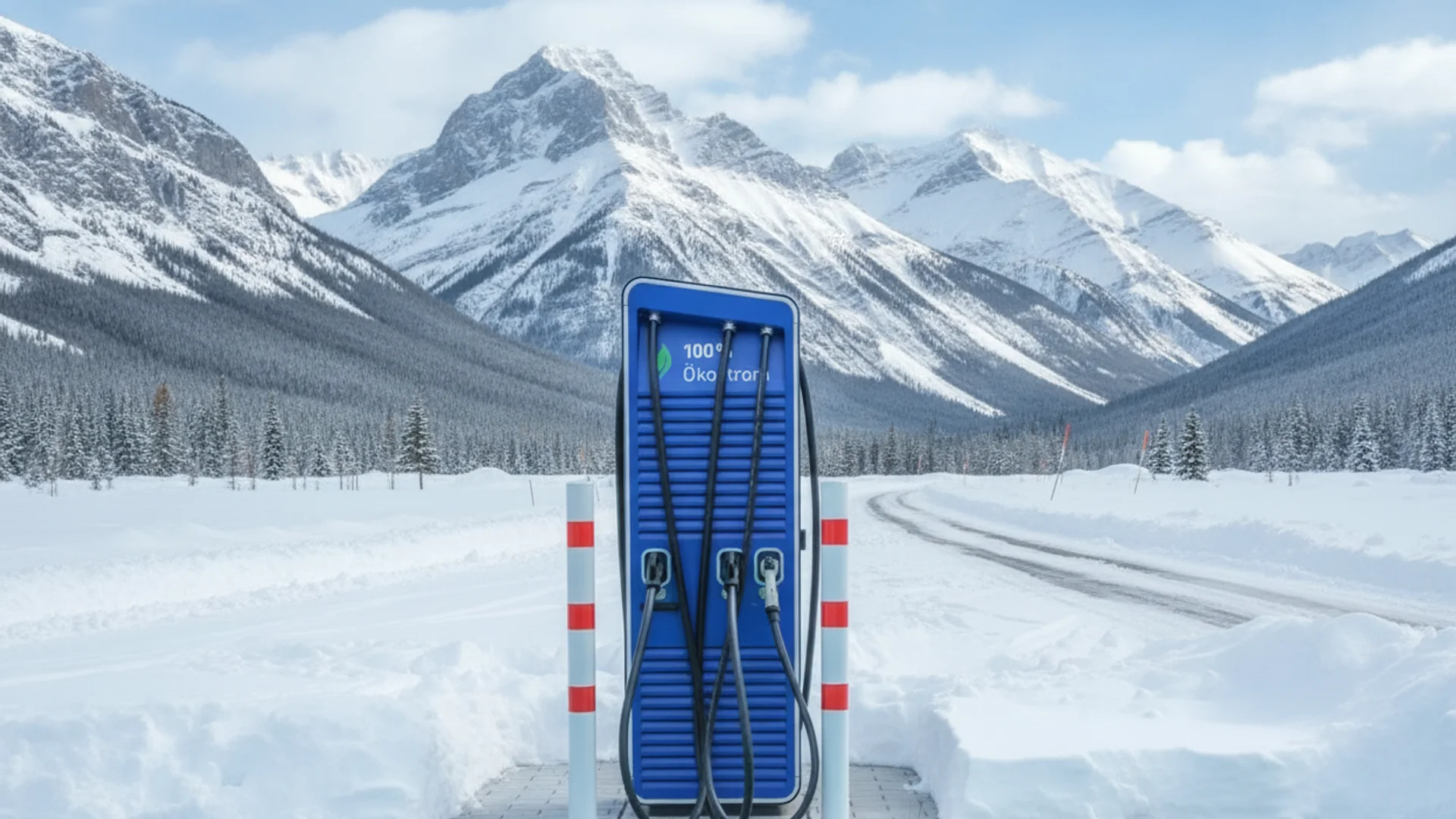
A lithium-ion cell in full thermal runaway burns above 1,000°C and generates its own oxygen. Water does not put it out, it cools the surrounding structure while the cell finishes its reaction on internal fuel. That single physical fact shapes every layer of how modern EVs are built, from the chemistry inside each cell to the software watching the pack forty times a second.
The good news buried under the scary numbers: thermal runaway is not a random event. It is a predictable chain reaction with specific triggers and a specific sequence, and the entire modern EV design stack exists to interrupt that sequence before it reaches the cell next door. The engineering worth understanding is the interruption, not the fire.
Key takeaways
- A lithium-ion cell in full thermal runaway exceeds 1,000°C and generates its own oxygen, water can't stop it.
- BYD's public nail-penetration test produced zero fire because LFP chemistry holds oxygen in its crystal structure far more tightly than NMC.
- The Hyundai Kona recall of 82,000 vehicles traced to a BMS software flaw allowing cells to charge past their designed voltage ceiling.
- Geotab fleet data shows liquid-cooled packs degrade at roughly half the rate of air-cooled packs, 2.3% versus 4.2% annually.
- The BMS monitors cells many times per second, meaning the same physical pack can be materially safer after an over-the-air software update.
What Thermal Runaway Actually Is (Quick Answer)
Thermal runaway is a self-sustaining exothermic chain: one cell's internal temperature climbs past a threshold, the reaction inside that cell releases more heat than the pack can shed, and the heat pushes an adjacent cell over its own threshold. Repeat. The sequence unfolds in three phases, onset (heat buildup and internal side reactions), propagation (the cell vents flammable gas), and full runaway (ignition, cascading cell failure). Cell temperatures can climb past 150°C before any visible symptom reaches the outside of the pack, which is why detection is a software problem before it is a hardware problem.
The important framing: this is not the battery being unstable. It is the battery being highly energy-dense, which is the point. A pack that stores enough electricity to drive 500 kilometres at highway speed contains real chemical energy. The engineering job is not to eliminate that energy, which would eliminate the car. It is to make sure a fault in one cell stays in one cell.
The trigger set is small. Every real-world thermal runaway event traces back to one of four causes, and each cause has its own countermeasure stack.
Gear worth having
As an Amazon Associate, ThinkEV earns a small commission from qualifying purchases — at no extra cost to you.

Lectron Level 2 J1772 Charger (40A, WiFi)
Smart WiFi charger with real-time energy monitoring. 40A / 9.6 kW, J1772 with a NEMA 14-50 plug, schedule charging right from your phone.
As an Amazon Associate, ThinkEV earns from qualifying purchases — at no extra cost to you.
The Four Triggers Engineers Actually Design Against
- Mechanical abuse. Crash damage that crushes cells, a nail or metal fragment penetrating the pack, cell compression during a rollover. This is the trigger the marketing tests are built around, BYD's nail-penetration demonstration became the industry benchmark precisely because it is the most visually legible failure mode. The public catalogue of thermal incidents in electric vehicles collects fires attributed directly to a fault or failure in the main traction battery caused by a manufacturing or maintenance defect, and mechanical intrusion sits next to a disproportionate share of them.
- Electrical abuse. Overcharging past the cell's safe voltage limit, the failure that pushed Hyundai to recall roughly 82,000 Kona Electrics after a Battery Management System flaw allowed cells to charge past their designed ceiling. That recall is the textbook case: the hardware was fine, the chemistry was fine, but a software boundary failed and the cells were the ones that paid for it. Over-discharge does the mirror-image damage on the other end of the state-of-charge curve.
- Thermal abuse. DC fast charging, hard acceleration, and regenerative braking all generate pack heat. None of them cause runaway on their own in a healthy pack, but they narrow the safety margin, and if a cell is already degraded, the margin can disappear. This is why fast-charging behaviour matters over years, not weeks.
- Internal defects. Manufacturing contamination, dendrite growth over hundreds of charge cycles, gradual separator failure. This is the hardest trigger to catch because the pack looks healthy from every external metric right up until it isn't. It is also the reason cell-manufacturing quality control is not a boring supplier-management topic, it is a safety topic. The pressure on cell makers to squeeze more Wh/kg out of the same footprint keeps internal-defect risk a moving target.
How the Pack Is Designed to Stop the Cascade
Modern EV battery pack design is a layered defence, and each layer has a different job.
Cell level. Individual cells carry thermal fuses, current-interrupt devices, and pressure-relief vents. When a cell's internal pressure spikes, the vent opens and directs hot gas away from the neighbours instead of forcing a rupture that would spray reactive material sideways. It is the smallest safety layer and often the first one to activate.
Module level. Microporous thermal pads and fire-resistant barriers sit between modules to confine one cell's failure. This is the layer that turns "one cell failed" into "one cell failed and the pack is otherwise intact", or fails to, in which case the cascade proceeds. The materials science here has moved fast in the last five years, and it is the layer where new chemistries and better packaging show up first.
Pack level. Liquid cooling channels manage heat distribution across the whole pack and, critically, degradation rate over the pack's life. Geotab's fleet data on this is unambiguous, liquid-cooled packs degrade at roughly half the rate of air-cooled packs, with the Tesla Model S liquid-cooled system showing around 2.3% annual degradation against the air-cooled 2015 Nissan Leaf running at 4.2%. Cooling is not just a thermal-runaway defence. It is a longevity system, and the two problems turn out to be the same problem.
Gear worth having
As an Amazon Associate, ThinkEV earns a small commission from qualifying purchases — at no extra cost to you.

Magnetic Car Phone Mount
Snaps your phone to the dash or vent so navigation and charging apps stay in view. The cheapest upgrade that makes every EV drive easier.
As an Amazon Associate, ThinkEV earns from qualifying purchases — at no extra cost to you.
Software layer. The Battery Management System monitors voltage, temperature, and current at the cell level, in some designs many times per second, and cuts charge or opens contactors before the pack's limits are breached. This is the layer that failed in the Kona recall, and the layer that, when it works, prevents almost every electrical-abuse event before the chemistry gets a vote. The BMS is the fastest-moving part of the safety stack because it is software, which means the same physical pack in a 2026 car can be materially safer than the same pack in a 2022 car if the manufacturer keeps pushing over-the-air improvements.
The full crash-structure and battery-safety picture covers how the pack fits inside the car's crash architecture, which is where mechanical-abuse defence lives.
Gear worth having
As an Amazon Associate, ThinkEV earns a small commission from qualifying purchases — at no extra cost to you.
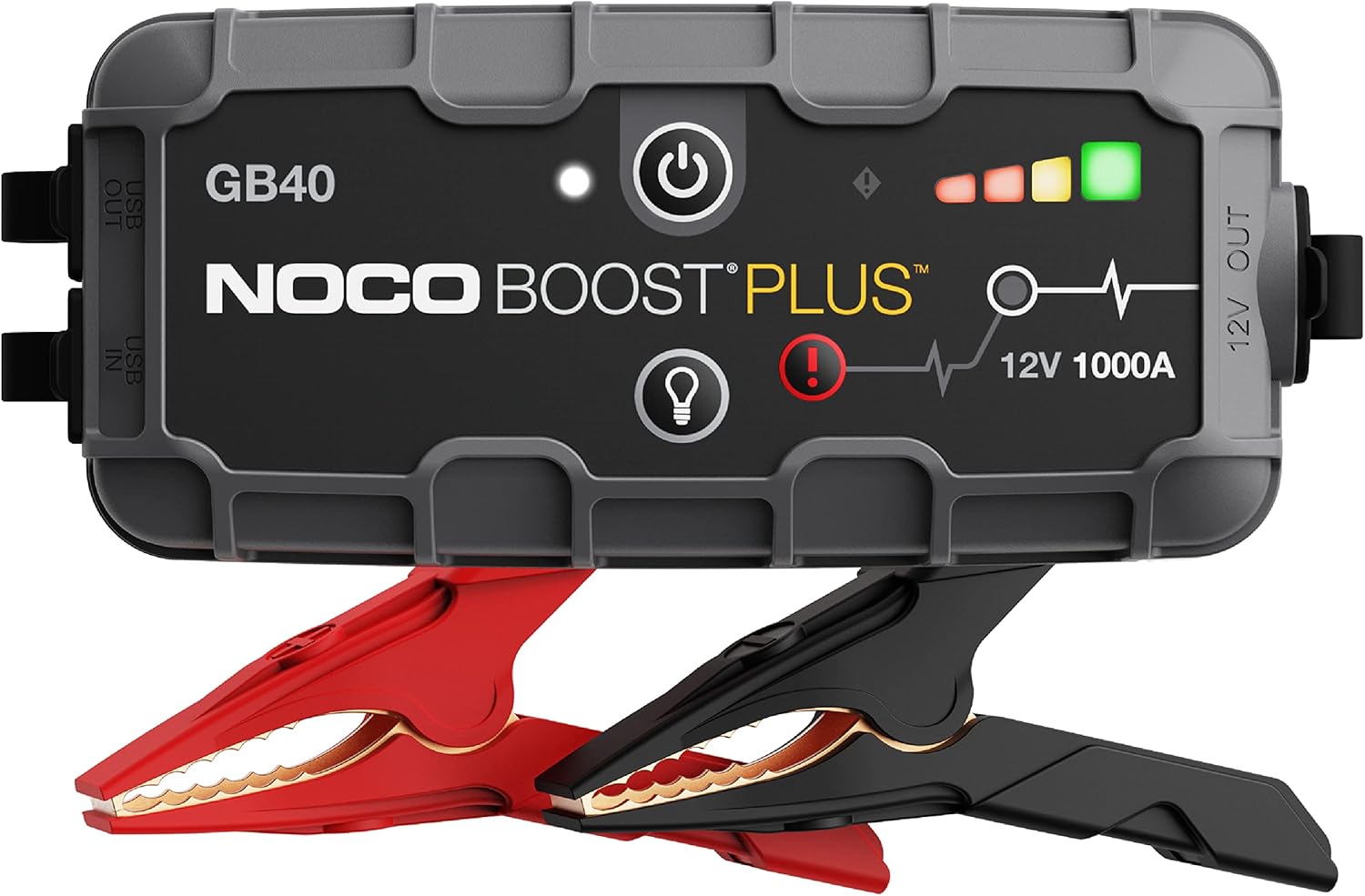
NOCO Boost Plus GB40 Jump Starter
A 1000A lithium jump starter that fits in your glovebox and works on any 12V battery. Your insurance against a dead 12V in a parking lot.
As an Amazon Associate, ThinkEV earns from qualifying purchases — at no extra cost to you.
Chemistry Is the Deepest Safety Variable
Everything above assumes a given chemistry. But the chemistry choice is the deepest variable in the whole system, and it changes what the defences even have to do.
Lithium iron phosphate (LFP), the chemistry inside BYD's Blade Battery and, increasingly, entry-trim packs across the industry, is inherently more thermally stable than nickel-manganese-cobalt (NMC). The physics is not marketing. NMC releases oxygen when it overheats, which is the mechanism that lets a runaway cell sustain its own combustion. LFP's crystal structure holds its oxygen far more tightly, which is why the nail-penetration test that reliably ignites NMC cells did not ignite the Blade Battery. The industry-changing detail of that test is that BYD ran it publicly, on camera, and the result was not "less fire." It was no fire.
That is the safety case for LFP. The trade-off is real and it is Canadian. LFP underperforms in extreme cold, the range loss in Manitoba and Saskatchewan is chemistry-driven, not a Battery Management System settings problem. Preconditioning and better thermal management narrow the gap, but the gap does not close. If you charge and discharge at −30°C for four months a year, you are paying for LFP's thermal stability with winter range. That is a real editorial trade for buyers in the Prairies, and pretending it isn't real is how Chinese-EV coverage in Canada gets miscalibrated in both directions.
The structural fix is solid-state. Solid-state batteries reduce the risk of thermal runaway, a primary cause of battery fires, because most solid electrolytes are nonflammable. Removing the flammable liquid electrolyte removes one of the ingredients the runaway reaction needs. Solid-state is still at the commercial-scale threshold rather than through it, and every automaker's "solid-state in production by year X" claim has slipped at least once. The technology is coming. The date it arrives at $30,000-sedan price points is the number to watch, not the announcement itself.
Gear worth having
As an Amazon Associate, ThinkEV earns a small commission from qualifying purchases — at no extra cost to you.

Amazon Basics Seat Belt Cutter and Window Hammer
The 10-dollar tool you hope to never use: cuts a jammed belt and shatters a window in an emergency. Mount it within reach.
As an Amazon Associate, ThinkEV earns from qualifying purchases — at no extra cost to you.
What the Actual Incident Data Tells You
17 confirmed Tesla thermal incidents in 2023. A global fleet past 5 million vehicles the same year. Per-vehicle rate down each year through the period even as the raw incident count went up. That is not spin, that is what happens when a fleet grows faster than its failure count. Internal-combustion vehicles catch fire at meaningfully higher rates per mile driven than EVs do, a comparison the complete 2026 EV safety analysis works through with the underlying NHTSA data. The absolute number of EV fires will rise as the parc grows. The rate is a different number, and the rate is the one that matters for buyers.
Where the incident data does justify concern: EV battery fires burn longer and hotter than ICE fires when they do happen, and they can reignite hours or days after the initial event. Garage fires with pack involvement are a real fire-services challenge regardless of how rare the ignition event is. The suppression problem is real even when the ignition rate is falling. Both things can be true at once.
Global test standards also diverge, and that gap matters. The Tesla Cybertruck fire caused by thermal runaway of its battery following a collision in Baytown, Texas is exactly the mechanical-abuse case that testing regimes are meant to bound, but the bounds are different in different jurisdictions. China's GB standards, the UN ECE R100 series, and UL 9540A test different things in different ways. A pack certified under one regime is not equivalently tested under another. When a manufacturer says "certified to the highest safety standards," the honest follow-up is "which standard," and the answer sometimes matters more than the certification claim.
The verdict I would put on the desk: the defences work. The rate is falling. The failure modes are understood well enough that the industry knows which chemistry, which cooling architecture, and which BMS discipline moves the numbers. Solid-state removes the last flammable ingredient from the recipe, and the automakers with the deepest LFP supply chains, BYD first among them, have a structural advantage on the safety math that Canadian buyers will feel as prices come down through 2027. The number I would watch is not the annual incident count. It is the share of new packs shipped with LFP chemistry, because that is the line that determines what the fleet looks like a decade from now.
Gear worth having
As an Amazon Associate, ThinkEV earns a small commission from qualifying purchases — at no extra cost to you.

Roadside Emergency Safety Kit
Jumper cables, a portable air compressor, tow strap, first aid, and more for when something goes wrong between chargers. Canadian winters do not forgive the unprepared.
As an Amazon Associate, ThinkEV earns from qualifying purchases — at no extra cost to you.

Founder & Chief Editor
Vlad Pereira is the founder and chief editor of ThinkEV.ca, the Canadian electric-vehicle publication he writes and edits from Courtenay, British Columbia. He covers EV pricing, federal and provincial rebates, charging costs, and the Chinese manufacturers now entering Canada, from the buyer's side rather than the press-fleet side. ThinkEV is a venture of Vlad Pereira Online; his writing on health, income and the long game lives at vladpereira.com.
Frequently asked questions
Can a thermal runaway fire actually be put out?
Does DC fast charging damage my battery over time?
If the BMS fails, what actually happens next?
Is LFP chemistry actually safer for Canadian winters?
How does an EV prevent one bad cell from killing the whole pack?
More EV & road-trip finds
Affordable upgrades worth a look — tap any to check the price on Amazon.
 ★ 537
★ 537USB Star Projector Roof Light
View on Amazon ★ 4,055
6-Speed Manual Shift Knob Display
View on Amazon ★ 21,304
Car Headrest Hooks (4-Pack)
View on Amazon ★ 17,242
LISEN Mini USB-C Car Charger (54W)
View on Amazon ★ 61
★ 61Toddler Car Seat Snack and Cup Tray
View on Amazon ★ 17,839
Qifutan Vent Phone Mount (Military-Grade Clip)
View on Amazon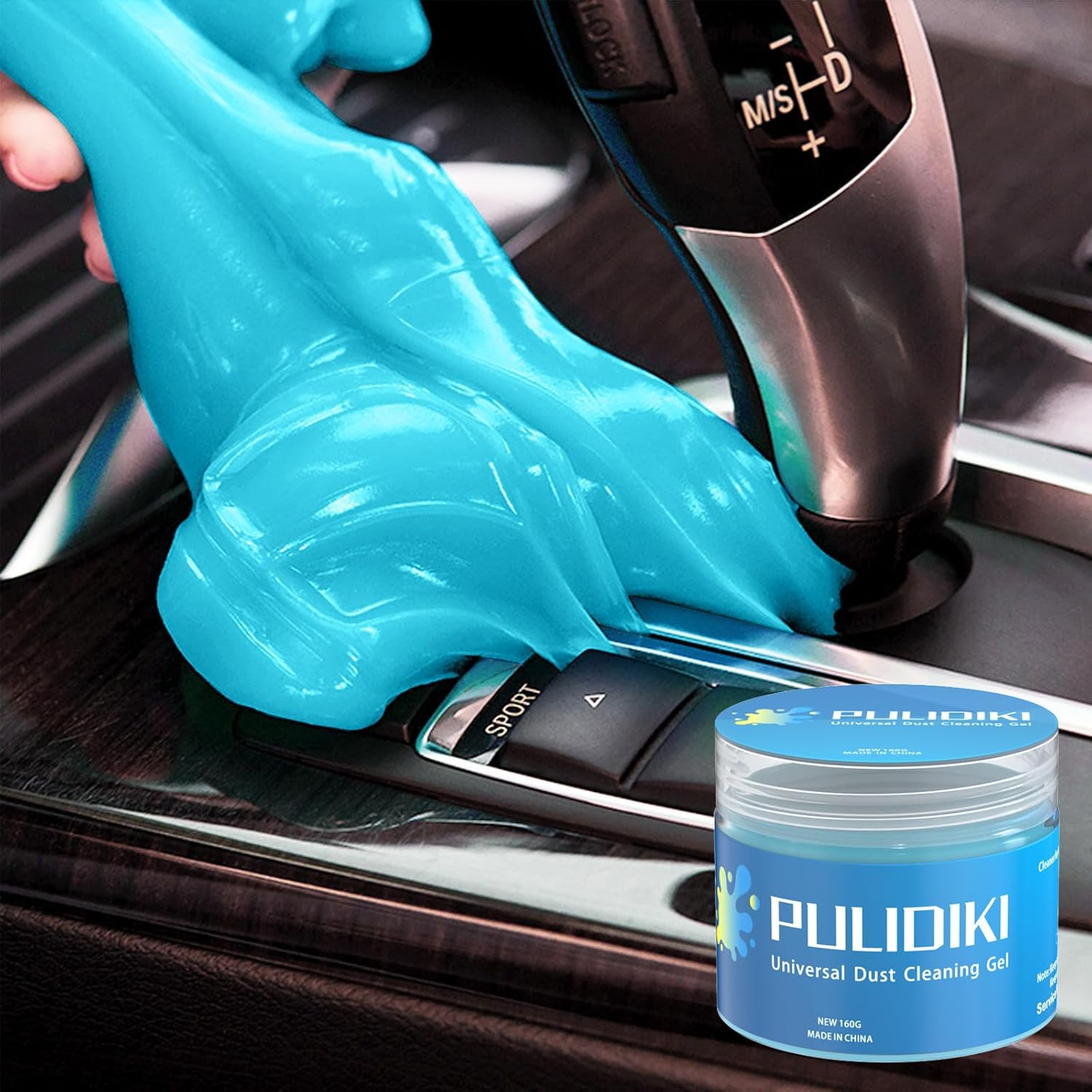 ★ 96,686
PULIDIKI Car Cleaning Gel (Detailing Putty)
View on Amazon ★ 314
★ 314Mini USB LED Ambient Lamps (4-Pack)
View on AmazonRead, Plan, Then Stay Current
Explore our expert articles to understand incentives and ownership costs, use the map to pressure-test charging reality, then subscribe so new EV coverage comes straight to you.
Continue Reading

BYD Auto Explained: World's Biggest EV Maker, Blocked From Canada

Are EV Batteries Safe in Floods and Deep Water?
Are EVs Safe? Crash Structure and Battery Safety Explained
How BYD's Blade Battery Changed the Industry
Denza Z9GT Spotted in Melbourne: 1000km Range, 9-Min Charge