
The Long Range AWD badge costs $6,000 to $10,000 more than the single-motor trim on most popular EVs sold in Canada. The question is what you're actually buying with that second motor, and whether the physics justifies the invoice.
Most of the answer sits on the spec sheet, hiding in plain sight. A dual-motor EV puts a drive unit on each axle, which enables genuine torque vectoring: each end of the car gets power independently, not through a mechanical link. That is a real engineering advantage. It is also a heavier, thirstier car that costs more to buy and slightly more to charge, and the range penalty shows up in every long-distance trip you take for the rest of the ownership window.
Key takeaways
- The dual-motor premium runs $6,000–$10,000 more and delivers a 5–12% range penalty on every trip.
- EV AWD vectors torque per axle in milliseconds, no transfer case, no driveshaft, just software.
- The Polestar 2 loses 63 km of rated range on the Dual Motor trim, enough for an extra charging stop Vancouver to Kelowna.
- A second motor earns its cost in exactly three cases: ice-launch traction, meaningful towing, and performance numbers.
- Tesla Model Y AWD and RWD sit within a few kilometres of each other on EPA range; the $8,000 buys performance, not distance.
Two Motors Earn Their Price in Three Scenarios
A single-motor EV, rear-drive on most modern platforms, front-drive on a few, covers roughly 80 to 85 percent of Canadian driving use cases without complaint. Urban commutes, highway cruising, mild-winter driving on proper tires, occasional cottage trips. The one motor is enough.
The second motor earns its price in three specific scenarios: winter-performance drivers who need launch traction on ice or packed snow at sustained speed, buyers towing meaningful trailer weight, and performance shoppers chasing the acceleration numbers. Outside those three, the math gets hard.
The performance gap is real. Adding a front motor typically buys 50 to 100 horsepower and drops the 0 to 100 km/h time by half a second to a second and a half depending on the platform. So is the range penalty, 5 to 12 percent lower rated range on most models that offer both. The buyer choosing between them faces a clean trade:
- Price gap: $6,000 to $10,000 more for the dual-motor trim on the Tesla Model Y, Hyundai Ioniq 5, Polestar 2, and Volvo EX30 before options.
- Range gap: 5 to 12 percent lower rated range on the dual-motor version of the same car.
- Performance gap: 50 to 100 horsepower added; roughly one second shaved off the 0 to 100 km/h time.
- Traction gap: meaningful at launch on low-grip surfaces; negligible at cruise.
If your winter is a Toronto winter with covered parking, or your commute is Vancouver-flat with a set of winter tires already in the plan, the single-motor trim is the correct answer. The dual-motor premium is buying performance and a modest traction edge in a narrow band of conditions.
Gear worth having
As an Amazon Associate, ThinkEV earns a small commission from qualifying purchases — at no extra cost to you.

Tesla Key Card Holder with AirTag Slot
Stop fishing the keycard out of your wallet, and slot an AirTag in case the car wanders off in a lot.
As an Amazon Associate, ThinkEV earns from qualifying purchases — at no extra cost to you.
What the Second Motor Actually Does to the Physics
The mechanical case for dual-motor AWD is stronger than the marketing lets on, and the trade-off is honest. Tesla's Model Y comes in rear-wheel-drive and dual-motor all-wheel-drive configurations, with RWD variants using a single rear-mounted internal permanent-magnet synchronous reluctance motor; the AWD variant adds a second unit at the front axle. That configuration, one motor per axle, no transfer case, no mechanical driveshaft between them, is the reason EV AWD systems can vector torque more precisely than any traditional AWD car ever could. Each axle's motor is independently controllable in milliseconds. The software decides where power goes; the hardware just executes.
Where that matters most is at launch on a low-grip surface. Pulling out of a snow-covered intersection, climbing a wet ramp with a trailer, accelerating hard on cold pavement, the second motor buys you traction the software can meter to each wheel. That is a real safety and confidence advantage, and it is the single strongest argument for the premium.
Where it matters least is sustained highway cruising. Once you are at 110 km/h in a straight line, the second motor is dead weight the primary motor drags through the air. Aerodynamic drag scales with velocity squared; the second motor's mass penalty compounds that. The physics of why shape beats curb weight explains why a lighter single-motor trim often wins on a long highway run. Add rolling resistance from the second motor, its inverter, half-shafts, and cooling loops, and the efficiency gap shows up on every kilowatt-hour. Engineering research on EV powertrain efficiency has shown for years that the range penalty from a second motor scales with how aggressively the driver uses it. A dual-motor EV driven gently loses less range than a dual-motor EV driven hard, but it still loses range compared to the single-motor version of the same car doing the same trip.
The Volvo EX30 illustrates the mid-market version of the trade cleanly. The Twin Motor's AWD delivers performance confidence and stability, not snow-day survival, and Volvo itself frames it that way in the configurator. For a driver taking weekend runs into Whistler or the eastern townships, the added grip is genuinely useful. For a driver who already owns dedicated winter tires, it is a $6,000-plus performance upgrade wearing a safety badge.
The Range and Efficiency Trade-off, Named by Model
The starkest example in the current Canadian market is the Polestar 2. The Single Motor version is rated at roughly 655 km, the Dual Motor at 592 km, a 63 km drop, or about 10 percent, for the same battery. On a Vancouver-to-Kelowna run in winter, that gap is the difference between one charging stop and two.
Gear worth having
As an Amazon Associate, ThinkEV earns a small commission from qualifying purchases — at no extra cost to you.
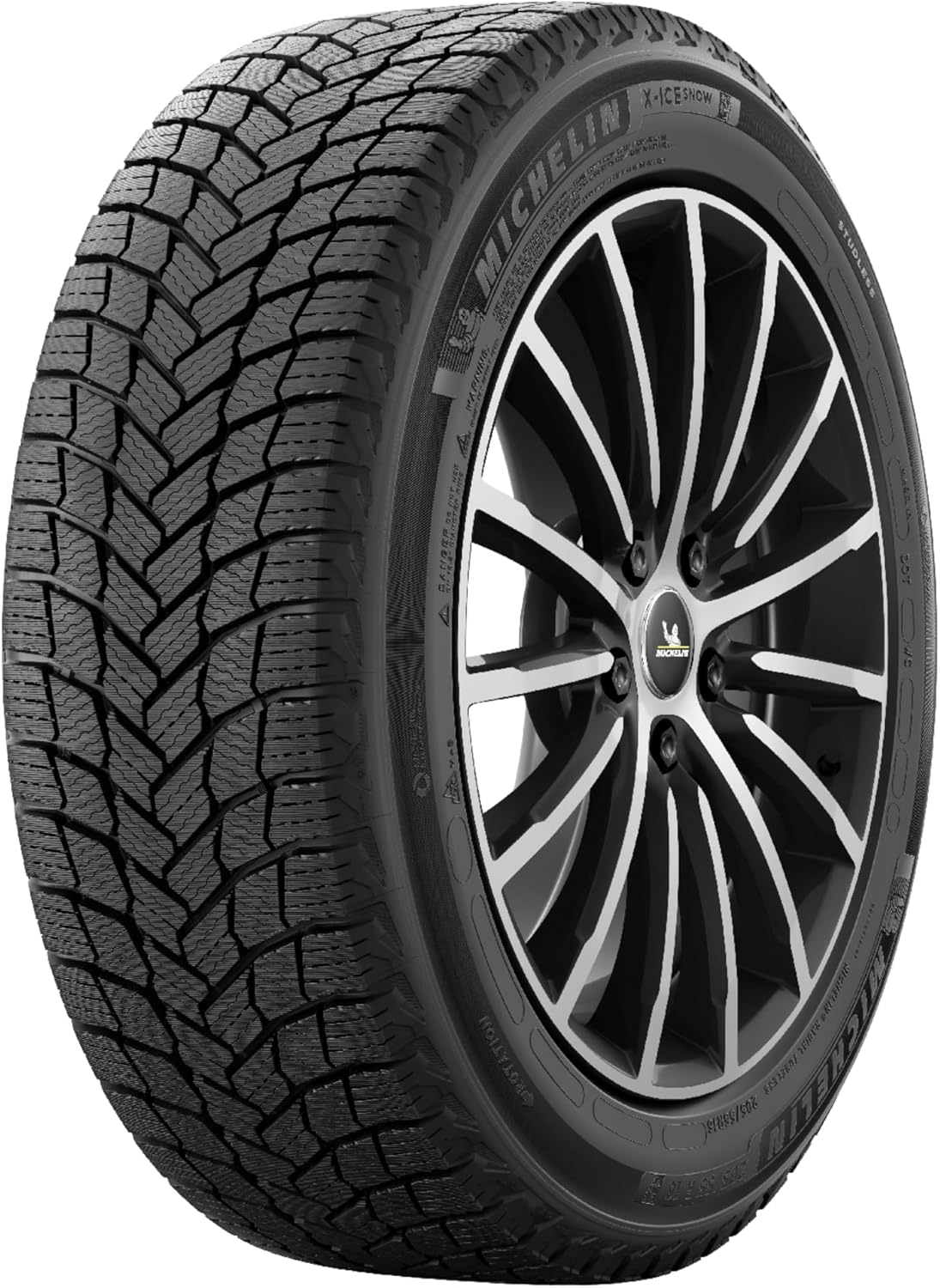
Michelin X-Ice Snow Tires (EV-rated)
EV-specific winter tires with low rolling resistance that recover up to 15 percent of cold-weather range. Mandatory in Quebec, smart everywhere else.
As an Amazon Associate, ThinkEV earns from qualifying purchases — at no extra cost to you.
The Tesla Model Y is the opposite anomaly. Long Range RWD and Long Range AWD sit within a couple of kilometres of each other on EPA range, because Tesla has spent years optimising the front-motor variant to sip when it isn't needed. The premium here, around $8,000, is buying performance and traction, not range. If the buyer wants the range number and doesn't need the second motor, the RWD trim is the sharper purchase.
The Hyundai Ioniq 5 and Kia EV6 lose roughly 40 to 60 km on AWD trims versus their rear-drive equivalents, depending on which trim you spec. The Polestar 4 shows the same pattern: the Single Motor holds the commuter argument on price and range; the Dual Motor wins on performance and worst-case traction. Volvo's 2026 EX30 splits similarly: the Twin Motor variant is a performance and stability play for mountain-road drivers, not a snow-survival tool for people who already carry winter tires.
None of this is hidden in the fine print. It is on every manufacturer's configurator page. The reason it matters is that the range gap compounds over the ownership window: every winter road trip is slightly slower, every DC fast-charge is a few dollars more, every long haul carries a small toll. Amortised over five years and 100,000 km, the efficiency gap outlasts the badge.
Gear worth having
As an Amazon Associate, ThinkEV earns a small commission from qualifying purchases — at no extra cost to you.

AstroAI Portable Tire Inflator
One tap, it inflates to your exact PSI then stops automatically. Low tires cost 5 to 10 percent of your range, so this pays for itself in a week.
As an Amazon Associate, ThinkEV earns from qualifying purchases — at no extra cost to you.
The Canadian Case: Winter Tires Do More Than a Second Motor
The single most consistently ignored fact in EV winter marketing is Transport Canada's position, echoed by every provincial safety authority: the drivetrain matters less than the tire. Winter driving performance in Canada is a tire problem first, a traction-management problem second, and a drivetrain problem a distant third. A single-motor EV on proper winter tires outperforms a dual-motor EV on all-seasons in the overwhelming majority of Canadian winter conditions. The rubber is where the physics happens.
The specific scenario in which AWD earns its keep is narrower than the ads suggest: packed snow or sheet ice at sustained speed, where torque vectoring can save the launch or the merge in a way that single-axle drive with a good tire cannot. On a mountain pass in real winter conditions, the Coquihalla in January, the Trans-Canada through the Rockies, Highway 400 north of Barrie during a whiteout, the second motor is genuinely useful. On the Gardiner in a Toronto slush storm, a good set of Blizzaks on a rear-drive EV will do the job.
Federal rebate math is drivetrain-agnostic. EVAP, the current federal EV purchase program that replaced the retired iZEV framework, applies equally to single-motor and dual-motor trims of the same vehicle up to the $50,000 final-transaction-value cap. Choosing AWD doesn't change your rebate eligibility; it just consumes more of your budget before the rebate applies. That is a $6,000 to $10,000 decision the federal program is not going to soften.
One planning note for buyers looking ahead: the VW ID.Buzz LWB launches in Canada in single-motor rear-drive configuration, with an AWD variant announced for the North American market but Canadian availability and pricing still unconfirmed. If you are cross-shopping the ID.Buzz against a Chrysler Pacifica PHEV or other family hauler, the AWD trim is not a decision you can make in 2026. The same holds one segment down: the Tesla Model 3 Long Range comes standard as dual-motor AWD in Canada, while the Kia EV4 launches primarily as front-wheel drive, so the single-vs-dual choice is made for you at the sedan level, not by you.
Gear worth having
As an Amazon Associate, ThinkEV earns a small commission from qualifying purchases — at no extra cost to you.

Digital Tire Pressure Gauge
Low tires quietly cost 5 to 10 percent of your range. A 10-second check with an accurate digital gauge keeps every kWh on the road.
As an Amazon Associate, ThinkEV earns from qualifying purchases — at no extra cost to you.
When the Premium Pays Off and When It Doesn't
It pays off for the BC Interior driver who runs the Coquihalla twice a month in winter, for the Ontario commuter without covered parking who starts on a frozen driveway five months a year, and for the trailer-towing buyer who wants the launch traction and the peace of mind. It also pays off for the performance shopper who wants the sub-five-second 0 to 100 time and has already accepted the range trade.
It doesn't pay off for the urban commuter, the highway-heavy driver in a mild climate, or the buyer replacing a front-drive or rear-drive ICE without ever having felt a compromise. For those buyers the single-motor trim is not a downgrade, it is the correctly sized product.
The used-market picture is shifting as off-lease dual-motor Model Ys and Ioniq 5s hit inventory through late 2026. The new-car premium of $6,000 to $10,000 compresses to something closer to $3,000 to $5,000 on comparable used stock, which changes the math for a second-owner buyer who wants the traction insurance without paying full sticker. The payoff threshold is roughly 25,000 km a year in a province with genuine winter driving, below that, the single-motor math wins and the buyer who chose AWD will feel it on every long trip until trade-in.
Gear worth having
As an Amazon Associate, ThinkEV earns a small commission from qualifying purchases — at no extra cost to you.

PULIDIKI Car Cleaning Gel (Detailing Putty)
Press it into vents, buttons, and seams and it lifts out dust you did not know was there. Weirdly satisfying, genuinely useful.
As an Amazon Associate, ThinkEV earns from qualifying purchases — at no extra cost to you.

Founder & Chief Editor
Vlad Pereira is the founder and chief editor of ThinkEV.ca, the Canadian electric-vehicle publication he writes and edits from Courtenay, British Columbia. He covers EV pricing, federal and provincial rebates, charging costs, and the Chinese manufacturers now entering Canada, from the buyer's side rather than the press-fleet side. ThinkEV is a venture of Vlad Pereira Online; his writing on health, income and the long game lives at vladpereira.com.
Frequently asked questions
Do winter tires actually outperform AWD on ice?
Which Canadian EVs take the biggest range hit going AWD?
Does dual-motor help when towing a trailer?
Can a single-motor EV handle a Toronto or Vancouver winter?
Does the range penalty from AWD shrink over time?
More EV & road-trip finds
Affordable upgrades worth a look — tap any to check the price on Amazon.
 ★ 4,626
HoogaLife Hanging Car Diffuser (2-Pack)
View on Amazon ★ 12,396
K KNODEL Car Trash Can with Lid
View on Amazon ★ 15,014
Spigen Tempered Glass for Tesla Model 3/Y
View on Amazon ★ 87
★ 87Car Window Sun Shades for Kids (4-Pack)
View on Amazon ★ 68
★ 68WeatherTech FloorLiner for Tesla Model 3
View on Amazon ★ 47,507
HOMEXCEL Microfiber Cloths (12-Pack)
View on Amazon ★ 314
★ 314Mini USB LED Ambient Lamps (4-Pack)
View on Amazon ★ 1,349
Cool Swinging Duck Dashboard Ornament
View on AmazonRead, Plan, Then Stay Current
Explore our expert articles to understand incentives and ownership costs, use the map to pressure-test charging reality, then subscribe so new EV coverage comes straight to you.
Continue Reading

New or Used EV: Which Is the Smarter Buy in 2026?

EV Highway vs City Range: Why They Flip
Buy or Lease an EV in Canada? The 2026 Answer
BYD Shark 6 Price in Canada: $55K–$62K Estimate, Explained
Longest-Range Electric Cars You Can Buy in Canada (2026)