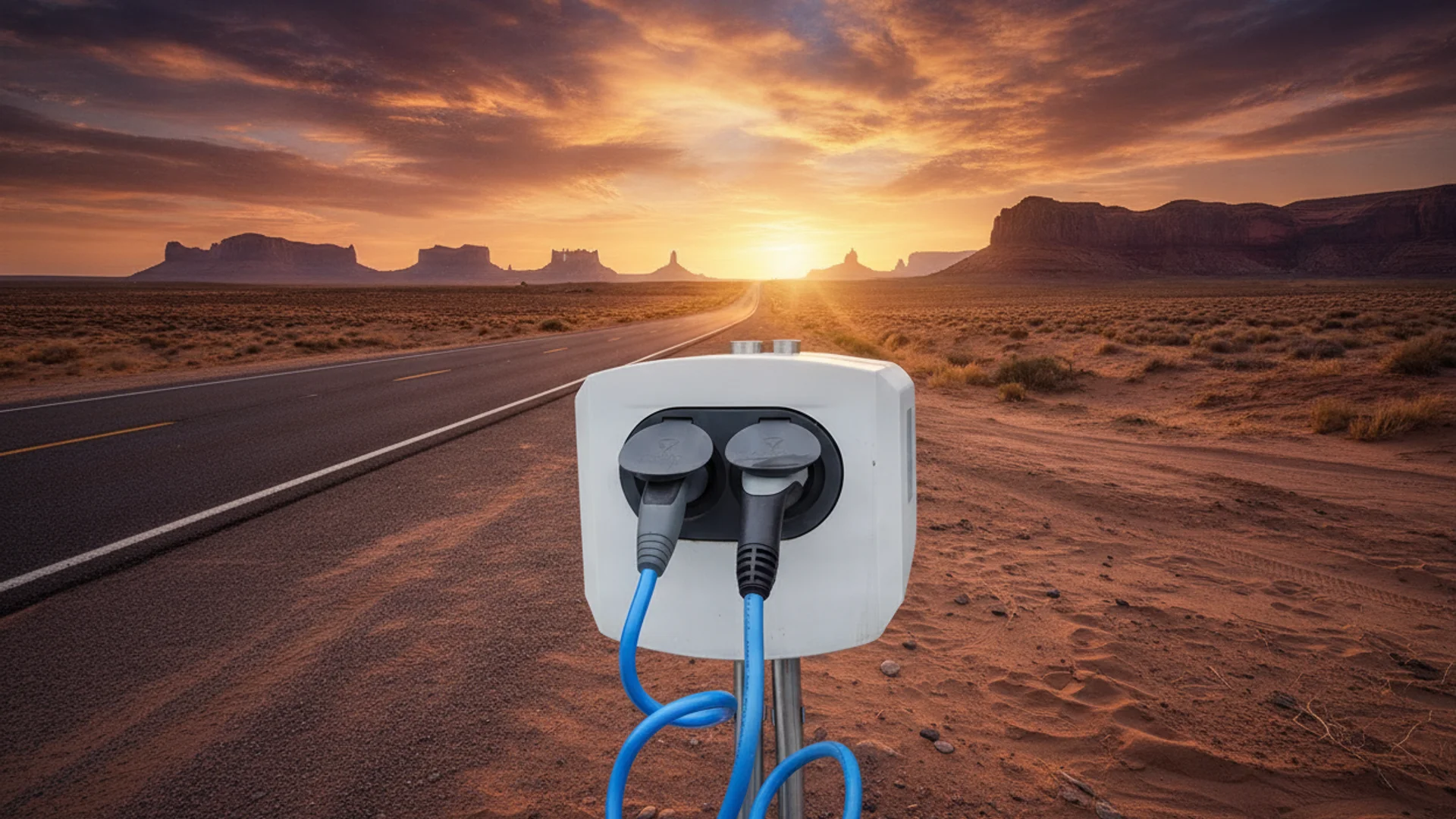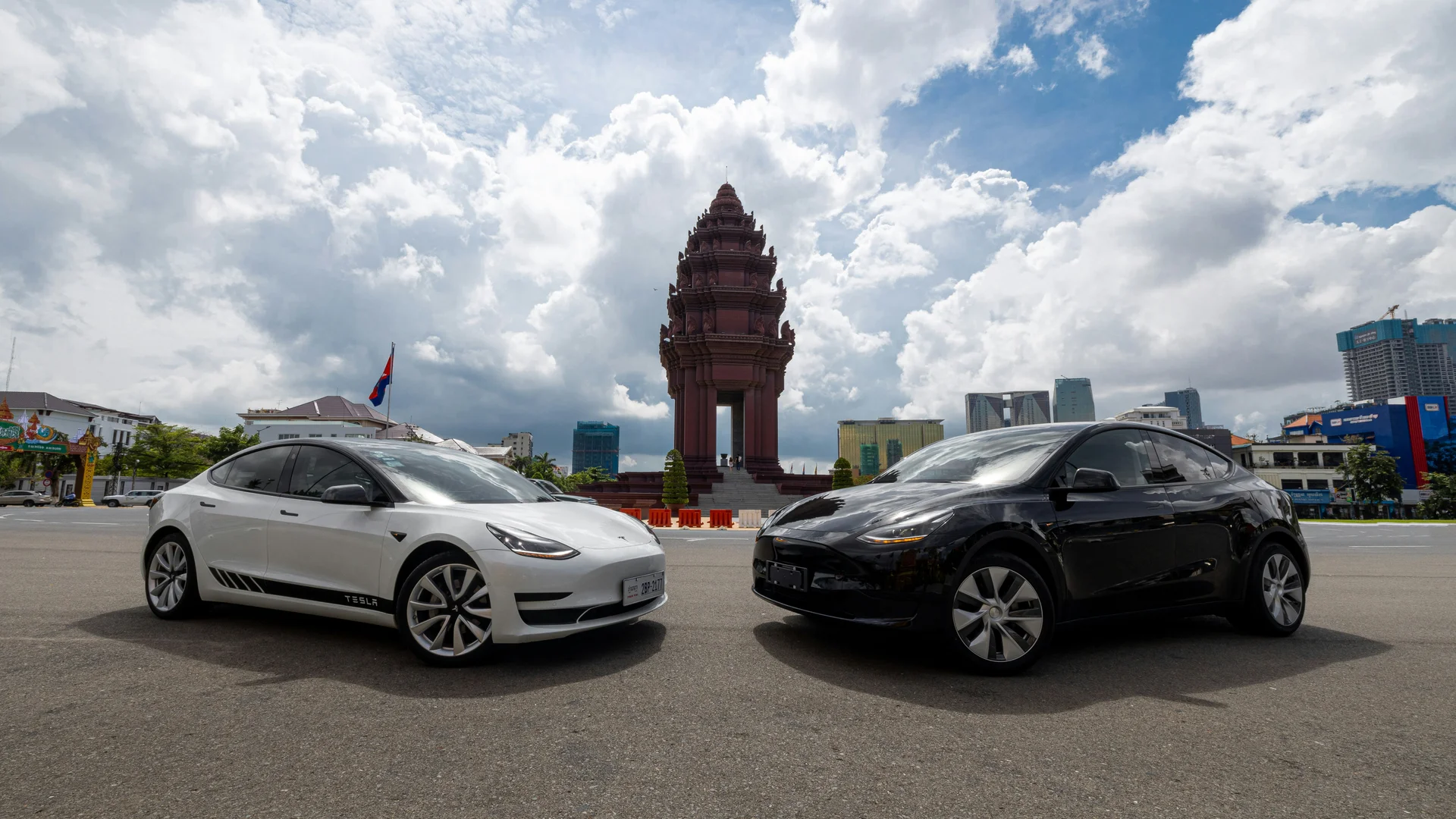
No, NACS standardization isn't a mistake, but the way it's rolling out in Canada absolutely is creating one for buyers who don't know what they're walking into. You just bought a 2024 CCS Hyundai Ioniq 6. Your neighbour plugged their new F-150 Lightning into a Supercharger last week. Same country, different connectors, for now.
Here's the short version: if you charge mostly at home and road-trip a few times a year, the connector debate is mostly noise. A $250 adapter solves it. If you road-trip every other weekend and live anywhere outside the Windsor-Quebec City corridor or BC's Lower Mainland, the connector you pick today shapes your next three years of charging life. The iZEV rebate doesn't care which port you have. The Tesla Supercharger network does.
This guide walks through the actual buyer-side decisions, which 2025–2026 models ship with which port, where your province sits on NACS coverage, what the adapter costs and where it falls down, how rebates apply, and whether to buy now or wait. Stripped of the marketing language, the answer for most Canadians is "buy what fits your life and budget, the adapter market makes the connector less load-bearing than the dealer wants you to believe."
Key takeaways
- A 2024 CCS Ioniq 6 needs a $250 adapter to access Tesla Superchargers your F-150 neighbour uses free.
- The same model year Equinox EV can ship CCS1 or NACS depending on build month, always check the VIN.
- Supercharger network access drove the NACS switch because Electrify Canada's CCS uptime was an embarrassment through 2023.
- Used 2022–2024 CCS inventory is where the value window is opening as dealers discount non-NACS stock.
- Outside the Windsor-Quebec City corridor or BC's Lower Mainland, your connector choice shapes three years of road-trip charging.
What Is NACS and Why Did Canada Suddenly Switch?
NACS stands for North American Charging Standard. It used to be the Tesla connector, full stop, a proprietary plug that Tesla owners used and everyone else watched from across the parking lot. That changed in two steps. Tesla introduced the physical connector design, originally called the Tesla charging connector, with the Model S in 2012, but it wasn't until 2021 that Tesla vehicles began supporting the expanded communications protocol that is specified as part of NACS. In 2022, Tesla opened the standard to other manufacturers, and SAE International formally standardized it in 2023.
Once SAE blessed it as J3400, NACS stopped being a Tesla product. It became a standard any automaker could build to, the same way CCS1 has been the standard most non-Tesla automakers built to since around 2012. Ford was first across the line in 2023, announcing its EVs would adopt NACS. GM, Honda, Nissan, Rivian, Volvo, Polestar, Hyundai, Kia, BMW, Mercedes, every major brand selling EVs in North America followed within roughly twelve months. By 2025, "we're going NACS" stopped being news and started being the default.
Why did it move so fast? Three reasons. The Tesla Supercharger network was, and still is, the single largest, most reliable DC fast-charging network in North America. Access to it was the prize. Tesla offered access in exchange for adopting the connector, and no automaker wanted to be the holdout explaining to customers why their car couldn't use the best charging network. CCS1 stations existed, but reliability had been a public sore point for years, with rural and highway corridors in Canada particularly thin.
The case against this read deserves a clear hearing: CCS1 was already an open standard, backed by the SAE, and had momentum behind it from a broader coalition than Tesla alone. The argument from CCS loyalists in 2023 was that switching to a connector designed and controlled by a single automaker, even one nominally opened to the SAE process, handed Tesla architectural leverage over the entire continent's charging stack. That concern is legitimate. The rebuttal is mostly empirical: CCS1's coalition had a decade to build a reliable, ubiquitous fast-charging network and didn't. Uptime data from Electrify America and Electrify Canada through 2022–2023 was the embarrassment that ended the debate. Tesla's network worked; the alternative didn't. Standards bodies don't win that argument against driver experience.
The second reason: the connector itself is genuinely better hardware. Smaller, lighter, single-handed plug-in, no awkward two-pin DC adapter clipped onto an AC connector. Drivers who have used both prefer NACS at the physical level. The third reason is more boring, once two major automakers commit to a standard, the supplier base reorients, and the rest follow because the parts and the engineering economies are there.
For Canada specifically, the switch is happening on the same timeline as the US, but with a thinner charging network to retrofit. CCS1 dominated public DC fast charging here since roughly 2012, Electrify Canada, FLO, Petro-Canada's coast-to-coast network, BC Hydro, Circuit électrique in Quebec, all CCS1 by default. Those networks now have to either swap heads, add dual-head stations, or rely on adapters at the user level. That work is in progress, not finished. The deeper history of how CCS and NACS arrived at this moment is worth a separate read if you want the engineering and policy backstory.
The short version for a buyer: NACS won. CCS1 isn't dead, it's just transitioning. And the transition is messy.
Which 2025–2026 Cars Come With NACS Built In, and Which Still Use CCS?
This is the single question that determines whether you need an adapter on day one. Here's the current state, by major nameplate available in Canada:
Ships with NACS native (no adapter needed for Superchargers):
- Ford F-150 Lightning (2025+ build dates)
- Ford Mustang Mach-E (2025+ build dates)
- Chevrolet Silverado EV (2025+)
- Chevrolet Equinox EV (2025+)
- Chevrolet Blazer EV (2025+)
- Honda Prologue (2025+ retrofits and 2026 builds)
- Acura ZDX (2025+)
- Rivian R1S and R1T (2025+ builds; earlier ones get retrofit adapters from Rivian)
- Lucid Gravity (NACS-native from launch)
- Nissan's next-gen Leaf and Ariya refresh (2026 model year)
- All Teslas, obviously, they've been NACS since they invented it
Still ships with CCS1 through at least 2025:
- Hyundai Ioniq 5 and Ioniq 6 (NACS retrofit promised for 2025, port change for 2026)
- Kia EV6 and EV9 (same timeline as Hyundai, they share the platform)
- BMW i4, i5, i7, iX (CCS through 2025, NACS announced for 2026)
- Volkswagen ID.4 and ID.Buzz (CCS through 2025)
- Audi Q4 e-tron, Q6 e-tron (CCS through 2025)
- Mercedes EQE, EQS, EQB (CCS through 2025, NACS by 2026)
- Polestar 3 (CCS through 2025)
- Volvo EX30, EX90 (CCS through 2025)
The trap here is that the same nameplate can ship with different connectors depending on build month and trim. A Hyundai Ioniq 5 built in February 2025 versus November 2025 may have different ports. The 2026 Chevy Equinox EV ships NACS-native, while a 2024 model on a dealer lot is CCS1. Always, always, check the spec sheet for the specific VIN, not the model name. The vehicle identification number is the canonical reference for build-specific details, standardized by the International Organization for Standardization in ISO 3779, for connector-spec questions on EVs built during the transition window, the VIN is the only field your dealer cannot fudge.
The named comparison worth running here is Lucid Gravity against Hyundai Ioniq 6. Both target the same buyer, long-range, fast-charging premium sedan/SUV territory. The Gravity ships NACS-native from launch; the Ioniq 6 ships CCS1 with a retrofit pending. On paper they're closer competitors than the marketing suggests. In practice, the Gravity buyer walks into a Supercharger on delivery day; the Ioniq 6 buyer waits for either a dealer retrofit appointment or a $250 adapter to land. Same use case, two different ownership experiences for the first year. That delta is the real cost of being on the wrong side of the transition.
If you're shopping used, assume CCS1 for anything built before mid-2024 unless the seller can show you the port. Used 2022–2024 CCS inventory is exactly where the value window is opening up, dealers know NACS is the new default and are starting to discount CCS stock to move it. The 2027 Chevy Bolt's Canadian spec page is a useful reference point for how GM is positioning its NACS-native lineup at the affordable end.
For buyers cross-shopping the Tesla Model Y against an updated Equinox EV, the connector question is now neutralized, both are NACS, both can use Superchargers natively, the decision comes down to range, price, software, and which dealer experience you can tolerate.
Gear worth having
As an Amazon Associate, ThinkEV earns a small commission from qualifying purchases — at no extra cost to you.

Lectron Level 2 J1772 Charger (40A, WiFi)
Smart WiFi charger with real-time energy monitoring. 40A / 9.6 kW, J1772 with a NEMA 14-50 plug, schedule charging right from your phone.
As an Amazon Associate, ThinkEV earns from qualifying purchases — at no extra cost to you.
Does Your Province Have Enough NACS Chargers Yet?
Short answer: depends on which side of the Manitoba-Ontario border you live on, and whether you ever leave the city.
Tesla's Supercharger network in Canada sits at roughly 100+ stations as of mid-2026, concentrated along the Trans-Canada Highway corridor and the major metropolitan areas, Greater Toronto, the Montreal-Quebec corridor, BC's Lower Mainland and Vancouver Island, and Calgary-Edmonton. Tesla opened most of these to non-Tesla NACS vehicles starting in 2024, with the rollout being gradual rather than flip-the-switch. By early 2026, the vast majority of Canadian Superchargers accept any NACS car.
The non-Tesla networks are still predominantly CCS1 hardware. Electrify Canada runs a few dozen sites in BC, Ontario, and Quebec, all CCS1, with NACS retrofits planned but slow. FLO, the Quebec-based network that covers most of Atlantic Canada and a chunk of Ontario, is CCS1 with NACS pilot sites only. BC Hydro's DCFC network is CCS1. Petro-Canada's coast-to-coast network, which was the original highway charging spine, is CCS1.
What's actually rolling out is dual-head stations, sites with both a CCS1 plug and a NACS plug on the same dispenser. These are appearing at new builds and at higher-traffic existing sites first. Don't assume a station has both unless PlugShare or the network app confirms it.
Coverage by region, as of mid-2026:
- British Columbia: densest NACS coverage outside the Tesla network thanks to BC Hydro's accelerated retrofit programme and Tesla's heavy Lower Mainland and Vancouver Island concentration. Highway 1 to Kamloops is solid. The Sea-to-Sky and Highway 97 corridors are getting there.
- Ontario: strong along the 401 and the Toronto-Ottawa-Montreal triangle. Northern Ontario beyond Sudbury thins out fast. Tesla's Trans-Canada coverage helps.
- Quebec: Circuit électrique is the dominant CCS1 network and is moving slowly on NACS. Montreal and Quebec City have Supercharger sites; outside those, plan ahead.
- Alberta: Calgary-Edmonton corridor is well-served by Superchargers. Mountain Parks (Banff, Jasper) coverage is improving. Rural southern and northern Alberta gaps are real.
- Prairies (Saskatchewan, Manitoba): thinnest NACS coverage in the country. Plan your road trips around Tesla sites in Regina, Saskatoon, and Winnipeg.
- Atlantic Canada: very thin. Halifax and Moncton have Tesla sites; outside the major cities, you're relying on CCS1 with an adapter.
- Territories: essentially zero NACS coverage. CCS1 sites exist in Whitehorse and Yellowknife but the EV road-trip case here is still aspirational.
The counter-argument from the network operators is that this map is a snapshot of a transition, not a steady state, and they're right, technically. The question is whether you buy a car for the map that exists or the map that's promised. Electrify Canada has been promising accelerated NACS retrofits since 2024; FLO has talked about pilot sites for two years. Promised infrastructure timelines in Canadian EV charging have a poor track record of landing on schedule, and any buyer who picks a vehicle based on what a network commits to "by 2027" should price in slippage. The map you can charge from in 2026 is the map that matters for the lease you sign in 2026.
Tesla and EVgo's recent commitment to 1,000 new fast chargers across Canada will reshape this map over the next two years, but for a 2026 buying decision, plan around what exists today, not what's announced.
Gear worth having
As an Amazon Associate, ThinkEV earns a small commission from qualifying purchases — at no extra cost to you.
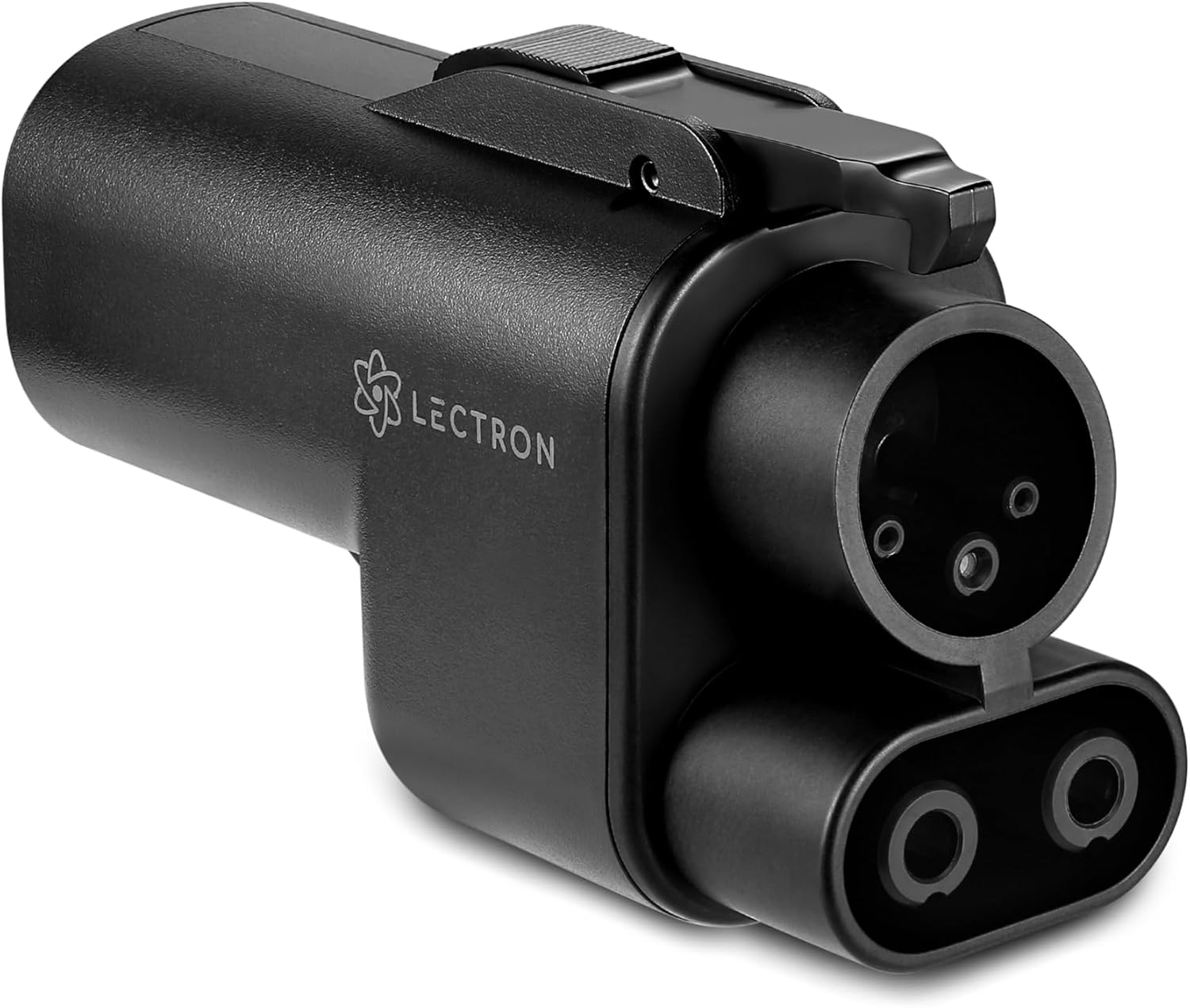
Lectron NACS to CCS Fast-Charge Adapter
Unlock every CCS fast charger for your Tesla, up to 500A DC. Never get stranded at a non-Tesla DC station again.
As an Amazon Associate, ThinkEV earns from qualifying purchases — at no extra cost to you.
CCS Adapter Reality Check: What It Costs and Where It Actually Works
The adapter market is where the connector transition gets practical, and it's where most of the buyer anxiety either gets resolved or gets worse depending on which direction you're adapting.
CCS1 car needs to use a Tesla Supercharger (Magic Dock or adapter path):
Tesla sells an official CCS1-to-NACS adapter, the one that goes into the CCS1 port of your Hyundai or BMW and accepts the NACS plug from the Supercharger. List price is around $250 CAD. It works on most Supercharger sites that have been software-updated for non-Tesla vehicle access. Not every Supercharger site supports it yet; the Tesla app shows which ones do.
The Magic Dock, Tesla's other solution, where the Supercharger plug itself has a built-in CCS adapter and the driver doesn't bring their own, is much rarer in Canada than in the US. Most Canadian Superchargers use the bring-your-own-adapter model rather than the Magic Dock model. The Magic Dock situation for Canadian drivers is worth understanding in detail if you're planning to rely on it.
NACS car needs to use a CCS1 charger (third-party adapters):
Going the other direction, a NACS-native Ford Lightning or Equinox EV trying to plug into a CCS1 Electrify Canada or FLO station, needs a NACS-to-CCS1 adapter. These come from third-party manufacturers (Lectron, A2Z, and a few others) and cost roughly $100–$200 CAD. Quality varies. The cheap ones have a bad reputation for thermal throttling above 150 kW, meaning your "150 kW DC fast charge" turns into 60 kW because the adapter's heating up. Ford and GM have started selling official-spec adapters bundled with new NACS vehicles, accept the bundle, it's cheaper than buying one later.
Where adapters fall down:
High-power sessions are the failure mode. At 50 kW or 100 kW, adapters are fine. At 250 kW or 350 kW, the kind of charging the Hyundai Ioniq 6 or a Lucid Gravity is rated for, the connector tolerances get tight, the thermal headroom shrinks, and cheap adapters either throttle or refuse the session. If you bought a 350 kW-capable EV to road-trip fast, an adapter is a workable Plan B but not a great Plan A.
There's also a safety-engineering wrinkle most adapter reviews skip past. Battery safety for vehicles sold in Canada is governed by international standards including UN R100 and UN R136 that all EVs must meet regardless of country of origin, but adapters sit outside that regulatory envelope. Most third-party NACS-to-CCS adapters are certified to far weaker standards than the connectors they bridge. If one of them fails catastrophically at 350 kW, a thermal runaway in the adapter housing, not the battery, the manufacturer's recourse is a Lectron warranty claim, not a national recall. That asymmetry is why I'd pay the premium for an automaker-bundled unit rather than the $89 Amazon special.
Network-side restrictions are the other adapter trap. Some networks officially "don't support" adapter sessions, meaning if the session fails mid-charge, customer support won't help you. Electrify Canada has been more permissive; FLO's policies have varied by site. Always start a fresh session at a new station before assuming the adapter chain works.
As Driving.ca's coverage put it, the march towards the EV future is filled with hurdles, and over the past year a new stumbling block has been dropped in the path of would-be owners: the adoption of a new charging standard. The read: adapters work for most people most of the time. They're not a permanent solution and they're not seamless, but they do bridge the transition cheaply.
Rebate Math: Does Your Connector Choice Affect What You Get Back?
Good news here, and it's the cleanest part of the whole conversation. No, your connector choice does not affect your rebate eligibility. The iZEV federal rebate, the provincial top-ups, and the home/workplace charger rebates are all connector-agnostic.
iZEV federal rebate: $5,000 on eligible new EVs with MSRP under $55,000 (or $65,000 for higher-trim variants of qualifying base models), administered by Transport Canada through NRCan. The eligibility is based on the vehicle, not the port. A 2026 CCS1 Volkswagen ID.4 and a 2026 NACS Chevy Equinox EV both qualify on the same terms.
Provincial top-ups:
- British Columbia: the BC SCRAP-IT and CleanBC EV rebates stack with iZEV for up to $4,000 extra depending on the programme variant. Connector-agnostic. MSRP caps apply.
- Quebec: Roulez vert offers up to $4,000 in provincial rebate, stacked with iZEV. Connector-agnostic. Quebec also subsidizes home Level 2 charger installation up to $600.
- Ontario: no provincial EV purchase rebate currently. Workplace and public charger rebates exist through provincial programmes but require SAE J1772 or SAE J3400 certified equipment, both NACS and CCS-compatible chargers qualify.
- Prince Edward Island, Newfoundland and Labrador, New Brunswick, Nova Scotia: all have provincial rebate programmes ranging $2,500–$5,000. Connector-agnostic across the board.
- Yukon: $5,000 territorial rebate, connector-agnostic.
Home charger rebates: NRCan's Zero Emission Vehicle Infrastructure Programme (ZEVIP) covers home and workplace Level 2 chargers. The qualifying spec is SAE J1772 or J3400, meaning both CCS-compatible and NACS-compatible Level 2 hardware qualifies. Most home Level 2 chargers today are J1772 (the AC connector, same physical shape as CCS1's AC half) and remain eligible.
Workplace charging rebates: Same ZEVIP funding pool covers workplace installations at 50% up to $5,000 per port. Same J1772 or J3400 eligibility. The employer-side details on how Canadian workplace EV charging programmes interact with the NACS transition are useful to send along if you're trying to convince an HR department to install hardware that won't be obsolete in two years.
The practical takeaway: there is no financial penalty in the rebate stack for buying a CCS1 car today. The only out-of-pocket cost of choosing CCS1 now is the adapter you might buy later, call it $250 worst case. Compared to a $5,000 federal rebate plus province-specific top-ups, $250 is rounding error.
Where the math gets interesting is on the used side. A 2023 or 2024 CCS1 vehicle doesn't qualify for iZEV (used vehicles aren't covered federally), but provincial used-EV programmes in BC, Quebec, and Nova Scotia do offer used-EV rebates, and these are connector-agnostic too. With CCS1 inventory now discounting because dealers know NACS is the new default, the used CCS1 market plus a $250 adapter is one of the better total-cost-of-ownership plays in 2026.
Gear worth having
As an Amazon Associate, ThinkEV earns a small commission from qualifying purchases — at no extra cost to you.

Grizzl-E Classic Level 2 EV Charger (40A)
Canadian-made and rated for minus 40C winters. 40A / 9.6 kW, NEMA 14-50, indoor/outdoor, 24-ft cable. The charger built for Canadian weather.
As an Amazon Associate, ThinkEV earns from qualifying purchases — at no extra cost to you.
Should You Buy CCS Now, Wait for NACS, or Not Worry About It?
Buy / Wait / Skip, here's the call.
BUY a CCS1 car now if: you're shopping the used market and finding a 2022–2024 model at a real discount, you charge mostly at home, and your road trips are occasional rather than weekly. The used CCS1 discount window in 2026 is genuinely good, dealers are clearing inventory ahead of the NACS-native model years. A $250 adapter handles the Supercharger gap. You're not making a mistake.
WAIT for NACS-native if: you road-trip regularly, you live outside the major metro areas, you want a 2026 or 2027 vehicle anyway, and you're prepared to spend in the $50K+ range new. The NACS-native vehicle plus open Supercharger access is the seamless experience. No adapter, no questions about whether this site supports your car, no thermal throttling on long fast-charge sessions. If you're already going to spend $60,000 on a new EV, paying for the model year that ships NACS-native is a small premium for a meaningfully better road-trip life.
SKIP the connector anxiety if: you charge at home, your daily round trip is under 200 km, and you only road-trip a few times a year. The connector debate is mostly noise for your use case. Buy the car that fits your budget, your space, and your aesthetic preferences. Worst case, you spend $250 on an adapter once in three years. The bigger decisions, battery size, real-world range, software experience, dealer reliability, matter more than the port.
The trigger that would flip the call: if Tesla's Supercharger network access for non-Tesla NACS vehicles gets restricted (a pricing change, a capacity-management policy that throttles non-Tesla sessions, a dealer-only-access model from some automaker), the value of NACS-native shrinks. Watch for any signal that Supercharger access is becoming conditional rather than open. That hasn't happened yet, and there's no public indication it will, but it's the one shift that would change the math.
What I'd bet on, with stakes attached: by late 2027, the connector question disappears entirely. Every new EV sold in Canada will be NACS-native, the major CCS1 networks will have completed retrofits or dual-head conversions, and the residual adapter market will exist for owners of pre-2024 used vehicles. The transition pain is real but compressed, roughly an 18-month window between now and "this is no longer a topic." What would change my mind: a regulatory move from a major province (most likely Quebec, through Roulez vert eligibility rules) that explicitly favours one connector over the other, or a Tesla pricing decision that turns Supercharger access into a tiered subscription. Either signal would extend the messy phase by two years and would flip my "buy CCS1 used and adapt" recommendation. Absent those signals, the 18-month read holds.
Gear worth having
As an Amazon Associate, ThinkEV earns a small commission from qualifying purchases — at no extra cost to you.

Tesla Key Card Holder with AirTag Slot
Stop fishing the keycard out of your wallet, and slot an AirTag in case the car wanders off in a lot.
As an Amazon Associate, ThinkEV earns from qualifying purchases — at no extra cost to you.
FAQ: Quick Answers for Canadian EV Buyers
NACS Is The Right Call, The Transition Is The Messy Part
NACS standardization is the right call for Canada's EV future, better connector, better network access, cleaner driver experience. The transition is the messy part, and 2026 is the messy year. If you're buying a new car in the $50K+ range and you road-trip frequently, wait for the NACS-native model year. If you're shopping used or charging mostly at home, buy what you like and budget $250 for an adapter you may or may not ever need.
What I'd watch over the next twelve months: whether non-Tesla networks accelerate their NACS retrofits, whether Hyundai-Kia's retrofit programme actually delivers on schedule, and whether the cheap third-party adapter market gets a quality shake-out (a few bad batches melting under 350 kW sessions would tighten the regulatory screws fast). If Petro-Canada announces a Trans-Canada NACS conversion timeline, that's the signal the transition is genuinely finishing.
Buy the car that fits your life. The connector follows.
Gear worth having
As an Amazon Associate, ThinkEV earns a small commission from qualifying purchases — at no extra cost to you.
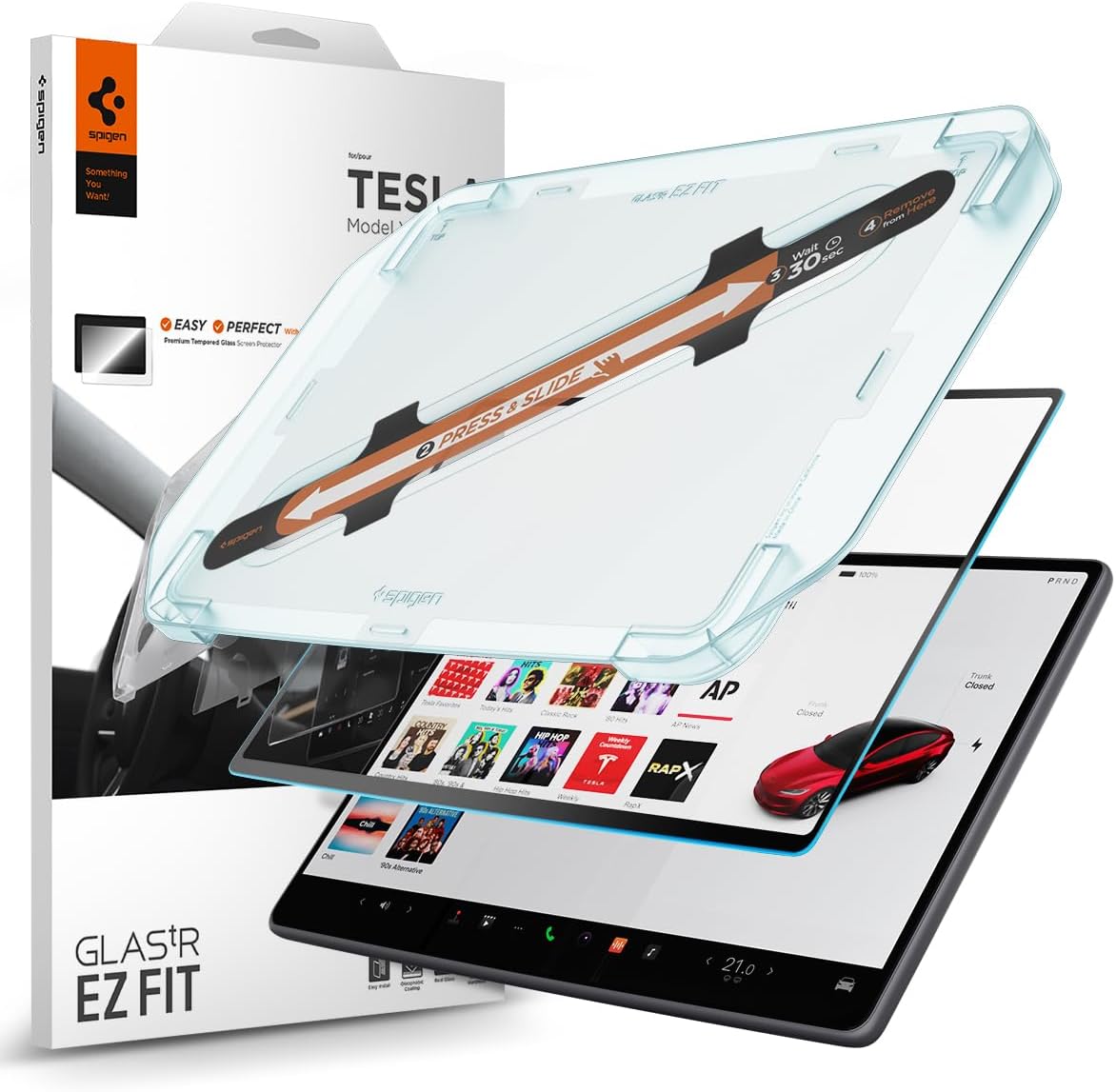
Spigen Tempered Glass for Tesla Model 3/Y
Tempered-glass protection for the touchscreen that kills fingerprints and scratches. Two minutes to install, lasts the life of the car.
As an Amazon Associate, ThinkEV earns from qualifying purchases — at no extra cost to you.

Founder & Chief Editor
Vlad Pereira is the founder and chief editor of ThinkEV.ca, the Canadian electric-vehicle publication he writes and edits from Courtenay, British Columbia. He covers EV pricing, federal and provincial rebates, charging costs, and the Chinese manufacturers now entering Canada, from the buyer's side rather than the press-fleet side. ThinkEV is a venture of Vlad Pereira Online; his writing on health, income and the long game lives at vladpereira.com.
Frequently asked questions
Will my CCS adapter still work at Superchargers in five years?
Does the EVAP rebate apply to both NACS and CCS vehicles?
Is a used 2023 CCS vehicle actually a bad buy right now?
Which provinces have the weakest NACS fast-charging coverage today?
Can I get a Supercharger adapter directly from my automaker or only aftermarket?
More EV & road-trip finds
Affordable upgrades worth a look — tap any to check the price on Amazon.
 ★ 164
★ 164Solar-Powered LED Ambient Light
View on Amazon ★ 568
★ 568Personalized Photo and Text Keychain
View on Amazon ★ 21,304
Car Headrest Hooks (4-Pack)
View on Amazon ★ 1,866
70mai A810 4K Dual Dash Cam
View on Amazon ★ 121
★ 121Foldable Windshield Sun Umbrella
View on Amazon ★ 268
★ 268Anti-Slip Leather Steering Wheel Cover
View on Amazon ★ 96,686
PULIDIKI Car Cleaning Gel (Detailing Putty)
View on Amazon ★ 419
★ 419RGB Car Interior LED Strip Light
View on AmazonRead, Plan, Then Stay Current
Explore our expert articles to understand incentives and ownership costs, use the map to pressure-test charging reality, then subscribe so new EV coverage comes straight to you.
Continue Reading
First-Time EV Buyer Mistakes Worth Avoiding in Canada
How to Test-Drive an EV: What Gas-Car Buyers Miss
EV Charging Connectors Explained: NACS, CCS, and J1772
Federal EV Rebate Canada 2026: EVAP Pays $5,000

BYD Dolphin Canada: Price, Specs & 2026 Launch Date