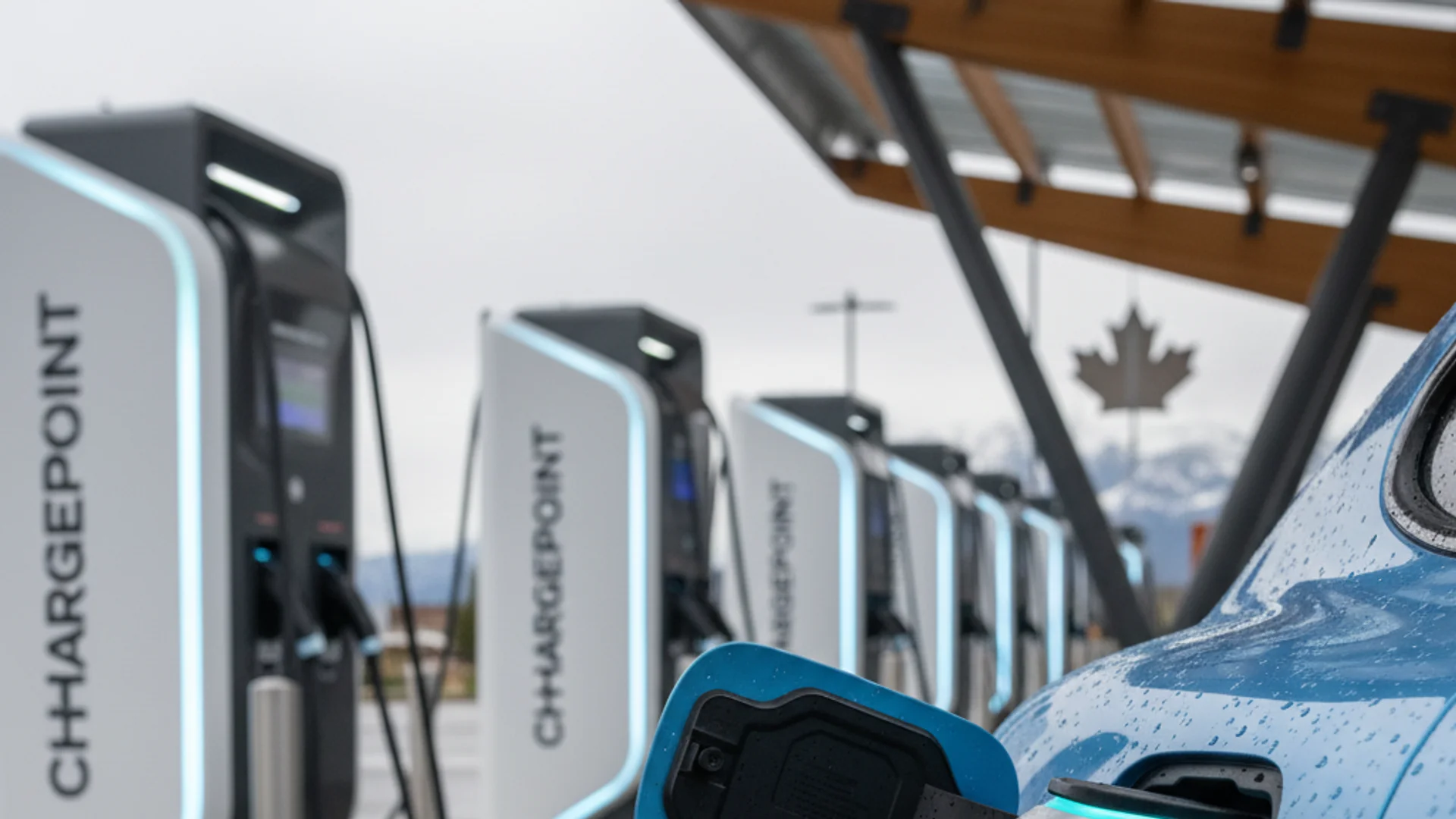
China's ¥69,800 starting price for the BYD Seagull converts to roughly $13,400 CAD at current rates, before a single regulatory layer touches it. That number is the cleanest input to any Canadian price model, and it is also the number every speculative headline ignores.
The Canadian retail figure is not a marketing decision. It is the output of a stack: CIF value, the 6.1% within-quota duty introduced January 16, 2026, federal and provincial sales taxes, Transport Canada compliance, dealer margin, and the quota-exhaustion cliff that resets the duty to 100%. Each layer is documented in Finance Canada's tariff schedule and Transport Canada's vehicle import framework. None of them is negotiable at the dealer level.
The realistic Canadian price band for the Seagull sits between $21,000 and $25,000 CAD within quota, and the policy lever that determines whether it stays there is not the tariff rate. It is the size of the quota and the order of brands clearing customs. The analysis below walks the math, jurisdiction by jurisdiction, and identifies the two variables editorial readers should actually watch.
Key takeaways
- Canada's 49,000-unit annual quota, not the 6.1% tariff rate, is the binding constraint on Seagull pricing.
- The realistic Canadian retail band is $21,000–$25,000 CAD for the standard battery, within quota.
- EVAP's FTA-origin requirement excludes the Seagull from the $5,000 federal rebate, regardless of its price.
- Australia's 63–64% markup model over Chinese MSRP is the most reliable proxy for projecting Canadian landed cost.
- Transport Canada cold-weather validation adds regulatory delay BYD hasn't yet put a timeline on.
The Tariff Math: What the 6.1% Quota Rate Actually Adds
Canada's tariff regime on Chinese-built EVs changed structurally on January 16, 2026. The previous 100% surtax, imposed October 2024 as a defensive measure against state-subsidised Chinese EV exports, was replaced by a 6.1% Most-Favoured-Nation rate, but only within an annual 49,000-unit quota. Import permit applications opened March 1, 2026, and the 100% surtax is replaced by a 6.1% tariff for vehicles within the 49,000 annual quota. Above the quota, the 100% rate snaps back. There is no third tier.
For the Seagull, the within-quota duty math is small in absolute terms. On a CIF value of roughly $13,400 CAD, 6.1% adds approximately $820. That is a rounding error against the rest of the price stack, which is precisely why the tariff rate is the wrong variable to focus on. The quota is the load-bearing policy instrument; the rate is decorative within it.
Finance Canada has not yet published the quota allocation mechanism. The working assumption, confirmed by multiple trade-policy analysts but not by Ottawa directly, is first-to-clear-customs. That means BYD competes with every other Chinese-built EV brand for the same 49,000 slots: NIO, XPeng, Geely, Zeekr, Chery, and the Tesla Model 3 Highland units built at Shanghai Gigafactory all draw against the same cap.
The composition matters because BYD's second wave for Canada is scheduled for 2027 and includes the Seal U mid-size SUV alongside the Seagull, which requires Transport Canada cold-weather validation before launch. By the time the Seagull lands, the quota has already absorbed two years of demand from earlier-arriving brands. The Atto 3 and Seal, BYD's first-wave Canadian models, will themselves consume a portion of the cap.
The implication, stated plainly: the 6.1% rate is the marketing-friendly number. The 49,000 ceiling is the binding constraint. Any price analysis that anchors on the rate without modelling the quota is incomplete.
Building the Price Band: Landed Cost Layer by Layer
The Canadian landed cost decomposes into four predictable layers and one variable one. The predictable layers are CIF value, import duty, federal and provincial sales tax (13% HST in Ontario as the modelling benchmark), and Transport Canada compliance certification. The variable layer is dealer margin, and BYD has no Canadian dealer network yet, which means the margin is a forecast, not a quote.
The most useful international benchmark is Australia. BYD's Australian retail prices apply a model-specific markup over Chinese MSRP, converted at roughly 1 AUD ≈ 1.040 CAD as of April 2026. The Seagull and Atto 3 both sit closer to a 63–64 percent margin over Chinese base price, while the Dolphin lands at roughly 43 percent and the Seal at 27 percent, differences that reflect segment positioning, shipping costs, and local spec upgrades.
Applying Australia's 63–64% structural margin to the Seagull's Chinese base, approximately ¥69,800 (roughly $13,000–$14,000 CAD), with the higher-spec larger-battery variant topping out around ¥99,800 (about $18,500–$19,500 CAD), yields a pre-tax landed estimate of $21,200 to $32,000 CAD. That ceiling is the headline-grabbing number. The realistic floor is what matters for buyers.
Even after shipping costs, Canadian compliance testing, dealer margins, and the 6.1% MFN tariff that now applies to Chinese-built EVs under Canada's 2026 import framework, the Seagull would still likely land somewhere in the $22,000 to $28,000 CAD range. The narrower analytical band, derived from the Australian markup methodology applied to Canadian tax and tariff layers, sits at $21,000 to $25,000 for the standard battery configuration.
Three caveats apply to that band. First, it assumes within-quota landing; over-quota units would face the 100% surtax and price out of the segment entirely. Second, it assumes BYD does not absorb margin to undercut the segment for market-entry purposes, a strategy the company has used in Mexico and Brazil but not yet signalled for Canada. Third, the band excludes the federal EVAP rebate, which the Seagull does not qualify for under current rules. The next section explains why.
Gear worth having
As an Amazon Associate, ThinkEV earns a small commission from qualifying purchases — at no extra cost to you.

WeatherTech FloorLiner for Tesla Model 3
Deep-channel liners that trap every drop of slush and salt. The difference between a ruined interior and a showroom-fresh cabin after a Canadian winter.
As an Amazon Associate, ThinkEV earns from qualifying purchases — at no extra cost to you.
EVAP Eligibility: Does the Seagull Qualify for the $5,000 Federal Rebate?
The Electric Vehicle Affordability Program, Canada's replacement for the now-suspended iZEV, launched February 16, 2026. EVAP offers up to $5,000 in federal rebates on eligible new electric vehicles, structured to favour lower-priced models. The Seagull's projected $21,000–$25,000 retail band sits comfortably within EVAP's MSRP cap.
The Seagull fails eligibility on a different axis: origin. EVAP's published eligibility criteria require either Canadian final assembly or import from a Free Trade Agreement partner. China is not a CUSMA signatory and has no bilateral trade agreement with Canada that confers FTA-equivalent status for vehicle imports. The Seagull is built at BYD's Xi'an plant. Under the framework as written, it is excluded from rebate eligibility regardless of price.
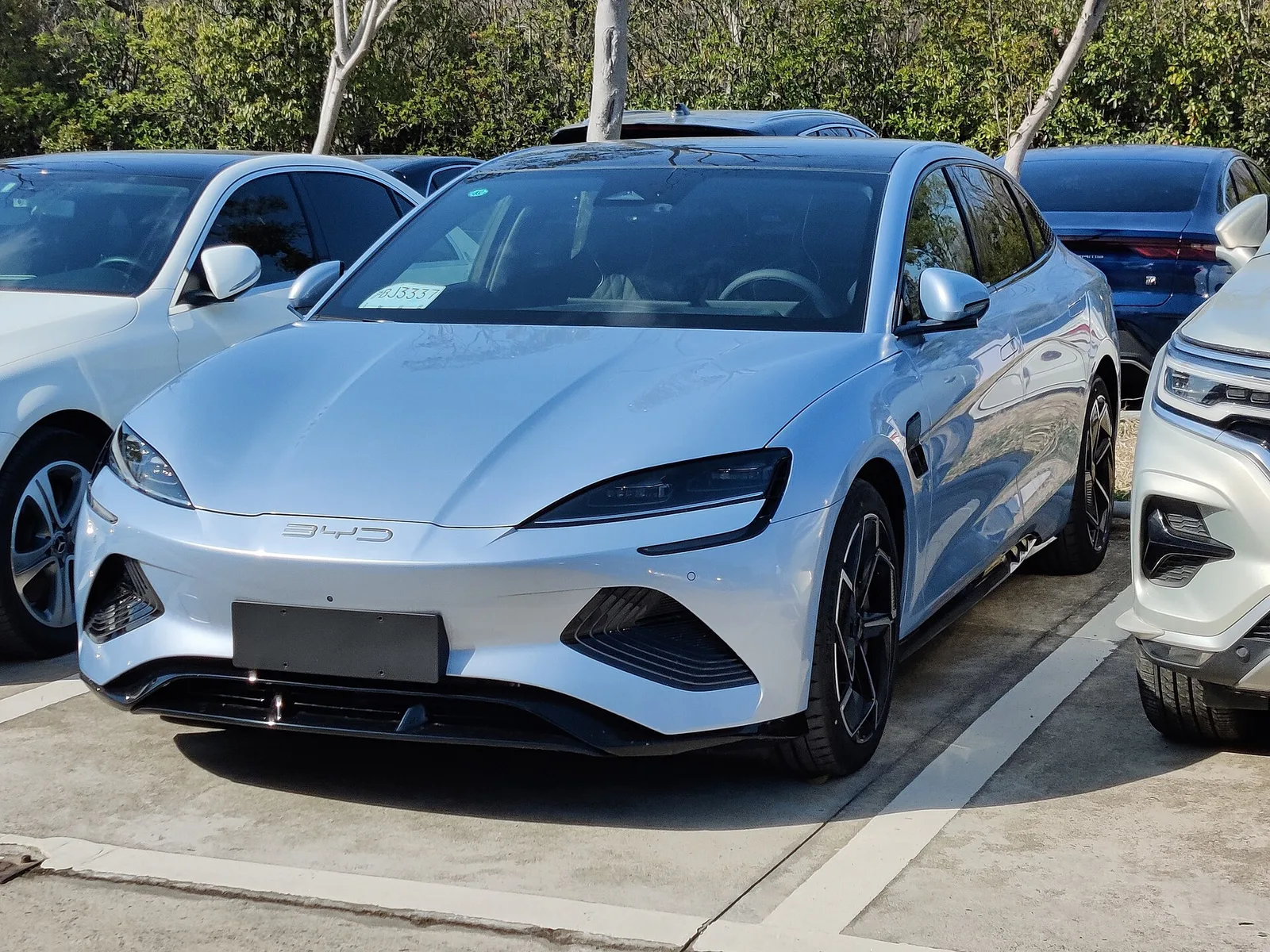
This is the same exclusion that affects the entire BYD Canadian lineup, including the BYD Shark PHEV pickup and the BYD Seal sedan that would otherwise compete directly against the Tesla Model 3. The exclusion is structural, not Seagull-specific.
A second prerequisite compounds the issue. The Seagull requires Transport Canada cold-weather validation before it can be sold in Canada. Cold-weather certification is a non-trivial regulatory process, it involves thermal management testing, battery performance benchmarking at -30°C and below, and HVAC validation. BYD has not published a certification timeline for the Seagull. The Atto 3 received certification first because it had Australian and European cold-climate data to leverage; the Seagull's compact LFP-only battery has thinner cold-climate documentation.
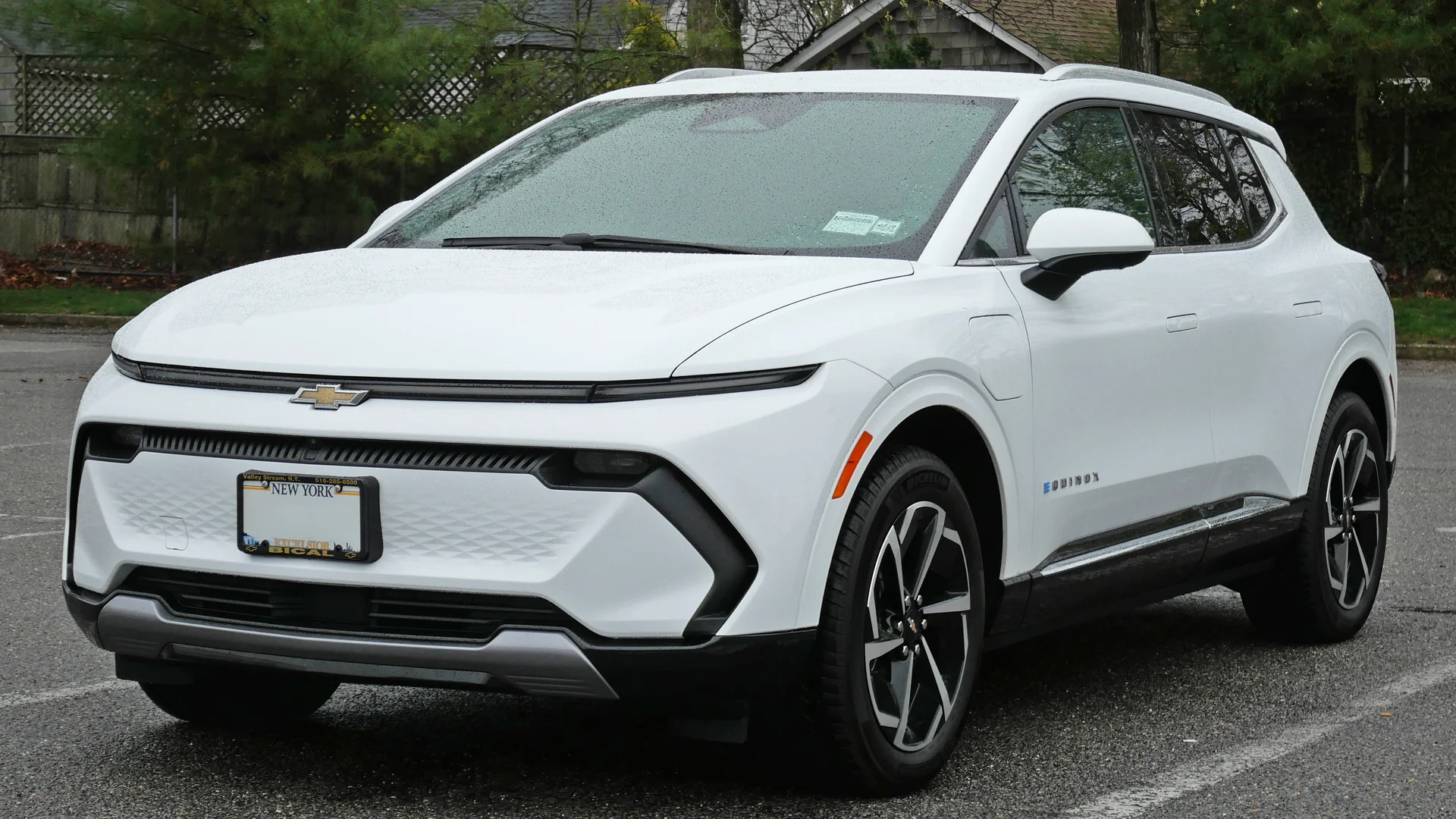
The net result: no federal rebate offsets the price band. A Canadian buyer comparing the Seagull to a Chevy Equinox EV at $44,995 CAD sees a roughly $20,000 nominal gap, but the Equinox's $5,000 EVAP rebate narrows the practical gap to $15,000. The Seagull's price advantage is real, and it is also smaller than the sticker math suggests.
Multi-Jurisdiction Comparison: What the Same Car Costs Elsewhere
The Seagull's pricing across markets is the cleanest dataset available for projecting Canadian retail, because the vehicle itself is identical and only the regulatory layers vary. The Seagull starts at approximately ¥78,000 (around $14,000 CAD at current exchange rates) in China, and BYD has expanded the model to Mexico, Latin America, and parts of Asia, with European markets expected in 2026.
The European entry is the most policy-instructive comparison. The EU imposed countervailing duties on Chinese-built EVs in October 2024, with BYD facing a 17.0% rate on top of the standard 10% MFN duty, a 27% effective rate. The Seagull's European pricing, when it launches, will reflect that stack on a smaller base price. Analyst projections place it in the €18,000–€22,000 range, comparable on a tariff-adjusted basis to Canada's within-quota math.
Gear worth having
As an Amazon Associate, ThinkEV earns a small commission from qualifying purchases — at no extra cost to you.

Lectron Level 2 J1772 Charger (40A, WiFi)
Smart WiFi charger with real-time energy monitoring. 40A / 9.6 kW, J1772 with a NEMA 14-50 plug, schedule charging right from your phone.
As an Amazon Associate, ThinkEV earns from qualifying purchases — at no extra cost to you.
Australia's regime is the closest functional analog to Canada's within-quota tier. There is no Chinese-EV-specific surcharge; the standard 5% import duty applies. The Seagull is not yet sold there, but BYD's existing model markups suggest an AUD $23,000–$26,000 launch band, roughly $23,900–$27,000 CAD. That convergence, Australia and Canada landing in similar absolute price bands despite different tariff structures, is not coincidence. It reflects the dominant cost driver: dealer margin and compliance, not tariff arithmetic.
Mexico and Brazil tell the opposite story. BYD's Mexican Seagull pricing sits near $20,000 USD because the company has manufacturing partnerships that partially offset import exposure. Brazil's Camaçari plant, scheduled to begin full production in 2026, will eventually eliminate import tariffs on Brazilian-market BYDs entirely. Local production is the only durable mechanism for breaking the tariff stack. Canada has no such pathway on the table.
The cross-jurisdiction read: countries with FTA pathways or local production land Seagulls below $20,000 CAD-equivalent. Countries without, including Canada and the EU, land them at $22,000 and up. Canada's quota mechanism makes that floor conditional, not guaranteed.
Gear worth having
As an Amazon Associate, ThinkEV earns a small commission from qualifying purchases — at no extra cost to you.

Grizzl-E Classic Level 2 EV Charger (40A)
Canadian-made and rated for minus 40C winters. 40A / 9.6 kW, NEMA 14-50, indoor/outdoor, 24-ft cable. The charger built for Canadian weather.
As an Amazon Associate, ThinkEV earns from qualifying purchases — at no extra cost to you.
Quota Risk: The 49,000-Unit Cap and What It Means for Supply
The 49,000-unit quota is the single most underanalysed variable in Canadian Chinese-EV pricing. Public commentary has treated it as administrative housekeeping. It is not.
Canada imported roughly 18,000 Chinese-origin EVs across all brands in 2024, before the 100% surtax effectively froze the trade. The 2026 quota of 49,000 represents a notional 2.7× expansion over the last unfrozen year, meaningful, but not large given pent-up demand. BYD's first-wave Canadian models, the Atto 3 and Seal, are projected to consume a material share of available quota before the Seagull launches.
BYD addressed some Australian market concerns with a 2026 Atto 3 EVO variant, featuring an 800-volt architecture, 74.8 kWh battery, 220 kW DC fast charging, and an all-wheel-drive option producing 330 kW. That same upgraded Atto 3 is the lead Canadian model. It will not be cheap, but it will be in demand, and every Atto 3 unit clearing customs draws against the same 49,000 cap the Seagull eventually competes for.
The structural risk is mid-year quota exhaustion. If the 2026 cap fills before December 31, additional units face the 100% surtax. A Seagull whose within-quota price is $23,000 would, over-quota, theoretically land near $36,000, pricing it out of the segment entirely. BYD's logical response would be to halt shipments until the next calendar year opens, creating supply gaps rather than price cliffs.
Finance Canada's quota allocation mechanism remains unpublished. Three possible structures circulate among trade policy analysts: first-to-clear customs (simplest, current working assumption), brand allocation (politically harder), and auction-based allocation (Treasury-preferred but administratively heavy). Each produces different price dynamics. The annual review process, Ottawa is expected to revisit the quota size for 2027, is the only mechanism that genuinely changes the picture.
For broader context on the regulatory map, Canada's Chinese-EV import framework and the realistic timeline covers the certification and tariff dependencies in more granular detail.
Realistic Canadian Price Band and What Moves It
Synthesising the layers above, the defensible Canadian price band for the BYD Seagull is $21,000 to $25,000 CAD for the standard-battery configuration, contingent on within-quota landing, standard dealer margin, and no EVAP rebate offset. The higher-spec larger-battery variant adds roughly $4,000–$5,000 CAD, landing at $25,000–$30,000.
Three scenarios move the band:
- Upside risk (price rises): Quota exhausts mid-cycle, forcing over-quota imports to the 100% surtax. Theoretical ceiling moves above $35,000 CAD, but BYD is more likely to halt shipments than to retail at that level. The practical upside risk is supply scarcity rather than price escalation.
- Downside scenario (price falls): BYD establishes Canadian assembly capacity or a CUSMA-eligible production partnership. Neither is on the table for 2026 or 2027. The Brazil Camaçari model is the precedent, but the Canadian regulatory and labour-cost environment does not yet support a similar investment case.
- Neutral path: BYD prices the Seagull at the band's midpoint to establish market presence, absorbing some margin to undercut the cheapest EVs under $50K in Canada's current 2026 ranking. At $22,000 retail, the Seagull would land roughly $23,000 below the segment's current floor.
For comparison, the cheapest currently available new EVs in Canada, the Chevy Equinox EV at $44,995 and the Tesla Model Y Standard Range RWD at $49,990, sit in a different segment entirely. The Seagull does not compete with them; it opens a sub-$25,000 EV category that does not currently exist in the Canadian market.
The structural question is whether that new segment is large enough to justify the regulatory and certification cost. BYD's calculus depends on quota allocation. Without quota visibility, the company cannot commit to volume, and without volume, it cannot commit to a retail price.
Gear worth having
As an Amazon Associate, ThinkEV earns a small commission from qualifying purchases — at no extra cost to you.

PULIDIKI Car Cleaning Gel (Detailing Putty)
Press it into vents, buttons, and seams and it lifts out dust you did not know was there. Weirdly satisfying, genuinely useful.
As an Amazon Associate, ThinkEV earns from qualifying purchases — at no extra cost to you.
The Number, the Conditions, and What Moves It
The realistic Canadian retail price for the BYD Seagull is $21,000 to $25,000 CAD for the standard configuration, assuming within-quota landing and standard margin. That number is bounded by Finance Canada's tariff schedule and Transport Canada's certification framework, not by BYD's marketing strategy.
The policy lever that matters most is quota size, not tariff rate. The 6.1% within-quota duty is already low; the 49,000-unit cap is the binding constraint that determines whether the Seagull ships in volume or in trickles. Ottawa's annual quota review, and the question of whether the 2027 cap rises, holds, or falls, is the variable to watch.
Two secondary conditions remain unresolved. Transport Canada cold-weather validation has not been completed for the Seagull, and EVAP eligibility remains blocked by the FTA-origin requirement. As of February 2026, BYD had not confirmed official Canadian launch dates or pricing for the Seagull, a position the company has maintained through subsequent quarters. A previous round of reporting on BYD executive statements was partially based on inaccurate information from an imposter X account, and the executive statements attributed to Stella Li, the specific vehicle launch phases, and a $25,000 Seagull pricing claim were entirely fabricated. The fabrication episode reinforces why projection methodology, not press-release scraping, is the only defensible path to a Canadian price estimate.
Until Transport Canada certification clears and Finance Canada publishes the quota allocation mechanism, no Seagull price is binding. The band above is the analytical floor; everything else is sales theatre.
The Seagull will likely retail in Canada between $21,000 and $25,000 CAD when it arrives, probably in 2027. Watch the quota, not the tariff rate. That is where the price either holds or collapses.
Gear worth having
As an Amazon Associate, ThinkEV earns a small commission from qualifying purchases — at no extra cost to you.

WixGear Magnetic Air Vent Phone Mount (2-Pack)
A magnet strong enough that your phone never flinches over potholes or rail crossings. Two in the box, one for each car.
As an Amazon Associate, ThinkEV earns from qualifying purchases — at no extra cost to you.

Founder & Chief Editor
Vlad Pereira is the founder and chief editor of ThinkEV.ca, the Canadian electric-vehicle publication he writes and edits from Courtenay, British Columbia. He covers EV pricing, federal and provincial rebates, charging costs, and the Chinese manufacturers now entering Canada, from the buyer's side rather than the press-fleet side. ThinkEV is a venture of Vlad Pereira Online; his writing on health, income and the long game lives at vladpereira.com.
Frequently asked questions
Will the Seagull qualify for provincial EV rebates even without EVAP?
What happens to the price if BYD misses the quota window?
Does Transport Canada cold-weather certification have a typical timeline?
Could BYD price the Seagull below cost to capture Canadian market share?
Which competing EV sits closest to the Seagull's realistic price band?
More EV & road-trip finds
Affordable upgrades worth a look — tap any to check the price on Amazon.
 ★ 17,839
Qifutan Vent Phone Mount (Military-Grade Clip)
View on Amazon ★ 12,051
Windex Electronics Screen Wipes
View on Amazon ★ 164
★ 164Solar-Powered LED Ambient Light
View on Amazon ★ 1,349
Cool Swinging Duck Dashboard Ornament
View on Amazon ★ 865
★ 865Collapsible Trunk Organizer
View on Amazon ★ 21,310
Magnetic Car Phone Mount
View on Amazon ★ 121
★ 121Foldable Windshield Sun Umbrella
View on Amazon ★ 268
★ 268Anti-Slip Leather Steering Wheel Cover
View on AmazonRead, Plan, Then Stay Current
Explore our expert articles to understand incentives and ownership costs, use the map to pressure-test charging reality, then subscribe so new EV coverage comes straight to you.
Continue Reading
First-Time EV Buyer Mistakes Worth Avoiding in Canada
BYD Seagull Canada: Real Price, Real Specs, Real Wait
BYD Seagull Go vs Hyundai Kona EV: The Spec Sheet
Best GM EVs in Canada for Budget Families 2026
BYD Seal Price in Canada: Policy, Not Engineering