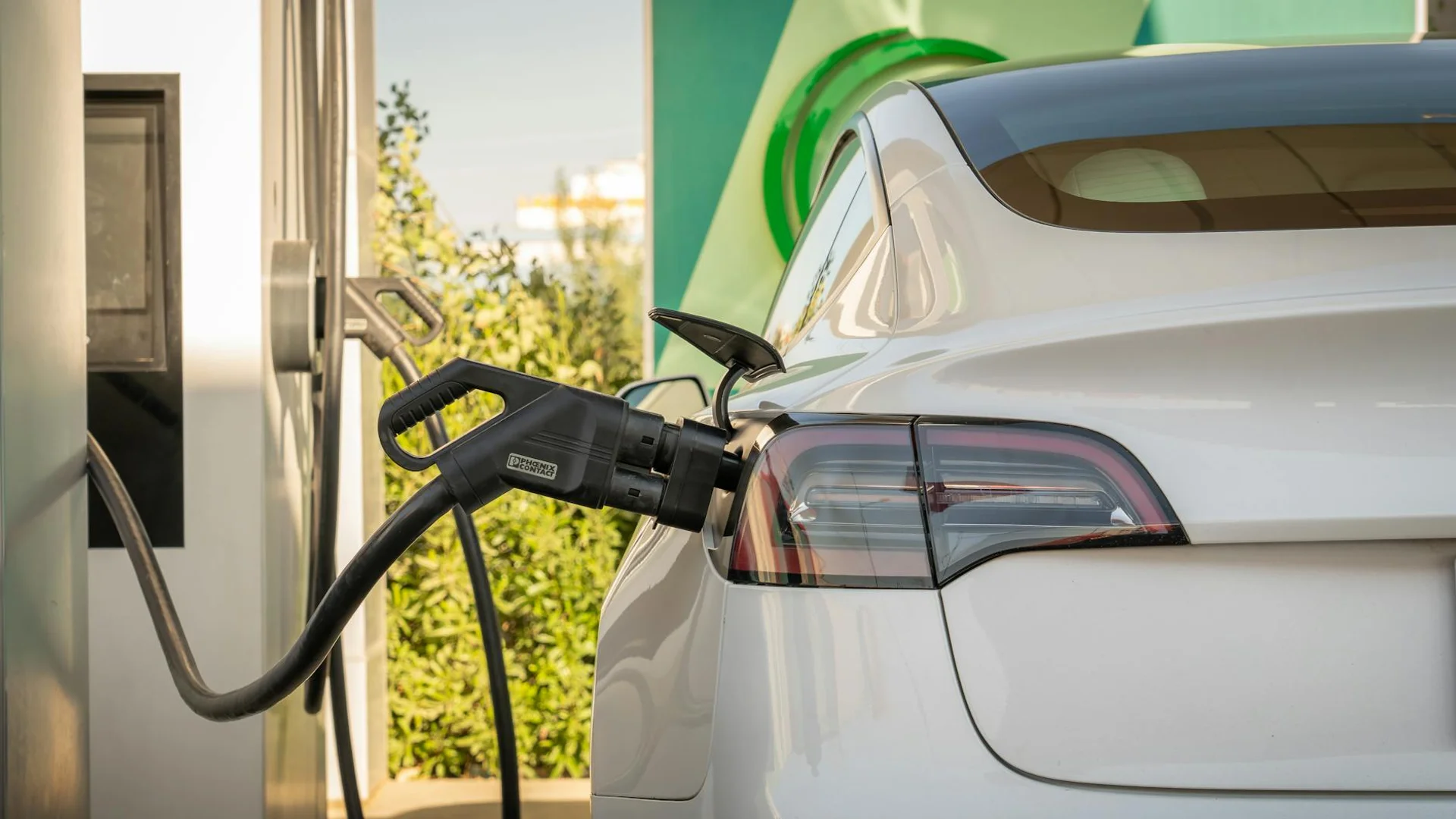
You're about to trade your Ioniq 5 for a Chevy Bolt to save on charging. Before you do, run the numbers. The savings are real, but they're smaller than your group chat thinks, and in some provinces they nearly vanish. The charging argument is a proxy for a much simpler question: can I afford the bigger car?
A compact EV is cheaper to charge, that part holds up. The surprise is how small the gap is once you do the actual math. Closer to a tank of gas per year than to a mortgage payment, and the moment you start factoring in winter range, dealer availability, and the federal rebate stack, the case for "buying small to save on charging" gets surprisingly thin. Most of us are really solving for the monthly payment and using charging as the cover story, which is fine, but let's do the math. This guide walks you through it the way a friend would at a kitchen table, with Canadian electricity rates, real km/kWh numbers, and the dealer reality of what you can actually drive home in 2026.
Key takeaways
- In Quebec, a Bolt saves you ~$47/year over an Ioniq 5, not $47/month, $47/year.
- At highway speeds above 70 km/h, aerodynamic drag dominates energy use, shrinking the compact EV efficiency advantage.
- Alberta buyers see the biggest charging gap at ~$114/year, the only province where small-battery math actually holds up.
- A $5,000 price premium between Bolt and Ioniq 5 would take 50+ years to recover through charging savings alone.
- City driving flips the script: compact EVs beat mid-size by 30–40% per kilometre in stop-and-go conditions.
Why Compact EVs Aren't Much Cheaper to Charge Than Mid-Size Ones
The first surprise for most buyers, and the one that annoyed me most when I dug into it, is that at highway speed, a compact EV barely beats a mid-size one on efficiency. The reason is physics, not marketing. Above roughly 70 km/h, aerodynamic drag, not weight, dominates the energy budget. Small boxy EVs lose the drag fight to longer, sleeker mid-size ones almost every time. Manufacturers keep building boxy compacts because buyers keep asking for them, but the physics doesn't care what sold well last year.
Here's what doesn't get said in the dealership: a Chevy Bolt and a Hyundai Ioniq 5 AWD post real-world highway numbers within about 10% of each other. EPA testing methodology assumes Level 2 AC charging and accounts for losses from the charging cable and on-board vehicle charger, moving the measurement from the vehicle to the outlet in the wall to better represent how much users would pay to refuel their car, which is the right number for your wallet. Recurrent's 2026 efficiency testing shows mid-size EVs like the Ioniq 5 landing around 3.0 mi/kWh at highway speed, with the Bolt only modestly better. The gap is real. It's just not the chasm small-car shoppers imagine.
Why? Because aerodynamic drag scales with the square of speed, and a tall, short car has nowhere to send the air. The Bolt's frontal area is smaller than the Ioniq 5's, but its drag coefficient is worse. The Ioniq 5, despite being a bigger vehicle, has a longer body to manage airflow over and around, and that geometry wins on the 401 at 110 km/h. The Reddit thread that kicked this discussion off had it right: weight matters less than you'd think because most highway energy goes to overcoming drag, not accelerating mass.
The interesting part is what happens when you slow down. City driving flips the script. Stop-and-go is where weight, regen, and packaging actually matter, and where compact EVs pull ahead clearly. Bolt owners routinely log 4.8–5.4 mi/kWh in mixed urban driving. Mid-size SUVs in the same conditions sit closer to 3.5–4.0 mi/kWh. An EV's battery transfers energy to an electric motor that turns a drive train, and up to 80 percent of the energy in the battery is transferred directly to power the car, but that efficiency advantage compounds in city driving, where regen recaptures braking energy. If your day is a 15-km commute through Vancouver, the Bolt isn't just cheaper, it's meaningfully cheaper, on the order of 30–40% per kilometre.
So the framing is this: compact EVs are a city-efficiency story, not a highway-efficiency story. If your driving is mostly suburban errands and downtown commutes, the small car wins decisively. If you're a Toronto-to-Montreal commuter or a Calgary-to-Banff weekend regular, the energy gap shrinks until it's a rounding error. Lighter cars do enjoy a real rolling-resistance edge, but rolling resistance is a small fraction of total energy use at highway speeds, where the air takes over.
There's a deeper trend worth flagging. EV efficiency has actually declined since its 2018 peak because the market, Canadian buyers included, keeps choosing taller, heavier, less aerodynamic crossovers. Manufacturers respond to demand. The most efficient EVs on the market are still slippery mid-size sedans, the Model 3, the Ioniq 6, not the hatchbacks people picture when they say small. The market asked for boxy, and the engineers delivered boxy, and the aerodynamics suffered for it.
What Does a Full Charge Actually Cost You in Canada?
Now the math you came for. Charging cost depends on three things: battery size, electricity rate, and energy used per kilometre. The rate is where Canada gets weird, provincial differences are big enough to flip the entire shopping equation.
Here's residential overnight charging in 2026, using publicly posted utility rates:
- British Columbia: BC Hydro Step 1 residential rate is roughly 11.6¢/kWh
- Ontario: TOU off-peak hovers around 8.7¢/kWh on the regulated price plan
- Alberta: variable rates average roughly 17¢/kWh including delivery
- Quebec: Hydro-Québec residential Rate D is approximately 7.1¢/kWh
- Manitoba: Manitoba Hydro residential averages about 9.9¢/kWh
- Atlantic provinces: Nova Scotia and PEI sit between 16–18¢/kWh
These are posted residential rates as of early 2026, verify your specific tier with your utility before you build a spreadsheet around them.
Now apply those to a real comparison. A 2025 Chevy Bolt EUV carries a 65 kWh battery. A 2026 Hyundai Ioniq 5 RWD long-range carries 84 kWh. Charging from empty to full at home:
- Bolt full charge: $7.55 in BC, $5.66 in Ontario off-peak, $10.98 in Alberta, $4.62 in Quebec
- Ioniq 5 full charge: $9.74 in BC, $7.31 in Ontario off-peak, $14.28 in Alberta, $5.96 in Quebec
The dollar gap per charge is small. Two to four loonies in most provinces. A single tank of gas in your old Civic costs more than a month of overnight EV charging in Quebec.
Scale it to a year. A typical Canadian driver covers around 20,000 km. At Bolt-class efficiency (roughly 6 km/kWh in mixed driving), that's about 3,333 kWh per year. At Ioniq 5-class efficiency (roughly 5 km/kWh), it's about 4,000 kWh. The annual charging-cost delta:
- BC: Bolt ~$386, Ioniq 5 ~$464, delta ~$78/year
- Ontario off-peak: Bolt ~$290, Ioniq 5 ~$348, delta ~$58/year
- Alberta: Bolt ~$566, Ioniq 5 ~$680, delta ~$114/year
- Quebec: Bolt ~$237, Ioniq 5 ~$284, delta ~$47/year
Sixty to a hundred and twenty dollars a year. That's the answer. In Quebec it's under $50. In Alberta, which has both the highest rates and the longest cold snaps, it pushes past $100, and that's the only province where the math starts to genuinely favour the smaller battery on charging cost alone.
A reframe worth sitting with: if you're spending $5,000 extra to upsize from a Bolt to an Ioniq 5, the charging-cost difference would take 50+ years to pay back the premium. Charging cost is the wrong reason to choose between these cars. Range, cargo space, AWD, and your winter commute matter much more.
Gear worth having
As an Amazon Associate, ThinkEV earns a small commission from qualifying purchases — at no extra cost to you.

Lectron Level 2 J1772 Charger (40A, WiFi)
Smart WiFi charger with real-time energy monitoring. 40A / 9.6 kW, J1772 with a NEMA 14-50 plug, schedule charging right from your phone.
As an Amazon Associate, ThinkEV earns from qualifying purchases — at no extra cost to you.
Winter Kills Your Range, But Does It Kill Compact EVs More?
Canadian winters complicate every EV equation, and they hit smaller batteries harder in absolute terms. Range loss in deep cold is well-documented, Recurrent's cold-weather research on real-world EV testing tracks the pattern across the fleet, and the practical takeaway is that drivers should plan for a meaningful chunk of summer range to disappear in a -20°C cold snap. The question is whether that hits your wallet differently in a Bolt versus an Ioniq 5.
The short answer: yes, and the difference goes the wrong way for compact-EV optimists.
Here's the mechanism. EV cabin heating draws roughly the same wattage regardless of vehicle size, a resistive heater pulls 4–6 kW, a heat pump pulls 1–2 kW. That's a fixed power draw. On a 65 kWh Bolt, an hour of -25°C highway driving with the heater running consumes a meaningfully larger percentage of the pack than the same hour does on an 84 kWh Ioniq 5. The smaller battery has less buffer to absorb the heating overhead.
Cold-weather range data from Recurrent's efficiency research on real-world EV testing shows the pattern clearly: heat-pump-equipped EVs like the Ioniq 5 typically log smaller winter losses because the heat pump scavenges waste heat from the motor and battery cooling system instead of generating it from scratch. Older compact EVs without heat pumps, the pre-2024 Bolt, the original Leaf, see noticeably steeper drops in deep cold. Most pre-2024 compact EVs sold in Canada don't have heat pumps, and that gap shows up on the dashboard every January.
Why this matters for charging cost: more winter range loss means more public fast-charging stops on long trips, and DC fast-charging in Canada runs roughly 35–55¢/kWh, three to five times your home rate. A Calgary owner who needs two extra fast-charging stops per month from December through March is looking at $15–$30 per stop, or $120–$240 in winter fast-charging premium they wouldn't pay in summer.
Here's the punchline: the compact EV's annual charging savings of $80–$120 can be erased entirely by a single bad cold snap that pushes you to public charging. Mid-size EVs with heat pumps and bigger packs ride out winter with fewer disruptions. If you live in Edmonton, Winnipeg, Saskatoon, or anywhere north of 53°N latitude, the heat pump matters more than the battery size for your real annual charging bill.
Canadian buyers who optimize for "cheapest to charge" without checking heat-pump status are optimizing the wrong variable.
Which Compact EVs Can You Actually Buy at a Canadian Dealership Right Now?
This is the part of the math nobody puts in the spreadsheet. The cheapest EV to charge is the one you can't buy. Canadian compact-EV inventory in 2026 is thin, and the gap between "what's on the press release" and "what's on the lot in Surrey" is wider than American buyers face.
Here's the reality check. The 2025 Chevy Bolt EUV lists at roughly $38,998 CAD MSRP at GM Canada dealers nationally, and inventory is improving after the 2024 production pause. It's the most common true-compact EV you can walk into a dealership and drive home today. It also qualifies for federal rebates, which we'll cover next.
Other contenders for "compact EV in Canada" right now:
Gear worth having
As an Amazon Associate, ThinkEV earns a small commission from qualifying purchases — at no extra cost to you.

TP-Link Kasa Smart Plug with Energy Monitoring
Track exactly how much electricity your Level 1 charger uses and schedule it for off-peak hours. Know your real cost per kWh.
As an Amazon Associate, ThinkEV earns from qualifying purchases — at no extra cost to you.
- Nissan Leaf: still listed but inventory varies by region; the 2026 redesign isn't broadly available yet, confirm at your dealer
- Mini Cooper SE: discontinued in North America; if you find one, it's leftover inventory
- Fiat 500e: returned to Canada in limited quantities at approximately $48,000 MSRP, verify the figure with your local Fiat dealer before relying on it, since pricing varies by trim and incentive timing
- Hyundai Inster: confirmed for Europe and Korea, no Canadian launch date announced
- Renault 4 / Renault 5: European market only, Renault doesn't sell in Canada
- Volkswagen ID.2: Europe-first, no Canadian launch on the calendar
Most "compact" options Canadian buyers research online are either European-only, discontinued, or limited-inventory leftovers. The practical compact-EV market in Canada is essentially the Bolt EUV plus a handful of niche models. If you want a true small car with a small battery and a small charging bill, your shopping list is short.
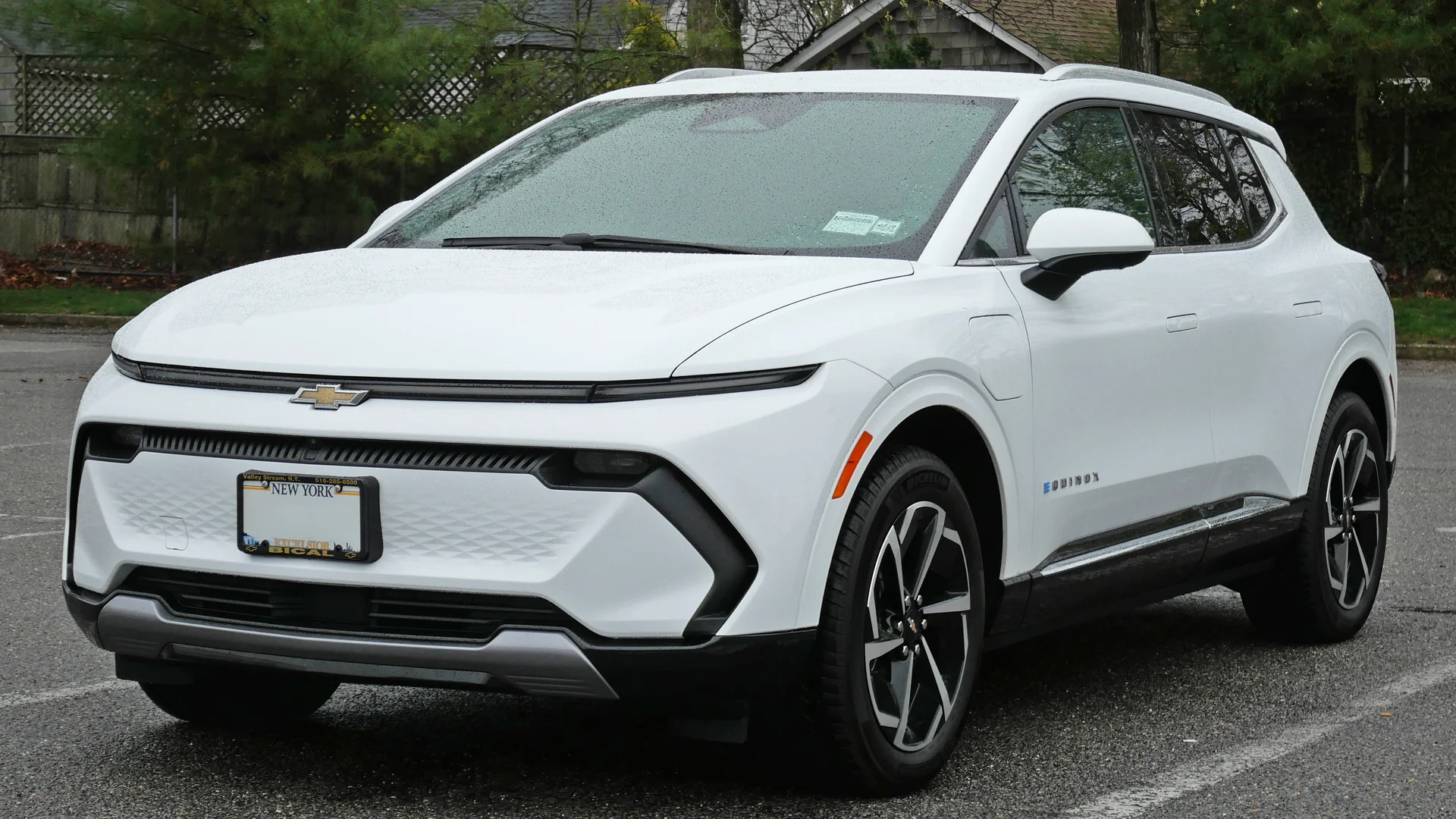
What's actually filling the sub-$45,000 segment in Canada is crossovers, not compacts. The Hyundai Kona Electric, Chevy Equinox EV, and Nissan Ariya entry trims all sit in that price band, and all have larger batteries (60–85 kWh) than the Bolt. They're not "small EVs" in the engineering sense, even if they're priced like one. So when a Canadian buyer asks "which small EV should I get to save on charging," the real answer is often "you have one mainstream choice, and the next-cheapest option is already a mid-size."
Tesla's inventory model is the outlier, one config, steady supply. Legacy dealers are still running the old playbook, and Canadian buyers get caught in the restock gaps. Verify inventory at your local dealer before you fall in love with a press-release spec sheet.
Gear worth having
As an Amazon Associate, ThinkEV earns a small commission from qualifying purchases — at no extra cost to you.

P3 Kill A Watt Electricity Usage Monitor
Plug in your charger and see exactly what you spend in kWh, cost, and watts. Settle the is-my-EV-really-cheaper debate with data.
As an Amazon Associate, ThinkEV earns from qualifying purchases — at no extra cost to you.
Rebates Change the Math: Federal EVAP + Provincial Top-Ups
Here's where the financial picture actually gets interesting, and where Canadian buyers have genuine leverage that gets overlooked in efficiency comparisons.
The federal Electric Vehicle Affordability Program (EVAP) is the current federal incentive structure. Transport Canada describes EVAP as a programme designed to help increase the adoption of affordable electric vehicles in Canada through purchase/lease incentives for Canadians and Canadian businesses.The legacy iZEV page now redirects buyers to EVAP for current information, if you find an older blog post citing iZEV amounts, the numbers may be out of date. The eligible-vehicle list lives at the Transport Canada EVAP vehicle list, which also notes that eligible EVs with an odometer with less than 10,000 km qualify as demonstrators (vehicles that buyers can test drive at a dealership), useful if you're hunting deals on lightly-used dealer demo units.
The structure most buyers care about: up to $5,000 federal on battery-electric vehicles, with MSRP caps that the Bolt EUV at $38,998 sits comfortably under. Plug-in hybrids get less. Full eligibility rules and current incentive amounts are spelled out on the EVAP main program page, and Transport Canada also flagged a planned outage of the EVAP and iMHZEV Program portal from Saturday, May 2 at 07:00 hours to Sunday, May 3 at 12:00 hours EDT, minor but worth knowing if your dealer hits a portal error mid-paperwork. For specific frequently-asked-questions on eligibility, application steps, and dealer obligations, the Transport Canada EVAP Q&A page is the authoritative reference and uses a keyword filter to surface the answers Canadians, dealerships, and authorized sellers ask most often.
Provincial stackable rebates as of 2026 (confirm before signing, these programs cycle funding and rules without much warning):
- British Columbia: SCRAP-IT program offers up to $6,000 when you scrap an older vehicle, plus the standard CleanBC rebate framework, verify current amounts at your dealer
- Quebec: the Roulez vert main rebate has been wound down, with transitional amounts possibly applying on specific models, confirm with the Quebec ministry of transport or your dealer before signing, because this one is genuinely in flux
- Ontario: no provincial EV rebate as of 2026 (the Drive Clean program ended in 2018 and hasn't been replaced)
- New Brunswick, PEI, Nova Scotia, Newfoundland: each have provincial programs in the $2,500–$5,000 range
Run the BC math. A 2025 Bolt EUV at $38,998, minus $5,000 federal EVAP, minus $6,000 BC SCRAP-IT, lands at roughly $27,998 before tax. That's the cheapest path to a new EV at a Canadian dealership today. A base Ioniq 5 RWD at roughly $54,999 minus the same $5,000 federal (Ioniq 5 also qualifies if MSRP is under the cap) minus $6,000 SCRAP-IT lands at $43,999. The post-rebate gap is roughly $16,000 in BC.
That's the gap that actually matters. Not the $80/year charging delta. The $16,000 sticker delta, which over a 7-year ownership window is roughly $2,300/year of capital cost. That's where the real "buy small to save money" argument lives, and it has nothing to do with charging.
In Ontario, where there's no provincial rebate, the same comparison is $33,998 Bolt versus $49,999 Ioniq 5, about $16,000 again, just at a higher absolute price point. Quebec, with its softer provincial program and lowest-in-Canada electricity rates, narrows the lifetime cost gap further but still leaves capital cost as the dominant variable.
InsideEVs reporting on segment economics makes the point cleanly: vehicle class drives lifetime emissions and lifetime cost more than fuel-source efficiency does. Compact EVs are cheaper because they're compact, not because they're efficient.
The Real Break-Even: Lease vs. Cash and the Charging Cost Payback Period
Let's put it all on one page. If you're thinking about going small to save money, the charging math is the smallest variable in the equation. The interesting part is everything else.
Run this scenario: a 20,000 km/year Canadian driver in BC, comparing a Bolt EUV to an Ioniq 5 RWD long-range, both purchased outright after rebates.
- Charging cost annual delta (BC rates): roughly $78/year in the Bolt's favour
- MSRP delta after rebates: roughly $16,000 in the Bolt's favour
- Charging-only payback period on the MSRP delta: $16,000 ÷ $78 = 205 years
Two centuries. The charging argument doesn't pay for the price difference, the price difference is the argument. If you're going to choose the Bolt, choose it because it's the cheaper car, the easier-to-park car, the lower-monthly-payment car. Don't choose it because it sips kilowatts.
Lease math tells a slightly different story. Compact EVs with lower MSRPs translate directly to lower lease payments, that part is mechanical. The actual monthly spread between a Bolt lease and an Ioniq 5 lease varies enough by term length, residual value, and provincial taxes that I'd rather you pull a live quote from GM Canada and Hyundai Canada than trust a number from a forum thread. Whatever the spread is on the day you sign, multiply it by 36 or 48 months to see your real lease-vs-lease cost difference, that's the figure that matters, and it's almost always larger than your annual charging delta. If your decision is monthly cash flow, lease the small car. If your decision is long-term ownership cost, the answer is similar but the gap is smaller because resale on the larger EV historically holds better.
A few more variables that matter more than charging cost:
- Home charger installation: budget $800–$1,500 in Canada for a Level 2 install, more if you need a panel upgrade, a fixed cost shared across any EV
- Insurance: compact EVs typically insure 10–15% lower than mid-size EVs in most Canadian provinces
- Cargo and passengers: if you can't fit your life in a Bolt's cargo area, the savings vanish the first time you rent something bigger
- Annual mileage threshold: under 15,000 km/year, the compact-EV charging advantage shrinks; over 25,000 km/year, it grows but is still dwarfed by capital cost
Most Canadian buyers who say "I'm switching to a small EV to save on charging" are actually optimizing for monthly payment and using charging as the rationalization. That's fine, monthly payment is a valid reason. But name what you're actually solving for. The math gets clearer when you do.
What would change this analysis: if Hydro-Québec doubled its rates, if a heat-pump-equipped sub-$30,000 compact EV launched in Canada with 350+ km of real winter range, or if EVAP funding got slashed and the Bolt lost its rebate edge. Watch those three signals. As of 2026, none of them have moved.
Gear worth having
As an Amazon Associate, ThinkEV earns a small commission from qualifying purchases — at no extra cost to you.

Grizzl-E Classic Level 2 EV Charger (40A)
Canadian-made and rated for minus 40C winters. 40A / 9.6 kW, NEMA 14-50, indoor/outdoor, 24-ft cable. The charger built for Canadian weather.
As an Amazon Associate, ThinkEV earns from qualifying purchases — at no extra cost to you.
FAQ: Canadian Buyers' Most Googled Questions About Small EV Charging Costs
The bottom line: buying small to save on charging makes sense in exactly one scenario, Alberta or Atlantic-province residency, mostly city driving, under 20,000 km/year, and the Bolt-class capital cost premium that drops you well below $30,000 after rebates. For everyone else, the charging argument is a story we tell ourselves about a much larger purchasing decision. Small EVs cost less because they're small, and the charging bill is a footnote.
If your decision is between a Bolt and an Ioniq 5, the right question isn't "which is cheaper to charge?" It's "which fits my life?" Run that math first. Buy the car you'll actually drive, the kilowatt-hours are the cheapest part of the deal.
Gear worth having
As an Amazon Associate, ThinkEV earns a small commission from qualifying purchases — at no extra cost to you.

ChargePoint Home Flex Level 2 Charger (50A)
Premium 50A / 12 kW charger with the best app ecosystem. Hardwired or NEMA 14-50, with real-time energy tracking and smart scheduling.
As an Amazon Associate, ThinkEV earns from qualifying purchases — at no extra cost to you.

Founder & Chief Editor
Vlad Pereira is the founder and chief editor of ThinkEV.ca, the Canadian electric-vehicle publication he writes and edits from Courtenay, British Columbia. He covers EV pricing, federal and provincial rebates, charging costs, and the Chinese manufacturers now entering Canada, from the buyer's side rather than the press-fleet side. ThinkEV is a venture of Vlad Pereira Online; his writing on health, income and the long game lives at vladpereira.com.
Frequently asked questions
Does province actually change which EV size makes sense?
Is the Bolt actually more efficient than the Ioniq 5 everywhere?
How long before charging savings pay off a cheaper purchase price?
What does a full home charge actually cost in Ontario?
Which EV is most efficient if not the smallest one?
More EV & road-trip finds
Affordable upgrades worth a look — tap any to check the price on Amazon.
 ★ 848
★ 848Coiled USB-C to USB-C Car Cable (2-Pack)
View on Amazon ★ 87
★ 87Car Window Sun Shades for Kids (4-Pack)
View on Amazon ★ 68
★ 68WeatherTech FloorLiner for Tesla Model 3
View on Amazon ★ 4,050
Touchscreen Mist Screen Cleaner Kit
View on Amazon ★ 419
★ 419RGB Car Interior LED Strip Light
View on Amazon ★ 4,626
HoogaLife Hanging Car Diffuser (2-Pack)
View on Amazon ★ 4,424
Sun Visor Card and Document Organizer
View on Amazon ★ 692
★ 692USB-A to USB-C CarPlay Adapter (3-Pack)
View on AmazonRead, Plan, Then Stay Current
Explore our expert articles to understand incentives and ownership costs, use the map to pressure-test charging reality, then subscribe so new EV coverage comes straight to you.
Continue Reading
BYD Seagull Price Canada 2026, The Real Number, Banded
Best GM EVs in Canada for Budget Families 2026
EV Charging Cost Calculator: The Canadian Numbers
Why Is My EV Charging Slow? The Three Real Layers

ChargePoint Billing by kWh and Time: What to Watch