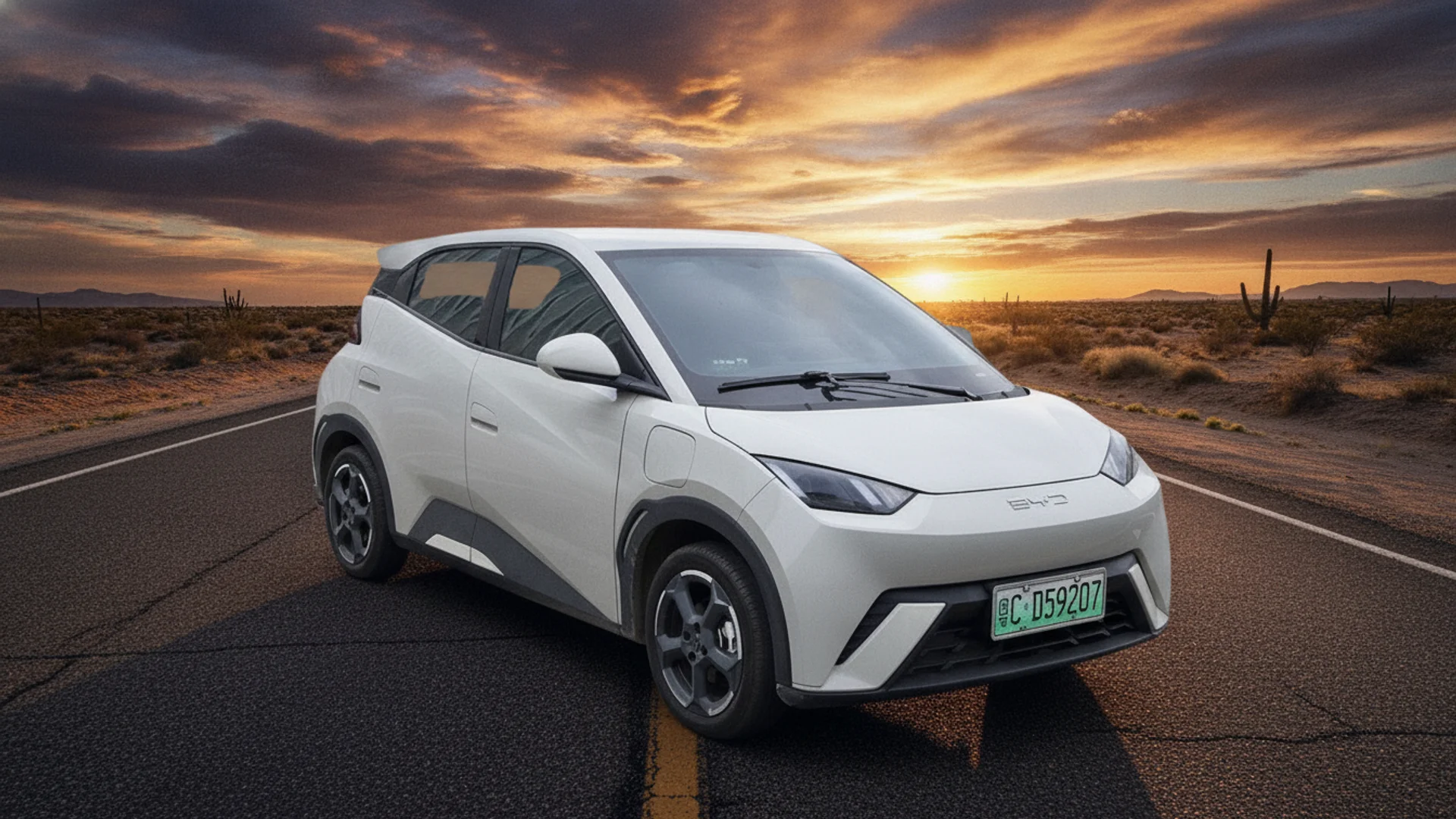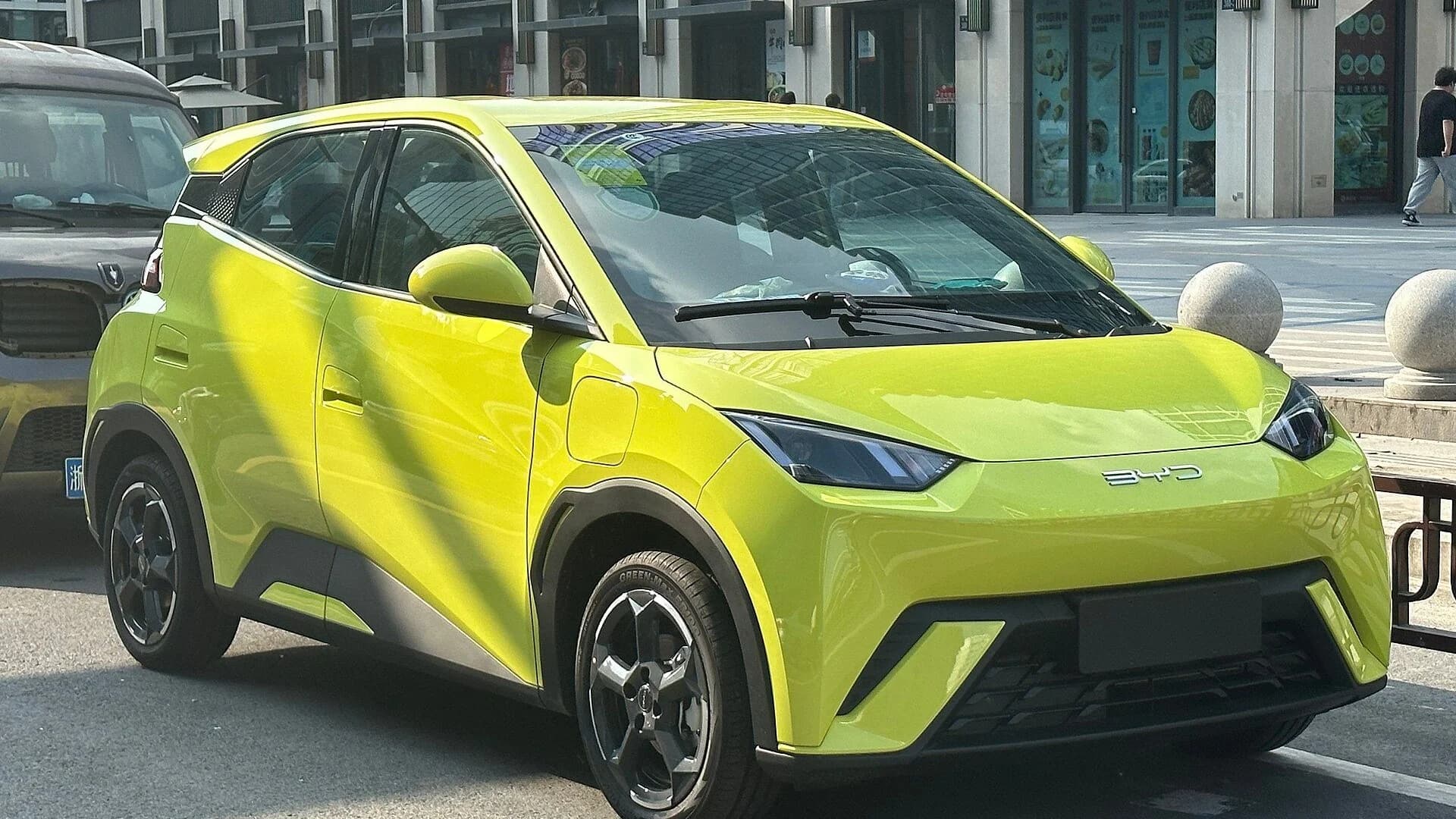
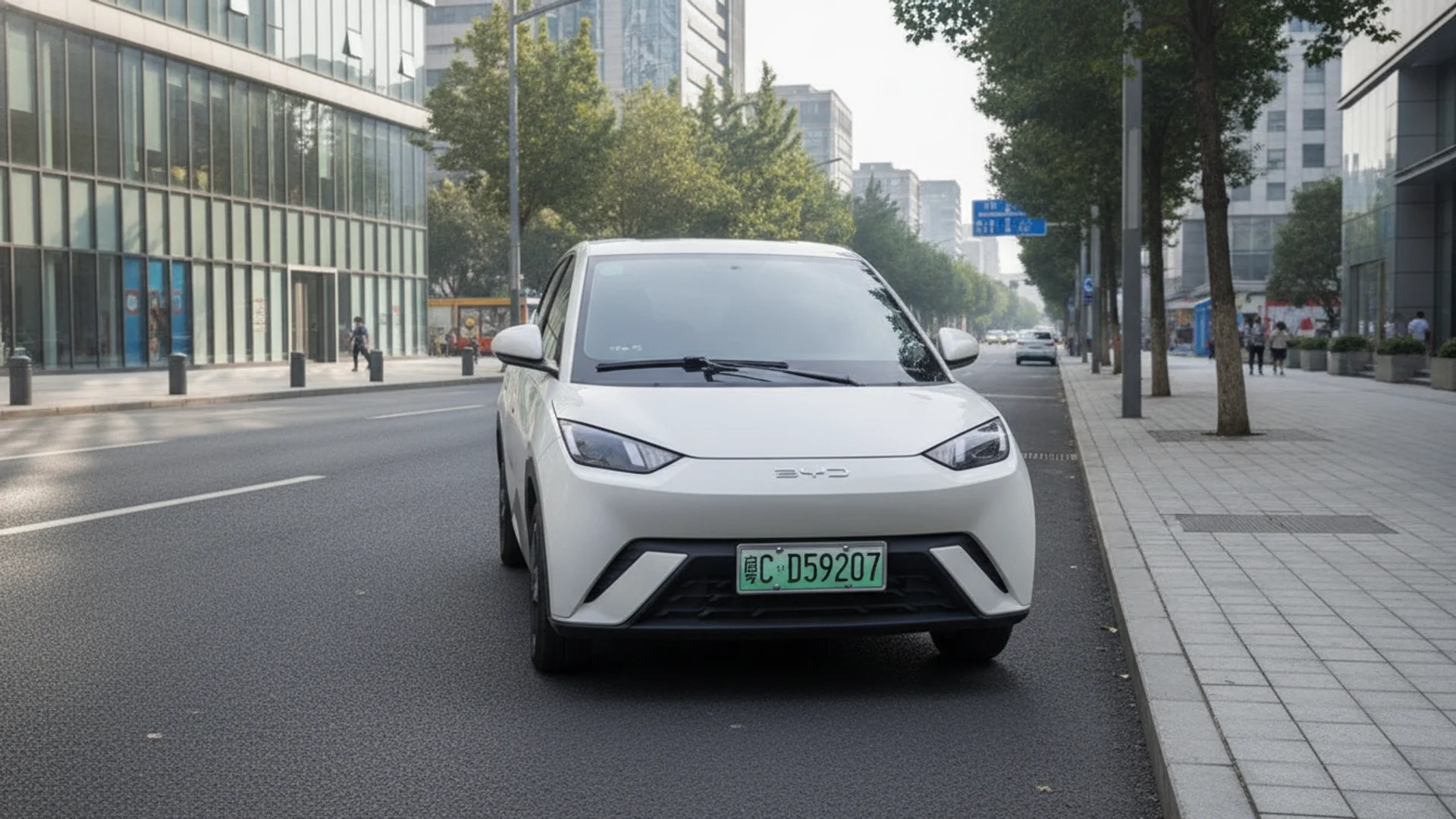
The Hyundai Kona Electric starts at $42,999 CAD. The BYD Seagull go sells for roughly $22,000 in equivalent terms, a price InsideEVs has reported at $8,000 in its Chinese home market. The gap is not discount. The gap is doctrine.
Two cars, built in the same decade, under the same global supply pressure, around the same fundamental compact-EV brief. They arrive at radically different conclusions about what the car is supposed to be, and the spec sheet is where that argument is written in plain text. Read it carefully and the $20,000 gap stops looking like a price difference. It starts looking like a difference in how the company thinks the next decade of car manufacturing will work.
Key takeaways
- BYD's Seagull go costs roughly $22,000 CAD versus the Kona Electric's $42,999, a doctrine gap, not a discount.
- BYD manufactures its own Blade LFP cells in-house; Hyundai pays supplier margins to LG Energy Solution and SK On on every 64.8 kWh pack.
- InsideEVs reviewers trained on $80,000 EVs called the $8,000 Seagull go 'scary good' and questioned Western automakers' ability to match it.
- The Seagull go's 55–64 kW e-axle integrates motor, inverter, and reducer into one unit, shrinking parts count and warranty exposure Hyundai can't match.
- Hyundai's Kona EV inherits E-GMP architecture optimised for premium pricing; BYD engineered the Seagull go end-to-end for the price point it actually sells at.
Two Cars, Two Definitions of What 'Enough' Means
The Kona Electric was designed around Western consumer expectations: a range number that quiets anxiety, feature parity with its ICE sibling, a crossover stance the segment has been conditioned to want. Hyundai's brief was to give a North American buyer a small SUV that happens to be electric, not an electric car that happens to be small. Every engineering tradeoff in the Kona EV flows downhill from that brief.
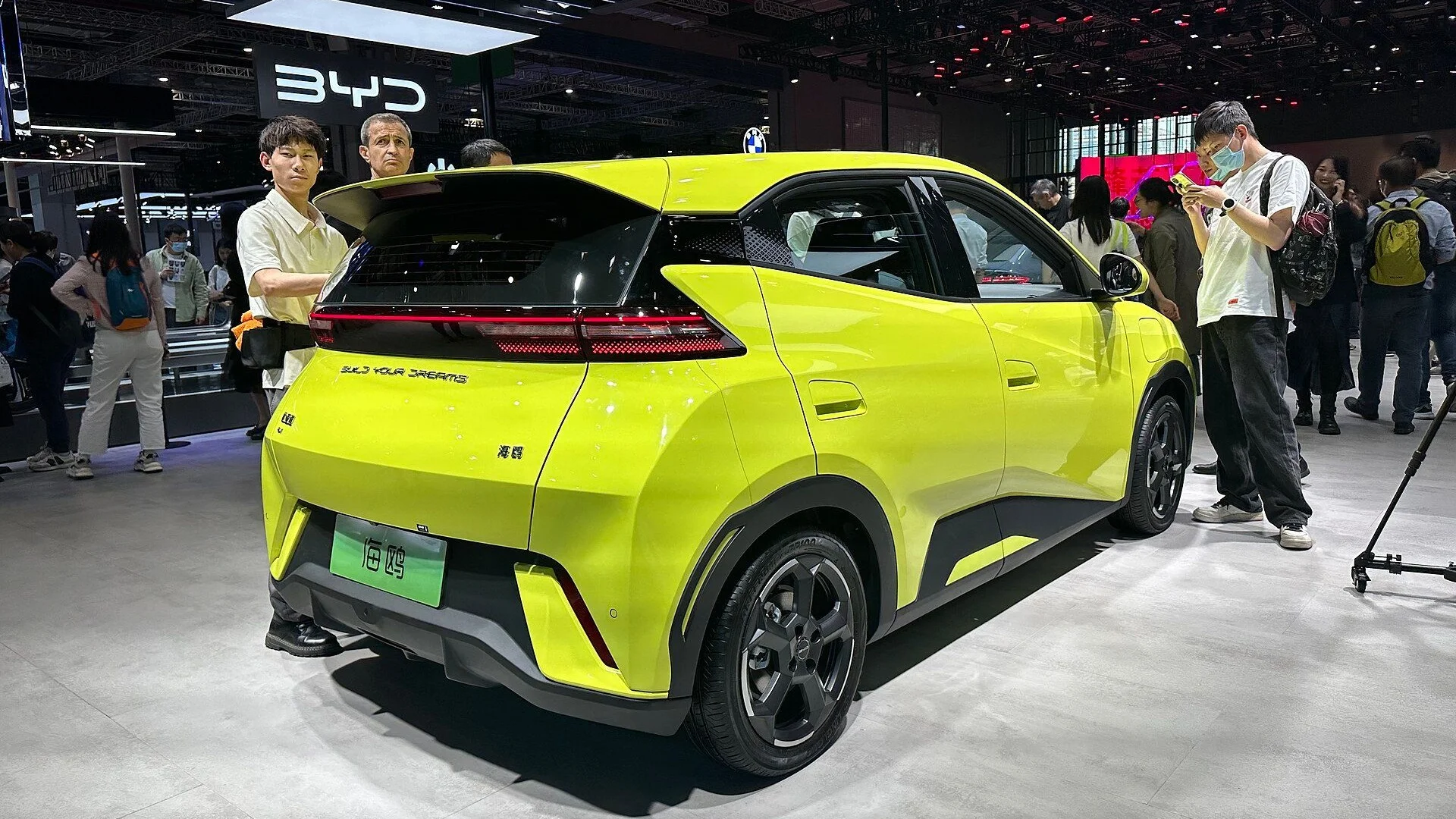
The Seagull go was designed around a different question. Not "what does a Western family expect from a crossover," but "what is the minimum viable electric car that an urban Chinese household actually needs?" The answer BYD arrived at, a 30 kWh LFP pack, a footprint sized for tight parking, a power figure tuned for stop-light-to-stop-light driving, is structurally different. The car ships with two variants, Comfort at 30 kWh and Dynamic at 38.8 kWh, both calibrated for sufficiency rather than headroom.
The case against this framing is fair: a Canadian winter is not a Shenzhen summer, and a 30 kWh pack at minus-twenty in Sudbury is a different animal than a 30 kWh pack on a flat city loop. That is a real constraint, not a marketing one. But it cuts both ways. The Kona EV's 64.8 kWh pack also loses range in February, buyers just absorb the loss inside a bigger absolute number. The Seagull go's design bet is that most urban kilometres do not require the bigger number, and the cars BYD is already selling at scale across South America and Southeast Asia suggest the bet is winning the argument where the climate allows it to.
This is the philosophical hinge the comparison turns on. The Kona EV is engineered for range you might use. The Seagull go is engineered for range you actually use. Different constraints produce structurally different cars, and the price gap is the receipt for which constraint each company accepted.
Battery Chemistry Is Where the Philosophy Diverges First
Chemistry is the first place the doctrine shows itself. The Seagull go uses lithium iron phosphate, BYD's Blade architecture, the same flat-cell, thermally stable, cobalt-free pack that the company has spent the better part of a decade industrialising across its lineup. The Kona EV uses NCM, the higher-energy-density nickel-cobalt-manganese chemistry that lets Hyundai fit 64.8 kWh into a footprint that would otherwise demand more volume.
LFP versus NCM is not a quality call. It is a lifecycle and cost doctrine. LFP cells cost meaningfully less per kWh to manufacture, tolerate full-state-of-charge cycling without the same degradation penalty, and run cooler under fast charging. They give up energy density, which is why the Seagull go pack is half the size of the Kona's, and they give up cold-weather peak performance, which matters in Manitoba in February but matters less in Shenzhen in July.
Hyundai chose NCM because a North American buyer expects 400-plus kilometres of range in a vehicle this size. BYD chose LFP because a Chinese urban buyer rarely drives more than 60 kilometres in a day, and the company would rather sell a car that lasts twelve years than one that wins a range-anxiety benchmark test.
The vertical-integration story behind those chemistry choices is where the price gap really starts to make sense. BYD manufactures its own Blade cells in its own plants, on equipment it designed. Hyundai sources its NCM cells from third-party suppliers, LG Energy Solution, SK On, and pays the supplier margin on every car it ships. Multiply that delta across a 64.8 kWh pack and the manufacturing cost difference is no longer a rounding error. It is a structural advantage BYD compounded over fifteen years and Hyundai now has to either match, partner around, or live with. The technical breakdown of EV battery safety data across Tesla, BYD, and Hyundai shows why that chemistry choice ripples through everything from insurance underwriting to long-term residual value.
Gear worth having
As an Amazon Associate, ThinkEV earns a small commission from qualifying purchases — at no extra cost to you.
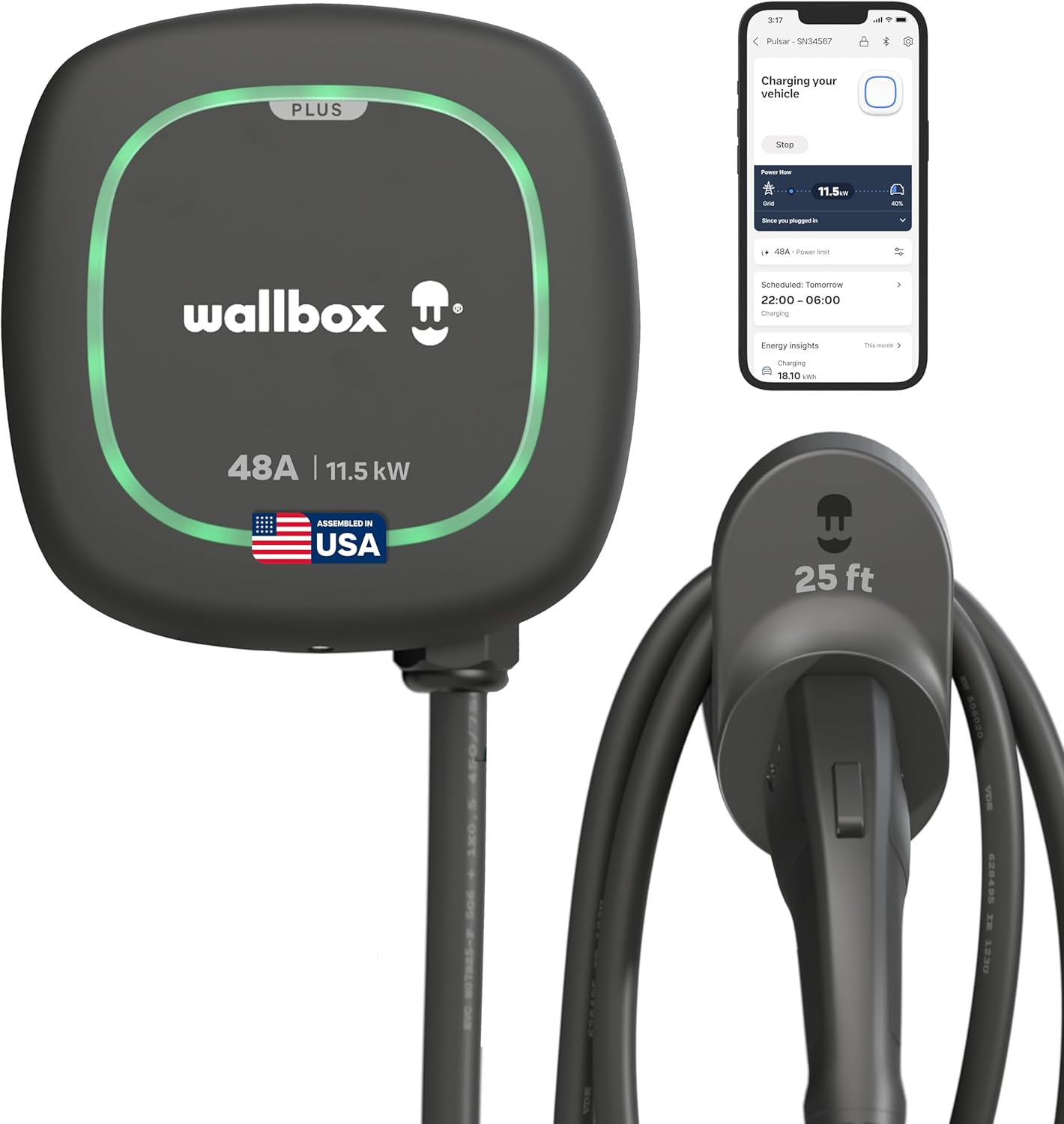
Wallbox Pulsar Plus 48A Level 2 Charger
Compact, sleek charger with app control and power sharing for two EVs. 48A / 11.5 kW, NEMA 14-50. Looks as good as your EV.
As an Amazon Associate, ThinkEV earns from qualifying purchases — at no extra cost to you.
The E-Axle Story: What 64 kW Says About Intent
Power output is the easiest place to misread the Seagull go. Its motor is rated between 55 and 64 kW depending on market trim, figures that look almost embarrassing next to the Kona Electric's 99 kW base motor or 160 kW long-range trim. The temptation is to read the gap as "the Hyundai is twice the car." That reading misses what the number is for.
A 64 kW front-wheel-drive e-axle, sized correctly, delivers the torque a 1,200 kg car needs to leave a stoplight ahead of every gasoline subcompact on the road. InsideEVs, after driving the car in China, described it as "a downright dignified driving experience" and explicitly questioned whether Western automakers could replicate the experience at the price. A second InsideEVs drive review later called the $8,000 car "scary good" and asked when Western markets get cheap EVs this competent. Those are not faint compliments. Those are reviewers trained on $80,000 EVs telling readers the cheap one is not embarrassing.
The Kona EV's 99 kW motor exists to give a Canadian buyer the confidence to merge onto the 401 with a family of four and ski gear in the back. It is sized for highway anxiety, not city efficiency. That sizing decision cascades through the entire vehicle, the cooling system that supports it, the inverter that drives it, the battery that feeds it. Every component is bigger because the headline number had to be bigger.
BYD's e-axle integration, motor, inverter, and reducer combined into a single unit, also reduces parts count, assembly time, and warranty surface area in ways Hyundai cannot match while still buying its motors and inverters as separate components from separate suppliers. Hyundai's E-GMP platform, the architecture that underpins the IONIQ 5 and IONIQ 6, was designed to scale upward from premium-priced products. The Kona EV inherits architecture that was optimised for a price point twice its own. BYD's Seagull architecture was optimised, end to end, for the price point it actually sells at.
Drag, Dimensions, and the Design Conversation Nobody Is Having
The Seagull go's drag coefficient sits at roughly 0.29 on a subcompact hatchback footprint. The Kona EV, taller and broader in its 2023 redesign, carries the aerodynamic penalty of its crossover stance, a ride height the segment demands, a frontal area the styling brief insisted on. Hyundai recovered some of that loss with sharper surfaces and a longer wheelbase, but it could only recover so much. A crossover at 110 km/h burns more energy moving air out of its way than a hatchback does, the physics are non-negotiable.
Gear worth having
As an Amazon Associate, ThinkEV earns a small commission from qualifying purchases — at no extra cost to you.
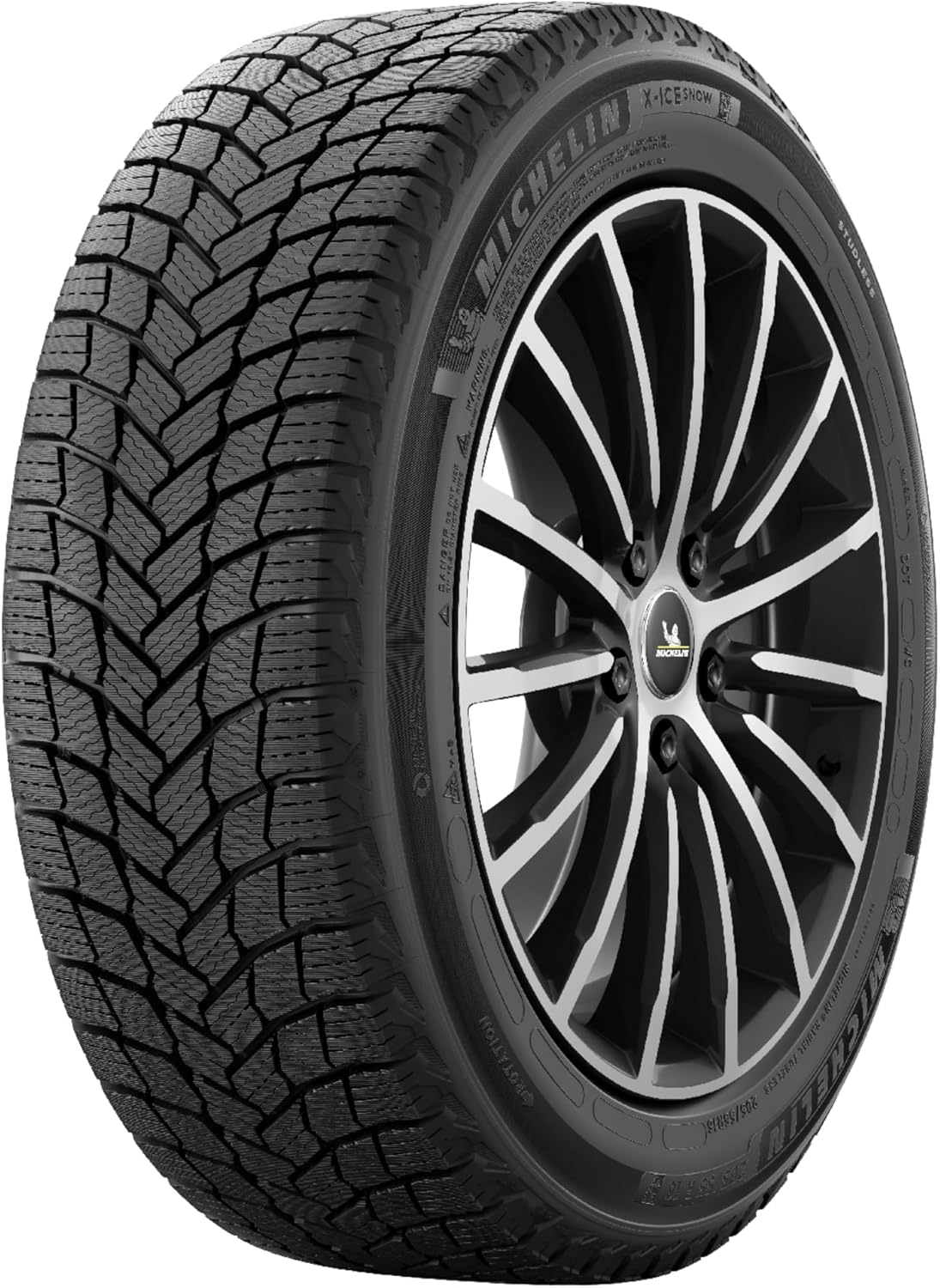
Michelin X-Ice Snow Tires (EV-rated)
EV-specific winter tires with low rolling resistance that recover up to 15 percent of cold-weather range. Mandatory in Quebec, smart everywhere else.
As an Amazon Associate, ThinkEV earns from qualifying purchases — at no extra cost to you.
The interesting move BYD made is not the drag number. It is the decision that aerodynamic efficiency at this price point matters more than segment prestige. A Canadian buyer at $42,999 expects an SUV silhouette because the segment has trained that expectation. A Chinese urban buyer at $22,000 expects a car that fits in a tight parking spot and uses less electricity at highway speeds, and BYD shaped the Seagull go to that expectation without apology.
The closest like-for-like benchmark for what that decision costs the buyer is the Kona's bigger sibling, the Atto 3, against the Kona Electric directly. CarExpert's review noted the facelifted Atto 3 added battery, range, and storage space while undercutting the Kona on price, a smaller-scale rehearsal of the same argument the Seagull go is making one segment down. Efficiency comparisons in that bracket from EVcourse give the Kona Electric the edge at approximately 168 Wh/km and a 105 kW DC charging peak, which is exactly the point: Hyundai still wins the efficiency benchmark, and BYD still wins the price-per-kilometre-actually-driven argument. Both numbers are true. Only one of them is the one the buyer signs the cheque against.
Hyundai's 2023 Kona redesign was a genuinely confident styling statement, longer, sharper, more deliberate than the first-generation car. It earned the visual perception upgrade Hyundai wanted. The cost of that upgrade is paid in kilowatt-hours every time someone drives one at highway speed, and the buyer is the one paying it.
Gear worth having
As an Amazon Associate, ThinkEV earns a small commission from qualifying purchases — at no extra cost to you.

PULIDIKI Car Cleaning Gel (Detailing Putty)
Press it into vents, buttons, and seams and it lifts out dust you did not know was there. Weirdly satisfying, genuinely useful.
As an Amazon Associate, ThinkEV earns from qualifying purchases — at no extra cost to you.
Software Stack: Where the Manufacturing Philosophy Gets Invisible
The Seagull go ships with DiLink OS, BYD's proprietary, deeply integrated infotainment platform, complete with over-the-air update capability and a 10.1-inch rotating tablet-style display. The platform is not a skin over Android. It is software BYD wrote, owns, and ships across its entire lineup, from the Seagull go to the Yangwang U8.
The Kona EV's infotainment is competent. It supports Android Auto and Apple CarPlay seamlessly, and the underlying Hyundai connected services do what they need to do. But the software is not Hyundai's competitive moat. The company outsources the centre of its in-cabin experience to Google and Apple, the way every legacy OEM does, and pays the licensing and integration costs that come with that decision.
In-house software is not just a marketing line. It is tighter hardware-software co-design, faster iteration cycles, and the absence of per-unit licensing costs that legacy OEMs are paying without always disclosing. When BYD wants to push a new charging-curve optimisation to every Seagull go in the field, it pushes it. When Hyundai wants to do the same, it negotiates timelines with Google's certification process. The gap is not theatrical. It is structural, and it compounds with every model year.
Gear worth having
As an Amazon Associate, ThinkEV earns a small commission from qualifying purchases — at no extra cost to you.

WixGear Magnetic Air Vent Phone Mount (2-Pack)
A magnet strong enough that your phone never flinches over potholes or rail crossings. Two in the box, one for each car.
As an Amazon Associate, ThinkEV earns from qualifying purchases — at no extra cost to you.
What the Spec Sheet Actually Proves About the Next Decade
The Seagull go is not a budget car trying to look premium. It is a complete engineering thesis, executed at a specific price point, by a company that controls the cells, the motors, the software, and the manufacturing line that bolts them together. That degree of vertical integration is not something Hyundai can replicate by reading a press release. It is the product of fifteen years of capital investment in cells, semiconductors, and platform engineering. BYD made bets in 2010 that are paying out in 2026, and the Seagull go is the most visible receipt.
The Kona Electric, by contrast, is a well-executed global product caught between two pressures it was not engineered to resolve. It inherits the E-GMP platform's premium-segment ambitions while being asked to compete at a price point the platform was not optimised for. It pays the supplier margin on cells, motors, and software while competing against a manufacturer that pays none of those margins. It is a good car. It is a car priced at the bottom of a platform built for a higher tier.
The $20,000-plus gap between the two is not a feature-count gap. The Seagull, sold as the Dolphin Surf in South Africa, was the cheapest BEV in the country at launch and became the best-selling EV there by January 2026, surpassing the Volvo EX30 and the BMW iX3. That is not a market response to a budget car. That is a market response to a complete car at a budget price, and Western OEMs now have to justify why their entry-level EVs cost twice as much without delivering twice the car. For Canadian buyers tracking when these cars actually arrive, the projected $15K-$20K launch window and tariff math under the January 2026 rate is where the next conversation starts.
The case against the doctrine reading is the obvious one: BYD has not yet had to survive a full product cycle inside a Western regulatory and dealer-network environment, and the Seagull go's economics may not translate cleanly once it pays Transport Canada compliance costs, a Canadian dealer margin, and the residual 6.1% federal tariff. Concede the point. But the Canadian price floor today is already brutal, the cheapest EV you can buy in Canada is the Nissan LEAF S at $39,560, with the Chevrolet Equinox EV starting at $47,995. Even doubling the Chinese sticker after compliance, freight, dealer margin, and tariff leaves the Seagull go arriving meaningfully under that floor. The doctrine survives the translation costs because the doctrine started so far ahead.
The decade-ahead question is whether legacy OEMs can restructure their supply chains, software stacks, and platform economics fast enough to meet a competitor that already finished the work. Hyundai is one of the better-positioned legacy players, its IONIQ platform is genuine, its software ambitions are real, and the Kona Electric remains a sensible, capable EV under $45K. But the Kona EV's price is the price of a system designed before the Seagull go existed. The next Kona will have to answer questions the current one was never asked.
I would watch BYD's vertical-integration story finish its arc on even cheaper cars, the LiDAR-equipped Seagull at $13K is the next chapter, not a stunt. The thing that would change my mind is a Hyundai announcement that the next-generation Kona moves to in-house LFP cells and an in-house software stack on a platform engineered from the floor up for the sub-$30K bracket, not a trim-line price cut, not a financing rebate, a platform reset. If that announcement arrives inside eighteen months, the doctrine gap closes. If it does not, the Seagull go's spec sheet is the spec sheet the rest of the segment will be measured against by 2028.
The spec sheet is telling a story about two manufacturing philosophies. One was built for the price the next decade is going to demand. The other was built for the price the last decade could bear.
Gear worth having
As an Amazon Associate, ThinkEV earns a small commission from qualifying purchases — at no extra cost to you.
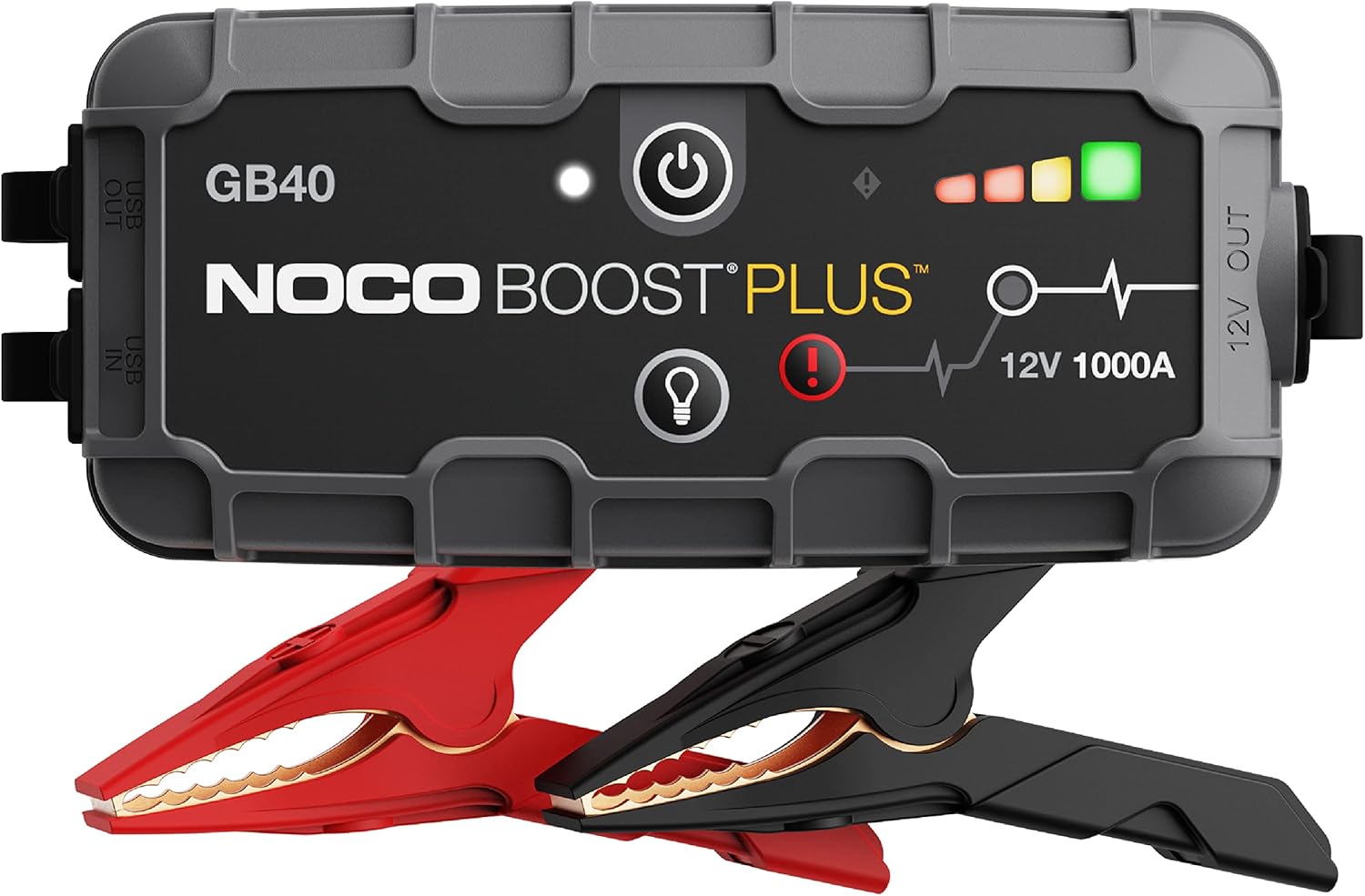
NOCO Boost Plus GB40 Jump Starter
A 1000A lithium jump starter that fits in your glovebox and works on any 12V battery. Your insurance against a dead 12V in a parking lot.
As an Amazon Associate, ThinkEV earns from qualifying purchases — at no extra cost to you.

Founder & Chief Editor
Vlad Pereira is the founder and chief editor of ThinkEV.ca, the Canadian electric-vehicle publication he writes and edits from Courtenay, British Columbia. He covers EV pricing, federal and provincial rebates, charging costs, and the Chinese manufacturers now entering Canada, from the buyer's side rather than the press-fleet side. ThinkEV is a venture of Vlad Pereira Online; his writing on health, income and the long game lives at vladpereira.com.
Frequently asked questions
Would the Seagull go's 30 kWh pack survive a Canadian winter daily driver?
Is BYD's Blade LFP battery actually safer than the Kona's NCM chemistry?
Can you actually buy the Seagull go in Canada today?
Does the Kona EV hold its resale value better given the price gap?
What does BYD's vertical integration actually mean for the buyer paying $22,000?
More EV & road-trip finds
Affordable upgrades worth a look — tap any to check the price on Amazon.
 ★ 392
★ 392Large Cup Holder Adapter (32-40oz)
View on Amazon ★ 4,050
Touchscreen Mist Screen Cleaner Kit
View on Amazon ★ 164
★ 164Solar-Powered LED Ambient Light
View on Amazon ★ 546
★ 546Funny Headrest Face Covers (2-Pack)
View on Amazon ★ 865
★ 865Collapsible Trunk Organizer
View on Amazon ★ 308
★ 308Coiled Lightning Car Cable for iPhone (2-Pack)
View on Amazon ★ 119
★ 119Foldable Waterproof Trunk Organizer
View on Amazon ★ 17,839
Qifutan Vent Phone Mount (Military-Grade Clip)
View on AmazonRead, Plan, Then Stay Current
Explore our expert articles to understand incentives and ownership costs, use the map to pressure-test charging reality, then subscribe so new EV coverage comes straight to you.
Continue Reading
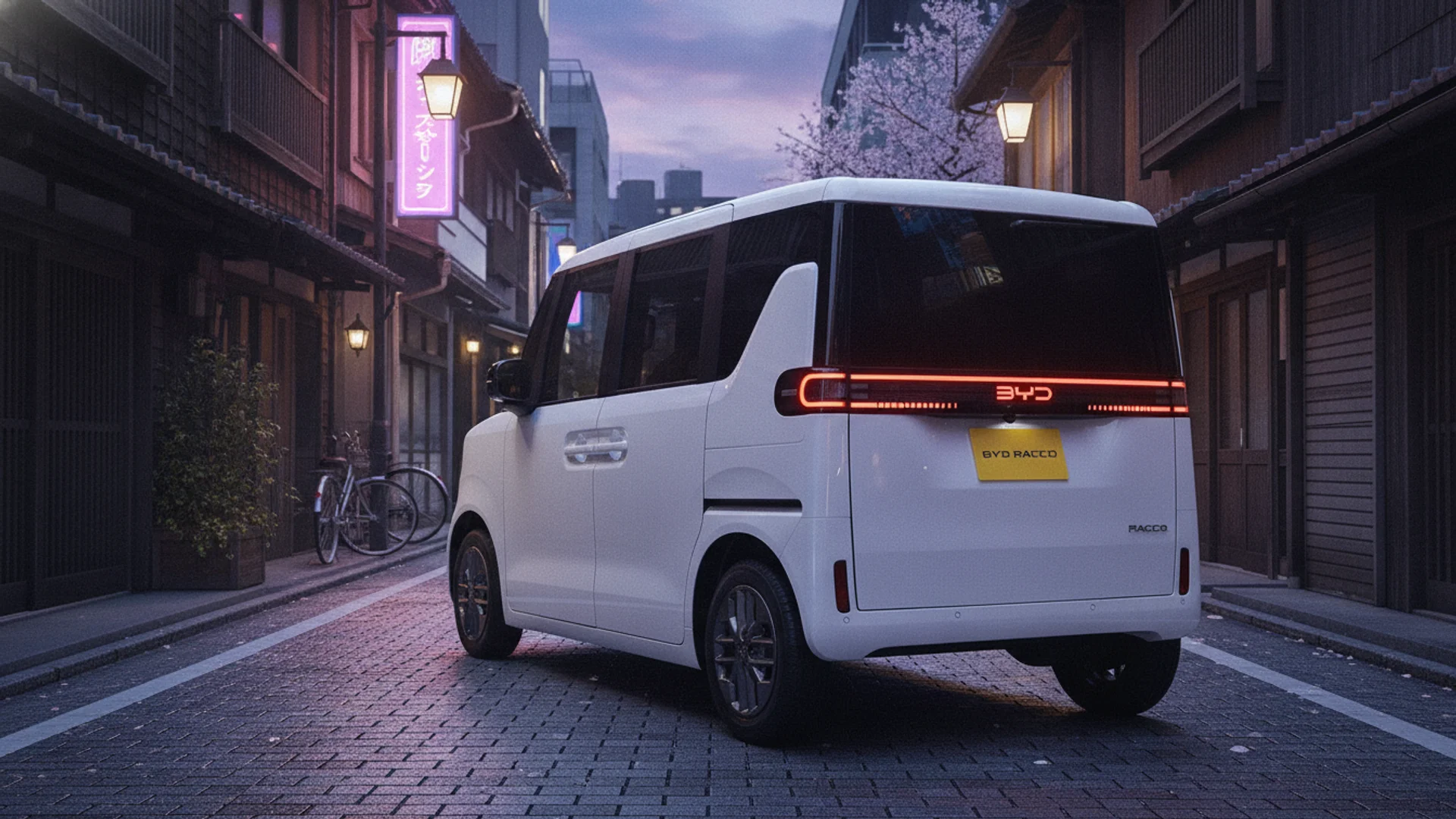
BYD Racco 2026: Kei EV With 320 km Range at ¥2.145M
BYD Great Seagull: A Bigger $10,000 EV Hatch Is Coming

10–97% in 9 Min: Sunwoda Joins the Flash Charging Race
BYD Seagull With LiDAR at $13K: A Sub-$15K First
Which EVs Should Be Charged to 100%? The LFP Exception