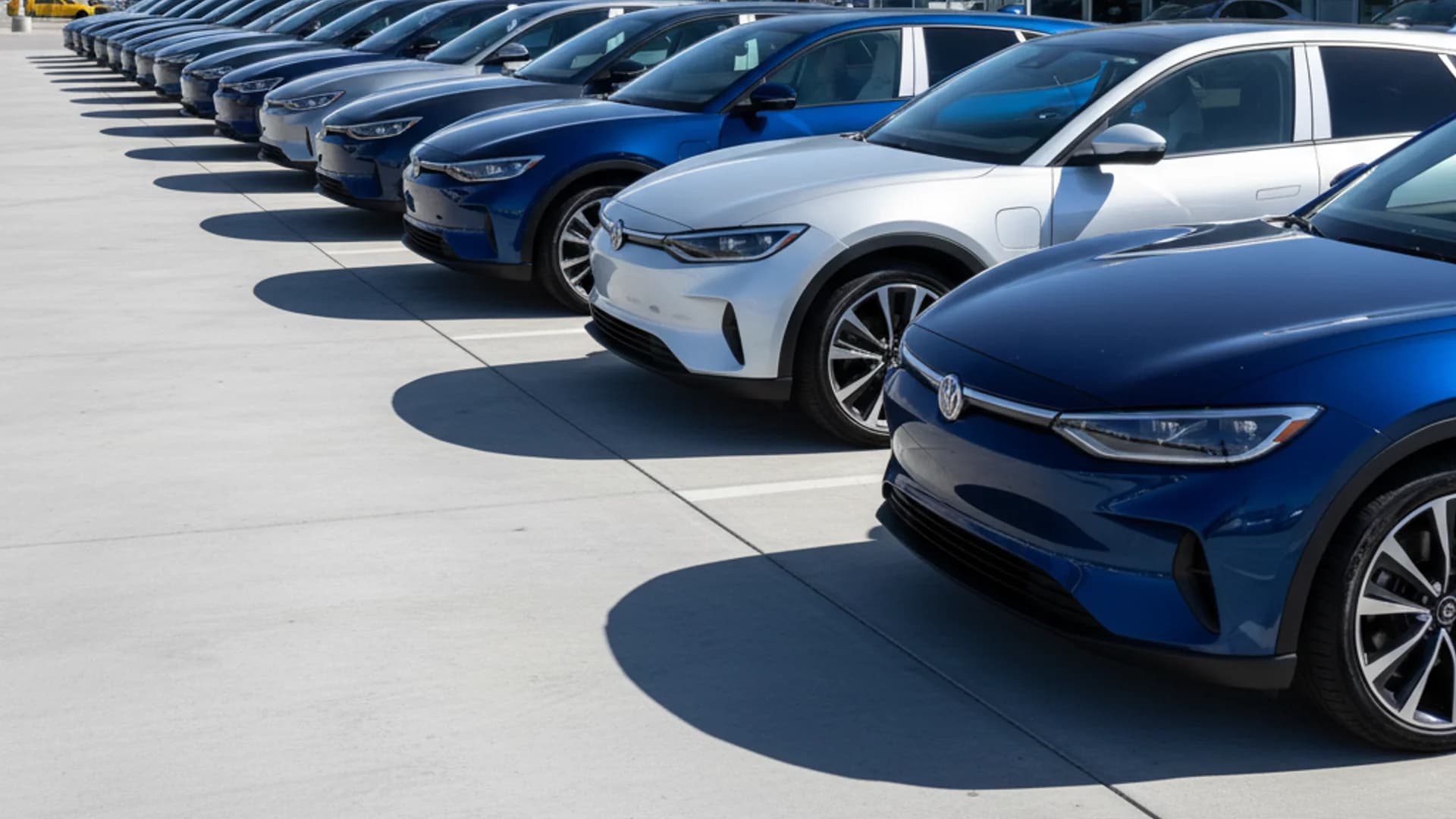
You walked into a dealership in March and drove home in an EV for $5,000 less. Your dealer is still waiting for that cheque from Ottawa. Both things are true, and neither changes the answer to the question most buyers are actually asking: yes, the EVAP rebate is back, it's real money, and you can claim it on most mainstream EVs with a final price under $50,000 right now.
The numbers tell the story sideways. Sales jumped more than 80 per cent in March, compared to February, right after the rebates could be claimed again. That's the kind of demand signal you get when buyers have been waiting months for a program to come back. Ottawa set a target of putting 840,000 new EVs on the road by offering up to $5,000 toward the cost of a new EV, and $2,500 toward plug-in hybrids under the new program. The plumbing behind that money, how it flows from Ottawa to your dealer to you, is where the friction lives.
Key takeaways
- March EV sales jumped over 80% versus February, the month EVAP rebates became claimable again.
- Dealers fronted $5,000 per car for six weeks before Ottawa opened claims on April 6.
- BC and Quebec stack provincial rebates on top of federal for a combined ceiling near $9,000.
- The Chevrolet Equinox EV at $44,995 is the safest bet for finding an EVAP-eligible car on a lot today.
- BYD's Atto 3 and Seal don't qualify for EVAP rebates despite the January 2026 tariff cut to 6.1%.
What the EVAP Rebate Actually Pays, and What It Doesn't
The federal EVAP (Electric Vehicle Affordability Program) pays up to $5,000 toward a new battery-electric vehicle and up to $2,500 toward a plug-in hybrid. Those are ceilings, not guarantees, and Transport Canada maintains the eligible-vehicle list.
The price cap is the part buyers get tripped up on. EVAP looks at the final transaction value, base price plus options, accessories and dealer fees, but not taxes or freight, and it must land at or under $50,000 (there's no cap at all on EVs built in Canada). Cross $50,000 with options and you can knock yourself out of eligibility on a vehicle you assumed qualified. Always confirm the specific configuration against the current eligible list before you sign anything.
You never see the money. The rebate is applied at the point of sale, which means the price on your bill of sale is just lower by the rebate amount. The dealer fronts it and then claims reimbursement from Ottawa. That's a critical detail, and it's the source of the dealer-float problem you'll read about further down.
Leases qualify too, with a minimum term of 12 months, shorter than that and you're out.
Province-by-Province Stack: How High Can Your Rebate Actually Go?
Federal is the floor. Stacking is where the math gets interesting, and it varies wildly by where you register the vehicle. British Columbia and Quebec are the two provinces where the stack is genuinely meaningful. Everywhere else, the federal rebate is essentially the whole picture.
In BC, the CleanBC Go Electric passenger vehicle rebate adds up to $4,000 on top of the federal $5,000 for an eligible BEV. The provincial side is income-tested, full rebate at lower household incomes, scaled down as income rises, and zeroed out above the upper threshold. Combined ceiling lands around $9,000 if you qualify for the maximum on both sides.
Quebec's Roulez vert program tops up by $4,000 on full BEVs, again stackable with federal for a combined $9,000. Quebec also runs its own MSRP eligibility cap and its own list, so a vehicle that qualifies federally doesn't automatically qualify provincially. Check both before you commit.
Ontario, despite being the largest single EV market in the country, has no provincial passenger rebate, the program was cancelled in 2018 and hasn't returned. Federal-only. The same goes for Alberta, Saskatchewan, and Manitoba, where the federal $5,000 is the entire incentive picture. If you're shopping in those provinces, Alberta's full incentive stack including municipal programs in Edmonton and Calgary is worth reading before you assume there's nothing.
One subtle point: provincial rebates are sometimes administered after delivery rather than at the point of sale. Federal is at-signing. Provincial may be a cheque you wait for. That cash-flow timing matters if you're stretching to make the down payment.
Gear worth having
As an Amazon Associate, ThinkEV earns a small commission from qualifying purchases — at no extra cost to you.

Portable Level 2 EV Charger (40A, NEMA 14-50)
Throw it in the trunk and charge anywhere with a 240V outlet. 40A portable with NEMA 14-50 plug. Your road-trip insurance policy.
As an Amazon Associate, ThinkEV earns from qualifying purchases — at no extra cost to you.
Which EVs Under $55,000 Are Actually on Dealer Lots Right Now?
The eligible list is long. The dealer-lot reality is shorter. Here's what's actually moving in early 2026.
The Chevrolet Equinox EV is the inventory story of the moment. Starting around $44,995, it qualifies cleanly for the full federal rebate, GM has been pushing units into Canadian dealer networks aggressively, and the LT trim brings it under the MSRP cap with room to spare. If you want an EVAP-eligible EV you can actually test drive this week, this is the safest bet.
Tesla Model 3 RWD starts around $50,990 and qualifies. Model Y is the trickier call, base trims around $54,990 may slip in under the cap, but option packages can push you over. Confirm the specific configuration. Tesla's Canadian inventory situation has been volatile, and Tesla's 60% Canadian sales collapse through 2025 changed the negotiating dynamic at Tesla stores, there's more deal room now than there used to be.
Hyundai IONIQ 6 Standard Range opens around $46,999 and qualifies. The Long Range version sits closer to the cap. Hyundai's dealer network is well distributed across provinces, which makes it a practical pick if you're outside major metros where Tesla and GM dominate. The Kia EV6 in lower trims also qualifies, though inventory varies sharply by region.
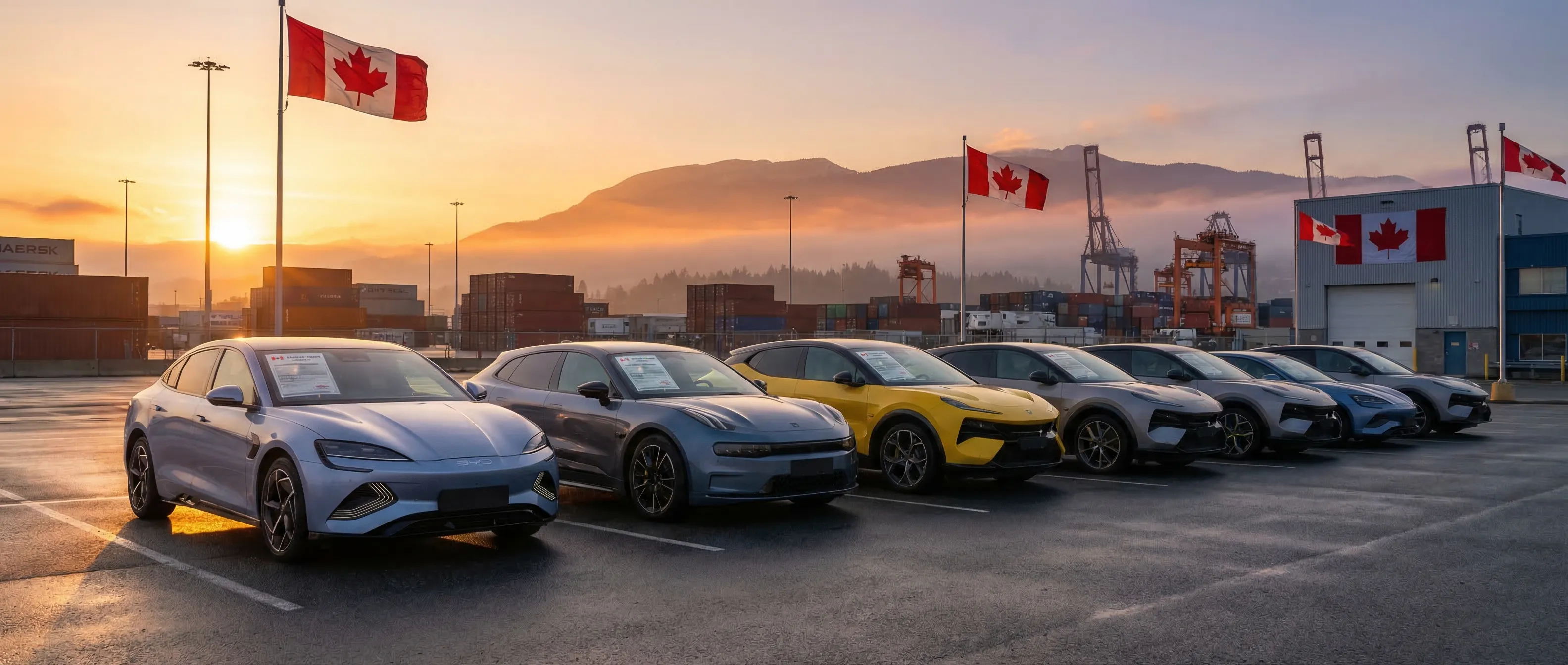
A note on what's NOT on the list: BYD's Atto 3 and Seal, despite arriving in Canada through the BYD dealer rollout that starts with 20 Toronto-area stores, are not EVAP-eligible. The federal exclusion of Chinese-manufactured EVs from the rebate program remains in place even after the January 2026 tariff cut from 100% to 6.1%. If you're cross-shopping a BYD against a Tesla or Equinox, the $5,000 rebate gap is part of the real comparison.
The Dealer Float Problem: What It Means for You at the Negotiating Table
Of the story that doesn't get covered in the buying guides, and it changes how you negotiate. Vehicles sold after Feb. 16 are eligible for the rebates, but dealers couldn't start filing claims to get the money until April 6. That's six weeks of dealers fronting $5,000 per car out of their own working capital before they could even submit a claim. The reimbursement queue has been slow ever since.
Gear worth having
As an Amazon Associate, ThinkEV earns a small commission from qualifying purchases — at no extra cost to you.

AstroAI Portable Tire Inflator
One tap, it inflates to your exact PSI then stops automatically. Low tires cost 5 to 10 percent of your range, so this pays for itself in a week.
As an Amazon Associate, ThinkEV earns from qualifying purchases — at no extra cost to you.
The reporting from late May confirmed the strain. Over $122 million in rebate claims have been filed since the program restarted, and many dealers say they're still waiting on Ottawa to pay them back. For a mid-sized dealership that moves 30 or 40 EVs a month, you're talking about $150,000 to $200,000 in cash float sitting in Transport Canada's processing queue at any given time. Smaller independents feel it harder than franchise dealers backed by manufacturer captive finance.
The earlier iteration of the program saw similar tensions. Coverage from Drive Tesla and other outlets reported on disputes over iZEV rebate fund allocation, including claims that "other dealers were stiffed as Tesla claimed rebates", the structural issue of a finite federal pool being drawn down by a small number of high-volume players isn't new.
What this means for you at the negotiating table: ask directly. "Are you current on EVAP reimbursements?" is a fair, professional question, and the answer tells you something about the dealer's cash flow and how motivated they are to move metal versus sit on it. A dealer with a clean reimbursement track record can afford to be less aggressive on discount. A dealer with $200K stuck in Ottawa may be quieter, hungrier, and more willing to find money elsewhere in the deal.
Don't try to extract the rebate twice, the $5,000 is the $5,000, and it's already coming off the price. But ancillary items (winter tire packages, accessories, extended warranty pricing, financing rate buy-downs) are where a stressed dealer has more flexibility than usual right now.
Lease vs. Buy Math When a $5,000 Rebate Is on The Table
The rebate changes the math in different ways depending on how you take delivery. Walk through it on a real number.
On a 48-month lease of a $50,000 EV, the $5,000 federal rebate is applied as a capitalized cost reduction at signing. That drops your effective lease principal from $50,000 to $45,000 before residual and money factor calculations. Rough monthly impact: somewhere in the $100–$120 range off your payment, depending on residual value and the lease rate. The dealer handles the paperwork; you sign one extra form at delivery.
Cash purchase is the cleanest version. The rebate reduces your out-the-door price by $5,000. You carry full depreciation and resale risk yourself, but you also capture the rebate as pure equity in the vehicle. If you sell or trade in five years, the $5,000 is gone, depreciation absorbs it like any other discount, but the math is straightforward and there's no monthly variable.
Financing splits the difference. The rebate comes off the principal, which means you're financing $45,000 instead of $50,000. Over a 72-month term at current rates, the interest savings on the smaller principal add a few hundred dollars to the total benefit beyond the rebate face value. Critical: when a finance manager quotes you a payment, confirm they've calculated it on the post-rebate amount, not the sticker.
Interest rates are part of the picture too. The Bank of Canada's cumulative rate cuts have pulled the overnight rate to 2.75%, materially below the 5.00% peak from 2024. Lease money factors and auto loan rates follow, with a lag. If you were quoted financing 18 months ago and shelved the purchase, the rate environment is meaningfully better now, re-pull the numbers.
Gear worth having
As an Amazon Associate, ThinkEV earns a small commission from qualifying purchases — at no extra cost to you.

Grizzl-E Classic Level 2 EV Charger (40A)
Canadian-made and rated for minus 40C winters. 40A / 9.6 kW, NEMA 14-50, indoor/outdoor, 24-ft cable. The charger built for Canadian weather.
As an Amazon Associate, ThinkEV earns from qualifying purchases — at no extra cost to you.
How to Claim the Rebate Without Getting Burned
The process is mostly invisible to you, which is good news and bad news. Good: no application, no waiting period on your end, no separate cheque to chase. Bad: if anything goes wrong, you may not find out until weeks later when a dealer comes back asking for documentation.
The mechanics: the dealer applies the rebate at the point of sale, you sign a Transport Canada declaration form confirming eligibility (vehicle, your residency, that you're not stacking with a commercial program that excludes iZEV), and the discounted price appears on your bill of sale. Done.
What to verify before you sign:
- The specific trim and configuration of your vehicle is on the current Transport Canada EVAP eligible list. Models get added and occasionally removed. The list is the authority.
- Your bill of sale shows the rebate as a discrete line item, not a vague "discount." Paper trail matters if a claim issue surfaces later.
- Delivery is scheduled during a period the program is funded. Ottawa has not announced a hard cap or wind-down date for the restarted program, but the original iZEV ran out of money before its scheduled end. Sooner is safer than later in 2026.
Keep your paperwork. If a dealer's claim is rejected for any reason, incorrect VIN, missed declaration, eligibility dispute, you may be asked to re-sign documents months after delivery. The bill of sale, the declaration form, and your delivery checklist are your evidence that you held up your end at signing.
Gear worth having
As an Amazon Associate, ThinkEV earns a small commission from qualifying purchases — at no extra cost to you.
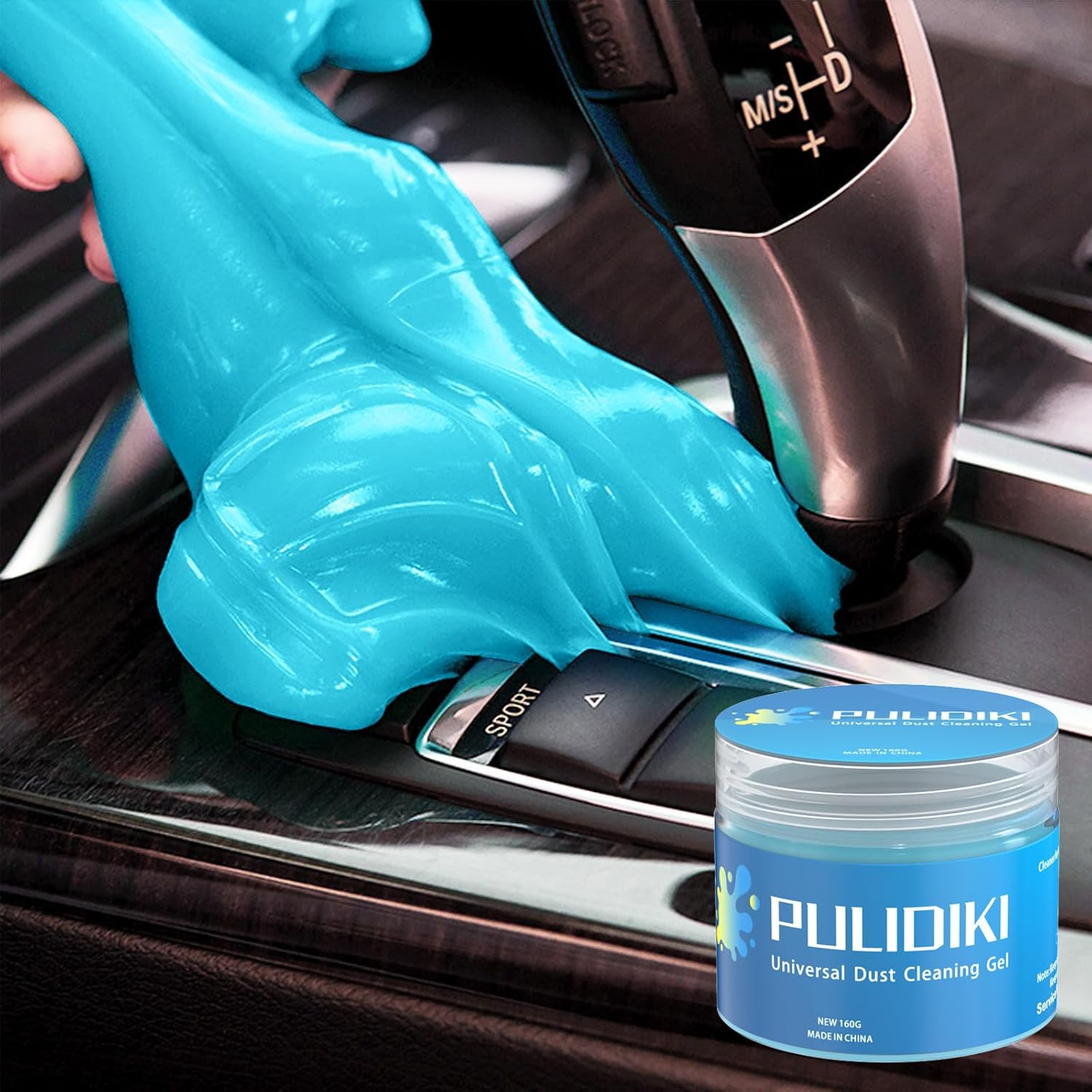
PULIDIKI Car Cleaning Gel (Detailing Putty)
Press it into vents, buttons, and seams and it lifts out dust you did not know was there. Weirdly satisfying, genuinely useful.
As an Amazon Associate, ThinkEV earns from qualifying purchases — at no extra cost to you.
FAQ: Your EVAP Rebate Questions, Answered
The Most Buyer-Friendly Setup Since 2023
Buy now if you've been holding back specifically because the rebate disappeared, the math has shifted in your favour again. The combination of restored federal $5,000, BoC rate cuts to 2.75%, and dealer cash-flow pressure that creates negotiating room is the most buyer-friendly setup Canadian EV shoppers have seen since 2023. The EV-versus-gas sales trajectory in Canada is shifting fast, and waiting another year doesn't obviously get you a better deal, it might get you a worse one if EVAP runs out of budget again.
Wait if you're cross-shopping a BYD or other Chinese EV against an EVAP-eligible Western model and the $5,000 gap is what's tipping you toward the rebate-eligible vehicle. The product comparison may swing your way independently of the rebate, and BYD's Canadian rollout pricing in late 2026 could neutralize the gap on its own. Take a longer look.
Skip the rebate chase if you're buying out a lease, looking at used, or sitting just over the MSRP cap on a trim you actually want. The rebate isn't the universe; the right vehicle at the right price is, and there are paths to a good EV deal that don't run through EVAP.
The trigger that would flip the call: Ottawa announces a program wind-down or budget cap date. That converts "buy when ready" to "buy now." Watch for it.
Gear worth having
As an Amazon Associate, ThinkEV earns a small commission from qualifying purchases — at no extra cost to you.

WixGear Magnetic Air Vent Phone Mount (2-Pack)
A magnet strong enough that your phone never flinches over potholes or rail crossings. Two in the box, one for each car.
As an Amazon Associate, ThinkEV earns from qualifying purchases — at no extra cost to you.

Founder & Chief Editor
Vlad Pereira is the founder and chief editor of ThinkEV.ca, the Canadian electric-vehicle publication he writes and edits from Courtenay, British Columbia. He covers EV pricing, federal and provincial rebates, charging costs, and the Chinese manufacturers now entering Canada, from the buyer's side rather than the press-fleet side. ThinkEV is a venture of Vlad Pereira Online; his writing on health, income and the long game lives at vladpereira.com.
Frequently asked questions
When does the dealer actually receive their $5,000 rebate money?
Does a 36-month lease still qualify for the federal rebate?
Are BYD vehicles eligible for the EVAP rebate in Canada?
Can I add options to a qualifying vehicle without losing eligibility?
Do provincial rebates come at the dealership or arrive later?
More EV & road-trip finds
Affordable upgrades worth a look — tap any to check the price on Amazon.
 ★ 314
★ 314Mini USB LED Ambient Lamps (4-Pack)
View on Amazon ★ 4,055
6-Speed Manual Shift Knob Display
View on Amazon ★ 21,304
Car Headrest Hooks (4-Pack)
View on Amazon
TP-Link Kasa Smart Plug with Energy Monitoring
View on Amazon ★ 61
★ 61Toddler Car Seat Snack and Cup Tray
View on Amazon ★ 17,839
Qifutan Vent Phone Mount (Military-Grade Clip)
View on Amazon ★ 9,349
Auto Detailing Brush Set (10-Piece)
View on Amazon ★ 55
★ 55LED Car Door Logo Projector Light
View on AmazonRead, Plan, Then Stay Current
Explore our expert articles to understand incentives and ownership costs, use the map to pressure-test charging reality, then subscribe so new EV coverage comes straight to you.
Continue Reading
First-Time EV Buyer Mistakes Worth Avoiding in Canada

Chinese EVs in Canada: 15,603 In, Still No BYD
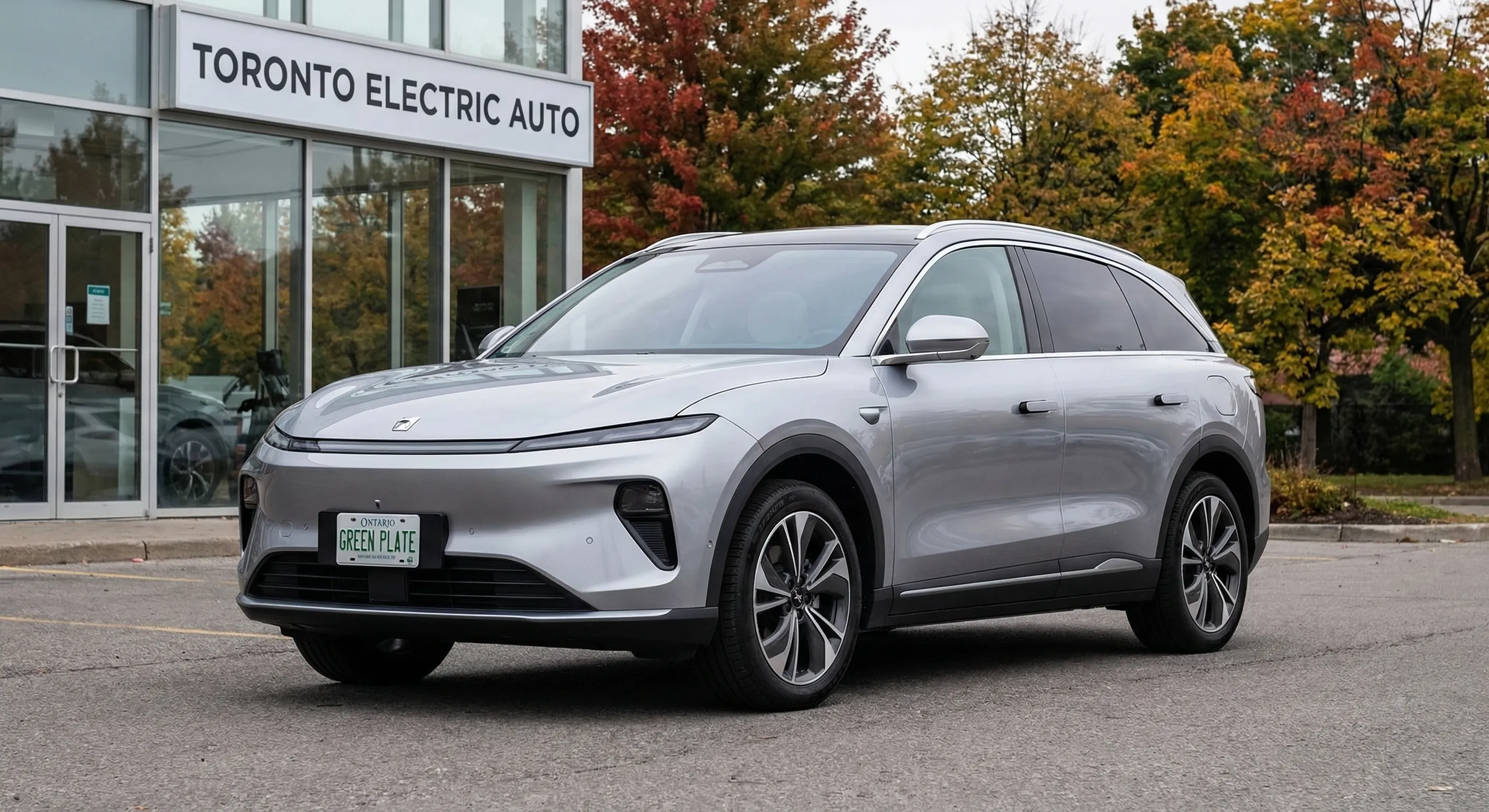
Chery EVs Coming to Canada: Models and Prices
Who Got Canada's First Chinese EV Import Permits
Uber and Lyft EV Switch Canada 2026: The Savings